BIDU(09888)

Search documents
千问App公测30天月活破4000万!科创人工智能ETF华夏(589010) 午后震荡翻红,复旦微电大涨超16%
Mei Ri Jing Ji Xin Wen· 2025-12-25 06:21
Group 1 - The core viewpoint of the news highlights the positive performance of the Sci-Tech Innovation Artificial Intelligence ETF (589010), which is showing signs of recovery with a 0.67% increase and over 70% of its constituent stocks in the green, indicating strong market interest in the AI sector [1][2] - The trading volume for the ETF has increased, surpassing 54 million yuan, reflecting ongoing investor attention and potential opening of a configuration window for the Sci-Tech AI sector [1] - The Xsignal data analysis agency reported that the Qianwen App achieved over 40 million monthly active users (MAU) and over 19 million weekly active users (WAU) within just 30 days of its public testing, indicating rapid user adoption and engagement [1] Group 2 - Guosen Securities noted that AI is significantly impacting the advertising business of internet giants, with Tencent's advertising growth at 20% and Alibaba Cloud's growth accelerating to 26%, showcasing improved operational efficiency among companies like Tencent and Kuaishou [2] - The recent launch of self-developed chips by companies such as Baidu and Alibaba is expected to enhance their market share by completing the full chain layout of chips, models, and applications in the cloud sector [2] - The Sci-Tech Innovation Artificial Intelligence ETF closely tracks the Shanghai Stock Exchange Sci-Tech Innovation Board AI Index, covering high-quality enterprises across the entire industry chain, benefiting from high R&D investment and policy support [2]





讯飞、支付宝、百度连拿上亿大单,医疗AI商业化要走通了?
Di Yi Cai Jing· 2025-12-25 05:47
Core Insights - The recent surge in government procurement projects for medical AI indicates a potential turning point for commercialization in the sector, with major companies like iFlytek, Alipay, and Baidu winning contracts exceeding 100 million yuan [1][3][19] - These projects focus on building foundational platforms rather than specific AI functionalities, emphasizing regional and systematic upgrades to existing healthcare information systems [3][4][6] - The government is playing a crucial role in driving this phase of development, with policies aimed at enhancing AI integration into healthcare systems by 2027 and 2030 [6][14] Group 1: Government Projects and Market Dynamics - Major contracts awarded to leading firms suggest a consolidation of resources and capabilities, favoring larger companies over smaller startups [7][10] - The nature of these projects is more akin to information technology upgrades rather than direct AI commercialization, with significant budgets allocated for comprehensive digital infrastructure rather than just AI capabilities [6][10][12] - The long project cycles and high engineering demands may deter traditional AI firms from engaging, as they prefer models based on usage fees rather than one-time project payments [8][9][10] Group 2: Future Commercialization Pathways - The government projects serve as a foundational step, potentially paving the way for future applications and commercial opportunities in the healthcare sector [14][15] - Companies are encouraged to explore a balance between government, business, and consumer markets, with a focus on long-term operations and cost-saving solutions for healthcare providers [16][17] - The C-end market presents the highest potential for growth, offering personalized services that the current healthcare system struggles to provide, despite facing intense competition [17][18][19]


IXDC专访 | 百度高级经理张勇:AI驱动百度设计价值重构与运营提效
Sou Hu Cai Jing· 2025-12-25 02:46
Core Insights - The article discusses how AI technology is reshaping the design industry and emphasizes the importance of guiding teams to transform AI into strategic opportunities for design value reconstruction [1] Group 1: AI Integration in Design - The team is guided through a "three-step" approach to leverage AI opportunities: first, moving from resistance to acceptance and mastery of AI tools; second, integrating AI into the entire design process to enhance efficiency and quality; third, embedding AI methodologies into actual business operations to create high-quality products and improve designer satisfaction through user feedback [3] - AI enhances operational efficiency at Baidu by addressing repetitive tasks and bulk output needs, allowing designers to focus more on creativity, which in turn optimizes product experience and expands capability boundaries, leading to tangible benefits for the team [4] Group 2: Future Competencies for Designers - In the next three years, the core competencies for designers will include the ability to embrace change and adapt to the rapid evolution of AI, as well as the capability to expand their skill sets to ensure AI outputs meet user needs [6] Group 3: AI's Cross-Disciplinary Integration - AI's cross-disciplinary integration empowers designers to become "versatile talents," as generative AI covers various fields such as images, videos, and scripts, breaking traditional job boundaries and expanding the scope of design capabilities [7] Group 4: The Essence of Design in the AI Era - The essence of design remains unchanged, focusing on providing solutions to user needs; however, AI enhances design value by offering more dimensions, better presentation methods, and higher efficiency, allowing designers more space for innovation and deeper involvement in product decision-making [8] Group 5: Awards and Recognition - The appeal of awards lies in the opportunity to share AI-related workflows and case studies, validating their feasibility and providing new insights for industry professionals; additionally, it allows for engagement with industry dynamics and peer work directions [10] - Participation in award evaluations leads to systematic and professional consolidation of work, helping to clarify and present work outcomes effectively while laying a foundation for future endeavors [11] Group 6: Industry Support and Development - The IXDC conference is recognized as a leading platform for sharing experiences and methodologies in the design industry, fostering collaboration and innovation among top talents [12]


12月25日早餐 | 北京购房政策调整;又有机器人独角兽收购上市公司
Xuan Gu Bao· 2025-12-25 00:05
Group 1: Overseas News - US stock market has seen five consecutive days of gains, with the Dow Jones up 0.6%, Nasdaq up 0.22%, and S&P 500 up 0.32%. Major tech companies like Apple, Meta, Microsoft, and Amazon saw increases of up to 0.53%, while Tesla, Google A, and Nvidia experienced declines of up to 0.32% [1] - Nvidia denied reports of a $200 million acquisition of AI chip startup Groq, stating that only a licensing agreement for inference technology was reached [1] - Samsung and SK Hynix are reportedly raising HBM3E prices by nearly 20% for next year [1] - Sanofi plans to acquire US vaccine company Dynavax for $2.2 billion to enhance its adult vaccine portfolio [1] Group 2: Domestic Major Events - The People's Bank of China and eight other departments issued opinions to support the construction of the Western Land-Sea New Corridor, exploring cross-border payment trials for digital RMB with Singapore [2][5] Group 3: Market Strategy Insights - Everbright Securities noted that the Shanghai Composite Index has shown strong performance with six consecutive days of gains, indicating a recovery in market sentiment and potential continued inflow of funds, particularly favoring technology growth stocks [3] Group 4: Real Estate Policy Changes - Beijing's new real estate policy, effective December 24, 2025, includes four main aspects: relaxing social security requirements for non-Beijing residents, supporting multi-child families in housing needs, optimizing commercial loan interest rates, and lowering the down payment ratio for second homes [4][5] Group 5: Digital Currency Developments - The digital RMB aims to address inefficiencies and high costs in traditional cross-border payments, with optimistic projections for transaction volumes reaching 162.4 trillion yuan by 2030 [6]




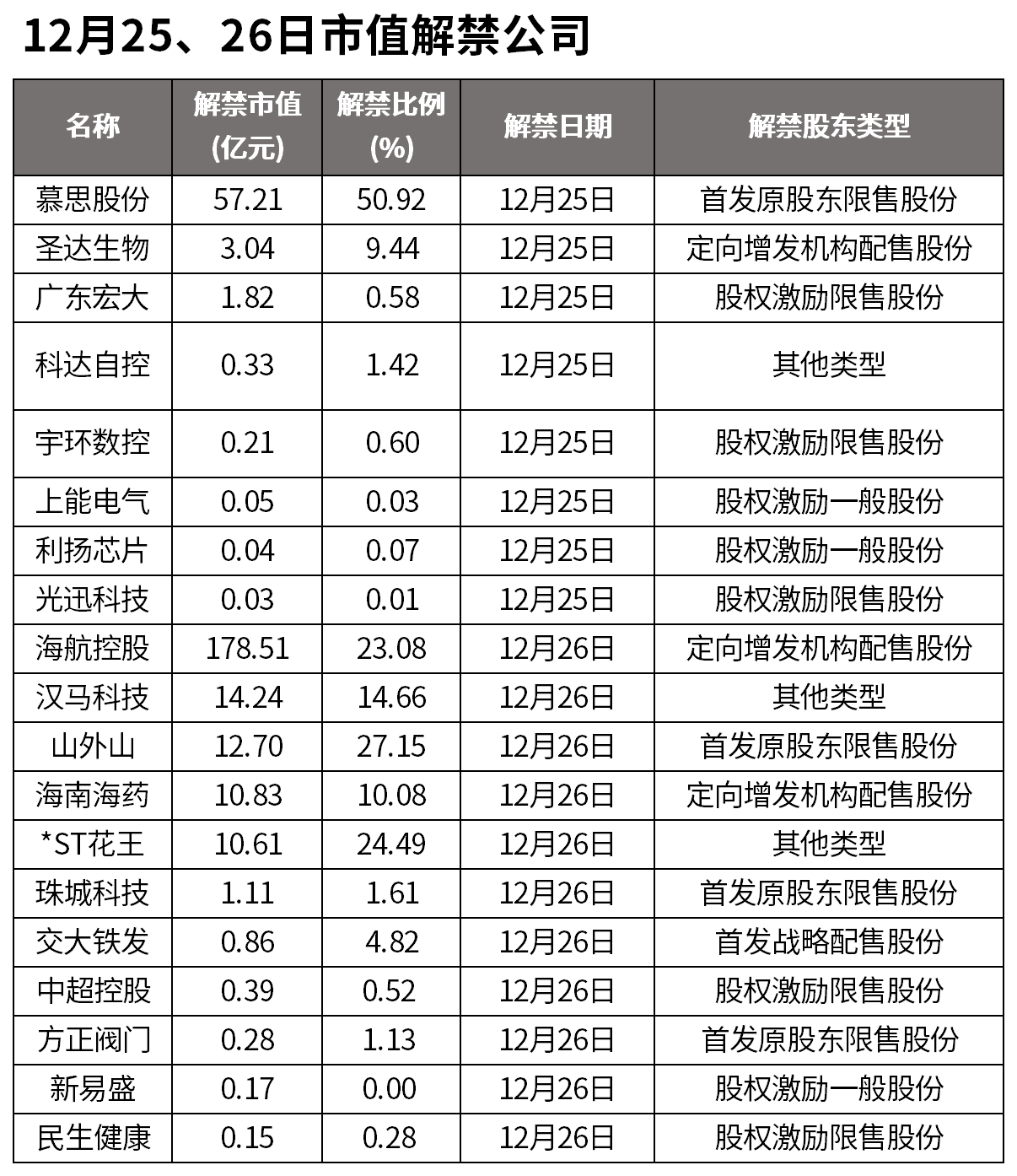
智通ADR统计 | 12月25日
智通财经网· 2025-12-24 22:22
Market Overview - The Hang Seng Index (HSI) closed at 25,833.90, up by 14.97 points or 0.06% [1] - The index reached a high of 25,870.92 and a low of 25,775.12 during the trading session, with a trading volume of 13.8677 million [1] - The 52-week high for the index is 27,275.90, while the 52-week low is 18,856.77, indicating a fluctuation of 0.37% [1] Major Blue-Chip Stocks Performance - HSBC Holdings closed at 123.759 HKD, down 0.03% from the Hong Kong close [2] - Tencent Holdings closed at 602.001 HKD, down 0.17% from the Hong Kong close [2] - Alibaba Group (W) saw a decrease of 1.200 HKD, closing at 146.000 HKD, a drop of 0.82% [3] - China Construction Bank decreased by 0.050 HKD, closing at 7.560 HKD, a decline of 0.66% [3] - Xiaomi Group (W) increased slightly by 0.020 HKD, closing at 39.220 HKD, a rise of 0.05% [3] ADR Performance - Tencent's ADR closed at 602.001, down by 0.999 HKD or 0.17% compared to its Hong Kong stock price [3] - Alibaba's ADR closed at 145.796, down by 0.204 HKD or 0.14% compared to its Hong Kong stock price [3] - HSBC's ADR closed at 123.759, down by 0.041 HKD or 0.03% compared to its Hong Kong stock price [3] - AIA Group's ADR closed at 83.298, up by 0.048 HKD or 0.06% compared to its Hong Kong stock price [3]



Can ERNIE 5.0 and Qianfan Strengthen Baidu's AI Cloud Advantage?
ZACKS· 2025-12-24 17:31
Core Insights - Baidu's AI Cloud business is becoming strategically important as the company focuses on scaling its foundation model ecosystem and enhancing enterprise applications [1] - The launch of ERNIE 5.0, which features native omni-modal capabilities, is expected to strengthen Baidu's position in the competitive AI infrastructure market in China [1] - Qianfan, Baidu's Model-as-a-Service platform, has been upgraded to support enterprise AI adoption, integrating ERNIE 5.0 and expanding its model library [2] Financial Performance - In Q3 2025, AI Cloud Infrastructure revenue reached RMB 4.2 billion, a 33% year-over-year increase, while subscription-based AI accelerator infrastructure revenue surged by 128% [2] - The Zacks Consensus Estimate for Baidu's Q4 2025 revenues is $4.62 billion, reflecting a 1.09% year-over-year decline due to investments in AI Search and cloud infrastructure [3] - Baidu's shares have appreciated 42.9% over the past six months, underperforming the Zacks Internet - Services industry's growth of 73.4% [5] Competitive Landscape - Baidu's AI Cloud expansion is occurring amid increasing competition from Alibaba and Tencent, both of which are implementing similar enterprise AI strategies [4] - Market differentiation among Baidu, Alibaba, and Tencent will depend on demonstrating measurable enterprise value and achieving profitability in AI Cloud services [4] Valuation Metrics - Baidu's forward 12-month price/earnings ratio is 19.35X, which is below the industry average of 28.31X [9] - The Zacks Consensus Estimate for Baidu's Q4 2025 earnings is $1.5 per share, indicating a 42.97% year-over-year decline [11]

Chinese AI stocks rise: Investors bet on Alibaba, Tencent, Metax, and Moore Threads
The Economic Times· 2025-12-24 16:02
Core Insights - Global investors are increasingly investing in Chinese AI companies, seeking the next big opportunity like "DeepSeek" while diversifying their portfolios [1][3] - Concerns about a potential AI bubble in the U.S. market are prompting investors to look towards China, where government support for tech independence is seen as a positive factor [1][2] Investment Trends - Ruffer, a UK asset manager, is focusing on Alibaba due to its AI chip unit and significant investments in cloud infrastructure, indicating a shift in competitive dynamics between the U.S. and China [2][3] - UBS Global Wealth Management has rated Chinese tech as "most attractive," highlighting the benefits of diversification and strong policy support for AI development in China [3] Market Valuation - The U.S. Nasdaq trades at 31 times earnings, while Hong Kong's Hang Seng Tech trades at 24 times, making Chinese stocks like Alibaba and Baidu more appealing for investment [4][16] ETF Investments - KraneShares' KWEB ETF, which includes Tencent, Alibaba, and Baidu, has seen significant growth, reaching nearly $9 billion this year, reflecting strong investor interest in Chinese tech [6][16] - Another KraneShares ETF focuses on Chinese onshore tech stocks, including Cambricon and Montage Technology, which have also experienced growth [7][16] Competitive Landscape - While the U.S. leads in AI innovation, China is noted for its strengths in engineering, manufacturing, and power supply, providing a competitive edge in the AI race [7][16] - The urgency in the AI sector is drawing attention to Chinese companies, as noted by KraneShares' Chief Investment Officer [6][16] Company Performance - Chinese AI chipmaker MetaX saw a 700% increase in its Shanghai debut, while Moore Threads rose 400%, indicating a strong market response despite warnings about valuation support driven by hype [10][16] - Fund managers caution that many listed chip companies lack valuation support and are primarily driven by market hype [10] Strategic Recommendations - Investors are advised to selectively add companies benefiting from China's self-reliance push in AI and semiconductors while maintaining exposure to global leaders [11][12][16] - There is an expectation of increased investment in AI and robotics, with a focus on identifying potential leaders in these high-tech segments [12][16] Popular Companies - Key Chinese AI companies attracting investor interest include Alibaba, Baidu, Tencent, MetaX, Moore Threads, and Cambricon [14][16]


萝卜快跑将在伦敦开启业务;智元年销有望超10亿元丨新鲜早科技
2 1 Shi Ji Jing Ji Bao Dao· 2025-12-24 13:05
Group 1: Regulatory Actions - Apple has been fined approximately €98.63 million (around 813 million RMB) by the Italian antitrust authority for abusing its market dominance through its App Tracking Transparency policy, which restricts competition among third-party developers since April 2021 [2] Group 2: Autonomous Driving Developments - Baidu's autonomous driving service platform,萝卜快跑, plans to launch driverless testing and services in London by 2026, marking its first entry into a right-hand traffic market outside of Hong Kong [3] Group 3: AI and Robotics Innovations - Alibaba has open-sourced a new image generation model, Qwen-Image-Layered, which allows for advanced layer understanding and image generation, addressing consistency issues in AI-generated images [4] - 智元机器人 expects to achieve sales revenue exceeding 1 billion RMB this year, with plans for significant growth in robot shipments and revenue in the coming years [5] - 智元机器人 has launched a national robot rental platform, "擎天租," aiming to streamline the rental process and project the market size to exceed 10 billion RMB this year [5] Group 4: Corporate Transactions and Investments - 吉利汽车 has completed the privatization of 极氪, which is now a wholly-owned subsidiary, and its financial performance will be consolidated into 吉利汽车's financial statements [7] - 凌云光's subsidiary plans to invest up to $5 million in the IPO of 智谱, reinforcing their long-term partnership in AI and industrial data [8] - 通宇通讯 is increasing its registered capital by 10 million RMB through a cash investment from 武汉武创院投资有限公司 to enhance its capital strength [6] Group 5: Market Trends and Product Launches - 长飞光纤 reports that the demand for fiber optic cables related to the telecom market remains under pressure, despite increased attention on new products related to data centers [10] - 云知声 has launched a new medical AI model, "山海·知医大模型5.0," which aims to transition from an "intelligent tool" to a "clinical collaborator" [11] - 华为 has released the nova15 series smartphones, starting at 2,699 RMB, featuring the new 麒麟9010s chip and HarmonyOS 6 [23]


中国Robotaxi驶入欧洲腹地
Zhong Guo Qi Che Bao Wang· 2025-12-24 10:36
Core Viewpoint - Chinese autonomous driving companies are making significant strides in the European market, with key players like WeRide, Pony.ai, and Baidu's Apollo making substantial progress in deploying autonomous taxi services and forming strategic partnerships to enhance their market presence [3][4][5][6][7]. Group 1: Market Entry and Expansion - WeRide has received Switzerland's first pure driverless Robotaxi license, allowing it to operate in Zurich, marking a significant milestone for Chinese autonomous driving firms in Europe [3][4]. - By 2025, WeRide, Pony.ai, and Baidu's Apollo are expected to launch major projects across various scenarios, including airport shuttles and urban commuting, establishing a comprehensive presence in the European market [4][5]. - WeRide has already secured autonomous driving licenses in seven countries, including Switzerland, France, and the UAE, covering all operational levels from testing to commercial deployment [4][5]. Group 2: Strategic Partnerships - Pony.ai is leveraging Luxembourg as a strategic hub, having established a European R&D center and secured the first L4 Robotaxi testing permit in Luxembourg [6]. - Baidu's Apollo has formed strategic partnerships with Lyft and Uber to facilitate the deployment of autonomous vehicles in Germany and the UK, highlighting a collaborative approach to market entry [7][10]. - WeRide's collaboration with Renault in France exemplifies a successful integration of Chinese technology into local contexts, providing autonomous shuttle services during major events [9][10]. Group 3: Technological Advantages - The competitive edge of Chinese companies lies in their self-developed technologies, which enhance operational efficiency and adaptability to complex driving conditions [8]. - WeRide's Robotaxi utilizes a multi-sensor fusion system for reliable performance in adverse weather, while Pony.ai generates vast amounts of simulation data to improve its models [8]. - Baidu's sixth-generation autonomous vehicles are equipped with advanced perception capabilities, achieving high decision-making accuracy in complex road environments [8]. Group 4: Operational Experience and Data - Chinese companies have accumulated extensive operational experience, with Baidu's Apollo reporting over 240 million kilometers of autonomous driving globally [9]. - WeRide has logged approximately 55 million kilometers of autonomous driving, while Pony.ai has recorded 500,000 hours of fully driverless operation [9]. - This operational data provides a strong foundation for Chinese firms to establish credibility and confidence in the European market [9]. Group 5: Challenges and Regulatory Landscape - Chinese autonomous driving companies face significant regulatory challenges in Europe, including compliance with GDPR and the upcoming AI Act, which impose strict data protection and operational standards [11][12]. - Building public trust in autonomous vehicles is crucial, as European consumers tend to be more cautious compared to their Chinese counterparts [12]. - Cost pressures related to operational expenses and regulatory compliance in Europe present additional hurdles for achieving profitability in the market [12].

智能实验管理系统3900万招标,百度、神码、中移动等参与竞标
仪器信息网· 2025-12-24 09:02
特别提示 微信机制调整,点击顶部"仪器信息网" → 右上方"…" → 设为 ★ 星标,否则很可能无法看到我们的推送。 12 月 14 日 , 广 东 广 州 市 呼 吸 传 染 病 预 测 预 警 系 统 项 目 发 布 中 标 公 告 , 百 度 中 标 , 中 标 金 额 为 1.69 亿 元。 | 采购标的( | 品目名称( | 数量( | 单价限价e | | --- | --- | --- | --- | | | | | (万元) < | | 智慧实验室管理子 系统(2 | 自动化仪器管理模块(2 | 1套e | 39006 | | | 自动化仪器调度模块(2 | 1套4 | 22004 | | | 感染过程诊断标记物预测模块(1 | 1套6 | 1300«2 | | 疫苗抗体设计与迭 代验证子系统(2 | 抗体疫苗优化模块(2 | 1 套e | 160047 | | | 临床干预推演← | 1 套e | 1300@ | | | 预测模块(2 | | | | 数字病原与预警子 | 病原数据存储与← | 1套e | 1800e | | | 计算模块( | | | | | 感染过程推演模块(2 | 1套6 ...