
MNSO(09896)

Search documents
叶国富谈名创优品进店转化率30%,全球一号店月入1600万
Mei Ri Jing Ji Xin Wen· 2025-10-22 13:23
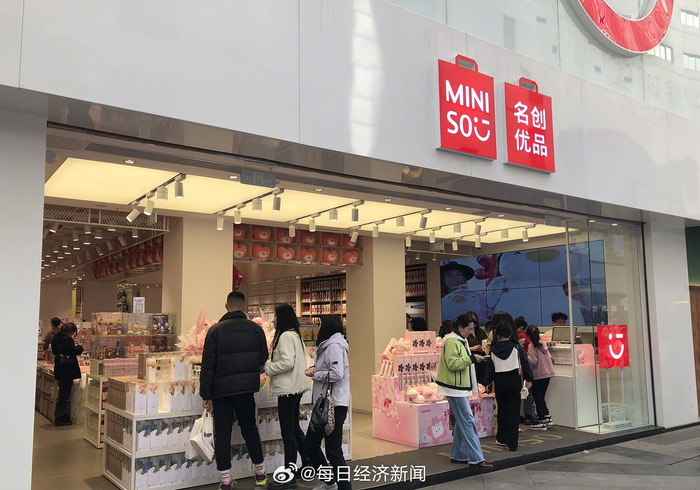
Core Insights - Miniso has achieved a conversion rate of 30%, meaning that out of every 100 customers entering the store, 30 make a purchase [1] - The company reached a revenue milestone of 10 billion in just five years, which is noted to be faster than Alibaba's growth [1] - The flagship store on Nanjing Road in Shanghai generated sales of 100 million within nine months, with a peak monthly revenue of 16 million [1] Company Development - Miniso was inspired by foreign specialty stores and was founded in a garage in Guangzhou in 2013 [1] - The initial suppliers were sourced from the Canton Fair, leveraging their design capabilities to enhance product competitiveness [1] - The company optimized its product selection strategy by benchmarking against competitors and successfully established a self-operated store business model within three months [1] Business Strategy - The gross profit margin for Miniso's franchisees is reported to be 38% [1] - The popularity of well-performing stores serves as effective advertising, attracting numerous franchisees seeking collaboration [1]

名创优品创始人叶国富称80%门店将关闭重开,转型文化创意
3 6 Ke· 2025-10-22 12:18
Core Insights - Miniso's founder Ye Guofu highlighted the company's rapid growth, achieving a revenue of 10 billion in just a few years and opening over 1,000 stores in peak years, claiming a growth rate faster than Jack Ma's [1] Group 1: Company Strategy - The company plans to "transform" by closing and reopening 80% of its stores over the next two years, indicating a shift in store model and product structure [1] - The transformation aims to transition from a retail-focused business to one centered around cultural creativity [1]
叶国富:名创优品用5年做到了100亿,比马云还快
Xin Lang Cai Jing· 2025-10-22 11:21
Core Insights - The discussion highlighted the rapid growth of Miniso, which reached a revenue of 10 billion RMB in approximately five years, outpacing Alibaba's growth [2] - Miniso's current in-store conversion rate stands at 30%, with a flagship store in Shanghai achieving sales of 100 million RMB in nine months [2][4] - The company has adopted a dual-track strategy for IP development, collaborating with major brands like Disney and signing artists for unique product designs [3] Company Development - Miniso was founded in 2013 by Ye Guofu, inspired by foreign lifestyle specialty stores, and has since expanded significantly [2] - The company has 4,305 domestic stores and 3,307 international stores, with a net increase of 30 and 94 stores respectively in the latest quarter [4] - The revenue for the second quarter of 2025 reached 4.97 billion RMB, marking a year-on-year growth of 23.1% with a gross margin of 44.3% [4] Strategic Initiatives - Ye Guofu emphasized the importance of a "trial and error" budget for innovation, suggesting that investing in experimentation is crucial for long-term success [3] - Miniso's subsidiary, TOP TOY, is projected to achieve revenues of 4 billion RMB by the second quarter of 2025, with a significant year-on-year increase of 87% [3] - The company plans to close and reopen 80% of its stores in the next two years to shift from retail to cultural creativity [4] Acquisitions and Partnerships - Miniso acquired a 29.4% stake in Yonghui Supermarket for approximately 6.3 billion RMB, becoming its largest shareholder [4] - Ye Guofu praised the collaboration with Donglai, highlighting the importance of product quality and service in retail success [3][4]
名创优品叶国富:最新的愿景是成为全球领先的IP运营平台型公司
Zhi Tong Cai Jing· 2025-10-22 11:15
Core Insights - The core viewpoint of the article is that Miniso aims to transform from a retail company into a cultural and creative company by acquiring and signing numerous Chinese intellectual properties (IPs) to become a leading global IP operation platform [1] Company Strategy - Miniso's founder and CEO, Ye Guofu, announced the company's new vision to become a global leader in IP operations, moving beyond its traditional retail identity [1] - The company has already signed exclusive agreements with 17 artist IPs and plans to promote cultural creators in China to generate new IPs annually [1] Market Expansion - Miniso intends to leverage its nearly 8,000 global stores to sell these new IPs, which also serves as a form of cultural export [1] - Ye Guofu expressed confidence that Chinese culture and IPs will be on par with those from Japan and the United States in the future [1]
名创优品(09896)叶国富:最新的愿景是成为全球领先的IP运营平台型公司
智通财经网· 2025-10-22 11:13
Core Viewpoint - The founder and CEO of Miniso, Ye Guofu, aims to transform the company from a retail-focused entity into a cultural and creative company, with a vision to become a leading global IP operation platform [1] Company Strategy - Miniso plans to boldly acquire and sign contracts with numerous Chinese intellectual properties (IPs) to enhance its cultural offerings [1] - The company has already signed exclusive agreements with 17 artist IPs and aims to promote new cultural creators in China [1] Global Expansion - With nearly 8,000 stores worldwide, Miniso intends to leverage its global presence to sell these cultural products, contributing to cultural output [1] - Ye Guofu expresses confidence that Chinese culture and IPs will be on par with those from Japan and the United States in the future [1]
叶国富与罗永浩对谈:名创优品用5年做到了100亿,比马云还快
Xin Lang Cai Jing· 2025-10-22 10:27
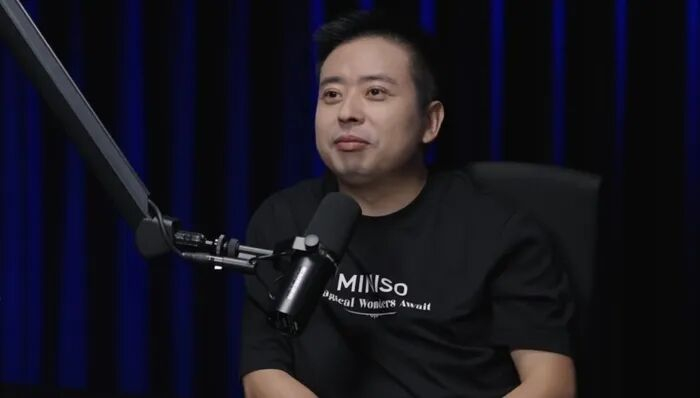
Core Insights - The discussion highlighted the rapid growth and strategic initiatives of Miniso, with its founder Ye Guofu sharing insights on the company's development and future plans [1][2][3] Company Development - Miniso was founded in 2013 by Ye Guofu, inspired by foreign lifestyle specialty stores, and achieved a revenue of 10 billion RMB within five years, outpacing Alibaba's Jack Ma [1] - The company has a current in-store conversion rate of 30%, meaning 30 out of 100 visitors make a purchase [1] - The flagship store on Nanjing Road in Shanghai generated sales of 100 million RMB in nine months, with a peak monthly revenue of 16 million RMB [1] Business Strategy - Ye Guofu emphasized the importance of a "trial and error" budget for innovation, suggesting that spending 100 million RMB on experimentation is a safer long-term strategy than avoiding risks [2] - Miniso employs a dual-track model for IP development, collaborating with top brands like Disney and signing artists for unique product designs [2] - The TOP TOY brand under Miniso is projected to achieve revenues of 4 billion RMB by Q2 2025, reflecting a year-on-year growth of 87% [2] Acquisitions and Partnerships - Miniso acquired a 29.4% stake in Yonghui Supermarket for approximately 6.3 billion RMB, becoming its largest shareholder [3] - Ye Guofu praised the collaboration with Pang Donglai, highlighting the importance of product quality and service in retail success [3] Market Position and Future Plans - Miniso reported a total revenue of 4.97 billion RMB for Q2 2025, a 23.1% increase year-on-year, with a gross margin of 44.3% [3] - The company operates 4,305 stores domestically and 3,307 stores internationally, with net additions of 30 and 94 stores in Q2, respectively [3] - Future plans include a significant restructuring of 80% of its stores to shift from retail to cultural and creative offerings [3]
叶国富谈名创优品与泡泡玛特相似发展路径
3 6 Ke· 2025-10-22 09:41
Core Insights - The discussion highlights the similarities between Miniso and Pop Mart in their growth trajectories, with both companies starting from a similar foundation in retailing miscellaneous goods and gradually transitioning towards IP development [1][2] Group 1: Company Growth and Strategy - Miniso and Pop Mart both began their journeys in 2010, focusing on selling miscellaneous goods, but with different primary product categories: Pop Mart emphasizes toys while Miniso focuses on lifestyle products [1] - Miniso has been slower in its transition to self-owned IP, starting this shift only in 2023, while Pop Mart began its transition approximately seven years earlier [1] - Miniso has signed contracts for 17 self-owned IPs, with the first IP projected to achieve sales of 40 million this year and potentially exceed 100 million next year [1] Group 2: Product Categories and Market Position - Pop Mart has expanded its product offerings to include blind boxes, plush toys, and mobile accessories, while Miniso has a diverse product range and is now incorporating blind boxes and figurines into its offerings [2] - The future product categories of both companies are expected to converge, with the main distinction being the different IPs each company holds [2]

名创优品80%门店将关闭重开
Jing Ji Guan Cha Wang· 2025-10-22 09:34
Core Insights - The founder of Miniso, Ye Guofu, highlighted the company's rapid growth, achieving a revenue increase from zero to 10 billion in a short period, with the ability to open over 1,000 stores in peak years, indicating a growth rate faster than that of Jack Ma [1] Company Strategy - Ye Guofu announced plans for the next two years to "replace the old with the new," aiming to close and reopen 80% of Miniso's stores to transform the store model and product structure, shifting from retail to cultural creativity [1]
名创优品要转型 :成为一个文化创意公司
Xin Jing Bao· 2025-10-22 08:39
Core Viewpoint - The founder of Miniso, Ye Guofu, emphasizes the importance of adapting retail strategies to either online or offline models, highlighting the success of Xiaomi in both domains and the need for Miniso to transform into a cultural and creative company focusing on IP products in the coming years [1] Group 1: E-commerce and Retail Insights - E-commerce has rapidly developed and significantly impacted China's retail industry [1] - Different brands excel in either online or offline sales, with some, like Xiaomi, successfully operating in both [1] Group 2: Miniso's Transformation - Miniso aims to transition into a cultural and creative company, with a focus on selling IP products in the next three to five years [1] - The growing interest in IP products in China is noted as a key factor driving this transformation [1]
名创优品创始人叶国富:胖东来卖货品,其它超市卖货架
Feng Huang Wang· 2025-10-22 07:30
Core Insights - The guest of the eighth episode of "The Crossroads of Luo Yonghao" is Ye Guofu, the founder of Miniso, who discusses the supermarket industry in China [1] - Ye Guofu differentiates between supermarkets that sell products based on consumer needs, like Sam's Club and Pang Donglai, and those that focus on backend fees, such as shelf space and barcode fees [1] - Miniso's business model includes franchising, which started three months after its establishment, leveraging store visibility as a marketing tool [1] - Miniso's franchisees enjoy a gross margin of 38% [1] - The flagship store on Nanjing Road in Shanghai achieved sales of 100 million in nine months, with a peak monthly revenue of 16 million [1] - Ye Guofu emphasizes that high-quality products do not require advertising, stating that only inferior products need marketing, and Miniso has not spent any money on franchise advertising since its inception [1]