AKESO(09926)

Search documents
恒生医疗ETF(513060)拉升涨超2%,政策支持下,创新药企有望加速实现价值兑现
Sou Hu Cai Jing· 2025-07-22 02:06
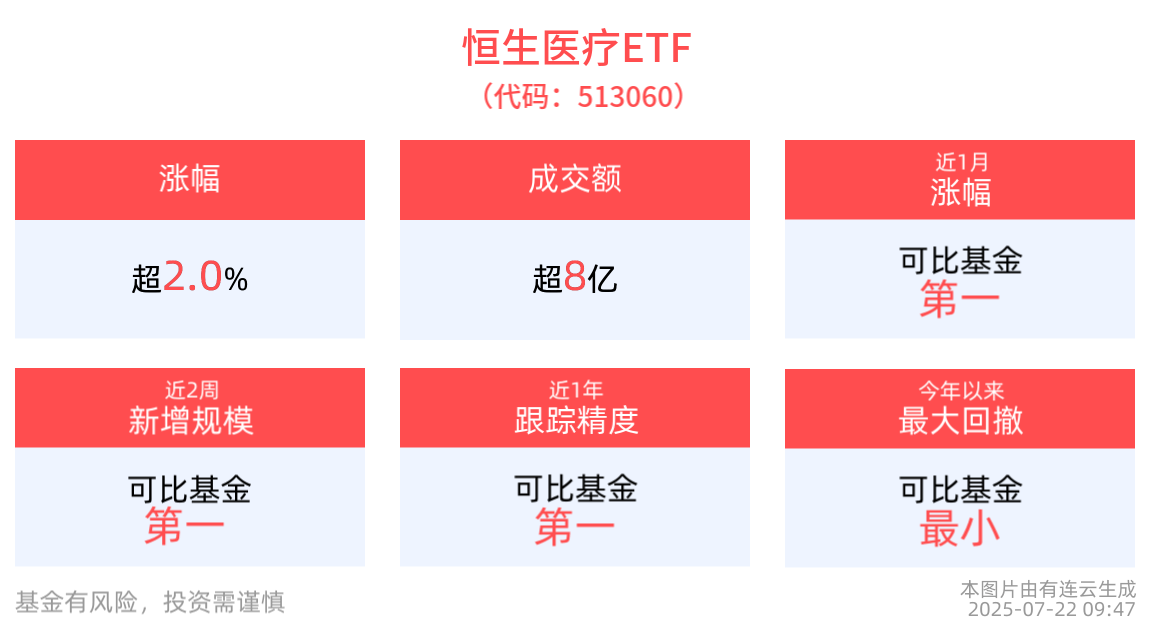
Group 1 - The Hang Seng Healthcare Index (HSHCI) has shown a strong increase of 2.14%, with notable gains from stocks such as Livzon Pharmaceutical (up 11.57%) and United Laboratories (up 7.00) [3] - The Hang Seng Healthcare ETF (513060) has risen by 2.02%, with a recent price of 0.66 yuan, and has accumulated an 8.95% increase over the past week, ranking in the top third among comparable funds [3] - The trading activity of the Hang Seng Healthcare ETF is robust, with a turnover rate of 10.09% and a transaction volume of 840 million yuan, indicating active market participation [3] Group 2 - The 11th batch of national drug procurement has officially launched, involving 55 varieties, signaling a positive shift in procurement policies favoring innovative drugs [4] - The procurement policy emphasizes "no procurement for new drugs" and optimizes selection criteria, enhancing protection for innovative drugs and promoting a healthier market ecosystem for generic drugs [4] - The stable operation of the national medical insurance fund, projected to reach total revenue of 34,913.37 billion yuan by the end of 2024, supports the accessibility and market demand for innovative drugs [5] Group 3 - The Hang Seng Healthcare ETF has seen a significant growth in scale, increasing by 221 million yuan over the past two weeks, ranking in the top third among comparable funds [5] - The ETF's financing activities are notable, with a latest financing purchase amount of 160 million yuan and a financing balance of 231 million yuan [5] - The ETF has achieved a net value increase of 30.39% over the past two years, with a maximum monthly return of 28.34% since inception [5] Group 4 - The Hang Seng Healthcare ETF has a Sharpe ratio of 2.22 over the past year, indicating strong risk-adjusted returns [6] - The ETF has the lowest relative drawdown among comparable funds, with a drawdown of 0.52% year-to-date [6] - The ETF's management fee is 0.50%, and its tracking error is 0.060%, the highest tracking precision among comparable funds [6] Group 5 - The top ten weighted stocks in the Hang Seng Healthcare Index account for 60.73% of the index, including companies like BeiGene and WuXi Biologics [7]



康方生物(9926.HK):综合性国际化创新平台 引领IO2.0发展
Ge Long Hui· 2025-07-21 22:51
Core Insights - Kangfang Biopharma is a global leader in bispecific antibodies, with its core product, AK112 (PD-1/VEGF bispecific antibody), becoming the first bispecific antibody to surpass Keytruda in mPFS for first-line lung cancer treatment [1] - The report updates on AK112's clinical data both domestically and internationally, highlighting its potential as a blockbuster drug, and discusses the differentiation between AK104 and AK112 [1][2] - Future focus areas include the 2025 ESMO HARMONi-6 clinical data release, overseas clinical progress for AK112 and AK104, domestic healthcare negotiations in 2025, and potential business development opportunities [1] Commercialization Capability - Both Kadunili and AK112 have been included in healthcare insurance, with Kadunili achieving sales of 546 million yuan in its first year and 1.358 billion yuan in 2023, representing a growth of 148.5% [2] - AK112 generated approximately 350 million yuan in its first year post-launch, with the negotiated price dropping to 736 yuan per bottle, a reduction of 68% [2] - The overseas development of AK112 is supported by a $5 billion licensing agreement with Summit Therapeutics, which is conducting three ongoing Phase III clinical trials [2] R&D Pipeline - The company has over 50 innovative drug candidates targeting major diseases, with 24 new drugs in clinical research and commercialization stages, including 15 potential first-in-class or best-in-class bispecific antibodies [2] - 17 Phase III clinical trials are currently underway, including PD-1/LAG-3 bispecific antibody AK129 and TIGIT/TGF-β fusion protein AK130 [2] - The exploration of new therapeutic approaches through bispecific antibodies and ADCs is expected to become a second growth point for the company [2] Company Catalysts - Upcoming catalysts include the Phase III HARMONi-6 study data readout for AK112 at the ESMO conference in October, and potential updates on HARMONi-3 and HARMONi-7 overseas enrollment [3] - For AK104, data readout for post-operative adjuvant therapy in liver cancer is anticipated, along with potential global development plans [3][4] - Other significant data readouts include the final data for the combination of Paimu Li and Anru Te Ni in advanced liver cancer and the monoclonal antibody for moderate to severe atopic dermatitis [4] Financial Projections - The company is projected to achieve revenues of 3.732 billion yuan, 5.149 billion yuan, and 7.628 billion yuan in 2025, 2026, and 2027, respectively, with growth rates of 75.70%, 37.98%, and 48.14% [4] - Expected net profits for the same years are -75 million yuan, 335 million yuan, and 1.401 billion yuan [4] - The ongoing expansion of the R&D pipeline and the successful launch of innovative products are expected to contribute positively to the company's long-term sustainable growth [4]

中华交易服务香港生物科技指数下跌1.62%,前十大权重包含康方生物等
Jin Rong Jie· 2025-07-21 16:12
Group 1 - The core index, the CESHKB, experienced a decline of 1.62%, closing at 8758.46 points with a trading volume of 12.171 billion [1] - Over the past month, the CESHKB has increased by 21.79%, by 64.09% over the last three months, and has risen 98.69% year-to-date [1] - The CESHKB is designed to reflect the overall performance of biotechnology companies listed in Hong Kong, with a base date of December 12, 2014, and a base point of 2000.0 [1] Group 2 - The top ten holdings of the CESHKB include: CanSino Biologics (13.31%), Innovent Biologics (9.84%), 3SBio (9.12%), BeiGene (8.94%), WuXi Biologics (8.9%), WuXi AppTec (5.65%), Kintor Pharmaceutical (4.91%), Zai Lab (4.82%), Nuo Therapeutics (4.34%), and Kingstar Biotech (4.0%) [1] - The CESHKB is fully composed of stocks listed on the Hong Kong Stock Exchange, with a sector breakdown showing 59.75% in biopharmaceuticals, 23.83% in pharmaceutical and biotechnology services, 14.25% in chemical drugs, and 2.17% in medical devices [2]
中证港股通创新药指数下跌1.42%,前十大权重包含康方生物等
Jin Rong Jie· 2025-07-21 13:59
Group 1 - The core index of the CSI Hong Kong Stock Connect Innovative Drug Index (931250) experienced a decline of 1.42%, closing at 1114.48 points with a trading volume of 16.63 billion yuan [1] - Over the past month, the index has increased by 22.12%, by 65.37% over the last three months, and has risen 94.38% year-to-date [1] - The index comprises 50 listed companies involved in innovative drug research and development, reflecting the overall performance of innovative drug companies within the Hong Kong Stock Connect [1] Group 2 - The top ten weighted companies in the index include: CanSino Biologics (10.0%), Innovent Biologics (9.88%), BeiGene (8.97%), WuXi Biologics (8.93%), China Biologic Products (7.69%), CSPC Pharmaceutical Group (7.19%), 3SBio (5.66%), Hansoh Pharmaceutical (4.23%), WuXi AppTec (3.5%), and Kelun-Biotech (3.05%) [1] - The index's holdings are entirely composed of companies listed on the Hong Kong Stock Exchange, with a 100% allocation [1] Group 3 - In terms of industry composition, the index's sample holdings consist of 40.89% in drug formulations, 40.00% in other biopharmaceuticals, 18.70% in pharmaceutical and biotechnology services, and 0.41% in vaccines [2] - The index samples are adjusted biannually, with adjustments occurring on the next trading day following the second Friday of June and December each year [2] - Special circumstances may lead to temporary adjustments to the index, such as delisting of samples or corporate actions like mergers and acquisitions [2]
中证香港美国上市中美科技指数报5642.24点,前十大权重包含康方生物等
Jin Rong Jie· 2025-07-21 13:26
Core Insights - The China-Hong Kong-US Listed Chinese and American Technology Index has shown significant growth, with a 9.54% increase over the past month, 29.90% over the past three months, and 25.59% year-to-date [1] Group 1: Index Performance - The index is designed to reflect the overall performance of high liquidity and high market capitalization technology companies listed in Hong Kong and the US, using an equal-weighted calculation method [1] - The index was established on December 31, 2010, with a base point of 1000.0 [1] Group 2: Top Holdings - The top ten holdings of the index include: - Kangfang Biotech (2.97%) - Oracle Corp (2.55%) - Bilibili (2.38%) - Advanced Micro Devices Inc. (2.37%) - NIO (2.24%) - NVIDIA Corp (2.22%) - Innovent Biologics (2.20%) - Sunny Optical Technology (2.15%) - Palantir Technologies Inc (2.14%) - Avago Technologies Ltd (2.13%) [1] Group 3: Market Composition - The index's market composition shows that the Nasdaq Global Select Market accounts for 47.02%, the Hong Kong Stock Exchange for 31.03%, the New York Stock Exchange for 19.58%, and the Nasdaq Capital Market for 2.37% [2] - In terms of industry composition, Information Technology represents 44.27%, Consumer Discretionary 17.44%, Communication Services 14.09%, and Healthcare 11.16% [2] Group 4: Index Adjustment Mechanism - The index samples are adjusted biannually, with adjustments occurring on the next trading day after the second Friday of June and December [2] - Weight factors are generally fixed until the next scheduled adjustment, with special circumstances allowing for temporary adjustments [2]
大佬们集体出手!永赢基金高楠、睿远基金傅鹏博为何扎堆调仓“创新药”?
Sou Hu Cai Jing· 2025-07-21 12:46
Group 1 - The core trend observed in the second quarter of 2025 is that many prominent fund managers are increasing their positions in the innovative drug sector, indicating a growing interest in this area [1] - Yongying Fund's Gao Nan reported that the total scale of the funds he manages reached 15.326 billion yuan, a significant increase of nearly 3.5 billion yuan compared to the end of the first quarter [2] - Several funds managed by Gao Nan achieved net value growth exceeding 10%, ranking among the top in their category, showcasing a dual increase in performance and scale [2] Group 2 - The top ten holdings of Gao Nan's flagship fund, Yongying Ruixin, saw significant adjustments, with new additions from the communication equipment sector and innovative drug companies [3] - Major new holdings include companies like ZTE and Innovent Biologics, while positions in BYD and Ninebot were exited [3][4] - The three main investment directions for Gao Nan's funds are communication (TMT), innovative drugs, and light manufacturing, reflecting a clear structural adjustment in response to market themes [4] Group 3 - Gao Nan emphasizes stock selection based on company growth potential and earnings realization, aiming to reduce industry concentration while capturing growth opportunities [5] - The Yongying Technology Driven Fund plans to increase exposure to the artificial intelligence supply chain and reallocate in defense and biomedicine sectors [5] - Gao Nan expresses cautious optimism for the second half of the year, noting improved liquidity conditions and a strong financial risk prevention system established by the government [5] Group 4 - Ruiyuan Fund's Fu Pengbo also significantly increased allocations to the pharmaceutical sector, particularly in innovative drugs, during the second quarter [6] - The Ruiyuan Growth Value Mixed Fund reached a scale of 18.666 billion yuan, with a net value growth rate of 5.80%, outperforming its benchmark by 4.13 percentage points [6][7] - Fu Pengbo's portfolio is heavily weighted towards electronics, internet technology, precision manufacturing, and pharmaceuticals, with a stock position exceeding 92% [7] Group 5 - Fu Pengbo's strategy involves increasing holdings in the pharmaceutical sector, covering innovative drugs and traditional medicine benefiting from AI, while reducing exposure to traditional energy companies [10] - He plans to closely monitor mid-year reports from listed companies and seek industries and companies with rising prosperity [11] - Both Gao Nan and Fu Pengbo share a focus on innovative drugs, providing investors with a reference point for market trends and industry movements [11]




高楠旗下永赢睿信基金公布二季报 聚焦TMT、创新药、新消费方向
Zhi Tong Cai Jing· 2025-07-20 23:10
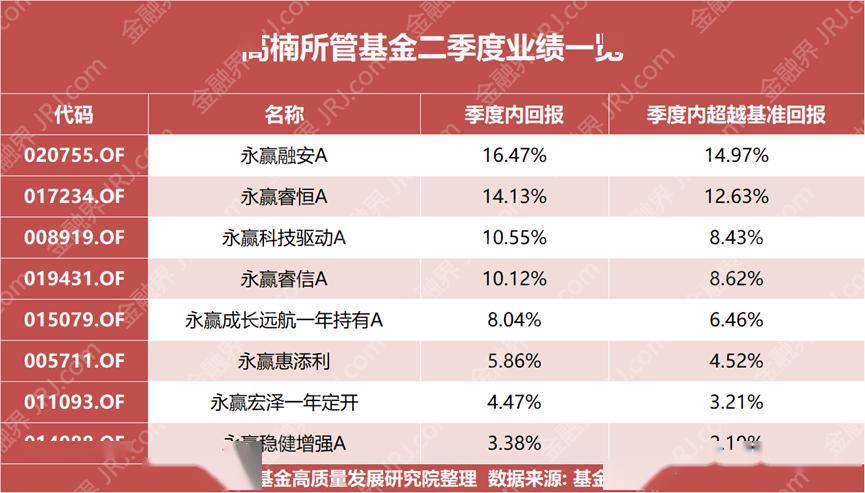
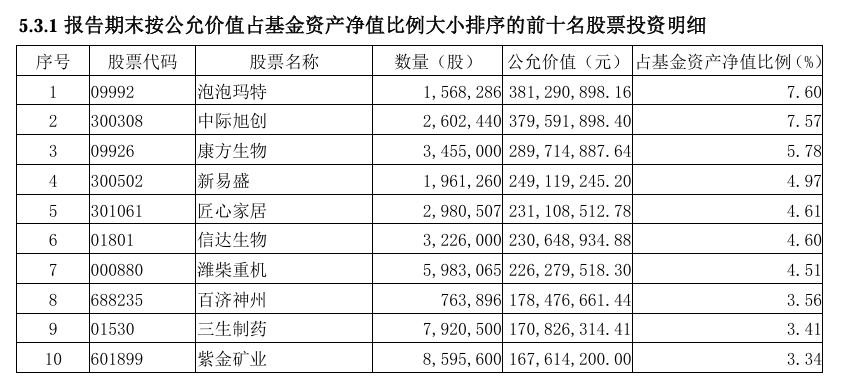
Core Viewpoint - Gao Nan's managed funds reported significant growth in the second quarter, with a total management scale of 15.326 billion yuan, an increase of nearly 30% from the previous quarter [1] Fund Performance - Gao Nan's flagship fund, Yongying Ruixin, saw an increase of nearly 1.6 billion yuan in scale during the second quarter, reaching 5.016 billion yuan [1] - The net asset value of Yongying Ruixin Mixed A Fund was 1.4545 yuan at the end of the reporting period, with a net value growth rate of 10.12%, compared to a benchmark return of 1.50% [1] Portfolio Composition - The top ten holdings of Yongying Ruixin as of the end of the second quarter included Pop Mart (09992), Zhongji Xuchuang (300308), Kangfang Biotech (09926), Xinyi Sheng (300502), Jiangxin Home (301061), Xinda Biotech (01801), Weichai Heavy Industry (000880), Baijie Shenzhou (688235), San Sheng Pharmaceutical (01530), and Zijin Mining (601899) [1] - New additions to the portfolio included Zhongji Xuchuang, Xinyi Sheng, Xinda Biotech, Weichai Heavy Industry, San Sheng Pharmaceutical, and Zijin Mining, while Kangfang Biotech and Baijie Shenzhou were increased [3] Macroeconomic Environment - The overall economic operation in China remained stable in the second quarter, with resilient industrial production and high levels of infrastructure and manufacturing investment [3] - The central bank implemented measures such as reserve requirement ratio cuts and interest rate reductions to stabilize the market and expectations [3] Market Analysis - The Shanghai Composite Index rose by 3.26% in the second quarter, despite experiencing significant volatility [3] - The market saw a notable differentiation in asset performance, with sectors like innovative pharmaceuticals, artificial intelligence, and finance showing significant excess returns [3] Investment Strategy - The investment strategy emphasized bottom-up stock selection, focusing on company growth potential and earnings realization [4] - The fund aims to diversify industry concentration while capturing growth opportunities, and it also considers stocks with a safety margin and potential for future improvement [4]

港股创新药ETF继续扛旗
Zhong Guo Zheng Quan Bao· 2025-07-20 20:20
Group 1 - The innovation drug and AI computing sectors showed strong performance, with related ETFs rising significantly, such as the Huatai-PB Hang Seng Innovation Drug ETF increasing over 13% [1][2] - The first batch of 10 Sci-Tech Bond ETFs launched on July 17, attracting nearly 60 billion yuan in net inflows over two trading days, increasing total scale from under 29 billion yuan to over 88 billion yuan [2][3] - Major pharmaceutical companies in China are expanding their business development efforts due to the upcoming patent cliff for multinational corporations, indicating a strengthening of China's innovation drug sector [1] Group 2 - The AI computing sector also performed well, with stocks like New Yisheng rising nearly 40%, and several ETFs in this space increasing over 10% [2] - Fund managers are applying for their Sci-Tech Bond ETFs to be included in the repurchase pledge library, which could enhance market liquidity and attract more long-term capital [3] - The leading broad-based ETFs experienced significant outflows, with a total net outflow of nearly 20 billion yuan for ETFs tracking major indices [3] Group 3 - The A-share market remains strong due to stable policy expectations, which have created a "buffer" against macroeconomic disturbances [4] - There is a focus on low-valuation cyclical stocks in the short term, while mid-term opportunities lie in sectors benefiting from supply-side improvements and policy support [4] - The outlook for the Chinese stock market is positive, driven by favorable policies and potential reallocation opportunities in sectors like AI and emerging industries [5]

增配医药!傅鹏博、高楠……明星基金经理二季度调仓曝光
券商中国· 2025-07-20 07:11
Core Viewpoint - The article highlights the ongoing strong performance of the innovative drug sector, with several fund managers increasing their allocations to this area, indicating a positive outlook for the future despite potential adjustments and volatility ahead [2][3][8]. Group 1: Fund Managers' Adjustments - Fund manager Fu Pengbo has increased allocations to the pharmaceutical sector, particularly in innovative drugs and traditional medicine benefiting from AI, while also adjusting positions in the export chain [4]. - Fund manager Gao Nan has shifted focus towards TMT (Technology, Media, and Telecommunications) and innovative drugs, with significant growth in fund size, indicating a strategic pivot in investment focus [5][6]. - Both fund managers express confidence in the continuation of the innovative drug market's upward trend, emphasizing the importance of evaluating company performance through upcoming mid-year reports [4][10]. Group 2: Market Dynamics and Trends - The innovative drug sector is seen as a necessary evolution rather than an option, with Chinese companies positioned to benefit from global competition and transparency in drug development [9][10]. - Factors contributing to the success of Chinese innovative drugs include high research efficiency, lower operational costs, and a well-established industry chain that supports rapid market entry and commercialization [9]. - The article notes that while the innovative drug sector has strong long-term potential, it has already experienced significant gains, suggesting that market corrections and fluctuations are likely in the near future [3][11].




重磅利好!一图盘点创新药四大管线
天天基金网· 2025-07-18 11:15
Core Viewpoint - The article highlights a significant surge in the innovative drug sector, driven by new policies from the National Healthcare Security Administration aimed at supporting the development of innovative drugs and optimizing procurement processes [1][2]. Summary by Sections Innovative Drug Market Surge - On July 17, there was a notable increase in the stock prices of innovative drug companies, with companies like ShenZhou Cell rising over 15% and KangnuoYa increasing over 14% [1]. - The article mentions that the 11th batch of national drug centralized procurement has been initiated, emphasizing that new drugs will not be included in centralized procurement to protect industry innovation [1]. Policy Support for Innovative Drugs - The "Measures" issued on June 30 by the National Healthcare Security Administration and the National Health Commission aim to support the entire chain of innovative drug development from laboratory to bedside [1]. - The measures include dynamic adjustments to the medical insurance catalog, allowing eligible innovative drugs to be included, and establishing more scientifically reasonable payment standards [1]. Establishment of Commercial Health Insurance Directory - A groundbreaking proposal to establish a "Commercial Health Insurance Innovative Drug Directory" is introduced, which will include innovative drugs with significant clinical value that exceed basic medical insurance coverage [2]. - Drugs in this directory will enjoy special treatment, such as confidential price negotiations and exemption from centralized procurement monitoring, creating new payment channels for high-priced breakthrough therapies [2]. Investment Opportunities - Analysts from Bohai Securities suggest that the introduction of innovative drug policies and the potential establishment of the commercial health insurance directory present investment opportunities in related innovative drug companies and their supply chains [2]. - Xiangcai Securities predicts that by 2025, the domestic innovative drug industry may experience a turning point, shifting from capital-driven to profit-driven trends, leading to dual recovery in performance and valuation [2].