BABA(09988)

Search documents
30亿豪掷春节,千问APP 9小时AI下单量突破1000万
Guo Ji Jin Rong Bao· 2026-02-06 10:57
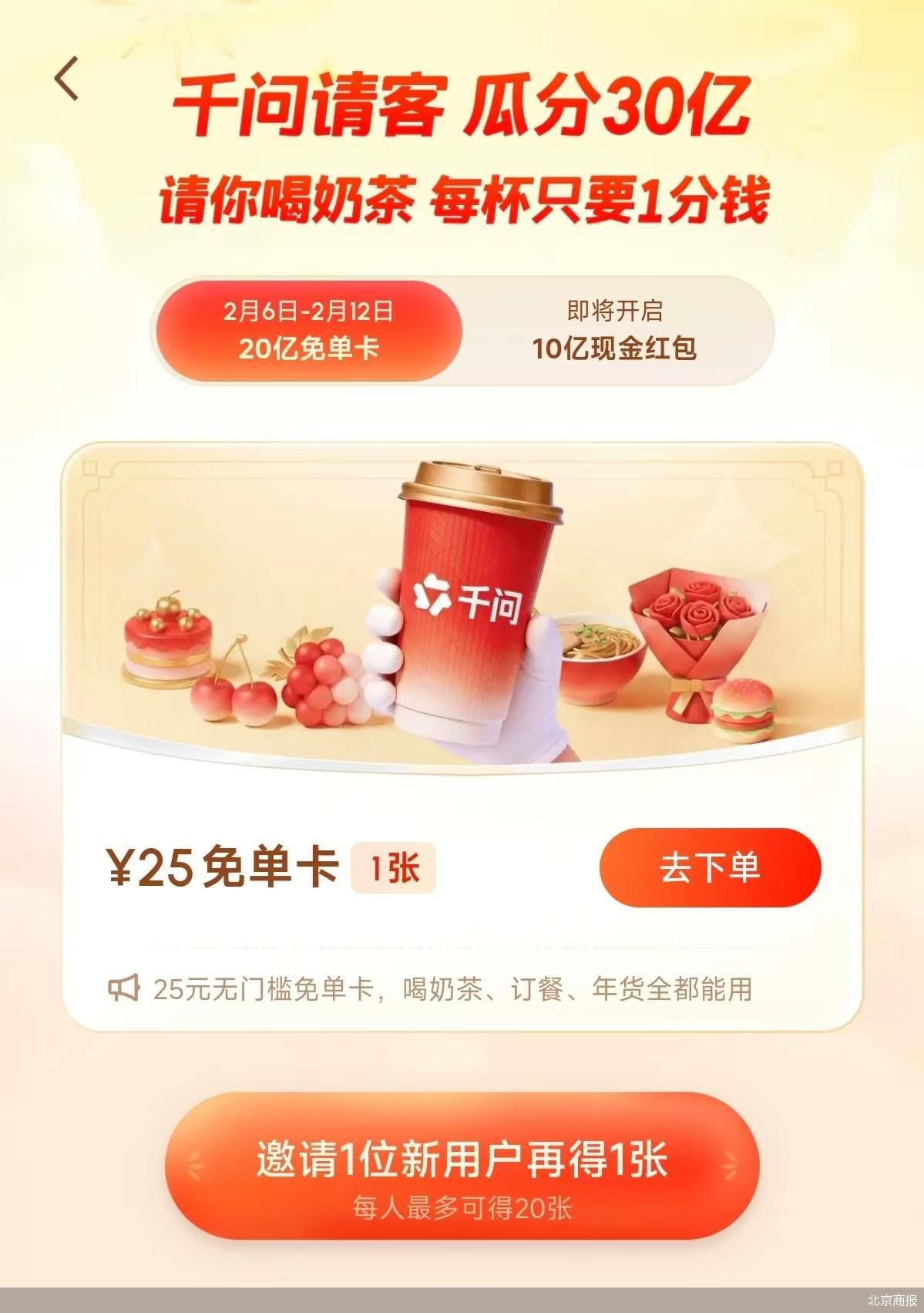
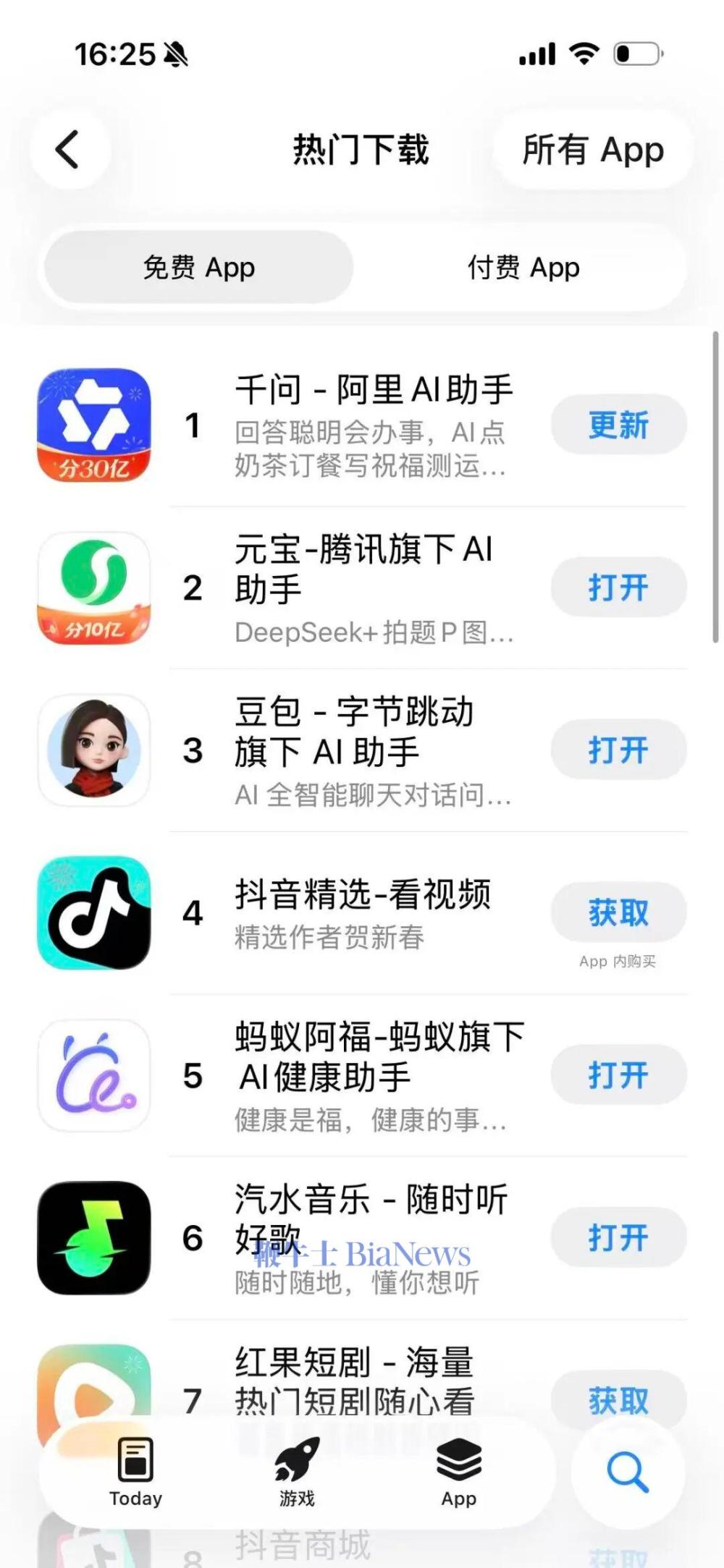
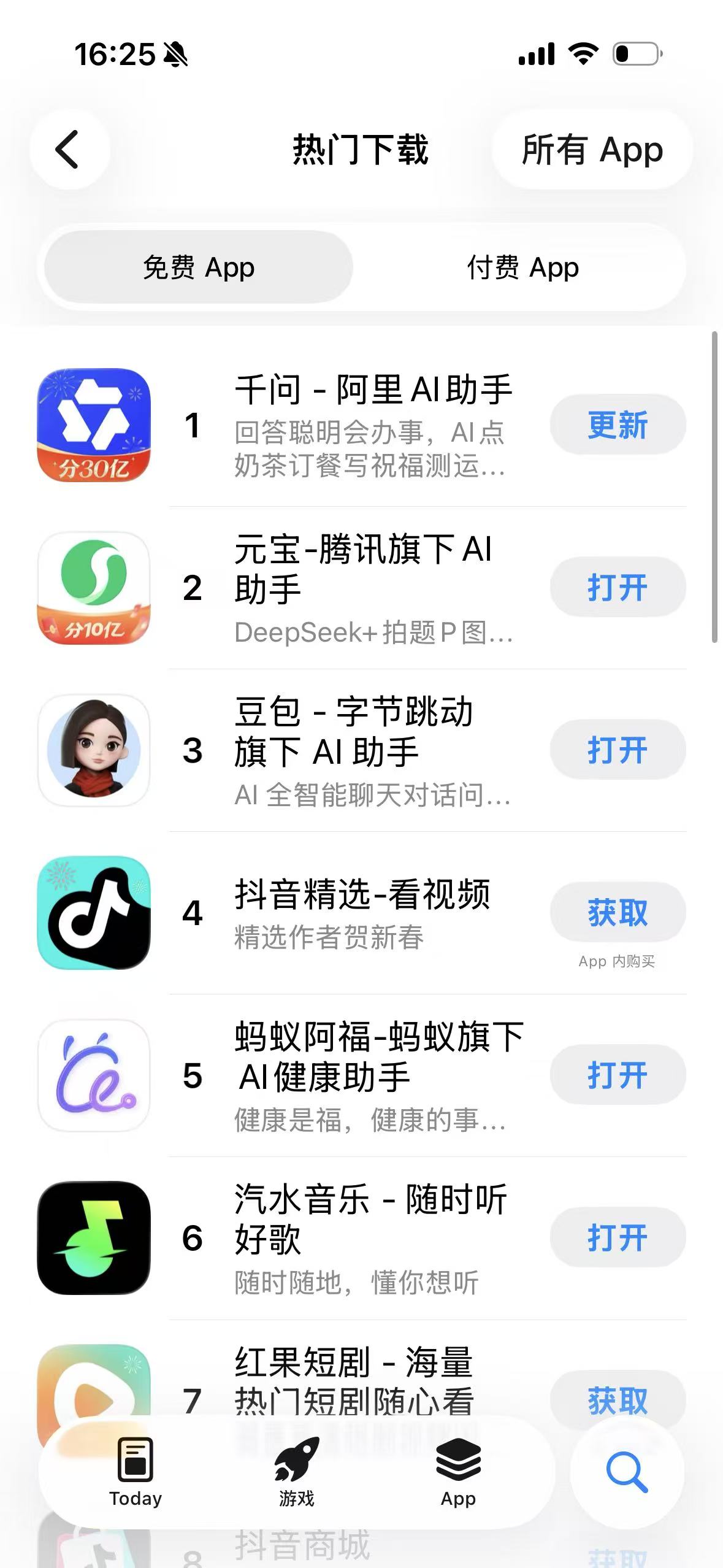
Group 1 - The "Spring Festival 3 Billion Free Order" campaign launched by Qianwen APP, a subsidiary of Alibaba, achieved explosive growth, generating over 10 million AI orders within just 9 hours and receiving more than 30 million "help me buy" commands from users [1] - The campaign has made Qianwen APP the top free app on the Apple App Store, surpassing other applications like Doubao and Yuanbao, driven by the popularity of the event and user experiences shared on social media [1] - The free order card is valid until February 23 and covers various daily consumption categories, including milk tea, meals, and fresh groceries, with integration into offline supermarkets and Hema stores [1] Group 2 - Alibaba has taken the lead in the practical application of AI within its ecosystem, with Qianwen APP integrating with core services like Taobao Flash Purchase, Alipay, and others as early as mid-January [2] - The goal of this integration is to embed AI into users' daily consumption and lifestyle, moving beyond simple conversational interactions that most AI assistants currently offer [2] - The Spring Festival campaign involves participation from Alibaba's entire ecosystem, including Taobao Flash Purchase, Fliggy, Damai, Hema, Tmall Supermarket, and Alipay [2]

资金动向 | 北水持续抢筹腾讯、阿里,抛售康方生物3亿港元
Ge Long Hui· 2026-02-06 10:54
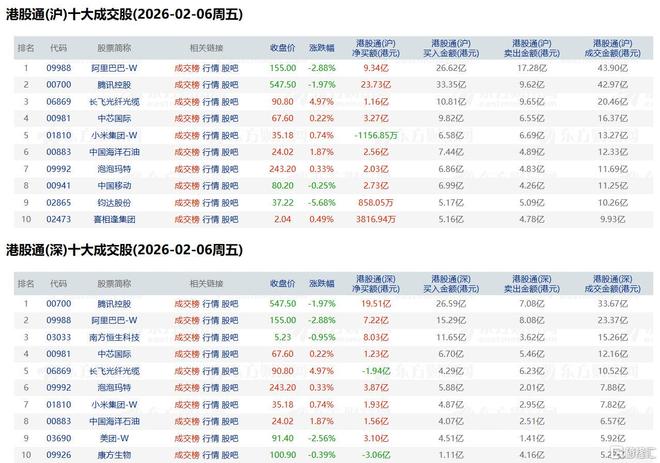
Group 1 - On February 6, southbound funds recorded a net purchase of HKD 14.859 billion, with Tencent Holdings and Alibaba receiving net buys of HKD 4.324 billion and HKD 1.656 billion respectively [1] - Kangfang Biotech and Changfei Optical Fiber Cable experienced net sales of HKD 306 million and HKD 79 million respectively [1] - Tencent Holdings closed at HKD 547.50, down 1.97%, while Alibaba closed at HKD 155.00, down 2.88% [2][3] Group 2 - Tencent and Alibaba faced further restrictions on their AI applications, impacting their competitive positioning in the consumer AI sector [4] - Bubble Mart announced London as its European headquarters and plans to open seven new stores in the UK, creating over 150 jobs [4] - China National Offshore Oil Corporation (CNOOC) is expected to see a rebound in oil and industrial metal prices by 2026, despite current commodity market volatility [4] Group 3 - China Mobile, along with other major telecom operators, launched Beidou SMS services, which may help mitigate profit pressures from increased VAT rates [5] - Morgan Stanley maintains a positive outlook on China Mobile due to its high profit margins and attractive dividend yield [5]





阿里AI,重新“冠名”自己先烧30亿
Bei Jing Shang Bao· 2026-02-06 10:37
Group 1 - Alibaba's Qianwen App launched a "30 billion Spring Festival free order" campaign, allowing users to order milk tea for free using AI, resulting in over 1 million orders within 3 hours and topping the App Store charts [1][10] - The company's AI strategy is becoming clearer, focusing on a "golden triangle" of the Tongyi model, Alibaba Cloud, and the PingTouGe chip, with Qianwen App leading the charge [3][20] - The Spring Festival campaign includes a significant 30 billion yuan subsidy, indicating a high-cost marketing strategy aimed at proving AI's commercial value [11][20] Group 2 - Qianwen has integrated with various Alibaba services, enhancing user experience by providing product recommendations linked to Taobao [12] - The competition in the AI space is intensifying, with other companies like Tencent and Baidu also launching significant AI initiatives during the Spring Festival [12][20] - Alibaba's investment in AI infrastructure is projected to increase from 3.8 trillion yuan to 4.8 trillion yuan, reflecting a commitment to long-term AI capabilities [20][21] Group 3 - The company is exploring the potential for independent listing of its semiconductor unit, PingTouGe, which has gained attention for its AI chip developments [19][20] - Alibaba's financial performance shows a mixed picture, with revenue growth in certain sectors but a significant drop in operating profit, raising questions about the sustainability of its AI investments [21][22] - The strategy of investing in AI startups is seen as a way to secure a foothold in the AI ecosystem, ensuring that regardless of which technology path prevails, Alibaba remains a key player [26][27]
微信「大战」BAT:三天三场「封杀」
Di Yi Cai Jing· 2026-02-06 10:36
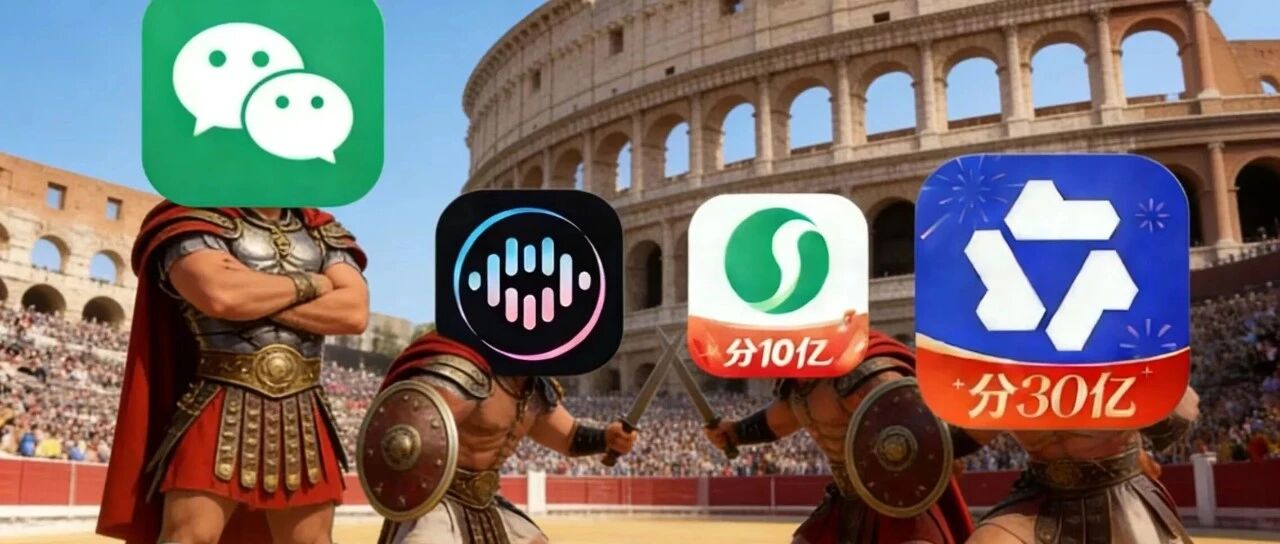
Core Viewpoint - The competition for user engagement during the Spring Festival has intensified, particularly on WeChat, as major companies like Tencent and Alibaba engage in aggressive marketing strategies, including substantial cash giveaways and promotional activities [1][3]. Group 1: Marketing Strategies - Tencent's "Yuanbao," Alibaba's "Qianwen," and Baidu's "Wenxin" have launched significant promotional campaigns, with Qianwen achieving over 10 million orders during a promotional event [1][3]. - The competition has led to a "carnival" of AI applications dominating the App Store rankings, with Qianwen reaching the top position, followed by Tencent's Yuanbao and Doubao [3][10]. - Companies are investing billions in subsidies and red envelopes to attract users, marking the Spring Festival as a critical period for AI application marketing [3][10]. Group 2: WeChat's Role - WeChat has implemented a "no-mercy" approach by blocking promotional links from competing applications, including its own Yuanbao, which has raised questions about its dual role as both a platform and a competitor [1][4]. - The platform's actions are seen as an effort to maintain user experience and combat excessive marketing tactics that could lead to user annoyance [4][5]. - The blocking of links has created confusion and operational challenges for companies like Qianwen, which faced system overloads and user complaints during peak traffic [6][7]. Group 3: Operational Challenges - Qianwen experienced significant system failures due to high traffic, leading to multiple user complaints about service disruptions and payment issues [6][7]. - The company is urgently working to enhance its system capacity and ensure smooth operations amidst the overwhelming demand for its promotional offerings [8]. - The challenge of coordinating internal resources and managing merchant relationships has become critical for Qianwen as it navigates this competitive landscape [8]. Group 4: Future Considerations - The ongoing competition raises questions about the sustainability of user acquisition strategies based solely on financial incentives, as companies may need to rely more on product quality and user experience to retain customers [15][16]. - The lack of a robust social ecosystem for Qianwen poses a challenge, as it must find ways to expand its user base beyond WeChat's constraints [16]. - Analysts suggest that while marketing can attract users, the long-term success of AI applications will depend on their technological capabilities and user satisfaction [15][16].

微信“大战”BAT:三天三场“封杀”
第一财经· 2026-02-06 10:23
Core Viewpoint - The article discusses the intense competition among AI application companies during the Spring Festival, particularly focusing on the battle for user engagement on WeChat, where Tencent's "Yuanbao," Baidu's "Wenxin," and Alibaba's "Qianwen" are vying for dominance in the market [3][4][5]. Group 1: Competition Dynamics - Tencent's "Yuanbao" faced a sudden ban on its red envelope links by WeChat, which was described as a "no-mercy" attack against excessive marketing practices [5][6]. - On February 6, "Qianwen" topped the App Store charts with over 10 million orders during its promotional event, despite experiencing system overloads and failures [3][4][7]. - The competition intensified as AI application companies invested billions in subsidies and red envelopes to attract users, leading to a chaotic marketing environment [4][10]. Group 2: User Experience Challenges - Users reported significant issues with the "Qianwen" app, including system failures and payment issues, highlighting the challenges of scaling during high-demand periods [7][8]. - The rapid influx of users caused "Qianwen" to struggle with system stability, prompting the company to increase resources urgently [7][8]. - The marketing strategies employed by these AI applications, while initially effective in attracting users, may not sustain long-term engagement without strong product capabilities [15]. Group 3: Strategic Implications - The article suggests that the current marketing tactics may not be sufficient for long-term user retention, as companies need to focus on product strength rather than just promotional spending [14][15]. - The lack of a robust social ecosystem for "Qianwen" poses a challenge for Alibaba, as it competes against Tencent's established platforms [14]. - The ongoing battle for user acquisition through social sharing methods may not yield the desired results, indicating a need for companies to innovate beyond traditional marketing approaches [13][14].
阿里千问回应“免费点奶茶活动无法下单”:正在紧急加资源;有奶茶店因单量过多已闭店
Sou Hu Cai Jing· 2026-02-06 10:20
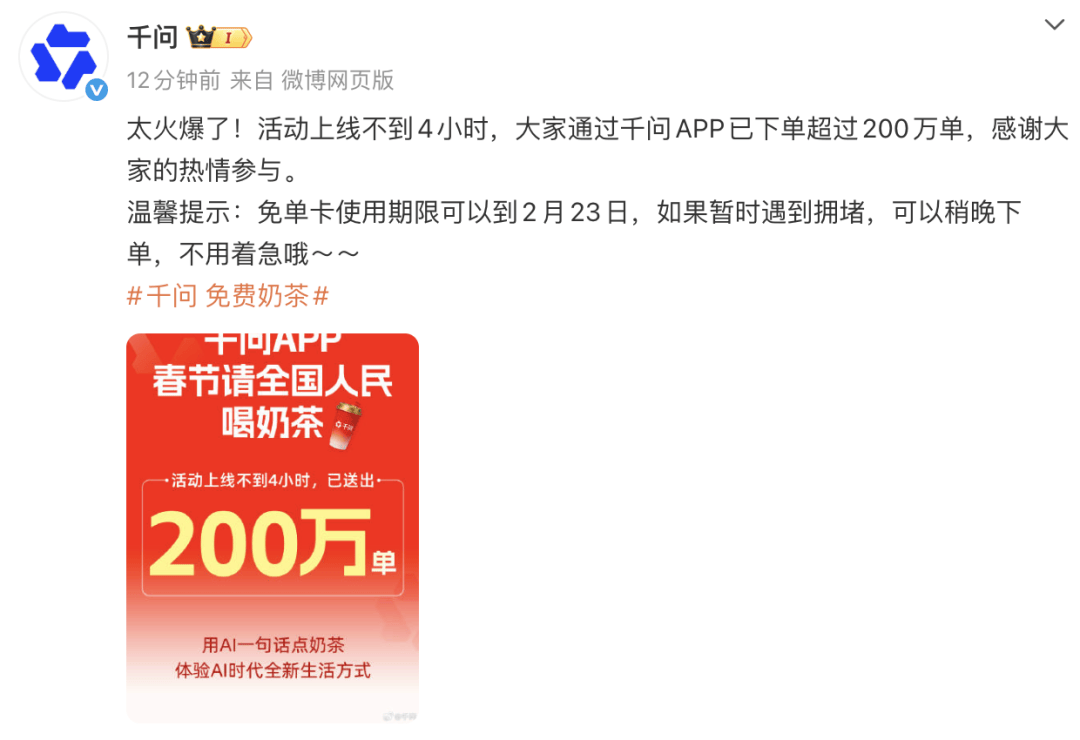
2月6日,阿里千问APP"春节30亿免单"活动正式上线,请全国人民用AI一句话免费点奶茶。 据科创板日报,记者在实测中发现,在下单过程中,千问APP多次出现卡顿现象,无法完成下单付款和分享。页面提示:活动太火爆了,请稍后再试。 对此阿里方面回应称:正在紧急加资源,全力保障顺畅。 另据@千问 最新回应:活动上线不到4小时,大家通过千问APP已下单超过200万单;免单卡使用期限可以到2月23日,如果暂时遇到拥堵,可以稍晚下 单。 | 编辑:吴祈 | | --- | | 审核:林夕合 | | 【来源:科创板日报、东方财经】 | 图片来源:视觉中国 另据东方财经,有网友吐槽"这才拉新几个人卡爆了。""刚发布活动就崩。公司没有压测团队吗?" 还有网友反馈,"拉人现在吞次数,你是否补偿大家一张25的免单卷呀?不然大家白拉了。"对此,千问AI生成回应称,"你好,关于吞次数和补偿问题, 建议你直接联系官方客服,提供你的活动截图和具体问题,他们会核实处理并给出解决方案。" 此外,据东方财经援引凤凰网科技消息,记者查询发现,多家奶茶门店因单量过多,已经选择临时闭店。 ...
北水动向|北水成交净买入148.59亿 春节AI红包大战持续发酵 北水继续抢筹互联网巨头
智通财经网· 2026-02-06 10:03
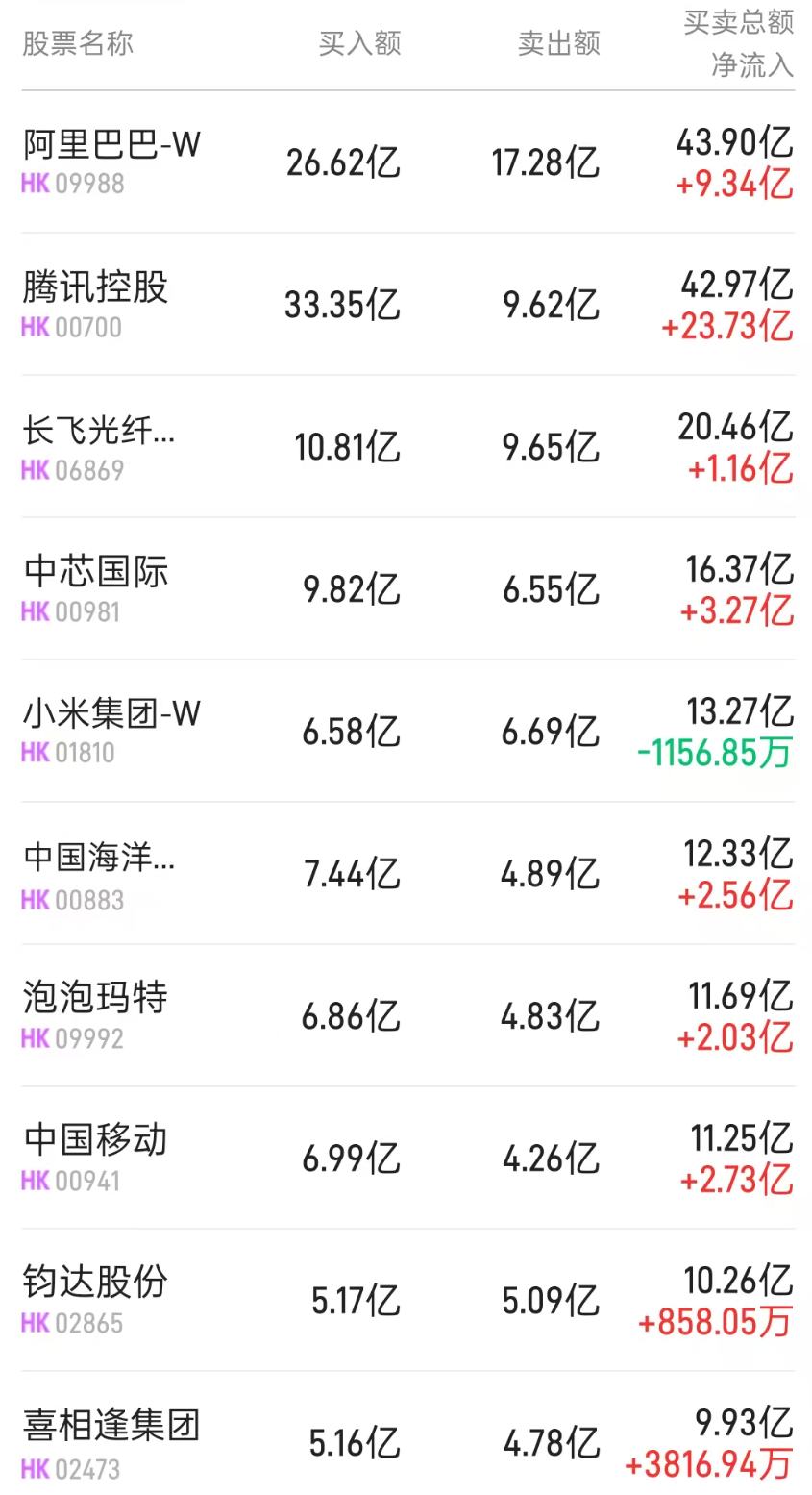
Core Viewpoint - The Hong Kong stock market saw significant net inflows from northbound trading, with a total of 14.859 billion HKD on February 6, 2023, indicating strong investor interest in key technology stocks like Tencent and Alibaba [1][2]. Group 1: Northbound Trading Activity - Northbound trading recorded a net buy of 14.859 billion HKD, with 7.113 billion HKD from the Shanghai Stock Connect and 7.746 billion HKD from the Shenzhen Stock Connect [1]. - The most purchased stocks included Tencent (00700) and Alibaba-W (09988), while the most sold stock was Changfei Optical Fiber (06869) [1]. Group 2: Individual Stock Performance - Alibaba-W saw a net inflow of 9.34 billion HKD, with a total trading volume of 43.90 billion HKD, comprising 26.62 billion HKD in buys and 17.28 billion HKD in sells [2]. - Tencent recorded a net inflow of 23.73 billion HKD, with total trading of 42.97 billion HKD, consisting of 33.35 billion HKD in buys and 9.62 billion HKD in sells [2]. - Changfei Optical Fiber had a net inflow of 1.16 billion HKD, with total trading of 20.46 billion HKD, including 10.81 billion HKD in buys and 9.65 billion HKD in sells [2]. Group 3: Sector Insights - The technology sector remains a focal point for investors, with significant net purchases in companies like Tencent, Alibaba, and Meituan, reflecting ongoing interest in the AI and tech space [4]. - The competition in the consumer AI sector is intensifying, with expectations that major players like Tencent and Alibaba will dominate the market [4]. - The chip industry is experiencing a price surge, with domestic chip manufacturers announcing price increases of up to 80%, indicating a bullish outlook for companies like SMIC [5]. Group 4: Other Notable Stocks - Pop Mart (09992) received a net inflow of 5.89 billion HKD, driven by positive sentiment around its stock buyback and new IP products [5]. - CNOOC (00883) saw a net inflow of 4.11 billion HKD, with expectations of oil price recovery due to geopolitical tensions [5]. - China Mobile (00941) had a net inflow of 2.72 billion HKD, with analysts suggesting that its profit margins will be less impacted by tax rate increases compared to its peers [6].


南向资金今日净买入148.59亿港元 腾讯控股获净买入居前
Xin Lang Cai Jing· 2026-02-06 10:00
Group 1 - Southbound funds recorded a net purchase of HKD 14.859 billion today [1] - Tencent Holdings received a net inflow of approximately HKD 4.324 billion [1] - Alibaba-W saw a net inflow of around HKD 1.656 billion [1] Group 2 - Kangfang Biopharmaceutical experienced a net outflow of HKD 306 million [1] - Changfei Optical Fiber (601869) faced a net outflow of HKD 79 million [1]
微信封链、系统崩溃、奶茶爆单:AI春节大战打成了一场混战
Di Yi Cai Jing· 2026-02-06 10:00
BAT 大战微信。 当腾讯、阿里撒出数十亿红包,在苹果应用商店上演"轮番登顶"时,谁也没想到,春节流量大战最激烈的战场,竟在国内最大的社交平台微信上演。 过去几天,腾讯"元宝"、百度"文心"、阿里"千问"的红包链接接连遭到微信"无差别"封杀。在今日,用户发现,曾被视作突破微信限制的口令红包也无法复 制。 2月6日,千问在春节活动的第一天,微信链接也被屏蔽了,部分用户在千问APP点击分享活动至微信好友时,已自动改为复制口令形式。记者下午发现,部 分用户已无法在微信对千问的春节活动口令进行复制。千问红包口令分享至微信后,即便选中口令,微信页面也不再显示复制键。这种"无差别攻击"的范围 还在扩大,腾讯旗下游戏王者荣耀的分享口令今日也被微信封了。 就在2月6日,"千问"因请客喝奶茶活动成功"偷塔",登顶App Store榜首。其系统也因流量过载而一度崩溃。最新数据显示,活动订单量已超过1000万单。 这场争夺AI入口的春节"撒币"大战,正变得前所未有的复杂与焦灼。此时距离春节,还有10天时间。它们真正的对手、拿下春晚独家合作的字节系,还未充 分发力。 微信"无差别攻击" "奶茶店都爆单了,上午我送了20多单外卖。"2 ...
5000家AI企业,都在疯狂试错|一线
Sou Hu Cai Jing· 2026-02-06 09:54
Core Insights - The rapid development of AI technology is outpacing the number of professional users, leading to a disconnect between innovation and practical application [32]. Group 1: AI Startup Landscape - AI entrepreneurship is booming, with over 5,000 AI companies in China as of September 2025, a significant increase from 1,454 five years prior [6]. - Events organized by AI communities, such as EPIC, attract large audiences, indicating strong interest and engagement in the AI startup ecosystem [3][4]. - The AI startup community is diverse, comprising grassroots entrepreneurs, large tech companies, and academic backgrounds, all experimenting and iterating rapidly [9][12]. Group 2: Challenges Faced by AI Entrepreneurs - AI startups are grappling with two main challenges: identifying genuine user pain points and managing the costs associated with utilizing large AI models [17][21]. - The average utilization rate of GPU resources in AI centers is below 30%, highlighting inefficiencies in the market [19]. - The cost of model usage can account for 40-70% of total variable costs for AI startups, creating pressure to commercialize quickly [22]. Group 3: Market Dynamics and Globalization - AI entrepreneurs are increasingly looking towards global markets for opportunities, as international users tend to have a stronger willingness to pay for AI solutions [24]. - The disparity in market maturity between China and the U.S. affects the commercialization of AI products, with U.S. users being more receptive to subscription models [24]. - Investment opportunities in the global AI infrastructure are projected to reach $3-4 trillion by 2030, with significant interest from major tech firms [28]. Group 4: Future Outlook - The AI startup ecosystem is characterized by a mix of excitement and anxiety, as companies navigate the rapid pace of AI development while facing practical challenges [32]. - There is a consensus that while AI technology is advancing quickly, the number of professional users remains limited, which could hinder broader adoption [32].