BABA(09988)

Search documents
南向资金今日净买入超148亿港元 腾讯控股获买入居前
Xin Lang Cai Jing· 2026-02-06 09:53
Group 1 - Southbound funds recorded a net purchase of approximately 148.59 billion HKD today [1] - Tencent Holdings received a net purchase of about 43.24 billion HKD, ranking first among the stocks [1] - Alibaba-W also saw a net purchase of approximately 16.56 billion HKD [1] Group 2 - Kangfang Biologics experienced a net sell-off of 3.06 billion HKD [1]



南向资金丨腾讯控股获净买入43.24亿港元
Di Yi Cai Jing· 2026-02-06 09:53
Group 1 - Southbound funds recorded a net purchase of 14.859 billion HKD, indicating strong investor interest in the Hong Kong market [1] - Tencent Holdings, Alibaba-W, and Southern Hang Seng Technology were the top three net purchases, with net inflows of 4.324 billion HKD, 1.656 billion HKD, and 0.803 billion HKD respectively [1] - On the sell side, Kangfang Biotech experienced a net sell of 0.306 billion HKD, while Changfei Optical Fiber Cable saw a net sell of 0.079 billion HKD [1]
阿里千问免单活动9小时订单破千万
Cai Jing Wang· 2026-02-06 09:32
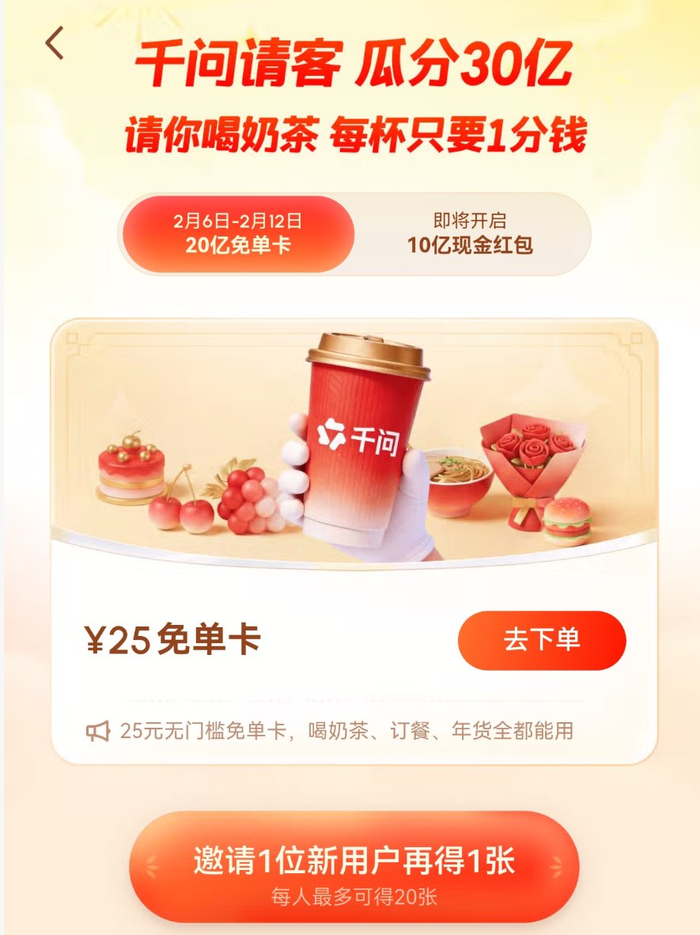
【#千问免单上线9小时订单突破1000万#】今日,阿里千问App"春节30亿免单"正式上线,仅9个小时, 用户在千问App上的AI订单突破1000万单。(新浪财经) ...

微信“疯了”:封完千问,再封元宝
3 6 Ke· 2026-02-06 09:21
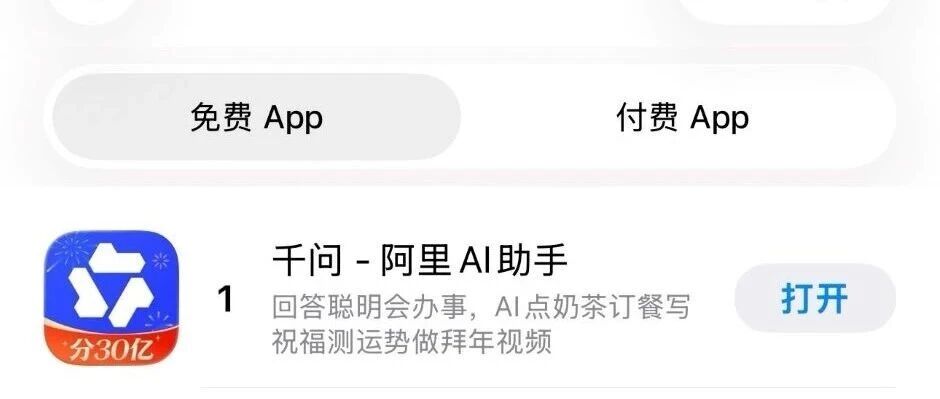
Core Viewpoint - WeChat's recent restrictions on sharing links for AI applications from Alibaba and Tencent signify a significant shift in the competitive landscape of the AI industry, emphasizing the importance of technology and product implementation capabilities in the long run [5][6][8]. WeChat's Restrictions - WeChat has blocked the sharing of red envelope activity codes for Alibaba's Qianwen and Tencent's Yuanbao, preventing users from copying these codes in private and group chats [1][2]. - This is the second round of restrictions imposed by WeChat on leading AI products within a week, indicating a strategic move to control the competitive dynamics in the AI sector [1][5]. User Reactions and Market Impact - Users have reported issues with copying the Qianwen code, leading to perceptions of a "business war" among major AI applications [3]. - Yuanbao's official response acknowledged the situation and assured users that the activity is being optimized [4]. Background of Restrictions - WeChat's actions are part of a broader strategy to manage user experience and prevent disruptive sharing practices that could lead to user harassment [5]. - The restrictions were initially justified by WeChat as a measure against "induced sharing" and user harassment, reflecting the intense competition for social traffic and AI market share [5][6]. AI Market Dynamics - The competition among AI applications has intensified, with the Spring Festival period being a critical time for customer acquisition [6]. - Data shows that Yuanbao topped the Apple App Store free chart on the first day of its Spring Festival activity, while Qianwen quickly followed suit [7]. User Retention Challenges - The reliance on red envelope incentives for user acquisition has led to low retention rates, with many users downloading AI apps solely for short-term benefits [7]. - Experts suggest that while subsidies can drive downloads, long-term user loyalty and product competitiveness depend on deeper product capabilities and user engagement [7][8]. Future Directions - The AI industry is shifting from a focus on marketing battles to ecosystem and scenario-based competition, with WeChat's restrictions marking a pivotal moment in this transition [6][8]. - Companies must balance short-term customer acquisition with sustainable business practices, integrating AI into core scenarios like payment and social interaction to enhance user connection and retention [8].

白热化!“千元豆”激战AI春节档
第一财经· 2026-02-06 09:17
Core Viewpoint - The article discusses the intense competition in the AI sector, particularly during the Chinese New Year, highlighting the aggressive marketing strategies employed by companies like Alibaba's Qianwen, Tencent's Yuanbao, and ByteDance's Doubao to capture market share and user engagement [5][10]. Group 1: Marketing Strategies and User Engagement - Qianwen launched a significant promotional campaign, offering free milk tea, which resulted in over 5 million orders within 5 hours of the campaign's start, showcasing rapid user engagement [1][8]. - The marketing expenditure for the "Qianwen Bean" initiative has reached tens of billions, with Alibaba committing 3 billion yuan (approximately 30 billion) for this campaign, marking the largest investment in a Spring Festival activity in its history [4][10]. - The competition is not just about monetary incentives; it is also about establishing user habits, encouraging users to rely on AI for various tasks, thus aiming to create a seamless consumer experience [10][12]. Group 2: Ecosystem Integration and Future Plans - Qianwen is integrating with Alibaba's core ecosystem, allowing users to access various services such as food delivery, shopping, and ticket purchases through a single app, which is expected to enhance user experience and engagement [9][10]. - The company plans to continue its promotional activities, including cash red envelope giveaways and user referral incentives, to further attract and retain users [8][9]. - The strategic focus is on enhancing the AI model's capabilities and expanding its service offerings within Alibaba's ecosystem, aiming to lead in the AI lifestyle and shopping sectors [11][12]. Group 3: Competitive Landscape and Industry Implications - The article emphasizes that the current competition among AI agents is shifting from basic chat functionalities to more integrated and practical applications in daily life, which could redefine user interactions with technology [12][13]. - The Spring Festival is seen as a critical period for testing and reshaping digital habits among consumers, marking the beginning of what is referred to as the "AI lifestyle year" [13].
震荡下跌,港股三大指数全绿,科网巨头齐跌!汽车股爆发,蔚来涨近7%,理想、小米、比亚迪等齐涨|港股收盘
Mei Ri Jing Ji Xin Wen· 2026-02-06 09:16
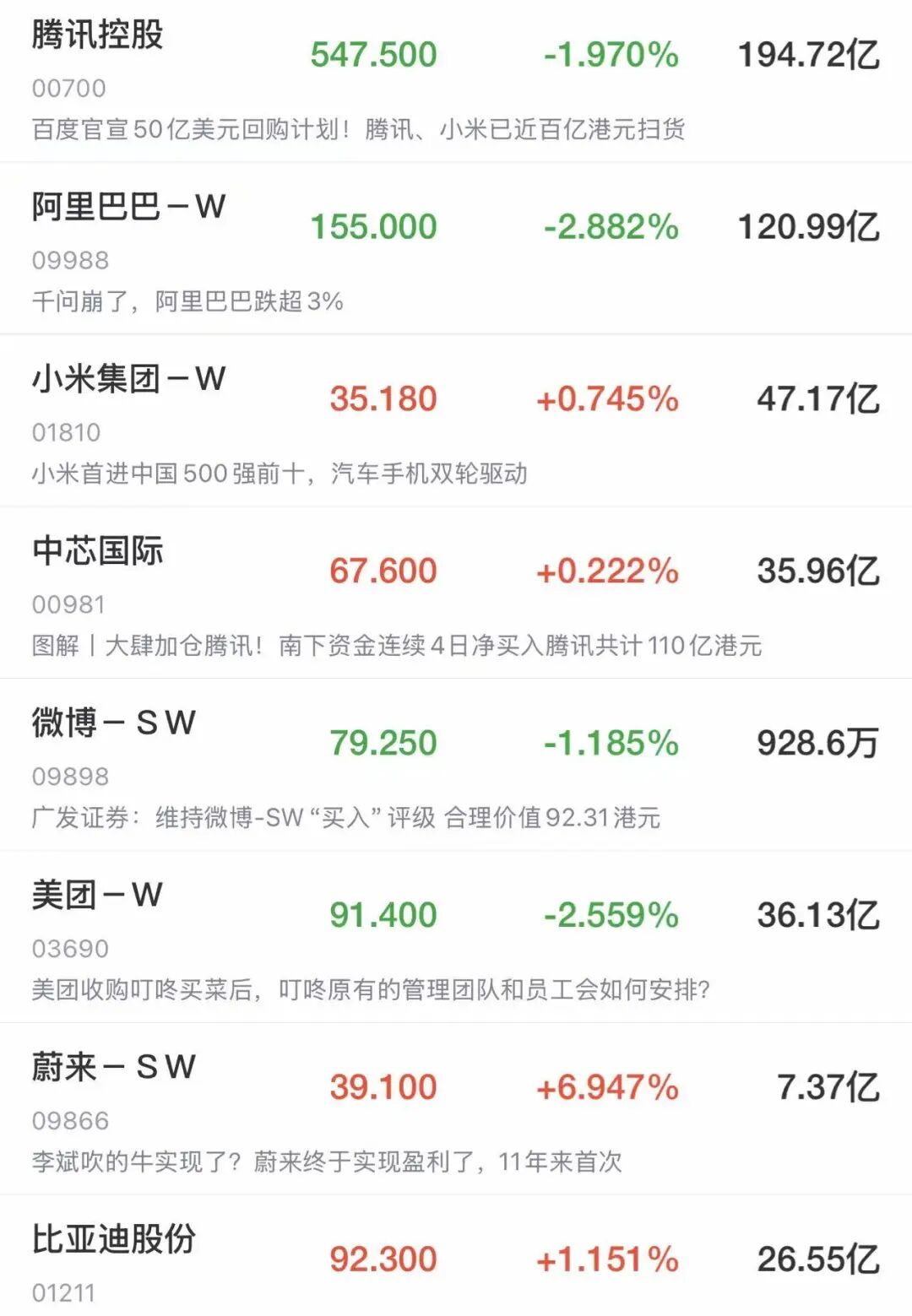
Market Overview - The Hong Kong stock market experienced a decline, with the Hang Seng Index falling by 1.21%, the Hang Seng China Enterprises Index down by 0.681%, and the Hang Seng Tech Index decreasing by 1.109% [1] - Technology stocks saw a significant drop, with Alibaba down nearly 3%, Meituan, Kingsoft, JD Health, Baidu, and NetEase all falling over 2%, while Tencent Holdings decreased by nearly 2% [1] - In contrast, automotive stocks rose, with NIO increasing by nearly 7%, Li Auto up over 5%, and Xpeng Motors rising over 3% [1] Company Specifics - NIO announced an earnings forecast indicating that it expects to achieve adjusted operating profit of approximately 700 million to 1.2 billion yuan for Q4 2025, marking the company's first quarterly adjusted operating profit in its 11-year history [3] - According to reports, Tencent and Xiaomi have been actively buying back shares, with Tencent seeing net purchases totaling 11 billion Hong Kong dollars over four consecutive days [2] - Meituan's acquisition of Dingdong Maicai raises questions about the future arrangements for the existing management team and employees of Dingdong [2] Investment Trends - Analysts suggest that the recent adjustments in the Hong Kong market are primarily technical corrections rather than a trend reversal, driven by overly optimistic market sentiment and external factors such as liquidity concerns related to the nomination of the Federal Reserve Chairman [4] - There is a noticeable shift in capital from high-performing tech stocks to more defensive sectors, such as consumer and dividend stocks, which are favored for their lower valuations and stable performance [4] - Resource stocks, particularly coal, have shown strong performance due to external catalysts like Indonesia's suspension of coal spot exports, indicating a market focus on physical assets [4]


港股收评:集体下跌!恒指跌1.21%,锂电池股逆市上升
Ge Long Hui· 2026-02-06 09:01
Market Overview - The Hong Kong stock market indices collectively declined, with the Hang Seng Index falling by 1.21%, the Hang Seng Tech Index down by 1.11%, and the Hang Seng China Enterprises Index decreasing by 0.68% [1] - Southbound funds recorded a net inflow of HKD 14.859 billion [11] Sector Performance - The lithium battery sector saw gains, with Cai Ke New Energy rising over 6%, and other companies like Zhong Chuang Innovation and Ganfeng Lithium also experiencing increases [4][7] - The oil and gas production sector performed well, with Yuanheng Gas surging over 27% and other companies like Jintai Feng International and United Energy Group rising over 7% [5][6] - The automotive sector continued to rise, with NIO increasing nearly 7%, and other companies like Li Auto and BYD also showing positive performance [7] Major Companies - Alibaba, Meituan, Kuaishou, NetEase, and Baidu all experienced declines of over 2%, while Tencent, JD.com, and Ctrip fell over 1% [2][3] - In contrast, Li Auto saw an increase of over 3%, and Xiaomi Group rose slightly by less than 1% [2][3] Cryptocurrency Market - The cryptocurrency sector faced significant declines, with Bitcoin dropping to around USD 64,000 [8] - Companies in the cryptocurrency space, such as New Fire Technology Holdings and Guofu Quantum, saw declines of over 7% and nearly 6%, respectively [8] Insurance Sector - The insurance sector experienced downturns, with AIA falling over 5%, Prudential down over 4%, and other companies like China Pacific Insurance and Zhong An Online also declining [9] Copper Industry - The copper sector faced declines, with China Metal Utilization dropping over 12% and other companies like China Nonferrous Metals and Minmetals Resources also experiencing losses [10] - Analysts predict that basic metals will maintain an upward trend this year, with copper, tin, and aluminum prices expected to rise by 20%, 16%, and 12% respectively by 2025 [10][11]




千问App免单上线9小时突破1000万订单
Xin Lang Cai Jing· 2026-02-06 08:34
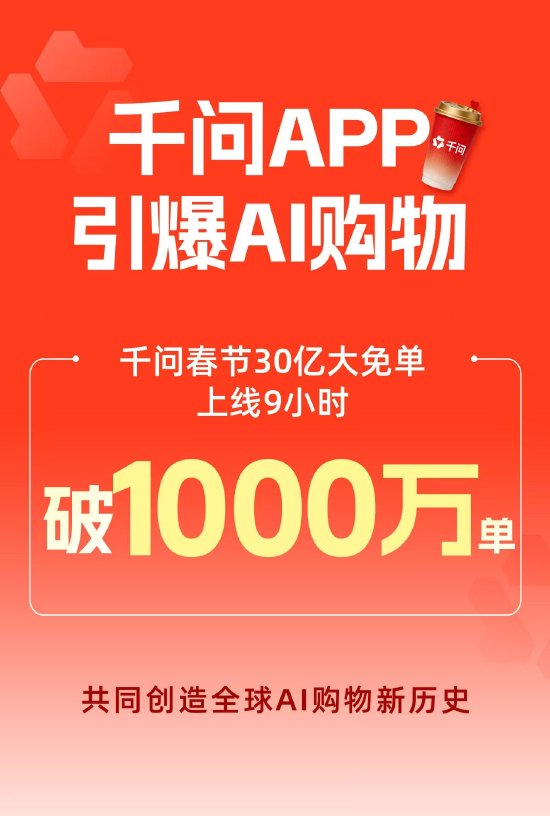
新浪科技讯 2月6日下午消息,今日,阿里千问App"春节30亿免单"正式上线,仅9个小时,用户在千问 App上的AI订单突破1000万单。 责任编辑:刘万里 SF014 新浪科技讯 2月6日下午消息,今日,阿里千问App"春节30亿免单"正式上线,仅9个小时,用户在千问 App上的AI订单突破1000万单。 责任编辑:刘万里 SF014 ...
港股收评:恒指跌1.21%、科指跌1.11%,黄金、加密货币及AI应用股普跌,科网股走势分化,新能源车股普涨
Jin Rong Jie· 2026-02-06 08:28
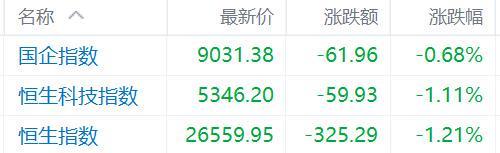
Market Overview - The Hong Kong stock market experienced a significant decline on February 6, with the Hang Seng Index falling by 1.21% to 26,559.95 points, the Hang Seng Tech Index down 1.11% to 5,346.2 points, and the National Enterprises Index decreasing by 0.68% to 9,031.38 points [1] - Major technology stocks mostly declined, with Alibaba down 2.88%, Tencent down 1.97%, and JD Group down 1.75%. In contrast, NIO saw an increase of nearly 7% [1] Individual Stock Performance - West China Cement (02233) continued to decline, dropping nearly 10%, with a cumulative drop of over 22% for the month. The company announced a $300 million issuance of 10.5% senior notes due in 2029 to manage existing debt [2] - Yujian Xiaomian (02408) rose over 4%, with a year-to-date increase of over 20%, supported by a share buyback announcement [2] - Nobikang (02635) reached a new high, increasing over 9% to 514.5 HKD, driven by its focus on AI technology and significant applications in various sectors [2] - Colorful New Energy (01986) saw its stock rise over 5% after announcing a profit forecast of at least 25 million RMB for the year ending December 31, 2025, a significant improvement from a loss the previous year [3] Institutional Ratings - Morgan Stanley expressed optimism about NetEase (09999), citing its attractive valuation with a current P/E ratio of 13 times, which is a 25% discount compared to its five-year average. The target price is set at 295 HKD [5] - Guohai Securities is optimistic about Leap Motor (09863), projecting revenues of 66.27 billion, 104.12 billion, and 135.41 billion RMB for 2025-2027, with significant profit growth expected [6] - Morgan Stanley also favored Laoputang Gold (06181), extending its valuation period to December 2026 and maintaining a target price of 1,296 HKD, citing potential short-term catalysts [6] Industry Insights - The macro strategy department of Bosera Fund noted that the Hong Kong stock market is currently influenced by liquidity benefits and fundamental uncertainties, with the improvement of price levels in 2026 being a key variable for market direction [8] - The fund manager of the Rongtong CSI Hong Kong Stock Connect Technology Index highlighted the potential for valuation recovery in the Hong Kong tech sector, driven by technological breakthroughs and sustained inflows of southbound capital [9]


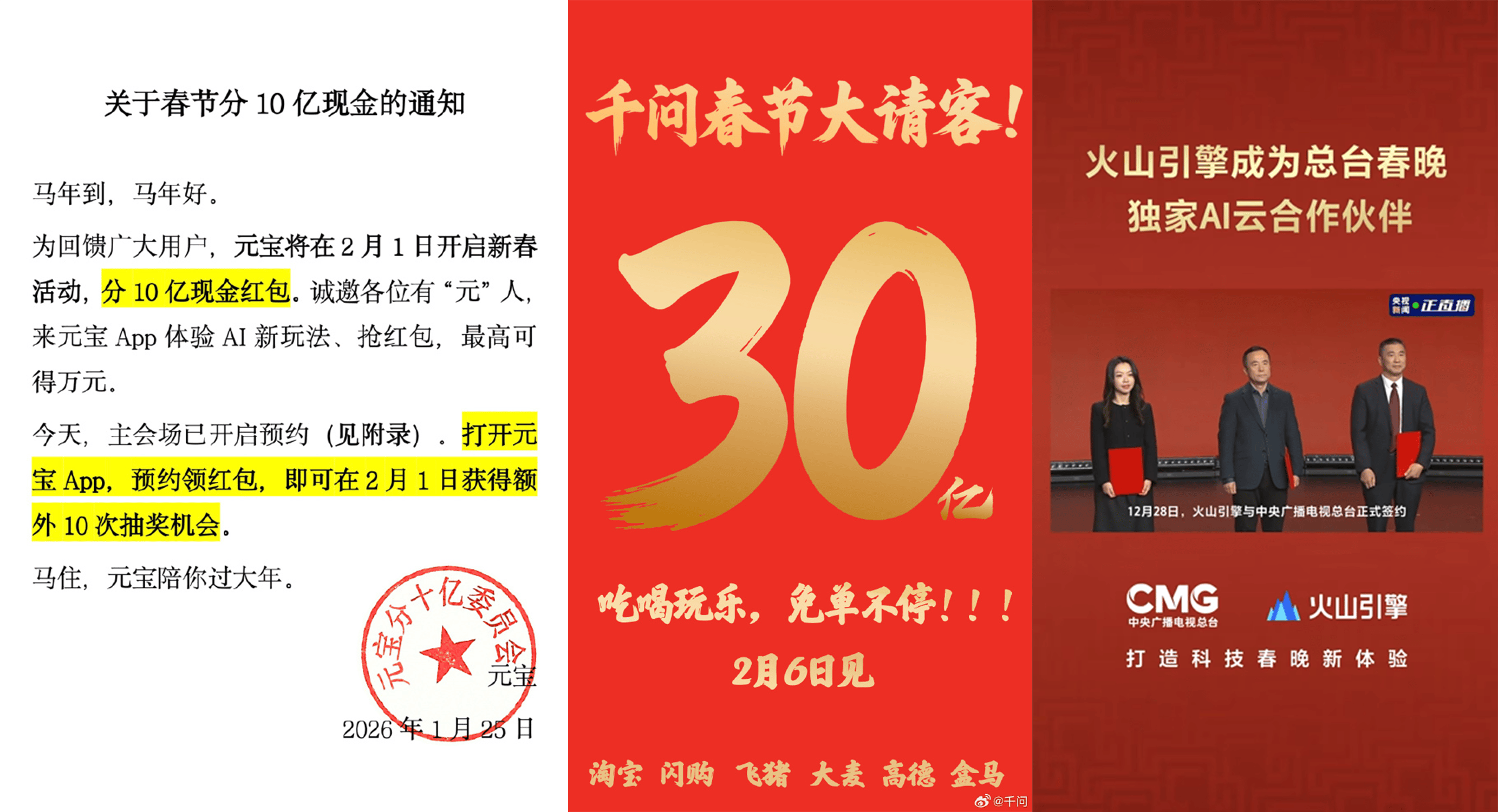
当春晚AI大战烧掉数十亿,我们看到了一个被忽视的真相
Sou Hu Cai Jing· 2026-02-06 08:28
Core Insights - The Chinese tech industry views the Spring Festival as a strategic window, with significant investments from major players like Tencent, Alibaba, and ByteDance in AI and cloud services for 2026 [1][4][45] - The focus is shifting from consumer-facing applications to building robust B2B ecosystems, highlighting the importance of hardware in making AI accessible to everyday users [10][45][56] Group 1: Major Investments and Strategies - Tencent announced a cash red envelope of 1 billion yuan, while Alibaba invested 3 billion yuan in its "Spring Festival hospitality" initiative [1] - ByteDance secured exclusive AI cloud partnership with CCTV for the Spring Festival gala, marking a significant move in the AI landscape [1] - The competition among giants is about creating ecosystems that define user interactions with AI, aiming to make their products the default choice for consumers [10][13] Group 2: Challenges in AI Implementation - Despite the advancements in AI, many companies face challenges in transitioning from smart models to practical products due to high R&D costs and supply chain complexities [15][18] - Data shows that 70% of small and medium enterprises have AI upgrade needs, but only 15% can successfully implement them [15] - The "last mile dilemma" in AI adoption highlights the gap between technology availability and practical application in everyday life [15][18] Group 3: Cost Analysis and Recommendations - Building in-house AI capabilities is costly, with initial investments for a private model potentially reaching tens of millions, while third-party solutions offer a more affordable alternative [17][18] - Companies are encouraged to leverage established ecosystems rather than duplicating efforts, focusing on product innovation instead [18][56] Group 4: Market Trends and Future Outlook - The AI hardware market is on the brink of explosion, with a notable increase in smart glasses shipments, yet many firms struggle with scaling from prototypes to mass production [49][56] - The competition in the AI space is expected to shift from technological prowess to the breadth of application, emphasizing the need for efficient production systems [56][58] - The ultimate goal is to integrate AI into daily life, making it accessible to all households, which requires a stable and cost-effective production framework [56][59]