
BABA(09988)

Search documents
Amazon vs. Alibaba: Which E-Commerce Titan Has an Edge Right Now?
ZACKS· 2026-02-17 17:00
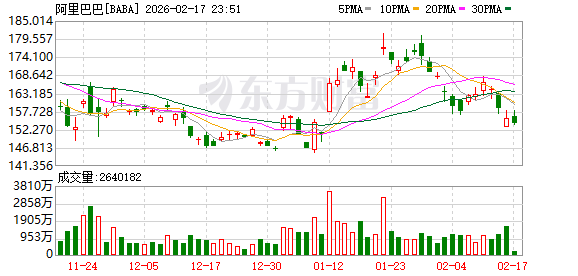
Core Insights - Amazon and Alibaba are the two largest players in e-commerce and cloud computing, both investing heavily in AI and cloud infrastructure, making a comparison relevant for investors [1] Group 1: Amazon (AMZN) Overview - Amazon's Q4 2025 results showed net sales of $213.4 billion, a 14% year-over-year increase, driven by strong performance in North America, International, and AWS [2] - AWS reported a 24% revenue growth, its fastest in 13 quarters, with an annualized run rate of approximately $142 billion and a backlog of $244 billion, indicating strong demand [3] - Amazon's capital expenditures for 2026 are projected at $200 billion, primarily for AWS and AI infrastructure, reflecting confidence in long-term returns [4] Group 2: Alibaba (BABA) Overview - Alibaba's Q2 fiscal 2026 revenues reached RMB 247.8 billion, a modest 5% year-over-year increase, while non-GAAP diluted earnings fell 71% due to heavy investments [5] - The Cloud Intelligence Group achieved 34% revenue growth, with AI-related products showing triple-digit gains for nine consecutive quarters, but faces challenges from U.S. chip export restrictions [6] - Alibaba's quick commerce business grew revenues by 60%, but incurred significant losses, leading to a RMB 21.8 billion free cash flow outflow [8] Group 3: Valuation and Performance Comparison - Alibaba's stock increased by 28.3% over the last six months, outperforming Amazon's 14.1% decline, but this is attributed to recovery rather than fundamental strength [10] - Alibaba's price-to-sales ratio is 2.29x, significantly lower than Amazon's 2.61x, reflecting Amazon's superior market position and predictable cash flows [14] - Amazon's premium valuation is justified by its stronger growth prospects, lower regulatory risks, and better forward guidance compared to Alibaba [17]



Alibaba Stock Rises 28% in 6 Months: Hold Tight or Time to Let Go?
ZACKS· 2026-02-17 17:00
Core Insights - Alibaba (BABA) shares have increased by 28% over the past six months, outperforming both the Zacks Internet – Commerce industry and the Zacks Retail-Wholesale sector, but underlying fundamentals indicate potential challenges ahead for 2026 [1][6] Financial Performance - In Q2 of fiscal 2026, Alibaba reported revenues of RMB247.8 billion, a modest 5% year-over-year increase, with non-GAAP diluted earnings dropping 71% year-over-year to RMB4.36 per ADS, missing analyst expectations by about 20% [2][6] - Total adjusted EBITDA fell by 78%, primarily due to significant investments in AI infrastructure and quick commerce subsidies, indicating a shift towards prioritizing growth over profitability [2][5] AI Investment and Margins - Alibaba's aggressive positioning in the AI sector has led to a 34% year-over-year revenue growth in its Cloud Intelligence Group, with AI-related products achieving triple-digit growth for nine consecutive quarters, but this has resulted in soaring costs [5][10] - Sales and marketing expenses more than doubled to RMB66 billion as the company invested heavily in its Qwen AI ecosystem and competed in quick commerce [5][10] Regulatory Environment - New e-commerce regulations in China, effective February 2026, prohibit platforms from coercing merchants into discount campaigns, adding regulatory uncertainty to Alibaba's operations [7] Forward Guidance - The Zacks Consensus Estimate for fiscal 2026 earnings is projected at $5.96 per share, reflecting a 33.85% year-over-year decline, with management indicating that maintaining e-commerce market share will require continued investment and subsidy spending [8][9] - Alibaba's capital expenditure plans may exceed $380 billion over three years, with uncertain correlations to revenue growth due to the early-stage nature of AI monetization [9] Valuation and Competitive Landscape - BABA is currently trading at a forward price/sales ratio of 2.29X, compared to the industry average of 1.84X, indicating it may be overvalued relative to peers [10] - The competitive landscape is intensifying, with major players like Alphabet, Microsoft, and Amazon advancing their AI capabilities and maintaining healthier margins, posing significant risks to Alibaba's market position [10] Conclusion - Despite the recent stock rally, Alibaba's deteriorating earnings, rising expenses, regulatory challenges, and fierce competition suggest that it may be prudent for investors to reconsider their positions in 2026 [12][13]
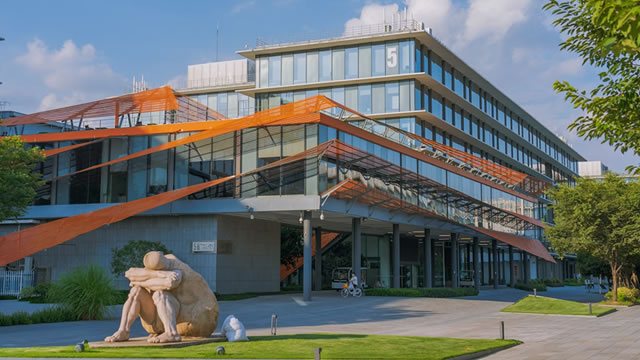
阿里AI春节“封神”:1.3亿人涌入千问 日活追平豆包 B端模型价格仅谷歌1/18
Guo Ji Jin Rong Bao· 2026-02-17 15:51
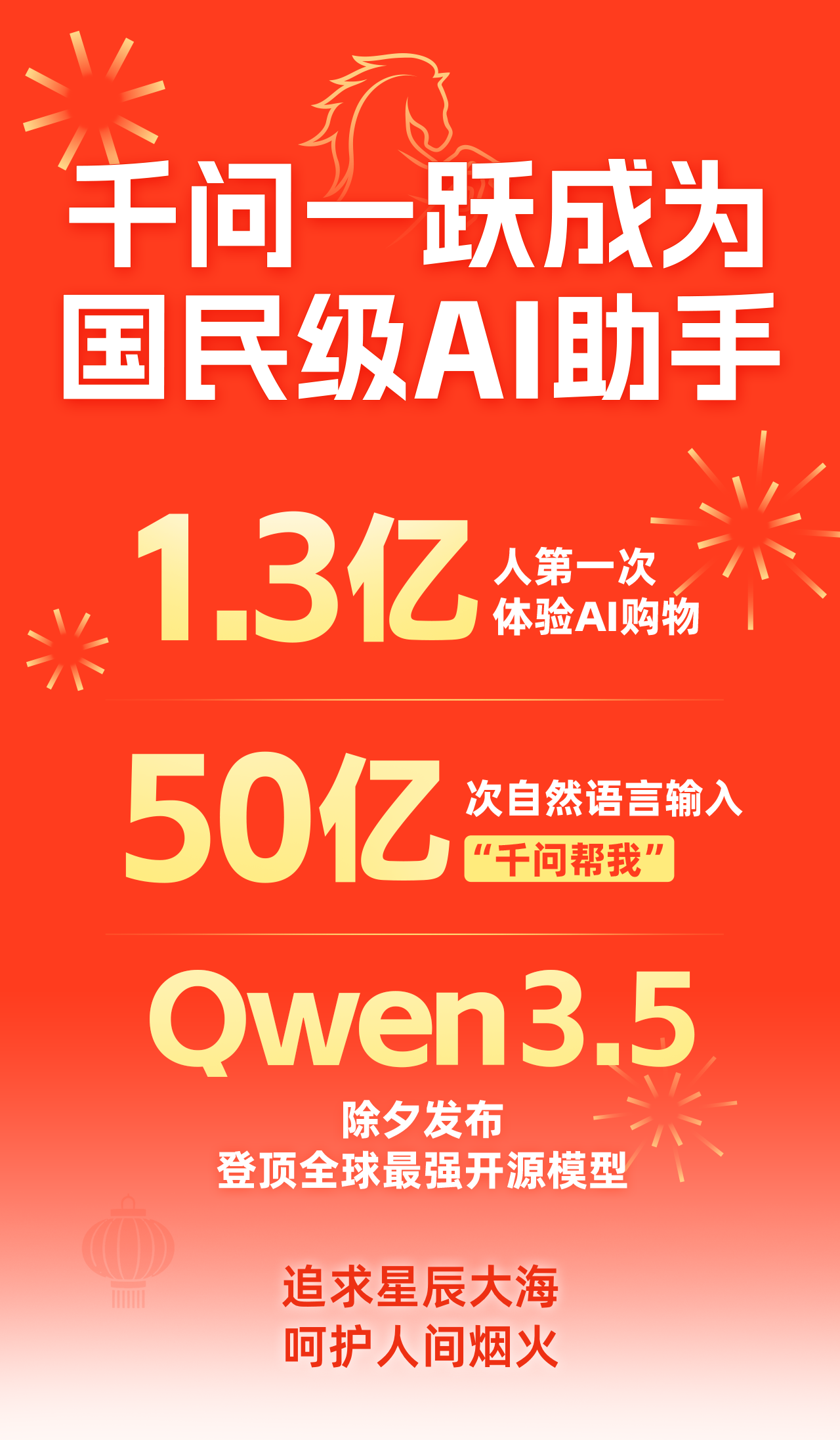
Core Insights - The AI industry in China experienced unprecedented competition during the Spring Festival, with major players like Alibaba, ByteDance, and Tencent launching aggressive initiatives [2] - Alibaba's Qwen 3.5-Plus model, released on New Year's Eve, showcases a significant advancement in AI capabilities, offering performance comparable to Google's Gemini 3 Pro at a fraction of the cost [3] - The shift in AI value focus is moving from chat-based interactions to task-oriented agents, with Alibaba aiming to address key industry challenges [2][9] B-end Cost Reduction - Alibaba's Qwen 3.5-Plus features a novel sparse mixture of experts (MoE) architecture with 3.97 trillion parameters, activating only 170 billion, leading to a 19-fold increase in inference throughput and a 60% reduction in memory usage [3] - The API pricing for Qwen 3.5-Plus is set at 0.8 yuan per million tokens, which is 1/18th the cost of Google's equivalent, aiming to enhance enterprise AI penetration [3] C-end User Engagement - During the Spring Festival, over 1.3 billion users interacted with the Qwen app, generating 5 billion "Qwen help me" commands, establishing it as a national-level AI assistant [6] - The app's daily active users (DAU) reached approximately 73.5 million within three months, nearly matching ByteDance's three-year growth [7] Strategic Integration - Alibaba's "Tongyun Ge" strategy, integrating its model, cloud infrastructure, and chip development, enables it to support both B-end pricing strategies and C-end user engagement effectively [8] - The unified architecture allows Alibaba to maximize computational efficiency, reducing training costs and increasing training speed by 10% [8] Market Narrative Shift - The recent developments indicate a shift in Alibaba's market narrative, moving from concerns about lacking a ChatGPT-like entry point to establishing a robust ecosystem that emphasizes practical AI applications [9][10] - The company is demonstrating its potential in the AI era by leveraging its pricing power and execution capabilities [10] Market Penetration - AI order volumes from lower-tier cities surged by 782 times, with nearly half of all AI orders originating from county-level areas [11] - Approximately 4 million users aged 60 and above engaged with AI shopping, highlighting the technology's role in bridging the digital divide [11]
摩尔线程:完成对Qwen3.5模型全面适配
Xin Lang Cai Jing· 2026-02-17 14:43
Core Insights - Moore Threads has successfully adapted its flagship AI training and inference GPU MTT S5000 to Alibaba's latest large model Qwen3.5, showcasing the maturity and completeness of the MUSA ecosystem [1] Group 1: MUSA Ecosystem - The adaptation demonstrates two core capabilities of the MUSA ecosystem: native MUSA C support allows developers to directly use MUSA C for kernel development, significantly lowering the migration barrier from the CUDA ecosystem [1] - Deep compatibility with Triton-MUSA enables developers to write high-performance operators using familiar Triton syntax, which can seamlessly run on Moore Threads' full-featured GPUs through the Triton-MUSA backend [1]
These 3 International Stocks Could Be the Best-Performing Stocks In 2026
247Wallst· 2026-02-17 14:42
Core Insights - International stocks outperformed U.S. stocks in 2025 after a decade of U.S. dominance, driven by currency fluctuations and a changing geopolitical environment [1] - Three international stocks are highlighted as potential strong performers in 2026: Restaurant Brands, Alibaba, and MercadoLibre [1] Group 1: Restaurant Brands (QSR) - Restaurant Brands was formed from a merger between Tim Horton's and Burger King, and has since acquired Popeye's and Firehouse Subs [1] - The company has shown slight weakness in recent quarters but is expected to benefit from a trade-down trend in dining due to inflation, potentially increasing foot traffic and margins [1] - The stock is considered a defensive growth option, currently trading at a discount to historical levels despite year-over-year revenue and earnings growth [1] Group 2: Alibaba (BABA) - Alibaba is a leading global growth stock with significant potential, driven by its core e-commerce business and artificial intelligence initiatives [1] - The company reported an 8% year-over-year revenue growth, with over 20% growth in its international e-commerce segment, which is a high-margin area [1] - Free cash flow margins reached 20% due to cost discipline, indicating strong financial health and future growth prospects [1] Group 3: MercadoLibre (MELI) - MercadoLibre is a major e-commerce and fintech player in Latin and South America, providing exposure to approximately $1 trillion in GDP [1] - The company achieved 35% year-over-year growth in its e-commerce business, supported by a 40% growth in its Mercado Pago segment [1] - With around $5 billion in annual free cash flow and world-class margins of about 12%, MercadoLibre is viewed as a strong investment opportunity [1]



1.3亿人春节首次体验AI购物
Zhong Guo Ji Jin Bao· 2026-02-17 12:32
Core Insights - Over 130 million people in China experienced AI shopping for the first time during the Spring Festival, with "Qianwen help me" becoming a national-level AI assistant [1][2][3] Group 1: User Engagement and Growth - During the Spring Festival, AI ticket purchasing orders surged, with a 22-fold increase for event tickets and over 7-fold for flight tickets [3] - Movie ticket orders via AI skyrocketed by 372 times, particularly in third and fourth-tier cities, where orders increased by 782 times [3] - Nearly 400,000 users aged 60 and above engaged in AI shopping, indicating a broad demographic reach [3] Group 2: Ecosystem Integration - Qianwen integrates with Alibaba's ecosystem, including Taobao, Alipay, and other platforms, to enhance user service [3] - Future functionalities will include AI ride-hailing, mobile top-ups, and group buying [3] Group 3: Model Development and Performance - Alibaba launched the Qianwen 3.5 model, which is considered the strongest open-source model globally, achieving a significant leap from text-only to multimodal capabilities [5] - Qianwen 3.5 outperformed competitors in various benchmarks, scoring 87.8 in MMLU-Pro and 88.4 in GPQA, surpassing GPT-5.2 and Claude 4.5 respectively [5] - The model's performance in instruction-following and general agent evaluations also exceeded that of Gemini 3 Pro and GPT-5.2 [5]
过完这个春节,中国AI只剩下阿里和字节
Xin Lang Cai Jing· 2026-02-17 12:13
Core Insights - The competition in China's AI landscape has transitioned into a "duopoly" between Alibaba's Qwen and ByteDance's Doubao, marking a significant shift from a fragmented market to a concentrated rivalry [1][15] - Alibaba's Qwen focuses on integrating AI into everyday life, while ByteDance's Doubao aims to democratize content creation through AI tools [6][14] Group 1: Alibaba's Strategy - Qwen achieved a remarkable milestone by integrating AI shopping capabilities across Alibaba's ecosystem, covering essential services like food delivery, movie tickets, and travel bookings [3] - The "Spring Festival Treat Plan" launched by Qwen distributed 30 billion in free orders, resulting in over 1.3 million transactions and a 22-fold increase in ticket orders through AI [4][12] - Qwen's user engagement surged, with a DAU increase from under 10 million to 73.52 million in just 82 days, demonstrating the effectiveness of integrating AI into high-frequency consumer scenarios [10][13] Group 2: ByteDance's Approach - Doubao's Seedance 2.0, which allows for multi-modal content generation, has garnered significant attention, including endorsements from notable figures like Elon Musk [6][9] - The application of Doubao is embedded within ByteDance's content ecosystem, allowing users to create content directly from engaging videos on platforms like Douyin [9] - Doubao's growth has been slower, reaching 78.71 million DAU over three years, compared to Qwen's rapid ascent, highlighting the differences in user engagement strategies [10][11] Group 3: Comparative Analysis - Alibaba's strength lies in its extensive ecosystem, with 800 million active users on Taobao and 1 billion on Alipay, enabling seamless integration of AI into daily tasks [7][8] - ByteDance capitalizes on its understanding of attention economics, leveraging its vast user base on Douyin to create a closed loop of content production and consumption [9] - The contrasting strategies reflect different definitions of AI value: Alibaba emphasizes AI as a facilitator of daily life, while ByteDance focuses on AI as a tool for individual creativity [6][14]

春节首战,阿里AI“航母”初具雏形
Xin Lang Cai Jing· 2026-02-17 10:30
Core Insights - Alibaba has officially open-sourced its new generation model Qwen3.5-Plus, which has been recognized as the "strongest source god" by AI enthusiasts, marking a significant leap from pure text models to native multimodal models [1][14] - During the Spring Festival, over 130 million people experienced AI shopping for the first time, with a total of 5 billion "Qwen help me" requests, establishing Qwen as a national-level AI assistant [15][17] Group 1: AI Model Development - Qwen3.5-Plus features a total of 397 billion parameters, with only 17 billion activated parameters, achieving high performance with a smaller parameter size, surpassing the trillion-parameter Qwen3-Max [20][24] - The model has undergone significant upgrades in capabilities, expanding training data across multiple languages and domains, and has outperformed leading closed-source products like GPT-5.2 and Gemini-3 Pro in various benchmarks [22][23] Group 2: User Engagement and Market Penetration - Qwen's daily active users (DAU) reached 73.52 million, surpassing competitors and achieving user scale comparable to industry leaders in less than two months [19] - AI ticket orders saw a 372-fold increase during the Spring Festival, with significant growth in orders from third- and fourth-tier cities, indicating strong market penetration [19][20] Group 3: Ecosystem Integration and Future Plans - Qwen can seamlessly integrate services across Alibaba's platforms, including Taobao, Alipay, and Fliggy, with plans to introduce additional features like AI taxi booking and mobile top-ups [20][24] - Alibaba's "Tongyun Ge" strategy, which combines its AI chip, cloud services, and model development, positions the company as a leading player in the AI landscape, aiming for comprehensive vertical integration [26][27]
继“DeepSeek时刻”之后 中国AI又迎来“千问周期”
Zhong Guo Jing Ji Wang· 2026-02-17 08:58
Core Viewpoint - The Chinese AI industry is entering a new "Qianwen Cycle," marked by significant advancements and innovations, particularly led by Alibaba's Qianwen AI family, which is set to redefine AI applications and capabilities in the market [1][6][12]. Group 1: Model Development - Alibaba's Qianwen AI family has launched the Qianwen-Image-2.0 model, positioning it alongside leading models like Google's Nano Banana Pro and GPT Image 1.5 [4]. - The newly open-sourced Qianwen 3.5-Plus model features a total of 397 billion parameters, outperforming larger models like Qianwen 3-Max, and offers competitive performance against top closed-source models such as GPT-5.2 and Gemini-3-Pro [9]. - Qianwen has released over 400 open-source models, making it the most widely adopted open-source model globally, with a download count exceeding 1 billion [7][9]. Group 2: Application and Market Impact - The Qianwen App has initiated a "Spring Festival 3 billion free order" campaign, achieving over 10 million orders in just 9 hours, indicating a strong market response and consumer engagement [4]. - The app's focus has shifted from merely being a conversational AI to a more functional assistant, emphasizing the ability to perform tasks and meet user needs effectively [11]. - AI shopping, as a key feature of the Qianwen App, aims to connect users with resources in a streamlined manner, enhancing user experience and creating new consumption opportunities [11][12]. Group 3: Strategic Vision - Alibaba is addressing fundamental questions about the capabilities and responsibilities of AI, aiming to guide the future direction of Chinese AI development [6][12]. - The "Qianwen Cycle" represents a commitment to making advanced AI accessible to small businesses and individuals, fostering a more inclusive technological landscape [14]. - The overarching goal is to integrate advanced technology with everyday applications, ensuring that AI serves practical human needs while driving innovation [14].

打响新春攻势,阿里在布什么棋?
Di Yi Cai Jing Zi Xun· 2026-02-17 08:44
Core Insights - Alibaba has launched its new AI model Qwen3.5-Plus, which competes with top closed-source models like Gemini-3-pro and GPT-5.2, marking a significant advancement in the AI landscape [1] - During the Spring Festival, over 130 million people experienced AI shopping for the first time, with the AI assistant "Qianwen" becoming a national-level tool [1] - Qwen3.5-Plus features a total of 397 billion parameters, with only 17 billion activated, achieving performance that surpasses models with over a trillion parameters while reducing deployment memory usage by 60% [1][4] Model Performance and Innovation - Qwen3.5 represents a generational leap from previous models, transitioning from a pure text model to a native multimodal model, significantly enhancing its capabilities in various assessments [2] - The model has shown superior performance in multiple evaluations, including general agent assessments and visual question answering, outperforming competitors like Gemini 3 Pro and GPT-5.2 [2][3] - Key innovations in Qwen3.5's architecture include a mixed MoE structure and a unified approach to handling multiple data modalities during pre-training, resulting in a more efficient model with lower parameter requirements [4] Market Impact and User Engagement - The Qianwen app has seen a dramatic increase in user engagement, with a 22-fold increase in AI ticket orders and a 372-fold increase in movie ticket orders during the Spring Festival [6] - Nearly half of all AI orders came from county-level cities, indicating a broadening user base and accessibility of AI technology [6] - The app's integration with Qwen3.5-Plus enhances its capabilities, allowing it to assist users in various tasks, thus increasing its utility in daily life [6] Infrastructure and Ecosystem - Alibaba has opened over 400 Qianwen models since 2023, with global downloads surpassing 1 billion, fostering a robust developer ecosystem [8] - The company’s self-developed AI chip "Zhenwu 810E" is optimized for training and inference of large models, contributing to the cost-effectiveness of Qwen3.5 [9] - Alibaba Cloud holds a 35.8% market share in China's AI cloud market, indicating its leading position and the growing demand for AI infrastructure [10] Long-term Strategy and Vision - Qwen3.5 is part of Alibaba's broader strategy towards achieving AGI, with ongoing exploration of all-in-one multimodal capabilities [5][7] - The dual approach of advancing cutting-edge models while making AI accessible to everyday users reflects Alibaba's commitment to integrating technology into daily life [11]