BABA(09988)

Search documents
共建“上海特色”智算云解决方案,上海仪电与阿里巴巴签署战略合作协议
Sou Hu Cai Jing· 2026-02-12 15:20
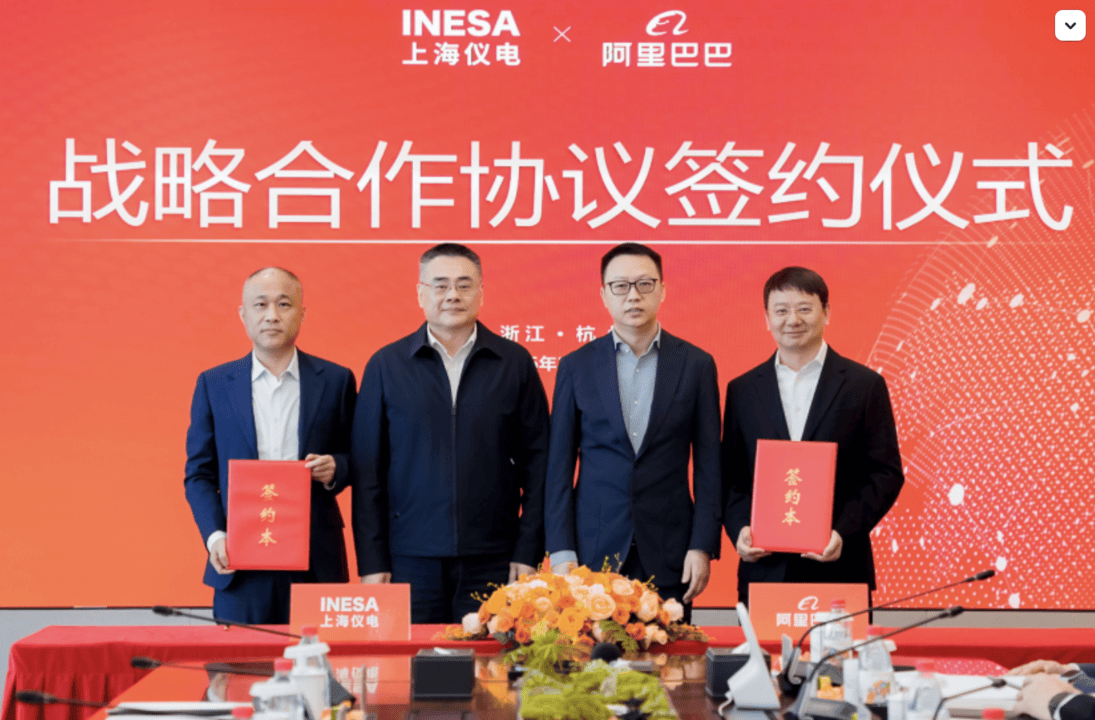
Core Viewpoint - Shanghai Yidian and Alibaba Group have signed a strategic cooperation agreement to enhance digital transformation in Shanghai, focusing on intelligent computing services, government-enterprise market, and public cloud business [1] Group 1: Strategic Cooperation - The agreement involves deep collaboration in intelligent computing services, government-enterprise market, and public cloud business [1] - The partnership aims to leverage Alibaba's Qianwen large model, self-developed AI chips, and cloud computing capabilities alongside Shanghai Yidian's YiCloud platform for integrated service solutions [1] Group 2: Application Scenarios - The collaboration will support Shanghai in various application scenarios including trusted data space, autonomous driving, intelligent government services, enterprise digitalization, education, and healthcare [1] - The goal is to create "Shanghai characteristic" intelligent computing cloud solutions through this partnership [1] Group 3: Current Status - The cooperation in the intelligent computing field has already begun to take shape [1]


2月12日南向资金追踪:腾讯控股、小米集团-W、美团-W净买入额居前,分别为14.29亿港元、10.20亿港元、9.85亿港元
Jin Rong Jie· 2026-02-12 15:01
Market Overview - The Hang Seng Index fell by 0.86%, closing at 27,032.54 points, with a total market turnover of 238.705 billion HKD [1] Southbound Trading Data - Tencent Holdings, Xiaomi Group-W, and Meituan-W saw net purchases of 1.429 billion HKD, 1.020 billion HKD, and 0.985 billion HKD respectively [1][2] - WuXi Biologics, Zijin Mining, and Pop Mart experienced net sales of 0.392 billion HKD, 0.346 billion HKD, and 0.301 billion HKD respectively [1][2] Individual Stock Performance - Tencent Holdings had a trading volume of 12.026 billion HKD, with a net buy of 1.429 billion HKD, closing at 535.50 HKD, down by 2.28% [2] - Xiaomi Group-W recorded a trading volume of 27.46 billion HKD, with a net buy of 1.020 billion HKD, closing at 36.52 HKD, down by 1.56% [2] - Meituan-W had a trading volume of 38.31 billion HKD, with a net buy of 0.985 billion HKD, closing at 84.85 HKD, down by 4.50% [2] - Pop Mart had a trading volume of 21.899 billion HKD, with a net sell of 0.301 billion HKD, closing at 252.20 HKD, down by 1.10% [2] - WuXi Biologics had a trading volume of 6.99 billion HKD, with a net sell of 0.392 billion HKD, closing at 41.34 HKD, down by 0.14% [2] - Zijin Mining had a trading volume of 9.64 billion HKD, with a net sell of 0.346 billion HKD, closing at 45.02 HKD, up by 3.45% [2]




阿里、谷歌接连“出手”,AI购物元年将至?
Feng Huang Wang· 2026-02-12 14:17
Group 1 - The core idea of the articles highlights the contrasting approaches to AI shopping between Google and Alibaba, with Google embedding AI shopping features into its search engine while Alibaba focuses on direct purchasing through its AI platform [1][2] - Google leverages its vast search engine capabilities to integrate transaction processes within user queries, following a model of "AI + advertising" for monetization [2] - Alibaba's approach is more pragmatic, allowing users to directly place orders through AI, exemplified by the success of its Qianwen app during the Spring Festival, where users made over 1.2 billion orders [1][2] Group 2 - The success of Alibaba's Qianwen app is attributed to its comprehensive AI technology and a robust consumption ecosystem, integrating various services from its platforms like Taobao and Tmall [2][3] - The differences in AI shopping strategies stem from Google's lack of checkout capabilities and delivery networks, while Alibaba has transformed its extensive logistics and e-commerce infrastructure into a foundation for AI-driven consumption [3] - The initial surge in user engagement during the Spring Festival is seen as just the beginning, with ongoing efforts to retain users and expand the range of products available through AI [4]

AI应用霸榜苹果应用商店
Zhong Guo Xin Wen Wang· 2026-02-12 13:48
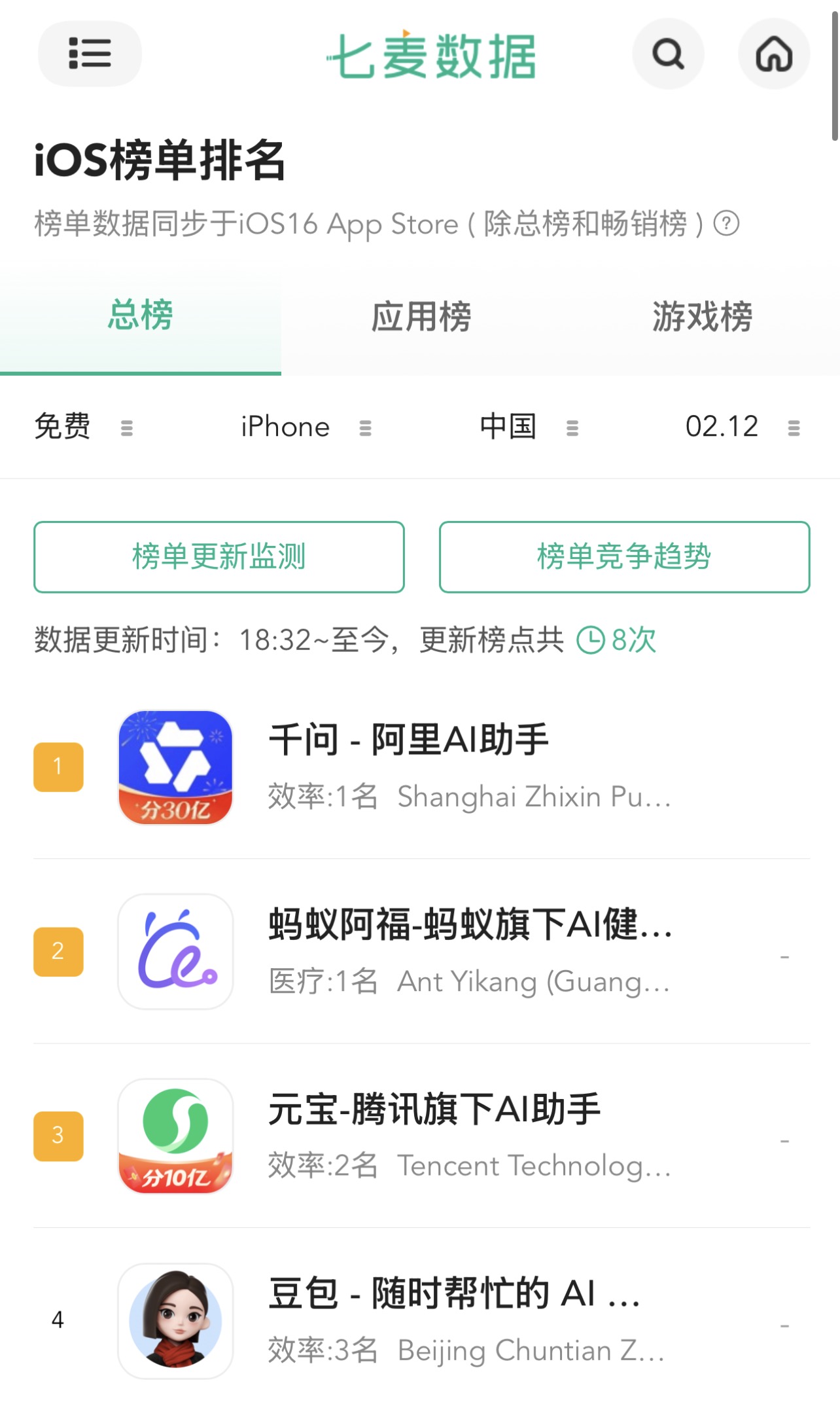
Core Insights - Major Chinese internet giants including Tencent, Alibaba, Baidu, and ByteDance are engaged in an "AI red envelope war," which has garnered significant attention and increased the popularity of related applications [1] Group 1: AI Application Rankings - As of February 12, 2023, the top four free iPhone apps in China are all AI applications: Qianwen, Antifufu, Yuanbao, and Doubao [1] - Qianwen, an AI assistant from Alibaba, has an estimated average daily download of over 242,000 on the iPhone for the week of February 5 to February 11, 2023 [6] - Yuanbao, Tencent's AI assistant, has an estimated average daily download of over 278,000 on the iPhone for the same period [9] Group 2: Download Statistics - Antifufu has an estimated average daily download of over 202,000 on the iPhone for the week of February 5 to February 11, 2023 [9] - The app "Dream AI" and "Little Lark" rank 13th and 20th respectively, both having integrated the popular AI video generation model Seedance 2.0 [9] - The app Quark ranks 33rd in the same context [9]

“春晚+” AI营销的国民初体验
Bei Jing Shang Bao· 2026-02-12 13:35
Core Insights - The AI marketing battle for the 2026 Spring Festival has been ignited early, with major players like Tencent and Alibaba investing heavily in cash incentives to attract users [1][6] - Doubao's Spring Festival activities will launch in two phases, focusing on user engagement through AI features rather than just cash prizes [4][5] - The event aims to showcase the practical benefits of AI technology in everyday life, encouraging broader participation in technological innovation [5] Group 1: Doubao's Spring Festival Activities - Doubao plans to launch its Spring Festival activities on February 13 and February 16, allowing users to experience AI-generated greetings and participate in cash prize draws [4][6] - The second phase will feature a live interaction during the Spring Festival Gala, offering prizes including cash up to 8,888 yuan and tech products integrated with Doubao's AI capabilities [4][8] - The tech prizes include 17 popular items, such as 3D printers and electric vehicles, showcasing the integration of Doubao's AI models in consumer products [4][6] Group 2: Competitive Landscape - Competitors like Tencent and Alibaba have emphasized cash prizes in their marketing strategies, with Tencent investing 10 billion yuan and Alibaba 20 billion yuan [6][9] - The differentiation between cash prizes and tech gifts is seen as a strategic move to enhance user engagement and demonstrate the leading edge of AI ecosystems [6][9] - The competition for user attention is fierce, with Doubao's daily active users nearing 7.87 million, while competitors like Alibaba's Qianwen reached 73.52 million [9][10] Group 3: Technological Integration and Future Outlook - The Spring Festival Gala has increasingly incorporated advanced technologies like VR, AR, and AI, with Doubao becoming a key player in this trend [7][8] - The collaboration with AI cloud computing partners marks a significant shift in how technology is presented to the public during major events [8] - The ongoing advancements in video generation technology, such as ByteDance's Seedance 2.0, highlight the rapid evolution of AI applications in marketing [10]

年末 AI 回顾:从模型到应用,从技术到商战,拽住洪流中的意义之线(上)
Xin Lang Cai Jing· 2026-02-12 12:12
Group 1: Models - The current AI wave is still in its early stages, with technological changes being the primary driving force behind product forms and business landscapes [4][56] - The Agentic Model supports agent capabilities, which include reasoning, coding, multimodal understanding, tool usage, and memory [5][58] - The rise of reasoning models is marked by the success of DeepSeek-R1, which is the first to replicate OpenAI's o1 model at a large parameter scale [7][59] Group 2: Applications - 2025 is seen as the year of large-scale explosion for agent applications, with two main lines: General Agents centered on coding capabilities and vertical agents [29] - General Agents utilize coding as a means to execute various tasks in the digital world, with products like Claude Code and Claude Cowork leading the way [30][32] - The emergence of mobile agents is notable, with ByteDance's Doubao phone preview enabling automated tasks like replying to WeChat messages [35] Group 3: AI Giants' Competition - Major players like ByteDance, Alibaba, and Tencent are engaged in a fierce competition in the AI space, focusing on collaborative optimization and infrastructure development [13][14] - Alibaba's Qianwen team has begun recruiting its own infrastructure talent to enhance agility in development [14] - Tencent's new AI head emphasizes the importance of co-design to streamline iterations and reduce internal friction [14] Group 4: Startups - A new ecosystem of startups is emerging around agent tools, driven by the demand for automation in personal and professional tasks [29][32] - Companies like Lovart and others are focusing on multimedia content production agents, aiming to redefine creative processes [37] Group 5: AI in Science - AI is accelerating scientific discoveries, with applications in first-principles calculations and generative AI for solving complex scientific problems [49][50] - The trend of AI agents capable of automating the entire research process is gaining traction, indicating a shift towards AI-driven scientific inquiry [51]


大厂护城河,正在借AI重构
3 6 Ke· 2026-02-12 11:24
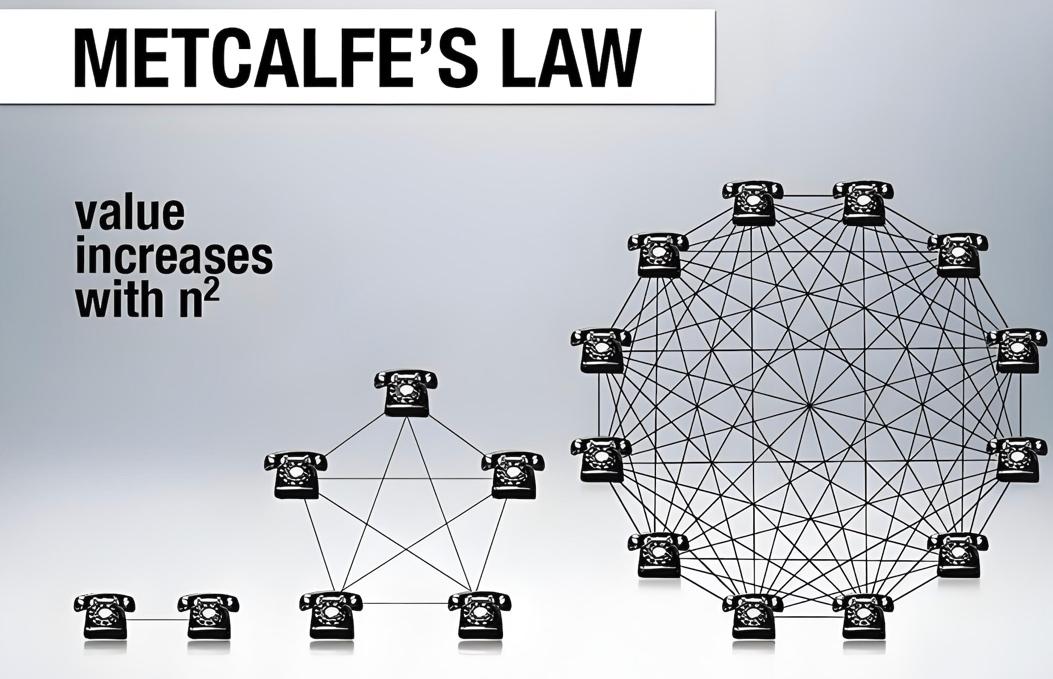
Core Insights - The article discusses the evolution of network effects in the Chinese internet landscape, particularly focusing on Tencent, Alibaba, and ByteDance, and how they are adapting to the challenges posed by AI technology [1][2][3] Group 1: Network Effects - Tencent's social network exhibits a unidirectional network effect, known as the Metcalfe effect, where the value of the network increases exponentially with the number of users [3][4] - Alibaba's e-commerce platform demonstrates a bidirectional network effect, where an increase in sellers leads to more choices for buyers, and vice versa, creating a strong growth flywheel [4][5] - ByteDance's network effect is based on data-driven user engagement, where increased usage leads to better algorithmic recommendations, creating a self-reinforcing loop [6] Group 2: AI Impact - The emergence of AI, particularly with the launch of ChatGPT, poses significant challenges to the existing network effects of these companies, altering how users interact with information and services [7][8] - ByteDance faces the most direct threat as AI can potentially replace its recommendation algorithms, shifting user behavior from platform-driven content to AI-assisted searches [7][8] - Alibaba's concern revolves around the potential displacement of its platform as AI agents could directly fulfill consumer needs, undermining its traditional role as a marketplace [8][9] Group 3: Strategic Responses - ByteDance is aggressively investing in AI-native applications and hardware to secure new data entry points and maintain its data network effect [10][12] - Alibaba is undergoing a self-disruption by integrating AI into its matching mechanisms to enhance its dual-sided market efficiency [12][13] - Tencent is taking a more cautious approach, embedding AI capabilities into existing products to enhance user experience without compromising its established social network [13][17] Group 4: Future Considerations - The article suggests that the future of AI products will hinge on their ability to foster user interaction and connection, moving beyond mere utility to create genuine network effects [15][19] - Companies must focus on accumulating quality users rather than just increasing user numbers, as service quality and user value will be critical for success in the AI era [18][19]
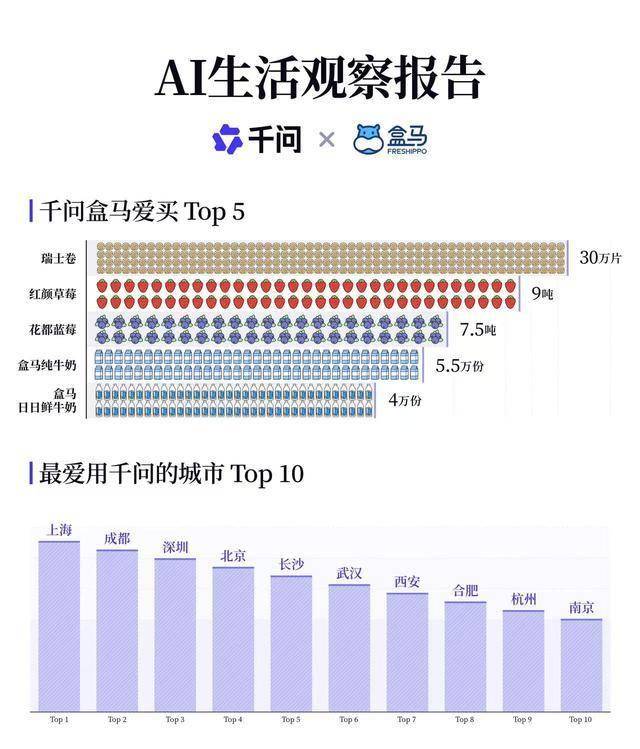
武汉等十城领跑全国AI购物潮 千问发布《AI生活观察报告》
Sou Hu Cai Jing· 2026-02-12 10:47
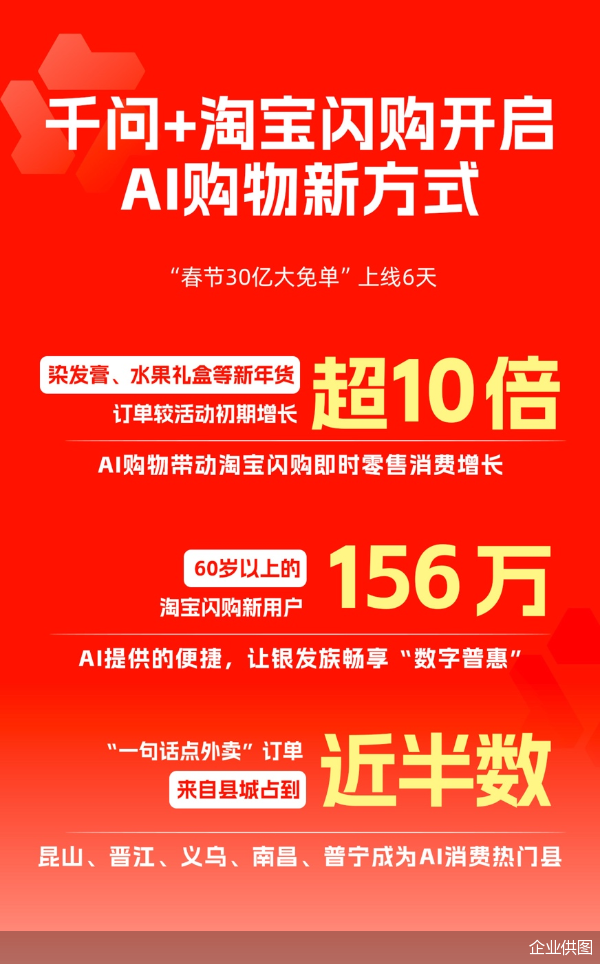
Group 1 - The core viewpoint of the article highlights the rapid adoption of AI in consumer shopping, with significant engagement from users, as evidenced by 4 billion instances of "Qianwen help me" and over 120 million orders placed using AI in just six days [1][5][20] - The report indicates that cities like Wuhan are leading the AI shopping trend, showcasing a blend of technology and everyday life that creates a vibrant digital consumption landscape [1][20] - The "Qianwen please guest" campaign, which included promotions like "free milk tea," has driven substantial user engagement, resulting in the purchase of over 1,000 tons of eggs and thousands of fitness equipment and books [5][17] Group 2 - The report reveals that nearly 50% of orders are coming from county-level cities, indicating a broadening consumer base for AI shopping [17] - There is a notable increase in retail orders for New Year-related products, with some categories seeing growth of over 10 times since the campaign's launch [17] - The AI shopping experience has also attracted older demographics, with 156 million users aged 60 and above trying out flash purchase services for the first time, demonstrating the accessibility of AI technology [17][20]
6天41亿声“千问帮我”,有156万名银发族首次用AI点单
Guang Zhou Ri Bao· 2026-02-12 10:45
Core Insights - Qianwen launched the "Spring Festival 3 Billion Free Order" campaign, achieving significant user engagement with 4.1 billion instances of "Qianwen help me" and over 120 million orders completed by AI in just six days [1][2] Group 1: User Engagement and Demographics - Nearly half of the AI orders originated from county and town areas, indicating a rise in AI consumption in these regions [1] - 1.56 million users aged 60 and above successfully placed their first food delivery orders using AI technology [1] Group 2: Product and Service Offerings - Users ordered over 1,000 tons of eggs, more than 2,300 fitness equipment items, and 1,500 books through the AI platform [1] - Beyond shopping, users engaged with Qianwen for various tasks such as writing Spring Festival couplets, creating New Year greetings, making PPTs, translating documents, and telling bedtime stories [2] Group 3: Technological Infrastructure - Qianwen is developed by Alibaba, leveraging self-developed chips from Pingtouge, Alibaba Cloud infrastructure, and open-source models [2] - Alibaba's ecosystem integrates various services including e-commerce, flash sales, travel, and entertainment into the AI framework, creating a comprehensive service network [2] Group 4: Market Position and Trends - Since its launch on February 6, Qianwen has consistently ranked first in the Apple App Store's free chart for six consecutive days [2] - The shift from active search in the PC era to algorithmic recommendations in mobile internet, and now to one-sentence command-based ordering, reflects a significant evolution in user interaction with technology [2]
AI购物新体验带动“数字普惠”新消费:156万银发族用千问首次“一句话点外卖”
Xin Lang Cai Jing· 2026-02-12 10:18
Core Insights - The "Qianwen App" launched a promotional campaign called "Spring Festival 3 Billion Free Orders," resulting in significant user engagement and order volume, with users making 4.1 billion requests and AI completing over 120 million orders in just six days [1][4]. Group 1: User Engagement and Demographics - Nearly half of the orders placed through Qianwen originated from county-level cities, indicating a shift in consumer behavior towards AI-assisted shopping in less urbanized areas [5]. - The campaign attracted 1.56 million elderly users (aged 60 and above) who experienced food delivery services for the first time through AI, showcasing the technology's reach across different age groups [5]. Group 2: Product Trends and Sales Growth - The AI-driven shopping trend led to a surge in various retail categories, with orders for items like eggs, fitness equipment, and books seeing substantial increases, reflecting a growing preference for AI-assisted purchasing during the festive season [4]. - Retail orders for items such as hair dye products, gift flowers, and emergency baby supplies increased by over ten times since the campaign's launch, highlighting the effectiveness of AI in enhancing consumer experience [5]. Group 3: Technological Infrastructure and Strategy - The success of Qianwen is attributed to Alibaba's comprehensive AI capabilities, which include self-developed chips, advanced cloud services, and a robust supply chain network, enabling seamless integration of AI into everyday services [6]. - The initiative marks the beginning of a new era in AI shopping, with consumers of all ages increasingly relying on AI for their purchasing needs, indicating a significant shift in retail dynamics [7].