BABA(09988)

Search documents
智通港股通持股解析|2月13日





智通财经网· 2026-02-13 00:32
Group 1 - The top three companies by Hong Kong Stock Connect holding ratios are China Telecom (71.33%), Haotian International Investment (69.79%), and Green Power Environmental (68.88%) [1] - Tencent Holdings saw the largest increase in holding amount over the last five trading days, with an increase of 9.996 billion yuan, followed by Alibaba-W with 3.458 billion yuan and Southern Hengsheng Technology with 2.412 billion yuan [1] - The companies with the largest decrease in holding amount over the last five trading days include China Ping An (-0.571 billion yuan), Shandong Gold (-0.566 billion yuan), and Zhaojin Mining (-0.404 billion yuan) [2] Group 2 - The latest holding ratios for the top 20 companies in Hong Kong Stock Connect show significant ownership, with China Telecom leading at 71.33% and several other companies above 60% [1] - The top 10 companies with the largest increases in holdings over the last five trading days include Meituan-W (+1.796 billion yuan) and China Life (+1.686 billion yuan) [1] - The top 10 companies with the largest decreases in holdings include Kangfang Biotech (-0.388 billion yuan) and Zijin Mining (-0.386 billion yuan) [2]
中国AI的2026:一场关于存量、增量与变量的血战
3 6 Ke· 2026-02-13 00:31
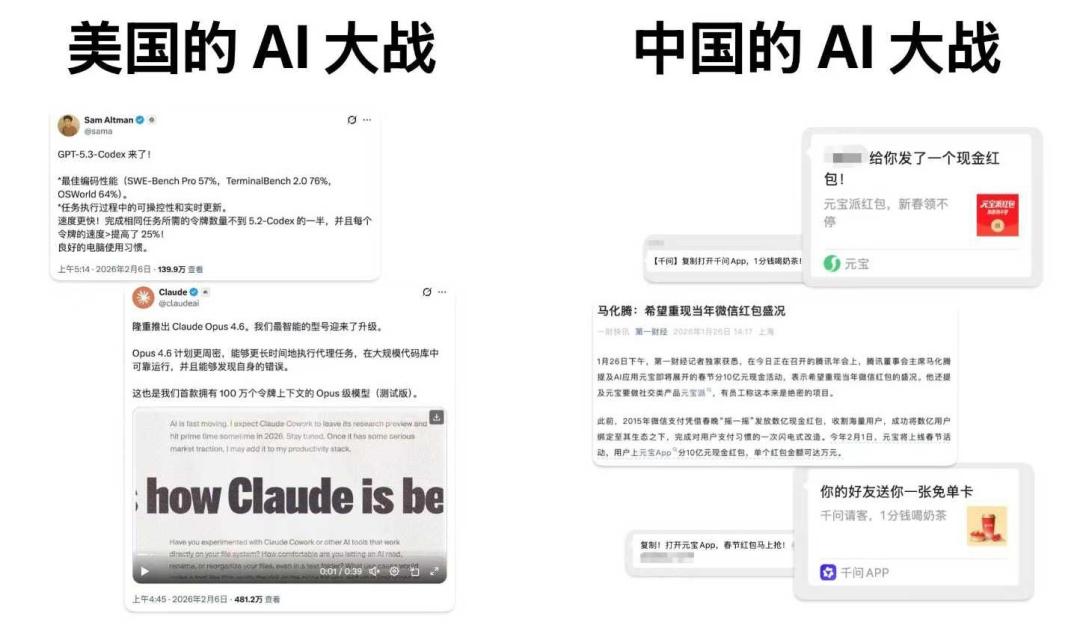
Core Insights - The essence of the AI race among giants is the balance between technological ideals and commercial realities, with different predictions about the future of AI [1] - The competition between China and the US in AI reflects a divergence in focus, where the US emphasizes scientific advancement while China prioritizes business applications [4][5] Group 1: AI Landscape Comparison - The current AI landscape shows a stark contrast between the US and China, with US companies focusing on large model parameters and funding, while Chinese companies are more concerned with profitability and practical applications [4] - Chinese internet giants are seen as prioritizing commercial viability over pure technological advancement, which is viewed as a necessary survival strategy [4][5] Group 2: Historical Context and Future Predictions - The current AI competition is likened to the prelude of the mobile internet explosion, where companies are now in a phase of user engagement and habit formation [9][10] - The AI sector is approaching a critical moment where companies must transition from entertainment to practical applications, similar to the evolution of mobile payment systems [14][15] Group 3: Company Strategies - Tencent's strategy is characterized as a "defensive offense," focusing on maintaining its social media dominance while integrating AI into its existing platforms [20][21] - Alibaba is exhibiting a sense of urgency and survival anxiety, rapidly pushing for commercial applications of AI to counter competition from rivals like Pinduoduo and ByteDance [21][22] - ByteDance is taking a more long-term view, aiming to develop a fundamentally new AI product that could redefine user interaction, rather than engaging in short-term competitive tactics [25][26] Group 4: Competitive Dynamics - The competition among major players is not just about immediate gains but about securing a future position in the evolving AI landscape, with each company pursuing different strategic goals [18][19] - The AI battle is seen as a critical juncture where companies must innovate or risk being left behind, drawing parallels to historical shifts in technology and market dominance [26][28]

智通港股沽空统计|2月13日
智通财经网· 2026-02-13 00:21
Group 1 - The core point of the article highlights the short-selling ratios and amounts for various companies, indicating significant market activity and investor sentiment towards these stocks [1][2]. Group 2 - The top three companies by short-selling ratio are China Resources Beer (80291), Great Wall Motor (82333), and JD Health (86618), all at 100.00% [1][2]. - The top three companies by short-selling amount are Meituan (03690) with 1.878 billion, Zijin Mining (02899) with 1.770 billion, and Tencent Holdings (00700) with 1.606 billion [1][2]. - The companies with the highest deviation values in short-selling are Kuaishou (81024) at 36.81%, Zhaojin Mining (01818) at 33.02%, and China Shipbuilding Leasing (03877) at 30.32% [1][2].



苹果大跌5%
财联社· 2026-02-12 23:41
Core Viewpoint - Concerns over the disruptive potential of artificial intelligence (AI) have led to a decline in major stock indices, with the Nasdaq falling by 2% and the S&P 500 and Dow Jones also experiencing significant drops [1][4]. Group 1: Market Performance - The Dow Jones index closed down 1.34% at 49,451.98 points, the S&P 500 index fell 1.57% to 6,832.76 points, and the Nasdaq index dropped 2.03% to 22,597.15 points [4]. - Major technology stocks saw declines, with Apple down 5%, erasing its gains for the year, and Nvidia down 1.64% [9]. Group 2: Sector Impact - The introduction of AI tools has negatively impacted various sectors, including software companies, publishers, and financial services, raising concerns about potential business model replication and profit margin erosion [5]. - Financial stocks, such as Morgan Stanley, faced pressure due to fears that AI could disrupt wealth management services [5]. - Trucking and logistics companies, like C.H. Robinson, saw a 14% drop in stock price as AI is expected to optimize freight operations, potentially reducing revenue sources [5]. Group 3: Real Estate and Defensive Sectors - The real estate sector is also affected, with concerns that higher unemployment rates will reduce demand for office space, leading to declines in stocks like CBRE and SL Green Realty [6]. - Investors are shifting towards more defensive sectors, with Walmart and Coca-Cola seeing stock price increases of 3.8% and 0.5%, respectively [7]. - In the S&P 500, the consumer staples and utilities sectors outperformed, both rising over 1%, with the consumer staples sector reaching a historical closing high [8].



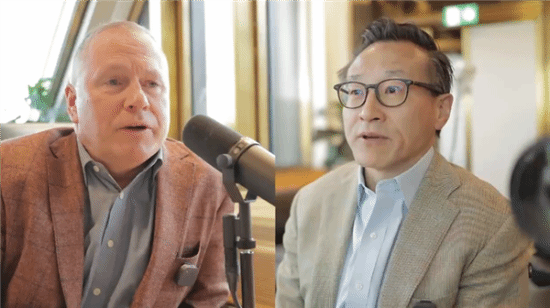
蔡崇信首度详述1999年弃高薪加盟马云创业始末
Sou Hu Cai Jing· 2026-02-12 23:31
2026-02-13 02:00:48 作者:狼叫兽 蔡崇信指出,尽管当时马云缺乏详尽的财务模型与执行路径,但其出众的感召力与凝聚团队的能力令人 印象深刻。那支由十八人组成的初创队伍,共同蜗居于狭小公寓之中,却始终洋溢着高度一致的信念与 热忱。 经过数月审慎权衡,他最终选择放弃原有高薪职位,加入阿里巴巴,出任首席财务官,月薪仅为五百元 人民币。这一决定令家人深感意外,其父甚至一度担心他的职业判断与精神状态。 关于二零一三年退出公司日常管理岗位,蔡崇信表示,这是他与马云基于企业长远发展所达成的共识。 彼时,阿里巴巴业务已覆盖B2B平台、淘宝、支付宝、云计算等多个领域,组织规模与复杂度显著提 升。双方一致认为,应适时将管理责任交予陆兆禧、张勇等新一代管理者,以保障企业持续成长与代际 平稳过渡。 二零二六年二月十一日,阿里巴巴董事会主席蔡崇信近日在一次访谈中,首次系统回顾了自己一九九九 年加入马云创业团队的全过程。 他谈到,一九九九年在杭州初次与马云见面时,对方尚未形成完整的商业计划书,仅在一处居民公寓 中,向十几位年轻人热情描绘未来图景。彼时,蔡崇信正任职于香港Investor AB,担任高级管理职务, 年薪达七 ...

韩国投资者加码港股市场 科技板块受追捧 扫货MINIMAX-WP、英诺赛科
Zhi Tong Cai Jing· 2026-02-12 22:59
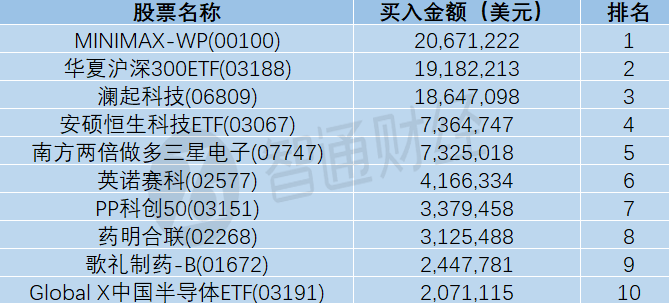
Group 1 - Korean investors have shown increasing enthusiasm for Chinese assets, with a total investment exceeding $88 million in the top ten stocks as of February 10, 2026 [3] - The top ten stocks purchased by Korean investors include MINIMAX-WP, Huaxia CSI 300 ETF, and Lanke Technology, with respective investments of $20.67 million, $19.18 million, and $18.64 million [1][2] - There is a noticeable shift in Korean investment focus towards emerging technology companies in China, compared to 2025, where the top investments were in companies like Xiaomi and Alibaba [4] Group 2 - The investment amounts for the top ten stocks in 2026 are as follows: MINIMAX-WP ($20.67 million), Huaxia CSI 300 ETF ($19.18 million), Lanke Technology ($18.64 million), and others, indicating a diverse interest in various sectors [2][4] - In 2025, the top investments were led by Xiaomi Group ($87.75 million) and Global X China Semiconductor ETF ($7.40 million), highlighting a different investment landscape compared to 2026 [5]

阿里巴巴财报回顾:云业务增长强劲,AI商业化受关注
Jing Ji Guan Cha Wang· 2026-02-12 22:48
未来发展 云业务中AI产品收入的持续增长(已连续多个季度三位数增长)及资本开支的落地效率,仍是市场观 察其技术投入回报的关键。高资本开支对短期自由现金流形成压力(上季度经营现金流同比下降 68%),投资者关注其如何在长期技术布局与短期利润波动之间取得平衡。截至目前(2026年2月13 日),阿里巴巴未公开披露新的财报日期或重大业务变更。 以上内容基于公开资料整理,不构成投资建议。 经济观察网 根据现有信息,阿里巴巴集团(BABA.N/09988.HK)近期未发布新的财报或重大事件公 告。以下内容主要基于其最近一期(2026财年第二季度,对应自然年2025年第三季度)的财报数据及当 时的管理层表态。 近期事件 根据2025年11月25日发布的财报,阿里巴巴2026财年第二季度营收为2477.95亿元人民币,同比增长 5%;调整后净利润为103.5亿元人民币。云智能集团收入同比增长34%至398.24亿元,AI相关收入占云 业务外部客户收入的20%。管理层在财报电话会中提及,过去4个季度在AI及云基础设施的资本开支约 1200亿元人民币,并暗示原定三年3800亿元的投资目标"可能偏小",未来或进一步加大投入。国际 ...
【2026春节特别报道】这一年的暖心事
Xin Lang Cai Jing· 2026-02-12 21:36
Group 1 - The core viewpoint of the articles highlights significant policy changes aimed at improving labor rights and social security for flexible and elderly workers in China [1][2][4][5][6][7] Group 2 - The cancellation of household registration restrictions for social insurance participation is expected to facilitate the free flow of labor resources and protect the rights of flexible employment groups [1] - The introduction of basic rights protection for elderly workers provides a legal basis for their rights, focusing on labor remuneration, rest, safety, and dispute resolution [2] - New tax regulations for internet platform workers indicate that those engaged in delivery and other services will not face additional tax burdens, thus supporting their financial stability [3] - Major companies like JD and Taobao are actively integrating gig economy workers into traditional social security systems, with significant coverage and subsidy plans for insurance [4] - The expansion of pilot programs for occupational injury protection for new employment forms is set to include more provinces and industries over the next three years, enhancing worker safety [5] - The age limit for applying for large passenger and freight vehicle licenses has been extended to 63 years, aligning with gradual retirement policies and supporting driver employment rights [6][7]

Will Heavy Capex Spending Weigh on Alibaba's AI Ambitions?
ZACKS· 2026-02-12 16:35
Core Insights - Alibaba Group (BABA) is significantly increasing its investment in artificial intelligence, but this aggressive spending is raising concerns about its near-term profitability as evidenced by its recent earnings report [1][7] Financial Performance - The company reported non-GAAP earnings of 61 cents per ADS for Q2 fiscal 2026, missing the Zacks Consensus Estimate by 7.58% [1] - Non-GAAP diluted earnings in domestic currency were RMB 4.36, reflecting a 71% year-over-year decline, despite a 5% increase in revenues to RMB 247.8 billion [1] - Capital expenditures surged 80% year-over-year to RMB 31.9 billion ($4.5 billion), resulting in negative free cash flow of RMB 21.8 billion, a reversal from a RMB 13.7 billion inflow a year ago [2] - Adjusted EBITDA fell 78%, with the margin dropping from 17.4% to 3.7% [2] Investment Strategy - Alibaba is committed to spending at least RMB 380 billion on AI and cloud initiatives over three years, having already invested RMB 120 billion [3] - The company is expanding its AI footprint through various projects, including the open-source RynnBrain robotics model and integrating AI across its platforms [3] Competitive Landscape - Other tech giants are also ramping up their capital expenditures, with Amazon projecting approximately $200 billion for 2026 and Alphabet guiding $175-$185 billion, both focusing on AI and cloud services [4] - Unlike Alibaba, Microsoft and Google are maintaining robust profitability, which provides them with a financial cushion for their investments [4] Stock Performance and Valuation - BABA shares have increased by 29.5% over the past six months, outperforming the Zacks Internet – Commerce industry and the Zacks Retail-Wholesale sector, which saw declines of 9.1% and 0.7%, respectively [5] - The Zacks Consensus Estimate for fiscal 2026 earnings is $5.96 per share, indicating a 33.85% year-over-year decline [10] - BABA stock is currently trading at a forward 12-month price/sales ratio of 2.42X, compared to the industry's 1.91X, and has a Value Score of F [11]
中国大模型“春节档”打响!等待消费级AI出“爆款”
硬AI· 2026-02-12 15:44
Core Viewpoint - The article discusses the competitive landscape of AI model releases during the Chinese New Year period, highlighting the shift from model performance to efficiency and practical applications, with DeepSeek's V4 model being a focal point for potential industry transformation [2][4][15]. Group 1: Industry Dynamics - The 2026 Chinese New Year is expected to see a surge in flagship model releases, with multiple companies, including ByteDance, Alibaba, and DeepSeek, preparing significant updates [4][5][8]. - ByteDance has already launched three models, signaling a strong market entry with its Seedance 2.0 model [4]. - Alibaba plans to release Qwen 3.5 in mid-February, supported by a substantial customer acquisition incentive [5]. - DeepSeek's V4 model is anticipated to enhance coding and long prompt processing capabilities, with a reported support for up to 1 million tokens [8][15]. Group 2: Competitive Implications - The simultaneous release of multiple models may lead to a "winner-takes-all" scenario, where underperforming models face significant disadvantages [9][10]. - The Chinese New Year period is characterized by scarce attention, making it crucial for companies to present credible flagship updates to remain relevant [12][13]. Group 3: DeepSeek's Strategic Focus - DeepSeek's potential release aims to improve efficiency through a novel "conditional memory" approach, which could shift expensive computations to more cost-effective retrieval operations [15][16]. - If successful, this could enable AI to transition from being an expensive "toy" to a cost-effective "tool," facilitating its integration into high-frequency consumer products [17]. Group 4: Beneficiaries of the Model War - Tencent is positioned as a major beneficiary of the upcoming model releases, leveraging its high-frequency communication platforms like WeChat and QQ to enhance user experience with improved AI capabilities [19][20]. - In contrast, Alibaba and Baidu may face a dual challenge: while stronger models can enhance user experience, a price war initiated by DeepSeek could pressure the entire API service market [21][22]. Group 5: Market Sentiment and Future Outlook - Despite the excitement in the capital markets, there is skepticism regarding the actual performance of consumer-facing AI models, with large-scale user testing during the Chinese New Year serving as a critical evaluation point [24][25]. - The true signal for adoption will be whether major players integrate AI as a default feature in high-frequency interfaces, which would drive sustained demand for AI capabilities [25]. Group 6: Valuation Perspectives - Morgan Stanley maintains a bullish outlook on model developers like Zhiyu and MiniMax, projecting significant long-term growth based on their advancements and market positioning [27][28]. - The valuation logic is shifting towards long-term profitability, with target prices set at 400 HKD for Zhiyu and 700 HKD for MiniMax, based on expected earnings by 2030 [29][30].