SMIC(688981)

Search documents
涨的眼花缭乱了!朋友们!
Xin Lang Cai Jing· 2026-01-06 01:12
Market Overview - The market opened positively, with a notable increase of 4000 points, indicating strong investor sentiment [1] - Resource sectors, particularly precious metals and oil and gas extraction, experienced significant gains due to geopolitical events [1][21] Key Industry Trends - Emerging industries such as commercial aerospace, controllable nuclear fusion, and brain-machine interfaces are on the rise, with brain-machine interfaces gaining attention due to advancements in automated surgical processes [2][22] - The semiconductor industry and consumer electronics are leading the market, with AI applications showing active performance [3][23] Semiconductor Sector Highlights - Semiconductor stocks have seen a resurgence, with notable events such as the increase in state fund holdings in SMIC from 4.79% to 9.25%, indicating strong governmental support [3][23] - Huahong Semiconductor's acquisition of 97.5% of Huali Microelectronics was priced at 8.2 billion, lower than market expectations of 15-20 billion [3][23] - The IPO application of Changxin Technology has been accepted, marking a significant step in the storage chip market [4][24] ETF Insights - The Hong Kong Information Technology ETF (159131) has shown a strong performance, with a rise of over 3.63%, focusing on the semiconductor industry [6][26] - This ETF, launched on November 5, 2025, tracks the China Securities Hong Kong Stock Connect Information Technology Composite Index, emphasizing core hard technology without internet tech [7][27] - The top holdings in this ETF include major players like SMIC and Xiaomi, with a significant focus on AI computing and chip manufacturing [8][28] Performance Comparison - The Hong Kong Information Technology ETF has outperformed other major indices over various time frames, with a 7-year growth of 85.82%, ranking fourth overall [11][31] - The ETF's price-to-earnings ratio (TTM) stands at 33.98, indicating a valuation below two-thirds of the time over the past three years, suggesting a reasonable valuation cushion [12][32] Additional ETF Developments - The domestic chip sector is also seeing the launch of the Huabao Science and Technology Chip ETF, which focuses on the core segments of the chip industry, with a 74.3% allocation to integrated circuits [14][34] - The Hong Kong Internet ETF (513770) is positioned as a complementary product to the Information Technology ETF, focusing on AI applications rather than hardware manufacturing [19][39]


三家半导体龙头企业齐推重组交易,科创板并购迈向“质变”新阶段
Xin Lang Cai Jing· 2026-01-05 22:50
Group 1 - Core viewpoint: Recent mergers and acquisitions by companies such as SMIC, Hua Hong, and Zhongwei reflect a significant trend in the semiconductor industry, with distinct integration strategies being employed [1] - Hua Hong plans to issue shares to acquire 97.5% of its "brother company" Huali Micro [1] - Zhongwei intends to issue shares and pay cash to purchase 64.69% of Hangzhou Zhonggui's equity [1] - SMIC announced a draft transaction to acquire 49% equity of its subsidiary, SMIC North [1] Group 2 - Since the release of the "Science and Technology Innovation Board Eight Articles," nearly 170 equity acquisition transactions have been disclosed by companies on the Science and Technology Innovation Board [1] - In 2025, over 100 transactions are expected, indicating a significant policy effect [1] - Major asset restructurings have reached 50 transactions, with 37 occurring in 2025, surpassing the total of 17 from 2019 to 2023 [1]


三家半导体龙头企业齐推重组交易 科创板并购迈向“质变”新阶段
Shang Hai Zheng Quan Bao· 2026-01-05 18:28
Core Viewpoint - Recent mergers and acquisitions in the semiconductor sector by leading companies such as SMIC, Huahong, and Zhongwei highlight a significant trend in industry consolidation and strategic integration, driven by favorable policies and market conditions [1][2] Group 1: Mergers and Acquisitions Overview - Huahong plans to issue shares to acquire 97.5% of Huali Micro's equity, while Zhongwei intends to purchase 64.69% of Hangzhou Zhonggui's equity through a combination of shares and cash [1] - SMIC announced a proposal to acquire 49% of its subsidiary, SMIC North, for approximately 406.01 billion yuan, marking the largest share-based asset acquisition in the history of the Sci-Tech Innovation Board [3][5] - Since the introduction of the "Sci-Tech Innovation Board Eight Articles," nearly 170 equity acquisition transactions have been disclosed, with over 100 expected in 2025, indicating a strong policy impact [1][8] Group 2: Strategic Integration Approaches - SMIC's strategy involves acquiring minority stakes in its subsidiaries to enhance asset quality and business synergy after stabilizing operations [3][4] - Huahong's acquisition of Huali Micro addresses competitive concerns and aims to expand production capacity and process collaboration, with a transaction value of approximately 82.68 billion yuan [5][6] - Zhongwei's acquisition of Hangzhou Zhonggui focuses on horizontal expansion to build a comprehensive capability in semiconductor manufacturing, integrating various core processes [7] Group 3: Market Dynamics and Trends - The capital market is becoming a primary channel for mergers and acquisitions, with leading companies leveraging policy opportunities to strengthen their core competitiveness [2] - The trend of introducing external capital for capacity construction and technology iteration is prevalent in the semiconductor sector, facilitating a virtuous cycle of investment and financing [4] - The overall completion rate of equity transactions on the Sci-Tech Innovation Board is close to 70%, reflecting the market's vitality and improved resource allocation efficiency [8]
ETF日报:短期黄金价格或延续高位震荡 关注黄金基金ETF和黄金股票ETF
Xin Lang Cai Jing· 2026-01-05 13:59
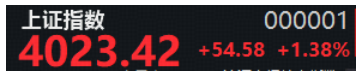
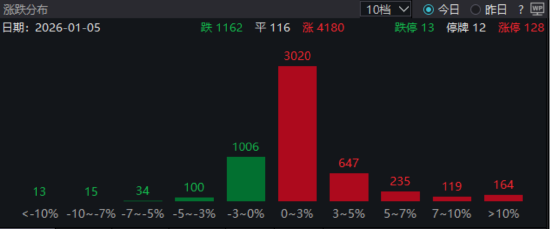
Group 1: A-Share Market Performance - The A-share market opened high and closed strong, with the Shanghai Composite Index rising by 1.38% to close at 4023.42 points, surpassing the 4000-point mark again [1] - The Shenzhen Component Index reached a new high, increasing by 2.24% to close at 13828.63 points [1] - The total trading volume exceeded 2.56 trillion yuan, indicating significant market activity [1] - Sectors such as media and pharmaceuticals led the gains, while oil and banking sectors faced declines, with over 4100 stocks rising [1] - The market outlook remains bullish, supported by the New Year effect and macroeconomic policies [1] Group 2: Hong Kong Market and Technology Sector - The Hong Kong market showed strong performance during the mainland's holiday, with the technology ETF rising over 4% [3] - The Hang Seng Index increased by 28% in 2025, marking its best annual performance since 2017 [3] - Key factors supporting the technology sector include improved macroeconomic conditions and a truce in US-China tariffs, alongside expectations of interest rate cuts by the Federal Reserve [3] - China's GDP grew by 5.2% year-on-year in the first three quarters of 2025, indicating economic resilience [3] - The AI industry's explosive growth has significantly boosted market confidence, exemplified by a 117% increase in shares of SMIC in 2025 [3] Group 3: ETF Insights - The Hong Kong Technology ETF tracks the CSI Hong Kong Stock Connect Technology Index, which includes major internet platforms and hard technology stocks [4] - The index structure allows it to benefit from both internet giants' profit releases and the growth in AI and semiconductor sectors [4] - Despite potential short-term volatility, the long-term outlook for the Hong Kong technology sector remains strong, with a favorable price-to-earnings ratio compared to US tech stocks [4] - Investors are encouraged to consider the Hong Kong Technology ETF for gradual investments to capitalize on the technology bull market [4] Group 4: Gaming Sector Performance - The gaming ETF rose by 4.55%, reflecting strong confidence in the sector's performance for 2026 [14] - The domestic gaming market's actual sales revenue surpassed 350 billion yuan in 2025, marking a 7.68% year-on-year increase [14] - The growth in the gaming sector is driven by the explosive performance of mini-program games, which generated 53.54 billion yuan in revenue, a 34.39% increase [14] - Chinese game developers are increasingly competitive globally, with overseas sales reaching $20.455 billion, a 10.23% increase [14] Group 5: Semiconductor and Storage Market - The semiconductor equipment ETF rose by 5.96%, indicating strong market interest [16] - The demand for storage products has surged, with DRAM and NAND Flash prices increasing over 300% since September [16] - The first quarter of 2026 is expected to see continued price increases in storage due to ongoing supply constraints and rising AI-related demand [16] - The semiconductor equipment sector is poised for significant growth, with order growth expected to exceed 30% in 2026 [16] Group 6: Gold Market Outlook - Gold ETFs saw increases of 2.09% and 2.41% for gold funds and gold stock ETFs, respectively [17] - Geopolitical tensions, particularly in Venezuela and ongoing conflicts in Ukraine, are expected to drive demand for gold as a safe haven [18] - The Federal Reserve's cautious stance on interest rate cuts and the ongoing trend of de-dollarization globally are likely to support gold prices in the medium to long term [18]



美国帮中国了一个大忙!美宣布对华加征关税,反助力中国补齐短板
Sou Hu Cai Jing· 2026-01-05 13:28
Core Viewpoint - The U.S. plans to impose tariffs on Chinese chips of 28nm and above starting June 2027, initially set at 0% and gradually increasing, reflecting a cautious approach due to reliance on Chinese supply chains [2][4][12]. Group 1: U.S. Tariff Announcement - The U.S. Trade Representative's office announced tariffs based on Section 301 investigations into China's semiconductor trade practices, but the timing appears late given previous tariff increases [2][4]. - The initial tariff rate of 0% for 18 months suggests a strategic delay, allowing U.S. companies to adjust to the ongoing reliance on Chinese markets [2][4][12]. Group 2: U.S.-China Semiconductor Dynamics - The U.S. is targeting 28nm technology, crucial for automotive, industrial, and IoT applications, where China has gained significant market share due to cost efficiency and rapid delivery [6][14]. - Despite U.S. efforts to maintain its competitive edge, China's investments in semiconductor manufacturing have been substantial, with over $100 billion since 2014, indicating a robust industrial foundation [6][12]. Group 3: Chinese Industry Response - Chinese companies are leveraging the 18-month window to enhance production capabilities, with firms like Huagong Technology expanding operations in Vietnam and Malaysia [8][20]. - Domestic players such as SMIC and Hua Hong are increasing their production capacities, while local funds are supporting the semiconductor sector with significant investments [8][20]. Group 4: Global Semiconductor Landscape - The U.S. semiconductor legislation has not yet yielded significant results, with high costs and slow implementation hindering domestic production [10][16]. - China's position in the global semiconductor supply chain remains strong, with imports accounting for 37% and packaging exceeding 50%, indicating a critical role in the industry [16][18]. Group 5: Future Outlook - The tariff announcement may serve as a test of China's resilience, with the potential for accelerated domestic industry consolidation and innovation in response to external pressures [18][22]. - The evolving landscape suggests that U.S. attempts to decouple from China may inadvertently strengthen China's semiconductor capabilities, positioning it for greater global influence [10][22].

资金动向 | 北水爆买港股超187亿港元,连续5日加仓华虹半导体
Ge Long Hui· 2026-01-05 12:41
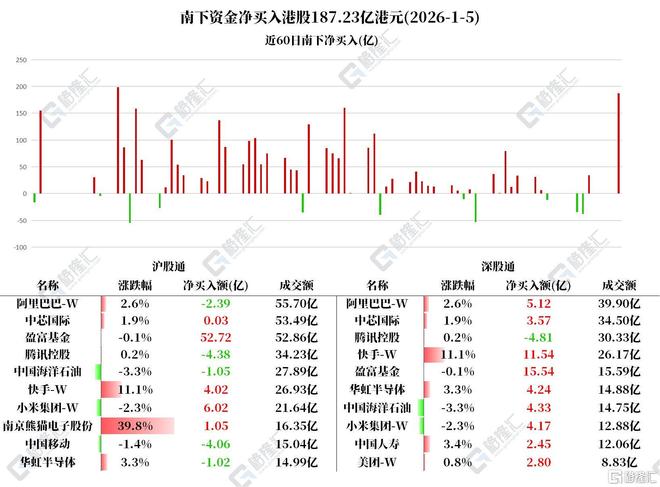
Group 1 - Southbound funds net bought Hong Kong stocks worth 18.723 billion HKD on January 5, with notable purchases including 6.826 billion HKD in the Tracker Fund, 1.556 billion HKD in Kuaishou-W, and 1.019 billion HKD in Xiaomi Group-W [1] - Tencent Holdings experienced a net sell-off of 9.18 billion HKD, marking six consecutive days of net selling totaling 4.86189 billion HKD [1] - Semiconductor companies saw increased interest, with SMIC receiving net purchases totaling 1.5115 billion HKD over three days and Hua Hong Semiconductor seeing net buys of 936.63 million HKD over five days [1] Group 2 - Kuaishou-W ranked first in graphic and design applications in South Korea and was among the top ten in markets like the US, Turkey, and Vietnam, with 500,000 downloads and 900,000 USD in revenue in December [3] - SMIC was significantly supported by the National Integrated Circuit Industry Investment Fund, which increased its stake from 4.79% to 9.25% by acquiring over 357 million shares at an average price of 74.2 RMB per share [3] - China National Offshore Oil Corporation (CNOOC) faced a decline in oil prices due to concerns over supply despite political turmoil in Venezuela, with Brent crude falling to around 60 USD per barrel [3] - Alibaba Group is launching a service to help restaurants utilize AI to showcase their environments, part of a broader strategy to compete with Meituan in the Chinese dining sector [3]
恒生指数上涨0.03% 恒生科技指数上涨0.09%
Xin Hua Cai Jing· 2026-01-05 12:04
成交额前三的个股中,阿里巴巴涨2.55%,成交超156亿港元;腾讯控股涨0.24%,成交超124亿港元; 中芯国际涨1.86%,成交超99亿港元。 (文章来源:新华财经) 整体来看,多数板块上涨,生物医药、芯片、房地产、电力、券商等股多为上涨,科网、新消费、煤 炭、有色金属等股有涨有跌,银行、新能源汽车、石油与天然气等股多有下跌。 个股方面,快手涨11.09%,小米集团跌2.33%,中国平安涨2.69%,美团涨0.76%,中国海洋石油跌 3.29%,华虹半导体涨3.32%,中国人寿涨3.40%,石药集团涨4.83%,壁仞科技跌3.66%,诺比侃涨 21.60%,英诺赛科跌9.42%,小鹏汽车跌4.60%,周大福涨5.13%,工商银行跌2.05%。 5日,港股主要指数高开后震荡整理,截至收盘,恒生指数上涨0.03%至26347.24点,恒生科技指数上涨 0.09%至5741.63点,国企指数下跌0.22%至9148.47点。 当日恒指高开22.97点,开报26361.44点,开盘上行,午前回落至开盘价附近,午后开盘在26351点附近 震荡,最终恒指涨8.77点,主板成交超2834亿港元。当日,港股通(南向)净流 ...




喜提开年红包!沪指12连阳创纪录!港股大反弹,港股通创新药ETF暴涨超5%,港股互联网ETF跳空涨超4%
Xin Lang Cai Jing· 2026-01-05 11:40
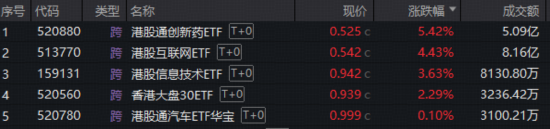
Core Viewpoint - The Chinese asset market is experiencing a strong start in 2026, with significant gains in both A-shares and Hong Kong stocks, driven by favorable monetary policies and sector-specific growth, particularly in pharmaceuticals and technology [1][24]. A-Share Market Summary - A-shares opened strongly, with the ChiNext Index rising by 2.85% and the Shanghai Composite Index surpassing 4000 points, achieving a record 12 consecutive days of gains, the longest streak since 1993, with trading volume exceeding 2.5 trillion yuan [1][24]. - The medical and healthcare sectors showed remarkable performance, with the Medical ETF (512170) increasing by 5.29%, marking its largest single-day gain since October 2024, and surpassing five key moving averages [4][26]. - The "AI twins" in the technology sector also performed well, with the Sci-Tech AI ETF (589520) rising by 4.74%, and the ChiNext AI ETF (159363) gaining over 3% to reach a new high since its listing [1][24]. Hong Kong Market Summary - The Hong Kong market also opened positively, with the Hang Seng Index rising by 2.76% and the Hang Seng Tech Index increasing by 4% on January 2, continuing to rise on January 5 [1][24]. - The Hong Kong Stock Connect Innovation Drug ETF (520880) surged by 5.42%, achieving its largest single-day gain since its launch in July 2025, with a trading volume of 5.09 billion yuan, reflecting a 263% increase from the previous day [4][28]. - The Hong Kong medical sector saw strong performance, particularly in the innovation drug segment, with 35 out of 37 covered stocks closing in the green, including notable gains from companies like InnoCare Pharma and Rongchang Bio [4][28]. Sector-Specific Insights - The brain-computer interface concept is gaining traction, with significant stock price increases in related companies, indicating a potential for substantial market growth in this area [6][28]. - The approval of 76 innovative drugs in China in 2025 set a historical record, with total transaction amounts exceeding 130 billion USD, highlighting the country's growing influence in the global pharmaceutical market [8][30]. - The technology sector, particularly in AI and semiconductor industries, is expected to continue its upward trajectory, supported by favorable policies and increasing foreign investment [1][24][15]. ETF Performance Overview - The Medical ETF (512170) recorded a trading volume of 11.66 billion yuan, a 211% increase from the previous trading day, reflecting strong investor interest in the healthcare sector [4][26]. - The Hong Kong Information Technology ETF (159131), focusing on the chip industry, rose by 3.63%, with a trading volume of 81.3 million yuan, indicating robust market activity in technology stocks [1][15]. Future Outlook - Analysts predict that the combination of domestic and international monetary policy easing will lead to continued net inflows of foreign and southbound capital, enhancing the profitability of Hong Kong-listed companies [1][24]. - The A-share market is expected to maintain its upward trend, driven by positive macroeconomic policies and a focus on technological innovation as a key driver for growth in 2026 [1][24].
图解丨南下资金净买入港股187亿港元,大幅买入快手和小米
Ge Long Hui A P P· 2026-01-05 10:28
Group 1 - Southbound funds net bought Hong Kong stocks worth 18.723 billion HKD today [1] - The top net purchases included: - Tracker Fund of Hong Kong: 6.826 billion HKD - Kuaishou-W: 1.556 billion HKD - Xiaomi Group-W: 1.019 billion HKD - SMIC: 360 million HKD - CNOOC: 328 million HKD - Hua Hong Semiconductor: 322 million HKD - Meituan-W: 279 million HKD - Alibaba-W: 272 million HKD - China Life: 245 million HKD - Nanjing Panda Electronics: 105 million HKD [1] Group 2 - Southbound funds net sold Tencent Holdings worth 918 million HKD and China Mobile worth 406 million HKD [2] - Tencent has seen a continuous net sell for 6 days, totaling 4.86189 billion HKD [2] - Hua Hong Semiconductor has experienced a continuous net buy for 5 days, totaling 936.63 million HKD [2] - SMIC has seen a net buy for 3 consecutive days, totaling 1.5115 billion HKD [2] - Xiaomi has also seen a net buy for 3 consecutive days, totaling 1.48281 billion HKD [2] Group 3 - In the Shanghai Stock Connect, Alibaba-W had a net sell of 239 million HKD with a trading volume of 5.57 billion HKD [3] - In the Shenzhen Stock Connect, Kuaishou-W had a significant increase of 11.1% with a net buy of 1.154 billion HKD [3] - Xiaomi Group-W experienced a decrease of 2.3% with a net buy of 602 million HKD [3] - Nanjing Panda Electronics saw a notable increase of 39.8% with a net buy of 105 million HKD [3]



马斯克发声,狂飙49%!
Zhong Guo Ji Jin Bao· 2026-01-05 10:24
Group 1 - Elon Musk announced that Neuralink will start large-scale production of brain-machine interfaces in 2026, leading to a surge in related stocks in Hong Kong, particularly Nanjing Panda Electronics, which saw a peak increase of 49.48% [7][10] - The brain-machine interface sector is expected to experience significant growth, driven by policy support and technological breakthroughs, as indicated by research reports from Debon Securities and Open Source Securities [10] - The healthcare industry index in the Hang Seng Composite Industry Index rose by 3.94%, reflecting positive market sentiment towards biotech and related sectors [6] Group 2 - Kuaishou's stock price increased by 11.09%, reaching HKD 73.60 per share, with a trading volume of HKD 9.898 billion, following the release of its 2025 annual trend report [11][14] - The report highlighted that Kuaishou has an average of 260 million daily users engaging with trending content, with over 38.81 million user-generated trending videos created throughout the year [14] - First Shanghai issued a "buy" rating for Kuaishou, projecting revenue growth from RMB 142.22 billion in 2025 to RMB 165.42 billion in 2027, with net profits expected to rise correspondingly [17]