SPD BANK(600000)

Search documents
银行板块持续调整 农业银行跌近3%
Mei Ri Jing Ji Xin Wen· 2026-01-21 06:40
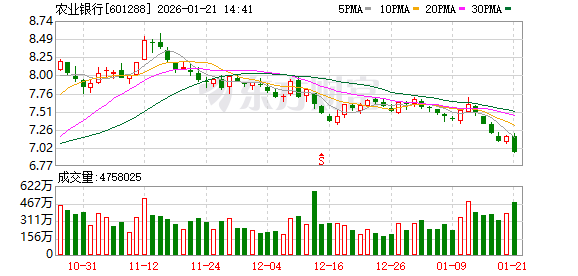
每经AI快讯,1月21日午后,银行板块持续调整,农业银行跌近3%,工商银行、中信银行、浦发银行、 重庆银行、邮储银行等跌幅靠前。 (文章来源:每日经济新闻) ...





观察|去年深圳8家银行密集“换将”,新行长们的角色之变
Nan Fang Du Shi Bao· 2026-01-21 06:03
Core Viewpoint - Shenzhen's "15th Five-Year Plan" aims to establish itself as a global "industrial financial center," raising expectations for local financial institutions, particularly banks, in their roles and responsibilities [22][23]. Group 1: Leadership Changes in Shenzhen Banks - Over the past year, at least eight commercial banks in Shenzhen have changed their leadership, including major state-owned banks and leading joint-stock banks [2]. - The appointment of Xiong Tao as the head of the Industrial and Commercial Bank of China (ICBC) Shenzhen branch reflects a strategic move to enhance the bank's focus on technology and innovation [2][4]. - Similarly, Ma Mingjun has been appointed as the head of the Bank of China Shenzhen branch, indicating a strengthened commitment to the Guangdong-Hong Kong-Macao Greater Bay Area [4][7]. Group 2: Key Appointments and Their Implications - Wang Xinghai, a veteran of China Merchants Bank, has taken over as the head of the Shenzhen branch, showcasing the bank's internal talent development strategy [9]. - Ping An Bank has also seen significant leadership changes, with Zhang Chaohui becoming the head of the Shenzhen branch, emphasizing the importance of this branch within the bank's overall strategy [11]. - New leaders at various banks, such as Shang Wencheng of China Everbright Bank and Yuan Rui of Shanghai Pudong Development Bank, are focusing on technology finance and innovative service models to meet the needs of Shenzhen's tech-driven economy [12][15]. Group 3: Strategic Focus on Technology Finance - The new leaders are expected to align their banks' strategies with Shenzhen's identity as a technology innovation hub, emphasizing the importance of "investment-loan linkage" services [12][23]. - The financial institutions are being urged to develop comprehensive service models that support the entire lifecycle of technology enterprises, particularly in critical sectors like semiconductors and advanced manufacturing [12][15]. - The shift towards a more integrated financial service approach reflects a broader trend in which banks are expected to act as "deep partners" and "comprehensive service providers" rather than just capital providers [23]. Group 4: Challenges and Future Directions - The banks in Shenzhen face challenges in transitioning from traditional financing to more complex service models, requiring enhanced risk management and understanding of emerging technologies [23]. - There is a growing need for collaboration with venture capital, insurance, and other financial institutions to meet the comprehensive needs of enterprises [23]. - The emphasis on long-term investment strategies and the establishment of a long-term assessment mechanism are critical for supporting sustainable growth in the technology sector [23].




银行已响应!信用卡分期消费贴息来了
Zhong Guo Zheng Quan Bao· 2026-01-21 04:15
农业银行发布的指引显示,信用卡用户可通过手机银行信用卡贴息专区、拨打信用卡客服热线主动签署 与查询信用卡贴息补充协议;也可在手机银行、客服等渠道办理账单分期时,按提示完成签署。 贴息支持范围扩大,信用卡账单分期业务也可以享受贴息了! "信用卡账单分期财政贴息政策实施期为2026年1月1日至2026年12月31日,在2026年1月1日至政策发布 日之间已办理的信用卡账单分期可致电我行信用卡客服热线申请补贴息。"农业银行(601288)表示。 1月20日,财政部相关负责人在新闻发布会上表示,将信用卡账单分期业务纳入了贴息支持范围。截至 目前,多家银行已经响应该政策,明确贴息举措。此外,去年9月份开始实施的个人消费贷款财政贴息 政策实施期限将延长至2026年底,每名借款人可享受消费贷款和信用卡贴息的上限为3000元。 信用卡账单分期业务可贴息 实施期覆盖2026年全年 多家银行表示,信用卡账单分期业务财政贴息政策实施期为2026年全年。 农业银行表示,新办理的信用卡账单分期业务且于政策实施期内生成的各期账单,经该行识别其真实 性、合规性后,可按规定享受贴息。 "信用卡账单分期年贴息比例是1个百分点,而且最高不超过办 ...


中小微企业贷款贴息、民间投资专项担保……财政部连发五项重要政策
Sou Hu Cai Jing· 2026-01-21 03:12
Group 1 - The Ministry of Finance and other departments have released five policy documents aimed at optimizing financial support for personal consumption loans, equipment updates, private investment guarantees, service industry loans, and small and micro enterprise loans [1][9][29] - The personal consumption loan subsidy policy has been extended until December 31, 2026, with adjustments to the subsidy standards and an expanded range of supported financial institutions [4][5][6] - The equipment update loan subsidy policy includes a 1.5% subsidy on fixed asset loans for equipment updates, applicable for up to two years, and has been expanded to include various sectors such as construction, aviation, and digital technology [10][11][12] Group 2 - The private investment guarantee plan has a total quota of 500 billion yuan, to be implemented over two years, focusing on supporting small and micro enterprises in various sectors including technology upgrades and service industry enhancements [17][18] - The plan includes a risk-sharing mechanism where banks will bear at least 20% of the loan risk, while the government guarantee fund will cover up to 80% [19] - The government will also reduce guarantee fees and increase the compensation limit for the guarantee fund to enhance support for private investments [20] Group 3 - The service industry loan subsidy policy has been extended to December 31, 2026, with an increased subsidy cap of 10 million yuan per loan and a 1% annual subsidy rate [23][24] - The policy now includes additional sectors such as digital, green, and retail industries, expanding the scope of financial support [24][25] - The implementation of these policies will involve streamlined processes for fund allocation and enhanced collaboration among financial institutions and regulatory bodies [26][28]


A股银行年度盘点:2025告别普涨,2026拥抱分化
3 6 Ke· 2026-01-21 00:59
Core Insights - In 2025, A-share listed banks in China experienced a significant shift in development logic, moving from scale competition to value creation, focusing on core business and providing precise financial services to support high-quality economic development [1][2] Group 1: Market Performance - The A-share banking sector showed notable structural differentiation in 2025, with the Shanghai Composite Index and Shenzhen Component Index rising by 18.41% and 29.87% respectively, while the banking sector index increased by 12.04% [1] - By the end of 2025, the total market capitalization of A-share banks reached 14.65 trillion yuan, with 35 out of 42 listed banks seeing their stock prices rise, and 19 banks experiencing gains exceeding 10% [1] - In contrast to the broad market rally in 2024, where the banking sector index rose by 43.56%, 2025 marked a transition to a more selective investment environment [1] Group 2: Performance of Major Banks - Agricultural Bank of China led the sector with a stock price increase of 52.66% in 2025, while other major banks like Industrial Bank, China Construction Bank, and Bank of China saw increases of 21.54%, 12.87%, and 10.75% respectively [4] - The total market capitalization of the four major state-owned banks remains dominant, with Industrial Bank at 2.63 trillion yuan and Agricultural Bank at 2.61 trillion yuan [4] - The performance of other major banks was hindered by large capital increases, as several banks announced plans to raise a total of 520 billion yuan through stock issuance [4][5] Group 3: Performance of Joint-Stock Banks - Joint-stock banks exhibited further performance differentiation in 2025, with Shanghai Pudong Development Bank leading with a 24.56% increase, while banks like Huaxia Bank, Everbright Bank, and Minsheng Bank saw declines of 9.82%, 5.59%, and 3.09% respectively [6][7] - The decline in stock prices for these banks can be attributed to poor operating performance, with Huaxia Bank and Everbright Bank reporting revenue and profit declines [8] - Regulatory penalties also impacted these banks, with Huaxia Bank facing over 120 million yuan in fines, indicating ongoing compliance pressures [10][12] Group 4: Regional and Cooperative Banks - City and rural commercial banks showed mixed performance, with Xiamen Bank rising by 35.78%, while others like Zhengzhou Bank and Beijing Bank experienced declines [11] - Regulatory penalties for city commercial banks were significant, with Shanghai Bank and Beijing Bank facing fines exceeding 3.8 million yuan and 3.6 million yuan respectively [12] Group 5: Investment Outlook for 2026 - The investment logic for bank stocks is expected to evolve towards value reassessment, with a focus on performance growth and compliance levels becoming critical for individual stock performance [19] - The banking sector is anticipated to transition from a "growth weak cycle" to a "reform deep water zone," suggesting a dual strategy of holding stable, high-dividend large banks while selectively investing in high-potential regional banks [18][19] - The average price-to-book ratio for the banking sector was approximately 0.73, indicating a structural recovery, with Agricultural Bank exceeding 1.0, while others remained below this threshold [13]




利率“探底” 中介喊“放水” 银行“开门红”信贷调查: 盛宴下的风险底线
Zhong Guo Zheng Quan Bao· 2026-01-20 21:57
年初历来是银行信贷投放的"黄金窗口期"。为冲刺"开门红"业绩,多家银行通过下调利率、提速审批来 争夺优质客户。在社交平台上,不少贷款中介借此宣称银行"悄然放宽了信贷审批标准"。 中国证券报记者调研发现,尽管银行员工为完成业绩指标(有的银行要求1月完成全年贷款任务的30% 以上)而积极营销,甚至承诺若后续贷款降息可协助客户调整利率,但所谓的审批"放水"仅是贷款中介 的营销话术。银行实际的贷款审批,依然严格遵循大数据风控模型,对客户资质与资金用途进行审慎把 控。 ● 张佳琳 李蕴奇 "这个贷款利率是近期最低价" 从事贷款中介多年的小李告诉记者:"在不同的月份,从银行贷款的'含金量'和'难度'是不同的。每年1 月都是银行'开门红'的关键期,此时从银行贷款能够实现额度放水、利率最低、审批开绿灯。" 小李特意嘱咐,哪怕现在不急着用钱,也要在1月把贷款办下来,别拖到2月。原因在于,经过1月的贷 款投放,很多银行的阶段性额度已经消耗殆尽。到了2月,银行会收紧口子,贷款审批标准也会变得严 格。 随后,记者分别以经营贷客户和消费贷客户身份,咨询了多家银行的客户经理。成都银行(601838)个 贷经理小于表示,1月正值银行"开门 ...

兴业恒生科技指数型证券投资基金(QDII)基金份额发售公告
Shang Hai Zheng Quan Bao· 2026-01-20 18:11
基金管理人: 兴业基金管理有限公司 基金托管人: 上海浦东发展银行股份有限公司 重要提示 1、兴业恒生科技指数型证券投资基金(QDII)(以下简称"本基金")的募集已获中国证监会2025年12 月19日证监许可[2025]2827号文准予募集注册。中国证监会对本基金募集的注册并不代表其对本基金的 投资价值和市场前景作出实质性判断或保证,也不表明投资于本基金没有风险。 2、本基金的基金管理人和登记机构为兴业基金管理有限公司(以下简称"本公司"、"兴业基金"),基 金托管人为上海浦东发展银行股份有限公司。 3、本基金募集对象包括符合法律法规规定的可投资于证券投资基金的个人投资者、机构投资者、合格 境外投资者以及法律法规或中国证监会允许购买证券投资基金的其他投资人。 登录新浪财经APP 搜索【信披】查看更多考评等级 本基金募集期间暂不开通C类基金份额的直销认购业务。投资者可通过其他销售机构购买本基金C类基 金份额。未来基金管理人开通本基金C类基金份额的直销业务,以基金管理人届时的公告为准。 4、本基金自2026年1月29日至2026年2月11日通过基金管理人指定的销售机构公开发售。本基金的募集 期限不超过3个月,自 ...
招行、浦发成功将卫星送上太空!通过遥感技术,银行可远程实现对楼盘贷后风险的实时监测
Mei Ri Jing Ji Xin Wen· 2026-01-20 16:13
Core Viewpoint - Multiple banks have recently launched satellites to enhance their risk management capabilities through satellite remote sensing technology, which allows for real-time monitoring of loan projects and collateral status, addressing the limitations of traditional inspection methods [3][5][6]. Group 1: Satellite Launches - On January 16, 2026, CMB's "Zhaoyin Jinkui" and SPDB's "Puyin Shuzhi" satellites were successfully launched, part of China's first global low Earth orbit satellite IoT constellation, "Tianqi Constellation" [1][3]. - This marks the third satellite launched by CMB, following "Zhaoyin 1" and "Zhaoyin 2" launched in December 2024 and March 2025, respectively [6]. Group 2: Technological Integration - The "Zhaoyin Jinkui" satellite is a low Earth orbit narrowband IoT satellite, complementing two previously launched broadband satellites, forming a collaborative communication matrix for CMB [5]. - CMB's remote sensing technology is integrated into its financial risk control system, achieving over 95% accuracy in monitoring construction progress of mortgage properties nationwide [5]. Group 3: Industry Trends - SPDB's "Puyin Shuzhi" satellite is part of the "Tianqi Constellation" and aims to enhance the bank's smart risk control and comprehensive service system, especially in extreme scenarios like natural disasters [8]. - The adoption of satellite remote sensing technology in the banking sector is becoming more widespread, with the costs of network deployment decreasing due to the ongoing commercial space boom [8].

警惕“包过话术”!银行“开门红”贷款调查
Zhong Guo Zheng Quan Bao· 2026-01-20 15:02
Core Viewpoint - Banks are reportedly relaxing credit approval standards during the "opening red" period to attract quality loan customers, although this is often exaggerated by loan intermediaries as a marketing tactic [1][3]. Group 1: Bank Strategies - Banks are engaging in a "price war" and "efficiency war" by lowering loan interest rates and speeding up approval processes to capture quality clients at the beginning of the year [2]. - For instance, China Merchants Bank offers a minimum business loan rate of 2.7% and a consumer loan rate of 3.0%, while Chengdu Bank has a consumer loan rate of 3.0% with additional incentives like cash coupons [2]. - Shanghai Pudong Development Bank has a consumer loan rate of 3.1%, which can be reduced to 3.0% with coupon usage, indicating a competitive approach to attract customers [2]. Group 2: Loan Intermediaries - Loan intermediaries are capitalizing on perceived relaxed approval standards, with over half promising "guaranteed low-interest loans" [3]. - These intermediaries often misrepresent their capabilities, claiming to have "internal channels" to secure loans, which are typically just a better understanding of bank products [3]. - Industry insiders emphasize that banks maintain strict credit approval processes, and any claims of relaxed standards by intermediaries should be approached with caution [3][4]. Group 3: Regulatory Environment - During the "opening red" period, banks do increase credit supply, but they must adhere to strict regulatory requirements, ensuring thorough due diligence on borrowers' creditworthiness and loan purposes [4]. - Legal experts warn that consumers should be wary of intermediaries making false promises, as involvement in fraudulent activities can lead to serious legal consequences, including loan fraud charges [5].
ETF复盘资讯|化工、贵金属逆市爆发!化工ETF(516020)劲涨1.27%续创阶段新高!电力ETF(159146)上市首日开门红!
Sou Hu Cai Jing· 2026-01-20 13:47
Market Overview - Major Asia-Pacific indices showed a collective decline, with the A-share market also experiencing consolidation, as the Shanghai Composite Index fluctuated while the Shenzhen Component and ChiNext indices performed weakly. The total trading volume in Shanghai, Shenzhen, and Beijing reached 2.8 trillion yuan, an increase of 72 billion yuan compared to the previous day [1] Real Estate Sector - The real estate sector rebounded strongly, with a notable increase in the price of a real estate ETF (159707) by 3.22%, marking multiple consecutive gains. According to the National Bureau of Statistics, the sales price of newly built commercial residential properties in first-tier cities decreased by 0.3% month-on-month in December 2025, with Shanghai seeing a slight increase of 0.2% [1] Chemical Sector - The chemical sector experienced a significant rally, with the chemical ETF (516020) reaching a new high since August 2022, closing up 1.27%. Major companies in the sector, such as BASF and Dow, have been raising prices across Europe, Asia, and the Middle East. The ETF attracted 1.148 billion yuan in the last ten days [1][4] - The chemical ETF has seen substantial net inflows, with over 5.8 billion yuan in net subscriptions in the last five trading days and 11 billion yuan in the last ten days. The Ministry of Industry and Information Technology has set guidelines for zero-carbon factory construction, which may limit new capacity in the chemical sector [6][7] Banking Sector - The banking sector showed resilience amid market volatility, with a significant number of bank stocks rising. The top bank ETF (512800) closed up 0.77%, ending a four-day losing streak. Historical data indicates that the banking sector has a high probability of generating absolute and excess returns before the Spring Festival, with an average return of 4.4% from 2017 to 2025 [8][11][14] - The banking sector is expected to benefit from continued growth in credit, supported by stable growth policies and a favorable low-interest-rate environment. The latest dividend yield for the banking index stands at 4.78%, significantly higher than the 10-year government bond yield of 1.84% [14][15] AI and Technology Sector - The AI and technology sectors faced a downturn, with the entrepreneurial AI ETF (159363) experiencing a four-day decline. Despite this, the sector remains attractive for future investments, particularly in light of ongoing developments in AI applications and infrastructure [16][18] - The communication and semiconductor industries are expected to see increased attention due to their potential for earnings upgrades, with significant growth anticipated in the coming years [18][20]