SPD BANK(600000)

Search documents
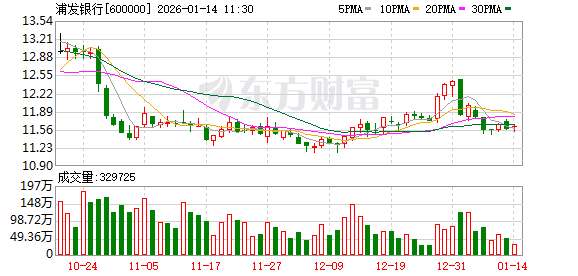
多只权重股,尾盘现巨额压单
证券时报· 2026-01-14 09:14
Market Overview - The Shanghai Composite Index experienced a strong rise in the morning, approaching 4200 points, but fell back into the red in the afternoon, closing down 0.31% at 4126.09 points [1] - The Shenzhen Component Index rose by 0.56%, and the ChiNext Index increased by 0.82%, while the STAR Market 50 Index gained 2.13% [1] - The total trading volume of the A-share market reached approximately 3.99 trillion yuan, an increase of about 288 billion yuan compared to the previous day [1] Sector Performance - The financial sector, including insurance and banking, saw a significant decline in the afternoon, with China Life Insurance dropping nearly 3% and major banks like China Merchants Bank and Industrial Bank falling over 2% [3][4] - The brokerage sector also retreated in the afternoon, with firms like Guosen Securities and Haitong Securities declining nearly 2% [3] - In contrast, the semiconductor sector showed strong performance, with stocks like Zhaoxin Technology rising nearly 15% and Jingfeng Mingyuan increasing over 13% [8] - AI application concepts remained active, with stocks such as Zhidema hitting the daily limit and achieving a cumulative increase of over 80% in four trading days [12] Regulatory Changes - The China Securities Regulatory Commission approved an adjustment to the financing margin ratio, increasing the minimum margin requirement for investors from 80% to 100% when buying securities on margin [6] AI and Semiconductor Trends - The semiconductor sector is expected to see continued demand improvement, driven by growth in PCs, smartphones, and AI servers, with a focus on domestic production as U.S. policies remain stringent [10] - AI applications are gaining traction, with companies exploring new marketing paradigms and enhancing user interaction through generative AI technologies [14]




中金:维持浦发银行“跑赢行业”评级 看好业绩可持续性
Jin Rong Jie· 2026-01-14 07:12
Core Viewpoint - The report from CICC indicates that Shanghai Pudong Development Bank (SPDB) is expected to see a revenue growth of 1.9% year-on-year in 2025, with a similar growth rate for Q4 2025 revenue. [1] - The bank's net profit attributable to shareholders is projected to increase by 10.5% year-on-year for the full year of 2025, with a notable acceleration in Q4 2025 net profit growth reaching 11.6%. [1] Group 1 - The successful conversion of SPDB's convertible bonds may lead to insufficient recognition of the company's future performance sustainability among some investors, resulting in a potential stock price correction. [1] - The company is expected to benefit from the active regional economy in the Yangtze River Delta, enhancing its customer service capabilities and operational efficiency under the "digital intelligence" strategy. [1] - There is optimism regarding the continuous improvement of the bank's funding costs and asset quality, maintaining confidence in future profit growth. [1] Group 2 - The report maintains an "outperforming the industry" rating for SPDB, with a target price set at 14.19 yuan. [1]
研报掘金丨中金:维持浦发银行“跑赢行业”评级 看好业绩可持续性
Ge Long Hui A P P· 2026-01-14 06:58
Core Viewpoint - CICC report indicates that Shanghai Pudong Development Bank (SPDB) forecasts a 1.9% year-on-year revenue growth in 2025, with a similar 1.9% growth in Q4 2025 revenue [1] - The bank expects a 10.5% year-on-year growth in net profit attributable to shareholders for the full year of 2025, with a net profit growth rate of 11.6% in Q4 2025, indicating an acceleration in quarterly growth [1] Group 1 - The successful conversion of SPDB's convertible bonds may lead to insufficient understanding among some investors regarding the sustainability of the company's future performance, resulting in a certain degree of stock price correction [1] - The company is expected to benefit from the active regional economy in the Yangtze River Delta, enhancing its customer service capabilities under the "digital intelligence" strategy, which is expected to boost operational efficiency [1] - There is optimism regarding the continuous improvement of the company's funding costs and asset quality, maintaining confidence in future profit growth [1] Group 2 - The report maintains an "outperforming the industry" rating and sets a target price of 14.19 yuan for SPDB [1]
浦发银行发布2025年度业绩快报:营收净利实现同比双增
Zheng Quan Ri Bao· 2026-01-14 04:36
(文章来源:证券日报) 同时,浦发银行不良贷款余额、不良贷款率实现"双降"。截至2025年末,浦发银行不良贷款余额为 719.90亿元,较上年末减少11.64亿元;不良贷款率为1.26%,较上年末下降0.10个百分点;拨备覆盖率 为200.72%,较上年末上升13.76个百分点。 浦发银行表示,2025年,浦发银行做深做实金融"五篇大文章",服务上海"五个中心"建设,坚定践 行"数智化"战略,持续深耕"五大赛道",纵深推进"三超"建设,不断提升服务实体经济成效,经营效益 实现较好增长,资产质量持续改善,经营发展稳健向好态势不断巩固。目前,浦发银行已形成涵盖商业 银行、信托、基金、理财、金融租赁、境外投行、科技银行、货币经纪、科技公司等多业态的经营格 局。旗下各子公司锚定高效率协同要求,强化一体化经营和统一化管理,经营成效提升明显。 本报讯 (记者金婉霞)1月13日晚,上海浦东发展银行股份有限公司(以下简称"浦发银行")发布2025 年度业绩快报。数据显示,2025年,浦发银行实现营业收入1739.64亿元,同比增加32.16亿元,同比增 长1.88%;实现归属于母公司股东的净利润500.17亿元,同比增加47 ...
经营效益延续增长 浦发银行资产总额突破10万亿
Huan Qiu Wang· 2026-01-14 03:17
经营效益增长主要得益于持续强化重点赛道、重点区域与新质生产力行业的信贷投放,推动信贷资产实 现质的有效提升和量的合理增长。强化主动资产负债管理,优化资产结构,提升资金使用效率,拓展高 质量负债来源,付息成本下降显著,净息差实现趋势企稳。资产质量持续向好,主要风险指标均创近年 来最优水平,风险抵补能力持续增强。 资产规模迈上新台阶。截至2025年末,集团资产总额突破十万亿元,达100,817.46亿元,较上年末增加 6,198.66亿元,增长6.55%;负债总额92,573.16亿元,较上年末增加5,402.17亿元,增长6.20%。 营收净利实现双增。2025年,集团实现营业收入1,739.64亿元,同比增加32.16亿元,增长1.88%。实现 归属于母公司股东的净利润500.17亿元,同比增加47.60亿元,增长10.52%。 来源:环球网 1月13日,浦发银行发布2025年度业绩快报。2025年,浦发银行做深做实金融"五篇大文章",坚定践 行"数智化"战略,持续深耕"五大赛道",纵深推进"三超"建设,不断提升服务实体经济成效,经营效益 实现较好增长,资产质量持续改善,经营发展稳健向好态势不断巩固。 资产质 ...
冲淡股价低迷影响?浦发银行去年业绩双增,资产总额超十万亿
Nan Fang Du Shi Bao· 2026-01-14 02:57
上市银行首份2025年"成绩单"发布。1月14日晚,浦发银行发布2025年度业绩快报。去年,该行营收和净利润双增 长:营收增长1.88%至1739.64亿元,归母净利润增长10.52%至500.17亿元。此外,2025年末,该行资产规模也突 破十万亿大关,达到100817.46亿元;不良贷款率则持续下降,至1.26%。 虽然业绩表现亮眼,但浦发银行股价开年以来的表现却在银行板块中靠后。分析称,随着浦发转债顺利转股落 地,部分投资者对该公司未来业绩的可持续性仍持审慎态度,股价因此承压回调。此次业绩快报能否有效提振市 场信心、带动股价回暖,仍有待进一步观察。 营收和净利润双增长 回顾浦发银行近年"成绩单",2021年至2023年可谓"失去的三年"。财报数据显示,2021年至2023年,浦发银行营 收和净利润连续三年都是负增长,尤其是2023年,净利润同比下滑28.28%,营收同比下滑8.05%。 2024年浦发银行业绩回暖,营业收入达1707.48亿元,下降1.55%;剔除上年同期出售上投摩根股权一次性因素影 响后,营业收入同比增长0.92%;实现归属于母公司股东的净利润452.57亿元,同比增加85.55亿元, ...

“马年贺岁纪念币钞”今晚开抢!银行预约攻略来了
Xin Lang Cai Jing· 2026-01-14 01:20
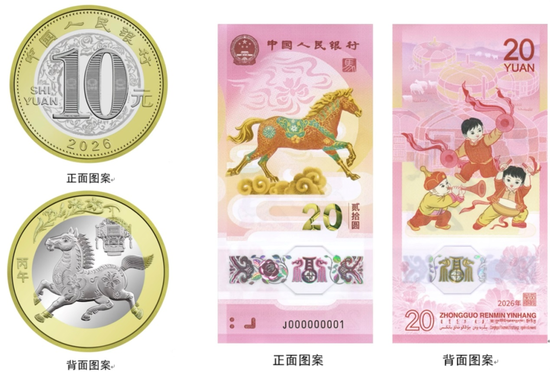
Core Viewpoint - The annual zodiac commemorative coins and banknotes for the Year of the Horse in 2026 will be available for online reservation starting at 22:00, with a limit of 20 coins and 20 banknotes per person [1][3][12]. Group 1: Product Details - The commemorative coin has a face value of 10 yuan, made of bimetallic copper alloy, with a total issuance of 100 million pieces [5][6]. - The commemorative banknote has a face value of 20 yuan, made of plastic, with a total issuance of 100 million pieces [5][6]. - The design of the coin features the "People's Bank of China" and the year "2026," while the banknote showcases a horse design along with the national emblem [3][5]. Group 2: Reservation Process - Reservations can be made through the official websites of the participating banks or at designated branches during business hours [9][10]. - Users can access the reservation page via mobile banking apps, with some banks offering streamlined processes for registered users [10]. - Each bank has different allocation limits for the coins and banknotes, with specific numbers for cities like Beijing and Tianjin [6][10]. Group 3: Market Performance - Recent years have seen a surge in public interest in zodiac commemorative coins and banknotes, with previous releases selling out within minutes [1][13]. - The secondary market for these items remains robust, with the Dragon Year commemorative items maintaining high premium prices [11][13].






上海浦东发展银行股份有限公司 2025年度业绩快报公告
Zhong Guo Zheng Quan Bao - Zhong Zheng Wang· 2026-01-14 00:39
登录新浪财经APP 搜索【信披】查看更多考评等级 本公司董事会及全体董事保证本公告内容不存在任何虚假记载、误导性陈述或者重大遗漏,并对其内容 的真实性、准确性和完整性承担法律责任。 本公告所载2025年度主要财务数据为初步核算的集团口径数据,未经会计师事务所审计,具体数据以公 司2025年年度报告中披露的数据为准,请投资者注意投资风险。 一、主要财务数据和指标 单位:人民币百万元 ■ 注: (1)基本每股收益、加权平均净资产收益率根据《公开发行证券的公司信息披露编报规则第9号一一净 资产收益率和每股收益的计算及披露(2010年修订)》计算。 基本每股收益=归属于母公司普通股股东的净利润/发行在外的普通股加权平均数。 加权平均净资产收益率=归属于母公司普通股股东的净利润/归属于母公司普通股股东的加权平均净资 产。 二、经营业绩和财务状况说明 2025年,公司深入贯彻党的二十届三中全会、四中全会会议精神,认真落实上海市委市政府决策部署及 监管要求,做深做实金融"五篇大文章",服务上海"五个中心"建设,坚定践行"数智化"战略,持续深耕 科技金融、供应链金融、普惠金融、跨境金融、财资金融"五大赛道",纵深推进超级平台 ...
浦发银行(600000):利润保持两位数增长 资产质量持续改善
Xin Lang Cai Jing· 2026-01-14 00:24
Core Viewpoint - Shanghai Pudong Development Bank (SPDB) is expected to achieve a small single-digit revenue growth in 2025, while maintaining a double-digit profit growth, aligning with expectations. The company focuses on "five major tracks," leveraging regional advantages for strong growth momentum. The optimization of asset-liability structure and the reduction of deposit benchmark interest rates have stabilized the interest margin trend. The bank has effectively controlled incremental risks, leading to a continuous decrease in non-performing loan (NPL) ratio and solidifying its risk compensation capacity. With the completion of the conversion of SPDB convertible bonds, the capital shortfall has been addressed, further opening up future development space [1]. Revenue and Profit Performance - In the performance report for 2025, SPDB achieved an operating income of 173.964 billion yuan, a year-on-year increase of 1.9% (9M25: 1.9%). The net profit attributable to shareholders reached 50.017 billion yuan, reflecting a year-on-year growth of 10.5% (9M25: 10.2%). The NPL ratio for Q4 2025 was 1.26%, a quarter-on-quarter decrease of 3 basis points, while the provision coverage ratio increased by 2.7 percentage points to 200.72% [2]. Growth Strategy and Capital Structure - The company has completed its management transition and is now focused on five major tracks: technology finance, supply chain finance, inclusive finance, cross-border finance, and financial asset management. This strategy aims to leverage regional advantages and traditional corporate business strengths. Following the completion of the SPDB convertible bond conversion, the capital shortfall has been addressed, providing ample space and motivation for expansion. On the liability side, the bank is diversifying high-quality funding sources while effectively managing costs, resulting in a significant reduction in interest expenses [3][4]. Asset Quality and Risk Management - SPDB has maintained a dual approach of controlling new risks while reducing existing ones, intensifying efforts to dispose of non-performing assets. The NPL ratio for Q4 2025 was 1.26%, marking a continuous decline for ten consecutive quarters since Q3 2023, down 109 basis points from the peak of 2.35% in Q3 2017. The provision coverage ratio increased to 200.72%, enhancing the bank's risk compensation capacity. Looking ahead to 2026, the real estate and retail risks are expected to remain industry-wide concerns, necessitating ongoing attention [5]. Future Outlook and Investment Recommendations - The bank's strategic transformation towards digitalization and the focus on five major tracks are expected to drive revenue and performance positively. Revenue growth rates are projected at 3.2% and 4.3% for 2026 and 2027, respectively, with profit growth rates of 10.1% and 10.3%. The current stock price corresponds to a 3.4% dividend yield for 2025, which remains attractive compared to government bond yields, and the valuation is supported by the economic recovery expectations despite market sentiment being subdued. A buy rating is maintained [6][7].
陆家嘴财经早餐2026年1月14日星期三
Wind万得· 2026-01-13 22:45
Group 1 - A-shares experienced a decline on January 13, with the Shanghai Composite Index down 0.64% to 4138.76 points, ending a 17-day winning streak. The total trading volume reached a record high of 3.7 trillion yuan [1] - The U.S. President Trump announced the cancellation of all talks with Iranian officials, and the U.S. State Department urged citizens to leave Iran immediately. Iran's military claimed to have enhanced its capabilities in response to security threats [1] - The Federal Reserve Chairman Powell is under criminal investigation, with former financial officials criticizing the Trump administration's actions. Global central bank leaders are drafting a statement in support of Powell [1] Group 2 - Trump threatened to impose a 25% tariff on countries doing business with Iran, prompting a response from China's Foreign Ministry, which emphasized the need to maintain the stability of global supply chains for critical minerals [4] - The Ministry of Industry and Information Technology held a meeting with representatives from key industries, emphasizing participation in industry rule-making and self-regulation to resist "involution" [4] - The Ministry of Civil Affairs and other departments introduced 14 measures to promote high-quality development in elderly care services, with the elderly population expected to reach 310 million by 2024 and over 400 million by 2035 [4] Group 3 - The Hong Kong Hang Seng Index rose 0.9% to 26848.47 points, with medical stocks performing well. Southbound funds recorded a net purchase of 1.296 billion Hong Kong dollars [6] - The ETF management scale of Huaxia Fund surpassed 1 trillion yuan, marking a milestone in the domestic ETF market [6] - Two "commercial aerospace" concept stocks received regulatory warnings for inaccurate and incomplete information disclosures [6] Group 4 - A survey indicated that over 70% of insurance investment officers are optimistic about the investment outlook for 2026, with a preference for increasing equity asset allocations [7] - As of January 13, 186 listed companies had been investigated by institutions, with a focus on sectors like brain-computer interfaces and commercial aerospace [7] - More than 140 companies in the A-share market released performance forecasts for 2025, with 63 companies expecting profit increases [7] Group 5 - Companies in the mining sector are expected to see significant profit growth in 2025 due to rising gold prices, with companies like Chifeng Jilong Gold and Zijin Mining forecasting substantial profit increases [8] - The passing of David Webb, a prominent activist investor in Hong Kong, has raised concerns about the impact on the market [8] - China Europe Fund announced the suspension of certain fund activities, indicating a tightening of investment conditions [8] Group 6 - The Ministry of Industry and Information Technology outlined a plan for the development of industrial internet platforms, aiming for over 450 influential platforms by 2028 [11] - The Ministry of Commerce announced the continuation of anti-dumping duties on imported solar-grade polysilicon from the U.S. and South Korea [11] - A new round of high-value medical consumables procurement is set to open bidding, involving 12 types of medical consumables [11] Group 7 - Jiangsu Province released an "Artificial Intelligence+" action plan, targeting a trillion-yuan industry scale by 2027 [12] - The used car market in China is projected to exceed 20 million transactions in 2025, with a notable increase in the share of electric vehicles [12] - Significant advancements have been made in the development of high-performance sodium-ion battery materials [12] Group 8 - The global hedge fund industry achieved a 12.6% return in 2025, marking the strongest annual performance since the 2009 financial crisis [20] - JPMorgan reported a fourth-quarter revenue of $45.798 billion, exceeding market expectations, despite a decline in investment banking performance [20]