CMBC(600016)

Search documents
25Q4基金对银行持仓点评:主动基金环比持平,被动基金增持
GUOTAI HAITONG SECURITIES· 2026-01-23 11:10
Investment Rating - The report assigns an "Overweight" rating for the banking sector [4]. Core Insights - In Q4 2025, the proportion of active funds holding banks remained stable at 1.9%, while passive funds increased their holdings by 1.6 percentage points to 7.0%. Notable banks that received increased allocations from active funds include Ningbo Bank, Industrial Bank, Bank of China, and China Construction Bank [2][4]. - Active funds saw a decrease in the number of shares held by 5.0% to 2.56 billion shares, with a slight decline in market value by 0.4% to 30.58 billion yuan. Conversely, passive funds increased their holdings by 25.7% to 6.14 billion shares, with a market value increase of 31.3% to 110.4 billion yuan [4][14]. - The report highlights specific banks with significant changes in fund holdings, such as Industrial Bank (+1.23 percentage points) and Agricultural Bank (-0.13 percentage points) [4][15]. Summary by Sections Fund Holdings Overview - Active funds' market value in banks decreased slightly to 30.58 billion yuan, while passive funds' market value rose to 110.4 billion yuan, indicating a shift towards passive investment strategies [4][14]. - The report identifies banks with increased fund holdings, including Ningbo Bank (+0.08 percentage points), Industrial Bank (+0.05 percentage points), and Bank of China (+0.04 percentage points) [4][15]. Investment Recommendations - The report suggests focusing on three main investment themes for the banking sector in 2026: 1. Identifying banks with expected performance growth, recommending Ningbo Bank, China Merchants Bank, and Nanjing Bank. 2. Emphasizing banks with convertible bond expectations, recommending Chongqing Bank and Changshu Bank, with Shanghai Bank as a related target. 3. Continuing a dividend strategy, recommending Bank of Communications, Jiangsu Bank, Chongqing Rural Commercial Bank, and Shanghai Rural Commercial Bank [4][17].





民生银行中层调整 涉及北京、广州分行
Xin Lang Cai Jing· 2026-01-23 09:05
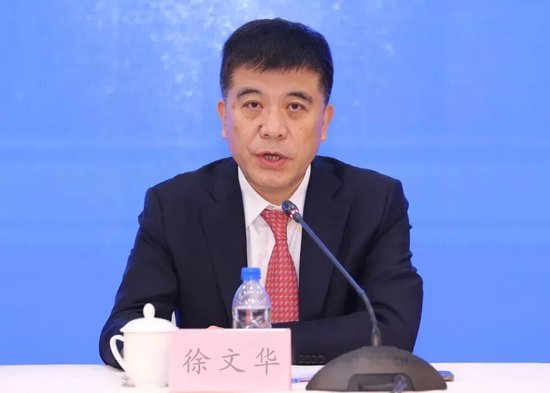
Group 1 - The core decision of Minsheng Bank's board is to absorb and merge Minsheng Village Bank, which has established 29 village banks, making it one of the institutions with the most village banks among joint-stock banks [1][17] - In early 2026, Minsheng Bank accelerated its "village to branch" transformation, increasing its stake in Ningjin Minsheng Village Bank to 95% and planning to establish branch offices [1][17] - The Linzhi Minsheng Village Bank was approved for dissolution, and a secondary branch, Linzhi Branch, was established [1][17] Group 2 - Personnel changes occurred at multiple first-level branches of Minsheng Bank at the beginning of the year, including the transfer of Xu Wenhua from Guangzhou Branch to Chief Specialist at Hangzhou Branch [3][20] - Guo Dai, previously the General Manager of the Credit Management Department at the head office, was appointed as the President of Guangzhou Branch [5][22] - Sun Lin, the Vice President of Beijing Branch, is proposed to be transferred to Guangzhou Branch as Vice President [7][24] Group 3 - Liu Yanbo's appointment as Vice President of Beijing Branch was approved; he has held various positions within Minsheng Bank, including General Manager of the Network Finance Department [9][26] - The management team of the Credit Card Center underwent significant changes, with new appointments including General Manager Sun Xing and three Vice General Managers [13][28] - As of June 2025, the credit card overdraft balance of Minsheng Bank was 449.90 billion, a decrease of 27.34 billion from the end of 2024 [13][28] Group 4 - Minsheng Bank's financial leasing subsidiary, Minsheng Jinzu, has a registered capital of 5.095 billion and is 54.96% owned by Minsheng Bank; as of June 2025, it had total assets of 176.91 billion and net assets of 24.32 billion [14][31] - The bank's total assets as of June 2025 were reported at 3.29 trillion, with 43 first-level branches and 33 directly controlled subsidiaries [15][32] - The bank employs a total of 59,279 staff, with 6,176 in management positions and 53,103 in professional roles [15][32] Group 5 - Minsheng Bank's recent personnel adjustments reflect a trend of rotation among executives across the head office, branches, and subsidiaries, aiming to optimize the age and professional structure of its leadership team [16][33] - The bank is focused on enhancing the selection and training of backup talent, emphasizing youth, professionalism, and practical experience in its selection criteria [16][34] - The bank aims to improve the scientific and precise nature of talent selection through innovative interview processes and increased candidate engagement [16][34]


民生银行创新多元消费场景 助力民生消费
Qi Lu Wan Bao· 2026-01-23 03:23
Core Viewpoint - Minsheng Bank is transitioning from traditional payment functions to building a comprehensive ecosystem that connects consumers, merchants, and the bank [1] Group 1: Online Platform Integration - The "All People's Life" App serves as the core platform for credit card business, continuously upgrading with embedded services covering high-frequency life scenarios such as public payments, entertainment, transportation, fitness, and healthcare, enabling precise customer profiling and "concierge-style" services [2] - The new version of the mobile banking App 10.0 focuses on wealth management, smart accounting, and security services, introducing AI features like digital human services, smart search, and customer service, while creating proprietary festivals to enhance user engagement and activity [2] - Payment optimization includes one-click binding with mainstream payment platforms like WeChat and Alipay, allowing users without Minsheng Bank cards to log in via phone number to access wealth management and lifestyle benefits [2] Group 2: Offline Scene Coverage - Collaboration with China UnionPay has led to the creation of a customer acquisition model within the UnionPay ecosystem, promoting the "UnionPay Ecological Card" nationwide, allowing users to access and use UnionPay coupons through Minsheng's mobile banking [3] Group 3: Targeted Customer Segmentation - Minsheng Bank has launched customized products to meet the diverse and personalized consumption demands of different customer segments, including a credit card for new citizens featuring designs that enhance their sense of belonging [4] - For car owners, the bank introduced automotive-themed credit cards and a co-branded card with PetroChina, offering extensive charging benefits for the electric vehicle market [4] - A new credit card for the elderly will be issued, featuring lifetime fee waivers, free transaction alerts, fraud insurance, personal doctor services, and one-click customer service to help seniors bridge the "digital divide" [4][5] Group 4: Financial Support to Boost Consumption - Beyond payment convenience and discounts, Minsheng Bank provides flexible credit support to lower consumption barriers and enhance residents' quality of life [6] Group 5: Scenario-Based Installment Services - The bank collaborates with platforms like Taobao and JD.com to offer installment services with discounts and interest-free options for essential and quality consumption scenarios, particularly in the context of national policies promoting the replacement of consumer goods [7] Group 6: Supply Chain Financial Empowerment - As a pioneer in supply chain finance, Minsheng Bank offers financing support to small and micro enterprises through its "Minsheng E-Chain" product series [8] - The bank innovates with a "guidance-based credit" model to provide unsecured loans to small and micro enterprises that do not meet traditional credit standards but have sound operations, alongside a dedicated app for easy loan applications and digital currency payments [10] Group 7: Comprehensive Strategy - Minsheng Bank's innovative consumption strategy is a multi-faceted initiative leveraging digital platforms, extensive ecosystem partnerships, precise customer segmentation, and flexible financing solutions to create a virtuous cycle benefiting users, merchants, and the bank [10]
民生银行:创新数据质押融资 让数据资产“活”起来
Sou Hu Cai Jing· 2026-01-23 02:11
Core Insights - The article emphasizes the importance of data as a new production factor driving high-quality economic development, highlighting the need for market-oriented reforms in data asset allocation [1] - It discusses the challenges of measuring data asset value and clarifying ownership, which have led to a significant amount of data remaining "asleep" and not being utilized for business growth [1] Group 1: Data Asset Development - Qingdao West Coast Public Utility Group has taken significant steps in data asset exploration by being selected as one of the first digital economy industry innovation centers in Shandong Province [1] - The company has launched 15 diverse data products, including datasets, algorithm models, and analysis reports at the Qingdao Big Data Trading Center, and established mutual recognition with 24 domestic data exchanges [1] Group 2: Collaboration and Financing - The collaboration between Qingdao West Coast Public Utility Group and Minsheng Bank's Qingdao branch has led to a successful case of data asset pledge financing, where a loan of 30 million yuan was issued based on the AI Perception Prediction Model [2] - The AI Perception Prediction Model, a core data asset, utilizes a one-stop AI platform and includes 11 algorithm models for real-time video monitoring and alert generation, demonstrating its high application value in public service [2] Group 3: Impact on Financing and Industry - The successful implementation of data asset pledge financing represents a breakthrough in addressing financing difficulties for small and medium-sized enterprises, transforming dormant data assets into tangible financial resources [3] - The practice of the AI Perception Prediction Model not only helps enterprises realize the strategic value of their data resources but also promotes the overall digital transformation of society [3] - Minsheng Bank aims to continue developing customized financial products in the data finance sector to support enterprises in their digital transformation and foster the integration of the digital economy with the real economy [3]
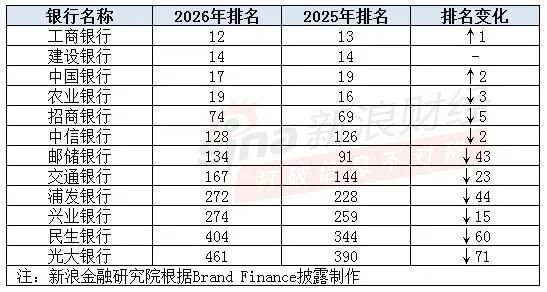
谁能跻身全球品牌价值500强?光大银行下滑71名,民生银行降60名
Xin Lang Cai Jing· 2026-01-23 01:08
Group 1: Core Insights - The Brand Finance 2026 Global Brand Value 500 report was released, highlighting the performance of various banks and insurance companies [1][7] - Chinese brands have shown a double-digit growth in total value, indicating strong resilience and potential for future growth [7] Group 2: Banking Sector Summary - Major Chinese banks included in the ranking are Industrial and Commercial Bank of China (ICBC) at 12th, China Construction Bank at 14th, and Bank of China at 17th, with ICBC holding a brand value of $90.88 billion and a brand strength index of 91.5 [2][3] - China Bank surpassed Agricultural Bank, which dropped to 19th place, while China Merchants Bank ranked 74th as the highest among joint-stock banks [3][4] - Notable declines were observed for China Everbright Bank, which fell 71 places to 461st, and Minsheng Bank, which dropped 60 places to 404th [1][4] Group 3: Insurance Sector Summary - Among the insurance companies, Ping An Insurance ranked 32nd globally, being the only Chinese insurer in the top 100, with a brand strength rating of AAA- [5][6] - Other insurers like China Life and China Pacific Insurance also maintained positions within the top 200, while Prudential Insurance saw a significant drop of 117 places to 350th [5][6] - Notably, Cathay Life Insurance improved its ranking by 180 places to 407th [6] Group 4: Overall Brand Performance - The report indicates that 12 Chinese brands made it to the top 50 globally, with Douyin's brand value increasing by 45.1% to $153.54 billion, ranking 6th [7] - State Grid Corporation achieved a brand value of $102.44 billion, ranking first in the global utility sector, with a 19.6% increase in brand value [8]



多家银行开启 信用卡分期贴息补申请通道
Bei Jing Shang Bao· 2026-01-23 01:05
Core Viewpoint - The new personal consumption loan interest subsidy policy aims to enhance consumer spending by expanding the scope of eligible loans and simplifying the application process for consumers [1][4]. Group 1: Policy Implementation - The Ministry of Finance, the People's Bank of China, and the financial regulatory authority jointly issued a notice to optimize the implementation of the personal consumption loan interest subsidy policy [1]. - The subsidy period for personal consumption loans is set from September 1, 2025, to December 31, 2026, while the credit card installment subsidy period is from January 1, 2026, to December 31, 2026 [1]. - Major banks, including ICBC, ABC, Bank of China, and others, have quickly responded by issuing operational guidelines and FAQs regarding the subsidy services [1][2]. Group 2: Eligibility and Application Process - Customers who have previously signed consumption loan subsidy agreements do not need to re-sign; the new policy will automatically apply to their existing loans [2]. - For credit card installment services newly included in the subsidy, banks like Postal Savings Bank and Agricultural Bank have outlined specific application paths for customers [2][3]. - Agricultural Bank requires customers to sign a supplementary agreement for credit card installment subsidies, with each card needing a separate agreement [3]. Group 3: Impact on Interest Rates - The new policy includes a 1% annual subsidy rate for credit card installments, which could lower the effective interest rate for eligible borrowers to the "2% range" after subsidies [4]. - The minimum execution interest rate for consumption loans remains at 3%, indicating potential benefits for borrowers with good credit ratings [4].



黄金涨个不停,“挂钩存款”卖爆了
Qi Lu Wan Bao· 2026-01-22 16:11
Core Insights - Gold prices have been on the rise since 2025, leading to a surge in demand for gold-linked structured deposit products from various banks, with some products offering annualized returns as high as 8% [1] Group 1: Product Offerings - Multiple banks have launched gold-linked structured deposit products, with variations in minimum investment, duration, and yield, resulting in some popular products being sold out [1] - China Bank introduced a product with a minimum investment of 10,000 yuan and a term of 87 days, offering an annualized yield ranging from 0.2% to 5.2% [2] - Other banks, such as the Bank of Communications and Minsheng Bank, have also released competitive products with varying yields and investment thresholds [2] Group 2: Market Trends - As of December 2025, the balance of structured deposits in Chinese banks reached 4.25 trillion yuan, marking a year-on-year growth of 6.01%, with unit structured deposits accounting for 69.49% of the total [3] - The trend of companies investing in structured deposits has increased, with numerous A-share companies announcing investments in gold-linked products [3] Group 3: Investment Appeal - The popularity of structured deposits is attributed to their dual advantages of capital protection and higher returns compared to traditional savings, especially in a low-interest-rate environment [4] - The rising gold prices, driven by its safe-haven and anti-inflation properties, have made gold-linked structured deposits attractive for investors seeking to capitalize on market gains [5]

多家银行发文明确信用卡账单分期贴息细节,开启补申请通道
Bei Jing Shang Bao· 2026-01-22 09:37
Core Viewpoint - The Chinese government has introduced a new personal consumption loan interest subsidy policy, which aims to enhance consumer spending and stimulate the economy by providing financial incentives through interest subsidies on personal loans and credit card installments [1][3]. Group 1: Policy Implementation - The new subsidy policy will be effective from September 1, 2025, to December 31, 2026, for personal consumption loans, while the credit card installment subsidy period will be from January 1, 2026, to December 31, 2026 [3]. - The policy expands the support scope by including credit card installment payments for the first time, with a subsidy rate of 1% per annum, and removes previous restrictions on consumption areas [3][4]. Group 2: Bank Responses - Major banks such as ICBC, ABC, BOC, CCB, and others have quickly responded by issuing operational guidelines and clarifications regarding the implementation of the subsidy policy [2][3]. - Banks have confirmed that customers who have already signed consumption loan subsidy agreements will automatically benefit from the new policy without needing to re-sign agreements [4][5]. Group 3: Customer Guidance - Customers are required to sign a supplementary agreement for credit card installment subsidies, with each card needing a separate agreement to benefit from the subsidy during the policy period [5][6]. - Banks are advised to streamline the process for customers to access the subsidy, including online application portals and clear communication of interest rates and subsidy limits [6][7]. Group 4: Market Impact - The minimum execution interest rate for consumption loans remains at 3%, but with the subsidy, the effective interest rate for eligible borrowers could potentially drop to the "2% range" [7].

银行行业资金流出榜:招商银行、华夏银行等净流出资金居前
Zheng Quan Shi Bao Wang· 2026-01-22 09:25
Market Overview - The Shanghai Composite Index rose by 0.14% on January 22, with 22 out of the 28 sectors experiencing gains. The top-performing sectors were building materials and defense, with increases of 4.09% and 3.23% respectively. The banking sector was among the top decliners, down by 0.43% [1] Capital Flow Analysis - The main capital flow showed a net outflow of 21.612 billion yuan across the two markets. However, 12 sectors saw net inflows, with the telecommunications sector leading at a net inflow of 8.019 billion yuan and a daily increase of 2.83%. The defense sector also performed well, with a net inflow of 5.713 billion yuan and a daily increase of 3.23% [1] - Conversely, 19 sectors experienced net outflows, with the electronics sector leading at a net outflow of 13.206 billion yuan, followed by the power equipment sector with a net outflow of 7.206 billion yuan. Other sectors with significant outflows included non-ferrous metals, automobiles, and pharmaceuticals [1] Banking Sector Performance - The banking sector saw a decline of 0.43% with a net outflow of 545 million yuan. Out of 42 stocks in this sector, 26 rose while 14 fell. Notably, 25 stocks had net inflows, with Jiangsu Bank leading at a net inflow of 224 million yuan, followed by Bank of Communications and Minsheng Bank with inflows of 152 million yuan and 98.929 million yuan respectively [2] - The stocks with the highest net outflows included China Merchants Bank, Huaxia Bank, and Shanghai Pudong Development Bank, with outflows of 743 million yuan, 184 million yuan, and 156 million yuan respectively [2] Individual Stock Performance - The following table summarizes the performance of key banking stocks based on their net capital flow and daily change: | Stock Code | Stock Name | Daily Change (%) | Turnover Rate (%) | Net Capital Flow (10,000 yuan) | | --- | --- | --- | --- | --- | | 600036 | China Merchants Bank | -1.02 | 0.91 | -7426.622 | | 600015 | Huaxia Bank | -0.92 | 0.82 | -1836.242 | | 600000 | Shanghai Pudong Development Bank | -1.02 | 0.46 | -1555.792 | | 601939 | China Construction Bank | -1.92 | 1.44 | -1473.762 | | 601988 | Bank of China | -0.56 | 0.12 | -1247.776 | | 601288 | Agricultural Bank of China | -2.16 | 0.15 | -504.228 | | 601166 | Industrial Bank | -1.33 | 0.69 | -398.051 | | 601998 | CITIC Bank | -1.58 | 0.17 | -213.897 | | 002936 | Zhengzhou Bank | 0.53 | 1.30 | -147.699 | | 601665 | Qilu Bank | 1.65 | 0.89 | -144.610 | | 601577 | Changsha Bank | 0.75 | 0.32 | -122.400 | | 601187 | Xiamen Bank | -1.40 | 0.49 | -100.037 | | 603323 | Suning Bank | 1.01 | 1.52 | -89.489 | | 002839 | Zhangjiagang Bank | 0.90 | 1.07 | -67.650 | | 002958 | Qingnong Commercial Bank | 0.97 | 0.86 | -54.434 | | 601963 | Chongqing Bank | 0.10 | 0.48 | -44.601 | | 601997 | Guiyang Bank | 0.35 | 0.71 | -9.478 | | 600928 | Xi'an Bank | 0.82 | 0.49 | 47.776 | | 601860 | Zijin Bank | 0.73 | 1.18 | 49.415 | [2][3]


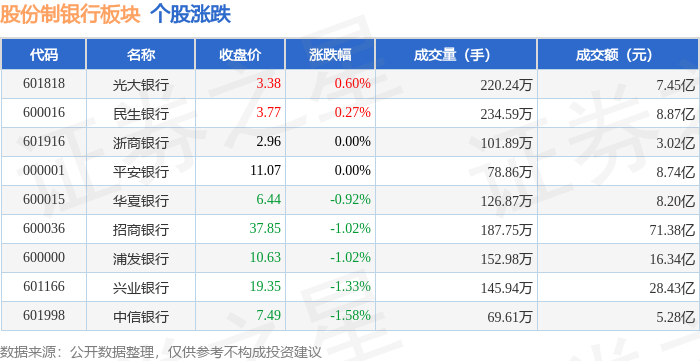
股份制银行板块1月22日跌0.86%,中信银行领跌,主力资金净流出9.6亿元
Zheng Xing Xing Ye Ri Bao· 2026-01-22 09:01
从资金流向上来看,当日股份制银行板块主力资金净流出9.6亿元,游资资金净流出2.76亿元,散户资金 净流入12.36亿元。股份制银行板块个股资金流向见下表: | 代码 | 名称 | 收盘价 | 涨跌幅 | 成交量(手) | 成交额(元) | | --- | --- | --- | --- | --- | --- | | 601818 | 光大银行 | 3.38 | 0.60% | 220.24万 | 7.45 Z | | 600016 | 民生银行 | 3.77 | 0.27% | 234.59万 | 8.87亿 | | 601916 | 浙商银行 | 2.96 | 0.00% | 101.89万 | 3.02亿 | | 000001 | 平安银行 | 11.07 | 0.00% | 78.86万 | 8.74亿 | | 600015 | 华夏银行 | 6.44 | -0.92% | 126.87万 | 8.20亿 | | 600036 | 招商银行 | 37.85 | -1.02% | 187.75万 | 71.38亿 | | 600000 | 浦发银行 | 10.63 | -1.02% | 152.98万 ...