
CM BANK(600036)

Search documents
指尖办、就近办、省心办 招商银行以金融科技赋能民生服务
Shang Hai Zheng Quan Bao· 2026-03-16 08:09
Core Viewpoint - The article emphasizes the transformation of China Merchants Bank's services from traditional branch-based operations to accessible online services and digital tools, enhancing customer experience and integrating financial services into daily life [1][17]. Group 1: Digital Financial Services - China Merchants Bank has developed a one-stop service platform for social insurance and housing fund management, allowing users to view their account balances in one place, thus eliminating the hassle of navigating multiple platforms [2][18]. - The bank has integrated AI and digital technologies into its services, creating a "chat and process" model that allows customers to complete transactions seamlessly during consultations [4][20]. - The bank has introduced a digital RMB payment system for housing fund withdrawals in real estate transactions, enhancing transparency and security in the process [4][21]. Group 2: Elderly Care and Accessibility - The bank has upgraded its app for elderly users, making it more user-friendly with larger fonts and simplified navigation, and has introduced a dedicated hotline for seniors [5][22]. - In physical branches, the bank has implemented various accessibility features, including specialized staff and equipment to assist elderly customers, ensuring they are not left behind in the digital age [7][24]. Group 3: Consumer Empowerment and Economic Growth - China Merchants Bank is actively supporting national strategies to boost domestic demand by embedding financial services into everyday consumer scenarios, thus enhancing market vitality [8][25]. - The bank has launched various promotional activities aligned with government consumption policies, including special offers during major holidays and events to stimulate consumer spending [9][26]. - The bank is focused on providing financial education to new employment groups, such as gig economy workers, to enhance their financial literacy and security [10][27]. Group 4: Commitment to Community and Future Plans - The bank is dedicated to serving the community by addressing everyday challenges and supporting vulnerable groups, demonstrating a commitment to a people-centered approach [16][32]. - Future plans include further innovation in digital financial services and enhancing the quality and efficiency of services to contribute to high-quality economic development [33].



2025H2公募基金代销保有规模点评:银行加速股票型指数基金布局,招行主动基金代销独占鳌头
GUOTAI HAITONG SECURITIES· 2026-03-16 05:16
Investment Rating - The report assigns an "Overweight" rating for the industry, indicating a positive outlook compared to the benchmark index [6]. Core Insights - The report highlights that by the end of 2025, the net asset value of non-monetary public funds reached approximately 22.7 trillion yuan, reflecting a 12.5% increase from mid-year. This growth is attributed to a vibrant capital market performance in the second half of the year, with the Shanghai Composite Index and the Wind All A Index rising by 15.9% and 21.7%, respectively [6]. - Within the equity fund category, the report notes that actively managed funds and index funds had net values of 4.2 trillion yuan and 5.5 trillion yuan, respectively, with growth rates of 1.7% and 29.2% from mid-year [6]. - The market share of banks in the distribution of non-monetary funds decreased by 0.3 percentage points to 21.3%, while the market shares of actively managed equity funds and stock index funds increased by 3.2 percentage points and 0.2 percentage points to 47.9% and 6.5%, respectively [6]. Summary by Sections Fund Market Overview - By the end of 2025, the total net asset value of non-monetary public funds was approximately 22.7 trillion yuan, with equity funds and bond funds valued at 9.7 trillion yuan and 13.0 trillion yuan, respectively [6]. - The report indicates that the top 100 fund distribution institutions saw an increase in market concentration, with non-monetary funds and equity funds' market shares rising to 51.4% and 61.4%, respectively [6]. Bank Performance - The report details that the total non-monetary fund holdings of banks grew by 10.8% to 4.8 trillion yuan, with actively managed equity funds increasing by 1,688 billion yuan (9% growth) and stock index funds by 902 billion yuan (34% growth) [6]. - Notably, 22 banks consistently ranked in the top 100, with China Merchants Bank leading the sector. The report also highlights significant growth rates for banks like WeBank (39%), GF Bank (37%), and Jiangsu Bank (29%) [6]. Competitive Landscape - The report identifies Ant Fund and Tiantian Fund as the top third-party institutions in terms of non-monetary and equity fund holdings, with Ant Fund's actively managed fund growth matching that of China Merchants Bank at 1,034 billion yuan [6]. - The report emphasizes that while banks have seen growth in stock index funds, the growth rates of these funds are generally higher among third-party institutions [6].
招商银行呼和浩特分行启动 “3·15”金融消费者权益保护教育宣传活动 探索金融教育新范式
Zhong Guo Jin Rong Xin Xi Wang· 2026-03-16 03:10
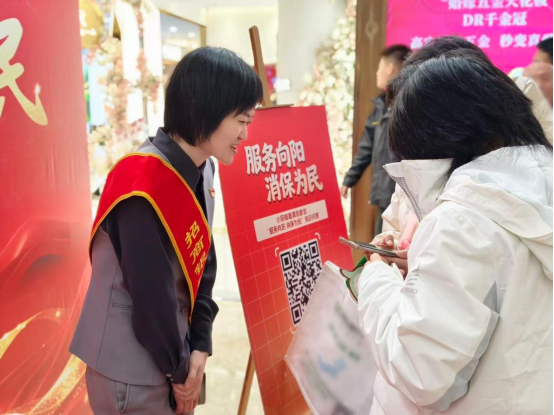
Core Viewpoint - The article highlights the launch of a financial consumer rights protection education campaign by China Merchants Bank in Hohhot, focusing on enhancing financial literacy and consumer protection through innovative and engaging methods [1]. Group 1: Event Overview - The campaign, themed "Clear Financial Network, Protect Safe Consumption," was initiated in key areas to promote financial knowledge and consumer rights [1]. - The event employs a multi-faceted approach combining online and offline activities, professional and entertaining elements, as well as traditional and technological methods [1]. Group 2: Integration of Party Building and Consumer Protection - The event integrates party building with consumer rights protection, guided by the principle of "Serving the Sun, Finance for the People" [2]. - An online quiz area was established to engage citizens, covering essential topics such as party spirit, financial policies, and personal information protection [2]. Group 3: Youth Involvement and Volunteer Services - The professional team from China Merchants Bank organized the event, showcasing high levels of professionalism and execution [4]. - A youth volunteer team provided one-on-one consultations, case explanations, and distributed educational materials, embodying the mission of "Finance for the People" [4]. Group 4: Innovative Educational Formats - The bank created three innovative educational scenarios to enhance engagement and knowledge retention [6]. - A "Financial Safety Defense Battle" immersive escape room was designed to teach participants about identifying fraudulent financial advertisements and information leakage risks through interactive challenges [6]. - A community interaction activity titled "Answer Questions to Win Fruits and Vegetables" incentivized residents to participate in financial knowledge quizzes by offering fresh produce as rewards [8]. - A financial consumer protection stand-up comedy show and an original song were introduced to convey important financial safety messages in an entertaining manner, making learning enjoyable [10]. Group 5: Commitment to Ongoing Education - China Merchants Bank in Hohhot aims to continuously explore new paths and models for financial education, contributing to a safe and harmonious financial consumption environment [12].
再融资政策优化,资管规模稳步提升
HTSC· 2026-03-16 02:20
Investment Rating - The report maintains an "Overweight" rating for the banking and securities sectors [10] Core Insights - The optimization of refinancing policies is expected to support the development of asset management products, with a long-term upward trend in the capital market [2] - The asset management industry is characterized by stable growth across various segments, including bank wealth management, public funds, insurance asset management, trust, and private equity [17] Summary by Sections Bank Wealth Management - In February, the total number of newly issued wealth management products decreased by 17.8% month-on-month, with a total of 2,243 products issued [3] - The total outstanding scale of bank wealth management products reached 31.67 trillion yuan, a slight increase of 0.10 trillion yuan month-on-month [3][37] - The average yield for wealth management products was 1.70%, down 192 basis points from the previous month [3] Public Funds - In February, the issuance of public funds was 90.6 billion units, a decrease of 25% month-on-month [4] - The total market size of public funds was 36.31 trillion yuan, with a slight increase of 0.03% month-on-month [4] Private Funds - As of the end of January 2026, the total scale of private fund products was 22.44 trillion yuan, with a month-on-month increase of 1.30% [6] - In January, the newly registered scale of private funds was 64.1 billion yuan, a year-on-year increase of 38% [6] Insurance Asset Management - By the end of Q4 2025, the balance of insurance funds reached 38.48 trillion yuan, a year-on-year increase of 16% [7] - The proportion of stock investments in insurance asset management increased by 0.65 percentage points month-on-month [7] Securities Asset Management - As of the end of Q3 2025, the scale of securities asset management was 6.37 trillion yuan, with a quarter-on-quarter increase of 4% [5] - In February, the newly issued scale was 4.574 billion units, a decrease of 42% month-on-month [5] Trust - As of the end of June 2025, the industry asset scale was 32.43 trillion yuan, an increase of 10% from the beginning of 2025 [8] - In February, a total of 933 trust products were issued, amounting to 101.1 billion yuan, a month-on-month decrease of 25% [8]



招商银行拟赎回275亿优先股规模年内第二 归母净利首超1500亿不良率连续5年低于1%
Chang Jiang Shang Bao· 2026-03-15 23:17
Core Viewpoint - China Merchants Bank (CMB) plans to fully redeem its preferred shares "Zhaoyin You1" issued in December 2017, amounting to 27.5 billion yuan, on April 15, 2026, as part of its strategy to optimize capital structure and reduce costs in a declining interest rate environment [1][2][3]. Group 1: Preferred Share Redemption - CMB's redemption scale of 27.5 billion yuan ranks second among domestic banks, following Everbright Bank's redemption of 35 billion yuan [2]. - The core logic behind the redemption is to lower financial costs and optimize capital structure, as the preferred share's coupon rate of 4.81% is significantly higher than the average rate of 2.43% for perpetual bonds [3][4]. - By redeeming these preferred shares, CMB is expected to save approximately 1.323 billion yuan annually in fixed dividend payments, enhancing net profit and shareholder returns [3][4]. Group 2: Financial Performance - In 2025, CMB reported total operating income of 337.532 billion yuan, a slight increase of 0.01% year-on-year, and a net profit attributable to shareholders of 150.181 billion yuan, marking a 1.21% increase [1][6]. - The bank's total assets surpassed 13 trillion yuan, reaching 13.07 trillion yuan, with a year-on-year increase of 7.56%, marking six consecutive years of asset growth [8]. - CMB maintained a non-performing loan (NPL) ratio of 0.94%, remaining below 1% for five consecutive years, indicating strong asset quality [9]. Group 3: Market Context - The trend of redeeming high-interest preferred shares is becoming common among banks, with nine banks redeeming a total of 111.8 billion yuan in 2025, a record high [5]. - CMB's return on equity (ROE) for 2025 was 13.33%, down 1.05 percentage points year-on-year, reflecting a focus on maintaining high returns for shareholders [3][4].
2025H2基金销售渠道数据点评:渠道两强格局逐渐确立,降费改革重塑行业格局
KAIYUAN SECURITIES· 2026-03-15 14:11
Investment Rating - The industry investment rating is "Positive" (maintained) [1] Core Views - The recent adjustments in the market present left-side opportunities, with a focus on performance and style switching catalysts [3] - The non-bank financial sector is experiencing a shift towards equity products, driven by policy changes and market dynamics [7] Summary by Relevant Sections Industry Trends - The non-bank financial sector is showing a significant increase in the market share of equity and non-cash products, with the top 100 distribution institutions seeing a 17% increase in total assets from 51.374 trillion to 60.000 trillion [4][11] - The concentration ratio (CR5) for equity distribution among the top five institutions increased from 44.2% to 44.7% [11] Channel Dynamics - The leading distribution channels are solidifying, with Ant Group and China Merchants Bank showing significant increases in market share, reaching 17.0% and 10.2% respectively [6][7] - The policy-driven push for B-end distribution institutions has led to substantial growth in active equity fund sales, with increases of 67% and 62% in active equity holdings for specific institutions [6] Performance Metrics - The top 100 distribution institutions' equity and non-cash holdings grew to 6.0 trillion and 11.7 trillion respectively, with increases of 17% and 15% compared to the previous half [4] - The market share of active equity funds for Ant Group and China Merchants Bank increased to 15.0% and 14.6%, reflecting a 1.4% and 1.5% rise respectively [16] Regulatory Impact - The implementation of the "Public Fund Sales Fee Management Regulations" is expected to lower costs for investors and enhance the alignment of interests between the fund industry and investors [7] - The new regulations are designed to promote long-term investment strategies and improve the overall quality of the public fund industry [7]
银行“315”盘点:中国银行“债务催收”投诉激增 众邦银行投诉量居首
Xi Niu Cai Jing· 2026-03-15 13:27
Core Viewpoint - Financial consumer rights protection has become a focal point, with banks facing significant scrutiny regarding consumer complaints as part of the "big consumer protection" framework [2][19]. Group 1: Consumer Complaints Overview - In 2025, China Bank received a total of 273,000 financial consumer complaints, with debit cards, credit cards, and loans accounting for 33.6%, 29.1%, and 14.3% of complaints respectively [2]. - The most significant increase in complaints was related to debt collection, which saw a nearly threefold increase to 3.1% [2]. - Other banks, such as HSBC and Bohai Bank, reported debt collection complaints at 7% and 21.6% respectively [2][3]. Group 2: Specific Bank Complaints - Among small and medium-sized rural commercial banks, loan-related complaints were particularly high, with Wanjing Rural Commercial Bank and Guannan Rural Commercial Bank reporting complaint rates of 15.2% and 55.1% respectively [3]. - The Black Cat Complaint platform indicated that as of March 10, there were 448,000 complaints related to credit cards, 2,683 for debit cards, and 929,900 for loans, with debt collection complaints reaching 1.6675 million [3]. Group 3: Internet Banks and Complaint Trends - The top five banks with the highest complaint volumes included Zhongbang Bank, China Merchants Bank, and Pudong Development Bank, with complaint counts of 646, 639, and 335 respectively [7]. - Zhongbang Bank's complaints primarily revolved around loan-related fees, including forced guarantee fees and unauthorized membership fees [7][8]. - Other internet banks like Xinwang Bank and Suning Bank also faced similar complaints, mainly concerning loan collection practices [13]. Group 4: Credit Card Complaints - China Merchants Bank and Pudong Development Bank had significant complaints related to credit card services, with issues such as unauthorized deductions and lack of transparency regarding fees [14][18]. - Complaints against China Merchants Bank included demands for compensation due to undisclosed fees totaling over 20,000 yuan [14]. - Pudong Development Bank faced complaints regarding hidden fees for services that consumers were not adequately informed about [15]. Group 5: Regulatory and Institutional Response - The banking sector is urged to prioritize consumer protection, moving away from a "business-first" mentality to ensure compliance in areas like loan fees and debt collection [19]. - Financial institutions are encouraged to enhance their complaint handling mechanisms to improve response and resolution efficiency [19]. - The collaboration between regulators, institutions, and consumers is essential for restoring the essence of financial services and promoting healthy development in compliance and service [21].



银行投资观察20260315:通胀回升的金融影响推导
GF SECURITIES· 2026-03-15 12:32
Core Insights - The report emphasizes the financial impact of rising inflation, particularly due to the recent increase in oil prices, which is expected to have a more significant effect on the price system compared to previous instances, such as during the 2022 Russia-Ukraine conflict [21][22] - The current economic cycle is positioned differently than in 2022, with signs indicating a potential recovery in corporate inventory and an increase in long-term loans, suggesting a shift towards a demand cycle [21][22] - The report predicts that long-term bond rates will likely break through their upper resistance levels as nominal economic recovery continues, with structural monetary policy adjustments being a key focus for the central bank [3][23] Financial Implications - The report outlines three main financial implications: 1. Long-term bond rates are expected to rise, with the ten-year government bond yield likely to break its current range [3][23] 2. A decrease in market risk appetite may lead to a shift from liquidity-driven asset valuation to profit-driven valuation, potentially resulting in a challenging period for financial assets [3][23] 3. The ongoing geopolitical tensions in the Middle East may drive capital flows towards safer assets, including RMB-denominated assets, depending on the pace of financial infrastructure opening [3][23] Banking Sector Adjustments - The banking sector is advised to adjust its mindset regarding the interest rate down cycle, preparing for a scenario where interest rates and funding costs may no longer decline [4][24] - Large banks should focus on reducing the duration of loans and increasing the acquisition of settlement deposits, while smaller banks need to extend the duration of liabilities to mitigate potential impacts from cyclical shifts [4][24] Market Performance - During the observation period from March 9 to March 13, 2026, the banking sector overall increased by 1.5%, outperforming the broader market [19][56] - The report notes that the A-share banking sector showed a positive performance, while H-share banks lagged behind, indicating a divergence in market performance [19][56] Profit Forecasts - The report indicates that profit growth expectations for banks in 2025 remain largely unchanged, with minor adjustments noted for specific banks [20][56]



金融风向标2026-W10:信贷亮点不断,银行股有望反弹
CMS· 2026-03-15 11:36
Investment Rating - The report indicates a positive outlook for the banking sector, suggesting a potential rebound due to improved fundamentals and defensive value amidst external uncertainties [1]. Core Insights - The banking sector is expected to benefit from stabilizing credit growth, a slowdown in the convergence of net interest margins, and a reduction in the generation of non-performing assets, leading to an overall improvement in the sector's fundamentals [1][8]. - The narrative surrounding AI is easing, and risk appetite is cooling, which may contribute to a rebound in the banking sector [8]. Summary by Sections Regulatory Dynamics - The People's Bank of China released the financial statistics report for February 2026, indicating ongoing regulatory oversight [2][11]. Industry Dynamics - China Merchants Bank announced plans to redeem 27.5 billion yuan of preferred shares on April 15, 2026 [2][12]. Market Dynamics - The Wande All A Index fell by 0.48%, while the Shenwan Banking Sector Index rose by 1.39% during the week [2][14]. Credit and Financing - In February, new RMB loans totaled 900 billion yuan, a decrease of approximately 100 billion yuan year-on-year, with a notable increase in medium- and long-term loans [4][8]. - The total social financing in February was 2.4 trillion yuan, with a year-on-year increase of about 150 billion yuan, indicating a stronger contribution from real sector credit compared to government bonds [3][4]. Deposit Trends - New RMB deposits in February amounted to 1.2 trillion yuan, with a significant increase in household deposits, while other deposit categories saw a marked decline [4][8]. Market Rates - The report highlights a mixed trend in market interest rates, with short-term funding rates rising and various Shibor rates declining slightly [21][22]. Banking Sector Performance - The report provides detailed performance metrics for various banks, including dividend rates, dynamic dividend yields, and recent stock performance, indicating a diverse range of outcomes across the sector [18].


金融行业周报(2026、03、15):重申保险板块攻守兼备属性,息差趋势企稳有望驱动银行业绩修复-20260315
Western Securities· 2026-03-15 10:35
Investment Rating - The report maintains a positive outlook on the insurance sector, indicating a high cost-performance ratio for investment opportunities [2][11] Core Views - The insurance sector has experienced significant adjustments due to pessimistic narratives surrounding AI, geopolitical conflicts, and investor concerns about the investment performance of the insurance sector. However, the valuation has dropped to historically low levels, suggesting a high cost-performance ratio for investment [2][11] - The banking sector is expected to see a stabilization in interest margins due to marginal improvements in both assets and liabilities, with non-interest income likely to recover as the equity market rebounds [3][20] Summary by Sections Insurance Sector - The insurance sector's index fell by 2.10%, underperforming the CSI 300 index by 2.28 percentage points. The sector has seen a cumulative decline of over 9% this year, with current valuations indicating significant room for recovery [2][11] - The sector's price-to-earnings value (PEV) is at 0.65x for A-shares and 0.42x for H-shares, indicating potential recovery spaces of 53% and 137% respectively [11] - The long-term core logic of improvement in both assets and liabilities remains unchanged, with expectations for dual recovery in valuation and performance as market sentiment improves [2][11] Brokerage Sector - The brokerage sector index decreased by 1.75%, underperforming the CSI 300 index by 1.94 percentage points. The sector's price-to-book (PB) ratio is at 1.27x, indicating a significant mismatch between earnings and valuation [17][18] - The "14th Five-Year Plan" emphasizes the need for comprehensive reforms in the capital market, which will benefit leading brokerages with strong service capabilities [17][18] - Recommendations include focusing on large brokerages with strong fundamentals and low valuations, as well as those undergoing mergers or restructuring [18][19] Banking Sector - The banking sector index increased by 1.39%, outperforming the CSI 300 index by 1.20 percentage points. The sector's PB ratio is at 0.52x [20][21] - Expected improvements in both asset and liability sides are anticipated to stabilize interest margins, with a projected decrease in the average cost of interest-bearing liabilities by 40 basis points in 2025 [20][21] - The overall asset quality is expected to remain stable, with non-performing loans in corporate real estate and non-real estate consumer credit anticipated to stabilize at high levels [22][23] - Recommendations include focusing on high-dividend large banks and those with strong recovery potential in performance [23]


