China Meheco(600056)

Search documents
与中国医药产业脱钩?美药企成本或将增加一半
第一财经网· 2025-05-15 04:53
Core Viewpoint - The U.S. pharmaceutical industry heavily relies on Chinese raw materials, and any forced decoupling could significantly increase costs for American drug companies, potentially by 50% [1][12]. Group 1: U.S. Dependency on Chinese Raw Materials - In 2019, only 12% of raw materials for drugs in the U.S. were produced domestically, indicating a high reliance on imports [2]. - China accounts for approximately one-third of the global raw material supply, with exports growing from $23.6 billion in 2013 to $51.79 billion in 2022 [2]. - The U.S. pharmaceutical industry is particularly dependent on Chinese imports for various bulk raw materials, including antibiotics and vitamins [3]. Group 2: Cost Implications of Decoupling - If the U.S. government encourages drug manufacturing to return domestically, it may lead to a shift of orders from China, impacting Chinese pharmaceutical exports [1]. - The cost of producing raw materials in the U.S. is expected to rise significantly, making it challenging to achieve lower drug prices [2][12]. - Outsourcing to countries like China can save U.S. companies 60%-75% in costs compared to domestic production [11]. Group 3: China's Competitive Advantage - China's raw material production benefits from scale and lower labor costs, making it difficult for the U.S. to replace this supply [2][6]. - The number of Drug Master Files (DMF) submitted by Chinese companies increased by 57.7% from 2023 to 2024, showcasing China's growing competitiveness in raw material supply [4]. - China's industrial foundation in basic and fine chemicals supports its raw material production, which is not easily replicable in the U.S. due to industrial hollowing [6]. Group 4: Innovation and Outsourcing Trends - The Chinese pharmaceutical industry is increasingly involved in global drug development, with a significant rise in prepayment transactions involving Chinese companies [7][8]. - The CXO (Contract Research Organization) model is gaining traction, allowing U.S. companies to outsource R&D and production to China, which offers lower costs and higher efficiency [8][9]. - In 2024, approximately 30% of FDA-approved drug workflows were outsourced to Chinese CDMO (Contract Development and Manufacturing Organization) companies [10]. Group 5: Market Dynamics and Future Outlook - The U.S. drug pricing issue is compounded by the profit distribution among pharmaceutical companies, insurers, and other stakeholders, making it difficult to achieve lower prices without addressing these structural issues [12][13]. - If the U.S. were to decouple from China, Chinese pharmaceutical companies would need to focus on domestic markets, innovation, and diversifying into other markets [14].


中国医药拟3亿收购关联资产收监管函 标的2亿借款未还营收两年降40%
Chang Jiang Shang Bao· 2025-05-14 23:46
Core Viewpoint - China National Pharmaceutical Group plans to acquire 100% equity of Beijing Jinsui Technology Development Co., Ltd. for 302 million yuan, aiming to enhance its e-commerce capabilities and transition from a pharmaceutical company to a health enterprise [1][2][5] Group 1: Acquisition Details - The acquisition involves a cash payment of 302 million yuan for the full ownership of Jinsui Technology, which operates in the e-commerce service industry [1][2] - Jinsui Technology's core business includes brand authorization and distribution of Philips personal health consumer products, with a significant presence on major e-commerce platforms [2][3] - The transaction is classified as a related party transaction since Jinsui Technology is a subsidiary of the controlling shareholder of China National Pharmaceutical [2] Group 2: Financial Performance of Jinsui Technology - Jinsui Technology's revenue has declined significantly from 1.747 billion yuan in 2021 to 1.018 billion yuan in 2023, representing a nearly 40% decrease over two years [1][3] - The company's net profit also showed a downward trend, with figures of 46.13 million yuan in 2021 dropping to 21.36 million yuan in 2024 [3] - As of early 2025, Jinsui Technology had outstanding loans totaling 205 million yuan owed to its parent company, with interest payments of approximately 2.58 million yuan in the first quarter of 2025 [6][7] Group 3: China National Pharmaceutical's Financial Performance - In 2024, China National Pharmaceutical reported a revenue of 34.148 billion yuan, a decrease of 12.04% year-on-year, and a net profit of 535 million yuan, down 48.91% [5][6] - The company's three main business segments—pharmaceutical manufacturing, pharmaceutical commerce, and international trade—experienced revenue declines of 9.85%, 9.72%, and 41.82% respectively [6] - In the first quarter of 2025, the company achieved a revenue of 8.263 billion yuan, reflecting a year-on-year decline of 5.84% [6]
中国医药拟3亿元关联收购拓宽电商平台 标的金穗科技营收两年降超41%谋转型
Chang Jiang Shang Bao· 2025-05-14 17:33
Core Viewpoint - China National Pharmaceutical Group (China Pharmaceutical) is expanding its e-commerce operations through the acquisition of 100% equity in Beijing Jinsui Technology Development Co., Ltd. for 302 million yuan, aiming to enhance its capabilities in e-commerce and transition from a pharmaceutical company to a health enterprise [1][2]. Group 1: Acquisition Details - The acquisition involves a cash payment of 302 million yuan for the complete ownership of Jinsui Technology, which specializes in e-commerce operations and has established partnerships with well-known brands like Philips and Omron [1]. - Jinsui Technology's core business includes brand authorization and distribution of personal health consumer products, with operational channels across major e-commerce platforms such as JD.com, Alibaba, Douyin, and offline channels [1]. Group 2: Financial Performance of Jinsui Technology - As of March 2025, Jinsui Technology's total assets are reported at 890 million yuan, with a net asset value of 225 million yuan [2]. - The company's revenue has significantly declined from 1.747 billion yuan in 2021 to 1.018 billion yuan in 2023, marking a decrease of 41.72% over two years [2]. - Despite the revenue decline, net profit has remained relatively stable, with figures of 46.13 million yuan in 2021, 48.19 million yuan in 2022, 52.16 million yuan in 2023, and 41.49 million yuan for the first eleven months of 2024 [2]. Group 3: China Pharmaceutical's Business Overview - China Pharmaceutical has experienced consecutive revenue and net profit growth in 2022 and 2023, but in 2024, revenue dropped to 34.148 billion yuan, a year-on-year decrease of 12.04% due to a decline in temporary medical supplies business [3]. - The company's net profit for 2024 was reported at 535 million yuan, down 48.91% compared to the previous year, influenced by non-operating land disposal gains in the prior period [3]. - In the first quarter of 2025, China Pharmaceutical's profitability showed signs of recovery, achieving a net profit of 166 million yuan, a year-on-year increase of 14.27% [3].
A股上市公司并购潮涌 布局新赛道重构资本逻辑
Zheng Quan Ri Bao· 2025-05-14 16:08
Core Viewpoint - The recent surge in mergers and acquisitions (M&A) in the A-share market reflects a deep-seated logic of industrial upgrading and strategic transformation, showcasing the diversification and specialization of the current M&A landscape [1] Group 1: Characteristics of Recent M&A Activity - Cash transactions dominate the current wave of M&A, with companies accelerating their entry into new sectors [2] - The M&A activities are driven by three strategic directions: seeking breakthroughs in technological innovation, enhancing risk resilience through resource integration, and capitalizing on policy incentives to enter emerging sectors like AI and semiconductors [2] Group 2: Industry Chain Integration - Industry chain integration is a core driver of M&A among A-share companies, with firms pursuing horizontal and vertical integration to enhance competitiveness [3] - Jiangsu Zongyi Co., Ltd. plans to acquire control of Jiangsu Jilai Microelectronics Co., Ltd. to extend its reach into the power semiconductor sector [3] - Suzhou Dongshan Precision Manufacturing Co., Ltd. intends to acquire 100% of Groupe Mécanique Découpage to optimize its debt structure and enhance its capabilities in the automotive parts sector [3][4] Group 3: Strategic Focus and Diversification - Companies are adopting divergent strategies, with some focusing on core businesses while others pursue diversification [5] - Jiangsu Zongyi's acquisition of Jilai Microelectronics aims to strengthen its position in the integrated circuit sector, enhancing its technical capabilities and market share [5] - China National Pharmaceutical Group plans to acquire Beijing Jinsui Technology to enter the e-commerce service sector, diversifying its business and revenue streams [5] Group 4: Investment Trends - Beijing Lier High-Temperature Materials Co., Ltd. is investing in Shanghai Zhenliang Intelligent Technology Co., Ltd. to enter the AI chip market, reflecting a commitment to both core business and new growth areas [6] Group 5: Valuation and Compliance Concerns - Valuation and compliance are critical issues in M&A transactions, directly impacting their success [8] - Huafeng Chemical Co., Ltd. terminated its planned acquisition of Zhejiang Huafeng Synthetic Resin Co., Ltd. due to high valuation and lack of shareholder approval, highlighting the risks associated with high-premium related transactions [8][9] - Companies are advised to establish a scientific valuation system and ensure transparency in operations to mitigate risks associated with related-party transactions [10]


2025中国医药健康产业发展大会将落地淄博
Qi Lu Wan Bao Wang· 2025-05-14 11:53
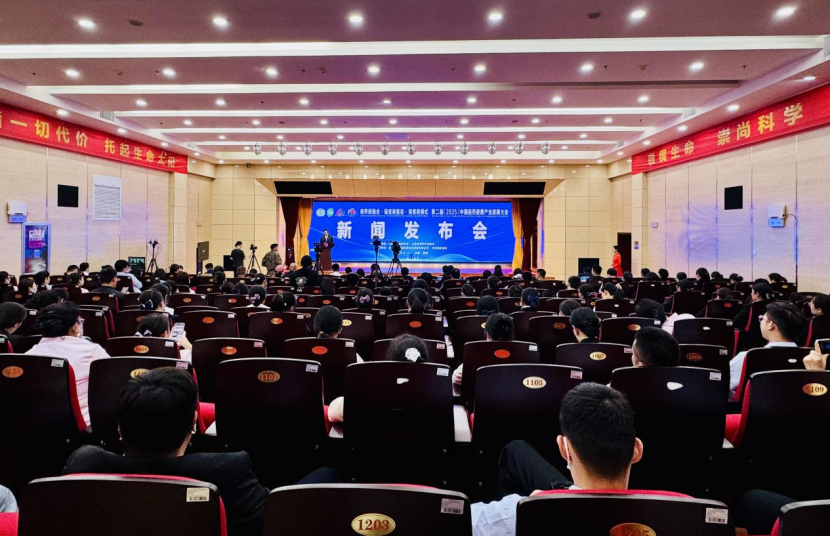
Core Viewpoint - The second China Pharmaceutical and Health Industry Development Conference will be held from June 27 to 29 in Zibo, focusing on innovation and high-quality development in the pharmaceutical health industry, aligning with the national "14th Five-Year Plan" and the Healthy China strategy [3]. Group 1 - The conference theme is "New Integration, New Intelligence, New Models," emphasizing collaboration across the industry chain, leveraging AI and big data for smart healthcare, and exploring deep integration of production, education, research, and application [3]. - The three core directions aim to drive the pharmaceutical health industry towards high-quality, intelligent, and sustainable transformation, injecting new momentum into the sector [3]. - The conference will feature various highlight activities, including a deep integration event between academia and industry, the unveiling of a chronic disease prevention work station, and grassroots public welfare clinics [3]. Group 2 - A public welfare clinic event titled "Chronic Disease Prevention Health Action" will take place on June 28 at the Zibo Expo High-tech Hospital, offering free medical services to local communities [4]. - The event will invite experts in major diseases and traditional Chinese medicine, covering fields such as endocrinology, cardiovascular health, and oncology [4].

健讯Daily | 郑州通报“健康证”办理有关问题;中国医药拟3.02亿元收购金穗科技100%股权
2 1 Shi Ji Jing Ji Bao Dao· 2025-05-14 00:03
Policy Developments - The National Medical Products Administration (NMPA) emphasizes the need for comprehensive drug regulation reform to enhance drug safety and support high-quality development in the pharmaceutical industry [2] Drug and Device Approvals - Zai Lab's new drug application for JAK inhibitor, Tofacitinib, for treating severe alopecia areata has been accepted by the NMPA, marking its second indication for this drug [4] - Tonghua Dongbao's insulin injection has received marketing approval in Nicaragua, expanding its overseas sales potential [5] - BeiGene's new indication application for its BCL2 inhibitor, Sotorasib, for treating mantle cell lymphoma has been accepted by the NMPA [6] - Yilian Biopharma's antibody-drug conjugate targeting VEGF has received clinical trial approval in the U.S. [7] - Zhengda Tianqing's combination therapy for advanced hepatocellular carcinoma has shown positive results in a Phase III trial, with plans for a market application in November 2024 [8] - Rongchang Biopharma's clinical trial application for its ADC molecule RC278 has been accepted by the NMPA [9][10] Capital Markets - Easternova Biotechnology has submitted its IPO application to the Hong Kong Stock Exchange, focusing on regenerative medical materials [12] - China National Pharmaceutical Group plans to acquire 100% of Jinsui Technology for 302 million yuan, enhancing its e-commerce operations in health products [13] Industry Developments - Suzhou Industrial Park has launched a plan to accelerate the development of the biopharmaceutical and health industry, focusing on innovation and enterprise growth [15] - Ganli Pharmaceutical has signed a cooperation agreement with the Brazilian Ministry of Health, becoming the first Chinese pharmaceutical company to enter Brazil's PDP program [16]
5月13日晚间重要公告一览
Xi Niu Cai Jing· 2025-05-13 10:21
Group 1 - Shengyi Electronics plans to repurchase shares with a total amount between 50 million and 100 million yuan, at a price not exceeding 43.02 yuan per share, for employee stock ownership plans [1] - Guoyao Modern's subsidiary has passed the consistency evaluation for the quality and efficacy of a generic drug, which is used for treating severe infections [1] - Tianhe Magnetic Materials' subsidiaries have obtained project filing notices for high-performance rare earth permanent magnet projects, with total investments of 100 million yuan and 50 million yuan respectively [1][2] Group 2 - Dream Lily intends to repurchase shares with an amount between 85 million and 170 million yuan, at a price not exceeding 10.90 yuan per share, supported by a loan commitment of up to 150 million yuan [3] - Weifu High-Tech has received a loan commitment of up to 135 million yuan from a financial institution for share repurchase [3] Group 3 - Lu'an Environmental Energy reported a coal sales volume of 4.51 million tons in April, a year-on-year increase of 17.75% [5] - *ST Tianshan reported a significant decline in livestock sales and revenue, with a revenue of 70,500 yuan in April, down 95.68% year-on-year [7] Group 4 - Feirongda announced a cash dividend of 0.38 yuan per 10 shares, with a total distribution of 21.9 million yuan [8] - Zhejiang Rongtai's shareholders and executives plan to reduce their holdings by up to 1.93% of the company's shares [9] Group 5 - Changhua Group's subsidiary won the land use rights for an industrial site in Ningbo for 27.05 million yuan, intended for manufacturing and related business [11] - Zejing Pharmaceutical's new drug application for a treatment for severe alopecia has been accepted by the regulatory authority [13][14] Group 6 - Hainan Mining plans to distribute a cash dividend of 0.8 yuan per 10 shares, totaling 1.59 billion yuan [15] - China Jushi plans to distribute a cash dividend of 0.24 yuan per share, totaling 9.61 billion yuan [16] Group 7 - Zhengzhong Design's subsidiary has obtained a utility model patent for an acrylic signage guide [18] - Rundu Co., Ltd. received approval for a veterinary drug product, which is intended for treating bacterial diseases in livestock [20] Group 8 - Emei Mountain A announced the resignation of its general manager due to work reasons [22] - Tonghua Dongbao's insulin injection has received a registration certificate in Nicaragua, allowing for sales in that market [23] Group 9 - Dizu Fashion's subsidiary has completed the registration of a private equity investment fund [24] - Ningbo Gaofa plans to increase capital by 60 million yuan in its subsidiary for operational needs [26] Group 10 - Haichuan Intelligent has obtained two utility model patents for material handling devices [27] - Newland's subsidiary signed a deep cooperation agreement with Alibaba Cloud for AI model applications [29] Group 11 - Rui Neng Technology's controlling shareholder plans to reduce its stake by up to 2.89% [30] - Guomai Culture intends to repurchase shares between 50 million and 100 million yuan for capital reduction [31] Group 12 - Shaanxi Construction won major construction projects totaling 7.88 billion yuan in April [32] - Hanyu Pharmaceutical signed a joint development agreement for a new peptide drug with a partner [34] Group 13 - Yunnan Copper is planning to acquire a 40% stake in Liangshan Mining, leading to a stock suspension [35] - Haizheng Pharmaceutical plans to repurchase shares between 50 million and 100 million yuan for employee stock ownership [36] Group 14 - Tianqiao Hoisting's controlling shareholder plans to increase its stake by 75 million to 150 million yuan [37] - Tiandi Online's controlling shareholder is transferring shares to introduce a strategic investor [38] Group 15 - Hongchang Technology plans to invest 15 million yuan in a joint venture with a partner [39] - Rabbit Baby's subsidiary is preparing for an IPO in Hong Kong [41] Group 16 - Wol Nuclear Materials is planning to issue H-shares for listing in Hong Kong [42] - Tangyuan Electric plans to raise up to 864 million yuan through a private placement for various projects [43] Group 17 - Tongrun Equipment's major shareholders plan to reduce their holdings by up to 2% [44] - Linzhou Heavy Machinery plans to raise up to 600 million yuan through a private placement [46] Group 18 - China Merchants Securities announced the resignation of its vice president [47] - Shangsheng Electronics plans to issue convertible bonds to raise up to 330 million yuan for various projects [48] Group 19 - Longda Co., Ltd.'s major shareholder plans to reduce its stake by up to 1% [49] - China Medical plans to acquire 100% of Jinsui Technology for 302 million yuan [50] Group 20 - Silek has signed a strategic cooperation agreement with a battery manufacturer [51] - Boyun New Materials' major shareholder plans to reduce its stake by up to 3% [53]


2025年一季度中国医药保健品进出口总额达470.88亿美元 同比微增0.38%
智通财经网· 2025-05-13 08:52
Core Insights - In Q1 2025, China's pharmaceutical trade exhibited "stable total volume and optimized structure," with total trade amounting to $47.088 billion, a slight year-on-year increase of 0.38% [1] - Exports reached $26.632 billion, up 4.39% year-on-year, driven by growth in traditional products like western medicine raw materials and medical device consumables [1] - Imports continued to decline, falling 4.42% to $20.456 billion, reflecting domestic industry upgrades and import substitution effects [1] Export Performance - Western medicine products dominated exports, accounting for $25.605 billion (54.4% share), with raw material exports at $11.108 billion, a 5.19% increase [1] - Medical device exports totaled $19.561 billion, a 5.38% increase, with disposable consumables and medical dressings as the main export drivers [1] - Exports to the US reached $4.639 billion, a 9.6% increase, with significant contributions from raw materials and disposable consumables [2] Import Trends - Western medicine imports totaled $11.785 billion, down 2.03%, while raw material imports increased by 22.52% to $2.732 billion [3] - Medical device imports fell to $8.004 billion, a decrease of 7.38%, indicating accelerated domestic replacement of high-end diagnostic and treatment equipment [3] - The reliance on high-end drug imports remains significant, particularly for cancer and rare disease medications [3] Market Diversification - The export market is becoming increasingly diversified, with emerging markets like Belt and Road countries driving growth, totaling $10.88 billion, a 5.23% increase [2] - Exports to Africa grew by 11.18% to $1.153 billion, with notable increases in Egypt (29.37%) and Nigeria (24.03%) [2] - Conversely, exports to Japan and South Korea declined by 2.93% and 6.68%, respectively, while exports to India grew by 7.54% despite local supply expansion policies [2] Future Outlook - The pharmaceutical trade is expected to face a "new normal" of intertwined opportunities and challenges, with continued growth in western medicine raw materials and medical device consumables [4] - The domestic innovation in pharmaceuticals and high-end equipment is anticipated to deepen the replacement process [4] - Long-term challenges include the decentralization of international supply chains, increased compliance costs due to EU carbon tariffs, and intensified competition from India and Southeast Asia [4]

中信建投:立足于内,开拓于外,中国医药行业需加速国际化布局
news flash· 2025-05-12 23:49
Core Viewpoint - The Chinese pharmaceutical industry needs to "focus on domestic stability while expanding internationally" in the context of a reshaped global landscape, promoting technological self-sufficiency and accelerating internationalization to address tariff policies and geopolitical challenges, while seizing opportunities from global pharmaceutical industry chain transformations [1] Summary by Relevant Categories Industry Outlook - The industry is expected to benefit from the trend of self-sufficiency and the export of medical devices, with a long-term positive outlook [1] - There is an emphasis on stabilizing domestic foundations while actively participating in industry consolidation and exploring overseas markets [1] Tariff and Geopolitical Impact - The recent U.S. tariff increases on China included a temporary exemption for pharmaceuticals, indicating limited impact on the sector [1] - The primary method for innovative drug companies to expand internationally is through intellectual property (IP) transfer, which also has a limited effect [1]
特朗普称将签署“药品降价”行政令;中国医药拟全资收购金穗科技
Mei Ri Jing Ji Xin Wen· 2025-05-12 23:32
Group 1 - China National Pharmaceutical plans to acquire 100% equity of Jinsui Technology for 302 million yuan to enhance marketing and supply chain management capabilities [1] - The acquisition aims to strengthen the company's e-commerce platform, product pipeline, and marketing strategies, potentially boosting investor confidence and stock performance [1] Group 2 - Tianjin Pharmaceutical responded to an inquiry regarding its 2024 annual report, highlighting strategic R&D collaborations and significant reductions in sales expenses due to policy changes and marketing upgrades [2] - The reduction in sales expenses indicates improved cost control and operational efficiency, which may positively impact investor confidence and stock valuation [2] Group 3 - President Trump announced plans to sign an executive order aimed at reducing prescription drug prices by 30% to 80%, aligning U.S. drug prices with the lowest global prices [3] - A significant drop in U.S. drug prices could pressure domestic pharmaceutical companies' export businesses, but innovative domestic firms may leverage unique advantages to mitigate risks [3] Group 4 - Fosun Pharma's FCN-159 tablet has been included in the breakthrough therapy designation program, indicating strong R&D capabilities and market potential for treating rare diseases and tumors [4] - The breakthrough designation may accelerate the drug's development and approval process, enhancing investor confidence and potentially increasing the company's market competitiveness [4] Group 5 - Rongchang Biopharma's ADC drug, RC48, has successfully met primary endpoints in a Phase III clinical trial for treating advanced or metastatic urothelial carcinoma [5] - The successful trial results may expand the drug's indications and significantly enhance its market competitiveness and commercial value, attracting investor interest [6]