
HEILAN HOME(600398)

Search documents
当海浪遇山影,裂痕生新声|2026春夏上海时装周
Xin Lang Cai Jing· 2025-10-15 12:18
Core Insights - The article highlights the innovative and immersive fashion shows at Shanghai Fashion Week, showcasing how brands are integrating AI data insights and historical inspirations into their designs [1][4][6]. Group 1: Douyin's Fashion Show - Douyin's fashion show featured an immersive experience with a stage designed to resemble a flowing ocean, using colors and materials inspired by current style trends captured through AI data [1]. - The new generation of designers utilized materials like blue organza and blue-and-white tweed to create garments that reflect a gradient color spectrum, emphasizing fluidity through three-dimensional cuts and layering [1]. Group 2: ili node's Collection - ili node's collection drew inspiration from the 1755 Lisbon earthquake, transforming historical fractures into poetic rebirth through an artistic installation at the center of the show [4]. - The core of the collection is based on the traditional Portuguese practice of using glazed tiles to repair cracks, symbolizing hope and storytelling through fashion [4]. - The designs explore versatility with "one garment, multiple wears," featuring asymmetrical deconstruction and reassembly, with blue tones representing both the glaze and the underlying fractures [4]. Group 3: HLA's "Mountains Are Not High" Series - HLA's show opened with an immersive Eastern aesthetic, featuring a bamboo installation that created a poetic atmosphere reminiscent of traditional landscape paintings [6]. - The brand's spokesperson, Cao Jun, showcased two outfits that narrate the cycle of seasons, from the freshness of spring to the abundance of autumn [6]. - A heartwarming father-son scene highlighted the theme of paternal love, with children's and adult men's clothing complementing each other, while a bamboo artist's installation revitalized ancient craftsmanship within modern fashion [7].

服装家纺板块10月15日涨1.77%,恒辉安防领涨,主力资金净流入7191.96万元
Zheng Xing Xing Ye Ri Bao· 2025-10-15 08:37
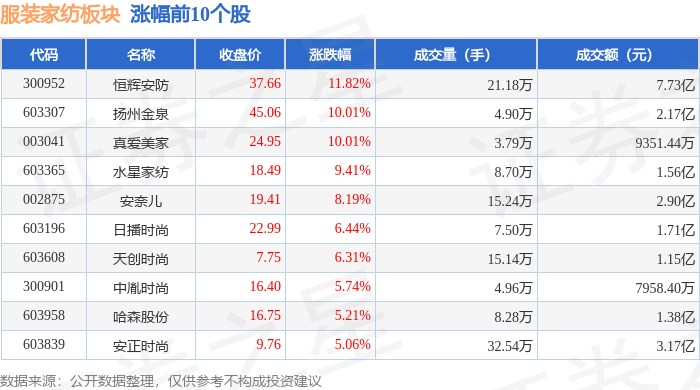
Market Overview - The apparel and home textile sector increased by 1.77% compared to the previous trading day, with Henghui Security leading the gains [1] - The Shanghai Composite Index closed at 3912.21, up 1.22%, while the Shenzhen Component Index closed at 13118.75, up 1.73% [1] Top Gainers in Apparel and Home Textile Sector - Henghui Security (300952) closed at 37.66, up 11.82%, with a trading volume of 211,800 shares and a transaction value of 773 million [1] - Yangzhou Jinqiao (603307) closed at 45.06, up 10.01%, with a trading volume of 49,000 shares and a transaction value of 217 million [1] - Zhenyaomeijia (003041) closed at 24.95, up 10.01%, with a trading volume of 37,900 shares and a transaction value of 93.51 million [1] - Other notable gainers include Shuihan Home Textiles (603365) up 9.41%, Anner (002875) up 8.19%, and Ribos Fashion (603196) up 6.44% [1] Market Capital Flow - The apparel and home textile sector saw a net inflow of 71.92 million from institutional investors, while retail investors contributed a net inflow of 82.86 million [2] - However, there was a net outflow of 155 million from speculative funds [2] Individual Stock Capital Flow - Henghui Security had a net inflow of 68.63 million from institutional investors, while it experienced a net outflow of 33.84 million from speculative funds [3] - Other stocks like Baoxiniang (002154) and Anzheng Fashion (603839) also saw significant net inflows from institutional investors [3] - Conversely, stocks like Haian Home (600398) experienced a notable net outflow from speculative funds [3]


2025年服装行业词条报告
Tou Bao Yan Jiu Yuan· 2025-10-13 13:50
Investment Rating - The report provides a positive investment rating for the apparel industry, highlighting growth potential driven by government support, competitive pricing, and market expansion opportunities [4]. Core Insights - The apparel industry is undergoing a transformation characterized by the integration of technology and fashion, with e-commerce and live-streaming commerce significantly boosting market growth [4]. - China's apparel exports are expected to grow due to favorable government policies, price advantages, and competitive quality in the global market [4]. Industry Definition - The apparel industry encompasses clothing, footwear, and accessories, serving functions such as protection, decoration, and identification [5]. - Apparel can be categorized by gender into men's and women's clothing, each with distinct design and functional characteristics [6]. Industry Characteristics - High raw material costs dominate the cost structure, with raw materials accounting for 76.1% of costs in upstream suppliers and 60% in midstream manufacturing [6][7]. - The export market is diversified, with growth in traditional markets like the US and EU, while emerging markets show mixed results [7]. - The industry exhibits strong cyclicality, with retail sales closely tied to economic growth rates [8]. Development History - The apparel industry in China has evolved through four key stages: industrialization, OEM rise, globalization, and brand and technology upgrades, currently transitioning into a phase driven by national pride and technological innovation [9]. Industry Chain Analysis - The apparel industry chain includes upstream raw material production, midstream manufacturing, and downstream brand sales, with varying levels of bargaining power across segments [14][15]. - Midstream manufacturers face challenges in negotiating with upstream suppliers due to industry fragmentation, leading to lower average profit margins [15]. - Labor cost increases are prompting a shift of the apparel supply chain to Southeast Asian countries [16]. Market Size and Growth - The apparel market size grew from 1,918.03 billion RMB in 2019 to 2,074.29 billion RMB in 2023, with a projected CAGR of 2.15% from 2024 to 2028 [36]. - E-commerce penetration and live-streaming commerce are key drivers of market growth, with significant increases in online shopping users [38][39]. Export Market Dynamics - China's apparel exports are benefiting from a recovery in overseas demand due to loose monetary policies and economic recovery in major markets [40]. - The export market is characterized by structural differentiation, with varying performance across different regions and product categories [40]. Policy Support - Government policies aimed at upgrading the industry and promoting digitalization and innovation are expected to drive future growth in the apparel sector [41][42]. - The competitive pricing of Chinese apparel products is anticipated to enhance export growth, particularly in the context of rising demand for affordable quality products in international markets [42].
纺织服装行业四季度策略:制造期待复苏,品牌分化持续
ZHESHANG SECURITIES· 2025-10-12 13:39
Group 1: Export Chain - The export chain is expected to see improved sentiment and performance, with clarity on tariff arrangements boosting order placement by brands [1][9] - Major brands like Nike and Adidas are cautiously optimistic about demand recovery, with Nike reporting a slight revenue and gross margin beat in its recent quarterly results [2][12] - Leading manufacturers have begun to see performance improvements in Q3, with companies like Xin'ao and Bailong Dongfang anticipating revenue growth driven by increased orders [3][19] Group 2: Investment Themes - Key investment themes include leading sports and leisure brands such as Nike, Adidas, and Uniqlo, along with their core suppliers like Shenzhou International and Huayi Group, which have attractive PE ratios for 2025 [4][21] - Upstream manufacturers showing short-term order improvements and medium-term market share gains include Xin'ao and Weixing, which are expected to benefit from rising raw material prices [4][21] Group 3: Brand Apparel - The brand apparel sector continues to show signs of divergence, with retail performance impacted by fluctuating offline traffic and intense online competition [5][22] - Despite challenges, companies like Hailan Home and Luolai Life are expected to maintain positive revenue growth due to strong online and offline sales strategies [6][26] Group 4: Market Outlook - The overall market outlook for the textile and apparel industry remains cautiously optimistic, with expectations of gradual recovery in demand and performance improvements across various segments [1][9][22] - The consumer confidence index shows slight recovery, but consumers remain focused on product functionality and value for money [5][22]





纺织服装行业周报:中美关税再度博弈,全球化产能布局企业价值凸显-20251012
Shenwan Hongyuan Securities· 2025-10-12 11:44
Investment Rating - The report maintains a "Buy" rating for companies like Yanjiang Co., New Australia Co., and Shenzhou International, highlighting their advantages in global capacity layout and supply chain [2][10][16]. Core Views - The textile and apparel sector has shown strong performance against the market, with the SW textile and apparel index increasing by 1.6% from October 9 to October 10, outperforming the SW All A index by 2.0 percentage points [2][3]. - The recent U.S. announcement of a 100% additional tariff on Chinese imports starting November 1, 2025, emphasizes the value of companies with established global production capabilities, allowing them to mitigate tariff costs and capture market share in favorable overseas markets [9][10]. - The report identifies a significant opportunity in the Australian wool market, with prices reaching record highs, benefiting companies like New Australia Co. [13][14]. Industry Data Summary - Retail sales in the apparel and textile category totaled 940 billion yuan from January to August, reflecting a year-on-year growth of 2.9% [27]. - In August, China's textile and apparel exports amounted to $26.54 billion, a year-on-year decline of 5.0%, with apparel exports specifically down by 10.1% [34]. - Cotton prices have shown slight fluctuations, with the national cotton price B index at 14,775 yuan per ton, down 0.3% this week [37]. - The Chinese sportswear market is projected to reach 408.9 billion yuan in 2024, growing by 6.0% year-on-year, with Anta's market share increasing [40].


家用电器:假期消费专题:出境游、线下演出高景气——25W40周观点-20251012
Huafu Securities· 2025-10-12 10:11
Investment Rating - The report maintains an "Outperform" rating for the industry [7] Core Insights - The report highlights a significant increase in holiday travel and consumption, with an average of 3.04 billion people traveling daily from October 1 to 8, a year-on-year increase of 6.3% [3][11] - Domestic consumption is showing steady improvement, with average daily sales in related sectors increasing by 4.5% during the holiday period, driven by strong performance in digital products, jewelry, and cultural services [3][15] - The offline performance of the entertainment sector is robust, with a 39.5% year-on-year increase in audience numbers for live performances during the holiday [3][20] Summary by Sections Holiday Consumption Trends - The report notes a rise in domestic travel, with 8.88 billion domestic trips taken during the holiday, an increase of 1.23 billion trips compared to the previous year [11][12] - The average spending per person decreased by 13% despite the increase in total expenditure, which reached 809 billion yuan [11][12] Retail and E-commerce Performance - Key retail and catering enterprises saw a 2.7% year-on-year increase in sales during the holiday [19] - E-commerce platforms experienced a surge in sales of green organic foods (up 27.9%), smart home products (up 14.3%), and domestic fashion brands (up 14.1%) [19][20] Investment Recommendations - The report suggests focusing on several sectors for potential investment, including: 1. Major appliances benefiting from trade-in programs, recommending companies like Midea Group, Haier Smart Home, and Gree Electric [4][23] 2. The pet industry, which is expected to remain resilient, with recommendations for companies like Guai Bao Pet and Zhongchong Co [4][23] 3. Small appliances and branded apparel, which may see a rebound in demand, with recommendations for companies like Bear Electric and Anta Sports [4][23] 4. Electric two-wheelers, with a strong outlook for domestic sales improvement, recommending companies like Ninebot and Yadea [4][23] Global Market Opportunities - The report emphasizes the long-term theme of international expansion, recommending companies like Ecovacs and Roborock in the cleaning appliance sector, and Midea and Haier in the major appliance sector [5][24] - It also highlights the potential for motorcycle brands to increase their market share overseas, suggesting companies like Chunfeng Power and Longxin General [5][24] Market Data - The home appliance sector saw a slight decline of 0.4% this week, with specific segments showing varied performance: white goods up 0.8%, black goods down 0.3%, and kitchen appliances down 1.0% [25]



固体运载火箭“海澜之家号”成功发射
Ren Min Wang· 2025-10-12 06:52
Core Viewpoint - The successful launch of the "Gravity-1 Yao-2·Hailan Home" rocket marks a significant advancement in China's commercial space sector, showcasing the collaboration between the national brand Hailan Home and the private rocket company Dongfang Space [1][2][5]. Group 1: Rocket Specifications and Capabilities - The "Gravity-1 Yao-2·Hailan Home" rocket has a total height of 30 meters, with a core stage and booster diameter of 2.65 meters, and a launch weight of 405 tons [4]. - It features a launch thrust of 600 tons and is equipped with a 4.2-meter diameter fairing [4]. - The rocket can carry up to 6.5 tons to low Earth orbit and 4.2 tons to a 500-kilometer sun-synchronous orbit, with capabilities for launching multiple satellites in a single mission [4]. Group 2: Strategic Importance and Collaboration - Hailan Home emphasizes the importance of commercial space as a new engine for China's aerospace development, contributing to the vision of becoming a space power [5]. - The partnership between Hailan Home and Dongfang Space, initiated in April 2023, aims to support national aerospace development and reflects a shared ambition in space exploration [5]. - The successful launch symbolizes a remarkable intersection of national branding and cutting-edge technology, reinforcing Hailan Home's commitment to innovation and responsibility [5].

超1.7万家实体店,倒在2025上半年
Sou Hu Cai Jing· 2025-10-11 03:27
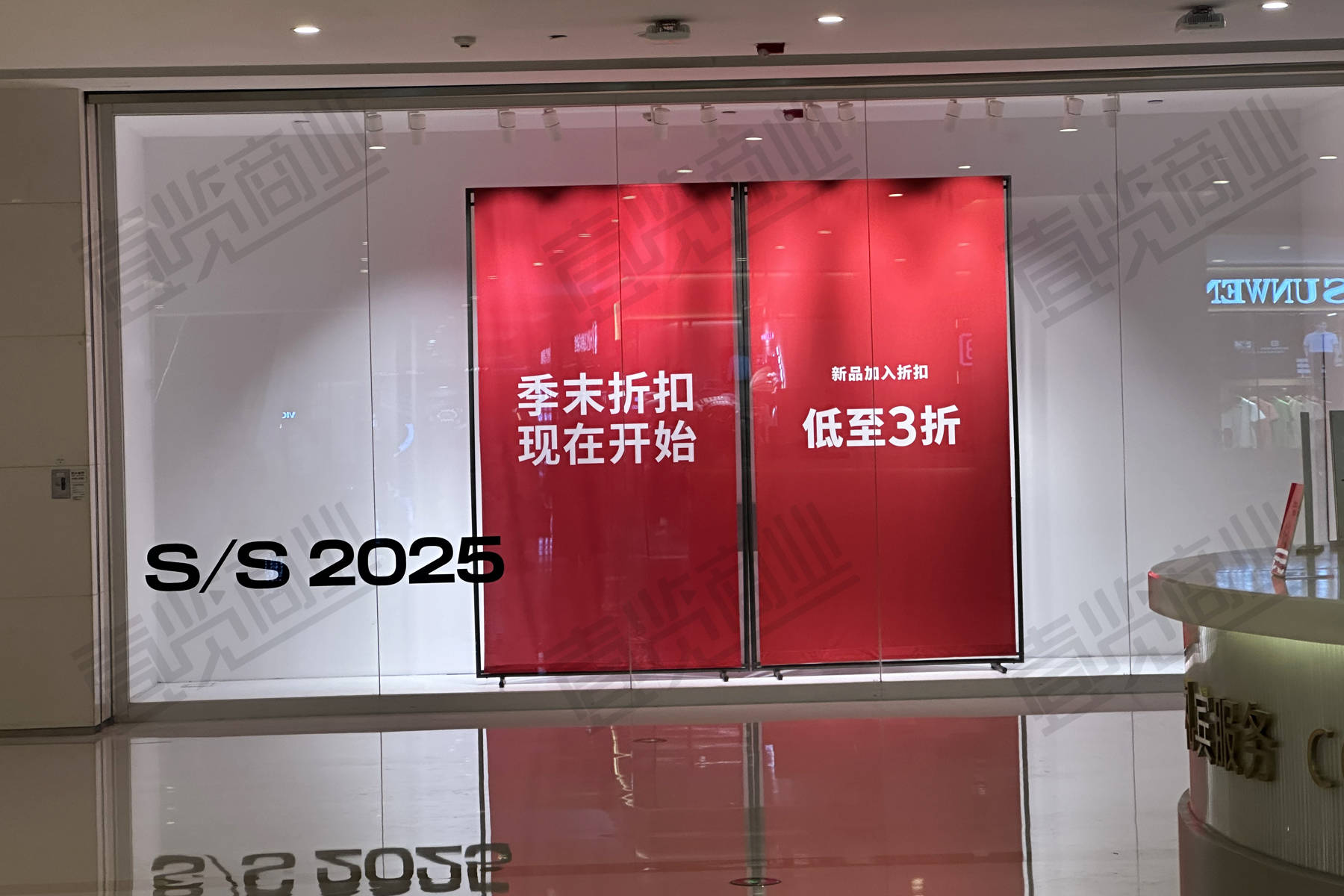
Retail Industry Overview - The total retail sales of consumer goods in China reached 24.55 trillion yuan in the first half of the year, with a year-on-year growth of 5.0%, slightly up from 3.7% in the same period last year [2] - Online retail sales amounted to 7.43 trillion yuan, growing by 8.5%, while offline retail sales were 17.12 trillion yuan, with a growth of 3.75%, indicating a shift in consumer shopping habits towards online platforms [2][5] Store Closures - In the first half of 2025, at least 1.71 million stores closed across various sectors, including major brands like Walmart, Starbucks, and Haidilao [2] - The supermarket sector saw at least 720 store closures, including national and regional brands such as Yonghui Supermarket and Hema [3][4] - The restaurant industry faced nearly 10,000 closures, while the apparel sector saw around 4,500 stores shut down [2][6] Supermarket Sector Challenges - Traditional supermarkets are experiencing accelerated closures due to increased competition from e-commerce and the rise of instant retail, which has grown from 36.6 billion yuan in 2017 to 650 billion yuan in 2023 [6] - Many supermarkets are closing underperforming stores and focusing on online business to adapt to changing consumer preferences [6][7] Department Store and Shopping Center Decline - The department store sector reported a year-on-year growth of only 1.2%, with at least 23 department stores and shopping centers closing in the first half of 2025 [8][9] - The decline is attributed to outdated business models and a lack of unique product offerings, leading to decreased foot traffic [11][12] Tea and Coffee Shop Closures - The tea and coffee sectors saw significant closures, with at least 6,673 tea and coffee shops shutting down in the first half of 2025 [13] - Brands like Heytea and Nayuki faced substantial store reductions, reflecting a market consolidation where only strong brands survive [15][20] Apparel Industry Adjustments - The apparel sector experienced a 3.1% year-on-year growth, with at least 4,563 clothing stores closing, including major brands like Semir and GU [21][24] - The closures are driven by high inventory levels, brand aging, and a shift towards larger store formats, which require higher operational efficiency [24][25][27] Cinema Industry Struggles - The cinema industry is facing a crisis, with a high vacancy rate of 30-40% and at least 38 cinemas closing in the first half of 2025 [28][30] - Factors contributing to this decline include high fixed costs, reliance on blockbuster films, and competition from streaming services [30][31][32] Other Industries - Various other sectors, including pet care, home improvement, and education, also experienced closures, indicating a broader trend of market contraction [34]


东南亚要“装不下”出海的国产服装品牌了
Hu Xiu· 2025-10-11 03:07
Core Viewpoint - The trend of A-share companies listing in Hong Kong is increasing, with 11 companies having done so this year, and over 50 more in the pipeline. The primary motivation for this move is to pursue global strategic expansion, as exemplified by the clothing brand HLA [1]. Group 1: Market Expansion - HLA has opened 50 stores in Malaysia since its first store in 2017, with a total of 78 stores across Southeast Asia as of January this year [2]. - Semir, another clothing brand, has also accelerated its overseas strategy, with 70 stores by the end of 2023 and plans to exceed 100 stores in 2024 [2][3]. - Major Chinese brands, including Anta and Li Ning, are also focusing on Southeast Asia for their international expansion, with Anta planning to establish 1,000 stores in the region over the next three years [5]. Group 2: Challenges in Overseas Markets - Despite the growth in overseas revenue for brands like HLA, the contribution to total revenue remains low, with HLA's overseas revenue accounting for only 1.76% in 2024 [7][8]. - Many traditional Chinese clothing brands struggle to achieve significant overseas market penetration, with most having less than 2% of their revenue coming from international sales [8][9]. - The slow urbanization process in Southeast Asia limits the effectiveness of the business models that have worked in China, as brands primarily target major cities, leaving smaller cities underserved [12][13]. Group 3: E-commerce and Retail Dynamics - The rise of e-commerce in Southeast Asia poses a challenge for traditional retail, as online platforms like Shopee and TikTok Shop gain traction [15][16]. - HLA has seen an increase in online sales, but overall revenue has declined, indicating difficulties in adapting to the online market [16]. - The reliance on physical stores in major cities may not be sustainable if e-commerce continues to grow, potentially impacting the profitability of brands that do not adapt [17].
东南亚“装不下”出海的国产服装品牌了
Xin Lang Cai Jing· 2025-10-11 02:42
Core Viewpoint - The trend of A-share companies listing in Hong Kong is increasing, with 11 companies having done so this year, including Haier Home, which plans to list in Hong Kong as part of its global strategy [1] Group 1: Company Expansion - Haier Home has opened 50 stores in Malaysia since its first store in 2017, with a total of 78 stores in Southeast Asia as of January this year [2] - Semir, another Chinese brand, has also accelerated its overseas expansion, with 70 stores by the end of 2023 and plans to exceed 100 stores in 2024 [2] - Other brands like UR, E-PRANCE, and Anta are also expanding aggressively in Southeast Asia, with Anta planning to open 1,000 stores in the region over the next three years [3] Group 2: Market Challenges - Despite the growth in store numbers, the overseas revenue for many Chinese apparel brands remains low, with Haier Home's overseas revenue accounting for only 1.76% of total revenue by 2024 [6] - Semir's overseas revenue is projected to be less than 1% of its total revenue in 2024, indicating a common struggle among Chinese brands to penetrate the Southeast Asian market [6][7] - The traditional business model that worked in China may not be effective in Southeast Asia, where brands are primarily targeting large cities, leaving smaller cities underserved [8] Group 3: E-commerce Impact - The rise of e-commerce in Southeast Asia, exemplified by platforms like Shopee, poses a challenge to traditional retail models, as many consumers are shifting towards online shopping [10][11] - Haier Home has seen an increase in online sales, but overall revenue has decreased, highlighting the difficulties in transitioning to an online model [11][12] - The potential for e-commerce growth in Southeast Asia could undermine the current strategy of Chinese brands that focus heavily on physical stores [12]