JAC(600418)

Search documents
江淮汽车携手安徽省汽车创新中心,共同打造下一代自主可控新能源汽车平台
Zhong Guo Qi Che Bao Wang· 2025-07-14 02:21
Group 1 - The project "Research and Industrialization of Next-Generation Autonomous and Controllable New Energy Vehicle Platform" was launched in Anhui Province, aiming to enhance the overall R&D level and core competitiveness of the automotive industry in the region [1][3] - The project is led by the Anhui Province Future Intelligent Connected New Energy Vehicle Innovation Center, with participation from several universities and Jianghuai Automobile [1][3] - The initiative focuses on addressing common challenges in the automotive industry through the "Eight New Concepts" which include new functions, architectures, energy sources, materials, structures, processes, equipment, and models [1] Group 2 - Key figures in attendance included Zhong Zhihua, Chairman of the Anhui Province Automotive Strategic Consulting Committee, and Xiang Xingchu, Chairman of Jianghuai Automobile Group, who discussed future automotive industry trends and project management mechanisms [3][7] - The project aims to create innovative industrial development models by exploring technology breakthroughs and application scenarios, contributing to the innovation of the intelligent connected new energy vehicle industry in Anhui Province [7] - Jianghuai Automobile emphasizes a dual strategy of independent innovation and open cooperation, focusing on technological innovation as a core driver for future development [7]


爆表了!6月新能源重卡销1.8万辆!渗透率超26%!三一/解放/徐工争冠 | 头条
第一商用车网· 2025-07-14 01:49
Core Viewpoint - The domestic new energy heavy truck market has shown remarkable growth, with sales reaching a record high of 18,000 units in June 2025, marking a year-on-year increase of 158% and a month-on-month increase of 19% [3][5][7]. Sales Performance - In June 2025, the total sales of new energy heavy trucks reached 18,000 units, the highest for any June in history, and part of a trend where sales have exceeded 15,000 units five times since March 2025 [3][5]. - The overall heavy truck market sold 69,200 units in June, with new energy heavy trucks growing at a rate significantly higher than the overall market, which saw a year-on-year increase of 47% [5][7]. Market Penetration - The penetration rate of new energy heavy trucks in the heavy truck market reached 26.03% in June 2025, up from 23.92% in May and significantly higher than the 14.82% in the same month last year [7][19]. - In the first half of 2025, the penetration rate averaged 22.34%, compared to 9.21% in the first half of 2024, indicating a strong upward trend [7][19]. Company Performance - In June 2025, 14 companies sold over 100 units, with 10 companies exceeding 500 units and 4 companies surpassing 1,000 units in sales [11][19]. - SANY led the sales with 2,887 units, followed closely by FAW Liberation and XCMG, which sold 2,576 and 2,537 units respectively [13][19]. Cumulative Sales - From January to June 2025, cumulative sales of new energy heavy trucks reached 79,200 units, a year-on-year increase of 186% [21][27]. - SANY and XCMG both achieved cumulative sales of 12,900 units, ranking first, while FAW Liberation ranked third with 10,700 units [25][27]. Market Competition - The competition in the new energy heavy truck market is intensifying, with five companies holding over 10% market share as of June 2025 [16][19]. - Companies like FAW Liberation, China National Heavy Duty Truck Group, and Shaanxi Automobile Group have shown significant year-on-year growth, with FAW Liberation's sales increasing by 448% [21][25].






奇瑞回应新能源补贴核减,特斯拉进军印度市场 | 汽车早参
Mei Ri Jing Ji Xin Wen· 2025-07-13 22:35
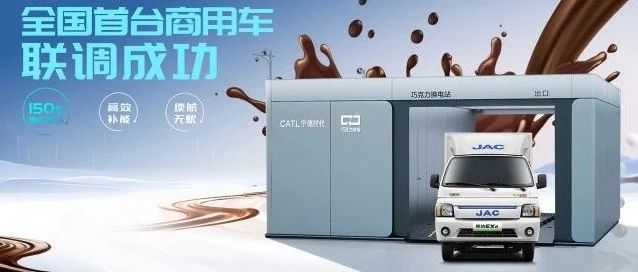
Group 1 - Chery Automobile clarified that the reduction in new energy subsidies is a normal process and denied any allegations of violations or fraud [1] - The company reported that the vehicles in question were not eligible for subsidies due to missing sales receipts, which were accurately disclosed [1] - Chery's compliance and transparency may enhance market confidence in its brand and contribute to a healthier development of the new energy sector [1] Group 2 - Tesla officially entered the Indian market by opening its first showroom in Mumbai, marking a significant step in its global expansion strategy [2] - The company has imported $1 million worth of vehicles and related products, despite facing high tariffs in India [2] - This move is expected to increase demand for electric vehicles and stimulate growth in the new energy vehicle sector [2] Group 3 - Jiangqi Group successfully collaborated with CATL to launch the first commercial vehicle with "chocolate" battery swapping technology, achieving a battery swap time of just 150 seconds [3] - The "chocolate" battery swap system can complete swaps in 3 minutes, significantly improving operational efficiency and user experience [3] - The project aims to establish 1,000 battery swap stations by 2025, with a long-term goal of 30,000 stations, enhancing the promotion of electric vehicles [3] Group 4 - Beiqi Foton increased its investment in Kavin New Energy by 758 million yuan, maintaining its controlling stake in the company [4] - Kavin New Energy raised over 1.2 billion yuan in a Pre-A round of financing, attracting multiple institutional investors [4] - This funding will support technological innovation and market expansion in the pure electric and hydrogen fuel cell sectors, enhancing Beiqi Foton's strategic position in the new energy commercial vehicle market [4]



汽车行业周报:极氪发布浩瀚-S架构,尚界启动预热-20250713
Guohai Securities· 2025-07-13 13:34
Investment Rating - The report maintains a "Recommended" rating for the automotive industry [1] Core Views - The automotive sector is expected to benefit from the continuation of the vehicle replacement policy, which is anticipated to support consumer demand and sales growth in 2025 [16] - The report highlights a new phase of domestic brands entering a strategic offensive towards high-end development, with companies offering quality products priced above 300,000 yuan likely to benefit significantly [16] - The report emphasizes the potential for high-level intelligent driving technologies to become more affordable, which could increase their penetration rates [16] Summary by Sections Recent Trends - The automotive sector underperformed compared to the Shanghai Composite Index, with a weekly decline of 0.4% from July 7 to July 11, 2025, while the Shanghai Composite Index rose by 1.1% [17] - In June 2025, the wholesale volume of automobiles reached 2.904 million units, a year-on-year increase of 13.8% [30] Key Company Recommendations - Recommended companies include: - Li Auto, JAC Motors, Geely, SAIC Group, BYD, Great Wall Motors for high-end supply [16] - XPeng Motors, Huayang Group, Desay SV, and Coboda for intelligent driving technologies [16] - Top Group, Sanhua Intelligent Control, and Beite Technology for robotics production [16] - Fuyao Glass, Xingyu Co., and Yinlun Co. for quality auto parts [16] - Foton Motor and China National Heavy Duty Truck for commercial vehicles [16] Earnings Forecasts - Key companies and their projected earnings per share (EPS) for 2024, 2025E, and 2026E include: - Yinlun Co.: 0.92, 1.28, 1.59 [49] - Baolong Technology: 1.44, 2.56, 3.22 [49] - BYD: 13.84, 18.15, 22.13 [49] - Li Auto: 4.16, 5.43, 8.33 [49]


中国车企出海势头强劲
Zhong Guo Zheng Quan Bao· 2025-07-11 20:50
Core Insights - The Chinese automotive industry is accelerating its transformation and upgrading, leading the global growth in new energy vehicle production and sales [1][2] - Chinese automotive companies are expanding internationally, moving beyond simple product trade to reshape the global industry landscape [1][3] Industry Performance - China's automotive market has shown a positive development trend, with new energy vehicles (NEVs) driving industry transformation [2] - The production and sales scale of automobiles in China has exceeded 30 million units for two consecutive years, with NEV production and sales surpassing 10 million units [2] - NEVs now account for 10% of total vehicle ownership, with projected sales of 16 million units for the year, potentially exceeding 50% of new car sales [2] - In the first half of the year, China's automobile exports reached 3.083 million units, a year-on-year increase of 10.4%, with NEV exports at 1.06 million units, up 75.2% [2] Global Expansion Strategy - Chinese automotive brands are rapidly entering international markets, becoming new choices for global consumers [2] - Changan Automobile aims to invest over $10 billion in overseas markets by 2030, targeting annual sales of 1.5 million units abroad [3] Challenges and Adaptation - The globalization of the Chinese automotive industry faces challenges such as complex international trade environments, product homogenization, and cultural adaptation [3][4] - Key areas for improvement include local integration, risk management, and building resilient ecosystems through collaboration across the supply chain [4] - Quality management is critical, with challenges in vehicle data transmission and the need for robust cybersecurity measures [4]

汽车行业2025年7月投资策略:品密集上市有望提振板块景气度,建议关注财报行情
Guoxin Securities· 2025-07-11 10:39
Core Insights - The report maintains an "Outperform" rating for the automotive sector, highlighting the expected boost in market sentiment due to a surge in new product launches and the upcoming earnings reports [1][5][12] - The automotive industry is transitioning towards a technology-driven era, with significant advancements in electrification, intelligence, and connectivity, which are expected to create new demand [12][13] - The report emphasizes the growth potential of domestic brands and the opportunities in incremental components driven by electric and intelligent trends [22][23] Sales Tracking - In June 2025, retail sales of passenger vehicles in China reached 2.084 million units, a year-on-year increase of 18.1% and a month-on-month increase of 7.6% [1] - Cumulative retail sales from January to June 2025 totaled 10.901 million units, reflecting a year-on-year growth of 10.8% [1] - The new energy vehicle market saw retail sales of 1.111 million units in June, marking a year-on-year increase of 29.7% and a cumulative total of 5.468 million units for the first half of the year, up 33.3% [1] Market Performance - In June, the CS automotive sector experienced a slight decline of 0.13%, with the CS passenger vehicle index down 2.34% [2] - Year-to-date, the automotive sector has risen by 28.88%, outperforming the Shanghai Composite Index by 14.17 percentage points [2] - The report notes a decrease in the inventory warning index for automotive dealers, indicating improved market conditions [2] Investment Recommendations - The report suggests focusing on domestic brands and the opportunities in incremental components, particularly in the context of the electric and intelligent vehicle trends [22][23] - Recommended companies include Leap Motor, JAC Motors, and Geely for vehicle manufacturing, and companies like Kobot, Huayang Group, and Junsheng Electronics for intelligent components [3][22] - The report highlights the potential of new entrants like Huawei and Xiaomi in the automotive sector, emphasizing their strong channel and software ecosystem capabilities [22][23] Company Earnings Forecasts - Leap Motor is projected to have an EPS of -0.05 in 2025, with a PE ratio of -1200, while Geely is expected to achieve an EPS of 1.36 with a PE of 12 [4] - JAC Motors is forecasted to have an EPS of 0.11 in 2025, with a PE of 380, indicating significant growth potential [4] - The report provides a detailed earnings forecast for several key companies, reflecting their expected performance in the evolving automotive landscape [4][30]



汽车行业2025年7月投资策略:新品密集上市有望提振板块景气度,建议关注财报行情
Guoxin Securities· 2025-07-11 09:46
Core Insights - The report maintains an "Outperform" rating for the automotive sector, highlighting the potential for improved industry sentiment driven by a surge in new product launches and upcoming earnings reports [1][5] - The domestic passenger car market saw retail sales of 2.084 million units in June 2025, representing a year-on-year increase of 18.1% and a month-on-month increase of 7.6% [1] - The report emphasizes the long-term growth opportunities in the automotive industry, particularly in the context of electric and intelligent vehicle trends, as well as the rise of domestic brands [12][13] Sales Tracking - In June 2025, the retail sales of new energy passenger vehicles reached 1.111 million units, marking a year-on-year growth of 29.7% and a month-on-month growth of 8.2% [1] - Cumulative retail sales for the first half of 2025 reached 10.901 million units, reflecting a year-on-year increase of 10.8% [1] - The report notes that the inventory warning index for automotive dealers in May 2025 was at 52.7%, indicating an improvement in the automotive circulation industry's sentiment [2] Market Performance - The automotive sector index experienced a slight decline of 0.13% in June 2025, underperforming compared to the Shanghai Composite Index, which rose by 2.9% [2] - Year-to-date, the automotive sector has increased by 28.88%, significantly outperforming the Shanghai Composite Index's 15.78% increase [2] Investment Recommendations - The report suggests focusing on domestic brands and the opportunities presented by incremental components in the context of electric and intelligent vehicles [12][19] - Recommended companies include Leap Motor, JAC Motors, and Geely for vehicle manufacturing, and companies like KOBOT, Huayang Group, and Junsheng Electronics for intelligent components [3][19] Industry Outlook - The report anticipates that the domestic automotive market will maintain a compound annual growth rate of 2% over the next 20 years, with new energy vehicle sales projected to reach 1.556 million units in 2025, reflecting a year-on-year growth of over 25% [13][22] - The transition towards electric and intelligent vehicles is expected to create structural development opportunities within the industry, as traditional automotive manufacturers adapt to new technologies [12][13] Key Company Earnings Forecasts - Leap Motor is projected to have an EPS of -0.05 in 2025, with a PE ratio of -1200, while Geely is expected to achieve an EPS of 1.36 with a PE ratio of 12 [4] - JAC Motors is forecasted to have an EPS of 0.11 in 2025, with a PE ratio of 380, indicating a strong growth potential [4] New Energy Vehicle Projections - The report predicts that new energy vehicle sales will continue to grow, with expectations of 1.556 million units sold in 2025, representing a 28% increase from the previous year [18][22] - The penetration rate of new energy vehicles is expected to reach 38% in 2024, with significant growth anticipated in the following years [17][22]


成本降30%+换电150秒!江淮商用车巧克力换电产品重磅来袭 | 头条
第一商用车网· 2025-07-11 09:44
Core Viewpoint - The successful commercial vehicle joint debugging of "Chocolate Battery Swap" marks a significant advancement in the efficiency of energy replenishment for new energy commercial vehicles, potentially revolutionizing the industry by reducing costs and enhancing user value throughout the vehicle lifecycle [1][4]. Group 1: Efficiency and Cost Advantages - The "Chocolate Battery Swap" reduces battery swapping time to 150 seconds, comparable to traditional refueling times, enabling near "zero waiting" operations [6]. - The innovative business model of battery separation lowers vehicle purchase costs and allows flexible leasing to meet diverse scenario needs, achieving a 30% reduction in total lifecycle costs (TCO) [6]. - The battery swap system is designed to accommodate multiple vehicle types, with intelligent operations and strategically located swap stations to support efficient logistics [6]. Group 2: Expansion Plans - The plan includes the construction of 1,000 "Chocolate Battery Swap" stations by 2025, with a mid-term goal of 10,000 and a long-term target of 30,000 stations [6]. - Currently, the swap stations have successfully entered 27 cities across the country, rapidly expanding to make "battery swapping as easy as refueling" a reality [6]. Group 3: Product Launches - Three new "Chocolate Battery Swap" products are set to launch in the second half of the year, targeting specific market segments: - The Jianghuai New Energy Light Truck EV5, designed for cold chain logistics and intercity transport, features high endurance and fast battery swapping [8][10]. - The Kaida EX6, optimized for last-mile delivery and community group buying, combines compact design with high battery capacity for efficient urban operations [10]. - The Van Baolu V10, aimed at B2B supply chains and new retail, supports frequent high-efficiency transport with intelligent space utilization [12]. Group 4: Future Outlook - The transition to a model where battery swapping is as simple as changing chocolate is expected to enhance transportation efficiency, driving the industry towards a future characterized by minute-level energy replenishment, cost optimization, and intelligent operations [14].
汽车行业今日净流出资金26.72亿元,赛力斯等6股净流出资金超5000万元
Zheng Quan Shi Bao Wang· 2025-07-11 09:29
Market Overview - The Shanghai Composite Index rose by 0.01% on July 11, with 19 out of 28 sectors experiencing gains. The top-performing sectors were non-bank financials and steel, with increases of 2.02% and 1.93% respectively. The automotive sector saw a modest increase of 0.15% [1] - The banking and building materials sectors faced the largest declines, with drops of 2.41% and 0.67% respectively [1] Capital Flow Analysis - The net outflow of capital from the two markets was 6.21 billion yuan, with 7 sectors seeing net inflows. The non-bank financial sector led with a net inflow of 8.21 billion yuan, coinciding with its 2.02% rise. The computer sector followed with a 1.93% increase and a net inflow of 6.20 billion yuan [1] - A total of 24 sectors experienced net capital outflows, with the power equipment sector leading at a net outflow of 3.83 billion yuan, followed by the automotive sector with a net outflow of 2.67 billion yuan. Other sectors with significant outflows included electronics, banking, and basic chemicals [1] Automotive Sector Performance - The automotive sector had a net outflow of 2.67 billion yuan, with 276 stocks in the sector. Out of these, 164 stocks rose, 1 hit the daily limit up, while 100 stocks fell, with 2 hitting the daily limit down [2] - Among the stocks with net inflows, BYD topped the list with a net inflow of 120 million yuan, followed by Shanghai Material Trade and Top Group with inflows of 104 million yuan and 93.16 million yuan respectively [2] - The stocks with the largest net outflows included Seres, Jianghuai Automobile, and Qin'an Shares, with outflows of 1.748 billion yuan, 489 million yuan, and 107 million yuan respectively [2][3] Automotive Sector Capital Inflow and Outflow Rankings - **Top Inflow Stocks**: - BYD: +0.83%, 1.45% turnover, 119.71 million yuan inflow - Shanghai Material Trade: +10.01%, 8.65% turnover, 103.82 million yuan inflow - Top Group: +1.92%, 1.76% turnover, 93.16 million yuan inflow [2] - **Top Outflow Stocks**: - Seres: -4.66%, 3.39% turnover, -1.748 billion yuan outflow - Jianghuai Automobile: -2.48%, 2.90% turnover, -489.62 million yuan outflow - Qin'an Shares: -10.01%, 5.07% turnover, -107.48 million yuan outflow [3]


【快讯】每日快讯(2025年7月11日)
乘联分会· 2025-07-11 09:25
Domestic News - The new national standard for electric vehicle battery swapping, GB/T 32879-2025, has been approved and will be implemented on January 1, 2026, focusing on compatibility and interchangeability in the battery swapping sector [2] - In June 2025, China's production of power batteries reached 129.2 GWh, a month-on-month increase of 4.6% and a year-on-year increase of 51.4%. Cumulative production for the first half of the year was 697.3 GWh, up 60.4% year-on-year [3] - The Shanghai Fengxian District government has launched an action plan to develop high-performance carbon fibers and inorganic fibers, aiming to attract high-end manufacturing enterprises in various sectors [5] - Xiaopeng Motors has initiated a full OTA update for its AI Tianji system, introducing features like human-machine co-driving and custom parking, enhancing driving experience and safety [6] - Renault Group has signed a partnership agreement with CICC Private Equity to establish a new energy vehicle industry fund, focusing on investment opportunities in battery technology and intelligent driving [7] - NIO has upgraded its charging and battery swapping network, having invested over 18 billion RMB in the past decade, establishing the largest battery swapping network globally [9] - Hongmeng Zhixing reported that its intelligent driving system has achieved 2 million avoidance actions in the first half of 2025, with a total driving distance of 1.67 billion kilometers [10] - Xinwanda plans to launch its first-generation all-solid-state battery product in 2026, followed by a second generation in 2027 [11] International News - In June 2025, the inventory of new cars in the U.S. decreased to 2.65 million units, down from 2.79 million in May, with a turnover period of 65 days [12] - Suzuki plans to launch its first mass-produced electric vehicle, the e Vitara, in Japan during the 2025 fiscal year, produced in India [14] - BMW is developing a new battery quality assurance system aimed at achieving "zero defects" in its Neue Klasse electric vehicle series, with the first model expected to debut later this year [15] - Tesla plans to expand its autonomous taxi service to the San Francisco Bay Area within one to two months, pending regulatory approval [16] Commercial Vehicles - Foton Cummins has launched the third-generation technology platform for its F series, marking significant milestones in engine production since its inception [17] - Jianghuai's Chocolate battery swapping commercial vehicles will begin to be launched in August 2025, aiming to revolutionize battery swapping efficiency [18] - Yutong Group held a ceremony to award its scientific and technological progress, with a focus on high-end electric bus development [19] - SANY has signed a 1 billion RMB investment agreement for a new energy commercial vehicle project, with plans for production to begin by September 2025 [20]