
Tsingtao Brewery(600600)

Search documents
啤酒板块,跌到头了吗
Ge Long Hui· 2025-09-27 08:05
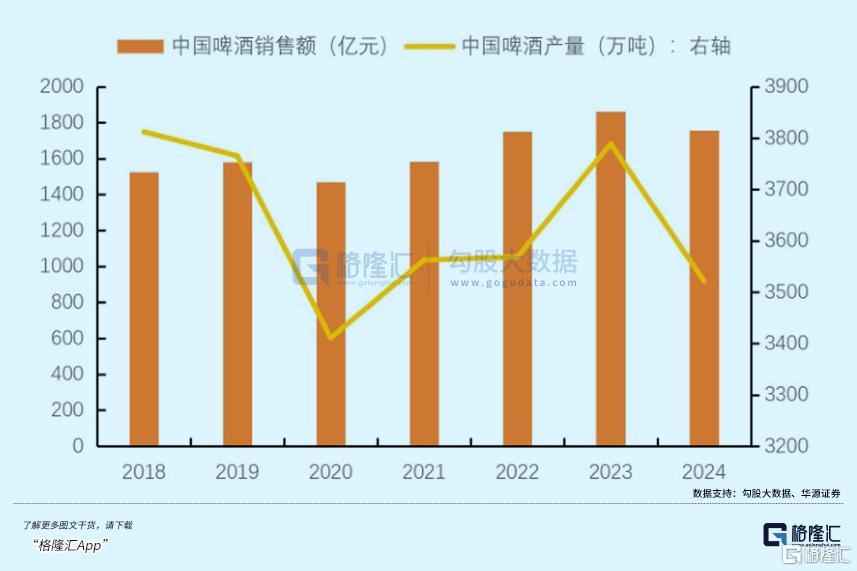
Group 1: Industry Overview - The demand for liquor, particularly white liquor, has shown slight improvement as the Mid-Autumn Festival and National Day approach, indicating a potential seasonal boost in sales [1] - The beer industry, however, has not yet shown signs of recovery after a prolonged downturn since early 2020, with production in 2024 expected to decline by 0.6% year-on-year [2][4] - The beer sector's revenue for the first half of 2025 is projected at 41.534 billion yuan, a year-on-year increase of 2.75%, while net profit is expected to rise by 11.81% to 6.512 billion yuan [4] Group 2: Company Performance - Major beer companies are experiencing varied performance, with Qingdao Beer reporting a revenue of 20.491 billion yuan, a year-on-year increase of 2.11%, while Chongqing Beer saw a slight decline in revenue [6] - Budweiser APAC, once a leader in the domestic beer market, reported a 6.1% decline in total beer sales and a 5.6% drop in revenue for the first half of 2025, with net profit down 24.4% [7][8] - The competitive landscape is shifting, with Budweiser APAC's market share falling to around 40%, indicating a significant change in the rankings among domestic beer companies [8][9] Group 3: Market Trends - The beer market has transitioned from a phase of rapid growth to one of saturation, with a notable shift towards high-end products, which now account for 72.7% of Qingdao Beer's sales [12][14] - The average price of beer in China remains relatively low compared to global standards, suggesting potential for future price increases [19] - The rise of the Z generation as a key consumer group is driving demand for craft and low-alcohol beers, with expected consumption growth rates of 17% for craft beer by 2025 [20] Group 4: Strategic Developments - Beer companies are diversifying their product lines, with some entering the yellow wine market and others focusing on beverage innovations to capture new consumer segments [22][23] - The rise of instant retail channels has become a significant sales avenue for beer, with sales penetration reaching 6.5% and expected to grow rapidly [23][24] - The beer industry is expected to recover from its current low point through new product categories and channel expansions, with a projected market size in instant retail expected to exceed 1.2 trillion yuan by 2026 [26]



啤酒板块,跌到头了吗
格隆汇APP· 2025-09-27 08:01
Group 1 - The core viewpoint of the article is that the liquor industry, particularly the white liquor sector, is showing signs of recovery as demand improves, while the beer sector continues to struggle with declining sales and market challenges [1][2][3]. - The white liquor market is expected to see a gradual improvement in sales velocity as the peak season approaches [2]. - In contrast, the beer sector has not shown any signs of recovery, with production in 2024 expected to decline by 0.6% compared to the previous year, reaching 35.213 million kiloliters, which is only 70% of the peak production capacity seen a decade ago [6]. Group 2 - The beer industry's financial performance is under pressure, with total revenue for the beer sector in the first half of 2025 reaching 41.534 billion yuan, a year-on-year increase of 2.75%, while net profit rose by 11.81% to 6.512 billion yuan [8]. - Major beer companies are experiencing a divergence in performance, with Qingdao Beer reporting a revenue of 20.491 billion yuan, a year-on-year increase of 2.11%, while Chongqing Beer saw a slight decline in revenue [9]. - Budweiser APAC, once the leader in the domestic beer market, reported a total beer sales volume of 4.363 billion liters in the first half of 2025, a decline of 6.1%, with revenue dropping by 5.6% to 3.136 billion USD [10][11]. Group 3 - The beer market has shifted from a phase of rapid growth to one of stock competition, with the peak in beer sales occurring in 2013, leading to overcapacity issues [15]. - The high-end beer market has become increasingly competitive, with domestic brands struggling to maintain their market share against foreign brands [17][19]. - Despite the challenges, the average price of beer in China remains low compared to global standards, indicating potential for future price increases [29][31]. Group 4 - The rise of the Z generation as a key consumer group is driving demand for craft and low-alcohol beers, with expected consumption of craft beer reaching 230,000 kiloliters by 2025, growing at a compound annual growth rate of 17% [33][36]. - Beer companies are exploring new growth avenues, including diversifying into other alcoholic beverages like yellow wine and soft drinks [39][40]. - The instant retail channel is emerging as a significant sales avenue for beer, with sales in this channel expected to reach 780 billion yuan in 2024, growing at a compound annual growth rate of 23% [50][52]. Group 5 - The article concludes that after several years of valuation adjustments, some leading beer companies now present attractive investment opportunities due to their stable cash flows and generous dividends [56][58]. - The beer sector is showing signs of bottoming out, but a full recovery will depend on improvements in the overall consumption environment [59].

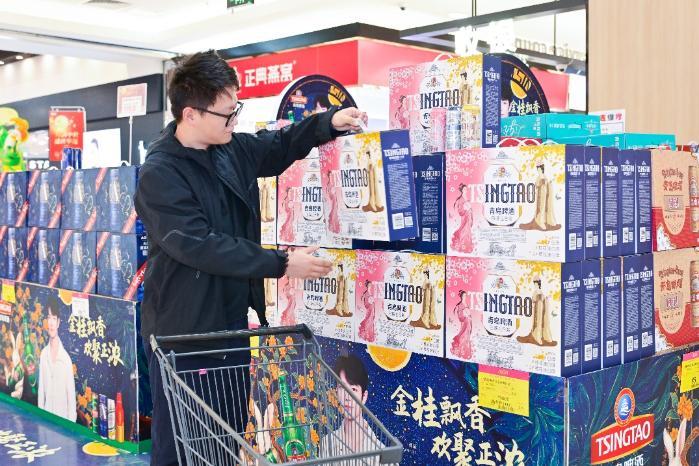
锁定节庆场景!月饼+啤酒成“黄金搭档”,中秋礼盒凭啥成C位?
Qi Lu Wan Bao· 2025-09-26 11:58
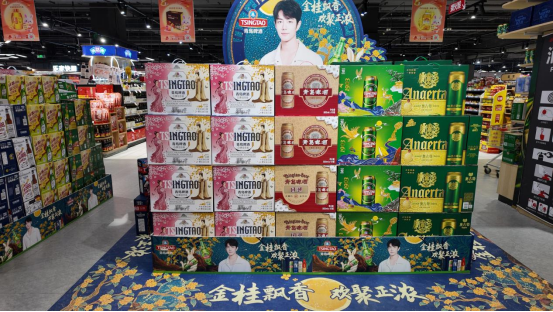
Core Insights - The Mid-Autumn Festival is driving an increase in consumer spending, particularly on festive products like beer gift boxes from Qingdao Beer [1][3] - Qingdao Beer has launched several themed gift boxes that are gaining popularity among consumers, with sales reportedly doubling during this period [3][9] Product Highlights - Qingdao Beer offers a variety of gift boxes, including the "Hongyun Dangtou" and "Qingdao Beer White Beer Combination," which feature distinct flavors and appealing packaging [5][7] - The "Classic 1903" gift box showcases traditional brewing techniques and has gained international recognition, being sold in over 120 countries [5][7] Consumer Behavior - Consumers are purchasing multiple gift boxes for family gatherings and as gifts for friends, with some buying four to five boxes at a time [9] - The festive atmosphere is enhanced by the attractive packaging of the gift boxes, which combines traditional cultural elements with modern design [7][9] Sales Channels - Qingdao Beer is leveraging both online and offline sales channels, with significant sales growth observed on e-commerce platforms like JD.com [9][11] - Efficient logistics, including cold chain delivery, ensure that products, especially those with short shelf lives like raw beer, reach consumers quickly and maintain freshness [11][12] Market Trends - The trend is shifting from merely consuming beer to a more nuanced experience of savoring different flavors, reflecting a growing appreciation for quality and variety among consumers [12]
食品饮料行业资金流入榜:贵州茅台等10股净流入资金超千万元
Zheng Quan Shi Bao Wang· 2025-09-26 09:41
Market Overview - The Shanghai Composite Index fell by 0.65% on September 26, with 10 industries experiencing gains, led by the petroleum and petrochemical sector, which rose by 1.17%, and the environmental protection sector, which increased by 0.38% [1] - The computer and electronics sectors saw the largest declines, with drops of 3.26% and 2.75%, respectively [1] - Overall, there was a net outflow of 83.579 billion yuan in the main funds across the two markets, with 5 industries seeing net inflows [1] Industry Performance - The automotive industry had the highest net inflow of funds at 0.882 billion yuan, despite a decline of 0.56% in its stock price [1] - The banking sector also saw a slight increase of 0.08% with a net inflow of 0.566 billion yuan [1] - A total of 26 industries experienced net outflows, with the electronics sector leading with a net outflow of 29.836 billion yuan, followed by the computer sector with a net outflow of 13.807 billion yuan [1] Food and Beverage Sector - The food and beverage industry declined by 0.15% but had a net inflow of 0.128 billion yuan, with 69 out of 124 stocks rising [2] - Guizhou Moutai led the inflow with 0.373 billion yuan, followed by Jinzi Ham and Wancheng Group with inflows of 0.115 billion yuan and 0.0429 billion yuan, respectively [2] - The sector also had 17 stocks with net outflows exceeding 10 million yuan, with Wuliangye, Yangyuan Beverage, and ST Juewei leading the outflows at 0.125 billion yuan, 0.0729 billion yuan, and 0.0409 billion yuan, respectively [2][4] Fund Flow in Food and Beverage Sector - Top inflow stocks included: - Guizhou Moutai: -0.28% change, 0.373 billion yuan inflow [2] - Jinzi Ham: +6.61% change, 0.115 billion yuan inflow [2] - Wancheng Group: +0.43% change, 0.0429 billion yuan inflow [2] - Top outflow stocks included: - Wuliangye: -1.11% change, -0.125 billion yuan outflow [4] - Yangyuan Beverage: +10.01% change, -0.0729 billion yuan outflow [4] - ST Juewei: -3.40% change, -0.0409 billion yuan outflow [4]




白酒关注中秋国庆动销,大众品把握结构性机会
Dongguan Securities· 2025-09-26 09:40
Investment Rating - The report maintains an "Overweight" rating for the food and beverage industry, expecting the industry index to outperform the market index by over 10% in the next six months [53]. Core Viewpoints - The report highlights the focus on liquor sales during the Mid-Autumn Festival and National Day, suggesting that consumer demand remains under pressure, particularly for high-end liquor brands like Kweichow Moutai [4][48]. - The report indicates a structural opportunity in mass-market products, with varying performance across different sub-sectors, emphasizing the importance of monitoring demand and cost indicators in the beer sector and consumption recovery in the condiment sector [4][48]. Summary by Sections Market Review - From September 12 to September 25, 2025, the SW food and beverage industry index fell by 5.76%, underperforming the CSI 300 index by approximately 6.76 percentage points [11]. - All sub-sectors underperformed the CSI 300 index during this period, with the baking sector experiencing the largest decline at -7.80% [13][14]. - Approximately 7% of stocks in the industry recorded positive returns, with notable gainers including Qianwei Yangchu (+21.90%) and Yangyuan Beverage (+16.80%) [15] . Industry Important Data Tracking Liquor Sector - As of September 25, 2025, the price of Feitian Moutai decreased to 1,765 RMB per bottle, while the price of Guojiao 1573 increased to 840 RMB per bottle [22]. Condiment Sector - As of September 25, 2025, the price of soybean meal was 2,988 RMB per ton, down 72 RMB from September 11, while the price of white sugar was 5,780 RMB per ton, down 110 RMB [25]. Beer Sector - As of September 25, 2025, the average price of barley was 2,230 RMB per ton, while the price of aluminum ingots was 20,710 RMB per ton, down 100 RMB [30]. Dairy Sector - The average price of fresh milk remained stable at 3.03 RMB per kilogram as of September 19, 2025 [37]. Meat Products Sector - The average wholesale price of pork was 19.44 RMB per kilogram as of September 25, 2025, down 0.49 RMB from September 11 [39]. Industry News - The report notes a slight decline in the national liquor price index in early September 2025, indicating ongoing market adjustments [41]. - The number of registered beer-related enterprises increased by 10.83% year-on-year from January to August 2025, reflecting a growing market [42]. Weekly Industry Perspective - The report emphasizes the importance of monitoring liquor sales during the upcoming holidays and suggests focusing on high-certainty liquor brands and mass-market products that benefit from policy catalysts [48].


双节消费观察:这些“老字号”成爆款 国潮范与经典款成宠儿
Zhong Guo Xin Wen Wang· 2025-09-26 09:08
Core Insights - The upcoming Mid-Autumn and National Day festivals are driving a surge in consumer spending, with gift boxes becoming a prominent category due to their essential role in festive celebrations [1][2] - Consumers are shifting towards rational purchasing decisions, prioritizing "reliable quality, cost-effectiveness, and value alignment" in their buying choices [1][10] - The integration of national trends and traditional brands' innovation is enhancing the appeal of classic products, reflecting consumers' dual pursuit of quality and cultural significance [2][7] Company Strategies - Qingdao Beer and Beijing Daoxiangcun are leading the festive market with their strategic product offerings, showcasing a blend of quality and cultural elements [2][9] - Qingdao Beer has introduced various gift box combinations, such as the "8+2" mix, catering to diverse consumer preferences for family gatherings and social visits [4][6] - Beijing Daoxiangcun has launched themed gift boxes like "Jingyun Zhongxian" and "Jinya Yiyue," which incorporate cultural artistry and practical value, aligning with consumer expectations for meaningful gifts [6][7] Market Trends - The trend towards rational consumption is evident, with 72% of consumers preferring established brands or classic products, and 68% emphasizing the importance of quality matching price [10] - The focus on product quality and emotional value over luxury packaging is reshaping the festive consumption landscape, promoting healthier and more meaningful purchasing behaviors [9][10] - The market is transitioning from "concept marketing" to "value competition," indicating a return to the essence of product quality and consumer satisfaction [10]
青岛啤酒股份(00168) - 致非登记股东之通知信函及回条 - 有关以电子方式发佈公司通讯安排的提...
2025-09-26 08:56
TSINGTAO BREWERY COMPANY LIMITED 青島啤酒股份有限公司 (a Sino-foreign joint stock limited company established in the People's Republic of China) Should you have any queries relating to this letter, please contact the H Share Registrar at (852)2862 8688 during business hours from 9:00 a.m. to 6:00 p.m. (Hong Kong time), Mondays to Fridays, excluding Hong Kong public holidays. (於中華人民共和國註冊成立之中外合資股份有限公司) (Stock Code 股份代號: 168) 26 September 2025 Dear non-registered shareholder(s), Reminder letter regarding the Arrangement ...
青岛啤酒股份(00168) - 致登记股东之通知信函及回条 - 有关以电子方式发佈公司通讯安排的提示...
2025-09-26 08:53
TSINGTAO BREWERY COMPANY LIMITED 青島啤酒股份有限公司 (a Sino-foreign joint stock limited company established in the People's Republic of China) (於中華人民共和國註冊成立之中外合資股份有限公司) (Stock Code 股份代號: 168) 26 September 2025 With reference to the notification letter dated 5 September 2024 titled "Arrangement of Electronic Dissemination of Corporate Communications", Tsingtao Brewery Company Limited (the "Company") is writing to remind you that the Company has adopted electronic dissemination of corporate communications (the "Corpo ...
国泰海通:即时零售或为白酒变革期新尝试 预计将持续扩容
智通财经网· 2025-09-26 05:52
Core Viewpoint - The rapid expansion of instant retail in China's liquor market is expected to maintain double-digit growth in the coming years, driven by the competitive landscape of food delivery services by 2025 [1][3] Group 1: Instant Retail Growth - China's retail industry has evolved through traditional retail, e-commerce, and new retail, with instant retail significantly shortening delivery times and enhancing consumer choices [1][2] - The liquor instant retail market has seen a surge since its inception on platforms like 1919 and Jiuxiaoer, with four main channel models emerging: vertical, platform-based, warehouse-store integrated, and front warehouse models [1][2] Group 2: Drivers of Instant Retail - The rise of instant retail in liquor is attributed to changing consumer habits, with a growing demand for convenience and quick fulfillment of spontaneous needs [2] - Cost efficiency is achieved by reducing distribution layers and operational costs, coupled with subsidies from some platforms, leading to significant price advantages [2] - Supply-side drivers include channel partners seeking to capture new growth and brand owners willing to collaborate with channels for new product launches and promotions [2] Group 3: Impact on the Liquor Industry - Instant retail presents both opportunities and challenges for the liquor industry, offering efficient fulfillment and better reach to younger consumers, while potentially impacting brand image and pricing structures [3] - Historical trends indicate that changes in the liquor cycle often coincide with channel transformations, and the current deep adjustment in the industry necessitates adaptation to instant retail [3] - The instant retail market for liquor in China is projected to reach 100 billion yuan by 2027, with a compound annual growth rate approaching the mid-double digits, benefiting core categories like baijiu and beer [3] Group 4: Investment Recommendations - The liquor retail channel is undergoing structural growth, with instant retail emerging as a highlight; recommended stocks include leading national brands and regional players with strong channel development capabilities [4] - Specific recommendations for baijiu include Guizhou Moutai, Shanxi Fenjiu, Wuliangye, Luzhou Laojiao, Yingjia Gongjiu, Jiansiyuan, and Guqingongjiu, while short-term elastic stocks include Zhenjiu Lidu and Shede Liquor [4] - For beer, which is the second-largest category in liquor, recommended stocks include Qingdao Beer, Zhujiang Beer, and China Resources Beer, reflecting high participation in instant retail [4]

新华锦控股股东母公司占用4亿资金寄望6.65亿向青岛啤酒“卖酒”还债
Xin Lang Cai Jing· 2025-09-24 21:04
Core Viewpoint - Xinhua Jin (600735.SH) is facing significant financial challenges, including a large amount of non-operating fund occupation by its controlling shareholder, Xinhua Jin Group, totaling 406 million yuan [2][3]. Financial Situation - As of the latest report, Xinhua Jin's revenue for 2024 was 1.637 billion yuan, a decrease of 30.97% year-on-year, with a net profit of -134 million yuan, down 354.59% [7]. - In the first half of 2025, the company reported revenue of 669 million yuan, a decline of 24.92% year-on-year, and a net profit of 12.87 million yuan, down 39.45% [7]. Fund Occupation and Regulatory Actions - Xinhua Jin Group and its affiliates have not returned the occupied funds, leading to regulatory scrutiny and potential administrative measures, including stock suspension and delisting warnings if the funds are not recovered within six months [3][4]. - The company is actively pursuing the recovery of these funds and is urging Xinhua Jin Group to expedite the disposal of other assets to raise the necessary capital [4]. Shareholder Actions and Agreements - Qingdao Beer announced a share transfer agreement with Xinhua Jin Group and Lu Jin Group for 100% equity of Jimo Yellow Wine, with a total consideration of 665 million yuan [2][6]. - However, four months after the announcement, there has been no update on the progress of the share transfer [2][6]. Business Operations - Xinhua Jin's business primarily focuses on "new trade and new materials," including the export of hair products and textiles, as well as graphite processing [7]. - The company has faced challenges in its operations, particularly in the second-hand car segment, which was divested in late 2024, impacting revenue [7].
