
Tsingtao Brewery(600600)

Search documents
青岛啤酒股份遭摩根大通增持约128.54万股 每股作价约50.51港元
Xin Lang Cai Jing· 2026-02-05 23:40
责任编辑:卢昱君 香港联交所最新资料显示,1月29日,摩根大通增持青岛啤酒股份(00168)128.5412万股,每股作价 50.5129港元,总金额约为6492.99万港元。增持后最新持股数目约为3317.1万股,最新持股比例为 5.06%。 热点栏目 自选股 数据中心 行情中心 资金流向 模拟交易 客户端 责任编辑:卢昱君 热点栏目 自选股 数据中心 行情中心 资金流向 模拟交易 客户端 香港联交所最新资料显示,1月29日,摩根大通增持青岛啤酒股份(00168)128.5412万股,每股作价 50.5129港元,总金额约为6492.99万港元。增持后最新持股数目约为3317.1万股,最新持股比例为 5.06%。 ...


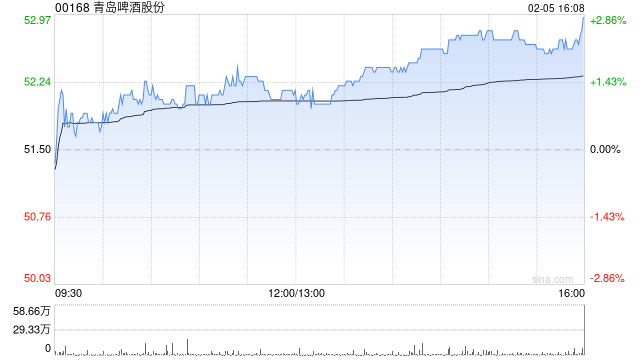
摩根大通增持青岛啤酒股份(00168)约128.54万股 每股作价约50.51港元
智通财经网· 2026-02-05 11:54
Group 1 - Morgan Stanley increased its stake in Qingdao Beer (00168) by 128,541.2 shares at a price of HKD 50.5129 per share, totaling approximately HKD 64.9299 million [1] - After the increase, the total number of shares held by Morgan Stanley is approximately 33.171 million, representing a holding percentage of 5.06% [1]
摩根大通增持青岛啤酒股份约128.54万股 每股作价约50.51港元
Zhi Tong Cai Jing· 2026-02-05 11:54
Core Viewpoint - Morgan Stanley has increased its stake in Qingdao Beer (600600) by acquiring 128,541.2 shares at a price of HKD 50.5129 per share, totaling approximately HKD 64.9299 million, resulting in a new holding of about 33.171 million shares, representing 5.06% of the company [1] Group 1 - Morgan Stanley's acquisition of shares indicates a positive outlook on Qingdao Beer, reflecting confidence in the company's future performance [1] - The total investment made by Morgan Stanley amounts to approximately HKD 64.9299 million, showcasing significant financial commitment [1] - Following the purchase, Morgan Stanley's total shareholding in Qingdao Beer has reached approximately 33.171 million shares [1]

预见2025:《2025年中国啤酒行业全景图谱》(附市场现状、竞争格局和发展趋势等)
Qian Zhan Wang· 2026-02-04 02:11
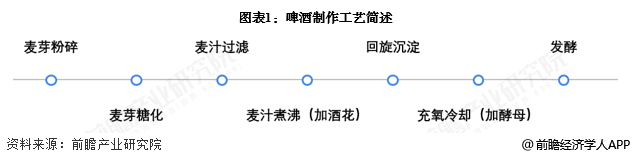
Industry Overview - The beer industry in China is defined as an alcoholic beverage made primarily from malted barley and wheat, with various classifications based on brewing techniques and yeast types [1] - The industry has a significant degree of product homogeneity due to similar brewing processes among most beer products [1] Industry Chain Analysis - The beer industry has a mature supply chain in China, with upstream suppliers providing raw materials, brewing equipment, and packaging [2][4] - Major beer producers dominate the midstream market, with the top five brands (China Resources Beer, Tsingtao Brewery, Budweiser APAC, Chongqing Brewery, and Yanjing Beer) accounting for over 90% of the market share [2][5] Industry Development History - The Chinese beer industry has evolved from foreign control in the late 19th century to a more localized production model post-1949, with significant growth following the economic reforms [7] - The industry experienced a rapid expansion from 1980 to 1994, followed by a consolidation phase from 1994 to 2005, leading to the establishment of major players [7] - Since 2017, the focus has shifted towards high-end beer production as low-end market growth has plateaued [7] Current Industry Status - Beer production in China has stabilized around 35 million kiloliters, with a slight recovery noted after a decline from 2015 to 2020 [10] - The sales revenue of the beer industry saw a significant increase in 2022, reaching 175.11 billion yuan, a 10.1% year-on-year growth [11] - The demand for high-quality beer products is rising, prompting leading companies to invest in the high-end market segment [14] Pricing Trends - The average price of beer in China has been on the rise, increasing from 14.6 yuan per liter in 2019 to an expected 17.2 yuan per liter by 2024 [15] Competitive Landscape - The beer industry in China exhibits a clear oligopolistic trend, with the top five companies dominating the market [18] - The regional concentration of beer production is high, particularly in coastal areas, with Shandong and Guangdong provinces leading in production capacity [23] Future Industry Outlook - The market size of the beer industry is projected to exceed 240 billion yuan by 2031, driven by increasing consumer demand for quality and unique beer products [24] - The industry is expected to see a rise in concentration and a shift towards high-end products, with digital marketing and innovative strategies becoming key growth drivers [28]




中国必选消费26年2月投资策略:震荡市场方显消费价值
Haitong Securities International· 2026-02-03 12:57
Investment Focus - The report highlights the value of consumer stocks in a volatile market, recommending a focus on companies like Guizhou Moutai, Eastroc Beverage, and Yili Group, all rated as "Outperform" [1]. Industry Overview - In January 2026, four out of eight tracked essential consumer sectors showed positive growth, including condiments, frozen foods, soft drinks, and dining, while four sectors, such as mid-to-high-end baijiu, dairy products, and beer, experienced declines [3][9]. - The overall consumer industry is characterized by a recovery in basic demand while hedonic consumption remains under pressure, indicating a shift in consumer spending towards essential goods [9]. Revenue and Growth Analysis - The revenue for the mid-to-high-end baijiu sector in January was 470 billion yuan, down 14.0% year-on-year, while the revenue for the mass-market baijiu sector was 229 billion yuan, down 3.0% year-on-year [10][11]. - The soft drink sector reported a revenue of 962 billion yuan in January, with a year-on-year growth of 1.1%, indicating a cautious recovery in demand [17]. - The frozen food sector saw a revenue of 150 billion yuan, with a year-on-year increase of 8.0%, driven by pre-Spring Festival stocking and low temperatures [16]. Price Trends - The report notes that the wholesale prices of major baijiu brands like Guizhou Moutai remained stable, while some brands faced downward price pressures due to high inventory levels [4][21]. - The average discount rates for liquid milk and condiments increased compared to the previous month, reflecting intensified market competition [35][37]. Market Dynamics - The report identifies four favorable funding factors for the essential consumer sector, including significant volatility in global capital markets, declining risk-free interest rates, increased foreign capital allocation to China, and low institutional allocation levels [6]. - The report suggests focusing on companies that align with both domestic and foreign institutional preferences, as well as those showing improvements in fundamentals and dividend yields [6].






骏马载福来,鸿运迎新春!青啤马年生肖产品解锁忙年新体验
Jin Rong Jie· 2026-02-03 10:47
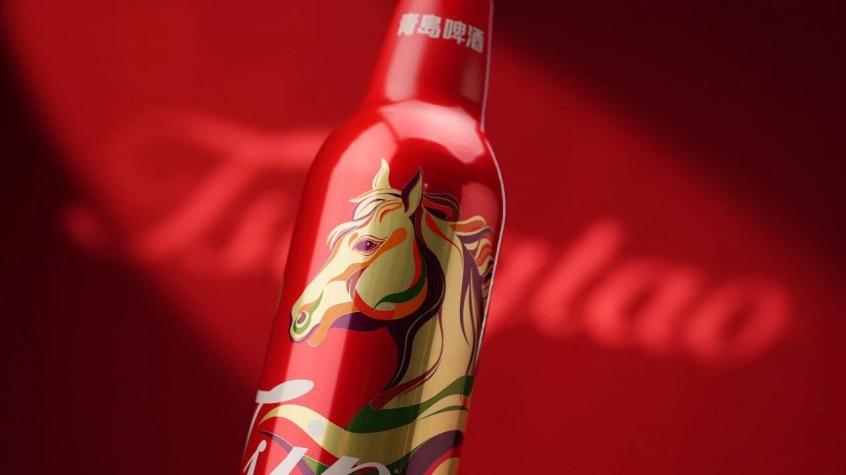
Core Viewpoint - Qingdao Beer has launched the "Hongyun Dantou" Year of the Horse Zodiac Edition, which combines cultural significance, quality, and versatility, making it a popular choice for the New Year celebrations across households [1][5]. Group 1: Product Features - The "Hongyun Dantou" Year of the Horse Zodiac Edition is prominently displayed in major supermarkets, featuring a red and gold aluminum bottle design that symbolizes joy and good fortune [2]. - The product is available in multiple specifications, including a 355ml single bottle for casual drinking, a 12-bottle box for family stocking, and a 473ml gift box designed for festive occasions, catering to various consumer needs [5]. - The design incorporates traditional Chinese cultural elements, with the horse symbolizing auspiciousness and progress, aligning with the New Year’s themes of success and striving [5][6]. Group 2: Cultural Significance - The product is positioned as a symbol of reunion and celebration during the New Year, enhancing the festive atmosphere with its rich flavors and cultural messages [6]. - Qingdao Beer has also introduced a creative gift box called "Huacong Xianrui," which integrates traditional elements with modern design, appealing to consumers looking for meaningful gifts during the busy New Year season [9]. - The Year of the Horse edition serves as a cultural bridge, connecting overseas Chinese communities with their heritage, allowing them to celebrate the New Year with a taste of home [12][14]. Group 3: Market Strategy - Qingdao Beer has maintained a commitment to cultural representation through its Zodiac editions since 2014, evolving its offerings to meet contemporary consumer preferences while honoring traditional values [16]. - The brand's strategy includes not only domestic sales but also international outreach, promoting the Year of the Horse edition in markets like South Korea, emphasizing its cultural significance and appeal [12][14]. - The marketing approach highlights the emotional connections fostered by the product, positioning it as more than just a beverage but as a means of connecting individuals, families, and cultures [16].
未知机构:招商食品啤酒板块观点更新及跟踪20260202当前行业股息-20260203
未知机构· 2026-02-03 02:25
Industry and Company Analysis Summary Industry Overview - The beer industry is currently experiencing a high dividend yield, with leading companies increasing their dividends, providing support for stock prices. The focus is on the recovery of service consumption and inflation expectations driving volume and price growth in 2026 [1][2] - The industry is expected to see a recovery in volume and price due to improved service consumption and inflation expectations [1] Key Companies and Insights China Resources Beer (华润啤酒) - Recognized for its leading position and ongoing premiumization strategy [1] - Projected to achieve a small single-digit volume growth in 2025, with stable pricing and a slight decline in H2 compared to H1. Full-year profit is expected to grow by a high single to double-digit percentage [2] - Anticipated revenue and profit for 2025 are 39.1 billion and 5.8 billion respectively, not accounting for impairments [2] - Dividend payout ratio is expected to gradually increase to 70-80% [2] Chongqing Brewery (重啤) - Q4 trends are better than the same period last year, primarily due to strict inventory control in 2025. The company expects stable or slightly increased sales for the year [2] - Notable growth in U.S. and Xinjiang markets, with double-digit growth for brands like Carlsberg and Fenghua Xueyue [2] Yanjing Beer (燕京) - The company forecasts a slight decline in net profit for Q4, with a year-on-year growth rate of -3% to +44% [3] - Plans to launch a new product, A10, to enhance its product matrix in 2026 [3] - Expected stable cost per ton and potential for operational efficiency improvements [3] Financial Metrics - China Resources Beer has a dividend yield of 4.0% for A shares and 5.5% for H shares [2] - Chongqing Brewery's Q4 performance is expected to show a slight increase in sales, with a focus on inventory management [2] - Yanjing's Q4 revenue is projected to grow by 7%, with an annual profit of 1.2 billion [3] Risks - Potential risks include cost fluctuations, slower-than-expected recovery in demand from the restaurant sector, and increased competition [4]
青岛啤酒股份(00168) - 截至2026年1月31日股份发行人的证券变动月报表
2026-02-02 08:34
股份發行人及根據《上市規則》第十九B章上市的香港預託證券發行人的證券變動月報表 截至月份: 2026年1月31日 狀態: 新提交 致:香港交易及結算所有限公司 | 2. 股份分類 | 普通股 | 股份類別 | H | | | 於香港聯交所上市 (註1) | 是 | | | | --- | --- | --- | --- | --- | --- | --- | --- | --- | --- | | 證券代號 (如上市) | 00168 | 說明 | H 股 | | | | | | | | | | 法定/註冊股份數目 | | | 面值 | | | 法定/註冊股本 | | | 上月底結存 | | | 655,069,178 | RMB | | 1 RMB | | | 655,069,178 | | 增加 / 減少 (-) | | | | | | RMB | | | | | 本月底結存 | | | 655,069,178 | RMB | | 1 RMB | | | 655,069,178 | 本月底法定/註冊股本總額: RMB 1,364,195,121 FF301 第 1 頁 共 10 頁 v 1.2.0 FF3 ...
中证恒生沪港通AH股精明指数调整:赛力斯获纳入,成份股格局优化
Sou Hu Cai Jing· 2026-02-02 04:52
Group 1 - The core announcement is the semi-annual review results of the China Securities Index Co., Ltd. and Hang Seng Index Company regarding the CSI Hang Seng Stock Connect AH Index as of December 31, 2025 [1] - The adjustments involve the inclusion and exclusion of constituent stocks to better reflect the market performance and structural changes of listed companies in both regions [3] - The total number of constituent stocks in the index remains unchanged at 50 [6] Group 2 - Two new constituent stocks are added: SANY Heavy Industry Co., Ltd. (600031.SH, 06031) and Seres Group Co., Ltd. (601127.SH, 09927) [4] - The stocks being removed from the index are China Eastern Airlines Corporation Limited (600115.SH, 00670) and Tsingtao Brewery Group Co., Ltd. (600600.SH, 00168) [4] - The inclusion of Seres, a representative company in the new energy vehicle sector, highlights its increasing activity and influence in the A+H share market, reflecting the index's focus on emerging high-growth industries [6] Group 3 - The specific share categories (A-shares or H-shares) for the newly included companies will be finalized by March 2026, ensuring the representativeness and investability of the index [8] - The update of the index constituents is a routine reflection of market dynamics, optimizing the industry structure to better represent vibrant and potential listed companies under the Stock Connect mechanism [10]




中国必选消费品1月需求报告:基础需求回暖,享乐型消费承压
Haitong Securities International· 2026-02-02 00:41
Investment Rating - The report rates multiple companies in the consumer staples sector as "Outperform," including Guizhou Moutai, Wuliangye, and Yili [1]. Core Insights - The consumer staples industry in January 2026 shows a recovery in basic demand while hedonic consumption remains under pressure, indicating a divergence in performance across different segments [3][29]. - Among the eight key consumer industries tracked, four are experiencing positive growth (condiments, frozen food, soft drinks, and catering), while four are facing declines (high-end and above Baijiu, mass-market Baijiu, dairy products, and beer) [29]. Summary by Segment Baijiu (High-end and Above) - In January, the revenue for high-end Baijiu reached 47 billion yuan, a year-on-year decline of 14.0%. The price pressure is significant, with expectations of over a 10% price drop throughout the year due to high inventory levels [11]. Baijiu (Mass-market and Below) - The mass-market Baijiu segment generated 22.9 billion yuan in January, down 3.0% year-on-year. Despite the decline, the segment shows resilience due to rigid demand and adaptability to consumption scenarios [13]. Beer - The beer industry reported revenues of 17 billion yuan in January, a decrease of 7.1% year-on-year. The demand was affected by adverse weather and the delayed Spring Festival, leading to a cautious inventory approach by distributors [15]. Condiments - The condiment sector achieved revenues of 46.9 billion yuan in January, reflecting a year-on-year growth of 3.5%. The recovery in the catering channel and increased demand from small and medium-sized businesses are key drivers [17]. Dairy Products - The dairy sector's revenue was 43.5 billion yuan in January, down 3.3% year-on-year. The demand remains under pressure, but a potential recovery is anticipated in the coming months due to low base effects [19]. Frozen Food - The frozen food segment saw revenues of 14.99 billion yuan in January, with a year-on-year increase of 8%. The demand is supported by pre-Spring Festival stocking and favorable weather conditions [21]. Soft Drinks - The soft drink industry generated 96.2 billion yuan in January, with a modest growth of 1.1% year-on-year. Increased promotional activities indicate heightened market competition [24]. Catering - The catering sector reported revenues of 16.2 billion yuan in January, up 2.5% year-on-year. The demand is gradually improving, particularly in small and medium-sized restaurants [26].

