HAIER SMART HOME(600690)

Search documents
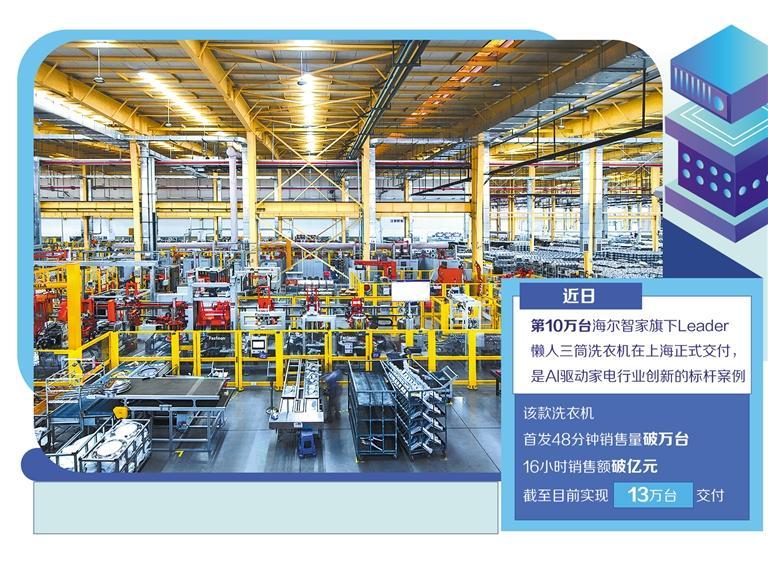
AI技术之光照进“无人家务”梦想
Jing Ji Ri Bao· 2025-09-16 22:12
Core Insights - The article highlights the emergence of AI-driven home appliances, particularly focusing on Haier's innovative "lazy" washing machine, which has achieved a milestone of 130,000 units delivered, addressing the growing consumer demand for convenience and hygiene in laundry solutions [2][3] Group 1: AI Empowerment in Home Appliances - AI technology is transforming home appliances from passive responders to proactive service providers, enhancing user experience by optimizing household tasks through machine learning [3] - The development of Haier's washing machine involved a comprehensive approach, utilizing intelligent algorithms to identify user pain points and significantly reducing the product validation cycle by 30% [3] Group 2: Integration of AI in Household Scenarios - The integration of AI across various home environments is reshaping family experiences, with appliances now capable of coordinating tasks across different rooms, marking a shift towards a more interconnected smart home ecosystem [4] - Haier's solutions, such as the intelligent kitchen system, exemplify this trend by automating cooking processes and enhancing safety through real-time monitoring [4] Group 3: Data and Model Challenges - The article emphasizes the critical role of high-quality data in AI performance, particularly in the "unmanned household" sector, where data collection and model optimization are essential for overcoming technical challenges [5][6] - Haier has invested significantly in data acquisition, employing a dedicated team to gather diverse cooking scenarios to enhance the accuracy of AI functionalities [5] Group 4: Collaborative Innovation Ecosystem - The industry is moving towards a collaborative innovation ecosystem, where standardization in data collection and open cooperation among companies are vital for advancing AI applications in home appliances [7] - Haier is leading efforts to establish data collection standards that can evolve from corporate to national levels, ensuring a robust foundation for AI development [7] Group 5: Future of Robotics in Home Management - The future of home management is expected to be dominated by robots, with the integration of AI appliances creating a synergistic environment for efficient household management [8] - Haier's leadership in the consumer electronics sector positions it uniquely to drive the widespread adoption of "unmanned household" solutions, leveraging its comprehensive industry capabilities [8]

家电行业周报(25年第37周):8月家电社零增长14%,家电企业亮相IFA彰显出海决心-20250916
Guoxin Securities· 2025-09-16 14:43
Investment Rating - The report maintains an "Outperform" rating for the home appliance industry [6][7][85]. Core Views - The home appliance retail sector showed a strong growth of 14% year-on-year in August, with offline sales improving and online sales remaining stable despite entering a low season [1][2][19]. - Home appliance exports faced challenges, with a 6% year-on-year decline in August, but the resilience of growth is highlighted amid tariff disruptions [3][43]. - Domestic appliance companies showcased new products at the IFA exhibition, indicating a strong commitment to overseas expansion [4][49]. Summary by Sections Retail Performance - In August, the retail sales of home appliances grew by 14.3% year-on-year, with offline sales benefiting from government subsidies [2][20]. - Key categories such as air conditioners and kitchen appliances maintained positive growth, with air fryers seeing over 30% growth in online sales [2][20]. Export Performance - The export value of home appliances in August was 603.7 billion yuan, down 6.3% year-on-year, with a decline in export volume by 3.6% [3][43]. - The average export price decreased by 3.2% to 20.9 USD per unit, reflecting the impact of tariffs since April [3][43]. Product Innovation - Major domestic brands like Midea, Haier, and TCL introduced innovative products at the IFA, showcasing advancements in smart home technology and a commitment to international markets [4][49]. - Stone Technology entered the lawn mower market, indicating diversification in product offerings [4][49]. Company Recommendations - The report recommends investing in leading companies in the white goods sector such as Midea Group, Gree Electric, and Haier Smart Home, as well as in small appliances like Bear Electric and Stone Technology [5][14][82].




AI驱动、出海加速!2025中国品牌百强总价值突破1.2万亿美元
Guo Ji Jin Rong Bao· 2025-09-16 14:09
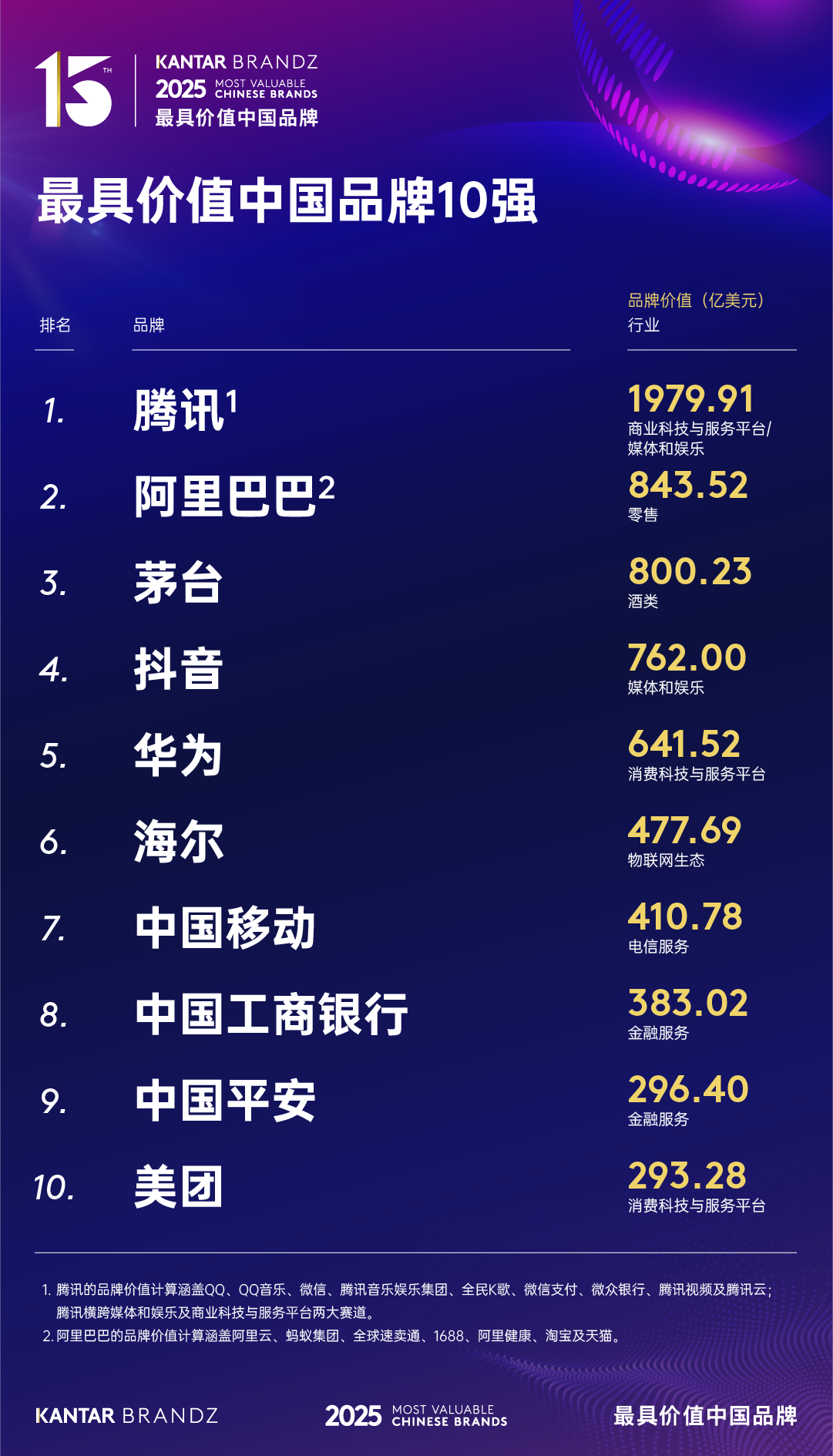
Core Insights - The total value of the 2025 BrandZ Top 100 Most Valuable Chinese Brands reached $1.21 trillion, marking a significant 25% increase from the previous year [1] - The strong recovery of Chinese brands is attributed to four main drivers: breakthroughs in artificial intelligence innovation, stable development in the financial services sector, accelerated expansion into overseas markets, and the value return of technology giants [1] Company Highlights - Tencent topped the BrandZ list with a brand value of $197.99 billion, achieving a 53% increase due to its expansion in consumer and enterprise sectors [3] - Alibaba reclaimed the second position with a brand value of $84.35 billion, growing at a rate of 23% [3] - Moutai maintained third place with a brand value of $80.02 billion, while Douyin surged 34% to $76.20 billion, securing fourth place [3] - Huawei's brand value increased by 56% to $64.15 billion, placing it fifth overall and among the top four in annual value growth [3] - Haier, ranked sixth with a brand value of $47.77 billion, strengthened its leadership in the IoT ecosystem through an enhanced ecological brand strategy [3] Emerging Brands - The BrandZ list showcased a diverse development landscape with seven new brands, including two from the fast-food sector [6] - Mixue Ice City ranked 51st with a brand value of $3.96 billion, recognized for its high-quality supply chain and affordable brand positioning [6] - Bawang Tea Ji ranked 88th with a brand value of $1.82 billion, focusing on cultural and aesthetic representation through tea [6] - Qunar, returning to the list at 78th with a brand value of $2.20 billion, improved its brand value through enhanced online service experiences [6] Growth Leaders - The average growth rate of the leading brands this year reached 67%, indicating strong development momentum among Chinese brands [7] - Xiaomi led the growth with a remarkable 154% increase, achieving a brand value of $28.15 billion through a user-centric innovation strategy [7] - BYD ranked 18th with a brand value of $17.16 billion, experiencing a 78% increase driven by advancements in smart driving technology and strategic partnerships [7] - XPeng Motors returned to the top 100 at 80th place with a brand value of $2.18 billion, bolstered by its overseas market expansion [7] Industry Trends - Chinese brands are at the forefront of artificial intelligence applications, optimizing manufacturing processes and transforming marketing strategies [8] - The integration of smart technology into daily life is becoming increasingly seamless, with innovations in smart home solutions leading the way [8]




海尔智家:2025年9月16日耗资645.75万元回购25万股A股股份。
Xin Lang Cai Jing· 2025-09-16 11:56
海尔智家:2025年9月16日耗资645.75万元回购25万股A股股份。 ...
海尔智家(06690)9月16日耗资645.75万元回购25万股A股
智通财经网· 2025-09-16 11:26
智通财经APP讯,海尔智家(06690)公布,2025年9月16日耗资645.75万元回购25万股A股股份。 ...
海尔智家(06690) - 翌日披露报表
2025-09-16 11:18
FF305 翌日披露報表 (股份發行人 ── 已發行股份或庫存股份變動、股份購回及/或在場内出售庫存股份) 表格類別: 股票 狀態: 新提交 公司名稱: 海爾智家股份有限公司 呈交日期: 2025年9月16日 (i) 上市發行人已收取其在是次股份發行或庫存股份出售或轉讓應得的全部款項; (viii) 有關債券、借貸股份、票據或公司債券的信託契約/平邊契據經已製備及簽署,有關詳情已送呈公司註冊處處長存檔(如法律如此規定)。 第一章節註釋: 如上市發行人的已發行股份或庫存股份出現變動而須根據《香港聯合交易所有限公司(「香港聯交所」)證券上市規則》(「《主板上市規則》」)第13.25A條 / 《香港聯合交易所有限公司GEM證券 上市規則》(「《GEM上市規則》」)第17.27A條作出披露,必須填妥第一章節 。 | 第一章節 | | | | | | | | --- | --- | --- | --- | --- | --- | --- | | 1. 股份分類 | 普通股 | 股份類別 A | | 於香港聯交所上市 | 否 | | | 證券代號 (如上市) | 600690 | 說明 | 每股面值人民幣1元之普通股(A ...
白色家电板块9月16日跌0.78%,格力电器领跌,主力资金净流出7.89亿元
Zheng Xing Xing Ye Ri Bao· 2025-09-16 08:46
Market Overview - On September 16, the white goods sector declined by 0.78% compared to the previous trading day, with Gree Electric Appliances leading the decline [1] - The Shanghai Composite Index closed at 3861.87, up 0.04%, while the Shenzhen Component Index closed at 13063.97, up 0.45% [1] Individual Stock Performance - Notable gainers in the white goods sector included: - Xueqi Electric (Code: 001387) with a closing price of 14.10, up 1.73% on a trading volume of 32,800 shares and a turnover of 45.95 million yuan [1] - Changhong Meiling (Code: 000521) closed at 7.49, up 1.49% with a trading volume of 141,100 shares and a turnover of 105 million yuan [1] - Aucma (Code: 600336) closed at 6.78, up 1.35% with a trading volume of 131,900 shares and a turnover of 89.09 million yuan [1] - Major decliners included: - Gree Electric (Code: 000651) closed at 40.50, down 1.07% with a trading volume of 555,700 shares and a turnover of 2.257 billion yuan [1] - Midea Group (Code: 000333) closed at 74.46, down 0.94% with a trading volume of 456,000 shares and a turnover of 3.396 billion yuan [1] Capital Flow Analysis - The white goods sector experienced a net outflow of 789 million yuan from institutional investors, while retail investors saw a net inflow of 572 million yuan [1] - Specific stock capital flows included: - Haier Smart Home (Code: 600690) had a net inflow of 26.03 million yuan from institutional investors, but a net outflow of 33.99 million yuan from retail investors [2] - Changhong Meiling (Code: 000521) saw a net inflow of 17.75 million yuan from institutional investors, but a net outflow of 13.20 million yuan from retail investors [2] - Gree Electric (Code: 000651) had a significant net outflow of 370 million yuan from institutional investors, while retail investors contributed a net inflow of 237 million yuan [2]


高盛:小米集团-W进入中国冷气机市场 美的集团料最具韧性
Zhi Tong Cai Jing· 2025-09-16 08:26
Core Insights - Goldman Sachs reports that the Chinese air conditioning market remains attractive due to high market consolidation, strong profitability of leaders, and balanced supply-demand dynamics [1] Industry Overview - The competition among Xiaomi Group-W (01810) and industry leaders is linked to the overall efficiency of the industry value chain, from supply chain and manufacturing to distribution networks [1] - Increased competition is expected to enhance industry efficiency and potentially reduce the profit pool [1] Company Ratings - Goldman Sachs maintains a "Buy" rating for Midea Group (000333), Haier Smart Home (600690), Hisense Home Appliances (000921), and Xiaomi [1] - The rating for Gree Electric Appliances (000651.SZ) is downgraded from "Buy" to "Neutral" due to weakened demand and intensified competition affecting growth prospects, although a projected dividend yield of 7 cents provides valuation support [1] Company Performance Expectations - Midea is anticipated to be the most resilient manufacturer, leveraging its global leading production advantages and continuously improving distribution efficiency to potentially increase market share [1] - Gree's profitability is expected to be most impacted among peers, given the company's reliance on the Chinese market [1] - Xiaomi is projected to become a leading player in second-tier cities, with a mid-term market share expected to rise to approximately 10%, benefiting from its distribution network, product ecosystem, and improved production capabilities [1] - Further market share growth will depend on strategies related to mid-to-high-end products and offline channels [1]
大行评级|高盛:中国冷气机市场在多方面具吸引力 维持美的、小米“买入”评级
Ge Long Hui· 2025-09-16 03:51
Group 1 - The report from Goldman Sachs indicates that the Chinese air conditioning market remains attractive due to high market consolidation and leaders having high profitability rates, along with supply-demand balance and core profitability strategies of leaders [1] - Competition between Xiaomi and industry leaders is related to the overall efficiency of the industry value chain, from supply chain and manufacturing to distribution networks, which is expected to enhance industry efficiency and potentially reduce profit pools [1] - Midea is anticipated to be the most resilient manufacturer, leveraging its global leading production advantages and continuous improvement in distribution efficiency to potentially increase market share [1] Group 2 - Gree's profitability is expected to be most affected among peers, considering the company's reliance on the Chinese market [1] - Xiaomi is projected to become a leading player in second-tier cities, with a mid-term market share expected to rise to approximately 10%, benefiting from its distribution network, product ecosystem, and improvements in production capacity [1] - The company maintains a "buy" rating for Midea, Haier Smart Home, Hisense Home Appliances, and Xiaomi, while downgrading Gree's rating from "buy" to "neutral" [1]
52家鲁企上榜2025中国企业500强榜单
Xin Hua Wang· 2025-09-16 01:45
Group 1 - The 2025 China Top 500 Enterprises list was released, with the top 10 companies including State Grid, China National Petroleum Corporation, and JD Group [1] - The threshold for entering the 2025 China Top 500 Enterprises reached 4.796 billion yuan, an increase of 57.9 million yuan from the previous year [1] - Total operating revenue for the top 500 companies reached 110.15 trillion yuan, showing an increase compared to the previous year [1] - The net profit attributable to the parent company was 4.71 trillion yuan, reflecting a growth of 4.39% year-on-year [1] - The contribution to total revenue from manufacturing, services, and other industries was 40.48%, 40.29%, and 19.23% respectively [1] - The number of advanced manufacturing enterprises in the list increased from 23 to 32, with notable growth in sectors like new energy equipment manufacturing and semiconductor manufacturing [1] Group 2 - Shandong province had 52 companies on the list, achieving a total operating revenue of 6.904 trillion yuan, an increase of 268.243 billion yuan from 2024 [2] - Among the listed companies, 18 had revenues exceeding 100 billion yuan, with one additional company joining this category compared to last year [2] - The top 10 companies from Shandong included Shandong Energy Group and Haier Group, with significant improvements in their rankings [2] - Shandong's large enterprises, acting as "chain masters," have played a crucial role in stabilizing the economy and enhancing innovation capabilities [2] - More than half of the companies with revenues over 100 billion yuan in Shandong are private enterprises, indicating the strengthening of the private sector [2]