
HAIER SMART HOME(600690)

Search documents
生态环境部核发2026年度消耗臭氧层物质和氢氟碳化物生产、使用和进口配额
Xin Lang Cai Jing· 2025-12-30 09:44
Group 1 - The Ministry of Ecology and Environment has issued a notification regarding the allocation of production, usage, and import quotas for ozone-depleting substances and hydrofluorocarbons for the year 2026 [1] - A total of 17 companies, including Inner Mongolia San Aifu Wanhao Fluorochemical Co., Ltd., have been granted production quotas for hydrochlorofluorocarbons, while 14 companies, including Aux Air Conditioning Co., Ltd., have received usage quotas for the same substances [1] - Additionally, 7 companies, including Lianlong Bohua (Tianjin) Pharmaceutical Chemical Co., Ltd., have been allocated usage quotas for carbon tetrachloride [1] Group 2 - A total of 34 companies, including Tianjin Green Bell Gas Co., Ltd., have been granted production and internal usage quotas for hydrofluorocarbons, while 36 companies, including Zhejiang Penglai Refrigerant Co., Ltd., have received import quotas for hydrofluorocarbons [1]

海尔智家(06690) - 翌日披露报表
2025-12-30 09:29
FF305 翌日披露報表 (股份發行人 ── 已發行股份或庫存股份變動、股份購回及/或在場内出售庫存股份) FF305 確認 根據《主板上市規則》第13.25C條 / 《GEM上市規則》第17.27C條,我們在此確認,據我們所知所信,第一章節所述的每項股份發行或庫存股份出售或轉讓已獲發行人董事會正式授權批准,並遵 照所有適用上市規則、法律及其他監管規定進行,並在適用的情況下: 表格類別: 股票 狀態: 新提交 公司名稱: 海爾智家股份有限公司 呈交日期: 2025年12月30日 如上市發行人的已發行股份或庫存股份出現變動而須根據《香港聯合交易所有限公司(「香港聯交所」)證券上市規則》(「《主板上市規則》」)第13.25A條 / 《香港聯合交易所有限公司GEM證券 上市規則》(「《GEM上市規則》」)第17.27A條作出披露,必須填妥第一章節 。 | 第一章節 | | | | | | | | --- | --- | --- | --- | --- | --- | --- | | 1. 股份分類 | 普通股 | A 股份類別 | | 於香港聯交所上市 | 否 | | | 證券代號 (如上市) | 600690 | ...
罗永浩炮轰,空调售后成“暴利江湖”?
商业洞察· 2025-12-30 09:23
Core Viewpoint - The article discusses the high costs associated with air conditioning maintenance and repair services, highlighting the lack of regulation in the air conditioning after-market, which has become a lucrative but problematic area for consumers and companies alike [2][4][15]. Group 1: High Costs of Air Conditioning Maintenance - The cost for seasonal cleaning and filter replacement for central air conditioning units can reach approximately 15,000 yuan, with filter replacement accounting for 70% of this cost [4][7]. - Consumers have expressed frustration over the high service fees, with some stating that the cost of maintenance can exceed the price of purchasing new units, especially as air conditioning prices have dropped significantly due to market competition [5][10]. - The average cleaning costs for other brands like Midea and Gree range from 100 to 300 yuan, indicating that the prices for maintenance services can vary widely across different brands [10][11]. Group 2: Issues in the After-Market - The air conditioning after-market is plagued by issues such as price opacity, inflated repair costs, and unnecessary upselling, leading to consumer distrust [15][16]. - Reports indicate that third-party service providers often charge significantly more than official brand service teams, sometimes up to 3-4 times higher [15][18]. - The lack of regulation in the after-market allows for a variety of service quality, with many third-party companies operating outside of formal oversight [18]. Group 3: Competitive Landscape and Service Improvements - Major appliance brands like Gree and Midea are increasingly focusing on enhancing their after-sales service networks, with Gree boasting over 15,000 authorized service points [20][22]. - The article notes a shift in service strategies, with brands like Midea and Xiaomi introducing longer warranty periods and comprehensive service packages to improve customer satisfaction [22][24]. - As the price competition in the air conditioning market reaches its limits, companies are recognizing the importance of service quality as a key differentiator in maintaining market share [23][24].





三大智能家居APP暗战:谁更适合用户?
和讯· 2025-12-30 09:23
Core Viewpoint - The article discusses the evolving definitions and standards of smart home technology, highlighting the recent "New National Standard" released by the National Standards Commission, which categorizes smart home products into five levels (L1-L5) based on their intelligence and user experience. The article compares three leading companies—Haier, Midea, and Xiaomi—each with distinct approaches to their smart home applications [1][5]. Group 1: Haier - Haier's smart home app aims to be the "first entry point for smart homes," featuring a new 3D interactive view that transforms a flat device list into an engaging 3D home model, enhancing user experience from "controlling appliances" to "managing life" [1]. - The app integrates over 55 brands and 167 categories of devices, extending smart living from indoor to outdoor scenarios through partnerships, such as with Changan and Chery [1]. - Haier offers a comprehensive service model that includes installation, maintenance, and design, providing a seamless user experience [1]. Group 2: Midea - Midea's app positions itself as a leader in the AI smart home era, introducing the Smart Home Agent concept and the "Xiao Mei AI Family Assistant," which aims for a "no-feel" control experience through self-sensing and decision-making capabilities [2]. - The company actively collaborates with major smartphone manufacturers and automotive companies to expand the interconnectedness of "people, vehicles, and homes," focusing on deep AI integration [2]. - Midea's strategy emphasizes making smart home technology smarter and more invisible, enhancing user comfort [2]. Group 3: Xiaomi - Xiaomi's app serves as the core control platform for its smart ecosystem, characterized by a simple interface and intuitive operation, allowing users to easily access frequently used functions [3]. - Although the 3D view feature is still under development, the app has strengthened its scene capabilities with new modes for security, environment, lighting, and shading, catering to comprehensive user needs [3]. - The app acts as an efficient "connector" and "adaptation center," integrating both Xiaomi's products and third-party devices, thus reducing complexity and cost for users looking to build a mixed-brand smart home [3]. Group 4: Conclusion - The competition among the three apps reflects deeper industry interpretations of "smart home" and the battle for user engagement, with Haier focusing on ecosystem building, Midea on control, and Xiaomi on adaptability [5]. - Users may find that there is no "best" option, but rather one that is "more suitable" based on their preferences for brand integration, AI experiences, or mixed-brand compatibility [5].
家电行业2026年度投资策略:重视红利、拥抱出海、把握家电+转型机遇
HUAXI Securities· 2025-12-30 09:17
Core Insights - The report emphasizes the strong resilience of leading white goods companies, highlighting their high dividend yields, with Gree Electric at 7.3%, Midea Group at 5.1%, Hisense Home Appliances at 4.9%, and Haier Smart Home at 4.6% [6][22] - The "Home Appliance +" strategy indicates opportunities in extending the appliance industry into robotics, with companies like Midea Group and Fuhua Co. making significant advancements [6][58] - The export market shows potential, particularly in the U.S. real estate sector, with expectations of demand recovery due to anticipated interest rate cuts and housing stimulus policies [6][70] Section Summaries 2025 Home Appliance Review - The home appliance index has shown a modest increase of 7.7% year-to-date, underperforming the CSI 300 index by approximately 9.7 percentage points [11][14] - The market style in 2025 has favored growth stocks, while the home appliance sector has leaned towards value, leading to a mismatch in market expectations [13][14] - The public fund allocation in the home appliance sector is at a historical low of 2.94%, indicating potential for future growth as external demand remains optimistic [18][19] Dividends - Leading white goods companies maintain high dividend yields, with Gree Electric at 7.3%, Supor at 6.1%, and Midea Group at 5.1%, reflecting strong earnings resilience [24][29] - The report suggests that the dividend rates for companies like Midea and Haier may continue to increase, supported by robust profit growth [24][30] Domestic Sales - The national subsidy policy has positively impacted consumer confidence, with a clear trend towards structural upgrades in appliance consumption [34] - The sales growth of home appliances has been driven by the "trade-in" policy, although growth rates have shown a declining trend in the latter part of the year [34][39] - The air conditioning market has maintained stable pricing, with a continued trend towards mid-to-high-end products [39] "Home Appliance +" - Midea Group has made significant investments in robotics, with humanoid robots already in practical application within factories [58] - Fuhua Co. is expected to launch its grain storage robots in 2026, indicating a diversification into new growth areas [59] - Key component manufacturers like Huaxiang Co. and Hanyu Group are positioned to benefit from the robotics trend, focusing on core components such as reducers and harmonic drives [64][65] Exports - The U.S. real estate market is expected to recover, with potential interest rate cuts and housing stimulus policies likely to boost demand for home appliances [71][84] - Retail inventory levels in the U.S. are high, which may affect sales performance in the short term, but long-term housing demand remains strong [76][83] - The report anticipates that if mortgage rates fall below 6%, there could be a significant recovery in demand within the real estate chain [84]



海尔专卖店深化数字转型实现80%统仓ToC
Jin Tou Wang· 2025-12-30 08:08
Core Insights - The traditional offline home appliance market is facing significant challenges in 2025, including long inventory turnover periods, high capital occupation, and inventory backlog. Haier's specialty stores propose the "Unified Warehouse ToC" model as a solution [1][3] - Haier's specialty stores reported overall retail growth despite market conditions, with over 80% of county customers adopting the Unified Warehouse ToC model and adding more than 2,800 new touchpoints throughout the year [1][3] Group 1 - The "Unified Warehouse ToC" model addresses inventory and capital issues for stores by providing four guarantees: stocking, delivery, service, and settlement, along with four certainties: products, policies, fulfillment, and revenue, leading to cost reduction and efficiency improvement [3] - In 2025, the Unified Warehouse ToC model achieved an average sales expense rate optimization of 1.1 percentage points year-on-year, a 14.7% improvement in product SKU efficiency, and a 10% enhancement in order response cycles [3] - Operational data from Haier's specialty stores confirm the effectiveness of the Unified Warehouse ToC model, with a specific store in Fuzhou achieving a 96% order share through this model and saving over 300,000 yuan in costs [3] Group 2 - Haier's specialty stores are set to further transform their business model through the Unified Warehouse ToC, with plans to launch additional service functions such as direct delivery and cross-border logistics in the first half of 2026 [3][5] - The ongoing implementation of the Unified Warehouse ToC model is expected to liberate offline stores from inventory management pressures, enhancing retail vitality and driving the evolution of business models towards greater digital efficiency [5]
华平投资战略入股海尔印度 中国家电巨头的本土化破局之路
Xin Lang Cai Jing· 2025-12-30 03:43
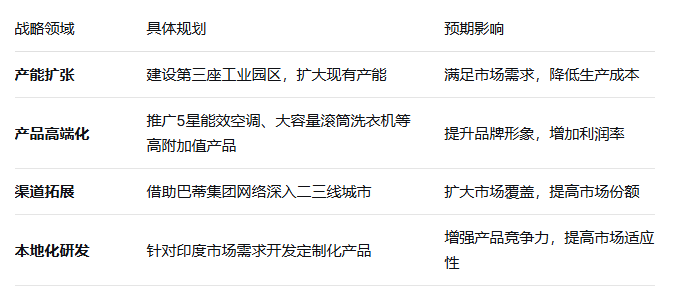
Core Insights - Haier Smart Home has transferred a total of 49% equity in Haier India to India's Bharti Group and US-based Warburg Pincus, while retaining 49% for itself and allocating 2% to the local management team's long-term incentive plan, reflecting a strategic move in a complex international environment [1][10][11] Transaction Structure and Strategic Alliance - The equity restructuring marks a strategic adjustment for Chinese home appliance companies in the Indian market, forming a tripartite equity structure among Haier, Bharti Group, and Warburg Pincus, with a focus on resource integration [2][12] - Haier India has been operating in the Indian market for over 20 years, achieving sales of ₹89 billion (approximately $1.03 billion) in 2023, a 33% year-on-year increase, prompting the decision to introduce external capital during a growth phase [2][12] - A significant valuation discrepancy exists between the rumored $2 billion and the actual transaction valuation of $720 million (approximately ₹60 billion), influenced by high brand usage fees paid to the parent company and cautious expectations from international investors regarding the Indian appliance market [2][12] Strategic Motivations: Localization and Capital Synergy - The introduction of local strategic investors and international capital is a strategic response to the complex market environment, particularly following India's 2020 foreign investment policy changes requiring government approval for investments from neighboring countries [4][14] - The partnership with Bharti Group alleviates regulatory pressures and facilitates future capacity expansion and new industrial park construction, addressing significant constraints on Haier India's growth [4][14] - The competitive landscape in the Indian appliance market includes international brands like LG and Samsung dominating the high-end market, local brands like Lloyd and Godrej in the mid-to-low end, and Chinese brands like Haier and Midea competing through cost-effectiveness and product innovation [4][14] Capital Synergy and Future Outlook - Haier India aims to achieve sales of ₹115 billion by 2025, necessitating substantial funding for product development, channel expansion, and brand building, with Warburg Pincus providing not only capital but also global management experience [5][15] - The equity restructuring is expected to pave the way for Haier India's potential IPO within the next two years, enhancing its attractiveness in the capital market [6][18] - The restructuring may serve as a reference for other Chinese appliance companies looking to invest in India, suggesting that establishing closer local ties through local strategic investors could be an effective strategy for globalization [6][18] Broader Implications - The equity restructuring of Haier India reflects the common challenges faced by global enterprises in adapting to diverse market policies and competitive dynamics while protecting core technologies and management control [8][19] - The collaboration with Warburg Pincus and Bharti Group represents a strategic innovation for global enterprises to navigate local markets, highlighting the importance of balancing globalization and localization for sustainable growth [8][19]
海尔取得空调器低压屏蔽程序控制方法专利
Sou Hu Cai Jing· 2025-12-30 00:43
Group 1 - Haier Smart Home Co., Ltd. has obtained a patent for "a control method and air conditioner" with authorization announcement number CN118998957B, applied on May 2023 [1] - Qingdao Haier Air Conditioning Electronics Co., Ltd., established in 1999, has a registered capital of 9,670.9088914 million RMB and has invested in 14 companies, participated in 4,702 bidding projects, and holds 127 trademark records and 5,000 patent records [1] - Qingdao Haier Air Conditioner Co., Ltd., established in 1996, has a registered capital of 93,638.162532 million RMB, invested in 20 companies, participated in 4,864 bidding projects, and holds 259 trademark records and 5,000 patent records [1] Group 2 - Qingdao Haier Intelligent Technology Research and Development Co., Ltd., established in 2014, has a registered capital of 130 million RMB, invested in 9 companies, participated in 7 bidding projects, and holds 22 trademark records and 5,000 patent records [2] - Haier Smart Home Co., Ltd., established in 1994, has a registered capital of 943,811.4893 million RMB, invested in 59 companies, participated in 1,887 bidding projects, and holds 285 trademark records and 5,000 patent records [2]
海尔取得用于电机的故障自诊断方法及装置专利
Sou Hu Cai Jing· 2025-12-30 00:43
Core Insights - Qingdao Haier has recently obtained a patent for a self-diagnosis method and device for motors and air conditioners, with the patent announcement number CN119901041B, applied for on October 2023 [1] Company Summaries - Qingdao Haier Smart Building Technology Co., Ltd. was established in 2003, located in Qingdao, primarily engaged in general equipment manufacturing, with a registered capital of 100 million RMB. The company has invested in 1 enterprise, participated in 1,031 bidding projects, holds 436 patents, and has 15 administrative licenses [1] - Qingdao Haier Air Conditioning Electronics Co., Ltd. was founded in 1999, also in Qingdao, focusing on specialized equipment manufacturing, with a registered capital of approximately 967.09 million RMB. The company has invested in 14 enterprises, participated in 4,702 bidding projects, holds 127 trademarks, 5,000 patents, and has 29 administrative licenses [2] - Qingdao Haier Air Conditioner Co., Ltd. was established in 1996, located in Qingdao, primarily engaged in electrical machinery and equipment manufacturing, with a registered capital of approximately 936.38 million RMB. The company has invested in 20 enterprises, participated in 4,864 bidding projects, holds 259 trademarks, 5,000 patents, and has 19 administrative licenses [2] - Qingdao Haier Intelligent Technology Research and Development Co., Ltd. was founded in 2014, located in Qingdao, focusing on research and experimental development, with a registered capital of 130 million RMB. The company has invested in 9 enterprises, participated in 7 bidding projects, holds 22 trademarks, 5,000 patents, and has 4 administrative licenses [2] - Haier Smart Home Co., Ltd. was established in 1994, located in Qingdao, primarily engaged in electrical machinery and equipment manufacturing, with a registered capital of approximately 943.81 million RMB. The company has invested in 59 enterprises, participated in 1,887 bidding projects, holds 285 trademarks, 5,000 patents, and has 10 administrative licenses [2]
出售印度子公司49%股权 海尔方面回应:依然是最大单一股东
Zhong Guo Jing Ying Bao· 2025-12-29 13:56
Core Viewpoint - Haier Group has sold 49% of its subsidiary Haier India to Bharti Group and Warburg Pincus, marking a significant strategic move to enhance local business development while retaining control as the largest single shareholder [1][2]. Group 1: Transaction Details - The transaction involves a total investment of $2 billion, with Haier retaining 49% ownership and allocating an additional 2% for local team incentives [2]. - Haier India is projected to exceed $1 billion in revenue for the first time in 2024, reflecting a growth rate of over 30% [5]. - The partnership aims to strengthen Haier India's position in the market through local procurement, expanded manufacturing capabilities, and product innovation [3]. Group 2: Market Context - Haier has been operating in India for over 20 years, establishing a strong brand presence and becoming one of the top three durable consumer goods companies in the country [5]. - The Indian home appliance market is characterized by a large population of 1.4 billion and a low penetration rate, indicating significant growth potential compared to other markets [6]. - Despite the growth potential, the Indian market faces challenges such as policy and regulatory risks that could impact foreign investment [6]. Group 3: Future Outlook - Haier aims to achieve a revenue target of $2 billion by 2027, indicating plans for substantial growth in the coming years [5]. - The collaboration with Bharti Group and Warburg Pincus is expected to leverage synergies among shareholders to enhance Haier's competitive position in the local market [5].