HAIER SMART HOME(600690)

Search documents
美的、海尔、小米等联手:推动“铝代铜”标准落地、禁止互相恶意攻击
Di Yi Cai Jing· 2025-12-11 07:35
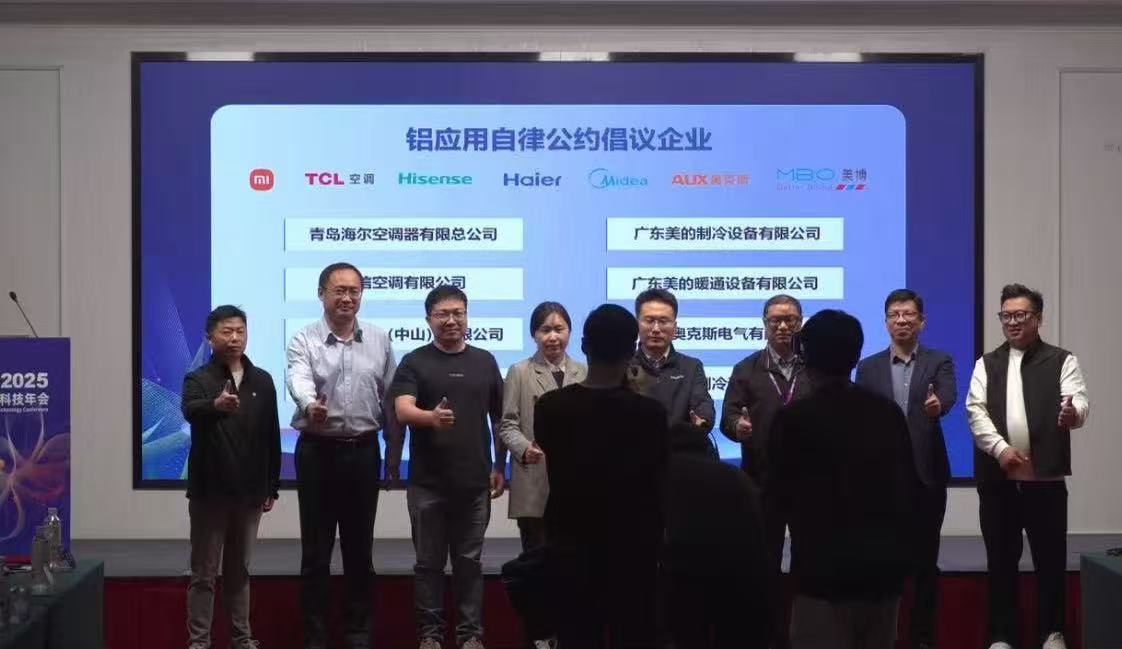
Core Insights - China's air conditioning industry is accelerating the adoption of aluminum instead of copper due to rising copper prices, with a focus on establishing relevant standards to ensure the safety of this billion-dollar industry [2][3] Group 1: Industry Developments - The China Refrigeration Society has released a group standard for the construction of aluminum tube fin heat exchanger production lines for room air conditioners, with additional standards for aluminum heat exchanger raw material requirements and production line construction currently being developed [2] - A national standard related to "aluminum instead of copper" for room air conditioners is under revision, with major companies like Gree, Midea, Haier, and Xiaomi participating in the discussions [2][3] - The China Household Electrical Appliances Research Institute has expanded its research group on aluminum applications in air conditioning to 19 members, including leading air conditioning manufacturers and related material companies [2] Group 2: Technical Challenges and Proposals - The demand for copper in household air conditioning is significant, with 10.7% of China's copper consumption in 2023 attributed to this sector, amounting to approximately 1.723 million tons, with 80% of this copper being imported [3] - There are three main challenges in adopting aluminum heat exchangers: high corrosion resistance technology issues, lack of standardized testing methods, and consumer biases against aluminum [3][4] - The Ministry of Industry and Information Technology has outlined a plan to support the development of aluminum applications in air conditioning and refrigeration, emphasizing the need for high corrosion resistance technology [4] Group 3: Industry Collaboration and Standards - Major air conditioning companies have signed a self-regulation agreement to promote aluminum heat exchangers, ensuring scientific communication about their benefits and preventing misleading claims [4] - The establishment of a standard system for aluminum heat exchangers is a priority, with a focus on addressing corrosion resistance and manufacturing capabilities [4]



青岛机器人崛起之路
Qi Lu Wan Bao· 2025-12-11 06:55
齐鲁晚报·齐鲁壹点 尚青龙 高雅洁 除了精密"大脑",人形机器人推广的另一重要制约因素是协调流畅的行动能力。青岛钢铁侠科技有限公 司十年磨一剑,为机器人锻造最强"小脑"。以ARTROBOT系列大型双足仿人机器人为例,从初代仅能 双足行走,到如今第五代可完成端茶倒水、拧螺丝等复杂精细动作,每一步都凝聚着研发团队的心血。 "第一代ARTROBOT只有两条腿,我们的目标很简单,就是先实现稳定的双足行走。虽然面临诸多技术 难题,但团队坚持攻克。"青岛钢铁侠科技有限公司副总裁陈天祥介绍道,第五代ARTROBOT搭载的自 研"运动脑",集成精密硬件与智能软件系统,在提升算力的同时降低功耗,为机器人的精准动作输出提 供核心支撑。"'运动脑'如同人类的小脑,体积不大却功能强大。它让机器人的每一个动作都更加精 准、流畅,极大便利了多自由度机器人的开发。" 康养领域的领跑布局 乐聚智家和钢铁侠作为引入的"生力军",为青岛具身智能产业注入了活力。而青岛本土企业在智能机器 人领域,尤其在康养医疗领域已抢占先机。 山东卓业医疗研发的全球首台AI经皮穿刺手术导航机器人,集成3D结构光与动态感知技术,可实现亚 毫米级穿刺精度。"这台机器人 ...

预见未来家:2025年度家电行业十大趋势
Xin Lang Cai Jing· 2025-12-10 14:00
Group 1 - The core viewpoint of the articles highlights the transformative impact of AI and green technology on the home appliance industry, driven by policies such as the "old-for-new" initiative, which has invigorated the market and accelerated technological upgrades [1][25][48] - The integration of AI into home appliances has shifted from optional enhancements to fundamental redefinitions of product forms and user experiences, marking a new phase in the industry [3][27] - The sales growth of smart home products has been significant, with a reported increase of 940.7% in new smart home product barcodes, indicating a robust market trend [4][30] Group 2 - The trend towards personalized and flexible customization in home appliances is emerging, exemplified by the popularity of products like the "three-tub washing machine," which responds to consumer feedback [8][33] - The green upgrade of home appliances is gaining momentum, with a reported sales increase of over 10% for first-level energy-efficient products, reflecting a shift in consumer awareness towards sustainable living [11][36] - The aging population in China is driving the demand for elder-friendly appliances, with new standards and products being developed to cater to this demographic [13][38] Group 3 - The "Good House" initiative is fostering a deep integration of home appliances with home design, pushing for a seamless experience in kitchen and living spaces [14][39] - The trend of collaboration among major appliance brands, such as the strategic partnership between Hisense and Midea, signifies a shift from competition to "co-opetition" in the industry [19][44] - The globalization of the Chinese home appliance industry is accelerating, with companies expanding their presence through mergers and international marketing strategies, including partnerships with global sports events [21][46]




海尔智家(06690.HK)12月10日耗资454万元回购17万A股
Ge Long Hui· 2025-12-10 11:47
责任编辑:安东 格隆汇12月10日丨海尔智家(06690.HK)公告,12月10日耗资454万元回购17万A股,回购价格每股26.63- 26.79元。 财经频道更多独家策划、专家专栏,免费查阅>> ...
海尔智家(06690)12月10日斥资454.02万元回购17万股A股
智通财经网· 2025-12-10 10:42
智通财经APP讯,海尔智家(06690)发布公告,于2025年12月10日,该公司斥资454.02万元回购17万股A 股。 ...
海尔智家12月10日斥资454.02万元回购17万股A股
Zhi Tong Cai Jing· 2025-12-10 10:41
海尔智家(600690)(06690)发布公告,于2025年12月10日,该公司斥资454.02万元回购17万股A股。 ...
海尔智家(06690) - 翌日披露报表
2025-12-10 10:32
FF305 翌日披露報表 (股份發行人 ── 已發行股份或庫存股份變動、股份購回及/或在場内出售庫存股份) 表格類別: 股票 狀態: 新提交 公司名稱: 海爾智家股份有限公司 呈交日期: 2025年12月10日 如上市發行人的已發行股份或庫存股份出現變動而須根據《香港聯合交易所有限公司(「香港聯交所」)證券上市規則》(「《主板上市規則》」)第13.25A條 / 《香港聯合交易所有限公司GEM證券 上市規則》(「《GEM上市規則》」)第17.27A條作出披露,必須填妥第一章節 。 | 第一章節 | | | | | | | | | --- | --- | --- | --- | --- | --- | --- | --- | | 1. 股份分類 | 普通股 | 股份類別 | A | | 於香港聯交所上市 | 否 | | | 證券代號 (如上市) | 600690 | 說明 | | 每股面值人民幣1元之普通股(A股) (於上海證券交易所上市) | | | | | A. 已發行股份或庫存股份變動 | | | | | | | | | | | 已發行股份(不包括庫存股份)變動 | | | 庫存股份變動 | | | | 事 ...
以新需求引领新供给 以新供给创造新需求
Ren Min Ri Bao· 2025-12-10 08:11
Group 1 - The core viewpoint emphasizes the importance of expanding domestic demand as a strategic foundation for economic growth, integrating consumer welfare and investment in goods and people to stimulate new supply and demand interactions [1][4] - The "14th Five-Year Plan" period highlights the strengthening role of consumption as a main engine and stabilizer for the economy, with consumer spending contributing approximately 60% to economic growth annually [3][4] - The domestic market is positioned as a key driver for high-quality development, with a focus on enhancing consumption and effective investment to leverage the advantages of a large-scale market [1][4][10] Group 2 - In recent years, Luoyang has launched new consumption formats and scenarios, leading to significant tourism growth, with 8.79 million visitors and a total tourism revenue of 7.563 billion yuan during the National Day and Mid-Autumn Festival holidays [2] - The service consumption sector has seen a rapid increase, with the proportion of residents' service consumption spending rising by 3.5 percentage points to 46.1% [3] - The average annual growth rate of residents' service consumption expenditure is projected to be 9.6% from 2020 to 2024, indicating a shift from goods consumption to service consumption [7][10] Group 3 - The development of new consumption formats is characterized by the integration of culture and economy, with innovative experiences in shopping and entertainment, such as museums and cultural markets [6][10] - The relationship between supply and demand is highlighted as a dialectical unity, where high-quality supply can create new consumption scenarios and stimulate demand [6][8] - The "14th Five-Year Plan" period is expected to see a transformation in consumer demand from basic needs to higher quality and experiential consumption, driving supply innovation [7][9] Group 4 - The total retail sales of consumer goods are projected to increase from 39.1 trillion yuan in 2020 to 48.3 trillion yuan in 2024, with an average annual growth rate of 5.5% [10] - The government aims to implement policies that enhance consumption and investment, ensuring a balanced interaction between the two to stimulate economic growth [11][12] - The service consumption sector is identified as a significant growth driver, with a focus on improving supply capabilities and quality to meet diverse consumer needs [12][13]
中上协发布最新上市公司董秘履职评价结果,这些董秘获得5A评级(附名单)
Sou Hu Cai Jing· 2025-12-10 05:54
Core Insights - The China Securities Association released the results of the "2025 Evaluation of Board Secretaries of Listed Companies," with 282 board secretaries receiving a 5A rating, 589 receiving a 4A rating, and 687 receiving a 3A rating [1] - The evaluation criteria included ten major standards and 67 indicators, covering areas such as compliance, information disclosure, internal control, investor relations management, and social responsibility [1] - Board secretaries play a crucial role in corporate governance, acting as gatekeepers for compliance and as a bridge between the capital market, investors, and company management [1] Group 1 - A total of 282 board secretaries achieved the highest 5A rating, reflecting their exceptional performance and the governance standards of their respective companies [1] - The evaluation emphasizes the importance of board secretaries in maintaining corporate transparency and sustainable development [1] - The recognition of board secretaries is not only a personal accolade but also highlights the benchmark status of their companies in governance and transparency [1] Group 2 - Notable companies with 5A rated board secretaries include COSCO Shipping Energy, Fosun Pharma, and Kweichow Moutai, among others [2] - The list of 5A rated board secretaries includes individuals such as Ni Yidan from COSCO Shipping Energy and Dong Xiaoxian from Fosun Pharma [2] - The evaluation results serve as a reference for best practices in corporate governance and investor relations within the industry [1][2]





大家电中企第一后,海尔英国小家电实现电商突破增长
Jin Tou Wang· 2025-12-10 03:26
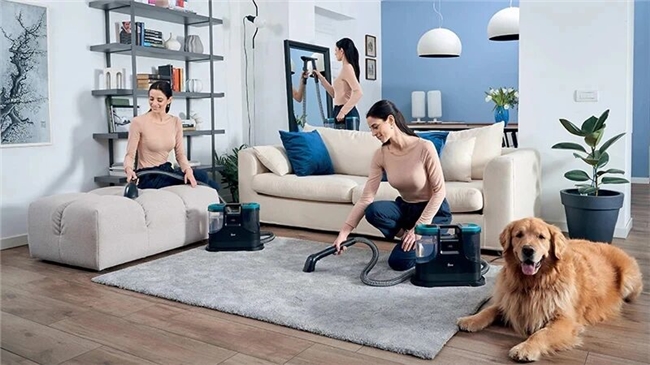
Core Viewpoint - Haier's small home appliance business in the UK has seen significant growth, with retail sales increasing by 30% year-on-year during the recent Black Friday promotion, driven by strong product performance and digital transformation efforts [1][3]. Group 1: Sales Performance - Haier's small appliances achieved a remarkable 30% year-on-year increase in retail sales during the Black Friday week [1]. - The Hoover cordless vacuum cleaner saw a staggering 549% year-on-year sales growth, while the mattress cleaning machine category also experienced a 384% increase [1][3]. Group 2: Product Innovation - The Hoover cordless vacuum cleaner features double the suction power of competing products and includes anti-tangle technology, addressing the cleaning challenges faced by pet owners [3]. - The focus on user needs and technological upgrades has solidified the foundation for sales growth [3]. Group 3: Digital Transformation - Haier UK is actively advancing its digital strategy to enhance user experience, optimizing marketing and service processes [3]. - The marketing team has improved online store visuals and created promotional content based on local social media trends, significantly increasing traffic conversion rates [3]. - AI digital tools have been utilized to streamline the entire service process, enhancing customer experience and fostering repeat purchases and positive word-of-mouth [3]. Group 4: Future Outlook - Haier's strategy in the UK market continues to deepen, with a focus on product innovation and digital strategies supported by a localized operational system and diverse product matrix [5].