SCSF(600779)

Search documents
水井坊:考验战略定力,隐藏在数字背后的“慢功夫”
Sou Hu Cai Jing· 2025-09-15 08:15
Core Viewpoint - The Chinese liquor industry, particularly the baijiu sector, is undergoing significant pressure with over 80% of the 20 listed baijiu companies experiencing revenue declines due to macroeconomic challenges, consumer differentiation, and high channel inventory [1] Group 1: Company Performance - Water Jiufang reported a revenue of 1.498 billion yuan and a net profit of 105 million yuan for the first half of 2025, both showing declines [1] - Despite the declines, institutions like Huatai Securities and Guojin Securities have given "buy" and "strongly recommended" ratings for Water Jiufang, indicating a focus on the company's long-term value and strategic execution [1][3] Group 2: Strategic Focus - Water Jiufang emphasizes channel health management, sacrificing short-term growth for long-term stability, and has taken measures against market disruptions such as low-price dumping [4] - The company employs a differentiated channel strategy, achieving over 126% revenue growth in new channels and increasing terminal coverage and operational efficiency [5] Group 3: Brand and Market Positioning - Water Jiufang maintains a high-end brand positioning while adopting flexible product and pricing strategies to meet consumer demand during industry adjustments [6][8] - The company is committed to dual-brand operation, enhancing its high-end image while introducing high-quality, cost-effective products to cater to diverse consumer trends [8] Group 4: ESG Commitment - Water Jiufang has achieved a BBB rating in MSCI ESG ratings, ranking among the top in the baijiu industry, and has implemented sustainable practices in raw material sourcing and production [9][11] - The company has initiated a non-material cultural heritage protection fund and established organic sorghum planting bases to support rural revitalization [11] Group 5: Long-term Outlook - The current industry phase is seen as a critical period for internal strengthening, with Water Jiufang focusing on channel cultivation, brand development, and ESG investments to build long-term barriers [12][13] - The cyclical fluctuations in the baijiu industry do not diminish its long-term value, and Water Jiufang's strategic patience may position it for high-quality growth in future recovery cycles [13]


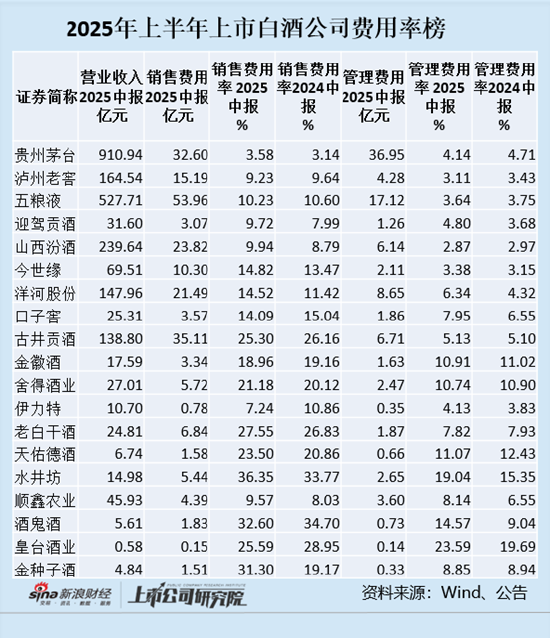
白酒中报|白酒企业逆势加大费用投放水井坊销售费用率最高达到36.35%
Xin Lang Cai Jing· 2025-09-12 10:37
Core Insights - The Chinese liquor industry is entering a period of accelerated clearing, with significant declines in production and profits observed in the first half of 2025 [1][2] - The market is experiencing increased inventory pressure among distributors, leading to a negative feedback loop affecting the delivery pace of liquor companies [1][2] - A notable shift in the growth logic of the liquor industry is occurring, with both volume and price declining, contrasting with previous trends of volume reduction coupled with price increases [2][3] Industry Performance - In the first half of 2025, the total production of the liquor industry was 1.9159 million kiloliters, a year-on-year decrease of 5.8%, while sales revenue reached 330.42 billion yuan, a slight increase of 0.19% [1] - Profit for the industry was 87.687 billion yuan, reflecting a year-on-year decline of 10.93% [1] - 68% of listed liquor companies reported a decline in revenue, with 13 out of 19 companies experiencing this downturn [1][2] Market Dynamics - The market is increasingly favoring leading liquor companies, with the top six companies accounting for 47% of revenue and 62.2% of total profits, marking a 13 percentage point increase over five years [2] - The median revenue growth rate for liquor companies with over 10 billion yuan in revenue was 2.36%, while those below this threshold saw a median decline of 16.89% [2] Pricing Trends - The wholesale price index for liquor has been declining, with notable price drops for major brands such as Moutai and Wuliangye [3] - Moutai's price fell from 2,660 yuan to 1,820 yuan, while Wuliangye's price decreased from 960 yuan to 860 yuan [3] Expense Management - Despite declining revenues, many liquor companies have increased their expenditure, with 58% of companies raising their sales expense ratios [3][4] - The highest sales expense ratio was recorded at 36.35% for Shui Jing Fang, up from 34.7% the previous year [3][5] - The management expense ratio for some companies has also increased, with Huan Tai Wine leading at 23.59% [6][7] Profitability Challenges - The profitability of smaller liquor companies is under pressure, with some facing losses and others struggling to break even [8][9] - In contrast, most leading companies have managed to reduce their management expense ratios, indicating a divergence in financial health within the industry [9]
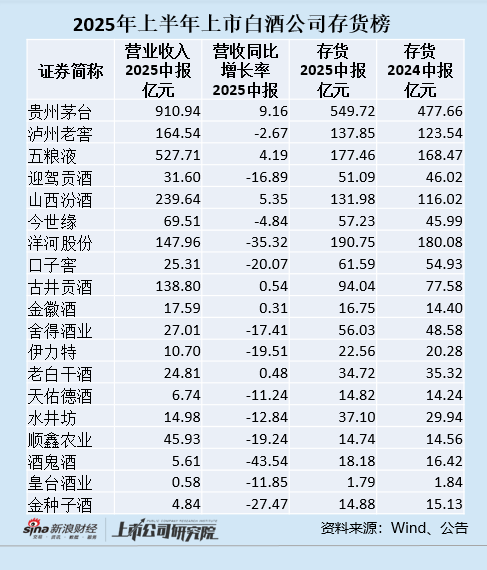
白酒中报|动销放缓酒企存货逆势增长今世缘、水井坊、古井贡酒存货增长最快
Xin Lang Cai Jing· 2025-09-12 10:37
Industry Overview - The Chinese liquor industry is entering a period of accelerated clearing, with total production in the first half of 2025 at 1.9159 million kiloliters, a year-on-year decrease of 5.8% [1] - Sales revenue reached 330.42 billion yuan, showing a slight increase of 0.19% year-on-year, while profits fell to 87.687 billion yuan, down 10.93% [1] Market Dynamics - Inventory pressure among liquor companies is increasing, with 58.1% of distributors reporting increased stock levels and over half facing price inversion issues [1] - The overall consumption of liquor is weak, leading to a slowdown in market activity and reduced willingness of distributors to collect payments, creating a negative feedback loop affecting shipment schedules [1] Company Performance - Among 19 listed liquor companies, 13 reported revenue declines, accounting for 68% of the total, with a significant slowdown in revenue growth compared to the previous year [1] - The market is increasingly favoring leading companies, with the top six liquor firms accounting for 47% of revenue and 62.2% of total profits, marking a 13 percentage point increase in revenue share over five years [2] Changing Growth Logic - The growth logic in the liquor industry is shifting, with the previous "volume down, price up" strategy failing, leading to simultaneous declines in both volume and price [2] - The wholesale price index for liquor has been declining, with notable price drops for major brands such as Moutai and Wuliangye [3] Inventory Trends - In the first half of the year, total inventory for 19 listed liquor companies reached 168.325 billion yuan, an increase of 18.224 billion yuan or 12% year-on-year, significantly outpacing revenue growth [3] - 79% of liquor companies reported inventory growth, with three companies seeing inventory growth rates exceeding 20% [3] Small and Medium Enterprises - Most small and medium-sized liquor companies are experiencing revenue declines and inventory growth, with a median revenue growth rate of -17.15% for companies with revenues below 5 billion yuan [4] - Among the top four liquor companies, only Wuliangye reported a modest inventory growth of 5.33%, while the others saw double-digit increases [4]
白酒中报| 白酒企业逆势加大费用投放 水井坊销售费用率最高达到36.35%
Xin Lang Cai Jing· 2025-09-12 09:41
Core Insights - The Chinese liquor industry is entering a period of accelerated clearing, with a significant decline in production and profits in the first half of 2025 [1][2] - A majority of listed liquor companies are experiencing revenue declines, indicating a shift in the industry's growth logic from "volume reduction, price increase" to simultaneous declines in both volume and price [2][3] Industry Overview - In the first half of 2025, the total production of the liquor industry was 1.9159 million kiloliters, a year-on-year decrease of 5.8%, while sales revenue reached 330.42 billion yuan, a slight increase of 0.19%. Profits fell to 87.687 billion yuan, down 10.93% year-on-year [1] - 58.1% of distributors reported increased inventory levels, with over half facing price inversion issues. The average inventory turnover days for the liquor industry reached 900 days, an increase of 10% compared to the previous year [1] Company Performance - Among 19 listed liquor companies, 13 reported revenue declines, accounting for 68% of the total, with a significant slowdown in revenue growth compared to the previous year [2] - The market share is increasingly concentrated among leading companies, with the top six liquor firms accounting for 47% of revenue in 2024, up 13 percentage points from five years ago [2] - The median revenue growth rate for the top six liquor companies was 2.36%, while the median for companies below 10 billion yuan was -16.89% [2] Pricing Trends - The wholesale price index for liquor has been declining, with notable price drops for major brands such as Moutai and Wuliangye, indicating a broader trend of price reduction across the industry [2][3] Expense Management - Despite declining revenues, many liquor companies have increased their marketing expenditures. The median sales expense growth rate for 19 companies was -11.85%, while overall sales expenses remained stable compared to the previous year [4] - The highest sales expense ratio was recorded at 36.35% for Shui Jing Fang, with 58% of companies increasing their sales expense ratios [4][5] - Management expense ratios have also increased, with the highest being 23.59% for Huangtai Liquor, indicating pressure on profitability for smaller companies [5][6]





白酒中报|动销放缓酒企存货逆势增长 今世缘、水井坊、古井贡酒存货增长最快
Xin Lang Cai Jing· 2025-09-12 09:24
Core Insights - The Chinese liquor industry is entering a period of accelerated clearing, with a significant decline in production and profits in the first half of 2025 [1][2] - A majority of listed liquor companies are experiencing revenue declines, indicating a shift in the industry's growth logic from "volume reduction, price increase" to simultaneous declines in both volume and price [2][4] Industry Overview - In the first half of 2025, the total production of the liquor industry was 1.9159 million kiloliters, a year-on-year decrease of 5.8%, while sales revenue reached 330.42 billion yuan, a slight increase of 0.19% [1] - The industry's profit was 87.687 billion yuan, reflecting a year-on-year decline of 10.93% [1] - 58.1% of distributors reported increased inventory levels, with over half facing price inversion issues, leading to an average inventory turnover period of 900 days, up 10% from the previous year [1] Company Performance - Among 19 listed liquor companies, 13 reported revenue declines, accounting for 68% of the total, with a significant slowdown in revenue growth compared to the previous year [2] - The market share is increasingly concentrated among top companies, with the top six liquor firms accounting for 47% of revenue in 2024, up 13 percentage points from five years ago [2] - The median revenue growth rate for large liquor companies (over 10 billion yuan) was 2.36%, while smaller companies (under 10 billion yuan) saw a median decline of 16.89% [2] Inventory Trends - The total inventory of 19 listed liquor companies reached 168.325 billion yuan, an increase of 12% year-on-year, significantly outpacing revenue growth [4] - 79% of liquor companies reported inventory growth, with three companies experiencing inventory growth rates exceeding 20% [4] - Notably, the top four liquor companies, except for Wuliangye, showed double-digit inventory growth, with Kweichow Moutai's inventory increasing by 15.08% [5] Price Trends - The wholesale price of top liquor brands has been declining, with Moutai's price dropping from 2,660 yuan to 1,820 yuan between August 2024 and August 2025 [3] - The price of other notable brands, such as the eight-generation Puwu and Guojiao 1573, also experienced significant declines [3]
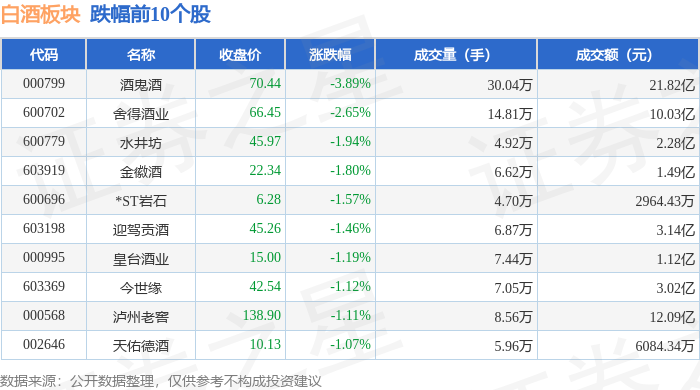
白酒板块9月12日跌0.79%,酒鬼酒领跌,主力资金净流出13.07亿元
Zheng Xing Xing Ye Ri Bao· 2025-09-12 08:31
Market Overview - On September 12, the liquor sector declined by 0.79% compared to the previous trading day, with Jiu Gui Jiu leading the decline [1] - The Shanghai Composite Index closed at 3883.69, up 0.22%, while the Shenzhen Component Index closed at 12996.38, up 0.13% [1] Liquor Sector Performance - The following table summarizes the closing prices, percentage changes, trading volumes, and transaction amounts for key liquor stocks: - Jiu Gui Jiu (000799): Closed at 70.44, down 3.89%, with a trading volume of 300,400 shares and a transaction amount of 2.182 billion [1] - She De Jiu Ye (600702): Closed at 66.45, down 2.65%, with a trading volume of 148,100 shares and a transaction amount of 1.003 billion [1] - Shui Jing Fang (600779): Closed at 45.97, down 1.94%, with a trading volume of 49,200 shares and a transaction amount of 228 million [1] - Other notable stocks include Quan Wei Jiu (616809), ST Yan Shi (600696), and Ying Jia Gong Jiu (603198) with respective declines [1] Capital Flow Analysis - The liquor sector experienced a net outflow of 1.307 billion from institutional investors, while retail investors saw a net inflow of 1.057 billion [1] - The following table details the capital flow for specific liquor stocks: - Jiu Gui Jiu (000799): Institutional net outflow of 332 million, retail net inflow of 342 million [2] - She De Jiu Ye (600702): Institutional net outflow of 149 million, retail net inflow of 12 million [2] - Shui Jing Fang (600779): Institutional net outflow of 57 million, retail net inflow of 46 million [2] - Other stocks also showed varying degrees of institutional outflows and retail inflows [2]


“喝美酒庆美事”,水井坊・井18创新渠道政策,携手渠道客户共赴未来
2 1 Shi Ji Jing Ji Bao Dao· 2025-09-10 09:27
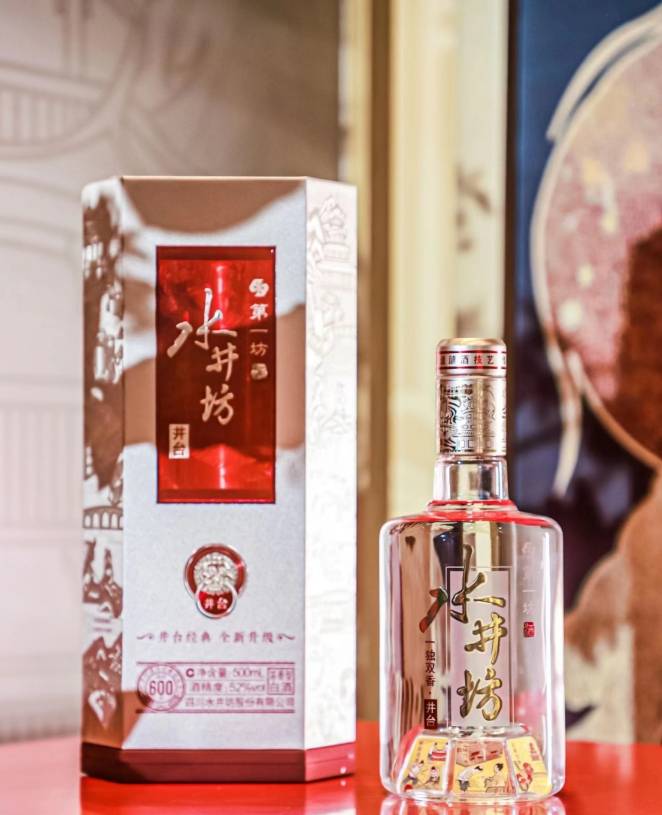
Core Insights - The Chinese liquor industry is at a crossroads of "value reassessment" and "stock competition," with innovative products like Shui Jing Fang's "Jing 18" being key to breaking through [1][9] - Shui Jing Fang's "Jing 18" aligns with the trend of rational consumption and aims to provide high quality at a reasonable price, responding to consumer demand for emotional value [1][10] Product Development - Shui Jing Fang's "Jing 18" integrates traditional craftsmanship with modern consumer needs, using aged liquor to enhance quality and embody the concept of "good liquor above good liquor" [3][4] - The product features a dual aroma profile and a unique fermentation process, resulting in a rich and layered flavor experience [4][10] Market Positioning - "Jing 18" targets the mid-to-high-end price segment, emphasizing quality over price competition, and aims to meet the evolving preferences of consumers for comfort and celebration [10][11] - The product's launch coincides with major holidays, providing consumers with a new option for festive gatherings [10][11] Channel Strategy - Shui Jing Fang employs innovative sales policies to protect channel partners' profits, ensuring a sustainable and mutually beneficial relationship [11][13] - The company limits annual product supply and partner numbers to maintain product scarcity and value, enhancing channel confidence and profitability [11][13][15] Brand Legacy - The brand's heritage of over 600 years is reflected in "Jing 18," which combines historical significance with contemporary appeal, reinforcing its position as a leader in the liquor industry [1][7][15] - The design of "Jing 18" incorporates elements that celebrate its cultural roots while appealing to modern aesthetics, creating a strong visual identity [5][7]

水井坊(600779) - 水井坊2025年第一次临时股东会会议资料
2025-09-09 09:30
四川水井坊股份有限公司 2025 年第一次临时股东会会议资料 目 录 四川水井坊股份有限公司 2025 年第一次临时股东会会议资料 四川水井坊股份有限公司 二〇二五年第一次临时 股东会会议资料 四川水井坊股份有限公司董事会办公室编制 2025 年 9 月 1 根据《公司法》《公司章程》等有关规定,并结合公司实际情况,经董事会提名委员会审查通 过,公司董事会提名Haiying Cheng 女士为公司第十一届董事会董事候选人,任期同本届董事会。 Haiying Cheng 女士简历如下: Haiying Cheng,女,57 岁,国籍:美国,美国宾州印第安纳大学工商管理硕士。历任葛兰素 史克消费者保健公司北美财务总监,葛兰素史克消费者保健公司欧洲及美洲财务总监,葛兰素史 克消费者保健公司美洲及全球研发中心财务总监,葛兰素史克消费者保健公司亚太区财务总监, 赫力昂公司亚太区财务总监,赫力昂公司全球生产力计划财务总监。现任帝亚吉欧亚太区及全球 免税业务财务总监。 截至公告日,Haiying Cheng 女士未持有公司股份,不存在《上海证券交易所上市公司自律监 管指引第1 号——规范运作》第3.2.2 条所列情形。 | ...
如何应对行业周期?白酒企业集体转向“三低”市场
Sou Hu Cai Jing· 2025-09-05 10:07
Core Insights - The Chinese liquor industry is undergoing a deep adjustment, with companies shifting their focus towards low-alcohol, low-priced products, and lower-tier markets due to macroeconomic pressures and changing consumer behaviors [1][6]. Group 1: Low-Alcohol Products - Several liquor companies have recently launched low-alcohol products targeting younger consumers, with notable releases including Gujing's 26-degree "Light Gu20," Wuliangye's 29-degree "Wuliangye Yijian Qingxin," and Shede's 29-degree "Shede Zizai" [2]. - The China Alcoholic Drinks Association predicts that the low-alcohol market will exceed 74 billion yuan by 2025, with a compound annual growth rate of 25% [3]. - Companies like Luzhou Laojiao are actively developing lower-alcohol products, with their 38-degree offerings now making up 50% of sales in the Guojiao 1573 series, which has surpassed 20 billion yuan in sales [3]. Group 2: Consumer Trends - The younger demographic, particularly those born in the 1980s and 1990s, along with young women, are emerging as key consumer groups, favoring personalized, low-alcohol, and aesthetically pleasing products for casual social settings [2]. - The shift in consumer preferences emphasizes a move from traditional social drinking to a focus on personal enjoyment and experience [3]. Group 3: Pricing and Market Dynamics - The demand for mid-range products is recovering slowly, while low-priced products are showing resilience, with some even experiencing growth [6]. - Wuliangye reported a production increase of 11.56% and sales growth of 12.75% for its products in the first half of 2025, driven by consumer preference for mid to low-priced options [7]. - The market is seeing a trend where high-end liquor prices are declining, and consumers are increasingly valuing cost-effectiveness, leading to a preference for lower-priced options [9]. Group 4: Market Competition and Strategy - The industry is facing intensified competition as major brands penetrate lower-priced segments, which could squeeze local brands out of their traditional markets [10][11]. - Local liquor companies are responding by launching competitively priced products, with some offering prices 20%-40% lower than similar premium products [11]. - Analysts suggest that local brands should leverage their regional advantages and focus on differentiation rather than competing on price with larger brands [11].

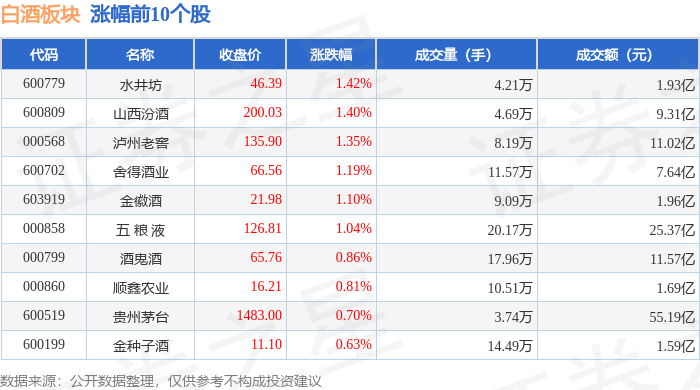
白酒板块9月5日涨0.81%,水井坊领涨,主力资金净流出7746.05万元
Zheng Xing Xing Ye Ri Bao· 2025-09-05 08:56
Group 1 - The liquor sector experienced a rise of 0.81% on September 5, with Shuijingfang leading the gains [1] - The Shanghai Composite Index closed at 3812.51, up 1.24%, while the Shenzhen Component Index closed at 12590.56, up 3.89% [1] - Key stocks in the liquor sector showed the following closing prices and percentage changes: Shuijingfang at 46.39 (+1.42%), Shanxi Fenjiu at 200.03 (+1.40%), and Luzhou Laojiao at 135.90 (+1.35%) [1] Group 2 - The liquor sector saw a net outflow of 77.46 million yuan from institutional investors, while retail investors experienced a net outflow of 67.44 million yuan [2] - Notable net inflows from speculative funds included Wuliangye with 12.8 million yuan, while it faced a net outflow of 101 million yuan from retail investors [2] - Other stocks like Shuijingfang and Luzhou Laojiao also experienced mixed fund flows, with Shuijingfang seeing a net inflow of 1.36 million yuan from institutional investors [2]