
CHINA MOBILE(600941)

Search documents
量子科技重大突破,高研发+高增长潜力概念股仅9只(名单)
Zheng Quan Shi Bao Wang· 2025-11-11 05:10
Core Insights - Quantum technology is viewed as the "key" to the next generation of information technology revolution, with significant breakthroughs in both policy and technology [1][3]. Policy Developments - The Anhui Provincial Development and Reform Commission announced that quantum technology is transitioning from technological breakthroughs to large-scale industrial applications, aiming to implement nearly 300 application scenarios by the end of this year and 1,000 by 2027 [1]. - The United Nations Educational, Scientific and Cultural Organization (UNESCO) has declared 2025 as the "International Year of Quantum Science and Technology" to commemorate the 100th anniversary of quantum mechanics [3]. Technological Advancements - A team from the Chinese Academy of Sciences has made significant progress in neutral atom quantum computing, proposing a new architecture based on fiber arrays that addresses challenges in achieving high parallelism, speed, and stability [1]. - Researchers at the University of Chicago have theoretically extended the connection distance between quantum computers to 2,000 kilometers, making the construction of a global quantum internet more feasible [2]. Industry Growth Potential - Quantum technology, encompassing quantum computing, quantum communication, and quantum precision measurement, is identified as a future industry with substantial growth potential, as highlighted in the 14th Five-Year Plan [3]. - The global quantum computing industry is projected to grow from $4.7 billion in 2023 to over $800 billion by 2035 [3]. R&D Investment - Over 60 companies in the A-share market are involved in quantum technology, with a total R&D expenditure of 69.47 billion yuan, accounting for 3.86% of total revenue [4]. - Among these, 35 companies reported R&D expenses exceeding 100 million yuan in the first three quarters, with seven companies surpassing 1 billion yuan [5]. Key Players and Financial Metrics - Notable companies include Guoxin Technology, which has the highest R&D expense-to-revenue ratio at 89.03%, and has successfully commercialized quantum security chips [5][6]. - Other companies with significant R&D investments include Suzhou Keda, Tianrongxin, and Digital Certification, with varying R&D expense ratios [5][6]. Institutional Interest - Institutional interest is high for companies like ZTE Corporation and China Mobile, with ZTE receiving ratings from 23 institutions [7]. - Forecasts indicate that nine companies are expected to achieve net profit growth rates exceeding 15% from 2025 to 2027 [7]. Market Predictions - Several stocks, including China Haifang and Keda Technology, are projected to have significant upside potential based on institutional target prices [8].






美团首款AI IDE产品CatPaw开启公测,科创100指数ETF(588030)盘中最高涨超1%
Xin Lang Cai Jing· 2025-11-11 02:40
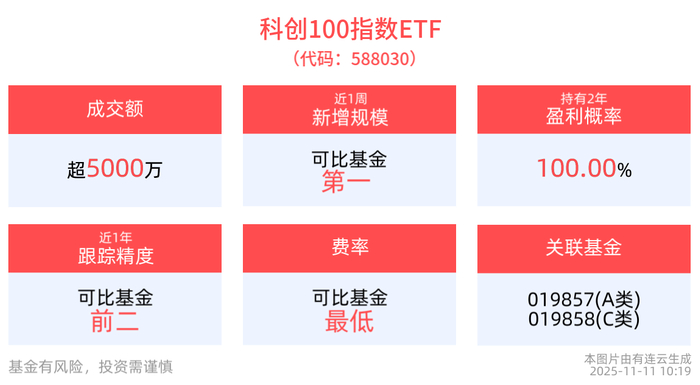
Group 1 - The Shanghai Stock Exchange Sci-Tech Innovation Board 100 Index experienced a slight decline of 0.01% as of November 11, 2025, with mixed performance among constituent stocks [3] - Weisheng Information led the gains with an increase of 5.08%, while Jinpan Technology saw the largest decline at 6.27% [3] - The Sci-Tech 100 Index ETF (588030) rose by 0.15%, with a recent price of 1.33 yuan, and has accumulated a 19.03% increase over the past three months [3] Group 2 - The liquidity of the Sci-Tech 100 Index ETF showed a turnover rate of 1.02% with a transaction volume of 58.9474 million yuan, and the average daily transaction volume over the past year was 376 million yuan, ranking first among comparable funds [3] - Meituan's first AI IDE product, Meituan CatPaw, has entered public testing, focusing on collaboration between agents and humans, supporting features like code completion and project debugging [3] Group 3 - Huayuan Securities highlighted that the core bottleneck in the current AI industry is not a lack of computing power but rather insufficient electricity supply to support large-scale GPU operations [4] - Global data center electricity consumption reached 415 terawatt-hours in 2024, accounting for 1.5% of global electricity usage, and is expected to double to 945 terawatt-hours by 2030 [4] - Several power equipment companies on the Beijing Stock Exchange may see development opportunities due to rising electricity demand driven by AI [4] Group 4 - CITIC Construction Investment indicated that the AI sector is leading the development of the computer industry, with opportunities arising from domestic production, quantum technology, financial IT, and intelligent driving sectors [4] - The Sci-Tech 100 Index ETF saw a significant growth in scale, increasing by 13.65 million yuan over the past week, ranking first among comparable funds [4] - The latest financing buy-in amount for the Sci-Tech 100 Index ETF reached 11.7686 million yuan, with a financing balance of 127 million yuan [4] Group 5 - The Sci-Tech 100 Index ETF closely tracks the Shanghai Stock Exchange Sci-Tech Innovation Board 100 Index, which selects 100 securities with medium market capitalization and good liquidity from the Sci-Tech Innovation Board [5] - As of October 31, 2025, the top ten weighted stocks in the Sci-Tech 100 Index accounted for 25.77% of the index, including companies like Huahong Semiconductor and Guo'an Quantum [6]

智元机器人完成股改;美团入局AI编程丨新鲜早科技
2 1 Shi Ji Jing Ji Bao Dao· 2025-11-11 02:31
Group 1: Technology Developments - Meituan has launched its first AI IDE product, CatPaw, which is currently in public beta and features intelligent programming capabilities such as code completion and project debugging [2] - ZhiYuan Robotics has undergone a corporate restructuring, changing its name and type to a joint-stock company, indicating growth in the humanoid robotics sector [3] - Baidu's Xiaodu AI glasses Pro have officially launched at a price of 2,299 yuan, marking a significant entry into the AI eyewear market [23] Group 2: Corporate Transactions and Financial Updates - Wenta Technology announced the completion of asset transfers related to its sale to Luxshare Precision, with outstanding payments totaling 2.31 billion yuan yet to be settled [4] - Demingli is in the early stages of planning a refinancing initiative, with no specific details on the amount or method yet available [6] - Zhongbei Communication signed a 1 billion yuan comprehensive service framework agreement with Hongxin Electronics for high-performance computing resource services [10] Group 3: Industry Regulations and Compliance - The Ministry of Industry and Information Technology reported that 39 apps, including Changba, were found to be in violation of personal information protection regulations [7] - Douyin e-commerce clarified that rumors regarding penalties for selling Moutai below market price are unfounded, as the platform is focusing on combating false advertising [5] Group 4: Investment and Financing Activities - Tangjing Quantum has secured funding to accelerate technology development and expand production in the compound semiconductor materials sector [22] - China Mobile participated in the D-round financing of New Stone Unmanned Vehicles, aiming to enhance collaboration in 5G vehicle networking and autonomous driving [21] - Lingzhi Software is planning to acquire 100% of the shares of Kaimiride through a combination of cash and stock issuance, indicating a significant move in the financial IT services market [19]




四大运营商发布反诈停机复机指南,线上线下均可办理
Xin Lang Ke Ji· 2025-11-11 02:22
Core Viewpoint - The article discusses the temporary suspension of mobile phone cards due to anti-fraud measures and provides recovery guidelines from the four major telecom operators in China. Group 1: China Telecom - Online channels: Users can process recovery through public accounts, mini-programs, and online service halls (specific methods can be found in the verification notification SMS) [1][17] - Offline channels: Users can bring their ID and phone card to any China Telecom service hall nationwide (specific locations can be queried via local 10000 service) [1][17] Group 2: China Mobile - Online channels: Users can click the link in the notification SMS or call the 10086 customer service hotline for self-service recovery (specific methods can be found in the verification notification SMS) [2][18] - Offline channels: Users can bring their ID and phone card to any China Mobile service hall nationwide (specific locations can be queried via local 10086 service) [2][18] Group 3: China Unicom - Online channels: Users can apply for recovery by searching for the "self-service recovery" interface on the China Unicom app homepage or through public accounts and mini-programs (specific methods can be found in the verification notification SMS) [3][19] - Offline channels: Users can bring their ID and phone card to any China Unicom service hall nationwide to complete real-person authentication [4][19] Group 4: China Broadcasting Network - Online channels: Users can download the China Broadcasting Network app via the link in the notification SMS and complete recovery after passing the identity verification. The app usage does not incur data charges [5][20] - Offline channels: Users can visit any China Broadcasting Network service hall, providing their ID and the phone card for real-person authentication to complete recovery [5][20]


科技3Q25总结:关注AI算力链及运营商
HTSC· 2025-11-11 01:55
Investment Rating - The report maintains an "Overweight" rating for the communication sector and communication equipment manufacturing [6]. Core Insights - The communication industry showed a steady growth in 3Q25, with total revenue and net profit attributable to shareholders increasing by 5.2% and 12.3% year-on-year, respectively [9]. - The growth is driven by the AI computing demand, particularly benefiting the optical communication and copper connection sectors, while telecom operators are expected to maintain stable growth [9][20]. - The report highlights the potential for high growth in net profit for the optical communication sector due to increased investments in AI computing capabilities [9][20]. Summary by Sections Telecom Operators - The three major telecom operators reported a revenue and net profit growth of 1.1% and 2.1% year-on-year, respectively, with net profit growth outpacing revenue growth [2][20]. - Traditional business revenue growth has slowed, but emerging AI applications are expected to drive growth in cloud computing and data center services [2][20]. - The operators' return on equity (ROE) continues to improve due to reduced capital expenditures and enhanced operational efficiency [2][25]. Optical Communication - The optical module and optical device sectors experienced significant growth, with total revenue and net profit increasing by 51% and 123% year-on-year, respectively [3][33]. - Key players like Zhongji Xuchuang benefited from sustained demand for 800G optical modules and the ramp-up of 1.6T products [3][33]. - Future demand for optical devices is expected to recover as the market for 800G and 1.6T optical modules expands [3][33]. Copper Connection - The copper connection sector saw a revenue and net profit increase of 26% and 72% year-on-year, respectively [4][63]. - Companies like Huafeng Technology are expected to benefit from the release of domestic super node projects, despite some short-term fluctuations in profit due to client pricing adjustments [4][63]. - The sector's growth is supported by the introduction of new AI-related products and the anticipated demand from super node deployments [4][63]. IDC (Internet Data Center) - The IDC sector reported a revenue decline of 1.6% but a net profit increase of 236% year-on-year, driven by successful public REITs projects [37]. - AI demand is expected to enhance the industry's growth prospects, although short-term challenges remain due to AI chip supply constraints [37][42]. - The report anticipates that as domestic AI chip production increases, the supply issues will gradually resolve, leading to improved performance in the IDC sector [37][42]. General Trends - The overall communication industry is benefiting from AI computing investments, with various segments such as optical modules, copper connections, and IDC showing promising growth trajectories [9][20][37]. - The report emphasizes the importance of adapting to the evolving landscape driven by AI and cloud computing, which is reshaping demand across the communication sector [9][20].


中国移动:暖心立冬,“饺”您共赴温暖之约
Xin Lang Cai Jing· 2025-11-11 01:45
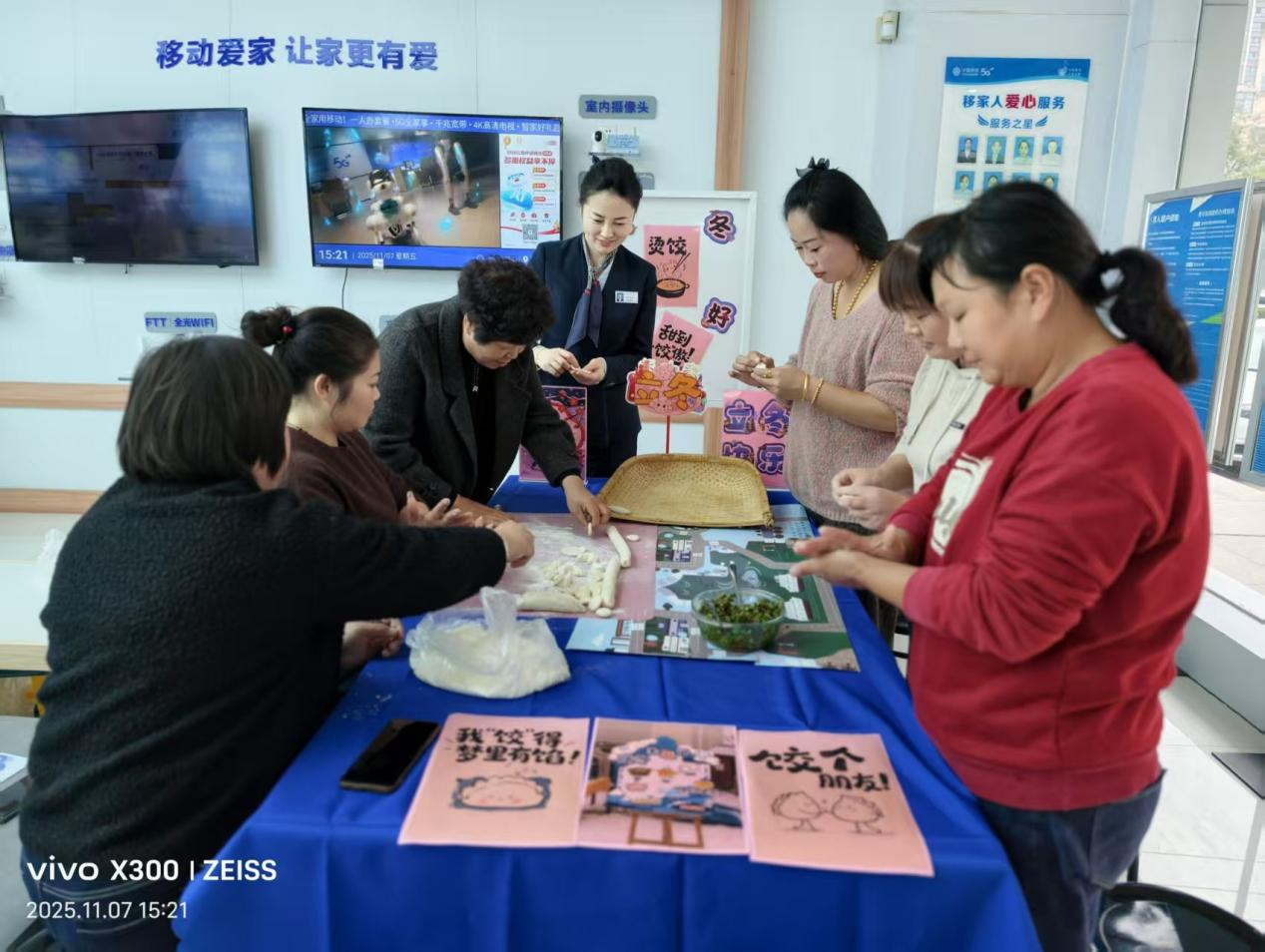
Group 1 - The core activity of the company is a "Winter Solstice Warm Dumpling" event aimed at expressing gratitude to long-term customers through traditional food customs [1][3] - The event involved meticulous preparation, from selecting ingredients to cooking, highlighting the company's attention to detail and customer care [3][5] - Customers expressed appreciation for the event, describing the dumplings as the "warmest gift" of the year, which reflects the company's commitment to enhancing customer relationships [5] Group 2 - The initiative aligns with the company's promise to make homes more loving, showcasing a blend of service and emotional connection through a cultural activity [5]
我国6G专利申请量全球第一 上市公司抢占技术制高点
Zheng Quan Ri Bao· 2025-11-10 16:13
Group 1 - As of June 2025, China holds approximately 40.3% of global 6G patent applications, ranking first worldwide, and is the largest holder of artificial intelligence patents at 60% [1][2] - The report indicates that by June 2025, China will have 684 million fixed broadband users and 11.18 billion 5G mobile phone users, with 4.55 million 5G base stations built [2] - The development of 6G technology is entering a critical breakthrough phase, with a global race underway to advance key technologies [2][3] Group 2 - Companies are focusing their R&D efforts on three main areas: terahertz communication, integrated space-ground systems, and intelligent metasurfaces [3][4] - Major companies like ZTE and China Mobile are actively pursuing advancements in 6G technology, with ZTE reporting progress in integrated sensing and computing, and China Mobile initiating 6G network architecture design [4][5] - The anticipated peak speed of 6G is expected to be 100 times that of 5G, with significant reductions in latency, enabling new applications such as holographic communication and remote surgical robots [5]
当双十一遇见移动爱购,中国移动打造数智生活新主场
Huan Qiu Wang· 2025-11-10 13:07
Core Insights - The article highlights the launch of China Mobile's "Mobile Love Shopping" digital lifestyle mall, featuring the "1AI Bean Unlocks N Benefits" campaign, aimed at simplifying and enhancing the shopping experience for users from now until December 15 [1][3] Group 1: AI Bean Reward System - The "AI Bean Reward System" allows users to earn AI Beans through daily consumption and participation in platform activities, which can be redeemed for discounts or exchanged for various rewards [3][4] - This system creates a closed-loop experience where users can earn, spend, and enjoy benefits, transforming AI Beans into a digital asset that can be used like cash [3][5] Group 2: Smart Lifestyle Integration - The digital mall integrates various aspects of daily life, covering eight core scenarios: clothing, food, housing, transportation, healthcare, education, entertainment, and elder care, providing a comprehensive smart lifestyle experience [4][5] - Services include online medical consultations, educational discounts, and entertainment options, all designed to enhance user convenience and satisfaction [5][7] Group 3: User-Centric Brand Philosophy - The platform emphasizes a user-centered brand philosophy, leveraging AI Beans and the "Lingxi Intelligent System" to understand user needs and deliver personalized services [7] - China Mobile aims to continue promoting digital lifestyle services and collaborating with partners to contribute to the construction of a "Digital China" [7]

面向5G-A与AI融合驱动的算网智一体化解决方案白皮书
Zhong Yi Zhi Ku· 2025-11-10 12:54
Investment Rating - The report does not explicitly state an investment rating for the industry Core Insights - The integration of 5G-A and AI is driving a new wave of technological revolution and industrial transformation globally, with a focus on creating a unified infrastructure that supports digital transformation across various sectors [4][9] - The report emphasizes the need for a "computing-network-intelligence" integrated solution to address the challenges faced by traditional network architectures in supporting industrial control and smart manufacturing [5][11] - China Mobile proposes a "5G-A × AI integrated solution" that leverages its network advantages and technological innovation to enhance production efficiency, optimize operational costs, and improve security [5][19] Summary by Sections 1. Background of 5G-A and AI Integration - The integration of 5G-A and AI is positioned as a core driver for new industrialization in China, supported by national policies aimed at enhancing the synergy between AI and the real economy [9][10] - Key challenges include the lack of integration among diverse network types, difficulties in real-time response to business needs, and the need for intelligent operations management [11][12] 2. 5G-A × AI Integrated Technology System - The report outlines a technology system based on the principle of "computing as the engine, network as the foundation, and intelligence as the brain," promoting deep integration of connectivity, computing power, and capabilities [14][15] - The architecture includes an edge intelligent core network, heterogeneous computing platform, and intelligent driving center, which collectively enhance the capabilities of enterprises [16][19] 3. Key Capabilities of Computing-Network-Intelligence - The edge intelligent core network is supported by a computing platform that allows for lightweight and elastic deployment, ensuring efficient resource allocation and high reliability [21][22] - Features such as heterogeneous access, intent-driven networking, and multi-modal perception are highlighted as essential for enhancing enterprise private networks [27][28][33] 4. Application Cases - The report presents case studies demonstrating the effectiveness of the integrated solution, such as reducing PLC control transmission latency from 60ms to under 20ms, significantly improving operational efficiency [48][53] - Another case illustrates the implementation of intent-driven intelligent management for 5G private networks, addressing challenges in traditional network operations [54][55]
中国移动参与新石器无人车6亿美元D轮融资
Feng Huang Wang· 2025-11-10 12:14
Group 1 - China Mobile participated in the Series D financing of New Stone Technology, which raised over $600 million, led by UAE's Leishi Capital and supported by several other investment firms [1] - The Beijing Zhongyi Digital New Economy Industry Fund, a subsidiary of China Mobile, highlighted the economic advantages of autonomous driving in urban logistics, addressing issues like rising labor costs and safety concerns [1] - New Stone Technology is recognized for being a pioneer in the large-scale deployment of L4 autonomous vehicles, establishing significant advantages in scene understanding, road rights acquisition, data accumulation, and vehicle mass production [1] Group 2 - During the Global Partner Conference in Guangzhou, China Mobile announced three key collaborative research directions with New Stone Technology, focusing on 5G IoT integration, high-precision positioning, and edge cloud computing for real-time data transmission [2] - The collaboration aims to enhance the safety and reliability of autonomous vehicles in complex urban environments through improved communication and positioning capabilities [2] - Continuous cooperation will be established around self-built computing power hosting and mobile cloud services, particularly in key cities for integrated vehicle-road-cloud projects [2]