Longi(601012)

Search documents
隆基绿能:“隆22转债”将于2026年1月5日开始付息
Ge Long Hui· 2025-12-25 09:48
Core Viewpoint - Longi Green Energy (601012.SH) announced that the interest payment for its convertible bonds issued on January 5, 2022, will commence on January 5, 2026, covering the period from January 5, 2025, to January 4, 2026 [1] Summary by Category - **Convertible Bonds Details** - The interest payment for the "Long 22 Convertible Bonds" will be the fourth-year payment, with a coupon rate of 1.20% (tax included) for the current interest year [1] - Each bond with a face value of 100 yuan will yield an interest amount of 1.20 yuan (tax included) [1]

隆基绿能(601012.SH):“隆22转债”将于2026年1月5日开始付息
Ge Long Hui A P P· 2025-12-25 09:47
Core Viewpoint - Longi Green Energy (601012.SH) announced that the interest payment for its convertible bonds issued on January 5, 2022, will commence on January 5, 2026, covering the period from January 5, 2025, to January 4, 2026 [1] Summary by Category - **Convertible Bonds Details** - The interest payment for the "Long 22 Convertible Bonds" will be the fourth-year payment, with a coupon rate of 1.20% (tax included) for the current interest year [1] - Each bond with a face value of 100 yuan will yield an interest amount of 1.20 yuan (tax included) [1]
隆基绿能(601012) - 关于“隆22转债”付息的公告
2025-12-25 09:47
| 股票代码:601012 | 股票简称:隆基绿能 | | | 公告编号:临 | 2025-099 号 | | --- | --- | --- | --- | --- | --- | | 债券代码:113053 | 债券简称:隆 | 22 | 转债 | | | | 债券代码:244101 | 债券简称:GK | 隆基 | 01 | | | | 债券代码:244386 | 债券简称:GK | 隆基 | 02 | | | 隆基绿能科技股份有限公司 关于"隆 22 转债"付息的公告 本公司董事会及全体董事保证本公告内容不存在任何虚假记载、误导性陈述 或者重大遗漏,并对其内容的真实性、准确性和完整性承担法律责任。 重要内容提示: 隆基绿能科技股份有限公司(以下简称"公司"或"本公司")于 2022 年 1 月 5 日公开发行的可转换公司债券(以下简称"可转债")将于 2026 年 1 月 5 日开始支付自 2025 年 1 月 5 日至 2026 年 1 月 4 日期间的利息。根据公司《公开 发行可转换公司债券募集说明书》(以下简称"募集说明书")有关条款的规定, 现将有关事项公告如下: 一、可转债发行上市概况 经中 ...
隆基绿能:“隆22转债”将支付第四年利息,百元兑息1.2元
Xin Lang Cai Jing· 2025-12-25 09:38
Core Viewpoint - Longi Green Energy announced the issuance of 7 billion yuan "Long 22 Convertible Bonds," which will pay interest from January 5, 2025, to January 4, 2026, on January 5, 2026 [1] Summary by Categories Financial Details - The interest rate for the bonds is set at 1.2% (tax included), translating to 1.2 yuan (tax included) for every 100 yuan [1] - The bond interest payment registration date is December 31, 2025, with the ex-dividend date and payment date on January 5, 2026 [1] Tax Implications - Individual investors (including securities investment funds) are required to pay a 20% interest income tax, while resident enterprises will self-pay [1] - The company will withhold a 10% corporate income tax for non-resident enterprises [1]
光伏产业如何通过技术与整合走出低价困局
Zhong Guo Neng Yuan Wang· 2025-12-25 09:34
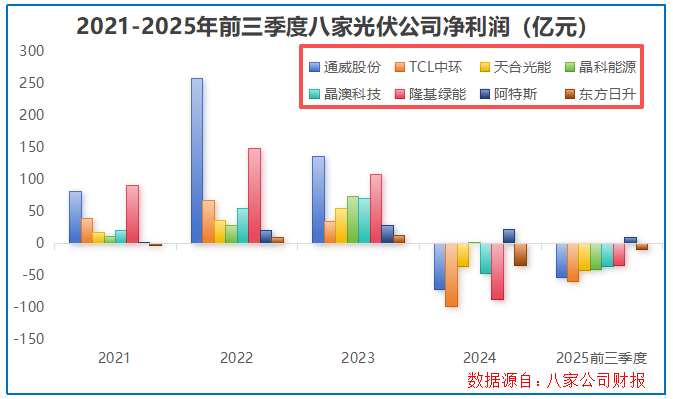
Core Insights - The photovoltaic industry is facing a severe oversupply and price decline due to excessive capacity expansion without corresponding demand growth [2][4] - Major companies in the industry have reported significant losses, with a total loss of 26.068 billion yuan in the first three quarters of 2025 [2] - The industry must shift from a focus on scale expansion to technological innovation to break free from the current predicament [4][32] Industry Overview - From 2021 to 2024, the photovoltaic industry has been in a race to expand production capacity, driven by carbon neutrality goals [1] - However, demand has not kept pace, leading to a decline in production across key segments, including polysilicon and silicon wafers, with polysilicon production down 29.6% year-on-year [2] - Prices for polysilicon have plummeted from over 300,000 yuan per ton in 2022 to 34,700 yuan per ton in mid-2025, a nearly 90% drop [2] Technological Innovation - The industry is at a crossroads where reliance on scale expansion is no longer viable, and technological innovation is essential for survival [4][32] - The transition from P-type to N-type solar cells represents a critical technological evolution, with N-type TOPCon technology becoming increasingly competitive [5][6] - Setting rigid efficiency standards for solar products is crucial to encourage innovation and eliminate low-quality competition [7][10] Policy and Regulation - The government is encouraged to implement policies that support high-efficiency solar components and set efficiency benchmarks for market entry [7][21] - The "three red lines" financial metrics, similar to those used in the real estate sector, could be applied to the photovoltaic industry to manage financial risks and prevent over-leverage [22][23] - Establishing a clear regulatory framework is deemed necessary to guide the industry towards sustainable development [20][32] Market Dynamics - The current market is characterized by a lack of unified efficiency data, leading to confusion and inconsistency in performance claims among companies [9] - The industry must focus on high-quality, high-efficiency products to move away from price-based competition and towards value-based competition [8][32] - Collaboration across the supply chain is essential to balance profitability and ensure sustainable operations for all stakeholders [14][17] Future Outlook - The photovoltaic industry is expected to evolve towards a model centered on technological innovation and quality improvement, moving away from the previous focus on scale and low prices [32] - Companies that prioritize innovation, manage risks effectively, and engage in ecosystem development are likely to emerge as leaders in the future [32]





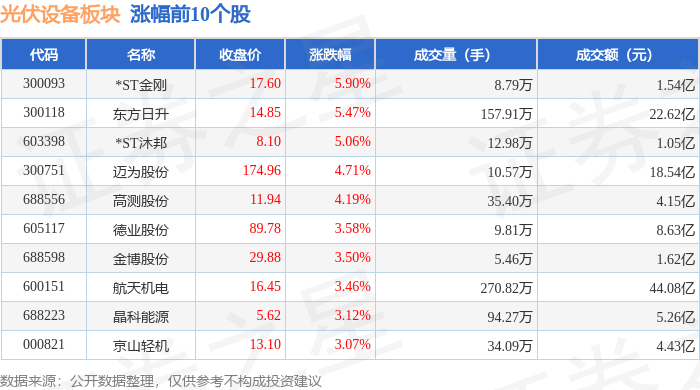
光伏设备板块12月25日涨1.18%,*ST金刚领涨,主力资金净流入6.76亿元
Zheng Xing Xing Ye Ri Bao· 2025-12-25 09:15
Group 1 - The photovoltaic equipment sector increased by 1.18% on December 25, with *ST Jinkang leading the gains [1] - The Shanghai Composite Index closed at 3959.62, up 0.47%, while the Shenzhen Component Index closed at 13531.41, up 0.33% [1] - Key stocks in the photovoltaic equipment sector showed significant price increases, with *ST Quannetwork rising by 5.90% and closing at 17.60 [1] Group 2 - The photovoltaic equipment sector saw a net inflow of 676 million yuan from institutional investors, while retail investors experienced a net outflow of 432 million yuan [3][4] - Major stocks with significant net inflows included Yangguang Electric Power with 778 million yuan and Maiwei Co. with 216 million yuan [4] - The trading volume and turnover for key stocks in the sector were substantial, with Dongfang Risen achieving a turnover of 2.262 billion yuan [1][4]

隆基绿能成立新公司,含电动汽车充电基础设施业务
Qi Cha Cha· 2025-12-25 05:28
Core Viewpoint - Longi Green Energy has established a new subsidiary focused on electric vehicle charging infrastructure, indicating a strategic expansion into the EV sector [1] Group 1: Company Overview - The newly formed company is named Yian County Long Energy New Energy Co., Ltd. and is wholly owned by Longi Green Energy [1] - The business scope includes operations related to electric vehicle charging infrastructure, efficiency assessment services, energy management services, and research and development of efficient energy-saving technologies in the power industry [1] Group 2: Industry Implications - The establishment of this subsidiary reflects the growing importance of electric vehicle charging infrastructure as the EV market continues to expand [1] - Longi Green Energy's move into this sector may position the company to capitalize on the increasing demand for sustainable energy solutions and infrastructure [1]
光伏组件涨价或冲击0.8元/W? 成本端力挺,需求端泼冷水
2 1 Shi Ji Jing Ji Bao Dao· 2025-12-25 05:27
Core Viewpoint - Recent price increases in photovoltaic (PV) modules have been reported, driven primarily by rising upstream material costs, particularly silver paste and silicon materials [1][2][3] Group 1: Price Increases and Causes - Major PV manufacturers like Longi Green Energy and Jinko Solar have raised module prices by 0.02 to 0.05 yuan per watt due to increased costs of upstream materials [1] - Silver paste has become the largest cost component in PV modules, accounting for 17% of the total cost, followed by silicon materials at 14% and glass at 13% [3] - The price of silver has surged, with spot prices rising from 6.68 yuan per gram at the beginning of the year to 16.11 yuan per gram by December 24, marking a 141.17% increase [3] Group 2: Market Dynamics and Implications - Despite rising costs, the price increase for PV modules has lagged behind other components, with module prices increasing less than 2% this year compared to significant increases in silicon and wafer prices [4][5] - The internal rate of return (IRR) for solar power projects has been negatively impacted by declining feed-in tariffs, leading to concerns that higher module prices could deter investment [4][5] - Industry experts suggest that for manufacturers to achieve profitability, module prices need to stabilize between 0.9 to 1 yuan per watt, with current average prices around 0.698 yuan per watt [7][8] Group 3: Quality Concerns and Market Demand - The push for lower module prices has raised concerns about product quality, with the overall qualification rate of PV modules dropping from 100% in 2019 to 62.9% in 2024 [7] - The current market demand for PV modules is limited, and expectations for rapid growth in installation capacity have diminished, indicating a potential slowdown in the market [8]
隆基绿能成立新公司 含电动汽车充电基础设施业务
Zheng Quan Shi Bao Wang· 2025-12-25 02:29
Group 1 - A new company, Longneng New Energy Co., Ltd., has been established in Yian County, focusing on electric vehicle charging infrastructure operations and energy management services [1] - The company is wholly owned by Longi Green Energy through indirect holdings [1] - The business scope includes operational efficiency assessment services and research and development of efficient energy-saving technologies in the power industry [1]
光伏大变局:价格筑底 龙头盈利 跨界进退|2025中国经济年报
Hua Xia Shi Bao· 2025-12-25 02:25
Core Insights - The year 2025 marks a pivotal point for China's photovoltaic (PV) industry, transitioning from chaotic competition to rational collaboration, as stated by Wang Bohua, honorary chairman of the China Photovoltaic Industry Association [2] - The fixed electricity price era has ended, leading to a new market-oriented phase for the PV sector, with significant changes in pricing and production dynamics [2] Group 1: Market Dynamics - The price of polysilicon has rebounded, with futures prices soaring from over 30,000 yuan/ton to above 60,000 yuan/ton, nearly doubling [3] - Major upstream companies like Daqo Energy and Tongwei have reported profitability in Q3, indicating a recovery in the industry [3] - The profitability of 31 key companies in the PV main industry chain has improved, with Q3 losses narrowing to 64.22 billion yuan, a reduction of approximately 46.7% from Q2 [4] Group 2: Sector Challenges - Despite improvements, the industry still faces supply-demand imbalances, particularly in the equipment sector, where many leading companies reported declines in revenue and net profit [5] - The inverter sector shows a mixed performance, with some companies experiencing profit growth while others face declining profits [5] - The auxiliary materials sector is under pressure, with leading companies in quartz crucibles and glass reporting significant losses [5] Group 3: Industry Restructuring - The PV industry is witnessing a dual trend of cross-industry expansion and exits, with companies like Longi Green Energy entering the energy storage market [6] - Several companies have exited the PV sector through asset sales and project terminations, indicating a consolidation trend [6] - The restructuring signals are strengthening, with companies like Jingang Photovoltaic undergoing reorganization to focus on specific technologies [7] Group 4: Future Outlook - The competition in PV technology is entering a new phase, with BC technology products rapidly gaining market share, potentially reaching 100GW in production by next year [8] - The price of silicon is expected to regain its central role in the industry, with a projected recovery in silicon prices linked to upstream polysilicon prices [9] - The demand for auxiliary materials is anticipated to weaken further, but supportive policies may help stabilize the market [10]