Longi(601012)

Search documents
光伏行业大会聚焦反内卷,特斯拉发布Optimus年度报告 | 投研报告
Zhong Guo Neng Yuan Wang· 2025-12-25 02:04
Core Viewpoint - The report highlights a significant slowdown in the growth of the photovoltaic (PV) industry in China for the first ten months of the year, with a notable decline in polysilicon production and a mixed performance in demand, indicating potential challenges ahead for the sector [1][2]. Manufacturing Sector Summary - Polysilicon production decreased by 29.6% year-on-year to 1.13 million tons - Wafer production fell by 6.7% year-on-year to 567 GW - Battery cell production increased by 9.8% year-on-year to 560 GW - Module production grew by 13.5% year-on-year to 514 GW [1][2][3]. Demand Sector Summary - The domestic PV installed capacity reached 252.87 GW, a year-on-year increase of 39.5% - From January to May, new installations totaled 198 GW, reflecting a 150% year-on-year growth - However, from June to October, new grid-connected installations saw a significant decline, dropping by 46.1% year-on-year [1][2]. Industry Developments - The 2025 China PV Industry Annual Conference focused on "anti-involution" strategies, aiming to address competitive pressures within the industry [1]. - The establishment of the polysilicon platform company, Guanghe Qiancheng, marks a significant step towards consolidating polysilicon production capacity, with major stakeholders including Tongwei Co., Ltd. holding a 30.35% share [3]. Future Outlook - The industry is expected to face a dual challenge of slowing new installations and a temporary supply-demand imbalance in the supply chain by 2026 - The "anti-involution" initiatives are anticipated to accelerate industry consolidation and reshape market dynamics [3]. Investment Recommendations - For the photovoltaic sector, it is advised to focus on leading companies such as Tongwei Co. and GCL-Poly Energy, as well as technology leaders in the BC technology space like LONGi Green Energy and Aiko Solar - In the robotics sector, attention is recommended for core companies with high supply chain certainty and significant value in the industry chain, including Topband, Sanhua Intelligent Controls, Zhaowei Electric, and Meihua Holdings [5].




光伏组件涨价潮
2 1 Shi Ji Jing Ji Bao Dao· 2025-12-24 23:02
Core Viewpoint - Recent price increases in photovoltaic (PV) modules have been reported, driven primarily by rising upstream material costs, particularly silver paste and silicon materials [1][2][3] Group 1: Price Increases and Causes - Major PV manufacturers like Longi Green Energy and JinkoSolar have raised module prices by 0.02 to 0.05 yuan per watt due to increased costs of upstream materials [1] - Silver paste has become the largest cost component in PV modules, accounting for 17% of the total cost, with significant price increases observed in both silver and silicon materials [3] - Silver prices have surged over 141% this year, while silicon prices have increased by approximately 29.88% [3] Group 2: Market Dynamics and Profitability - The price increase in PV modules is seen as necessary for the industry's profitability, but the actual recovery in module prices is uncertain [2][5] - The internal rate of return (IRR) for solar projects has been negatively impacted by declining electricity prices, leading to concerns among investors about the sustainability of price increases [4][5] - Current average prices for N-type TOPCon modules are around 0.698 yuan per watt, with industry experts suggesting a target price of 0.8 to 0.99 yuan per watt for profitability [7] Group 3: Quality Concerns and Market Demand - The decline in module prices has raised concerns about product quality, with the overall qualification rate of PV modules dropping from 100% to 62.9% from 2019 to 2024 [7] - Despite the potential for price increases, limited market demand poses challenges for driving up module prices in the short term [8] - The growth rate of the global PV market is expected to slow down, with basic demand remaining stable but without rapid increases anticipated [8]


隆基绿能大宗交易成交26.00万股 成交额468.52万元
Zheng Quan Shi Bao Wang· 2025-12-23 12:26
Group 1 - Longi Green Energy executed a block trade on December 23, with a transaction volume of 260,000 shares and a transaction amount of 4.6852 million yuan, at a price of 18.02 yuan per share [2][4] - The buyer of the block trade was Guotai Junan Securities Co., Ltd. headquarters, while the seller was Huatai Securities Co., Ltd. Beijing West Third Ring International Financial Center Securities Business Department [2][4] - In the last three months, Longi Green Energy has recorded a total of 13 block trades, with a cumulative transaction amount of 110 million yuan [3] Group 2 - The closing price of Longi Green Energy on the day of the block trade was 18.02 yuan, reflecting a decrease of 0.50%, with a daily turnover rate of 1.13% and a total transaction amount of 1.541 billion yuan [3] - The net outflow of main funds for the day was 113 million yuan, while the stock has seen a cumulative increase of 3.21% over the past five days, with a total net outflow of 14.9276 million yuan [3] - The latest margin financing balance for Longi Green Energy is 5.38 billion yuan, which has decreased by 124 million yuan over the past five days, representing a decline of 2.26% [3]

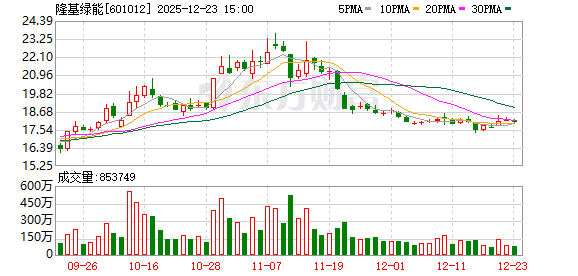
隆基绿能12月23日现1笔大宗交易 总成交金额468.52万元 溢价率为0.00%
Xin Lang Cai Jing· 2025-12-23 10:29
炒股就看金麒麟分析师研报,权威,专业,及时,全面,助您挖掘潜力主题机会! 12月23日,隆基绿能收跌0.50%,收盘价为18.02元,发生1笔大宗交易,合计成交量26万股,成交金额 468.52万元。 进一步统计,近3个月内该股累计发生13笔大宗交易,合计成交金额为1.1亿元。该股近5个交易日累计 上涨3.21%,主力资金合计净流出6604.21万元。 责任编辑:小浪快报 第1笔成交价格为18.02元,成交26.00万股,成交金额468.52万元,溢价率为0.00%,买方营业部为国泰 海通证券股份有限公司总部,卖方营业部为华泰证券股份有限公司北京西三环国际财经中心证券营业 部。 ...
宋志平:2026,抵制内卷和重塑经营范式
Xin Lang Cai Jing· 2025-12-23 04:52
Core Viewpoint - The recent Central Economic Work Conference emphasizes the need for a shift in business paradigms to resist "involution" competition and focus on value creation and high-quality development [2][26]. Group 1: Transition from Scale to Quality - Chinese enterprises have achieved significant growth, with 130 companies entering the Fortune Global 500 this year, but now must transition from speed and scale to quality and efficiency [4][29]. - The criteria for measuring development quality include investment returns, market presence, profitability, employee income, government tax revenue, and environmental improvement [4][29]. - Companies like Midea are focusing on modern governance to ensure stable development, projecting a profit of 38.5 billion yuan in 2024 with a market value of 630 billion yuan [4][29]. Group 2: Focus on Core Competencies - Companies should prioritize strengthening their core business rather than blindly expanding into unrelated areas, as many issues arise from straying from core competencies [6][31]. - The principle of business core focus suggests eliminating non-core and loss-making operations to maintain clarity and efficiency [6][31]. - For instance, CATL focuses solely on its core business of power batteries, projecting a profit of 50.7 billion yuan in 2024 with a market value of 1.8 trillion yuan [6][31]. Group 3: Shift from Management to Strategic Operations - The current era requires businesses to focus on strategic operations rather than just management, emphasizing the importance of making the right business decisions to enhance profitability [7][32]. - Effective leadership involves setting strategic direction and resource acquisition while delegating management tasks to subordinates [7][32]. - The distinction between management and operations is crucial, with a focus on generating revenue and market engagement being paramount [7][32]. Group 4: Value-Driven Pricing Strategies - Companies must transition from cost-based pricing to value-based pricing, focusing on the value delivered to customers rather than merely production costs [13][40]. - The importance of understanding the relationship between price, volume, and cost is highlighted, with a focus on maintaining price stability in over-saturated markets [17][42]. - Successful brands like Pop Mart leverage emotional and social value in their products, achieving significant revenue growth and market capitalization [41]. Group 5: Moving Towards Cooperative Competition - The need for a shift from harmful competition to cooperative competition is emphasized, where companies focus on creating value rather than engaging in destructive price wars [18][43]. - The concept of "prisoner's dilemma" illustrates the need for industry players to prioritize collective industry benefits over individual gains [19][44]. - Promoting a cooperative ecosystem within industries can lead to sustainable growth and mutual benefits for all stakeholders involved [19][44].





隆基绿能投资成立隆柒绿储新能源公司
Xin Lang Cai Jing· 2025-12-23 02:00
Group 1 - A new company, Shanxi Longqi Green Storage New Energy Co., Ltd., has been established, with Wei Jiangtao as the legal representative [1] - The company's business scope includes photovoltaic power generation equipment leasing, emerging energy technology research and development, and information technology consulting services [1] - Longqi Green Energy holds the company as a wholly-owned subsidiary through indirect ownership [1]
电新、公用行业周报:2025年光伏行业大会召开,固态电解质界面研究取得进展-20251222
CHINA DRAGON SECURITIES· 2025-12-22 11:51
Investment Rating - The report maintains an investment rating of "Recommended" for the electric new and public utility sectors [2][5]. Core Insights - The 2025 China Photovoltaic Industry Annual Conference was held, focusing on high-quality development and innovation in the photovoltaic sector [4][25]. - The wind power sector is advancing with international projects, such as the BC-Wind offshore wind project in Poland, which has a planned capacity of 390MW [4][26]. - Significant progress has been made in solid-state battery technology, enhancing the performance and stability of lithium batteries [4][27]. - The share of non-fossil energy consumption in China is expected to exceed the target of 20% during the 14th Five-Year Plan period, with substantial investments in renewable energy projects [4][27]. Industry Summary Photovoltaic Sector - The photovoltaic industry is undergoing a transformation aimed at improving quality and efficiency, with a focus on technological innovation [4][25]. - The market is experiencing price adjustments in the supply chain, with recent increases in silicon material prices and expectations for further price stability [29][30]. - The average price for N-type battery cells has risen to 0.3 RMB per watt due to increased silver prices [32]. Wind Power Sector - The domestic wind power sector saw a significant increase in installed capacity, with 8.92GW added in October 2025, representing a year-on-year growth of 34% [40]. - The BC-Wind project in Poland marks a notable international expansion for companies like 大金重工, which is manufacturing foundational components for the project [26]. Lithium Battery Sector - Research teams from Tsinghua University have made advancements in solid-state lithium metal batteries, improving their performance under high current densities and low temperatures [4][27]. Public Utility Sector - The investment in energy projects is projected to reach 3.54 trillion RMB in 2025, reflecting an 11% year-on-year growth [27]. - The transition to green and low-carbon energy is accelerating, with expectations for renewable energy to constitute over 50% of total power generation capacity by 2030 [5][27]. Investment Recommendations - The report suggests focusing on leading companies in the photovoltaic sector such as 爱旭股份 and 隆基绿能, as well as key players in the wind power and lithium battery sectors [5][43].


跨界新能源:告别“草莽”,回归价值
Xin Lang Cai Jing· 2025-12-22 11:24
Core Viewpoint - Wuliangye Group is investing in renewable energy by establishing a joint venture with Longi Green Energy and planning to build an energy storage power station in its industrial park, indicating a significant shift in the energy landscape and the emergence of structural opportunities in the industry [1][6]. Group 1: Investment Waves in Renewable Energy - The first wave of cross-industry investment began in 2006 with the Renewable Energy Law, which established a guaranteed purchase mechanism, followed by the introduction of high-standard feed-in tariffs in 2011, attracting numerous investors to the photovoltaic sector [2][7]. - The second wave was initiated by the 2015 electricity reform policy, which restored the commodity nature of electricity and allowed market-based pricing, expanding competition from generation to consumption [2][7]. - The third wave was driven by the 2020 carbon neutrality goals and subsequent policies promoting new energy storage, leading to increased participation from non-energy players in diverse business areas [3][8]. Group 2: Factors for Success in Cross-Industry Investment - Sufficient funding acts as a crucial "booster" for successful cross-industry players, enabling them to explore new growth avenues; companies like Sunwoda and Tongwei leveraged their cash flow to enter the renewable sector [4][8]. - Technological capabilities serve as a "streamlining cover," allowing companies to differentiate themselves; for instance, TCL successfully transferred its semiconductor technology to the photovoltaic sector [4][9]. - The integration of various scenarios is becoming a "transformational engine," as seen with China Mobile's energy storage products tailored for data centers and industrial parks, indicating a trend towards the fusion of energy, power, and data [5][10]. Group 3: Market Dynamics and Future Outlook - The renewable energy sector is experiencing significant changes due to fluctuating photovoltaic component prices, intensified competition in energy storage, and periodic policy adjustments, leading to a divergence in the fortunes of cross-industry enterprises [1][6]. - Companies like JD Logistics are capitalizing on opportunities within the photovoltaic supply chain by offering customized services and integrated solutions, enhancing their value proposition [5][10]. - The future of cross-industry opportunities in renewable energy will depend on companies' ability to create stable and sustainable value within the new energy system, with long-term thinkers likely to gain an advantage [5][10].


光伏产业从"内卷"走向"破卷",但明年才是行业治理的攻坚期
Di Yi Cai Jing· 2025-12-22 10:51
Core Viewpoint - The photovoltaic industry is expected to enter a continuous capacity clearing cycle by 2026, following a period of severe supply-demand mismatch and price wars, with a focus on addressing the industry's pain points and promoting "anti-involution" measures in 2025 [1][9]. Group 1: Industry Challenges - The first half of 2025 was characterized as "difficult," with all segments of the photovoltaic industry experiencing unprecedented losses, totaling a net loss of 12.58 billion yuan among 31 A-share listed companies in the photovoltaic main industry chain, a year-on-year increase of 274.3% [3][4]. - Over 40 companies have announced delistings, bankruptcies, or mergers since 2024 due to severe supply-demand imbalances and rapid price declines below industry cost lines [3][4]. Group 2: Financial Performance - Major companies reported significant losses in the first half of 2025, with Longi Green Energy losing 2.569 billion yuan, Tongwei Co. losing 4.955 billion yuan, JA Solar losing 2.58 billion yuan, Trina Solar losing 2.918 billion yuan, and TCL Zhonghuan losing 4.242 billion yuan, totaling 17.264 billion yuan in losses among these five leading firms [4][5]. - Despite a temporary boost in market demand from a "rush installation" trend in the distributed photovoltaic market, this demand growth was not sustained [4]. Group 3: Anti-Involution Measures - In the second half of 2025, measures to promote "anti-involution" began to intensify, with government and industry collaboration aimed at addressing low-price disorder and enhancing product quality [6][9]. - The implementation of the Anti-Unfair Competition Law in June 2025 positively impacted pricing, leading to a recovery in prices from July to October 2025, with prices across the photovoltaic industry chain rising compared to the beginning of the year [7][10]. Group 4: Future Outlook - The establishment of a multi-crystalline silicon capacity integration acquisition platform is seen as a significant step towards optimizing capacity and breaking the cycle of excessive competition [1][8]. - The Ministry of Industry and Information Technology plans to strengthen capacity regulation and promote the orderly exit of backward production capacity, indicating that 2026 will be a critical year for industry governance [9][10]. - The industry is expected to undergo a continuous capacity clearing cycle, with a focus on improving product quality standards and enhancing market entry barriers to ensure sustainable profitability across the entire supply chain [9][10].


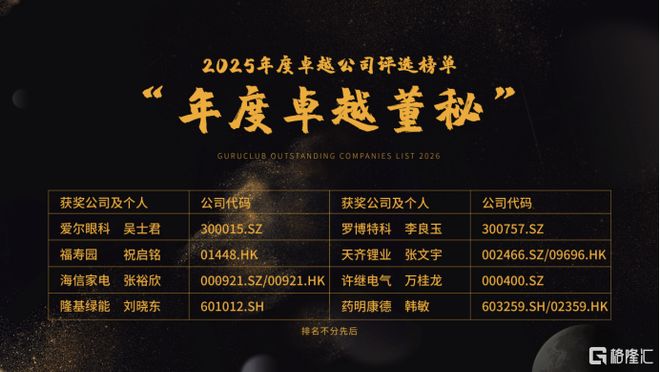
格隆汇“科技赋能·资本破局”线上分享会暨“金格奖”——“年度卓越董秘”奖项揭晓:爱尔眼科(300015.SZ)吴士君、福寿园(01448.HK)祝启铭等8位上榜
Ge Long Hui· 2025-12-22 08:50
Core Viewpoint - The "Golden Award" annual excellence company selection by Gelonghui highlights outstanding companies and their secretaries, emphasizing the importance of corporate governance and investor relations in the market [1][2]. Group 1: Award Winners - Eight individuals received the "Annual Excellence Secretary" award, including Wu Shijun from Aier Eye Hospital, Zhu Qiming from Fushouyuan, Zhang Yuxin from Hisense Home Appliances, Liu Xiaodong from Longi Green Energy, Li Liangyu from Robotech, Zhang Wenyu from Tianqi Lithium, Wan Guilong from XJ Electric, and Han Min from WuXi AppTec [1]. - The award recognizes secretaries for their exceptional performance in corporate governance, equity management, information disclosure, and investor relations [1]. Group 2: Evaluation Process - The selection process for the awards involved quantitative data analysis and expert review to determine the final results [1]. - The "Golden Award" aims to create a valuable reference for investors by ranking listed companies and unicorns across various stock exchanges, including the Hong Kong Stock Exchange, Shanghai Stock Exchange, Shenzhen Stock Exchange, New York Stock Exchange, and NASDAQ [2].