GAC GROUP(601238)

Search documents
又涨停 市值逼近千亿 601238迎来价值重估?
Shang Hai Zheng Quan Bao· 2025-11-30 13:40
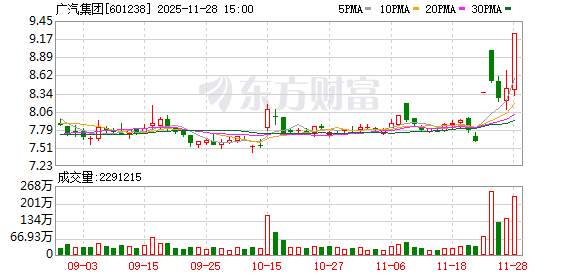
Core Viewpoint - GAC Group is experiencing a significant stock price rebound driven by technological breakthroughs, organizational reforms, and ecological layout, prompting a reevaluation of its value in the capital market as it attempts to transition from a traditional manufacturing company to a technology-driven enterprise [1][4][12] Stock Performance - GAC Group's stock has seen a 21.71% increase this week, with a trading volume of 7.11 billion yuan, a dramatic rise of over 400% compared to the previous week's 1.34 billion yuan [1] - The company's market capitalization has returned to 94.3 billion yuan, nearing the 100 billion yuan mark [1] Sales and Revenue Projections - GAC Group is projected to achieve automobile sales of 2.0031 million units in 2024, with total revenue estimated at approximately 401.65 billion yuan [1] - The consolidated revenue is expected to be around 107.78 billion yuan [1] Technological Advancements - GAC Group has launched a pilot production line for solid-state batteries, marking a significant step towards mass production of automotive-grade solid-state batteries by 2026 [2][4] - The energy density of the newly developed solid-state batteries is nearly double that of existing batteries, enabling vehicles to achieve over 1,000 kilometers of range [4] Strategic Partnerships - GAC Group has formed a deep collaboration with Huawei to create a high-end smart electric vehicle brand named "Qijing," set to launch in mid-2024 [6] - The partnership aims to leverage Huawei's core technologies in smart driving and smart cockpit systems to enhance GAC's competitive edge in the smart electric vehicle market [6][7] Internal Reforms - GAC Group is undergoing a comprehensive restructuring of its organizational framework, management processes, and corporate culture to support its transition towards a technology-oriented company [9][12] - The new management team is focused on shifting the product development approach from an engineering mindset to a customer-centric perspective [12] Market Response - Following the announcement of solid-state battery production, GAC Group's stock was locked at the daily limit on the first trading day, indicating strong market enthusiasm [4] - Despite the recent stock surge, GAC Group's current price-to-book ratio remains at 0.85, indicating it is still undervalued [4]

OCS产业进度加速,重视金刚石散热应用
Huaan Securities· 2025-11-30 13:24
Investment Rating - Industry investment rating is "Overweight" [1] Core Views - The report highlights that the A-share market indices have shown significant recovery, with the CSI 300, ChiNext 300, STAR 50, CSI 500, and CSI 1000 indices increasing by 1.64%, 4.68%, 3.21%, 3.14%, and 3.77% respectively, with the ChiNext 300 showing the most notable rebound [10][11] - The humanoid robot sector is identified as a crucial downstream application of AI technology, with domestic industrial manufacturing leading globally. The report anticipates that as products from companies like Tesla and Zhiyuan mature, the industry chain will accelerate [3][22] - The application of diamond heat dissipation is gaining recognition among downstream customers, particularly as the semiconductor industry progresses towards 2nm and 1nm technologies. The report emphasizes the importance of timely heat dissipation to maintain chip performance and reliability [3][22] - The 2025 Intel Technology Innovation and Industry Ecosystem Conference in Chongqing introduced the first dual-path cold plate liquid cooling server, indicating a growing demand for liquid cooling equipment driven by AI data center construction [3][22] - Optical Circuit Switch (OCS) technology is advancing rapidly, particularly with Google's development of next-generation technologies, which is expected to accelerate the industry chain [3][22] Summary by Sections Weekly Market Review - The humanoid robot sector has shown a mixed performance, with the top five gaining stocks being Lixing Co., Changying Precision, Chaojie Co., Ruineng Technology, and GAC Group, while the top five losing stocks include Huada Technology, Runhe Software, Jiangte Electric, Tonghui Electronics, and Lihexing [19][20] Recent Hotspots and Events - Invech's AI temperature control solution has achieved over 22% energy savings for data centers, addressing high energy consumption issues in the manufacturing industry's digital transformation [2][25] Key Emerging Industry Company Tracking - Zhongchuang Zhiling has announced a bank loan guarantee to support its subsidiary, while Guojijiang has highlighted the potential of diamond heat dissipation applications in the semiconductor field, with expected revenues exceeding 10 million yuan by 2025 [22][23] - Anpeilong is expanding its R&D team for force sensor products, aiming to enhance its capabilities in the robotics sector [23][24]


国内首条大容量全固态电池产线建成,商务部将推进汽车流通消费改革试点
Xinda Securities· 2025-11-30 05:08
Investment Rating - The industry investment rating is "Positive" [2] Core Views - The report highlights the successful establishment of the first large-capacity all-solid-state battery production line in China, which is expected to address key issues in electric vehicle range and safety [24] - The Ministry of Commerce plans to promote reforms in automotive circulation and consumption, aiming to expand the entire automotive consumption chain [24] - The report notes that the A-share automotive sector outperformed the market, with a weekly increase of 3.24%, while the Shanghai and Shenzhen 300 Index rose by 1.64% [3][9] Summary by Sections Market Performance - The A-share automotive sector outperformed the market, with a weekly increase of 3.24%, ranking 11th among A-share Shenwan first-level industries [3][9] - Key stocks leading the performance include GAC Group and BYD in the passenger vehicle sector, and King Long and CIMC Vehicles in the commercial vehicle sector [6][21][22] Industry News - The establishment of the first large-capacity all-solid-state battery production line marks a significant advancement in battery technology [24] - The Ministry of Commerce is set to implement automotive circulation consumption reform trials to boost overall automotive consumption [24] - Anhui Province has initiated a new round of consumer subsidies for automotive purchases, providing varying amounts based on vehicle price [24] - Leap Motor has achieved its 2025 sales target of 500,000 vehicles ahead of schedule and aims for 1 million vehicles in 2026 [24] - A new automotive consumption promotion policy has been launched in Hangzhou, offering subsidies and vouchers for new car purchases [24] Key Data Tracking - The report includes tracking of key upstream data such as steel, aluminum, natural rubber, and lithium carbonate prices, which are crucial for the automotive supply chain [27][28]

英国拟推20亿美元电车补贴计划,国内多个海风项目风机中标
ZHONGTAI SECURITIES· 2025-11-30 05:07
Investment Rating - The report maintains an "Overweight" rating for the industry [4] Core Insights - The UK government plans to introduce a $2 billion electric vehicle subsidy program to accelerate the adoption of electric vehicles [13] - Tianqi Lithium has made significant progress in the production of lithium sulfide, with costs expected to drop to 60% of the industry average [14][15] - Longpan Technology has secured a major order for 1.3 million tons of lithium iron phosphate from Chuangneng New Energy, significantly increasing its revenue potential [16] - The first large-capacity all-solid-state battery pilot production line in China has been completed, marking a technological milestone [18][19] Summary by Sections Lithium Battery Sector - The battery industry index rose by 3.14%, outperforming the CSI 300 by 1.5 percentage points, with significant gains from key companies like Longpan Technology and Penghui Energy [11] - The UK plans a £1.5 billion subsidy to boost electric vehicle sales, which has already seen over 35,000 owners switch to electric vehicles since July [13] - Tianqi Lithium's new production process for lithium sulfide is expected to reduce costs significantly, enhancing its competitive edge [14][15] - Longpan Technology's order increase from 150,000 tons to 1.3 million tons of lithium iron phosphate is projected to generate over 45 billion yuan in sales [16][17] Energy Storage Sector - The National Development and Reform Commission has announced that new energy storage plants will not be included in the pricing of transmission and distribution costs, promoting the sector's growth [22][23] - The Hubei province aims to reach 5GW of new energy storage capacity by 2027, with a focus on new energy storage technologies [28][29] Power Equipment Sector - The results of the pricing competition for electricity mechanisms across 11 provinces have been released, with Shanghai leading in pricing [30] - The bidding for three high-voltage direct current projects has commenced, indicating ongoing infrastructure development [31][32] Photovoltaic Sector - The price of polysilicon remains stable, while the price of silicon wafers has decreased, reflecting a challenging market environment [33][34] - The global market for polysilicon is dominated by Chinese manufacturers, with four companies expected to account for 65% of global production by 2024 [39] Wind Power Sector - Recent approvals and bidding progress for offshore wind projects in various regions indicate a steady pace of development in China's offshore wind sector [43][44] - The UK is advancing its offshore wind projects, with significant milestones achieved in the Dogger Bank project [47]





华为“占领”广州车展
Jing Ji Guan Cha Wang· 2025-11-29 09:24
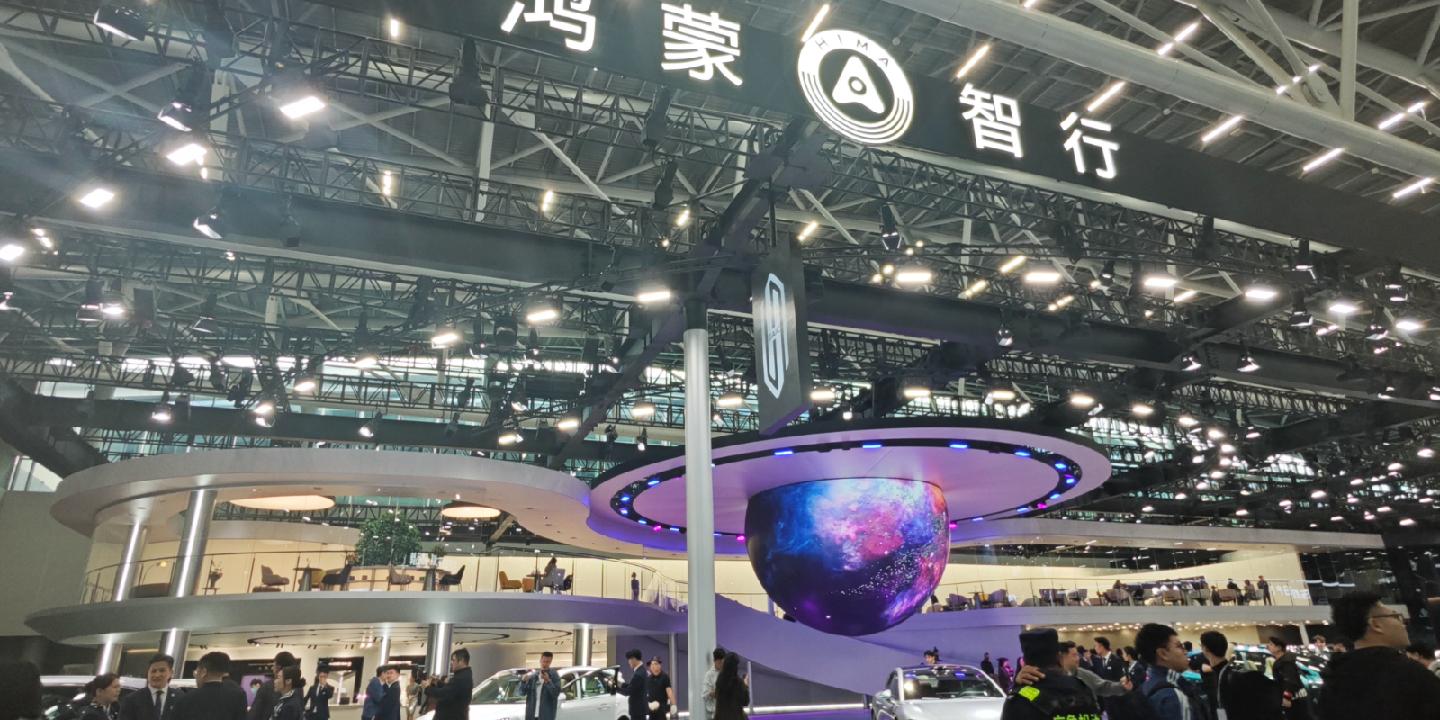
Core Insights - The 2025 Guangzhou Auto Show is highlighted as the most significant event in terms of technological integration, particularly with Huawei's extensive presence and partnerships in the automotive sector [2][5][9]. Huawei's Dominance in the Automotive Sector - Huawei has established itself as an indispensable player in the Chinese smart automotive industry, with numerous car manufacturers leveraging its technology to enhance their products [2][9]. - The launch of Huawei's new "Jing" series brands, including "Qijing" and "Yijing," marks a significant expansion of its automotive offerings, with plans for multiple new models to be introduced in the coming years [3][4]. Collaborations and Partnerships - Huawei has formed partnerships with various automakers, including Dongfeng and GAC, to develop new vehicle brands and models, showcasing a collaborative approach to innovation in the automotive space [3][4][6]. - The introduction of the A5L Qiankun Intelligent Driving Version by FAW Audi, which is the first fuel vehicle to feature Huawei's Qiankun technology, exemplifies the growing trend of luxury brands adopting Huawei's solutions [6][7]. Market Performance and Sales - In October 2023, vehicles equipped with Huawei's Qiankun driving system achieved sales exceeding 100,000 units in a single month, indicating strong market acceptance [9]. - As of September 2023, new cars in China featuring urban navigation assistance reached 1.628 million units, with those using Huawei's technology accounting for approximately 27.8% of the market share [9]. Industry Trends and Consumer Perception - The increasing adoption of Huawei technology among various car manufacturers reflects a shift towards smart and connected vehicles, aligning with consumer demands for enhanced safety and connectivity [8][10]. - Despite the proliferation of "Jing" and "Jie" brands, concerns about differentiation among vehicles using Huawei technology have emerged, suggesting that manufacturers must focus on unique branding and product features to stand out in a competitive market [10][11].

超百家企业捐赠总额超12亿港元,企业驰援香港大埔火灾救援


第一财经· 2025-11-29 07:06
Core Points - A significant fire occurred in Hong Kong's Tai Po district, resulting in major casualties and prompting over 100 companies and foundations to donate for emergency relief and community recovery efforts, with total donations exceeding HKD 1.2 billion [2][4]. Donation Summary - Major companies such as Yuexiu Group donated HKD 10 million, while China Overseas and China State Construction contributed HKD 20 million [3]. - Tencent donated HKD 30 million, and Alibaba made an initial donation of HKD 20 million [3]. - Other notable contributions include HKD 30 million from the Li Ka Shing Foundation and HKD 12 million from the Chaozhou Association [4]. - The total amount of donations has surpassed HKD 1.2 billion as of the latest reports [4].

广州汽车集团股份有限公司第七届董事会第14次会议决议公告
Shang Hai Zheng Quan Bao· 2025-11-28 20:13
Core Points - The board of directors of Guangzhou Automobile Group Co., Ltd. held its 14th meeting of the 7th session on November 28, 2025, and made several important resolutions [1][4] - Liu Xiangneng was appointed as the secretary of the board, with a term consistent with the current board [2][5] - The company announced organizational adjustments and approved the "14th Five-Year" development plan, focusing on enhancing joint ventures, strengthening independent brands, and expanding ecosystems [6][7][8] Summary by Sections Appointment of Board Secretary - Liu Xiangneng was appointed as the joint secretary of the board, meeting all legal qualifications and not having any disqualifications under relevant laws [2] - He holds 26,940 shares of the company's A-shares as of the announcement date [2] Organizational Adjustments - The board approved a proposal for organizational adjustments, which is part of the company's strategic realignment [6][8] Development Plans - The board approved the "14th Five-Year" development plan and the overall development plan for the company's independent brands, aiming to tackle the challenges of deep industry transformation and intense market competition [7] - The company plans to focus on three key battles: user demand, product value, and service experience [7]
港股通成交活跃股追踪 广汽集团近一个月首次上榜
Zheng Quan Shi Bao Wang· 2025-11-28 15:33
广汽集团为近一个月首次上榜,当日港股通成交额为10.66亿港元,成交净卖出0.82亿港元,该股当日收 盘上涨16.62%。(数据宝) 11月28日港股通成交活跃股榜单 | 证券代 | 证券简称 | 成交金额(亿 | 净买入金额(亿 | 近一个月上榜 | 最新收盘价 | 日涨跌幅 | | --- | --- | --- | --- | --- | --- | --- | | 码 | | 港元) | 港元) | 次数 | (港元) | (%) | | 00981 | 中芯国际 | 20.96 | -3.00 | 22 | 68.800 | 0.66 | | 01347 | 华虹半导 体 | 12.13 | -1.24 | 22 | 74.500 | 2.69 | | 01810 | 小米集 团-W | 18.28 | 4.70 | 22 | 41.020 | -0.19 | | 00700 | 腾讯控股 | 25.94 | 2.62 | 22 | 611.500 | - | | 09988 | 阿里巴 巴-W | 59.76 | 10.94 | 22 | 151.500 | 0.60 | | 09992 | 泡泡 ...
全国百城开启埃安UT super新车交付
Bei Jing Shang Bao· 2025-11-28 13:56
Core Viewpoint - The "National Good Car" Aion UT Super, jointly launched by GAC Group, CATL, and JD Auto, has commenced mass delivery across over a hundred cities in China, including Beijing and Guangzhou [1] Group 1: Product Features - Aion UT Super integrates JD's advantages in user insights and vehicle sales and maintenance, along with GAC's manufacturing capabilities and CATL's battery technology and battery swapping ecosystem [1] - The vehicle is equipped with CATL's "chocolate battery," offering an impressive range of 500 kilometers and a rapid battery swap time of 99 seconds, addressing range anxiety for drivers [1] - With a wheelbase of 2750mm, the Aion UT Super provides spacious interiors typical of a class A vehicle, catering to family travel and daily commuting needs [1]
中芯国际终止出售中芯宁波股权;超卓航科实控人将变更丨公告精选



2 1 Shi Ji Jing Ji Bao Dao· 2025-11-28 13:49
Group 1 - SMIC announced the termination of the sale of its stake in SMIC Ningbo due to failure to reach an agreement within the expected timeframe, retaining a 14.832% stake post-termination, with no significant impact on financial status [2] - Chaozhuo Aerospace's actual controller will change to Hubei State-owned Assets Supervision and Administration Commission, with stock resuming trading on December 1 [2] - ST Lifan faces potential forced delisting due to false disclosures in its 2021-2023 annual reports, with a total false revenue of 592 million yuan, representing 50.91% of the reported revenue for those years [3] Group 2 - Lijun Holdings' subsidiary signed a contract worth approximately 57.6 million USD for high-pressure roller mills, accounting for 52.53% of the audited consolidated revenue for 2024, expected to positively impact future performance [3] - Sanjiang Shopping's second-largest shareholder, Alibaba Zeta, reduced its stake by 5.4768 million shares, decreasing its holding from 30% to 29% [4] - Tianfeng Securities is under investigation by the CSRC for suspected information disclosure violations and illegal financing [5] Group 3 - China Jushi's major shareholder, Zhenstone Group, plans to increase its stake by no less than 550 million yuan and no more than 1.1 billion yuan [6] - Helun Zhe's major shareholder received a notice of investigation for suspected information disclosure violations, which does not affect the company's operations [7] - Yongtai Energy's actual controller also received a notice of investigation for similar violations, with no impact on the company's operations [8] Group 4 - Wuhantian Source's major shareholder, Konka Group, plans to transfer 9.83% of its shares to China Resources Asset Management [9] - Pinggao Electric won a bid for a State Grid project worth approximately 773 million yuan [9] - Zhejiang Longsheng is collaborating with a private equity fund to establish a venture capital partnership [9]