
CPIC(601601)

Search documents
AI应用,大事件!
摩尔投研精选· 2025-12-17 10:37
Market Overview - The market experienced a collective rebound, with the Shanghai Composite Index rising over 1% and the ChiNext Index increasing over 3%, as more than 3,600 stocks in the market saw gains [1] - The computing hardware sector showed strong performance, with stocks like Zhongci Electronics and Huanxu Electronics hitting the daily limit, while major players in optical modules also surged [1] - The lithium battery industry chain strengthened, with Jinyuan Co. achieving two limit-ups in four days and Tianji Co. hitting the daily limit [1] - The financial sector gained momentum in the afternoon, with Huatai Securities nearing a limit-up and China Pacific Insurance rising over 4% [1] Sector Analysis - High-profile stocks experienced a collective decline, with companies like Tongyu Communication and Zhongchao Holdings hitting the daily limit down [2] - The financial sector's afternoon surge was notable, with Huatai Securities and China Pacific Insurance leading the gains, alongside other major financial institutions [3] - The market's focus on computing hardware is attributed to its "performance certainty + growth potential," with expectations that the structural transformation seen in 2025 will continue into 2026 [6] Investment Themes - The technology innovation sector is contributing positively to industry profits, with TMT and advanced manufacturing leading the gains this year [7] - Industries linked to global demand or increased overseas penetration are also showing strong performance, including non-ferrous metals, automotive, home appliances, and machinery [7] - Key areas of focus for 2026 include AI supply-demand gaps, energy storage demand recovery, and the copper market's dependence on global fundamentals [8] AI Development - The AI application sector is entering a new catalytic phase, with ByteDance's Seed team launching a new audio-video creation model that supports various tasks [9] - Recent advancements in AI applications are being driven by major players enhancing their model capabilities and frameworks, with Alibaba's upgrade of "Tongyi - Qwen" being particularly notable [10] - The overall outlook for the AI application sector is optimistic, with consumer internet and marketing-related scenarios expected to benefit first from these developments [10]





A股,放量上攻!多股尾盘直线涨停!
Xin Lang Cai Jing· 2025-12-17 09:55
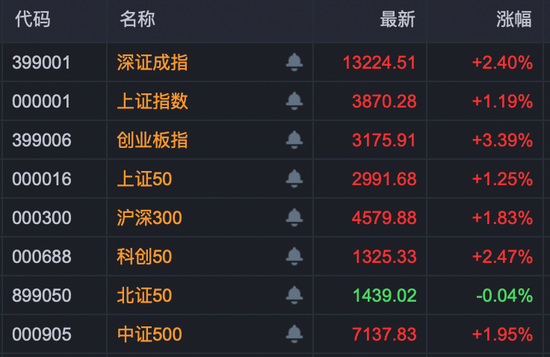
炒股就看金麒麟分析师研报,权威,专业,及时,全面,助您挖掘潜力主题机会! 今日(12月17日)午后,A股放量大幅上攻,创业板指大涨3.39%,创近2个月来最大单日涨幅,深证成 指、科创50也均涨逾2%,上证指数、沪深300、上证50等亦涨超1%,市场成交温和放大至1.83亿元。 万和证券认为,市场将震荡上行,"反内卷"政策有效推动市场竞争持续优化,扩内需、保民生等政策落 地带来供需关系的改善,建议关注消费行业的投资机会。此外,高技术制造业继续位于扩张区间,且明 显高于制造业总体水平,行业支撑作用持续显现,建议关注受益于政策和业绩驱动的集成电路、商业航 天板块。 市场热点方面,大金融午后集体异动拉升成为市场上涨主要动力。券商股在13:30左右开始放量,板块 指数约40分钟就由绿盘转为大涨近3%。华泰证券盘中一度冲击涨停,股价创2015年6月以来10年半新高 (复权,下同),收盘涨幅收窄至6.09%;兴业证券、广发证券等涨幅居前。 同一时段,保险板块指数也放量拉升,一度涨近4%,创历史新高。板块内所有个股上涨,中国太保、 新华保险逼近历史最高点,中国人寿、中国平安创年内新高。 银行板块指数午后也一度涨逾1%,多元 ...


保险板块12月17日涨3.02%,中国太保领涨,主力资金净流入7.17亿元
Zheng Xing Xing Ye Ri Bao· 2025-12-17 09:07
证券之星消息,12月17日保险板块较上一交易日上涨3.02%,中国太保领涨。当日上证指数报收于 3870.28,上涨1.19%。深证成指报收于13224.51,上涨2.4%。保险板块个股涨跌见下表: 从资金流向上来看,当日保险板块主力资金净流入7.17亿元,游资资金净流入2.89亿元,散户资金净流出 10.06亿元。保险板块个股资金流向见下表: | 代码 | 名称 | 主力净流入(元) | | 主力净占比 游资净流入 (元) | | 游资净占比 散户净流入(元) | | 散户净占比 | | --- | --- | --- | --- | --- | --- | --- | --- | --- | | 601318 中国平安 | | | 3.20ZZ | 4.91% | 2.86 Z | 4.40% | -6.06 Z | -9.31% | | 601601 中国太保 | | | 1.63亿 | 6.64% | 6414.54万 | 2.61% | -2.27亿 | -9.25% | | 601336 新华保险 | | | 1.20亿 | 7.60% | -5053.64万 | -3.20% | -6935.8 ...




A股午后大爆发!AI产业链股强势 锂矿概念爆发
Zheng Quan Shi Bao· 2025-12-17 08:47
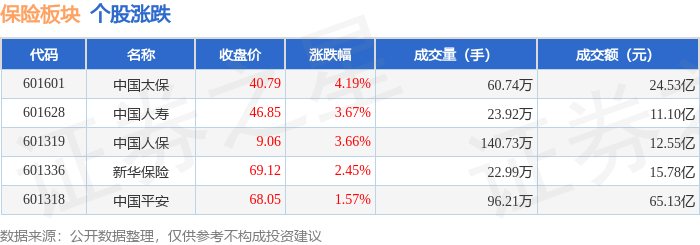
Market Overview - A-shares experienced a significant rally in the afternoon session, with the Shanghai Composite Index rising over 1% and the ChiNext Index soaring over 3% [1] - The total trading volume in the Shanghai and Shenzhen markets reached 1.8345 trillion yuan, an increase of approximately 86 billion yuan compared to the previous day [1] Insurance and Brokerage Sector - The insurance sector saw strong gains, led by China Pacific Insurance, with major companies like China Life and China Property & Casualty Insurance also rising over 3% [2] - Analysts suggest that the insurance industry may undergo valuation recovery due to the adjustment of preset interest rates and the development of floating income products [2] - The brokerage sector also performed well, with Huatai Securities hitting a near-limit increase and closing up about 6% [2] AI Industry Chain - Stocks related to the AI industry chain, particularly CPO concepts, saw significant increases, with companies like Yidong Electronics and Lian Te Technology hitting the 20% limit up [3] - The global AI industry is at a pivotal point of capability leap and accelerated commercialization, with leading firms in the US and China dominating the large model landscape [3][5] Lithium Mining Sector - The lithium mining sector experienced a substantial rise, with Tianhua New Energy increasing over 14% and several other companies reaching their daily limit [6] - The price of lithium carbonate futures surged over 8%, reaching a new high since June 2024, driven by supply disruptions and rising demand expectations [8] - Analysts noted that the price of lithium carbonate has increased over 70% from its low point earlier in the year, indicating strong supply and demand dynamics [8]
A股,午后大爆发!
证券时报· 2025-12-17 08:30
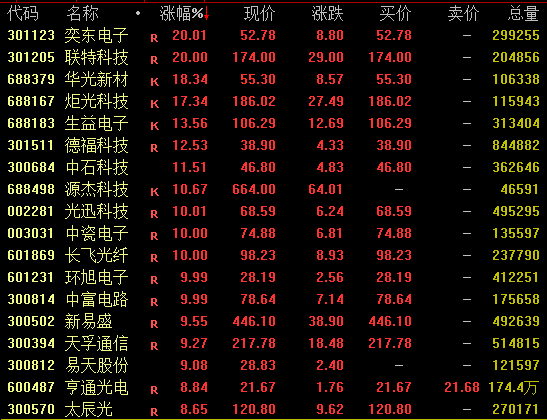
Market Overview - A-shares experienced a significant rally on the afternoon of the 17th, with the Shanghai Composite Index rising over 1% and the ChiNext Index soaring over 3% [1] - The total trading volume in the Shanghai and Shenzhen markets reached 18,345 billion yuan, an increase of approximately 860 billion yuan compared to the previous day [1] Insurance and Brokerage Sector - The insurance sector saw strong gains, led by China Pacific Insurance, with China Life and China Property & Casualty both rising over 3% [3] - Analysts suggest that the insurance industry may experience valuation recovery due to the adjustment of preset interest rates and the development of floating income products [3] - The brokerage sector also performed well, with Huatai Securities hitting a near-limit up and closing up about 6% [4] - Factors such as government policies aimed at stabilizing growth and the capital market, along with a favorable liquidity environment, are expected to boost the brokerage sector's performance [4] AI Industry Chain - Stocks in the AI industry chain surged, with companies like Yidong Electronics and Lian Te Technology hitting the 20% limit up [7] - The demand for computing power in AI is expected to grow significantly, driven by advancements in model architecture and multi-modal generation [9] Lithium Mining Sector - The lithium mining sector saw substantial gains, with Tianhua New Energy rising over 14% and several other companies hitting their daily limit up [11] - The price of lithium carbonate futures surged over 8%, reaching a new high since June 2024, with prices increasing over 70% from the year's low [13] - Analysts indicate that supply disruptions and rising external prices are contributing to the bullish trend in lithium prices, with expectations of strong demand continuing into the end of the year [13]




暴力拉升!A股突然全线大涨,发生了什么?
天天基金网· 2025-12-17 07:16
上天天基金APP搜索777注册即可领500元券包,优选基金10元起投!限量发放!先到先得! 今天的市场,太惊喜了!上午虽然指数上涨,但依旧有4000多只个股下跌。而到了下午一点 半之后,画风突变,三大指数直线暴力拉升,终于可以理直气壮找一回暴涨的原因了! 接下来一起去看看发生了什么事情。 突然的爆买! 12月17日下午开盘之后,原本震荡的A股三大指数,突然直线拉升。上证指数涨超1%,深证 成指涨超2%,创业板指数涨超3%! 全市场从上午的4000家下跌,转为3600多家公司上涨! | 880005 涨跌家数 | | | | --- | --- | --- | | 글 中 | 涨停 | 55 | | 涨幅 | > 7% | 120 | | 张唱 | 5-7% | 131 | | 涨幅 | 3-5% | 308 | | 张唱 | 0-3% | 3025 | | 跌幅 | 0-3% | 1435 | | 跌幅 | 3-5% | 119 | | 跌幅 | 5-7% | 50 | | 跌幅 | > 7% | 48 | | 其中 跌停 | | 18 | | 上涨家数 | | 3614 | | 下跌2 | | 1652 | ...

A股保险股集体拉升,中国人寿涨超4%
Ge Long Hui A P P· 2025-12-17 06:39
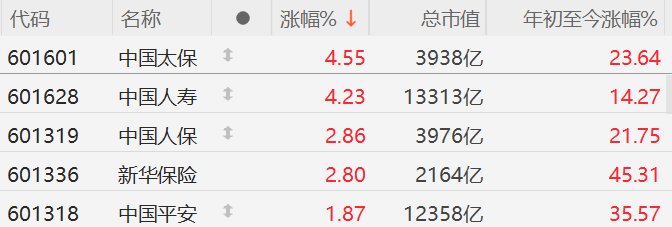
Core Viewpoint - The A-share market has seen a collective rise in insurance stocks, with notable increases in major companies such as China Pacific Insurance, China Life Insurance, China Property & Casualty Insurance, New China Life Insurance, and Ping An Insurance [1]. Group 1: Stock Performance - China Pacific Insurance (601601) increased by 4.55%, with a total market capitalization of 393.8 billion and a year-to-date increase of 23.64% [2]. - China Life Insurance (601628) rose by 4.23%, holding a market cap of 1,331.3 billion and a year-to-date increase of 14.27% [2]. - China Property & Casualty Insurance (601319) saw a rise of 2.86%, with a market cap of 397.6 billion and a year-to-date increase of 21.75% [2]. - New China Life Insurance (601336) increased by 2.80%, with a market cap of 216.4 billion and a year-to-date increase of 45.31% [2]. - Ping An Insurance (601318) rose by 1.87%, with a market cap of 1,235.8 billion and a year-to-date increase of 35.57% [2]. Group 2: Technical Indicators - The formation of a MACD golden cross signal indicates a positive trend for these stocks [1].
内险股午后涨幅扩大 长端利率呈企稳回升态势 有望带动上市险企估值修复
Zhi Tong Cai Jing· 2025-12-17 06:05
中信建投(601066)发布研报称,此前在长端利率趋势下行背景下,由于保险资金整体配置结构中约 75%-80%为固收类资产,市场对上市险企未来长期投资收益的预期较为悲观,也直接对寿险板块估值带 来压制,但近期长端利率呈企稳回升态势,目前10年国债收益率已处于1.8%以上,有望带动上市险企 估值修复。 内险股午后涨幅扩大,截至发稿,中国人寿(601628)(02628)涨4.31%,报28.56港元;中国太保 (601601)(02601)涨3.21%,报35.98港元;新华保险(601336)(01336)涨2.99%,报51.6港元;中国平 安(601318)(02318)涨1.88%,报65.1港元。 国金证券指出,明年大量定存到期,分红险对于低风险偏好、有长期财富保值增值诉求的资金来说具有 吸引力,且在反内卷和分红险转型背景下大公司的市占率将继续提升,预计开门红新单保费和NBV将 实现双位数增长。当前保险估值低位,配置性价比非常高,维持积极推荐。重点推荐开门红预期较好, 以及业务质地较好的头部险企。 ...
首单制种保险赔付落地 农业保险向精准化转型发展
Jin Rong Shi Bao· 2025-12-17 04:41
Core Insights - The article highlights the completion of China's first crop (rice) seed insurance payout by Taiping Property Insurance, amounting to approximately 757,900 yuan, reflecting the shift in agricultural insurance from traditional cost and yield protection to quality and key process protection [1] - The development of agricultural insurance is increasingly vital for ensuring national food security, promoting modern agricultural development, and supporting rural revitalization [2] Group 1: Agricultural Insurance Development - Agricultural insurance has provided coverage for 800 million farming households during the 14th Five-Year Plan period, with the average insurance amount per mu increasing by 72% [2] - The insurance sector is expanding its product offerings, including weather index insurance, price insurance, and high-standard farmland insurance, to create a diversified product system covering the entire agricultural value chain [2][3] Group 2: Innovation in Insurance Products - Taiping Property Insurance has introduced a seed insurance product focused on "rice seed setting rate" as a core compensation indicator, addressing the high risks in the seed production process, especially under extreme weather conditions [3] - In 2024, Taiping Property Insurance plans to cover complete cost insurance and planting income insurance for rice, wheat, and corn, providing risk coverage of 321 billion yuan for over 31 million farming households [3] Group 3: Challenges and Future Directions - Current agricultural insurance faces challenges such as product homogeneity and inadequate precision in risk management for diverse agricultural operations [4][5] - Experts suggest that future agricultural insurance should focus on precision, aligning products with industry needs and enhancing the accuracy of underwriting and claims processes [6][7] Group 4: Technological Empowerment - The use of big data analytics is recommended to create targeted insurance products and improve risk assessment, enabling a more personalized approach to insurance coverage [7] - The insurance industry is encouraged to expand the range of agricultural insurance products and explore innovative options like meteorological index insurance and price insurance to meet diverse regional needs [7]
【公告精选】4连板百大集团、2连板航天信息、2连板航天电子最新公告
Xin Lang Cai Jing· 2025-12-17 01:50
Highlights - Baida Group has experienced a significant short-term stock price increase, indicating potential risks of subsequent declines [1][5] Performance - China Pacific Insurance reported a 9.4% year-on-year increase in premium income for Pacific Life Insurance in the first 11 months [13] Shareholding Changes - Hu塑股份 plans to reduce its shareholding by no more than 2% [14] - Funeng Technology intends to reduce its shareholding by no more than 2% [15] Share Buybacks - Action Education plans to repurchase shares worth between 20 million to 25 million [16] - Nova Star Cloud intends to repurchase shares worth between 75 million to 150 million [17] Contract Wins - China XD Electric's subsidiary won a project worth 1.005 billion for the Southern Power Grid [18] - Poly Union's wholly-owned subsidiary won a project worth 1.528 billion [19] Major Investments - Zhongke Electric plans to invest approximately 7 billion to build an integrated project for producing 300,000 tons of lithium-ion battery anode materials annually [20] -沃尔核材 plans to invest no more than 1.5 billion to expand the Shuikou Industrial Park [21] - Xiechuang Data intends to procure servers worth no more than 9 billion to provide cloud computing services for clients [22] Other News - Jiayuan Technology's chairman has lifted the order for investigation [23] - Jiangte Electric plans to cancel the mining rights for lithium-containing ceramic stone in the Lion Ridge mining area [24] - Haili Biological's subsidiary has obtained a registration certificate for its products in Indonesia [25] Overseas Listings - Meg Intelligent has received approval from the China Securities Regulatory Commission for issuing overseas listed foreign shares (H shares) [3] - Dazhu CNC has also received approval for issuing overseas listed shares (H shares) [4][26]


