Jinko Solar(688223)

Search documents
晶科能源再为TOPCon举旗 披露Tiger Neo组件度电成本优化路径
Xin Lang Cai Jing· 2025-06-13 06:20
Core Insights - The release of the white paper during the SNEC PV+ 2025 International Solar Energy Conference highlights the advancements in TOPCon technology and the Tiger Neo 3.0 commercial solution, emphasizing cost reduction and efficiency improvements in solar energy systems [1][2] Group 1: Technology and Cost Efficiency - TOPCon technology enhances power generation efficiency while achieving significant cost reductions through material minimization and system structure optimization [1] - In high-temperature and high-irradiation environments, the Tiger Neo module reduces the system's initial investment and operational maintenance costs, leading to a lower overall Levelized Cost of Energy (LCOE) [1] - The white paper indicates that using Tiger Neo modules in desert-like high-temperature environments can lower the balance of system (BOS) cost by 0.048 yuan per watt, resulting in a 4.73% decrease in LCOE for a 100MW power station [1] Group 2: Performance Metrics - The Tiger Neo bifacial module achieves a bifaciality of 85%, significantly higher than the 55-65% of P-type bifacial cells, contributing to a 3%-5% increase in energy generation over the system's lifecycle [1][2] - The first-year degradation rate of the Tiger Neo module is less than 1%, ensuring long-term stable output [1][2] - The Tiger Neo 3.0 module has a power output of up to 670W, showcasing high efficiency and large power capacity [1] Group 3: Maintenance and Operational Costs - Innovations in frame design and dust accumulation prevention have led to a significant reduction in maintenance frequency for Tiger Neo modules in desert and tidal flat regions, with expected annual maintenance costs decreasing by 5%-10% in high-cost operational areas like the Middle East and North Africa [2] - The focus on cost reduction through technology is emphasized by the company's strategy to accelerate the replacement and iteration of efficient production capacity, particularly moving from 640W to 670W modules [2]

元安回应万字长文;智能眼镜销量暴涨800%;谷歌云大面积中断
Guan Cha Zhe Wang· 2025-06-13 00:58
Group 1 - Yuan An, a long-time employee of Alibaba, announced his departure and clarified that his resignation was voluntary and not due to financial reasons, emphasizing the pursuit of dreams over money [1] - The smart glasses market has seen an explosive growth, with sales increasing over 800% year-on-year, and global shipments expected to reach 12.8 million units by 2025, with China leading the market [1] - Quark, a subsidiary of Alibaba, launched a high school entrance examination model to provide personalized college application strategies for students [2] Group 2 - AMD unveiled its new AI chip MI400 at the Advancing AI 2025 conference, which will be integrated into a complete server system named Helios [4] - Micron Technology announced an expansion of its investment in U.S. memory manufacturing to $200 billion, creating approximately 90,000 jobs [5] - Ant Group's Ant Financial is applying for a stablecoin license in Hong Kong, aiming to establish its global headquarters there [5] Group 3 - Google introduced a voluntary departure plan for employees, offering at least 14 weeks of salary as compensation [2] - SpaceX's Starship's eighth test flight failed due to a hardware issue with one of its Raptor engines, but no public injuries or property damage were reported [5] - JinkoSolar signed multiple cooperation agreements for its Tiger Neo 3.0 modules, marking the start of mass production and delivery [7]




2025年中国钙钛矿行业产业链全景、发展现状、竞争格局及发展趋势研判:头部企业加速布局,未来3-5年将迎来商业化爆发期[图]
Chan Ye Xin Xi Wang· 2025-06-12 01:11
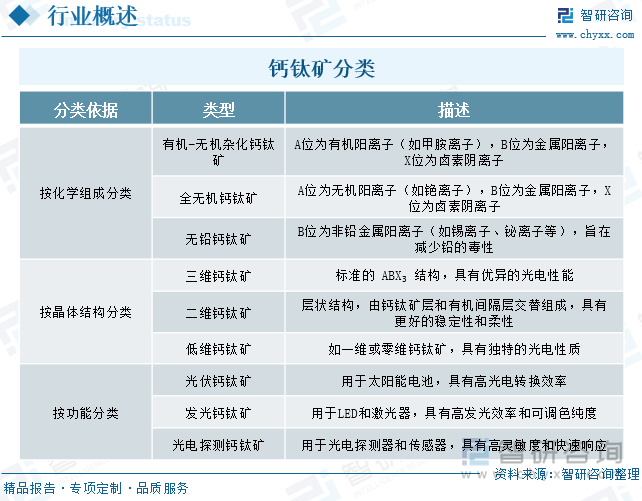
Core Insights - The Chinese perovskite industry is transitioning from laboratory innovation to large-scale production, achieving significant breakthroughs in technology development, production line construction, and commercial application [1][10][21] - In 2023, the industry achieved a laboratory efficiency of over 26% for single-junction cells, established seven 100MW production lines, and reduced component costs to 0.5 yuan/W [1][10] - With the commissioning of production lines by GCL-Poly and Xinao Photovoltaic, the industry is expected to enter a capacity explosion phase, with planned capacity exceeding 2GW by 2025 and actual annual capacity potentially surpassing 40GW by 2030, capturing nearly 10% of the photovoltaic market [1][10] Industry Overview - Perovskite is a class of functional materials with a specific crystal structure, which can be customized for photovoltaic, optoelectronic, and magnetic applications [1] - The perovskite industry has formed a relatively complete industrial chain, covering upstream raw materials and equipment, midstream battery/component manufacturing, and downstream application scenarios [7][21] Development History - The Chinese perovskite industry has evolved from technology catch-up to global leadership, with key milestones from 2013 to 2023, including the establishment of the first 100MW production line and significant cost reductions [5][10] Current Industry Status - The industry is in a critical transition phase towards large-scale production, with major breakthroughs in technology, production capacity, and commercial applications [10][12] - The industry is characterized by rapid capacity expansion and innovation in application scenarios, particularly in building-integrated photovoltaics (BIPV) and mobile energy solutions [12][21] Competitive Landscape - The competitive landscape features leading companies like GCL-Poly, LONGi Green Energy, and Xinao Photovoltaic, which are accelerating the commercialization of perovskite technology [14][17] - The industry is witnessing a dual-track competition between traditional silicon photovoltaic leaders and emerging perovskite-focused companies [14][17] Future Trends - The perovskite industry is expected to experience accelerated industrialization driven by technological breakthroughs and efficiency improvements [21][24] - The diversification of application scenarios and the collaborative development of the industrial chain will further enhance market demand [22][23] - Policy support and capital investment are crucial for the industry's ecosystem development, with significant funding expected in the coming years [24]




预期溢价10% 晶科能源本月起量产交付Tiger Neo 3.0组件
Zheng Quan Shi Bao Wang· 2025-06-11 06:19
Core Insights - JinkoSolar has officially released the "TOPCon Technology and Tiger Neo 3.0 Commercial Solution White Paper" in collaboration with authoritative institutions [1] - The company has achieved efficiency breakthroughs in TOPCon batteries, reaching 25.1%, 25.8%, and 26.5% since 2022, with expectations to reach 26.7%-27% by the end of 2025 [1] - The efficiency improvements are attributed to a comprehensive integration of material processes, electrode structures, and process control [1] Group 1 - The Tiger Neo 3.0 product has reached a mass production power of 670W, leading the industry among components of the same size [2] - Key performance features include a high bifacial rate exceeding 85%, significantly better than mainstream BC components (around 70%) [2] - The first-year degradation rate of the Tiger Neo 3.0 component is below 1%, substantially outperforming the industry average [2] Group 2 - The Tiger Neo 3.0 components will be delivered in phases, with 650W, 660W, and 670W products starting delivery in June, September, and December respectively [3] - The expected premium for the 3.0 products compared to the previous generation is around 10% [3] - The total production capacity for Tiger Neo 2.0 and 3.0 components is projected to reach 40GW-50GW by the end of this year [3]
光伏设备板块强势拉升,光伏ETF基金(159863)涨近1%,机构:光伏产业链或迎来新一轮景气周期
Xin Lang Cai Jing· 2025-06-11 03:20
Core Viewpoint - The photovoltaic industry is experiencing a recovery in prices and profitability due to industry self-discipline, production limits, and the elimination of outdated capacity, leading to an improved supply-demand balance [1][2]. Group 1: Market Performance - As of June 11, 2025, the CSI Photovoltaic Industry Index (931151) rose by 1.28%, with notable increases in constituent stocks such as Aiko Solar (600732) up 9.44%, and LONGi Green Energy (601012) also seeing gains [1]. - The Photovoltaic ETF (159863) increased by 0.93%, with a recent price of 0.43 yuan, and has accumulated a 1.42% rise over the past week [1]. Group 2: Industry Dynamics - The recent stabilization and rebound in prices for silicon materials and wafers, along with strong demand for N-type solar cells, are contributing to the recovery of profitability for related companies [1]. - The National Energy Administration's new management measures for distributed photovoltaic power generation are expected to enhance industry order and promote high-quality development, instilling long-term confidence in the market [1]. Group 3: Investment Insights - According to a report from China International Capital Corporation (CICC), the photovoltaic sector's valuation remains at historical lows, indicating strong investment potential [1]. - With the traditional installation peak season approaching in the third quarter, the photovoltaic industry chain is likely to enter a new cycle of prosperity, suggesting further upside for related stocks [1]. Group 4: Index Composition - The CSI Photovoltaic Industry Index includes up to 50 representative listed companies involved in the photovoltaic industry chain, with the top ten weighted stocks accounting for 56.2% of the index [2]. - The top ten stocks include LONGi Green Energy (601012), TCL Technology (000100), and Sungrow Power Supply (300274) among others [2].



上证中部崛起龙头企业指数下跌0.46%,前十大权重包含闻泰科技等
Jin Rong Jie· 2025-06-10 16:33
Group 1 - The Shanghai Central Rise Leading Enterprises Index (H50014) experienced a decline of 0.46%, closing at 3020.69 points with a trading volume of 15.059 billion yuan [1] - Over the past month, the index has decreased by 1.21%, by 2.68% over the last three months, and by 0.83% year-to-date [1] - The index is composed of leading companies from various secondary industries within selected regions, providing a reference for investors interested in China's regional economic development [1] Group 2 - The top ten weighted companies in the index include: Daqin Railway (16.7%), Luoyang Molybdenum (14.89%), Shanxi Fenjiu (14.01%), Conch Cement (13.33%), Jiangxi Copper (11.22%), JinkoSolar (3.81%), Changsha Bank (3.35%), Jiuzhoutong (2.0%), Luan Environmental Energy (1.99%), and Wentai Technology (1.93%) [1] - The index is fully represented by companies listed on the Shanghai Stock Exchange [1] Group 3 - The industry composition of the index shows that materials account for 41.97%, industrials for 25.80%, consumer staples for 14.39%, financials for 5.05%, healthcare for 4.36%, energy for 3.77%, information technology for 2.74%, communication services for 1.01%, utilities for 0.47%, and consumer discretionary for 0.46% [2] - The index samples are adjusted biannually, with adjustments occurring on the next trading day after the second Friday of June and December [2] - In special circumstances, the index may undergo temporary adjustments, such as when a sample company is delisted or undergoes mergers, acquisitions, or splits [2]




晶科能源发布TOPCon技术及Tiger Neo 3.0商业方案白皮书
news flash· 2025-06-10 06:26
Core Insights - JinkoSolar, in collaboration with third-party organizations such as the Certification Center and TÜV NORD Group, released the first industry white paper on TOPCon technology and the Tiger Neo 3.0 commercial solution [1] - The white paper includes testing data from over 10 extreme environment power plants globally, showcasing the performance advantages of TOPCon technology [1] - TOPCon solar cells can achieve a mass production efficiency of 26.5% through a design that incorporates a tunneling oxide layer and doped polycrystalline silicon layer [1] - Future advancements in TOPCon technology, leveraging invisible busbar technology and perovskite tandem technology, could potentially push theoretical efficiency beyond 32.5% [1] - The General Manager of JinkoSolar's Technical Service Center emphasized that TOPCon technology will be the market leader in the present and the next five years [1]
抢装结束后价格探底,关注技术迭代及政策推动出清 - 光伏6月月报
2025-06-09 15:30
Summary of Key Points from the Conference Call Industry Overview - The photovoltaic (PV) industry is experiencing significant overcapacity across all segments, with nominal capacity for components approximately double the actual demand, expected to persist for several quarters [1][2][10] - As of Q1 2025, nominal capacities for solar components, batteries, silicon wafers, and silicon materials exceed 1,200 GW, while the expected production for components is only 650-700 GW [2][10] Market Dynamics - Silicon material prices are at a low point, with N-type silicon material prices nearing cash costs, leading to losses for many producers [1][3][4] - The end of the domestic installation rush has limited the downward price movement of silicon materials, prompting some companies to reduce production [1][3] - Demand for PV products is heavily influenced by policy changes, with a slight recovery expected in Q4 2025 due to concentrated domestic demand [1][5][7] Technological Developments - The advancement of battery technologies, particularly TOPCon and BC technologies, is crucial for clearing excess capacity [1][5][7][8] - TOPCon technology is evolving, with potential efficiency improvements, but requires significant investment for equipment upgrades, posing risks for underfunded companies [1][8] - BC technology shows strong performance in distributed markets, with higher average production power compared to TOPCon, particularly in Europe where it commands a premium [1][9][11] Financial Implications - The average production power of BC cells exceeds 650 W, providing a competitive edge in the market [9] - Companies like LONGi and Aiko are expanding their BC production capacity, while TOPCon technology faces challenges due to declining orders and profitability [11][12] - The profitability of BC technology in Europe is significantly higher than that of TOPCon, with potential for positive earnings if overseas shipments increase [11][12] Supply Chain and Inventory - The silicon material market is currently facing a supply-demand imbalance, with production cuts expected to continue as companies respond to low prices [4][14][15] - Inventory levels have decreased from approximately 500,000 tons to around 400,000 tons due to increased component production, with expectations for further reductions by the end of 2025 [16] Cost Structure and Innovations - Silver paste costs have risen to 12% and 39% of the total costs for components and batteries, respectively, making it a significant cost driver [17] - Innovations aimed at reducing silver paste costs include the use of copper-based alternatives, which face technical challenges but offer substantial cost savings [18][19][20] - The market for high-performance silver paste is expected to grow, with advancements in copper paste technology showing promise for future cost reductions [21][22] Conclusion - The PV industry is navigating a complex landscape of overcapacity, technological advancements, and shifting demand dynamics, with significant implications for future profitability and market positioning [1][5][7][10]

关于供给出清路径与时点的思考暨光储策略会预热
2025-06-09 15:30
Summary of Key Points from the Conference Call on the Photovoltaic Industry Industry Overview - The photovoltaic (PV) industry has been in a loss state since Q4 2023, continuing for approximately 6 quarters, with all companies facing gross margin losses, particularly in the manufacturing segment [1][3][10] - Cash flow is generally tight across the industry, with significant price fluctuations in silicon materials and wafers, and a continuous decline in battery component prices [1][4] - Major layoffs are occurring, with leading companies like Weima Agricultural Machinery reducing their workforce by over half, and many third and fourth-tier companies being taken over by state-owned enterprises [1][5] Core Insights and Arguments - The current holding ratio in the PV industry is below the levels seen in 2020, and even lower than in 2017 and 2019, indicating a lack of confidence among investors [2][10] - The industry is facing a dual bottom in terms of chip structure and fundamentals, with a holding ratio of only 1.83% when excluding inverters [10] - The resolution of supply-demand contradictions in the PV industry requires both policy intervention and natural market clearing, with a focus on eliminating outdated production capacity and enhancing efficiency through technological advancements [11] Future Drivers and Investment Strategies - Key future drivers for the PV industry include policy changes and technological iterations, expected to see significant developments by the end of this year [6][21] - Investment strategies should focus on silicon material companies and battery-related targets, particularly after any policy or technological changes occur [7][19] - The market is anticipated to reach a turning point by the end of 2025, with significant observations expected around July and December regarding policy and technological advancements [16][17] Technical Iteration and Market Dynamics - Technological iteration is crucial for accelerating the clearing of the PV industry, with improvements in Topcon technology potentially increasing power output by 10-15 watts [13][14] - The industry is expected to undergo a phased development model, with initial challenges for second-tier companies while leading companies may turn profitable through demand digestion and technological progress [12] Recommendations for Investors - Investors are advised to gradually position themselves in the market starting from late summer 2025, as the current low attention on the sector presents tactical opportunities [20] - Engaging with industry leaders during events, such as the upcoming PV exhibition in Shanghai, is recommended for gathering insights and formulating strategies [8][20] Additional Considerations - The takeover of third and fourth-tier companies by state-owned enterprises does not necessarily equate to market exit, as these companies may still operate effectively if they can keep up with technological advancements [9] - The overall sentiment in the market remains cautious, with a continuous decline in the number of investors reflecting a lack of confidence in the PV sector [2][10]

光伏电站,为何成了不受欢迎的垃圾资产?
Ge Long Hui· 2025-06-09 01:47
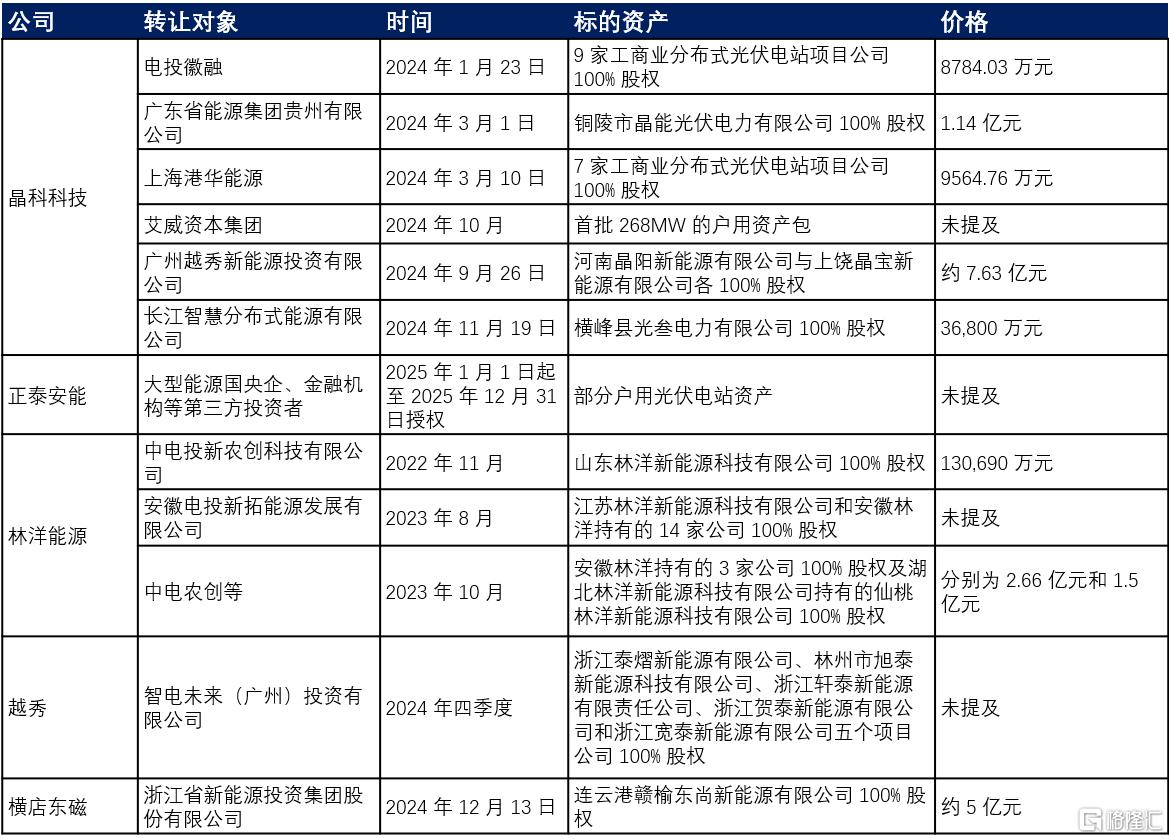
Core Insights - The decline in electricity prices is significantly impacting the investment value of photovoltaic (PV) power stations, leading to a situation where these assets are becoming undesirable and are being sold off at low prices [1][8][9] - The value of the PV manufacturing industry is closely tied to the asset value of PV power stations, which is primarily determined by electricity prices rather than hardware costs [1][5] - Recent market trends indicate a drastic drop in electricity prices across various regions, with some areas experiencing prices as low as 0.03 yuan/kWh, which undermines the profitability of PV investments [2][3][5] Summary by Sections Investment Value of PV Power Stations - The investment value of PV power stations is deteriorating due to falling electricity prices, leading to many stations being viewed as low-efficiency or "garbage" assets [1][9] - The market is witnessing a trend where private enterprises are selling off their PV power stations, not due to strategic business models but because of increasing uncertainty in investment returns [1][8] Electricity Price Trends - In November 2024, the average electricity price for PV in Shandong dropped to 0.03 yuan/kWh, while in Shanxi, it was 0.18 yuan/kWh, indicating a downward trend compared to previous years [2][3] - Gansu province's new pricing policies have led to a significant reduction in the comprehensive electricity price for PV projects, dropping from around 0.25-0.28 yuan/kWh in 2023 to an expected 0.2 yuan/kWh in 2024 [5][6] Market Dynamics and Policy Implications - The current market dynamics are characterized by intense competition and a lack of stable policy frameworks, which are contributing to the low electricity prices [7][9] - The introduction of market-oriented trading and pricing policies is creating uncertainty for investors, as seen in the case of Jinko Energy's decision to sell its PV assets to mitigate risks associated with price fluctuations [8][9] Future Outlook - The industry is calling for more stable and predictable policies to enhance investor confidence and ensure the sustainable development of the PV sector [7][10] - The relationship between production capacity and market mechanisms needs to be improved to foster innovation and efficiency in the renewable energy sector [10]