BeiGene(688235)

Search documents
百济神州20251013
2025-10-13 14:56
Summary of BeiGene Conference Call Company Overview - **Company**: BeiGene - **Industry**: Biotechnology and Pharmaceuticals Key Points and Arguments 1. **Global Commercialization Strategy**: BeiGene adopts a global commercialization strategy, leveraging Chinese patient resources and efficient clinical execution to reduce costs and accelerate global clinical trials, collaborating with international pharmaceutical companies like Novartis and Amgen [2][3] 2. **Core Product - Zanubrutinib**: Zanubrutinib has been approved in over 70 countries globally, becoming the leading BTK inhibitor for new patients in the U.S., surpassing the first-generation BTK inhibitor ibrutinib, significantly driving revenue growth for the company [2][5] 3. **Expansion into Solid Tumors**: BeiGene has made significant progress in the solid tumor field, with upcoming data releases for ADC, ProTech, and CDK, marking the company's transition from a focus on hematological malignancies to a broader oncology treatment approach [2][5] 4. **Clinical Trial Efficiency**: The company utilizes the cost and efficiency advantages of clinical trials in China, with 25% of global clinical patients from China and over 40% from Europe and North America, supporting simultaneous domestic and international product registrations [2][7] 5. **Upcoming Milestones**: Key milestones in the coming years include data readouts for ADC, ProTech, and CDK, as well as the submission of a BCL-2 inhibitor for U.S. market approval, which is expected to enhance the cure rate for frontline lymphoma patients [2][8] 6. **Unique Position in Chinese Innovation Drug Industry**: BeiGene is the only independent innovative drug company with global R&D and commercialization capabilities, making it a rare entity in the A-share and Hong Kong markets [3] 7. **Comprehensive Treatment Landscape**: In hematological malignancies, BeiGene has established a complete treatment portfolio including BTK, CDK, and BCL-2 inhibitors, with zanubrutinib expected to capture over 50% of the U.S. market share for CLL [4][12] 8. **BCL-2 Inhibitor Development**: The company is developing a new generation BCL-2 inhibitor, which is expected to achieve significant sales, potentially reaching $3 to $5 billion, and is currently undergoing global Phase III clinical trials [14][22] 9. **CDK Inhibitor Market**: BeiGene's CDK4/6 inhibitors are crucial in breast cancer treatment, with the global market exceeding $13 billion and projected to reach $16 to $18 billion [17][21] 10. **Broad Oncology Pipeline**: The company is actively developing treatments for various solid tumors, including lung and gastrointestinal cancers, with multiple products in clinical stages [20] Other Important but Overlooked Content 1. **Zanubrutinib's Competitive Edge**: Zanubrutinib's success is attributed to its superior product profile, showing better progression-free survival (PFS) and safety compared to ibrutinib, and being included in treatment guidelines [11][12] 2. **Impact of IRA Legislation**: The IRA legislation may have long-term effects on drug pricing, but currently, zanubrutinib has not faced price pressure, and its annual price has increased [13] 3. **Market Positioning**: BeiGene's international management team and shareholder structure, including significant overseas funds, support its global operations and strategic positioning [6][22] This summary encapsulates the critical insights from the conference call, highlighting BeiGene's strategic initiatives, product developments, and market positioning within the biotechnology industry.

内外资机构:中国创新药长期吸引力凸显
Shang Hai Zheng Quan Bao· 2025-10-12 15:08
Core Insights - The Chinese innovative pharmaceutical industry is experiencing a "double hit" in performance and valuation due to policy support, R&D breakthroughs, and value reassessment [1] - Many innovative drug stocks have doubled in price this year, with pharmaceutical-themed funds averaging a nearly 40% increase in net value over the past year [1] - The industry is entering a long-term growth trajectory, with current valuations still considered attractive by both domestic and foreign institutions [1] Group 1: Stock Performance - Several innovative drug companies have seen significant stock price increases, with companies like Shuyou Shen, Rongchang Bio, and Anglikang all experiencing over 100% growth year-to-date as of October 9 [1] - Pharmaceutical-themed funds have also shown strong performance, with the average net value increasing nearly 40% over the past year, and some funds, such as Penghua Innovation Upgrade Mixed A, seeing gains exceeding 100% [1] Group 2: Institutional Interest - There has been a surge in institutional research on Chinese innovative drug companies, with companies like Baiji Shenzhou and Baili Tianheng receiving attention from 213 and 186 institutions respectively [2] - Notable foreign institutions, including State Street Bank and BlackRock, have participated in the research of these companies, indicating growing international interest [2] Group 3: Industry Trends - The innovative drug sector is transitioning from "burning cash on R&D" to "product volume expansion," marking the beginning of a profit harvest period [3] - Chinese innovative drug companies have significantly improved their R&D capabilities and gained international recognition, positioning themselves in the global first tier in terms of pipeline quantity [3] - The industry is expected to achieve a systematic value reassessment, driven by comprehensive policy support and high levels of R&D and clinical efficiency [2][3]


艾伯维子公司撤诉 百济神州泽布替尼专利案终结
Mei Ri Jing Ji Xin Wen· 2025-10-12 14:20
Core Viewpoint - The patent dispute between BeiGene and Pharmacyclics LLC has concluded, with Pharmacyclics deciding not to appeal the final decision from the USPTO, marking a significant resolution for BeiGene's flagship product, Zebrutinib, which has achieved over $1 billion in global sales in 2023 [2][4][5]. Group 1: Patent Dispute Resolution - Pharmacyclics LLC, a subsidiary of AbbVie, has opted not to appeal the USPTO's decision regarding the patent dispute with BeiGene, allowing both parties to voluntarily withdraw the lawsuit filed in 2023 [2][3]. - The lawsuit claimed that BeiGene's Zebrutinib infringed upon Pharmacyclics' patent rights, specifically the "803 patent," which was granted in June 2023, just seven months after Zebrutinib's market approval [4][5]. - The USPTO ruled that the claims of the "803 patent" were overly broad and lacked inventiveness, leading to its invalidation, which has now been finalized with the withdrawal of the lawsuit [5]. Group 2: Financial Impact and Market Position - Zebrutinib, a BTK inhibitor developed by BeiGene, was the first innovative drug from China to be approved in the U.S. based on Chinese clinical data, achieving sales of $1.3 billion in 2023 [4][5]. - The resolution of the patent dispute is crucial as over 51.86% of BeiGene's revenue in the first half of 2023 came from the U.S. market, making it the company's largest revenue source [5]. Group 3: Ongoing Patent Risks - Despite the resolution of the Zebrutinib patent case, BeiGene still faces ongoing patent litigation from AbbVie regarding another compound, BGB-16673, which has received priority drug designation from the EMA [3][6]. - The company has stated its intention to vigorously defend against these allegations and has filed a motion to dismiss the lawsuit set for December 2024 [6]. Group 4: Industry Context - The patent dispute highlights the increasing patent risks faced by Chinese pharmaceutical companies as they expand internationally, with 4.1% of the pharmaceutical manufacturing sector encountering intellectual property disputes abroad [7][9]. - Recent reports indicate that 22 out of 29 new patent litigation cases involving Chinese biopharmaceutical companies were filed in the U.S., underscoring the challenges in navigating international patent laws [7][8].

AH医药再陷调整,医疗ETF止步三连阳,港股通创新药ETF(520880)失守所有均线,该抄底还是离场?
Xin Lang Ji Jin· 2025-10-12 11:48
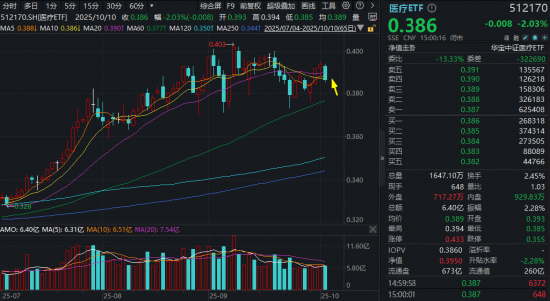
Core Viewpoint - The A-share and Hong Kong stock markets experienced significant fluctuations, with the A-share medical sector facing downward pressure, particularly in the CXO segment, while the innovative drug sector remains a focal point for investors despite recent adjustments [1][5][7]. Group 1: A-share Market Performance - The A-share medical sector opened lower and continued to decline, with major player WuXi AppTec leading the drop at 7.2%, and the largest medical ETF (512170) falling by 2.03% [1]. - The overall trend for the medical sector has been a recent upward movement, indicating potential for rebound despite short-term corrections [1]. Group 2: Hong Kong Market Performance - The Hong Kong medical sector initially showed signs of recovery but faced renewed selling pressure, with innovative drug stocks like Rongchang Bio and Innovent Biologics dropping over 11% [1][5]. - The Hong Kong innovative drug ETF (520880) experienced a decline of 2.25%, losing all moving averages, with a trading volume of 3.69 billion [1][5]. Group 3: Innovative Drug Sector Insights - The innovative drug sector, despite entering a phase of adjustment since September, continues to attract significant investor interest, with the Hong Kong innovative drug ETF (520880) raising over 675 million in the last 20 days [5][7]. - Analysts suggest that the innovative drug sector may see renewed opportunities in Q4, driven by upcoming academic conferences and policy implementations that could support domestic innovation [7]. Group 4: Investment Strategies - Investment strategies in the medical sector are focusing on two main lines: identifying companies with strong Q3 performance and exploring opportunities in innovative drugs for potential rebounds [7]. - The fund manager of the Hong Kong innovative drug ETF (520880) emphasizes the importance of balancing investments within the sector, including medical devices and services that may gain market attention [7].


医药生物行业跟踪周报:关税战对医药板块影响有限,看好创新主线及国产替代-20251012
Soochow Securities· 2025-10-12 11:34
Investment Rating - The report maintains an "Overweight" rating for the pharmaceutical and biotechnology sector [1] Core Viewpoints - The impact of the tariff war on the pharmaceutical sector is limited, with a positive outlook on innovation and domestic substitution [1][16] - The ranking of favored sub-industries is: innovative drugs > research services > CXO > traditional Chinese medicine > medical devices > pharmacies [2][10] - Specific stock recommendations include Zhaoli Pharmaceutical, Fangsheng Pharmaceutical, and Dong'e Ejiao from the traditional Chinese medicine sector, and Yuyue Medical and United Imaging Healthcare from the medical device sector [2][11] Summary by Sections Industry Trends - The A-share pharmaceutical index has seen a year-to-date increase of 21.87%, while the Hang Seng Biotechnology Index has increased by 94.11% [5][10] - Recent stock performance highlights include Zhend Medical (+21.00%) and Wanbangde (+12.01%) in A-shares, while Hong Kong stocks like Kaisa Health (+48.84%) have also performed well [5][10] Tariff Policy Analysis - The U.S. tariff policy on pharmaceuticals is expected to have minimal impact on China's pharmaceutical industry, as most exports consist of raw materials [16][22] - The tariff primarily affects brand-name and patented drugs, while generic drugs and raw materials are largely exempt [16][19] R&D Progress and Company Dynamics - Significant advancements in innovative drug development include the initiation of Phase III clinical trials for the first selective CDK2 inhibitor and breakthroughs in ADC treatments for triple-negative breast cancer [5][10] - The report emphasizes the importance of research quality and efficiency in CRO services, which remain unaffected by tariff policies [16][22] Market Performance Review - The pharmaceutical index's P/E ratio stands at 39.05, slightly above historical averages, indicating a robust market outlook despite recent fluctuations [5][10] - The report notes that the recent stock price declines in the innovative drug sector are primarily driven by market sentiment rather than fundamental changes [22]


2025年《财富》可持续发展峰会精彩观点荟萃
财富FORTUNE· 2025-10-11 13:21
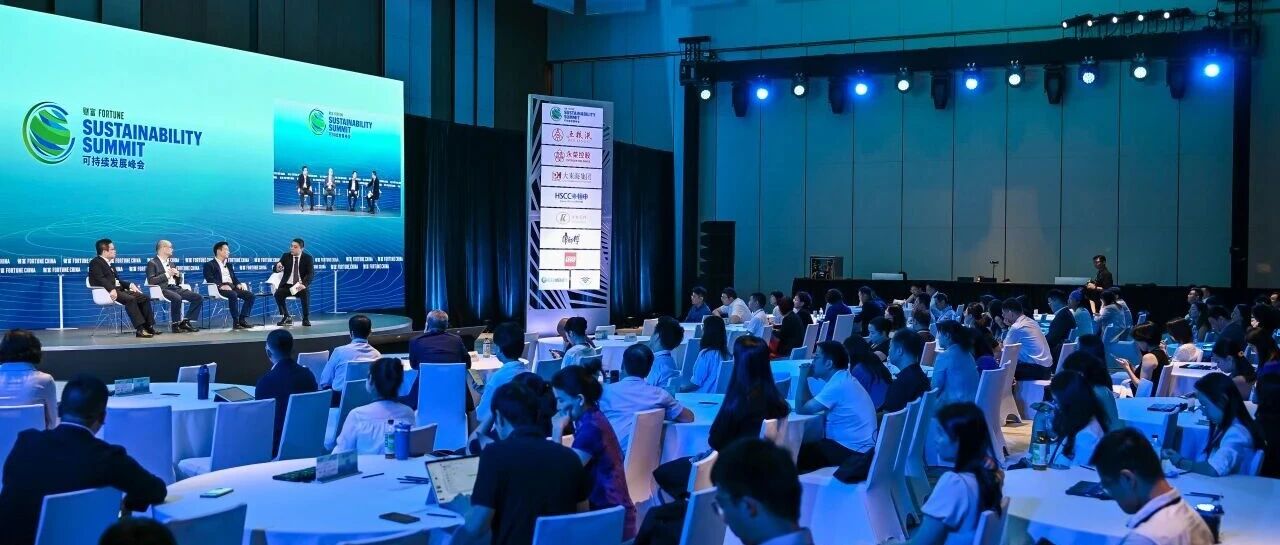
Core Insights - The 2025 Fortune Sustainable Development Summit was successfully held in Fuzhou, focusing on the theme "Intelligent Era, Intelligent Coexistence" and gathering nearly 200 global business leaders, policymakers, and academic experts to explore sustainable development paths empowered by technology [1] Group 1: Key Themes and Discussions - The summit featured 40 speakers from various sectors including AI, internet, manufacturing, new energy, finance, and health, discussing how smart technologies can accelerate growth while avoiding excessive environmental consumption [1] - Key topics included the social responsibilities of multinational companies in a fragmented geopolitical landscape and the protection of human creativity and development rights in an algorithm-driven era [1] Group 2: ESG Practices and Globalization - Companies are encouraged to ensure that suppliers meeting ESG standards will gain more orders and global opportunities, highlighting the competitive edge of Chinese suppliers in quality, cost, and delivery [6] - The urgency for green and low-carbon transformation in the chemical industry is emphasized, aligning with national dual carbon goals and the increasing demand for green materials from international brand clients [6] Group 3: Sustainable Consumption and Corporate Responsibility - The importance of circular economy practices is highlighted, where manufacturers must innovate in product design and lifecycle management, while consumers are also encouraged to participate in sustainable practices [30] - The wine industry is recognized as a participant in environmental practices, emphasizing the necessity of establishing a good ecological environment as a fundamental requirement [33] Group 4: Financial Instruments and ESG Integration - Green financial products like green bonds are seen as a driving force for companies to integrate international ESG concepts into their development, effectively addressing regulatory challenges and attracting international capital [41] - Companies are advised to balance production activities with ecological diversity protection, ensuring that sustainable financial tools align with their sustainability goals [45] Group 5: Technological Innovations in ESG - The application of cutting-edge technologies such as AI and big data is crucial for enhancing ESG management, transitioning from compliance to data-driven value creation [62] - Companies are encouraged to leverage technology to improve operational efficiency and sustainability, with a focus on accurate and transparent data for ESG disclosures [68]





百济神州打赢了关键一战
经济观察报· 2025-10-11 08:31
Core Viewpoint - The voluntary withdrawal of the lawsuit by both parties marks a significant victory for BeiGene and represents a shift for Chinese innovative pharmaceutical companies from "defensive outbound" to "rule-based outbound" strategies [1][16]. Summary by Sections Patent Dispute Conclusion - The two-year patent battle concluded with BeiGene successfully defending its position as AbbVie decided not to appeal the final decision of the U.S. Patent and Trademark Office [2][3]. - The resolution clears the patent obstacles for Zanubrutinib in the U.S. market, which is the first innovative drug approved in the U.S. from China and has generated over $6.4 billion in revenue for BeiGene [3][4]. Strategic Importance of Zanubrutinib - Zanubrutinib is crucial for BeiGene, contributing over 70% of its sales, and serves as a key product for entering the U.S. and global markets [12]. - The drug has achieved significant market share, surpassing its competitor Ibrutinib in the BTK inhibitor field by mid-2025 [3][13]. Legal Strategy and Tactics - A pivotal moment in the patent battle was BeiGene's proactive approach in initiating a Post Grant Review (PGR) process, leading to the invalidation of AbbVie's patent [6][8]. - This strategy shifted the focus from infringement to the validity of the patent itself, allowing BeiGene to take the initiative rather than merely defending against claims [9][10]. Implications for Chinese Pharmaceutical Companies - The outcome is viewed as a landmark victory for Chinese innovative pharmaceutical companies in navigating the U.S. intellectual property landscape [4][16]. - The case serves as a reference model for other Chinese companies facing complex patent disputes abroad, emphasizing the importance of understanding U.S. patent law and utilizing various procedural tools [17][18]. Future Considerations - Despite the victory, the competitive landscape remains challenging, and Chinese pharmaceutical companies must continue to innovate and comply with international regulations [14][16]. - Establishing a robust global intellectual property strategy is essential for both defensive and offensive maneuvers in future patent disputes [18].

百济神州打赢了关键一战
Jing Ji Guan Cha Wang· 2025-10-11 05:45
Core Viewpoint - The patent dispute between BeiGene and AbbVie has concluded, allowing BeiGene to maintain its market position for the drug Zebrutinib in the U.S. market, marking a significant victory for Chinese innovative pharmaceutical companies in the U.S. intellectual property landscape [2][3][10]. Summary by Sections Patent Dispute Resolution - On October 8, BeiGene announced that AbbVie would not appeal the final decision from the U.S. Patent and Trademark Office, leading to the removal of patent barriers for Zebrutinib in the U.S. market [2]. - The patent battle began in June 2023 when AbbVie accused BeiGene of infringing its patent rights related to Ibrutinib [2][4]. - Zebrutinib is the first innovative drug approved in the U.S. from China, contributing over $6.4 billion in revenue since its launch [2][8]. Strategic Victory - The turning point in the patent battle was BeiGene's proactive approach in filing for a Post Grant Review (PGR) to challenge the validity of AbbVie's patent, which ultimately led to the patent being declared invalid [4][6]. - AbbVie had been preparing for this legal action since obtaining a new patent just days before filing the lawsuit against BeiGene [5][6]. Market Impact - Zebrutinib has become a leading product for BeiGene, accounting for over 70% of its sales, and has established a strong market presence in the U.S. and globally [8][9]. - In 2024, Zebrutinib achieved $2.6 billion in annual sales, ranking among the top 20 global oncology drugs [9]. Industry Implications - The resolution of this patent dispute is seen as a landmark victory for Chinese innovative pharmaceutical companies, shifting their role from defensive to proactive in international markets [10][12]. - The case serves as a reference for other Chinese pharmaceutical companies on how to navigate complex patent disputes in the U.S. [12]. Future Considerations - Despite the victory, the competitive landscape remains challenging, and Chinese pharmaceutical companies must continue to innovate and adapt to international regulations [9][11]. - Establishing robust global intellectual property strategies is essential for Chinese companies to effectively compete and protect their innovations [12].
6股今日获机构买入评级



Zheng Quan Shi Bao Wang· 2025-10-10 09:51
Group 1 - Six stocks received buy ratings from institutions today, with Baijia Shenzhou-U, Gongchuang Turf, and Yujing Co. being newly covered by institutions [1][2] - Among the buy ratings, three were first-time ratings for Baijia Shenzhou-U and Gongchuang Turf [1] - The average decline for stocks with buy ratings today was 1.91%, underperforming the Shanghai Composite Index, with notable declines in SMIC, Baijia Shenzhou-U, and Yujing Co. at 7.89%, 6.20%, and 1.15% respectively [1] Group 2 - The latest buy ratings include SMIC with a target price of 238.00 yuan and a closing price of 127.95 yuan, and Gongchuang Turf with a closing price of 31.20 yuan [2] - Other stocks rated include Aorijun with a target price of 6.76 yuan and a closing price of 5.69 yuan, and Yujing Co. with a target price of 36.10 yuan [2] - Baijia Shenzhou-U received a strong recommendation with a closing price of 285.59 yuan, but no target price was provided [2]
深沪北百元股数量达164只 科创板股票占43.90%
Zheng Quan Shi Bao Wang· 2025-10-10 09:48
Market Overview - The average stock price in A-shares is 13.69 yuan, with 164 stocks priced over 100 yuan, a decrease of 13 from the previous trading day [1] - The Shanghai Composite Index closed at 3897.03 points, down 0.94%, while stocks priced over 100 yuan saw an average decline of 3.30%, underperforming the index by 2.36 percentage points [1] Performance of High-Value Stocks - The highest closing price among stocks over 100 yuan is Kweichow Moutai at 1430.00 yuan, down 0.47%, followed by Cambrian and GigaDevice at 1247.08 yuan and 531.98 yuan respectively [1] - Among the 164 high-value stocks, 26 increased in price today, with notable gainers including Northern Long Dragon and TaoTao Automotive, while 136 stocks declined, with C Yunhan and Huicheng Environmental Protection experiencing the largest drops [1] Recent Trends in High-Value Stocks - Over the past month, high-value stocks have averaged a 16.67% increase, outperforming the Shanghai Composite Index's 2.36% rise [2] - Year-to-date, these stocks have shown an average increase of 108.52%, significantly higher than the index's 92.25% [2] - Notable performers include Pinming Technology, Demingli, and Jiangbolong, with increases of 173.21%, 113.25%, and 93.43% respectively [2] Sector Distribution - The high-value stocks are concentrated in the electronics, computer, and pharmaceutical industries, with 58 stocks in electronics (35.37%), 20 in computers (12.20%), and 16 in pharmaceuticals (9.76%) [2] - In terms of market segments, there are 38 stocks from the main board, 51 from the ChiNext, 3 from the Beijing Stock Exchange, and 72 from the Sci-Tech Innovation Board, with the latter representing 43.90% of high-value stocks [2] Institutional Ratings - Among the high-value stocks, two received buy ratings from institutions today, including SMIC and BeiGene, with BeiGene being newly covered by analysts [2]