SZAP(000061)

Search documents
商务预报:11月3日至9日食用农产品价格略有上涨 生产资料价格总体平稳
Shang Wu Bu Wang Zhan· 2025-11-17 07:27
Agricultural Products Market - The national market price of edible agricultural products increased by 0.4% from the previous week [1] - The average wholesale price of 30 types of vegetables was 5.69 yuan per kilogram, rising by 1.4%, with notable increases in prices of chives (14.8%), cabbage (8.4%), and asparagus lettuce (5.3%) [1] - The average wholesale price of 6 types of fruits saw a slight increase, with watermelon, grapes, and apples rising by 3.5%, 2.8%, and 0.3% respectively [1] - Wholesale prices of aquatic products slightly increased, with large hairtail, large yellow croaker, and silver carp rising by 0.8%, 0.8%, and 0.7% respectively [1] - Poultry product wholesale prices increased, with broiler chicken and eggs rising by 0.2% and 0.1% respectively [1] - Grain and oil wholesale prices showed slight fluctuations, with peanut oil rising by 0.1%, while rice and soybean oil decreased by 0.2% and 0.1% respectively [1] - Meat wholesale prices experienced minor fluctuations, with pork priced at 18.60 yuan per kilogram, decreasing by 0.5%, while beef and lamb increased by 0.1% [1] Production Materials Market - Coal prices saw a slight increase, with thermal coal, coking coal, and anthracite rising to 779 yuan, 1058 yuan, and 1164 yuan per ton, increasing by 1.4%, 0.5%, and 0.3% respectively [2] - Basic chemical raw material prices predominantly increased, with sulfuric acid and soda ash rising by 1.5% and 0.6%, while methanol and polypropylene decreased by 0.7% and 0.3% [2] - Prices of non-ferrous metals showed slight fluctuations, with copper decreasing by 1.7%, while zinc and aluminum increased by 0.9% and 0.7% respectively [2] - Refined oil wholesale prices remained stable with slight declines, as 0 diesel remained unchanged, while 95 and 92 gasoline decreased by 0.3% [2] - Fertilizer prices slightly decreased, with urea dropping by 0.4%, while compound fertilizers remained stable [2] - Steel prices experienced a slight decline, with hot-rolled strip steel, rebar, and high-speed wire rod priced at 3490 yuan, 3313 yuan, and 3513 yuan per ton, decreasing by 0.8%, 0.7%, and 0.5% respectively [2] - Rubber prices saw a slight decrease, with synthetic rubber and natural rubber falling by 2.5% and 1.5% respectively [2]

11月17日“农产品批发价格200指数”比上周五下降0.05个点
Zhong Guo Xin Wen Wang· 2025-11-17 06:42
Core Insights - The "Agricultural Product Wholesale Price 200 Index" decreased by 0.05 points to 125.44 as of November 17, compared to the previous Friday [1] - The "Vegetable Basket" product wholesale price index also fell by 0.05 points to 127.53 [1] Price Changes in Key Agricultural Products - Average pork price is 17.98 yuan/kg, down 0.4% from last Friday - Average beef price is 66.54 yuan/kg, down 0.1% - Average lamb price is 62.33 yuan/kg, down 1.0% - Average egg price is 7.35 yuan/kg, down 2.3% - Average white strip chicken price is 17.78 yuan/kg, down 0.1% [1] Vegetable and Fruit Price Trends - Average price of 28 monitored vegetables is 5.72 yuan/kg, unchanged from last Friday - Average price of 6 monitored fruits is 7.19 yuan/kg, up 1.3% from last Friday [1] Fish Price Movements - Average price of crucian carp is 19.27 yuan/kg, up 1.4% - Average price of carp is 13.72 yuan/kg, down 0.8% - Average price of white catfish is 10.08 yuan/kg, up 4.8% - Average price of largehead hairtail is 41.23 yuan/kg, up 1.8% [1] Price Changes in Specific Products - The top five price increases among 46 monitored fresh agricultural products include white catfish (4.8%), flower catfish (2.9%), pineapple (2.6%), Chinese cabbage (2.2%), and watermelon (2.1%) - The top five price decreases include asparagus lettuce (4.3%), rapeseed (2.4%), eggs (2.3%), eggplant (1.8%), and cauliflower (1.3%) [2]
申报农产品商标“浦荞香”!西吉县让蜂蜜荞麦飘出香味来
Zhong Guo Jin Rong Xin Xi Wang· 2025-11-17 03:20
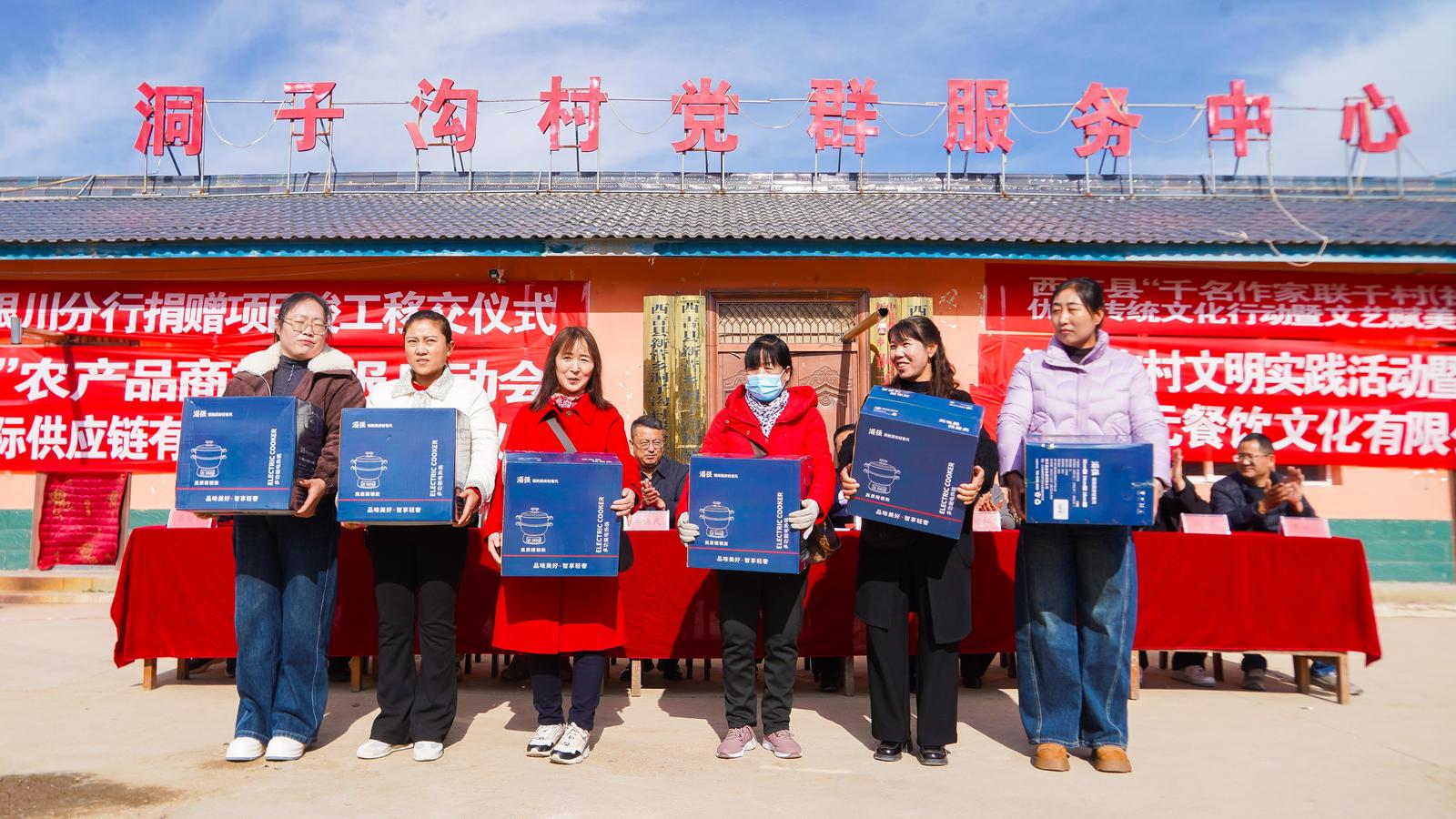
Core Viewpoint - The article highlights the efforts of SPDB Yinchuan Branch in supporting the poverty alleviation and rural revitalization of Dongzigou Village, emphasizing the importance of trademark registration for local agricultural products to enhance market access and sales opportunities [1][3]. Group 1: Support Initiatives - SPDB Yinchuan Branch has been providing targeted assistance to Dongzigou Village since 2017, focusing on poverty alleviation and rural revitalization [1]. - The bank donated 132,000 yuan for three projects, including the installation of 60 solar street lights and the provision of financial aid to four households [3]. - The bank's initiatives include collaborating with local enterprises for material donations and organizing cooking skills training and job recruitment events, showcasing a comprehensive approach to community support [4]. Group 2: Agricultural Development - The village has unique geographical advantages that allow for the production of high-quality honey and buckwheat, which have significant market potential [1]. - The lack of registered trademarks has been identified as a major bottleneck for the sales of these products, limiting access to larger e-commerce platforms [3]. - A local company, Yifengyuan, is proposed to hold the trademark and manage product sales, while also ensuring quality control through partnerships with local processing enterprises [3]. Group 3: Trademark Registration - The SPDB Yinchuan Branch is actively working on the application for the "Puxiaoxiang" trademark for honey and buckwheat products, aiming to enhance the marketability of these goods [3]. - The bank plans to leverage its resources for product promotion once the trademark registration is completed, with a focus on expanding product varieties and marketing efforts [3].


“壮山农鲜”“圳”甜蜜,百香百色农产品走入深圳
Nan Fang Nong Cun Bao· 2025-11-17 01:09
Core Viewpoint - The "Guilin Products Enter the Bay" event showcases high-quality agricultural products from Tianyang District, promoting the "Zhuangshan Nongxian" brand in Shenzhen, enhancing regional brand recognition and market integration [2][22][28]. Group 1: Event Overview - The event took place on November 16, 2025, in Shenzhen's Luohu District, featuring a variety of agricultural products from the "Zhuangshan Nongxian" series [2][3]. - It included multiple activities such as product sales, brand promotion, cultural tourism, and interactive events, highlighting the diversity and vitality of Baise's agriculture [7][8]. Group 2: Product Highlights - Featured products included dried mango, passion fruit, and cherry tomatoes, allowing consumers to enjoy flavors from Tianyang even during off-seasons [19][21]. - The event showcased various high-quality products like sweet mangoes, tomatoes, and the nutritious "Qinmi 9" passion fruit, which became the "taste focus" of the event [13][14][15]. Group 3: Market Expansion - The "Zhuangshan Nongxian" brand has expanded into the Bay Area market, appearing in major cities like Guangzhou, Shenzhen, and Zhuhai, and participating in national exhibitions [22][23]. - The brand's influence has led to increased recognition and reputation for Tianyang's agricultural products, facilitating deeper market integration [28][30]. Group 4: Business Development - Local enterprises are leveraging the "Zhuangshan Nongxian" brand to open sales channels and achieve brand spillover effects, with products like eco-friendly chili and vegetables gaining popularity [36][38]. - The event also included visits to Shenzhen's agricultural wholesale market for direct engagement with key merchants, establishing solid foundations for future cooperation [41][48].

新西兰对美国取消一系列对农产品的额外关税表示欢迎
Xin Hua Cai Jing· 2025-11-16 23:34
Core Viewpoint - New Zealand welcomes the U.S. decision to eliminate additional tariffs on a range of its agricultural products, including beef, offal, and kiwifruit, while expressing a desire for the complete removal of all extra tariffs on New Zealand goods [1] Group 1: Tariff Changes - The U.S. President Trump recently canceled tariffs on over 200 food items, including beef, due to consumer concerns over rising food prices in the U.S. [1] - The products affected by the tariff removal account for approximately 25% of New Zealand's exports to the U.S., valued at around $1.25 billion annually [1] Group 2: Government Response - New Zealand's Trade Minister stated that the decision to remove these tariffs is a step in the right direction, but emphasized that it is only a partial adjustment [1] - The ongoing framework of reciprocal tariffs continues to impose costs and uncertainty on New Zealand exporters [1]
涉及二百余种商品,承认关税推高物价,美免除部分农产品关税
Huan Qiu Shi Bao· 2025-11-16 23:08
Core Viewpoint - The U.S. government has unexpectedly shifted its policy regarding tariffs, particularly on agricultural products, indicating a significant retreat from aggressive tariff strategies that have previously contributed to rising consumer prices [1][2]. Group 1: Policy Changes - President Trump signed an executive order to exempt over 200 agricultural products from "reciprocal tariffs," effective from November 13 [1]. - The exemption applies to products that had previously seen price increases of over 10% year-on-year in the U.S. market [1]. - The decision reflects the administration's acknowledgment of the negative impact of tariffs on consumer prices, as evidenced by rising inflation and public concern over living costs [2][3]. Group 2: Economic Impact - The September Consumer Price Index showed significant price increases, with ground beef prices up nearly 13% and steak prices rising close to 17%, marking the largest increases in over three years [2]. - Overall, food costs for American households rose by 2.7% year-on-year in September, indicating a trend of increasing inflation [2]. - The rising costs have been linked to the administration's trade policies, which have faced criticism from both political parties [3]. Group 3: Political Reactions - The U.S. Chamber of Commerce welcomed the tariff adjustments and urged the government to consider further exemptions for products that are hard to source domestically [3]. - Democratic lawmakers argue that the tariff exemptions are insufficient to address the broader economic damage caused by the administration's trade policies [3]. - Polls indicate that 56% of the public disapproves of the president's handling of economic issues, highlighting the political pressure surrounding inflation and living costs [3].
苏陕协作·陕西特色农产品推介活动举行
Shan Xi Ri Bao· 2025-11-16 23:03
Core Points - The event "2025 Yangtze River Delta Quality Agricultural Products Supply and Marketing Fair" was held in Nantong, Jiangsu, focusing on promoting Shaanxi agricultural products in the Jiangsu market [1][2] - The theme of the event was "Shaanxi Goods Enter Jiangsu, Consumer Assistance," aiming to enhance cooperation between Shaanxi and Jiangsu provinces [1] - A total exhibition area of 5,200 square meters was utilized, with 90 Shaanxi enterprises participating [1] Group 1 - The event featured 25 specialized promotion activities to facilitate the entry of Shaanxi agricultural products into the Yangtze River Delta market [2] - A cooperation agreement was signed between Shaanxi Agricultural Products Management Company and supply cooperatives from Jiangsu, Shanghai, Zhejiang, and Anhui to promote the circulation of high-quality agricultural products [1][2] - The strategy includes establishing long-term sales channels in mainstream supermarkets, high-end communities, and online platforms in Jiangsu to ensure sustainable sales of Shaanxi products [1]
2026-27 年农产品基本面更新_全球农产品供应持续下滑,2026 年波动率将从当前压缩水平回升
2025-11-16 15:36
Summary of Agricultural Commodities Fundamentals Update Industry Overview - The report focuses on the agricultural commodities sector, highlighting the expected volatility in 2026 as global agricultural availability continues to decline from already low levels established in 2025/26 [7][10][14]. Key Points and Arguments 1. **Global Agricultural Availability**: - Global agricultural commodity availability is projected to decline further, indicating a tightening supply situation [8][10]. - Stocks-to-use (STU) ratios for major commodities such as soybeans, wheat, sugar, and palm oil are expected to decrease year-over-year (YOY) for the next two seasons [7][10]. 2. **Stocks-to-Use Ratios**: - The world STU ratios are near multi-year lows for 2026E/27E and 2027E/28E, with a decline from suppressed levels in 2025E/26E [7][10]. - Specific STU ratios for various commodities are projected as follows: - Soybeans: 19.4% in 2026/27 - Wheat: 29% in 2026/27 - Sugar: 14.7% in 2026/27 - Palm Oil: 17.5% in 2026/27 [8]. 3. **Inventory Projections**: - Global ending stocks projections through 2026/27 show significant inventory draws across the complex, with palm oil and corn experiencing the largest declines of -7.6% and -6.4% respectively [10][11]. - Adjustments in inventory projections indicate a marginal increase across most markets for 2025/26, except for cotton which saw a decline of 1.4% [12]. 4. **Market Dynamics**: - The report indicates that the agricultural commodities market is facing complex dynamics with varying trends across different commodities, necessitating close monitoring of supply and demand factors [10][14]. 5. **Regional Analysis**: - The report includes detailed balances for wheat production in key regions such as the US, Black Sea, Russia, and Ukraine, highlighting the production, consumption, and export dynamics [19][21][23][25]. Additional Important Content - The report emphasizes the importance of understanding the underlying factors affecting agricultural commodity prices, including weather conditions, geopolitical events, and changes in consumer demand [10][14]. - It also notes that the USDA data is incomplete due to a government shutdown, which may affect the accuracy of the projections [9][14][19][23]. This comprehensive overview provides insights into the agricultural commodities sector, highlighting the expected challenges and opportunities in the coming years.
湖南举办绿色农产品及食品加工产业链招商引资大会
Zhong Guo Xin Wen Wang· 2025-11-16 15:25
Group 1 - The 26th China Central (Hunan) Agricultural Expo is currently taking place in Changsha, where the Hunan Provincial Department of Agriculture and Rural Affairs held an investment promotion conference, signing 28 projects with a total amount of approximately 10 billion yuan [1] - Hunan ranks first in the country for rice area and production, with significant outputs in various agricultural products such as pigs, oil tea, rapeseed, citrus, tea, vegetables, and aquatic products, providing stable and high-quality raw materials for industry development [1] - The Hunan Provincial Rural Revitalization Fund, established with contributions from central, provincial, and municipal financial resources, aims to modernize the agricultural industry chain and attract targeted investments, having already invested over 1 billion yuan in the past three years [1] Group 2 - Anhui San Tiao Niu Agricultural Development Co., Ltd. operates in agriculture and agricultural machinery services across multiple provinces, expressing confidence in investing in Hunan due to the broad market for straw utilization and agricultural machinery services, along with strong government support and a favorable business environment [2] - Various cities and counties, including Zhangjiajie, Wangcheng District, Hengyang, Yueyang, Xinhua County, and Zhongfang County, showcased their unique projects at the conference, covering areas such as hybrid rice seed production, prepared vegetable production, organic waste resource utilization, and tea plantation construction [2]
特朗普削减多种农产品关税,美媒:物价上涨已引起美国选民不满
Guan Cha Zhe Wang· 2025-11-16 14:43
Core Points - The article discusses President Trump's recent executive order to adjust the scope of "reciprocal tariffs," specifically exempting certain agricultural products from these tariffs, which is seen as a significant concession in the ongoing trade war [1][5] - Analysts suggest that this move is aimed at alleviating public dissatisfaction over rising prices and may influence the upcoming midterm elections [1][5] Group 1: Tariff Adjustments - Trump signed an executive order on November 14, exempting certain agricultural products such as coffee, tea, cocoa, spices, bananas, oranges, tomatoes, beef, and some fertilizer products from "reciprocal tariffs" [1] - This decision is characterized as a major reversal in Trump's tariff policy, with analysts noting that rising prices have pressured him to make this adjustment [5][6] Group 2: Economic Impact - Despite Trump's claims that tariffs have not exacerbated inflation, prices for everyday goods continue to rise, with banana prices up approximately 7% and tomato prices up about 1% [4] - The cost of food consumption for American households increased by 2.7% in September, indicating ongoing inflationary pressures [4] Group 3: Public Sentiment and Political Implications - A recent poll indicated that about two-thirds of American voters disapprove of Trump's tariff policy, which could jeopardize the Republican Party's performance in the upcoming midterm elections [5] - Trump's decision to withdraw certain tariffs is viewed as an attempt to soothe public concerns over economic issues, particularly inflation [5][6] Group 4: Financial Costs of Tariffs - The tariffs on imported coffee have cost the U.S. approximately $358 million this year, significantly higher than the $1.3 million from the previous year [5] - The cost of automobile tariffs has reached $13 billion, over 36 times the original amount, highlighting the financial burden of these tariffs on American consumers [5]