TCL TECH.(000100)

Search documents
宗馥莉砍掉娃哈哈机器人业务,精机公司解散清算;荣耀人形机器人Robot表演后空翻;小米携手Gran Turismo发布中国首款VGT概念超跑丨邦早报
创业邦· 2026-03-02 00:09
Core Viewpoint - The article discusses various developments in the technology and automotive sectors, highlighting significant corporate actions, product launches, and market trends. Group 1: Corporate Actions - Wahaha Precision Machinery Co., Ltd. has officially entered liquidation, with its operations focused on robotics and intelligent equipment being discontinued as part of a strategy to refocus on core food and beverage businesses under the leadership of Zong Fuli [2] - Geely Holding Group has been approved to independently recruit postdoctoral researchers, becoming one of the few private enterprises in China with this qualification, which will enhance its talent acquisition and research capabilities [10] - TCL Huaxing has completed the acquisition of Fujian Zhaoyuan Optoelectronics Co., Ltd., enhancing its LED display supply chain [13] Group 2: Product Launches - Honor unveiled its humanoid robot, Robot, at the MWC 2026, showcasing its capabilities through interactive performances [3] - Xiaomi launched three high-end flagship smartphones and introduced the Xiaomi Vision Gran Turismo, a concept supercar developed in collaboration with Gran Turismo [6] - BMW has initiated a pilot project integrating humanoid robots into its production line in Leipzig, collaborating with Swedish company Hexagon [8] Group 3: Market Trends - The automotive industry in China has seen a 6.76% year-on-year increase in vehicle sales for the first two months of 2026, with electric vehicle sales growing by 6.44% [13] - The 2026 film box office in China has surpassed 10 billion yuan, leading the global market with a total of 2.25 billion viewers [18] - Multiple provinces in China have released details on the 2026 vehicle replacement subsidy policy, offering significant incentives for consumers to purchase new energy vehicles [18]







TCL华星官宣:已正式完成对福建兆元光电股权交割
WitsView睿智显示· 2026-03-01 11:24
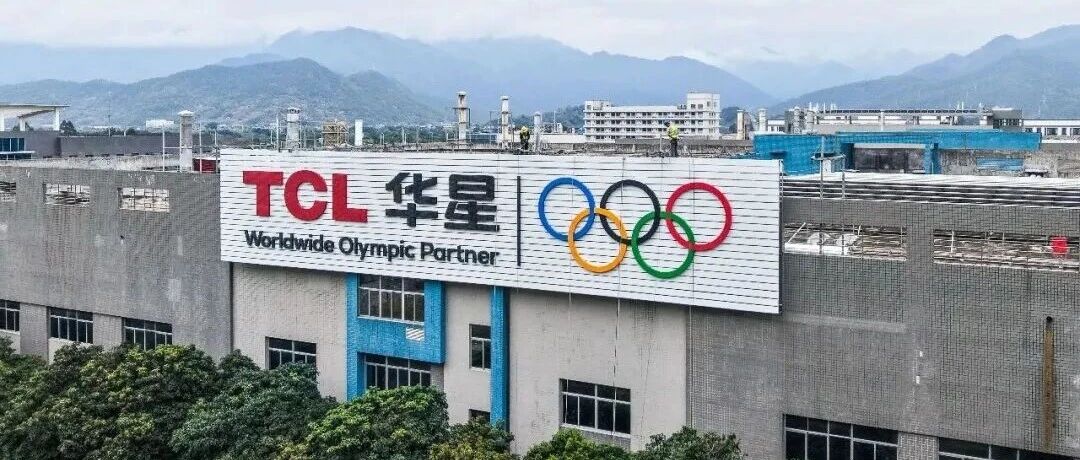
Core Viewpoint - The acquisition of Fujian Zhaoyuan Optoelectronics Co., Ltd. by TCL Huaxing marks a significant step in the semiconductor display industry, aiming for comprehensive synergy in technology, production capacity, and market reach, ultimately enhancing high-quality development for both companies [1][2][4]. Group 1: Acquisition Details - On March 1, TCL Huaxing completed the equity transfer ceremony for the acquisition of Fujian Zhaoyuan Optoelectronics, which has been renamed Fuzhou Huazhao Optoelectronics [1]. - TCL Technology announced on December 26, 2025, that TCL Huaxing successfully acquired 80% of Zhaoyuan Optoelectronics' equity and related debt for a total transaction price of 490 million yuan [2]. - The acquisition was approved by the State Administration for Market Regulation on February 26, 2026 [2]. Group 2: Company Background - Zhaoyuan Optoelectronics was established in March 2011 with a registered capital of 1.437 billion yuan, focusing on the R&D and manufacturing of LED epitaxy and chips, and possesses a complete LED chip production line with large-scale capacity [2]. - The company's products cater to high-value sectors such as backlighting, Mini LED direct display, and automotive lighting [2]. Group 3: Strategic Implications - The acquisition allows TCL Huaxing to integrate the entire industry chain from LED chips to display modules, accelerating the application of Mini/Micro LED high-end display technology in various scenarios [4][7]. - TCL Huaxing aims to leverage Zhaoyuan Optoelectronics' chip manufacturing capabilities to enhance product structure and profitability, driving both companies towards a new phase of high-quality development [4][7]. - With Zhaoyuan Optoelectronics integrated into its system, TCL Huaxing completes its layout in the upstream core segment of LED display, facilitating the construction of a self-controlled supply chain to meet the demands for high-quality display solutions [7].
破局多联机应用三座大山:TCL TMV7 AI多联机硬核科技重塑极端之境
Xin Lang Cai Jing· 2026-02-27 10:36
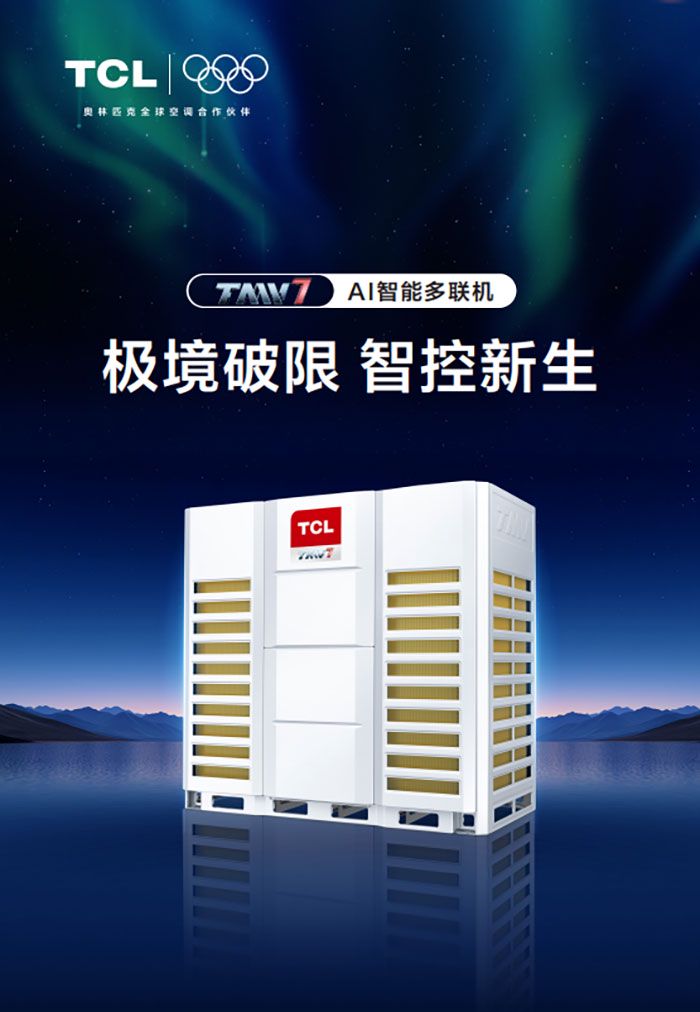
Core Insights - The HVAC industry is witnessing a shift towards multi-split systems, which have become the mainstream choice for commercial buildings and public facilities, holding a market share of approximately 46.1% as per the Aiken Network's report for 2025, although growth rates are slowing down and competition is shifting towards technological advancements [1][14] - TCL Smart HVAC has launched the TMV7 AI multi-split system, aiming to address persistent industry challenges such as heating performance in extreme cold, high energy costs, and chaotic project management through intelligent and adaptable technology [1][14] Group 1: Performance in Extreme Conditions - The TMV7 AI multi-split system is designed to operate efficiently in extreme temperatures ranging from -30°C to 58°C, overcoming traditional limitations of heating and cooling performance [2][16] - In extremely cold environments, the TMV7 utilizes a large displacement flexible jet enthalpy rotary compressor, enhancing heating capacity by 20% compared to traditional models, ensuring stable indoor heating even at -30°C [5][18] - For high-temperature cooling challenges, the TMV7 employs innovative refrigerant flow designs and optimized heat exchangers to maintain cooling efficiency at 58°C, preventing performance degradation due to overheating [7][20] Group 2: Energy Efficiency Innovations - The TMV7 AI multi-split system incorporates AI big data energy-saving algorithms, allowing for intelligent adjustments to operational parameters based on real-time environmental and user data, achieving a 20% reduction in annual energy consumption [9][22] - The system features a self-developed third-generation gallium nitride chip, improving power conversion efficiency and reducing losses, while achieving a standby power consumption of only 1W, approaching zero energy use during idle periods [9][22] Group 3: Intelligent Operation and Management - The TMV7 is equipped with an AI module for automatic networking, enabling real-time online monitoring and creating a visual energy management dashboard through the IOC smart cloud platform, which provides detailed energy consumption insights [10][23] - The multi-intelligent control platform supports remote monitoring and fault alerts, transforming maintenance from reactive to proactive, which is crucial for managing energy efficiency in large commercial spaces [12][25] - The introduction of AI and big data technologies into HVAC systems represents a significant step towards smarter energy management and operational efficiency in the industry [13][26]
TCL华星光电收购LED芯片企业股权案获批
WitsView睿智显示· 2026-02-27 04:35
Group 1 - The core viewpoint of the article highlights that TCL Huaxing Optoelectronics has successfully acquired an 80% stake in Fujian Zhaoyuan Optoelectronics, with the transaction valued at 490 million yuan, which has passed antitrust review [1][3] - The acquisition aims to enable TCL Huaxing to independently control the design and manufacturing of LED chips, thereby creating a vertically integrated supply chain from LED chips to display modules [4] - Fujian Zhaoyuan Optoelectronics, established in March 2011 with a registered capital of 1.437 billion yuan, specializes in the R&D, production, and sales of LED epitaxial wafers and chips, and reported revenues of 880 million yuan in 2024 with a net loss of 389 million yuan [3] Group 2 - TCL Huaxing and Fujian Electronic Information Group have signed a strategic investment agreement, indicating a commitment to deep cooperation in technology iteration, capacity synergy, and market expansion [3] - The financial performance of Fujian Zhaoyuan Optoelectronics shows a revenue of 710 million yuan and a net loss of 299 million yuan for the first ten months of 2025 [3]
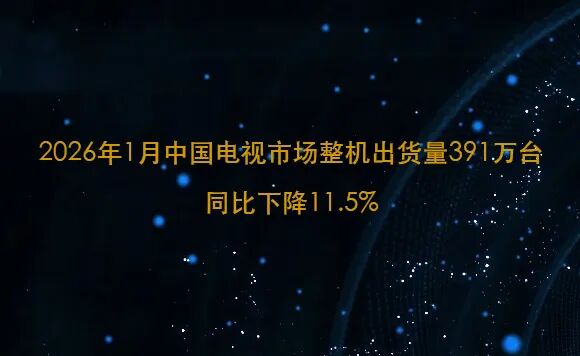
2026年1月中国电视市场整机出货量391万台,同比下降11.5%
Xin Lang Cai Jing· 2026-02-26 10:21
Core Viewpoint - The Chinese TV market is experiencing a significant decline in shipment volumes, with January 2026 showing a 11.5% year-on-year decrease compared to January 2025, despite the traditional shopping season and government subsidies [1][6]. Group 1: Market Performance - In January 2026, the total shipment volume of branded TVs in China was 3.91 million units, reflecting a severe downturn in market demand [1][6]. - The top eight brands in the Chinese TV market, including TCL, Hisense, Skyworth, and Xiaomi, collectively shipped approximately 3.72 million units in January, down 6.9% year-on-year, with a combined market share of 95.1% [3][8]. - Traditional brands TCL, Hisense, and Skyworth saw a combined shipment of about 2.39 million units, a decline of 2.8%, with TCL leading at approximately 900,000 units shipped [3][8]. Group 2: Brand Analysis - Xiaomi's market share in January was 15.3%, while Haier, Changhong, and Konka showed a slight increase in shipments, totaling around 620,000 units, up 2.3% year-on-year [3][8]. - Huawei's shipments exceeded 100,000 units in January, indicating growth compared to the previous year [3][8]. - Foreign brands such as Samsung, Sony, Sharp, and Philips continue to struggle in the competitive landscape against Chinese brands, which are gaining strength due to better value propositions [4][9]. Group 3: Future Outlook - The government subsidy program is expected to play a crucial role in stabilizing the market and preventing a collapse in sales [3][8]. - Despite the current challenges, 2026 is anticipated to be a significant year for the TV industry due to major sporting events like the Winter Olympics and the FIFA World Cup, which could boost sales [4][9]. - RUNTO predicts that the total shipment volume for the Chinese TV market will decline to 30.12 million units in 2026, representing an 8.4% decrease from 2025 [5][9].




市场监管总局无条件批准TCL华星光电收购福建兆元光电有限公司股权案
Xin Lang Cai Jing· 2026-02-26 02:47
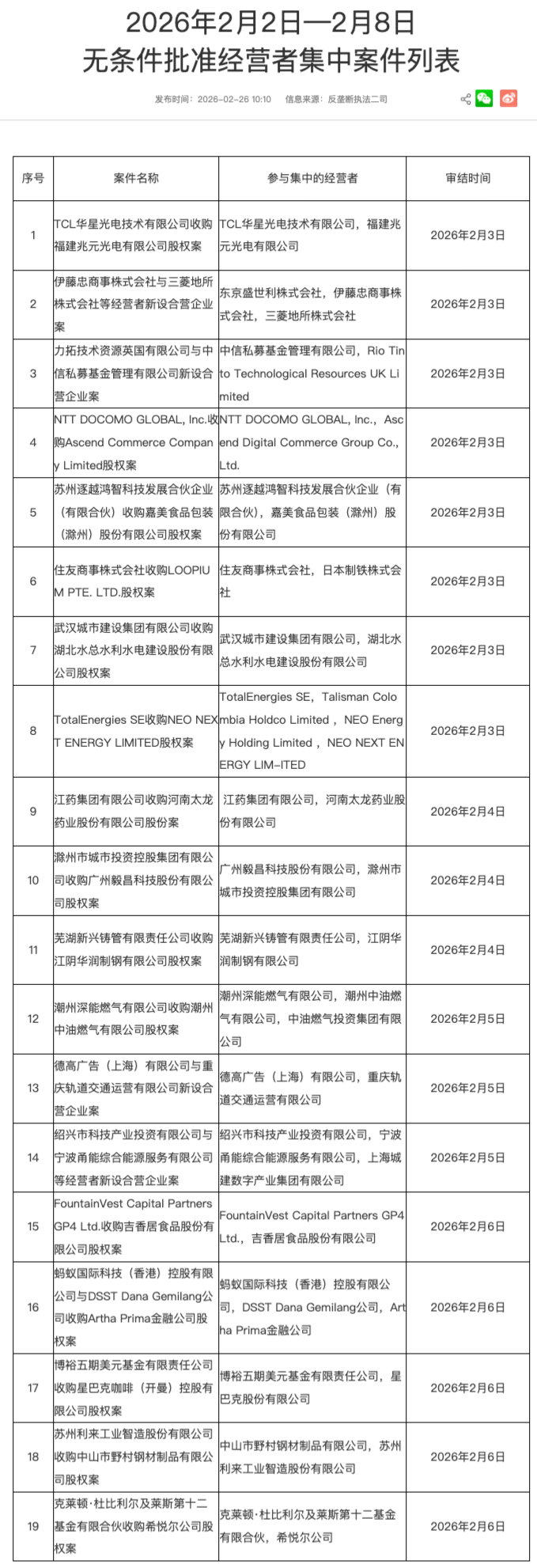
Group 1 - The National Market Supervision Administration has released a list of unconditionally approved operator concentration cases for the period from February 2 to February 8, 2026, which includes TCL Huaxing Optoelectronics' acquisition of Fujian Zhaoyuan Optoelectronics Co., Ltd. [1][3] - The acquisition case involving TCL Huaxing Optoelectronics and Fujian Zhaoyuan Optoelectronics was concluded on February 3, 2026 [3]. - Other notable cases in the list include partnerships and acquisitions involving companies such as Itochu Corporation, Mitsubishi Estate Co., and Rio Tinto [3][4]. Group 2 - The list includes a total of multiple acquisition cases, indicating ongoing consolidation trends in various sectors [3][4]. - The approval of these cases reflects regulatory support for mergers and acquisitions, which may impact market dynamics and competitive landscapes [1][3].
LCD景气度与TCL科技近况交流
2026-02-25 04:13
Summary of TCL Technology Conference Call Company and Industry Overview - **Company**: TCL Technology - **Industry**: LCD and OLED Display Technology Key Points and Arguments 1. **Market Resilience**: The LCD market is expected to show resilience in pricing throughout the year, reflecting a strong industry structure and pricing power due to the exit of older manufacturers over the past decade [2][3][4] 2. **Long-term Outlook**: The long-term outlook for the LCD industry remains positive, with expectations of stable annual growth in pricing and profitability as long as LCD technology remains dominant [3][4] 3. **Seasonal Demand Fluctuations**: Short-term fluctuations in demand may occur due to seasonal factors, such as inventory adjustments related to major events like the World Cup, but these are not expected to significantly impact long-term pricing trends [16][18] 4. **Demand Stability**: The demand for large-sized displays is expected to remain stable, with a significant contribution from large TVs and monitors, which are less affected by market fluctuations [5][21] 5. **Product Differentiation**: TCL's strategy includes a focus on product differentiation in the OLED segment, moving away from merely following competitors to establishing a unique position in the market [7][8] 6. **IT Product Growth**: The IT segment, particularly with the T9 production line, is expected to contribute significantly to revenue growth, driven by a shift towards IPS technology and increased demand from major clients [26][27] 7. **Capital Expenditure and Shareholder Returns**: TCL plans to manage its capital expenditures carefully while also considering shareholder returns through dividends and share buybacks, especially as the company transitions from a heavy investment phase to a cash-generating phase [30][33] 8. **OLED Market Challenges**: The OLED market faces challenges, particularly in terms of pricing pressures and supply chain issues, but TCL is optimistic about its ability to navigate these challenges through strategic client relationships and product innovation [39][40][41] 9. **Future of OLED**: The long-term outlook for OLED technology is cautiously optimistic, with expectations of market growth driven by new applications and consumer demand, although competition remains intense [44][46] Additional Important Insights - **Inventory Management**: Effective inventory management will be crucial in maintaining price stability, especially in the face of potential demand fluctuations [16][18] - **Technological Advancements**: Continuous investment in technology and production capabilities is essential for maintaining competitive advantages in both LCD and OLED markets [35][38] - **Market Dynamics**: The industry is expected to undergo consolidation, which may improve profitability for leading companies as weaker players exit the market [46][48] This summary encapsulates the key insights from the TCL Technology conference call, highlighting the company's strategic outlook and the broader industry dynamics.
电子行业业绩预告透视:超五成预盈 工业富联、立讯精密预告净利润居前
Xin Hua Cai Jing· 2026-02-24 23:29
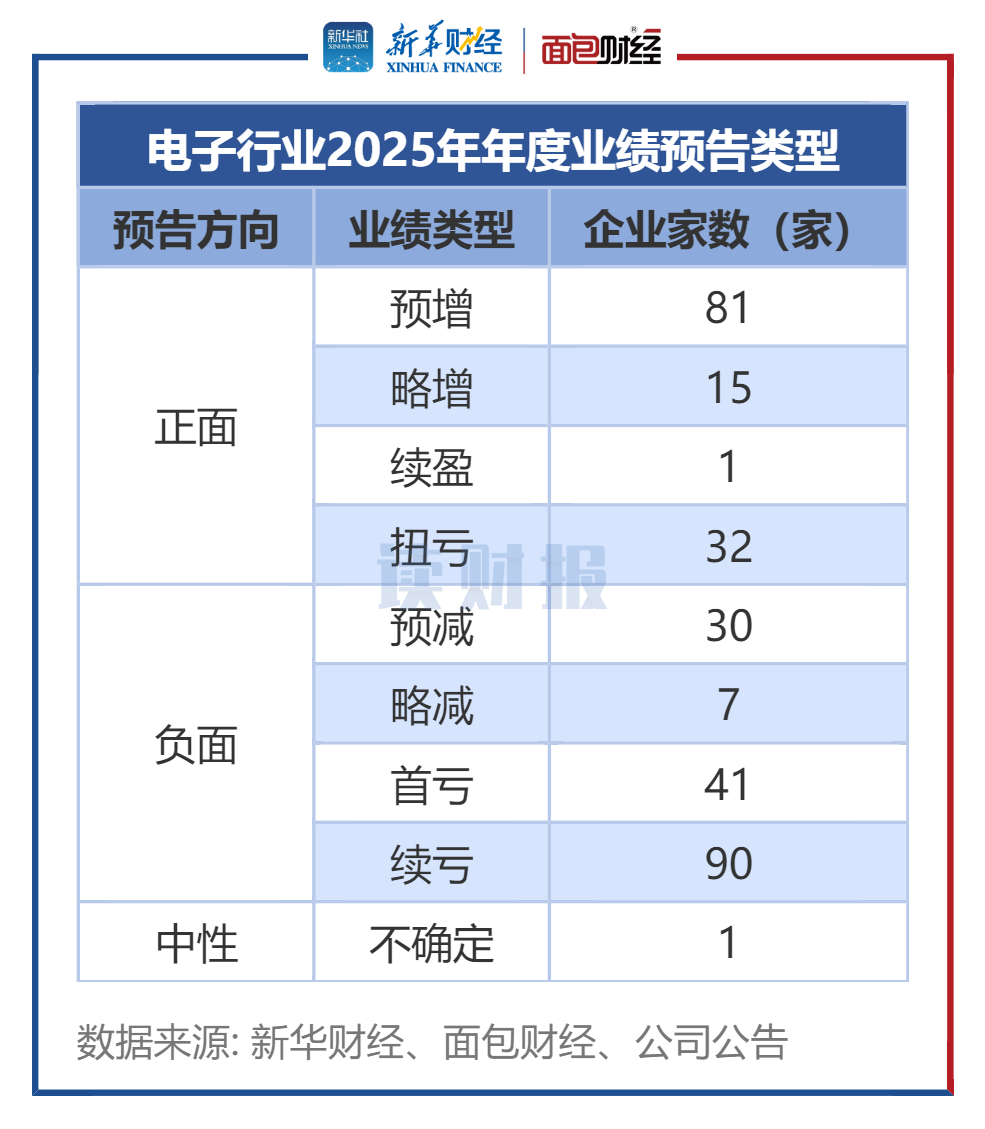
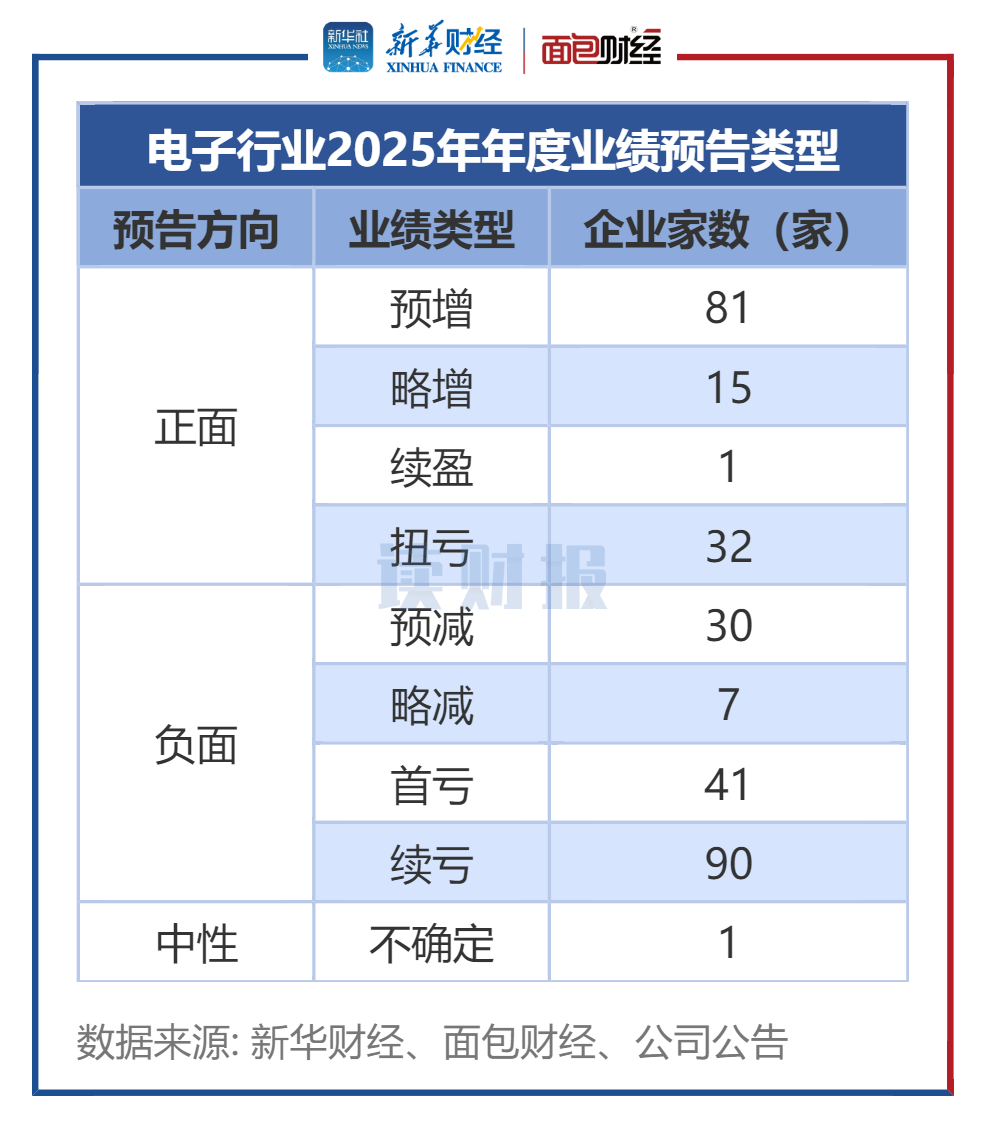
Core Viewpoint - The A-share electronic industry is showing a positive trend in 2025 annual performance forecasts, with nearly 60% of the listed companies expected to achieve year-on-year profit growth, driven by industry recovery and increasing demand for computing power [1][3]. Group 1: Overall Performance Forecast - A total of 495 companies in the A-share electronic industry have been classified, with 298 companies having released their 2025 annual performance forecasts [1]. - Among the 298 companies, 166 are expected to be profitable, indicating that over half of the companies are projecting positive earnings [3]. - The companies with the highest projected net profits include Industrial Fulian, Luxshare Precision, and TCL Technology [1][3]. Group 2: Profit Forecast Breakdown - Of the 298 companies, 81 are forecasting profit increases, 15 slight increases, and 1 is expected to maintain profitability, while 32 companies are predicting losses [2]. - The net profit forecasts show that 2 companies expect to exceed 10 billion yuan, and 21 companies anticipate profits over 1 billion yuan [3]. Group 3: Key Companies and Their Forecasts - Industrial Fulian is expected to achieve a net profit of 351 to 357 billion yuan, representing a year-on-year increase of 51% to 54% [5]. - Luxshare Precision forecasts a net profit of 165.18 to 171.86 billion yuan, with a growth of 23.59% to 28.59% compared to the previous year [5]. - TCL Technology anticipates a net profit of 42.1 to 45.5 billion yuan, reflecting a significant increase of 169% to 191% year-on-year [5]. Group 4: Companies with Significant Losses - A total of 130 companies are expected to incur losses, with the largest projected losses coming from Wentai Technology, Visionox, and Hu Silicon Industry [7]. - Wentai Technology forecasts a loss of 90 to 135 billion yuan, significantly impacted by investment losses and asset impairment [9]. - Hu Silicon Industry anticipates a loss of 12.8 to 15.3 billion yuan, citing challenging market conditions in the semiconductor silicon wafer industry [9].




【读财报】电子行业业绩预告透视:超五成预盈 工业富联、立讯精密预告净利润居前
Xin Hua Cai Jing· 2026-02-24 23:25
Core Viewpoint - The A-share electronic industry is showing signs of recovery, with nearly 60% of the 298 listed companies that have released their 2025 annual performance forecasts expected to achieve year-on-year profit growth, driven by factors such as industry recovery and increased demand for computing power [1][2]. Group 1: Performance Forecast Overview - A total of 495 companies are classified under the A-share electronic industry, with 298 having announced their 2025 annual performance forecasts [1]. - Among the 298 companies, 166 are expected to be profitable, with Industrial Fulian, Luxshare Precision, and TCL Technology leading in net profit forecasts [5]. - The performance forecast types indicate that 81 companies expect profit increases, while 30 companies anticipate profit decreases [3]. Group 2: Key Companies and Profit Forecasts - Industrial Fulian forecasts a net profit of 35.1 billion to 35.7 billion yuan for 2025, representing a year-on-year increase of 51% to 54% [8]. - Luxshare Precision expects a net profit of 16.518 billion to 17.186 billion yuan, with a growth of 23.59% to 28.59% compared to the previous year [8]. - TCL Technology anticipates a net profit of 4.21 billion to 4.55 billion yuan, reflecting a significant increase of 169% to 191% year-on-year [8]. Group 3: Loss Forecasts and Challenges - A total of 130 companies are expected to incur losses, with the largest projected losses coming from Wentai Technology, which anticipates a loss of 90 billion to 135 billion yuan [10][13]. - Hu Silicon Industry is also expected to report a loss of 12.8 billion to 15.3 billion yuan, citing challenging market conditions in the semiconductor silicon wafer industry [10][13]. - The overall market environment remains challenging, impacting the performance of companies like Hu Silicon Industry and Wentai Technology [13].
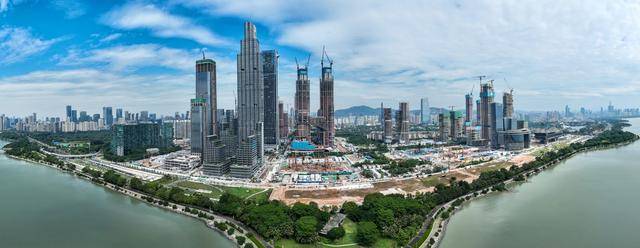
抢抓新春建设黄金期 多项目突破关键节点 深圳湾超级总部基地迎来19家企业总部入驻
Sou Hu Cai Jing· 2026-02-24 12:57
Core Insights - The Shenzhen Bay Super Headquarters Base (深超总) is accelerating its construction, transforming from a planning blueprint into a reality, which injects strong momentum into Shenzhen's high-quality development [1][8]. Investment and Development - The area has completed 80% of land transfers, with a total investment of approximately 210 billion yuan, of which about 120 billion yuan has been invested so far [3]. - The project has attracted numerous Fortune 500 and innovative tech companies, with 19 corporate headquarters already established in the area [3][7]. Project Progress - Construction activities are in full swing, with significant progress on various projects, including the DU09-03 project, which is undergoing foundation and earthworks [4]. - Notable buildings such as the C Tower and the global headquarters of China Merchants Bank have reached key construction milestones, with the latter now illuminated as a financial landmark [7]. Urban Planning and Environment - The area covers 117 hectares with a planned total construction area of approximately 5.2 million square meters, accommodating around 250,000 residents [8]. - The design emphasizes a blend of headquarters, culture, and ecology, providing a balanced solution for high-density urban development [10]. Community and Cultural Impact - The development aims to enhance the sense of identity and belonging for residents, focusing on public service improvements and cultural enrichment [12]. - The project is seen as a model for future urban living, integrating diverse cultural, artistic, and technological facilities [12]. Innovative Design Approach - The project employs a city chief designer system, led by Chinese Academy of Engineering academician Meng Jianmin, marking a first for Shenzhen in comprehensive technical oversight [13]. - The design philosophy aims to redefine modern urban quality, emphasizing harmony between nature, efficiency, and cultural vitality [16].