TCL TECH.(000100)

Search documents
TCL科技今日大宗交易平价成交47.51万股,成交额228.03万元
Xin Lang Cai Jing· 2026-02-24 08:48
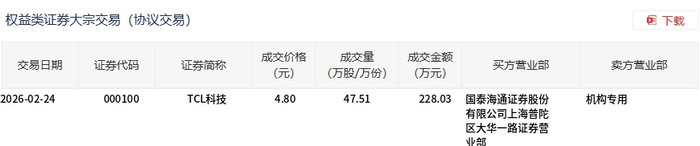
| 权益类证券大宗交易(协议交易) | | | | | | | | 团 下载 | | --- | --- | --- | --- | --- | --- | --- | --- | --- | | 交易日期 | 证券代码 | 证券简称 | 成交价格 (元) | 成交量 (万股/万份) | 成交金额 (万元) | 买方营业部 | 卖方营业部 | | | 2026-02-24 | 000100 | TCL科技 | 4.80 | 47.51 | 228.03 | 国泰海通证券股份 有限公司上海普陀 | 机构专用 | | | | | | | | | 区大华一路证券营 | | | | | | | | | | WHE | | | 2月24日,TCL科技大宗交易成交47.51万股,成交额228.03万元,占当日总成交额的0.07%,成交价4.8 元,较市场收盘价4.8元持平。 ...

谷爱凌冬奥会后首次亮相:打卡TCL冬奥主题展馆,现场体验黑科技
Huan Qiu Wang· 2026-02-24 06:58
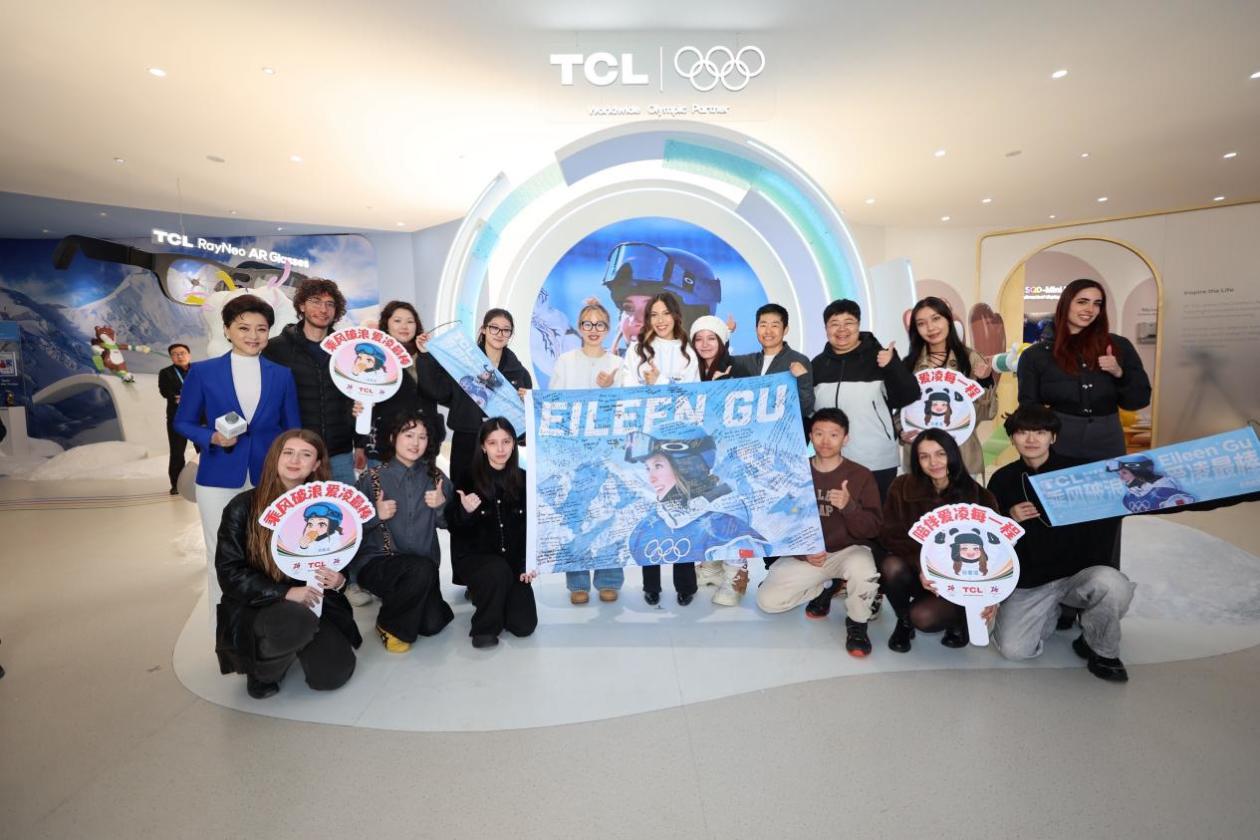
Group 1 - TCL's global brand ambassador Gu Ailing made her first appearance after the Winter Olympics at the "Snow Velvet Wonderland" Milan Winter Olympics theme pavilion, engaging with fans and media [1] - Gu Ailing expressed her desire to promote freestyle skiing among more young women, emphasizing the confidence it brings [3] - At the pavilion, Gu Ailing showcased interest in several TCL products, including the world's first SQD-Mini LED TV, TCL AI health sleep air conditioner, and the world's first printed OLED foldable portable MNT display [5] Group 2 - The "Snow Velvet Wonderland" pavilion has attracted over 139,000 visitors since its opening on February 5, with more than 60,000 engaging in interactive experiences, becoming a popular landmark during the Winter Olympics [7] - The pavilion has drawn attention from international media, sports officials, and celebrities, with notable visits from the International Olympic Committee president and representatives from various Olympic committees [7] - The TCL team, led by Gu Ailing, achieved impressive results at the Winter Olympics, winning a total of 7 golds, 7 silvers, and 1 bronze, with Gu Ailing herself securing 3 medals [9]
TCL科技股价涨5.04%,鑫元基金旗下1只基金重仓,持有189.25万股浮盈赚取43.53万元
Xin Lang Cai Jing· 2026-02-24 03:54
Group 1 - TCL Technology's stock increased by 5.04%, reaching 4.79 CNY per share, with a trading volume of 2.093 billion CNY and a turnover rate of 2.32%, resulting in a total market capitalization of 99.636 billion CNY [1] - The company, founded on March 11, 1982, and listed on January 30, 2004, specializes in the research, production, and sales of semiconductor display products and materials, as well as industrial finance, investment, and venture capital [1] - The revenue composition of TCL Technology includes 67.26% from semiconductor display devices, 17.15% from electronic product distribution, and 15.66% from new energy photovoltaic and other silicon materials [1] Group 2 - Xin Yuan Fund has a significant holding in TCL Technology, with the Xin Yuan CSI 800 Free Cash Flow Index A fund (024792) holding 1.8925 million shares, accounting for 3.88% of the fund's net value, making it the seventh-largest holding [2] - The Xin Yuan CSI 800 Free Cash Flow Index A fund has a current scale of 141 million CNY and has achieved a year-to-date return of 5.22%, ranking 2417 out of 5580 in its category, with a cumulative return of 15.17% since inception [2] Group 3 - The fund managers of Xin Yuan CSI 800 Free Cash Flow Index A are Mo Zhigang and Liu Yutao, with Mo having a tenure of 7 years and 40 days, managing assets totaling 1.216 billion CNY, and achieving a best return of 71.7% during his tenure [3] - Liu Yutao has a tenure of 3 years and 159 days, managing assets of 3.573 billion CNY, with a best return of 52.95% during his tenure [3]
全指现金流ETF鹏华(512130)涨超2%,油运贵金属强势领涨
Sou Hu Cai Jing· 2026-02-24 02:41
Group 1 - During the Spring Festival, overseas precious metals and crude oil prices collectively rose, with spot gold touching $5200 per ounce and WTI crude oil futures for March contracts increasing by 1.9%, while Brent crude oil futures for April contracts rose by 1.86% [1] - The current oil market is driven by geopolitical risks rather than supply and demand, with expectations of high volatility in prices over the next month due to the unclear situation between the US and Iran [1] - Companies with oil and gas resources and those in the offshore oil and gas service engineering sector are recommended for attention as they may benefit from the high industry prosperity [1] Group 2 - As of January 30, 2026, the top ten weighted stocks in the CSI All Share Free Cash Flow Index (932365) include China National Offshore Oil Corporation, Gree Electric Appliances, SAIC Motor, China Aluminum, COSCO Shipping Holdings, TCL Technology, Muyuan Foods, Silver Nonferrous Metals, Baosteel, and Chint Group, collectively accounting for 51.19% of the index [2]




412.78亿元市值限售股今日解禁





Ge Long Hui· 2026-02-23 23:51
Core Viewpoint - On February 24, a total of 25 companies had their restricted shares unlocked, with a total unlock volume of 2.478 billion shares, amounting to a market value of 41.278 billion yuan based on the latest closing prices [1] Summary by Category Unlock Volume - TCL Technology, Huadian International, and *ST Songfa had the highest unlock volumes, with 1.035 billion shares, 705 million shares, and 109 million shares respectively [1] Unlock Market Value - The companies with the highest unlock market values were *ST Songfa, TCL Technology, and Longxun Co., with market values of 10.919 billion yuan, 4.722 billion yuan, and 4.527 billion yuan respectively [1] Unlock Ratio - The companies with the highest unlock ratios relative to their total share capital were Yangzhou Jinqiao, Kuntai Co., and Longxun Co., with ratios of 73.45%, 72.39%, and 44.2% respectively [1]
A股限售股解禁一览:412.78亿元市值限售股今日解禁
Mei Ri Jing Ji Xin Wen· 2026-02-23 23:39
Group 1 - On February 24, a total of 25 companies had their restricted shares unlocked, with a total unlock volume of 2.478 billion shares, amounting to a market value of 41.278 billion yuan based on the latest closing prices [1] - TCL Technology, Huadian International, and *ST Songfa had the highest unlock volumes, with 1.035 billion shares, 705 million shares, and 109 million shares respectively [1] - In terms of unlock market value, *ST Songfa, TCL Technology, and Longxun Co. led with market values of 10.919 billion yuan, 4.722 billion yuan, and 4.527 billion yuan respectively [1] Group 2 - The companies with the highest proportion of unlocked shares relative to their total share capital were Yangzhou Jinqiao, Kuntai Co., and Longxun Co., with unlock ratios of 73.45%, 72.39%, and 44.2% respectively [1]
【兴证策略张启尧团队】2026年出海链有哪些投资机会?
Xin Lang Cai Jing· 2026-02-21 01:42
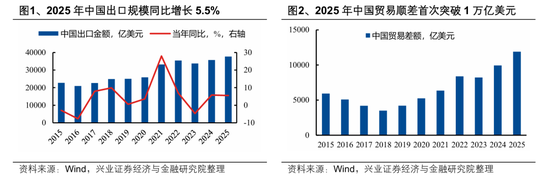
Group 1 - In 2025, China's foreign trade showed strong resilience, with total exports reaching a historical high, growing by 5.5% year-on-year, despite a complex external environment [1][57] - China's trade surplus exceeded $1 trillion for the first time, marking a significant increase of 19.8% year-on-year [1][57] - The net export of goods and services contributed 1.64 percentage points to GDP growth, the second-highest level since 2007, only behind 2021 [3] Group 2 - The diversification of external demand has strengthened, with emerging markets compensating for the decline in exports to the US, which fell by 19.79% year-on-year [6] - Exports to ASEAN, Africa, and the Middle East saw significant growth rates of 25.9%, 13.64%, and 9.7% respectively, contributing positively to the overall export scale [6] - The share of US exports in China's total exports decreased by 3.53 percentage points to 11.15% [6] Group 3 - The product structure of China's foreign trade is shifting towards higher value chains, with high-end products like electrical machinery, machinery, automobiles, and ships being the main export drivers [8] - Traditional light industrial products such as furniture and toys have seen a decline in export scale due to tariff friction and industrial chain relocation [8] Group 4 - The restructuring of global supply chains is creating significant opportunities for Chinese companies, with a notable increase in the number of Chinese enterprises establishing production capacities abroad, reaching 229 in 2025, nearly doubling from 2024 [18] - ASEAN, Mexico, and India are the primary destinations for Chinese production capacity outflows, with ASEAN covering a wide range of industries [18] Group 5 - The AI expansion cycle is a core focus in the Chinese capital market, with significant growth expected in AI computing hardware, supported by macro investment scales and healthy balance sheets of major tech companies [29][30] - The capital expenditure of major cloud service providers is projected to increase significantly, reflecting strong demand for AI computing [35] Group 6 - Cultural and technological value output is becoming a major trend for Chinese enterprises going abroad, with significant growth in IP exports and innovative products in sectors like gaming and new dining [39][41] - The Chinese innovative pharmaceutical sector is increasingly integrated into the global supply chain, with more products commercialized in the US and Europe [41] Group 7 - Key sectors with strong overseas expansion opportunities in 2026 include new energy (batteries, grid equipment), machinery, TMT (technology, media, telecommunications), and innovative pharmaceuticals [46] - The gaming industry is also highlighted for its potential, with significant overseas revenue growth expected [49]




TCL创始人、董事长李东生:继续完善全球化3.0体系
Jing Ji Guan Cha Wang· 2026-02-17 08:59
Group 1 - TCL will debut as an Olympic global partner at the 2026 Milan Winter Olympics, marking a new chapter in its globalization strategy [1] - The current global competition has shifted from cost and scale to a comprehensive comparison of values, technological capabilities, and industrial responsibilities [1] - The company defines this new phase as "Globalization 3.0," focusing on localizing the global industrial and supply chains [1] Group 2 - TCL aims to establish five local entities overseas, fostering local industrial ecosystems that include brand marketing, channel management, retail management, user service capabilities, and even product design [1] - The company is not just selling products abroad but is embedding R&D, manufacturing, and service capabilities in target markets [1] - In Poland, TCL is leveraging local talent in mathematics and algorithms to advance artificial intelligence technology [2] Group 3 - The "local for local" business model has dual strategic significance, contributing to local economic and social development while building long-term trust relationships [2] - TCL's confidence in its globalization efforts stems from its technological authority, exemplified by the construction of the world's first G8.6 generation printed OLED panel production line in Guangzhou [2] - The company is also committed to sustainable development, having launched a global code of conduct and a digital platform for carbon tracking [2] Group 4 - Looking ahead, TCL will maintain strategic focus on three core areas: smart terminals, semiconductor displays, and new energy photovoltaics [3] - The company plans to enhance its core capabilities by utilizing AI technology to improve advanced manufacturing levels and drive industrial efficiency [3] - TCL will continue to refine its Globalization 3.0 framework through deeper collaboration with global partners to explore new growth opportunities [3]
TCL创始人、董事长李东生:继续完善全球化3.0体系|2026商业新愿景
Jing Ji Guan Cha Wang· 2026-02-17 05:56
Group 1 - TCL will debut as an Olympic global partner at the 2026 Milan Winter Olympics, marking a new chapter in its globalization strategy [2] - The current global competition has shifted from cost and scale to a comprehensive comparison of values, technological capabilities, and industrial responsibilities [2] - The company defines this new phase as "Globalization 3.0," focusing on localizing global industrial and supply chains [2] Group 2 - TCL aims to establish five local entities overseas, fostering local industrial ecosystems with capabilities in brand marketing, channel management, retail management, user service, and product design [2] - The company is not just selling products abroad but is embedding core functions like R&D, manufacturing, and services in target markets [2] - In Poland, TCL is leveraging local talent in mathematics and algorithms to advance artificial intelligence technology [3] Group 3 - The "local for local" business model has dual strategic significance, contributing to local economic development and building long-term trust relationships [3] - TCL's confidence in its globalization efforts stems from its technological influence, exemplified by the construction of the world's first G8.6 generation printed OLED panel production line in Guangzhou [3] - The company is also committed to sustainable development, having launched a global code of conduct and a digital platform for carbon tracking [3] Group 4 - Looking ahead, TCL will maintain strategic focus on three core areas: smart terminals, semiconductor displays, and renewable energy photovoltaics [4] - The company plans to enhance its core capabilities by utilizing AI technology to improve advanced manufacturing levels and drive industrial efficiency [4] - TCL will continue to refine its Globalization 3.0 framework through deeper collaboration with global partners to explore new growth opportunities [4]
从米兰巨幅广告到快闪店,冬奥迎来史上最多中国顶级赞助商
第一财经· 2026-02-16 15:09
Core Viewpoint - The article highlights the significant presence and impact of Chinese brands as TOP sponsors at the Milan-Cortina Winter Olympics, showcasing the evolving landscape of sports marketing and sponsorship dynamics in the context of global events [5][15]. Group 1: Sponsorship Dynamics - The Milan-Cortina Winter Olympics features the highest number of Chinese TOP sponsors, including TCL, Alibaba, and Mengniu, marking a notable increase in Chinese brand representation compared to previous Olympics [5][15]. - The TOP sponsorship program is crucial for the financial support of the Olympics, with companies paying over $300 million per cycle, contributing significantly to the International Olympic Committee's revenue [12]. - The article notes that the TOP sponsorship program has seen a shift in participants, with traditional sponsors like Panasonic and Toyota exiting, while new entrants like TCL and Budweiser are filling the gaps, reflecting changes in commercial power [17][18]. Group 2: Marketing Strategies and Brand Visibility - TOP sponsors utilize various marketing strategies, including prominent outdoor advertising in Milan, to enhance brand visibility during the Olympics, with TCL securing a major outdoor advertising space [7][10]. - The presence of sponsors extends beyond advertising, as they provide services and products within the Olympic Village, enhancing the overall experience for athletes and staff [10][11]. - The article emphasizes the role of technology in enhancing viewer experience, with AI and cloud technologies being utilized for broadcasting and event management, showcasing the integration of new technologies in sports marketing [18][20]. Group 3: Market Expansion and Brand Recognition - Companies like TCL are leveraging the Olympic platform to expand their global business, with TCL reporting a 50% increase in market share in Italy, indicating successful brand recognition efforts [20]. - The article discusses the competitive landscape in the European market, where Chinese brands are gaining market share from traditional Japanese brands, highlighting a shift in consumer preferences [20]. - The need for companies to adapt their strategies to local market conditions in Italy is emphasized, as the market presents unique challenges and opportunities for growth [20].