TCL TECH.(000100)

Search documents
2026美国消费电子展上的“中国智造”
Xin Hua She· 2026-01-10 06:56
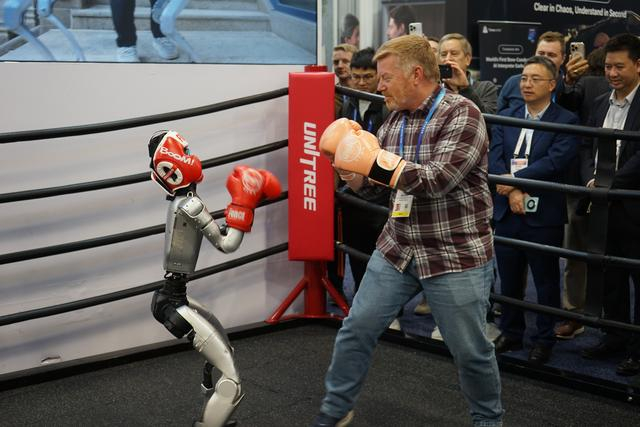
Group 1 - The 2026 Consumer Electronics Show (CES) in Las Vegas will take place from January 6 to 9, showcasing "Chinese manufacturing" with higher innovation density and clearer technological pathways, advancing towards international competition [1] - Visitors at CES are interacting with various robotic technologies, highlighting the growing presence of robotics in consumer electronics [3] - Shenzhen Zhongqing Robot Technology Co., as well as other companies, are exhibiting their robotic innovations at the event, indicating a strong focus on automation and robotics in the industry [5][7] Group 2 - Attendees are experiencing various products, including ice cream robots and smart glasses, which reflect the diversity of technological advancements being presented at CES [9][11] - Companies like TCL and Hisense are showcasing their latest innovations, such as smart glasses and RGB-Mini LED large screen televisions, emphasizing the trend towards enhanced visual technology [11][13] - The presence of electric bicycles at the event indicates a growing interest in sustainable transportation solutions within the consumer electronics sector [15]



品牌厂开始提前备货,1月TV面板价格有望迎来小幅上涨
Jianghai Securities· 2026-01-09 13:43
Investment Rating - The industry investment rating is "Overweight" (first time) [6] Core Insights - In January 2026, TV panel prices are expected to see a slight increase across the board due to the upcoming World Cup in June and the continuation of national subsidy policies [6] - In Q3 2025, global OLED display shipments increased by 65% year-on-year, with a total of approximately 644,000 units shipped [6] - Major panel manufacturers are maintaining full production capacity, while brand manufacturers are strategically increasing inventory ahead of demand [6] Summary by Sections Industry Performance - Over the past 12 months, the industry has shown a relative return of -4.82% compared to the CSI 300 index, with an absolute return of 20.21% [3] Market Trends - The demand for TV panels is expected to rise due to the World Cup and subsidy policies, leading to a potential price increase in January [6] - The supply side has seen tight conditions for certain production lines, which may lead to price adjustments for specific panel types [6] Company Insights - ASUS, Samsung, and MSI are the top three companies in OLED display shipments, with market shares of 21.9%, 18.0%, and 14.4% respectively [6] - Samsung is set to launch new Micro RGB TVs in 2026, featuring advanced LED technology [6] Investment Recommendations - Companies to watch include TCL Technology, JD.com A, OLED, Lite-On Technology, and Kangguang Technology due to the expected rise in TV panel prices and OLED shipment growth [6]



二十载品牌沉浮:Global Top Brands见证消费电子的迭代与坚守
Quan Jing Wang· 2026-01-09 12:12
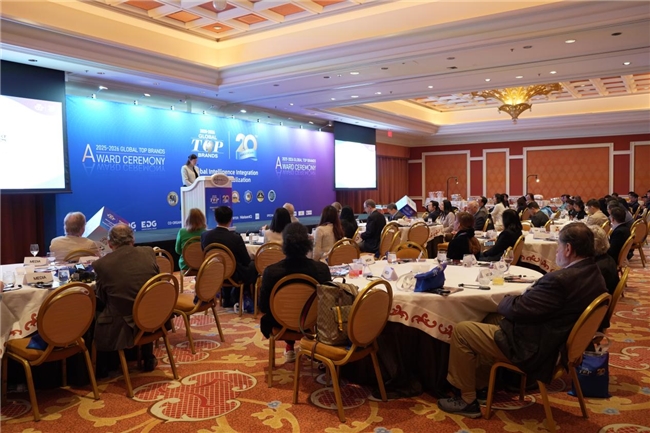
Core Insights - The Global Top Brands (GTB) awards celebrate 20 years of recognizing leading brands in the consumer electronics industry, reflecting the evolution of the market and technological advancements [1][3][28] Industry Evolution - Over the past two decades, the GTB awards have documented the rise of major brands like Apple, Samsung, and Sony, as well as the emergence of Chinese brands such as Huawei, TCL, and BOE, showcasing a shift from catching up to leading the market [3][21] - The consumer electronics industry has transitioned from single product competition to a comprehensive ecosystem, with AI playing a crucial role in driving innovation and industry progress [7][11] Market Trends - In 2025, the global technology and consumer electronics industry sales are projected to exceed $1.29 trillion, with emerging markets contributing 40% to this growth [15] - The display panel market is expected to reach $180 billion by 2025, with Chinese companies holding over 55% market share, indicating a significant shift in the competitive landscape [21] Brand Recognition - The GTB awards have gained international recognition, with the Nevada state government acknowledging its contributions to promoting global brand leadership and innovation in the consumer electronics sector [5][28] - The 2025-2026 GTB list includes leading brands like TCL and BOE, which have achieved recognition through technological innovation and market leadership [16][21] Smart Home Evolution - The smart home sector has evolved from single-device automation to a fully interconnected ecosystem, with Chinese brands becoming key players in this transformation [22] - The global smart home market is projected to surpass $2.1 trillion by 2025, with over 55% penetration of interconnected systems, highlighting the dominance of Chinese brands in this space [22] Brand Adaptation - Brands are increasingly crossing traditional boundaries and innovating to stay relevant, as seen with companies like Baidu and Meituan integrating technology into their services [26] - Continuous research and ecosystem development have allowed brands like Huawei, BOE, and TCL to transition from product exports to technology outputs, showcasing their adaptability in a changing market [26][28]
两条8.6代OLED产线今年将量产,高端笔记本将进入OLED时代
第一财经· 2026-01-09 12:08
Core Insights - The article discusses the expansion of flexible OLED panel applications, particularly in the IT and automotive sectors, driven by the upcoming mass production of 8.6-generation OLED panel lines by major manufacturers like BOE and Samsung in 2026 [3][4]. Group 1: OLED Panel Production and Market Penetration - In 2026, BOE and Samsung are expected to start mass production of their 8.6-generation OLED panel lines in Q2, which will accelerate the adoption of flexible and hybrid OLED panels in laptops [3]. - TCL Huaxing and Visionox are projected to begin mass production of their 8.6-generation OLED panel lines in Q3 and Q4 of 2027, respectively, further enhancing OLED panel usage in laptops [3]. - By 2030, the penetration rate of OLED panels in laptops is anticipated to reach approximately 19%, with OLED screens dominating the high-end laptop market [3]. Group 2: Advantages of OLED Panels - Compared to LCD screens, laptops equipped with OLED screens will offer superior performance in terms of lightweight design, portability, and image quality [4]. - The expected shipment volume of OLED laptop screens is projected to reach 45 million units by 2030, influenced by the differing production techniques of high-generation OLED panel lines [3][4]. Group 3: Cost and Technology Developments - TCL Huaxing's 8.6-generation OLED production line utilizes printing technology, which simplifies the manufacturing process and theoretically offers cost advantages, making OLED screens more accessible for mainstream laptops [4]. - The introduction of new generation chips by Intel and AMD, utilizing 2-3 nanometer processes, will enhance computing power, transitioning laptops from the 40 TOPS to the 50 TOPS era [4]. Group 4: Market Outlook - Despite rising memory costs, the global laptop market is expected to maintain stable shipment volumes in 2026, with growth anticipated in 2027 [5].

两条8.6代OLED产线今年将量产,高端笔记本将进入OLED时代
Di Yi Cai Jing· 2026-01-09 10:48
Core Insights - The year 2026 is projected to be pivotal for the promotion of affordable AI PCs, driven by the increased application of OLED screens and enhanced CPU capabilities [1][2] Group 1: OLED Panel Development - Two 8.6-generation OLED panel production lines are expected to commence mass production in 2026, accelerating the penetration of flexible and hybrid OLED panels in IT and automotive display sectors [1] - BOE and Samsung's 8.6-generation OLED panels are anticipated to be used in the next generation of Apple's MacBook Pro and will supply Taiwanese IT manufacturers, respectively [1] - TCL Huaxing and Visionox are expected to start mass production of their 8.6-generation OLED panels in Q3 and Q4 of 2027, further supporting the application of OLED panels in laptops [1] Group 2: Market Projections - The penetration rate of OLED panels in laptops is projected to reach nearly 20% by 2030, with OLED screens dominating the high-end laptop market [1] - The shipment volume of OLED laptop screens is expected to reach 45 million units by 2030 [1] Group 3: Technological Advancements - The adoption of OLED screens will enhance laptops' performance in terms of portability and display quality compared to LCD screens [1] - The introduction of new generation chips by Intel and AMD, utilizing 2-3 nanometer processes, is expected to elevate laptop computing power from 40 TOPS to 50 TOPS [2] - The new CPU architectures are anticipated to penetrate mainstream laptop product lines over the next three years, enabling more diverse task processing capabilities [2] Group 4: Market Outlook - Despite rising memory costs, the global laptop market is expected to maintain stable shipment volumes in 2026, with growth anticipated in 2027 [2]
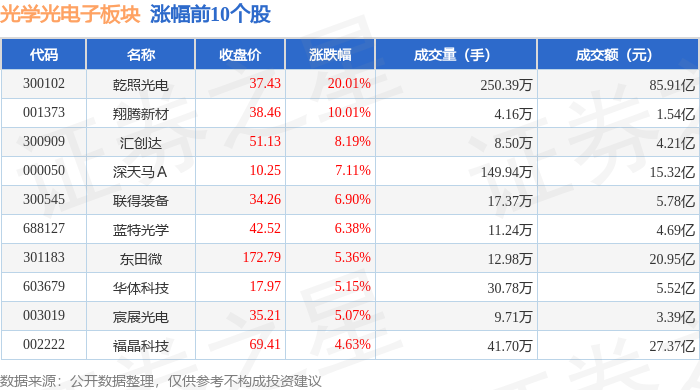
光学光电子板块1月9日涨2.11%,乾照光电领涨,主力资金净流出1860.91万元
Zheng Xing Xing Ye Ri Bao· 2026-01-09 08:54
Group 1 - The optical optoelectronics sector increased by 2.11% on January 9, with Qian Zhao Optoelectronics leading the gains [1] - The Shanghai Composite Index closed at 4120.43, up 0.92%, while the Shenzhen Component Index closed at 14120.15, up 1.15% [1] - Qian Zhao Optoelectronics saw a significant rise of 20.01%, closing at 37.43, with a trading volume of 2.5039 million shares and a transaction value of 8.591 billion [1] Group 2 - The optical optoelectronics sector experienced a net outflow of 18.6091 million from institutional funds, while retail investors saw a net inflow of 48.6 million [2] - The trading data indicates that major stocks like Fuzhijing Technology and Deep Tianma A had significant net inflows from retail investors, despite overall sector outflows [3] - The stock performance varied, with some companies like Guangzhi Technology and Wenbisen experiencing declines of 5.92% and 5.81% respectively [2]


通讯丨“中国智造”在美消费电子展舞台逐浪前行
Xin Hua Wang· 2026-01-09 08:28
Core Insights - "Chinese manufacturing" is making significant strides at the CES, showcasing higher innovation density and clearer technological pathways, positioning itself at the forefront of international competition [1] Group 1: Industry Participation - Over a thousand Chinese companies participated in CES, including industry leaders like TCL, Hisense, BOE, and Lenovo, as well as numerous startups [1] - Several Chinese companies received "CES Innovation Awards," highlighting global recognition of their innovative capabilities [1] Group 2: Display Technology - Chinese companies are leading in the display technology sector, shifting focus from single product parameters to AI-supported full-scene application revolutions [2] - TCL had the largest and most diverse exhibition space, showcasing innovations in television screens, electronic writing pads, and AR glasses [2] - Hisense presented next-generation large-screen display solutions, emphasizing color space enhancement and system optimization for eye protection [2] - The Chinese display industry has evolved from a technology follower to a global leader, particularly in LCD and OLED technologies [2] Group 3: Robotics Innovation - AI and robotics were major highlights at CES, with Chinese companies dominating the humanoid robot and related sectors, demonstrating rapid iteration and scalability [3] - Various robots showcased capabilities such as emotional companionship, autonomous lawn maintenance, and advanced coffee-making, emphasizing real-world application [3] - The focus has shifted from conceptual displays to tangible intelligent products that adapt to real environments [3] Group 4: Smart Home Solutions - Smart home technology has become a key area for Chinese companies to demonstrate systemic innovation and lifestyle solutions [4] - Solutions showcased include AI and IoT applications that create intelligent systems capable of perceiving, learning, and interacting [4][5] - Products like smart air conditioners and refrigerators exhibit advanced features such as dynamic energy management and food preservation [5] Group 5: Intelligent Mobility - Intelligent mobility was a focal point, with Chinese automotive companies showcasing innovations in smart cockpits and AI integration [6] - Geely's WAM model enhances understanding of complex driving scenarios, improving overall driving experiences [6] - Chinese companies are transitioning from cost and scale advantages to focusing on user experience, system integration, and technological maturity in the smart mobility sector [6] Group 6: Global Impact - CES serves as a platform for international collaboration and industry dialogue, with China recognized as a key driver of global technological advancement [6] - Chinese consumer electronics companies are accelerating their smart upgrades, becoming pioneers in global AI development [6] - "Chinese manufacturing" continues to navigate the waves of global technological change, contributing to the formation of a new international tech landscape through innovation and application [6]

CES变成中国科技秀:机器人跳舞、熊猫获奖
3 6 Ke· 2026-01-09 08:24
Group 1: Core Themes of CES 2026 - The main theme of CES 2026 is "human-centered" AI applications, marking a shift from traditional consumer electronics to AI-centric technological transformations [1] - Chinese companies are increasingly taking center stage at CES, with 942 exhibitors, accounting for approximately 22% of the total, maintaining their position as the second-largest exhibiting nation [1] - In specific sectors, Chinese firms dominate, with 55% of humanoid robot exhibitors and nearly 70% of AI glasses brands coming from China [1] Group 2: Robotics and AI Innovations - Chinese manufacturers are expected to continue leading in cost reduction and efficiency improvements in humanoid robots, showcasing their capabilities in unstructured environments [2] - Notable products include the Unitree H1 humanoid robot with advanced sensing capabilities and the latest generation of the "绝影" series robotic dogs, which excel in indoor navigation [4][11] - The "Care-bot" humanoid robot by Fourier demonstrates embodied intelligence in real-life interaction scenarios [7] Group 3: Consumer Electronics and Smart Devices - Over 80% of global smart glasses supply chain manufacturers are from China, with 16 Chinese companies showcasing their products at CES [15] - Innovations in smart home devices include the AI-driven "安安" companion robot designed for elderly and cognitively impaired individuals [16] - Companies like Alibaba and XREAL are launching advanced AI glasses, with features such as ultra-lightweight designs and integration with various AI services [19][20] Group 4: Automotive and AI Integration - The automotive industry is transitioning from "software-defined" to "AI-defined" vehicles, with companies like Geely and Great Wall showcasing new technologies [28] - Geely's G-ASD smart driving solution and Great Wall's focus on new energy technologies highlight the industry's shift towards AI integration [30][32] - New products like the AI-driven logistics solutions from New Stone and advanced lidar technology from Hesai demonstrate the growing importance of AI in transportation [34][35] Group 5: Home Appliances and AI - Hisense introduced new RGB-Mini LED display technology and AI-controlled smart refrigerators, showcasing the integration of AI in home appliances [41] - TCL's innovations in display technology, including the world's first printed OLED car screen, reflect advancements in consumer electronics [43][44] - Companies are increasingly focusing on AI capabilities in home security and smart home management systems [51][49] Group 6: Overall Impact of AI - CES 2026 emphasizes the profound impact of AI on the consumer electronics industry, with expectations for AI user numbers to grow significantly [59] - The event serves as a platform for global tech companies to set the foundation for future technological development and transformation [59] - The integration of AI into various sectors, including robotics, automotive, and consumer electronics, indicates a trend towards deeper AI adoption in everyday life [59]





TCL科技涨2.16%,成交额5.65亿元,主力资金净流出1309.83万元
Xin Lang Cai Jing· 2026-01-09 02:14
Core Viewpoint - TCL Technology has shown a positive stock performance with a year-to-date increase of 4.41% and a market capitalization of approximately 98.6 billion yuan as of January 9 [1]. Financial Performance - For the period from January to September 2025, TCL Technology achieved a revenue of 135.943 billion yuan, representing a year-on-year growth of 10.50% [2]. - The net profit attributable to shareholders for the same period was 3.047 billion yuan, marking a significant year-on-year increase of 99.75% [2]. Shareholder Information - As of September 30, 2025, the number of shareholders for TCL Technology was 671,100, a decrease of 2.22% from the previous period [2]. - The average number of circulating shares per shareholder increased by 2.27% to 26,965 shares [2]. Dividend Distribution - Since its A-share listing, TCL Technology has distributed a total of 14.683 billion yuan in dividends, with 2.491 billion yuan distributed over the last three years [3]. Major Shareholders - The largest circulating shareholder is Hong Kong Central Clearing Limited, holding 945 million shares, an increase of 91.023 million shares from the previous period [3]. - China Securities Finance Corporation is the fifth largest shareholder, maintaining its holding of 411 million shares [3]. - Huatai-PB CSI 300 ETF and other ETFs have also increased their holdings, indicating growing institutional interest [3].
掘金CES 2026:AI全域渗透加速,应用端投资机会将至?
智通财经网· 2026-01-09 00:55
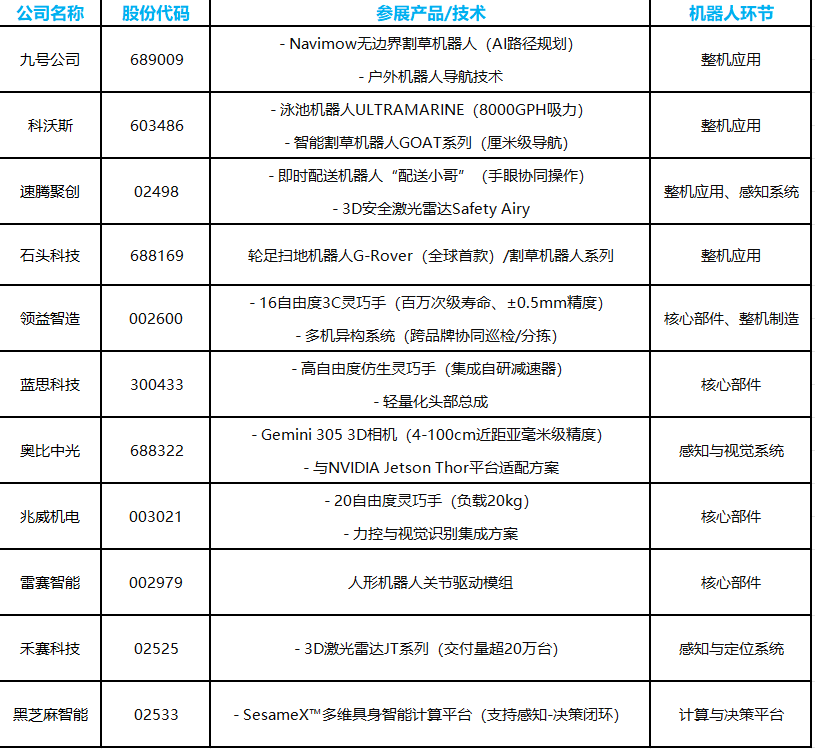
Group 1: CES 2026 Overview - CES 2026, known as the "Spring Festival Gala" of the tech industry, commenced on January 6 in Las Vegas, focusing on "defining the physical boundaries of AI" [1] - The event featured 207 Chinese companies across various cutting-edge fields, including AI, smart wearables, and smart home technologies, showcasing over 120 small and medium-sized tech firms [1] - The technologies presented by leading Chinese companies reflect the country's technological strengths and outline key directions for global industry evolution [1] Group 2: Robotics and AI Technologies - AI and robotics technologies were a major highlight at CES 2026, with global leaders showcasing various robots and core components [2] - NVIDIA's CEO announced that the robotics sector has entered its "ChatGPT moment," introducing world models to enhance robots' understanding of physical properties and spatial relationships [2] - Chinese companies, including Yushu Technology and Fourier, presented a wide range of innovative products, covering industrial applications, daily life, medical assistance, and emergency rescue [2][3] Group 3: Key Exhibitors and Innovations - Notable exhibitors included Ninebot, Ecovacs, and SUTENG, showcasing advanced robotic solutions such as AI path-planning lawn mowers and delivery robots capable of complex tasks [4][5] - Companies like Lingyi Zhi Zao and Zhaowei Electric displayed high-freedom dexterous hands and collaborative systems, indicating significant advancements in robotics [5] - The emergence of a cohesive display of robotics indicates a breakthrough in China's robotics industry, transitioning from fragmented to integrated solutions [5] Group 4: Automotive Innovations - The automotive sector at CES 2026 emphasized the transformation of vehicles into "smart partners" with emotional resonance and autonomous capabilities [6] - NVIDIA introduced the world's first open-source autonomous driving model, aiming to address challenges in extreme weather and construction detours [6] - Chinese automakers, including Great Wall Motors and Geely, showcased innovative models and technologies, highlighting the integration of smart features and collaboration with supply chain partners [6][7] Group 5: Wearable Devices and AI Glasses - Wearable devices, particularly AI glasses, gained significant attention at CES 2026, with over 60% of the showcased products coming from Chinese brands [10][11] - Innovations included independent communication-capable AR glasses and various health monitoring devices, indicating a shift towards mass production and consumer adoption [10][11] - The advancements in display and optical technologies for AI glasses reflect a robust ecosystem supporting the transition from concept to widespread use [12][13] Group 6: Industry Trends and Future Outlook - The CES 2026 event signaled a clear shift in AI's role from mere technology demonstration to deep integration within industry value chains [14] - The trend of AI becoming a physical entity is accelerating, with applications in robotics, smart driving, and wearable devices becoming observable realities [14] - Investors are encouraged to focus on the transition from technology validation to commercial scale, marking a critical window for capturing scene-based opportunities in 2026 [14]