TNMG(000630)

Search documents
现货黄金价格再创历史新高,黄金股票ETF基金(159322)稳步走强
Xin Lang Cai Jing· 2025-12-22 02:44
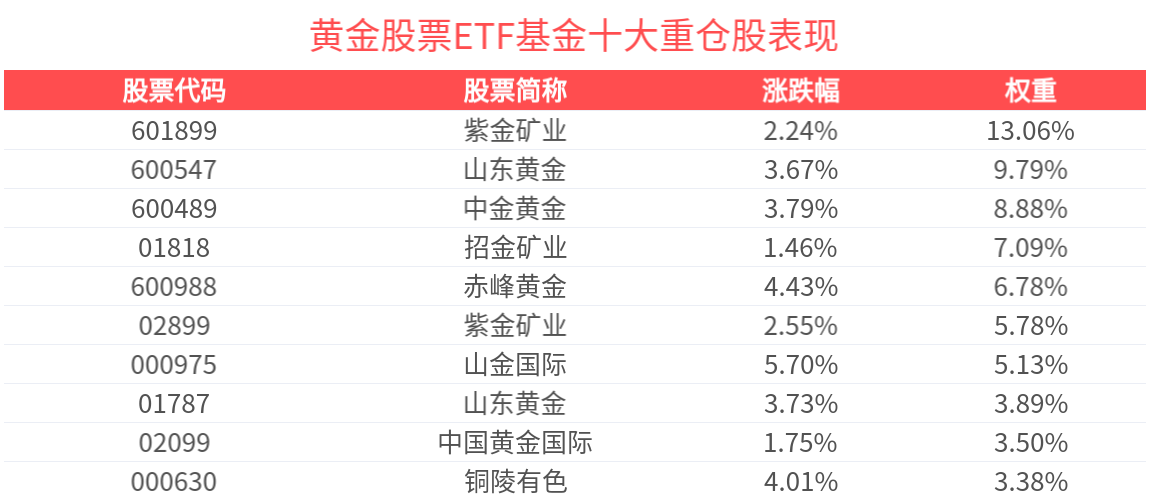
Group 1 - The core viewpoint of the news is that the spot gold price has surged, breaking its previous record and achieving a year-to-date increase of over 65% due to multiple factors including central bank purchases, geopolitical risks, and market re-evaluations of the Federal Reserve's interest rate cycle [1] Group 2 - The spot gold price reached a new high of $4,381.484, surpassing the previous record set on October 20 [1] - The China Securities Index for gold industry stocks (931238) rose by 3.40%, with significant increases in individual stocks such as Silver and Nonferrous (up 9.85%) and China National Gold (up 7.12%) [1] - The gold stock ETF fund (159322) increased by 3.35%, with a latest price of 1.67 yuan [1] Group 3 - The gold stock ETF fund experienced a turnover of 6.5% and a transaction volume of 6.8171 million yuan [2] - The fund's scale grew by 520.98 million yuan over the past two weeks [2] - The index reflects the performance of 50 large-cap companies involved in gold mining, refining, and sales, with the top ten stocks accounting for 68.26% of the index [2] Group 4 - The top ten weighted stocks in the gold industry index include Zijin Mining, Shandong Gold, and Zhongjin Gold, with Zijin Mining holding the highest weight at 13.06% [3]




有色钢铁行业周观点(2025年第51周):金铜铝铁权益滞后商品的现象或将改变-20251222
Orient Securities· 2025-12-22 02:20
Investment Rating - The report maintains a "Positive" investment rating for the non-ferrous and steel industry [5]. Core Insights - The phenomenon of gold, copper, aluminum, and iron equities lagging behind commodity prices is expected to change, with market expectations for mid-term price increases strengthening as commodity prices reach new highs [7][11]. - The gold sector is anticipated to benefit from rising commodity prices and inflation expectations due to a decline in non-farm employment, which has increased the likelihood of interest rate cuts [7][11]. - The copper sector is viewed positively due to the demand for traditional power grid upgrades, which is expected to support copper consumption and create a supply-demand imbalance favoring copper prices [12]. - The aluminum sector is expected to see price increases following the closure of the Mozal aluminum plant and the high copper-aluminum price ratio, which is likely to drive demand for aluminum as a substitute for copper [13]. - The steel sector is poised to benefit from the introduction of export license management for certain steel products, which may encourage a shift towards higher value-added product exports [14]. Summary by Sections Steel Market Overview - Supply and demand fundamentals are weak in the off-season, but steel profitability is showing signs of recovery [15]. - Iron output has slightly decreased, while steel demand has shown marginal improvement, with rebar consumption increasing by 2.73% week-on-week [20]. - Overall steel prices have seen a slight increase, with the rebar price rising to 3345 CNY/ton, reflecting a week-on-week increase of 0.87% [33]. New Energy Metals - Lithium carbonate production in November 2025 saw a significant year-on-year increase of 84.78%, indicating strong supply growth in the new energy sector [37]. - The demand for new energy vehicles remains robust, with production and sales of new energy passenger cars in October 2025 showing year-on-year growth of 19.94% and 18.65%, respectively [41]. Price Trends - The report notes a general increase in metal prices, with lithium and cobalt prices rising significantly, while nickel prices have shown mixed trends [46].


铜陵有色董事长丁士启一行到海螺集团访问交流
Zheng Quan Shi Bao Wang· 2025-12-20 06:08
Core Viewpoint - The meeting between Tongling Nonferrous Metals Group and Conch Group aims to enhance strategic cooperation and achieve mutual benefits through resource and industry advantages [1] Group 1 - The chairman of Tongling Nonferrous Metals Group, Ding Shiqi, led a delegation to Conch Group for an exchange visit [1] - Conch Group's chairman, Yang Jun, expressed the desire to leverage this exchange to deepen cooperation across multiple fields [1] - The focus of the collaboration is on achieving complementary advantages and promoting win-win development [1]
研判2025!中国铜靶材行业政策、产业链、市场规模、竞争格局及前景展望:半导体产业发展提速,推动铜靶材规模增长至25.15亿元[图]
Chan Ye Xin Xi Wang· 2025-12-20 03:31
Industry Overview - The copper target industry is crucial for the vacuum coating process, primarily used in semiconductor manufacturing, flat panel displays, and solar photovoltaic applications [1][4] - The market size of China's copper target industry is projected to grow from 1.207 billion yuan in 2019 to 2.515 billion yuan in 2024, with a compound annual growth rate (CAGR) of 15.81% [1][13] - The demand for high-performance targets is increasing due to advancements in semiconductor technology and the expansion of market scale [1][12] Market Dynamics - The semiconductor industry is a key application area for copper targets, with the market size expected to grow from 2,638.573 billion yuan in 2015 to 4,734.473 billion yuan in 2024, reflecting a CAGR of 6.71% [12] - The domestic sputtering target market reached 39.5 billion yuan in 2022, with a year-on-year growth of 6.76%, and is projected to further increase to 46.7 billion yuan in 2024, growing by 8.35% [12][13] Production Methods - Copper target production methods include melting and casting, powder metallurgy, and deposition techniques, each with specific processes to ensure high purity and quality [6][8] - The purity of copper targets is critical, with requirements for ultra-high purity levels (6N or higher) to meet the demands of advanced semiconductor processes [14][16] Industry Policies - The Chinese government has implemented policies to promote technological innovation and ensure the security of the copper target industry, including the "Standard Enhancement Action Plan" for key strategic materials [9][10] - Specific performance requirements for high-purity copper targets have been established, including purity levels, density, and impurity content [9] Competitive Landscape - The copper target industry in China features a mix of foreign and domestic companies, with foreign firms like JX Nippon Mining & Metals and Honeywell leading in high-end markets [14] - Domestic companies such as Jiangfeng Electronics and Aishi Innovation are rapidly advancing through technology investments and capacity expansion, aiming to increase their market share [14][15] Future Trends - The industry is moving towards higher purity and composite functionality in copper targets to meet stringent requirements for semiconductor applications [18] - There is a growing demand for larger and more complex target shapes to accommodate advancements in semiconductor and display technologies [17] - Sustainable manufacturing practices and recycling systems are becoming essential, focusing on reducing energy consumption and enhancing material recovery [18]


以国际化论坛搭建交流平台,共商有色金属产业国际化发展之路
Sou Hu Cai Jing· 2025-12-19 17:15
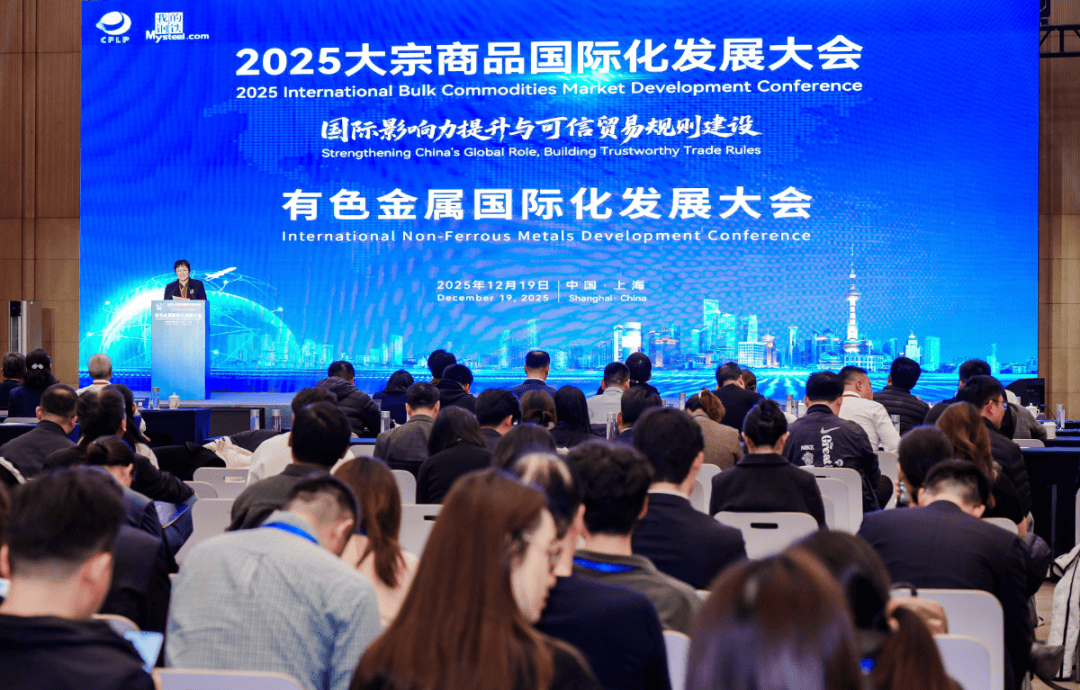
Core Viewpoint - The 2025 International Commodity Internationalization Development Conference, themed "Enhancing International Influence and Building Trustworthy Trade Rules," opened in Shanghai, with a parallel event focusing on the international development of the non-ferrous metal industry [1][4]. Industry Insights - The non-ferrous metal industry is a cornerstone of strategic emerging industries, playing a crucial role in promoting high-quality economic development. It supports high-end manufacturing, new energy, electronic information, infrastructure construction, traditional industrial upgrades, and national defense security [4]. - Key speakers at the conference included Liu Wei, Vice President and Secretary-General of the Recycled Metal Branch of the China Nonferrous Metals Industry Association, who analyzed the development path of the recycled metal industry in the context of internationalization [4]. - Zhang Qingdong, Senior Manager of the China Mineral Resources Research Institute, provided insights into the new global copper resource supply landscape and strategies for China to navigate multiple risks [4]. Opportunities and Trends - The topic of "Development and Opportunities for Shanghai's Non-Ferrous Metal Circulation Industry under Internationalization" was a hot discussion point, highlighting Shanghai's historical opportunity as a national trading center for non-ferrous metals [5]. - Financial tools, such as futures and derivatives, were discussed by Che Hongyun, Deputy Director of the Research Institute of Galaxy Futures, emphasizing their role in helping non-ferrous metal companies manage international market price volatility [5]. - The conference also addressed the new consumption patterns of non-ferrous metals driven by new energy and new materials, as analyzed by Chen Xionghui, Deputy General Manager of Zhejiang Huayou Recycling Technology Co., Ltd. [5]. Regional Development - The event took place in Putuo District, which has a deep-rooted connection to the non-ferrous metal industry, being home to the first national-level futures market, the Shanghai Metal Exchange, established in the 1990s [5]. - As of November this year, the trading volume in Putuo District has reached the total level of the previous year, with a year-on-year growth of 5%, leading in both scale and growth rate among central urban areas [7]. - The core facility, Wutrade Building, has attracted over 400 non-ferrous metal trading companies, along with logistics, futures, and banking institutions, creating a robust industrial ecosystem [7]. Future Directions - The conference aims to provide a significant platform for promoting international rule alignment and influence expansion in the non-ferrous metal sector, facilitating the internationalization, digitalization, and intelligence of commodity trade [7]. - Looking ahead, Putuo District plans to further develop high-level open platforms, enhance the linkage between spot and futures markets, and promote the internationalization of "Shanghai prices" [7].

2025年全球及中国汽车线缆行业分类、产业链、市场规模、重点企业及发展趋势研判:汽车产业发展态势良好,驱动汽车线缆规模突破200亿元[图]
Chan Ye Xin Xi Wang· 2025-12-19 01:49
Core Insights - The automotive cable industry is crucial for electric energy transmission, signal transmission, and control in vehicles, with increasing importance due to the rise of electric vehicles and automotive intelligence [1][7] - The market size of China's automotive cable industry is projected to grow from 149 billion yuan in 2021 to 193.2 billion yuan in 2024, with a compound annual growth rate (CAGR) of 9.05% [1][7] - The global automotive cable market is expected to expand from $58.21 billion in 2020 to $71.74 billion in 2024, with a CAGR of 5.36% [6] Industry Overview - Automotive cables are specifically designed for vehicles, categorized by purpose (signal and power cables), material (copper and aluminum), voltage (high and low), and temperature tolerance (high and low) [3] - The automotive cable industry supply chain includes raw materials (copper, aluminum, rubber, plastic), manufacturing, and downstream automotive manufacturers [3] Market Trends - The automotive cable market is expected to benefit from the increasing demand for electric vehicles and the advancement of smart connectivity in cars, leading to higher cable usage and value per vehicle [1][4] - The market size is anticipated to exceed 200 billion yuan by 2025, driven by economic growth and rising consumer demand [1][7] Competitive Landscape - The Chinese automotive cable industry is characterized by a mix of foreign dominance and local competition, with companies like Yazaki and Sumitomo leading the high-end market, while domestic firms like Carby and Xinhongye are gaining market share [8] - Carby and Xinhongye are focusing on technology introduction and cost advantages to enhance their market presence, especially in the growing electric vehicle segment [8] Challenges - The industry faces challenges such as outdated raw material performance, which affects the development of new automotive cables and increases operational costs [11] - The supply chain is often closed, with established international brands preferring to source from stable partners, making it difficult for local manufacturers to penetrate these networks [12] Future Development Trends - Lightweight cables are becoming a focus due to the push for energy efficiency and electric vehicle transition, utilizing aluminum alloys and innovative insulation materials [13][14] - High-voltage systems are being integrated into electric vehicles, necessitating advancements in insulation materials and safety features [15] - The demand for high-speed data transmission is increasing, leading to the development of high-frequency and high-speed cable systems [16] - Smart manufacturing technologies are reshaping production processes, enhancing flexibility and customization in cable manufacturing [17]



养老金概念17日主力净流入10.89亿元,亨通光电、香农芯创居前
Sou Hu Cai Jing· 2025-12-18 08:13
Core Viewpoint - The pension concept index increased by 1.2% on December 17, with a net inflow of main funds amounting to 1.089 billion yuan, indicating positive investor sentiment in this sector [1] Group 1: Market Performance - A total of 85 stocks within the pension concept rose, while 13 stocks declined [1] - The leading stocks by net inflow were Hengtong Optic-Electric (5.06 billion yuan), Xiangnong Chip (3.28 billion yuan), Zhongtung High-Tech (2.81 billion yuan), Yongxing Materials (1.73 billion yuan), and Zhangyuan Tungsten Industry (98.088 million yuan) [1] Group 2: Individual Stock Performance - Hengtong Optic-Electric had a latest price of 21.67 yuan, with an increase of 8.84% and a net inflow of 5.06 billion yuan, representing 13.58% of the main fund [1] - Xiangnong Chip's latest price was 137.56 yuan, with a rise of 6.72% and a net inflow of 3.28 billion yuan, accounting for 7.42% of the main fund [1] - Zhongtung High-Tech's latest price was 28.51 yuan, with a gain of 19.44% and a net inflow of 2.81 billion yuan, making up 6.06% of the main fund [1] - Yongxing Materials had a latest price of 48.17 yuan, with an increase of 3.51% and a net inflow of 1.73 billion yuan, which is 14.31% of the main fund [1] - Zhangyuan Tungsten Industry's latest price was 14.27 yuan, with a rise of 4.08% and a net inflow of 98.088 million yuan, representing 6.41% of the main fund [1]


铜陵有色涨2.03%,成交额2.97亿元,主力资金净流入475.88万元
Xin Lang Cai Jing· 2025-12-18 02:13
Core Viewpoint - Tongling Nonferrous Metals Group Co., Ltd. has shown significant stock performance with a year-to-date increase of 79.87% and a recent trading volume indicating strong investor interest [1][2]. Financial Performance - For the period from January to September 2025, Tongling Nonferrous achieved operating revenue of 121.89 billion yuan, representing a year-on-year growth of 14.66%. However, the net profit attributable to shareholders decreased by 35.14% to 1.77 billion yuan [2]. - The company has distributed a total of 7.805 billion yuan in dividends since its A-share listing, with 3.487 billion yuan distributed over the past three years [3]. Stock Market Activity - As of December 18, the stock price reached 5.54 yuan per share, with a trading volume of 297 million yuan and a market capitalization of 74.288 billion yuan [1]. - The stock has seen significant trading activity, with a net inflow of 4.7588 million yuan from main funds and notable buying from large orders [1]. Shareholder Structure - As of September 30, 2025, the number of shareholders decreased to 269,200, while the average number of circulating shares per person increased by 13.31% to 41,386 shares [2][3]. - Major shareholders include Hong Kong Central Clearing Limited, which increased its holdings by 45.0331 million shares, and various ETFs that have seen changes in their shareholdings [3].
【行业研究】求“铜”存异,负加工费时代的铜冶炼企业——有色金属行业深度研究
Xin Lang Cai Jing· 2025-12-17 14:19
Core Insights - The global copper smelting industry, particularly Chinese enterprises, is facing severe challenges and strategic transformations as it enters a historic "negative processing fee" era, driven by structural imbalances between tight mineral supply and expanded smelting capacity [1][28] - Leading companies are adapting by enhancing resource self-sufficiency, exploring by-product value, optimizing technology for cost reduction, utilizing financial tools flexibly, and promoting industry consolidation to build new competitive advantages [1][28] - Long-term growth is anticipated as demand for materials from new energy and high-end manufacturing continues to rise, transitioning the copper smelting industry from a "strong cyclical attribute" to a "growth attribute" for high-quality development [1][28] Industry Background - Copper is one of the earliest metals recognized and used by humans, with extensive applications due to its excellent conductivity, thermal conductivity, ductility, and corrosion resistance [2][29] - The copper industry chain is divided into upstream mining, midstream copper smelting, and downstream copper processing, ultimately reaching the end consumer market [2][29] Current Industry Challenges - China, as the largest refined copper producer, has limited copper mineral resources and heavily relies on imported ores, a situation expected to persist in the short term [4][31] - In 2024, China's copper ore production is projected to be approximately 1.8 million tons, a year-on-year decrease of 11%, while refined copper production is expected to reach 13.64 million tons, an increase of over 5% [4][31] - The self-sufficiency rate for copper concentrate in China is only 13%, with imports of copper concentrate expected to rise to 28.11 million tons in 2024 [4][31] Processing Fee Dynamics - The processing fee (TC/RC) has entered a downward trend, with the first negative value recorded for imported copper concentrate in 2025, reaching a historical low of -40 USD per dry ton [4][32] - The decline in processing fees reflects the structural imbalance between tight raw material supply and expanded smelting capacity, severely impacting the bargaining power of Chinese smelting enterprises [5][32] Impact of Negative Processing Fees - The "negative processing fee" indicates that smelting companies not only fail to earn processing income but must pay fees to obtain processing rights for copper concentrate, fundamentally disrupting traditional profit models [6][35] - Various scenarios illustrate the impact of processing fee declines on profitability, with significant losses projected if processing fees remain negative [6][36] Profitability Analysis - From 2023 to 2025, the benchmark for long-term copper concentrate processing fees is expected to decline significantly, with 2024 and 2025 fees projected at 80 USD per dry ton and 21.25 USD per dry ton, respectively [7][37] - Despite ongoing resource shortages and cost pressures, leading smelting companies have not significantly reduced production, continuing capital expenditures in the industry [7][37] Company Performance Metrics - Key companies in the copper smelting sector, such as Jiangxi Copper, Tongling Nonferrous, and Jinchuan Group, show varying production capacities and financial metrics, with some facing negative cash flows [9][38] - For instance, Jiangxi Copper has a smelting capacity of 2.13 million tons and reported a cash flow deficit of 7.73 million [9][38] Resource Self-Sufficiency - The self-sufficiency of mineral resources is critical for copper smelting companies, directly affecting their production, costs, competitiveness, and sustainability [11][11] - Companies are attempting to transition from "processing services" to "resource production" to mitigate the impact of low self-sufficiency on profitability [11][11] By-Product Revenue - The production of sulfuric acid as a by-product in copper smelting has become increasingly profitable, with companies like Jiangxi Copper and Tongling Nonferrous reporting high gross profit margins from sulfuric acid sales [13][15] - The recovery of precious metals from copper anode mud also presents significant economic value, with advanced extraction technologies in place [14][15] Technological Advancements - Continuous technological improvements in smelting processes and green transformations have positioned leading companies at the forefront of global standards, enhancing recovery rates and reducing costs [18][19] - Scale production helps lower fixed costs, with major companies maintaining low production costs despite the challenges posed by negative processing fees [19][19] Future Outlook - The copper smelting industry faces numerous survival challenges, but through strategic collaboration and healthy development, companies may maintain profitability even in a negative processing fee environment [24][27] - The global copper market is expected to shift from surplus to shortage by 2026, with prices anticipated to remain high due to supply concerns from major mining regions [27][28]

黄金价格强势上行,黄金股票ETF基金(159322)涨超2%
Xin Lang Cai Jing· 2025-12-17 06:12
Group 1: Employment Data - The U.S. non-farm employment increased by 64,000 in November, surpassing the market expectation of 50,000, but manufacturing employment has dropped to its lowest level since March 2022 [1] - The unemployment rate unexpectedly rose to 4.6%, the highest since September 2021, although this increase coincided with a rise in the labor participation rate [1] - Non-farm employment saw a significant decrease of 105,000 in October, with August and September also revised down by a total of 33,000 [1] Group 2: Wage Growth - The average hourly wage in November grew by 3.5% year-on-year, marking the lowest growth rate since May 2021, indicating a slowdown in real wage growth [1] Group 3: Market Reactions - Despite the overall weak data, there remains a divergence in market expectations regarding the Federal Reserve's interest rate cut path, leading to increased short-term volatility in gold prices [1] - The long-term appeal of gold as a safe-haven asset and its anti-inflation value continues to attract capital [1] Group 4: Gold Price Forecast - Goldman Sachs predicts that gold prices will reach $4,900 per ounce by the end of 2026, driven by increased holdings from households or institutional investors seeking to diversify risk amid high macroeconomic uncertainty [2] Group 5: Gold Industry Index Performance - As of December 17, 2025, the CSI Hong Kong-Shenzhen Gold Industry Stock Index (931238) rose by 2.87%, with constituent stocks such as Shandong Gold and Jiangxi Copper seeing significant gains [2] - The gold stock ETF fund saw a turnover of 7.16% during the trading session, with a transaction volume of 7.3346 million [2] Group 6: Top Holdings in Gold Industry Index - The top ten weighted stocks in the CSI Hong Kong-Shenzhen Gold Industry Stock Index account for 68.26% of the index, including companies like Zijin Mining and Shandong Gold [3]