Qinghai Salt Lake Industry (000792)

Search documents
A股异动丨锂矿股集体下挫,赣锋锂业、盐湖股份跌超4%
Ge Long Hui A P P· 2026-03-03 05:21
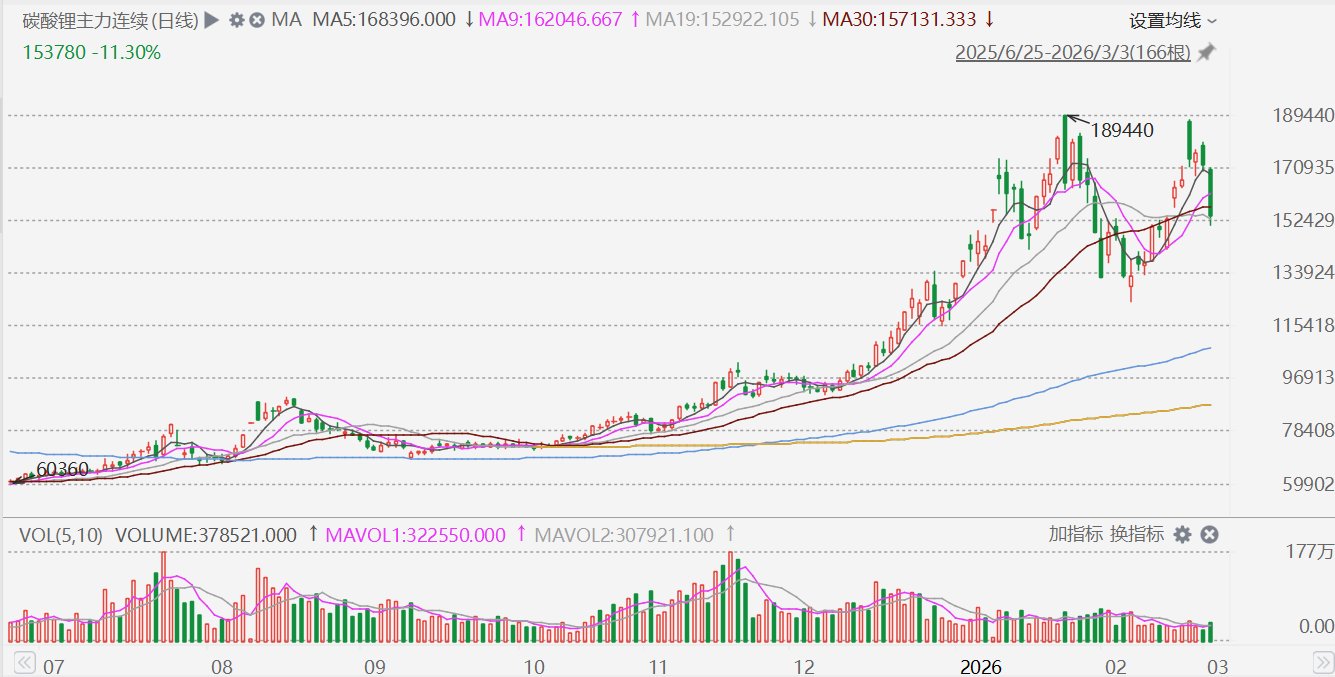
Group 1 - The A-share market saw a collective decline in lithium mining stocks, with companies such as Huayou Cobalt and Zhongmin Resources dropping over 6% [1] - Other companies like Tibet Summit and Western Mining also experienced significant declines, falling over 5%, while companies including Cangge Mining, Erkang Pharmaceutical, Ganfeng Lithium, Salt Lake Industry, and Tianqi Lithium dropped over 4% [1] - The main contract for lithium carbonate experienced a substantial drop, reaching a maximum decline of 12.99% during the trading session, with a price of 150,860 yuan per ton [1]


材料ETF(159944)开盘涨1.43%,重仓股紫金矿业涨2.15%,洛阳钼业涨1.71%
Xin Lang Cai Jing· 2026-03-02 01:36
Group 1 - The Materials ETF (159944) opened with a gain of 1.43%, priced at 1.846 yuan [1] - Key holdings in the Materials ETF include Zijin Mining (+2.15%), Luoyang Molybdenum (+1.71%), and Northern Rare Earth (+1.86%) [1] - The ETF's performance benchmark is the CSI All Share Materials Index, managed by GF Fund Management Co., Ltd., with a return of 82.05% since its inception on June 25, 2015, and a return of 3.93% over the past month [1]



美伊冲突或推高甲醇、乙二醇、尿素价格,陕西试点差别电价,节后化工品价格将迎来全面上行


Shenwan Hongyuan Securities· 2026-03-01 14:06
Investment Rating - The report maintains an "Optimistic" rating for the chemical industry [4][5]. Core Insights - The geopolitical conflict between the US and Iran is expected to drive up prices for methanol, ethylene glycol, and urea, with a comprehensive price increase anticipated for chemical products after the holiday [4]. - The report highlights the impact of differentiated electricity pricing in Shaanxi, which may accelerate the exit of outdated production capacities and improve industry dynamics [4]. - The overall capital expenditure in the chemical sector is at its peak, with low inventory levels in the supply chain, suggesting a favorable environment for price increases as downstream production resumes post-holiday [4]. Industry Dynamics - Current macroeconomic judgment indicates that oil prices are expected to remain in a relatively loose range, with Brent crude projected between $60 and $75 per barrel due to delayed OPEC+ production increases and stable demand recovery [5]. - Coal prices are expected to stabilize at a low level in the medium to long term, while natural gas costs may decrease as the US accelerates its export facility construction [5]. - The report notes that the January PPI for industrial products decreased by 1.4% year-on-year but increased by 0.4% month-on-month, indicating a slight recovery in the manufacturing sector [7]. Investment Analysis - The report suggests focusing on four main areas for investment: 1. Textile and apparel chain, benefiting from high demand growth and improved supply dynamics [4]. 2. Agricultural chemicals, with stable fertilizer demand and increasing transgenic penetration supporting long-term pesticide demand [4]. 3. Export-related chemical products, as overseas inventories are at historical lows and interest rates are expected to decline [4]. 4. "Anti-involution" policies leading to accelerated clearance of outdated capacities in various sectors [4]. Key Material Focus - The report emphasizes the importance of self-sufficiency in key materials, particularly in semiconductor and panel materials, as well as in lithium battery and fluorine materials [4].
基础化工行业周报:关注油价上涨,关注化工旺季到来—看好全球化工反内卷大周期+AI需求大周期-20260301
Guohai Securities· 2026-03-01 13:04
Investment Rating - The report maintains a "Recommended" rating for the chemical industry [1] Core Insights - The report highlights the solid cost and efficiency advantages of leading Chinese chemical companies, which are entering a long-term upward performance phase. The recovery in demand is expected to sustain the improvement in the performance of supply-constrained sectors. The carbon emission control measures are likely to lead to a re-evaluation of the Chinese chemical industry, with capacity expansion slowing down significantly. This is expected to enhance free cash flow and potential dividend yields for companies, transforming them from cash-consuming entities to cash-generating ones. The report emphasizes the importance of demand, value, and supply in identifying investment opportunities [2][29] Summary by Sections Recent Trends - As of February 26, 2026, the Guohai Chemical Prosperity Index stands at 94.19, reflecting a slight increase of 0.22 from February 19, 2026 [1] Performance Analysis - The basic chemical sector has shown a performance increase of 6.0% over the past month, 26.1% over the past three months, and 52.2% over the past year, significantly outperforming the CSI 300 index [4] Investment Opportunities - **Value-Driven Opportunities**: Companies such as Hualu Hengsheng, Luxi Chemical, and Baofeng Energy are highlighted for their potential dividend rate increases [2] - **Supply-Driven Opportunities**: Companies like Xin Fengming and Tongkun Co. are noted for benefiting from domestic supply constraints and European capacity exits [6] - **Demand-Driven Opportunities**: The report identifies companies in sectors such as gas turbines, refrigerants, and energy storage as key beneficiaries of growing demand [6][7] Key Companies and Earnings Forecast - The report provides a detailed earnings forecast for various companies, indicating a positive outlook for firms like Dongfang Shenghong, Hubei Yihua, and Baofeng Energy, with expected earnings per share (EPS) growth in the coming years [30] Market Dynamics - The report discusses the impact of geopolitical tensions on oil prices, which are expected to rise, benefiting companies like China Petroleum and China National Offshore Oil Corporation. It also notes potential supply shortages in methanol and urea due to disruptions in Iranian production [10][11] Price Trends - Recent price movements include a significant increase in battery-grade lithium carbonate prices, which rose by 19.18% week-on-week, driven by supply constraints and demand recovery [14] Conclusion - The report concludes that the chemical industry is entering a favorable cycle, driven by supply-side constraints and increasing demand, making it an attractive investment area [29]


投资组合报告:2026年三月策略金股报告
ZHESHANG SECURITIES· 2026-03-01 10:48
Group 1: Macro and Strategy Insights - The macro view for March indicates a gradual improvement in risk appetite, influenced by external factors such as the Iran conflict and expectations surrounding the US-China summit, which may lead to a more neutral market impact [7] - The strategy perspective suggests that the market lacks a clear main line, with a tendency for continued oscillation, recommending a flexible approach while waiting for trend opportunities [8] - The quantitative view highlights the absence of a main line in March, with market capitalization expected to decline further, presenting a potential opportunity for positioning [9] Group 2: March Gold Stock Portfolio - The selected gold stock portfolio for March includes: - Electronics: Shiyun Circuit - Consumer Electronics: Hongrida - Communication: Kexin Innovation Source - Media: Perfect World - Light Industry: Yingke Regeneration - Chemicals: Xinfengming - Coal: Hengyuan Coal Power - Non-ferrous: Salt Lake Co. - Machinery: Zoomlion - Agriculture: Youran Animal Husbandry [11] - The rationale for Shiyun Circuit is its deep ties with Tesla and potential benefits from emerging fields such as commercial aerospace and intelligent driving, which could lead to significant growth opportunities [11] - Hongrida is transitioning its focus towards AI chip cooling and optical communication, with expectations for substantial production scale in 2026, driven by recent advancements in 3D printing technology [14][15] - Kexin Innovation Source is positioned to capitalize on the growing demand for AI liquid cooling solutions, with anticipated breakthroughs in both domestic and international markets [18][19] - Perfect World is expected to see revenue growth from its game "Yihuan," with projections indicating potential earnings exceeding market expectations [22][24] - Yingke Regeneration is forecasted to experience accelerated revenue growth due to the rising demand for easy-install plastic wall panels and the operational efficiency of its Vietnamese base [26][29] - Xinfengming is anticipated to benefit from a recovery in polyester filament profitability, supported by a slowdown in industry capacity expansion [32] - Hengyuan Coal Power is viewed as a premium coking coal asset, with expected price increases driven by global supply constraints [36][39] - Salt Lake Co. is expected to benefit from rising lithium prices and strong demand for potassium fertilizers, enhancing its market valuation [43][44] - Zoomlion is positioned for growth through its diversified machinery offerings and global expansion strategies, with a focus on non-excavation machinery [48][50] - Youran Animal Husbandry is set to benefit from a cyclical recovery in raw milk prices and beef cattle, with significant growth potential in both its raw milk and cattle businesses [55][56]



有色:能源金属行业周报:节后多数金属价格继续回暖,后续仍看好关键金属全面行情
HUAXI Securities· 2026-03-01 10:35
Investment Rating - The industry rating is "Recommended" [3] Core Views - The report highlights that the supply disruptions in Indonesia are raising expectations for tighter market conditions, which may support nickel prices. As of February 27, the LME nickel spot price was $17,685 per ton, up 3.09% from February 20, with total LME nickel inventory at 287,976 tons, an increase of 0.09% [1] - The cobalt raw material supply remains tight, with expectations for continued price increases. As of February 27, electrolytic cobalt was priced at 440,000 yuan per ton, up 2.92% from February 13 [2] - The report indicates that the overall supply of antimony is slightly contracting, which may support antimony prices. The average price of domestic antimony ingots was 167,500 yuan per ton as of February 26, up 1.82% from February 12 [6] - The report notes that the supply of lithium carbonate is expected to remain tight, with prices rising to 176,000 yuan per ton as of February 27, an increase of 17.82% from February 13 [8] - The report emphasizes that the supply of praseodymium and neodymium is likely to remain short, which may support prices in the rare earth magnetic materials sector. As of February 27, the average price of praseodymium oxide was 955 yuan per kilogram, up 6.70% from February 14 [9] - The report discusses the ongoing tensions in northern Myanmar, which are raising concerns about the supply chain for tin, with the LME tin spot price reaching $57,425 per ton, up 26.21% from February 20 [11] - The report indicates that the supply shortage of tungsten is worsening, with white tungsten concentrate priced at 796,000 yuan per ton as of February 28, up 14.86% from February 13 [13] - The report highlights that expectations for tight uranium supply are continuing to develop, with the global uranium market price at $69.71 per pound as of January, remaining high despite some fluctuations [14] Summary by Sections Nickel and Cobalt Industry - Nickel prices are expected to find support due to supply constraints from Indonesia, with a significant reduction in approved mining quotas [1][16] - Cobalt supply is projected to remain structurally tight, with potential for further price increases benefiting cobalt resource companies [2][17] Antimony Industry - Antimony supply is tightening, with domestic prices expected to rise as export controls and supply chain issues persist [6][19] Lithium Industry - Lithium carbonate prices are expected to remain strong due to supply constraints and increased demand from battery manufacturers [8][20] Rare Earth Industry - The supply of praseodymium and neodymium is expected to remain tight, with price support anticipated due to regulatory changes and supply chain disruptions [9][21] Tin Industry - Ongoing geopolitical tensions in Myanmar and supply chain uncertainties are expected to support tin prices [11][22] Tungsten Industry - The tungsten market is facing supply shortages, with prices expected to rise further due to production constraints and regulatory measures [13][23] Uranium Industry - The uranium market is experiencing tight supply conditions, with prices remaining elevated due to geopolitical factors and production delays [14][24]


锂行业弹性表
ZHESHANG SECURITIES· 2026-02-28 07:04
Investment Rating - The industry investment rating is "Positive" [1][11] Core Insights - The report anticipates a significant increase in lithium production from key companies such as Ganfeng Lithium, Tianqi Lithium, and others from 2025 to 2027, driven by various projects coming online [4] - The global demand for lithium is expected to grow rapidly, particularly due to the increasing sales of electric vehicles and energy storage solutions, leading to a potential supply-demand imbalance in 2026 [6][8] - The report suggests focusing on industry leaders with high growth rates and substantial production volumes, including Ganfeng Lithium, Tianqi Lithium, and others [8] Summary by Sections Lithium Production Forecast - Ganfeng Lithium is expected to see production growth from projects like Goulamina and Cauchari-Olaroz [4] - Tianqi Lithium's growth will be driven by the expansion of the Greenbushes mine and the commissioning of the Cauchari-Olaroz project [4] - Other companies like Dazhong Mining and Zijin Mining are also projected to increase production significantly through various projects [4] Demand Projections - Global electric vehicle sales are projected to reach 2.9 million units by 2027, with corresponding lithium demand increasing to 248.7 thousand tons LCE [7] - The demand for lithium from energy storage solutions is expected to rise significantly, contributing to overall demand growth [7] Supply Analysis - The report estimates global lithium supply to reach 164.5 thousand tons LCE in 2025, with a slight surplus of 2.5 thousand tons in 2026, but potential tightness due to low inventory levels [8] - The supply-demand balance indicates a potential shortage in 2026, which could drive lithium prices higher [8]


锂矿第二大进口来源国断供,A股2000亿龙头大涨近8%
2 1 Shi Ji Jing Ji Bao Dao· 2026-02-27 00:38
Core Viewpoint - Zimbabwe's recent lithium export ban adds significant pressure to an already tight lithium market, raising concerns about potential price increases for lithium products [2][3][11]. Group 1: Market Impact - Zimbabwe's Ministry of Mines announced a ban on lithium ore exports, including in-transit shipments, with no clear timeline for resumption [2]. - In 2025, China is projected to import approximately 7.751 million tons of lithium concentrate, with 1.204 million tons (15.5%) sourced from Zimbabwe, making it the second-largest supplier after Australia [3][11]. - The ban has intensified market expectations for rising lithium prices, as evidenced by significant price increases in lithium carbonate futures [3][13]. Group 2: Domestic Companies' Performance - Domestic companies with lithium resources, particularly those with low-cost salt lake operations, are favored in the market due to their immunity from overseas export policy changes [3]. - As of February 26, companies like Jinyuan Co. and Salt Lake Co., which have domestic salt lake resources, saw significant stock price increases, outperforming international competitors [3][17]. - The stock performance of domestic lithium companies reflects a preference for those with "self-controllable" resources, indicating a shift in investor sentiment towards local production capabilities [17]. Group 3: Policy and Strategic Shifts - Zimbabwe's "value retention" strategy aims to compel mining companies to refine minerals locally, thereby increasing economic benefits from its resources [5]. - The new regulations restrict export licenses to companies with valid mining rights and approved processing facilities, marking a shift towards more aggressive resource nationalism [8]. - The global lithium supply chain is facing sudden disruptions due to these policy changes, which could have far-reaching implications for the industry [8][9].

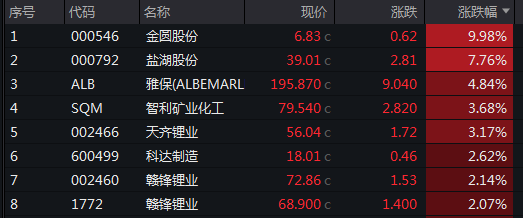
津巴布韦暂停锂矿出口,13家锂矿公司或将受益,其中7家年报预增
Sou Hu Cai Jing· 2026-02-26 17:37
Core Viewpoint - Zimbabwe's sudden ban on lithium ore and concentrate exports has created significant disruptions in the global lithium supply chain, affecting nearly 20% of China's lithium raw material supply and potentially leading to a supply gap of approximately 14,000 to 15,000 tons of lithium carbonate equivalent per month starting in May 2026 [1][3][4]. Group 1: Impact of Zimbabwe's Ban - Zimbabwe's Ministry of Mines announced an immediate suspension of all lithium ore and concentrate exports, including shipments already at sea, to strengthen mineral regulation and promote domestic processing [1][3]. - In 2025, China imported 7.75 million tons of lithium concentrate, with 1.2 million tons (19%) coming from Zimbabwe, highlighting the critical role of Zimbabwe in China's lithium supply [3]. - The ban is expected to lead to a significant increase in lithium prices, with domestic carbonate lithium futures prices surging to over 171,440 yuan per ton, reflecting a nearly 17% increase in just two trading days [4]. Group 2: Market Reactions and Opportunities - The immediate market reaction saw a spike in lithium prices, with the benchmark price for battery-grade lithium carbonate reaching 162,000 yuan per ton, an increase of over 8% since the beginning of the month [4]. - Companies with integrated mining and processing capabilities in Zimbabwe are positioned to benefit from the ban, as they can still apply for export licenses while others face supply constraints [6]. - A total of 13 domestic companies with lithium carbonate production or lithium mining resources are now in the spotlight, with 7 of them forecasting significant profit increases for 2025 [7]. Group 3: Company Profiles and Strategies - The first tier of companies, termed "ban immune," includes Huayou Cobalt, which has established deep processing capacity in Zimbabwe and is set to produce lithium sulfate, allowing it to circumvent the export ban [9]. - Zhongjin Lingnan has a strong position with its control over the Bikita lithium mine, which allows it to apply for export licenses despite the ban, and it has a stockpile of 150,000 tons of lithium concentrate to buffer against short-term export restrictions [11]. - The second tier includes resource giants like Ganfeng Lithium, which has diversified global resources and is expected to see a significant increase in production from 200,000 tons to 500,000 tons by 2026, benefiting from rising lithium prices [11][13]. Group 4: Long-term Industry Implications - The ban is prompting a reevaluation of companies with overseas resources, local processing capabilities, or stable domestic sources, as their strategic value is being reassessed in the market [17]. - The surge in lithium carbonate futures and the rising stock prices of lithium mining companies reflect this market reassessment and the potential for long-term growth in the sector [17].

涨价潮,轮到碳酸锂了?
格隆汇APP· 2026-02-26 12:29
Group 1 - The article discusses the recent volatility in the lithium market, highlighting a significant increase in lithium carbonate futures prices, which rose by over 11.42% to nearly 187,700 yuan per ton [2][4] - There is a stark divergence in stock performance among lithium companies, with some like Salt Lake Co., Tianqi Lithium, and Ganfeng Lithium seeing strong gains, while others like Shengxin Lithium and Yahua Group faced substantial declines [5][20] - The article emphasizes the geopolitical implications of lithium resources, particularly following Zimbabwe's unexpected announcement of a complete ban on lithium concentrate exports, which was initially planned for 2027 but has been moved up by a year [10][12] Group 2 - Zimbabwe's ban is seen as a strategic move to alter the global profit distribution of mineral resources, as the country aims to enhance local value addition rather than relying on raw mineral exports [11][14] - The article notes that Zimbabwe is the fourth-largest lithium producer globally, with expectations that its lithium production will reach 235,000 tons by 2026, accounting for about 12% of global supply [12][14] - The domestic lithium salt refining capacity in China is heavily reliant on Zimbabwean ore, with 19% of lithium concentrate imports coming from Zimbabwe, amounting to approximately 120,000 tons [15][16] Group 3 - The article highlights the impact of the export ban on downstream battery manufacturers, indicating that companies like CATL have also experienced stock declines due to supply chain uncertainties [18] - The supply disruption is expected to lead to upward pressure on lithium prices, as the market anticipates potential shortages if alternative supply sources cannot be developed in the medium to long term [18][19] - The article suggests that companies with domestic low-cost resources, such as Salt Lake Co., may benefit from the price surge, while those relying on raw mineral exports could face significant challenges [24][27] Group 4 - Despite the surge in lithium futures prices, the overall stock performance of lithium mining companies has been mixed, with some companies facing operational challenges due to the export ban [20][21] - The article points out that companies with established local processing capabilities may be better positioned to navigate the new regulatory landscape, while those with a "mining and shipping" model may struggle [21][23] - The article concludes that the era of simply holding mining licenses for high valuations is over, as geopolitical factors increasingly influence operational costs and market dynamics [32][33]