ZGXT(000831)

Search documents
国内和海外需求共振,储能市场高景气!央企现代能源ETF(561790)冲击3连涨
Sou Hu Cai Jing· 2025-10-27 03:54
Core Insights - The Central State-Owned Enterprises Modern Energy Index has seen a strong increase of 1.70%, with notable gains from stocks such as China Xidian up 6.61% and Shanghai Electric up 6.40% [3] - The National Development and Reform Commission has released a plan aiming for a new energy storage capacity of over 180 million kilowatts by 2027, enhancing project economics through supportive policies [5] - The demand for energy storage is expected to maintain a high growth rate, with projections indicating a 30%-40% increase in global energy storage installations over the next two years [4] Group 1: Market Performance - The Central State-Owned Enterprises Modern Energy ETF (561790) has increased by 1.63%, marking a three-day consecutive rise, with a latest price of 1.25 yuan [3] - The ETF has seen a weekly cumulative increase of 2.85% as of October 24, 2025, ranking in the top third among comparable funds [3] - The ETF's trading volume reached 416.82 million yuan with a turnover rate of 9.1% [3] Group 2: Policy and Economic Outlook - The new energy storage plan outlines a target of 180 million kilowatts by 2027, with supportive measures from provinces like Henan to enhance project viability [5] - The energy storage market is experiencing robust demand, driven by new pricing policies and increased investment from social capital [4] - The lithium battery demand is projected to exceed 2700 GWh next year, with a year-on-year growth rate of over 30% [4] Group 3: Industry Composition - The top ten weighted stocks in the Central State-Owned Enterprises Modern Energy Index account for 47.72% of the index, including major players like Yangtze Power and China Nuclear Power [6] - The Central State-Owned Enterprises Modern Energy ETF closely tracks the index, which includes 50 listed companies involved in green energy and fossil energy sectors [5]


见识过中国稀土管制的威力后,俄罗斯也不想受制于人,试图独立发展
Sou Hu Cai Jing· 2025-10-27 03:26
Core Viewpoint - China has strengthened its control over rare earth exports, leaving the US and its allies in a vulnerable position, unable to escape dependence on Chinese rare earth resources [1][3] Group 1: Russia's Strategic Moves - Russia recognizes the strategic importance of rare earths amid US-China tensions and aims to establish an independent rare earth industry [1][5] - The Russian government plans to invest 700 billion rubles in developing a complete production chain for rare earths in Siberia [1][5] - Russia's current rare earth production is only 2,600 tons in 2024, accounting for less than 1% of global output, highlighting its technological lag [1][3] Group 2: Challenges Faced by Russia - Russia's rare earth industry is highly dependent on China, with 95% of its rare earth concentrates sent to China for processing [3][5] - The country faces significant technological challenges, as it relies on outdated extraction methods and imported equipment [1][6] - Environmental concerns related to rare earth processing pose additional hurdles, requiring substantial investment in pollution control technologies [6][12] Group 3: Potential for Market Influence - Russia aims to gain a foothold in the international rare earth market, especially as US sanctions have weakened its economy [5][6] - If successful, Russia could leverage its rare earth resources to replace lost energy revenue and stabilize its economy [5][6] - However, the lack of trust and cooperation with the US complicates potential partnerships for technological advancement [8][10] Group 4: Dependence on China - Russia has sought collaboration with China for advanced rare earth extraction technologies, but China is unlikely to share its core technologies [10][12] - China's recent export controls on key rare earth technologies further limit Russia's ability to develop its industry independently [10][12] - The future of Russia's rare earth ambitions remains uncertain, requiring significant effort and investment to overcome existing challenges [12]
美债爆雷37.4万亿!中国稀土反杀卡脖子,三大底牌让美国输到绝望
Sou Hu Cai Jing· 2025-10-27 02:40
Group 1 - The U.S. national debt has surged to $7.374 trillion, equating to $107,000 per person in the U.S. [1] - The debt is increasing at a rate of $1 trillion every five months, with interest payments nearing $1 trillion annually, surpassing military spending [3] - The Trump administration is pressuring the Federal Reserve to lower interest rates, claiming it would benefit Chinese goods, indicating a shift in the Fed's perceived independence [3] Group 2 - China has implemented an 84% tariff on U.S. agricultural products and has been actively acquiring U.S. gold reserves for 11 consecutive months [5] - The U.S. has attempted to leverage its control over rare earth minerals against China, but China has countered effectively, highlighting its dominance in this sector [5][7] - China holds over 80% of the global heavy rare earth reserves and 69% of the production, positioning itself as a critical player in the supply chain [7] Group 3 - China's financial strategies are evolving, with a significant reduction in U.S. Treasury holdings from 37% to 24%, while gold reserves have increased to 74 million ounces [10] - The use of the renminbi in ASEAN settlements has surpassed 31%, indicating a growing influence in international trade [10] - Digital currency is becoming more prevalent, facilitating cross-border payments and enhancing transaction efficiency [10] Group 4 - A recent report reveals China's capability to liquidate nearly $100 billion in U.S. Treasuries within 48 hours while effectively hedging risks [12]


谁在偷卖中国稀土?3.5吨藏废铁运欧洲,还泄露军工稀土技术!
Sou Hu Cai Jing· 2025-10-26 18:51
Core Viewpoint - The article highlights the increasing sophistication of rare earth smuggling operations in China, posing significant risks to national security and the economy due to the strategic importance of these resources in military and industrial applications [5][10]. Group 1: Smuggling Operations - A recent inspection at Shenzhen's Yantian Port revealed 25 tons of neodymium-iron-boron magnetic powder disguised as "tile adhesive" [1] - Another case involved 2.3 tons of high-purity rare earth materials, including dysprosium and terbium, hidden within plastic models [3] - Smuggling tactics include mislabeling high-purity rare earths as low-value products and concealing them among legitimate goods [5][7] Group 2: Strategic Importance of Rare Earths - Rare earths are referred to as "industrial gold" due to their irreplaceable military and civilian applications, with China holding over 90% of global medium and heavy rare earth reserves [8][10] - The price of key rare earth elements like dysprosium and terbium has surged by 200% to $3,000 per kilogram since China implemented export controls [10] Group 3: Government Response - In response to smuggling, China has announced export controls on medium and heavy rare earths, effective December 1, 2025, requiring permits for exports containing Chinese-origin rare earths [12] - The government has established advanced traceability systems and upgraded customs inspection methods to combat smuggling [14] Group 4: Security Threats - The article discusses risks related to technology and information theft, including cases of corporate espionage involving rare earth separation technology [16] - New laws have increased penalties for rare earth smuggling, with sentences up to 10 years for serious offenses [18]

美国急得跳脚!超级大国罕见低头,中国稀土如何逆风翻盘?
Sou Hu Cai Jing· 2025-10-26 08:41
Core Insights - The strategic importance of rare earth minerals has become a key leverage point for major powers, particularly in military applications, with significant quantities required for advanced military vessels [1] - China holds a dominant position in the global rare earth market, possessing approximately 34% of the world's total reserves, which amounts to around 120 million tons [1][5] - The evolution of China's rare earth industry from a resource exporter to a leader in the high-end industrial chain showcases a significant transformation in its approach to resource management and technology [5][9] Industry Development - Historically, China's rare earth industry faced challenges due to lack of planning and rampant exploitation, leading to undervaluation of these resources [3] - The current process involves a comprehensive industrial chain, from exploration and mining to advanced separation and purification techniques, which are difficult for other countries to replicate [5] - Recent regulations by China's Ministry of Commerce and Customs aim to tighten export controls, ensuring that buyers are thoroughly vetted to prevent circumvention of restrictions, particularly by U.S. military contractors [7] Strategic Implications - The shift in China's rare earth strategy reflects a broader understanding of the resource's value, emphasizing the importance of maintaining control over core technologies and export channels [9] - As demand for rare earth elements continues to rise in high-end manufacturing and renewable energy sectors, their strategic value is expected to increase further [9] - China's approach of strict export management and strengthening the industrial chain positions it favorably in international negotiations and resource security [9]

美国财长的“天真交易”用即将到期的关税休战,换中国稀土让步?
Sou Hu Cai Jing· 2025-10-26 06:12
Group 1 - The U.S. government exhibits contradictory stances regarding China, with Trump declaring a trade war while Treasury Secretary Bessent proposes a trade-off involving tariffs and rare earth export controls [1] - Bessent's proposal to exchange tariff relief for China's delay in rare earth export controls highlights a misjudgment of the strategic situation between the U.S. and China, emphasizing the strategic importance of rare earths [1][2] - The U.S. attempts to leverage an expiring tariff truce to negotiate on national security issues, which is seen as absurd given the high tariffs still imposed on Chinese goods [4] Group 2 - The U.S. is deeply anxious about China's technological monopoly in the rare earth sector, as China controls nearly 90% of rare earth separation and refining technology, which is critical for U.S. military equipment [5] - The U.S. military's reliance on Chinese rare earths is significant, with 87% of its main equipment dependent on these materials, raising concerns about supply disruptions if China enforces stricter controls [5] - The U.S. has implemented export controls on over 3,000 items, which is three times more than China's, indicating a double standard in its approach to trade negotiations [4] Group 3 - The Trump administration employs a "carrot and stick" approach to pressure China, revealing a lack of effective strategy as China counters with its own measures [6] - China's response to U.S. tariffs includes reciprocal actions and a restructuring of its supply chains to enhance economic resilience, demonstrating a shift away from U.S. dominance [6] - China's rare earth export controls are framed as regulatory measures rather than outright bans, maintaining a level of openness for compliant applications [6] Group 4 - China maintains a firm stance on negotiations, insisting on equality, respect, and mutual benefit, while rejecting any compromises on core interests [8] - China's specific demands include restoring tariffs to pre-2018 levels and lifting unreasonable sanctions on semiconductor materials and technologies [8] - The failure of Bessent's proposal is attributed to its reliance on outdated coercive tactics, overlooking China's proactive stance in the strategic competition [8][9]

战略小金属价值重估进行时,推荐关注稀土及钴等战略金属
HUAXI Securities· 2025-10-26 05:55
Investment Rating - Industry rating: Recommended [3] Core Insights - The report emphasizes the strategic revaluation of key metals, particularly focusing on rare earths and cobalt [24] - Nickel prices are expected to be supported due to tightened supply expectations following Indonesia's new regulation reducing the approval cycle for mining plans from three years to one year [26][27] - Cobalt prices have continued to rise, with expectations of increasing supply tightness further driving prices up [30][33] - Antimony supply is expected to remain tight, providing a bottom support for antimony prices [34] - Lithium carbonate prices are projected to remain strong due to ongoing demand and inventory depletion [16] - China's dominance in rare earth supply is reinforced by stricter export controls, which are expected to support rare earth prices [18] - Tin supply remains uncertain due to ongoing challenges in overseas supply, which is expected to support tin prices [19] - Tungsten prices are supported by a tightening supply situation, with production rates slowing down [20] - Uranium supply tightness is anticipated to continue, supporting uranium prices [21] Summary by Sections Nickel and Cobalt Industry Update - Indonesia's new regulation on mining approvals is expected to tighten future ore supply, supporting nickel prices [26] - As of October 24, LME nickel price was $15,085 per ton, up 1.04% from October 17 [26] - Cobalt prices have risen significantly, with electrolytic cobalt reaching 408,500 CNY per ton, a 6.94% increase [30] Antimony Industry Update - Domestic antimony prices have decreased, but long-term supply tightness is expected to support prices [34] - China's antimony production is projected to dominate global supply, accounting for 60% of the total [34] Lithium Industry Update - Lithium carbonate prices have increased, with a market average of 73,700 CNY per ton as of October 24 [16] - Demand from the battery sector continues to drive price support [16] Rare Earth Industry Update - China's strict export controls on rare earths are expected to tighten supply and support prices [18] - The report highlights the importance of China's role in the global rare earth supply chain [18] Tin Industry Update - Tin prices are supported by supply uncertainties, particularly from Myanmar and Indonesia [19] - As of October 24, LME tin price was $35,925 per ton, up 2.42% from October 17 [19] Tungsten Industry Update - The tungsten supply situation is tightening, with production rates slowing down [20] - Prices for tungsten concentrate have increased, reflecting supply constraints [20] Uranium Industry Update - The report indicates a continued tight supply situation for uranium, supporting price stability [21] - Recent production guidance reductions from major suppliers are expected to impact future supply [21]


中国稀土出口管控加强,北京与华盛顿展开关键供应链博弈,全球聚焦政策影响力与未来走向
Sou Hu Cai Jing· 2025-10-25 17:43
Group 1 - The core viewpoint of the articles revolves around China's strategic control over critical materials like rare earth elements, gallium, germanium, and graphite, which are essential for various global industries [1][3][5] - China's dominance in the rare earth supply chain is highlighted, with over 70% of global separation and processing occurring within the country, making it a crucial player in the industry [3][5] - The impact of export controls on these materials has led to price increases and a rush among foreign companies, particularly in Japan and Europe, to find alternative suppliers, although the core supply still relies heavily on China [5][11] Group 2 - The ongoing geopolitical tensions, particularly between the U.S. and China, have resulted in increased tariffs on Chinese electric vehicles, lithium batteries, and solar products, further complicating the supply chain dynamics [3][5] - The relationship between China and Russia is characterized by increasing trade, particularly in energy, but also highlights the complexities and limitations of their cooperation, especially in high-tech projects like the CR929 aircraft [7][9] - China's manufacturing sector remains robust, contributing over 30% to global manufacturing value added, which positions it as a critical player in global supply chains [11][13] Group 3 - The military advancements in China, such as the development of the "Fujian" aircraft carrier with electromagnetic catapults, indicate a rapid improvement in naval capabilities, which may have implications for regional security dynamics [13] - The focus on environmental regulations and the push for higher value-added production in the rare earth sector suggests a strategic move by China to enhance its bargaining power and stabilize supply chains [13]

欧盟制定计划 减少对中国稀土的依赖
Sou Hu Cai Jing· 2025-10-25 16:30
Core Points - The European Union is developing a new plan to reduce dependence on China for critical raw materials, particularly in light of recent export restrictions imposed by Beijing [2][3] - The plan, named "RESourceEU," aims to establish partnerships with countries like Chile, Australia, Canada, Greenland, Kazakhstan, Uzbekistan, and Ukraine for sourcing critical materials [2] - The EU is also focusing on increasing the recycling of critical raw materials from products sold in Europe [2] - The initiative is similar to the "REPowerEU" plan, which was created to reduce reliance on Russian energy following the invasion of Ukraine [2] - European Commission President Ursula von der Leyen highlighted the significant risks posed by China's recent export controls on rare earths and battery materials [2][4] Industry Response - The EU is currently seeking solutions through discussions with Chinese officials following the tightening of rare earth export restrictions [3] - The EU is prepared to utilize all available tools to respond to the situation, including collaboration with G7 partners [3] - French President Macron has urged EU leaders to consider using the Anti-Coercion Instrument (ACI) against China if no solutions are found regarding the export controls [4] - Von der Leyen noted that 90% of Europe's rare earth magnets are imported from China, emphasizing the substantial impact of China's actions on Europe [4]

中国稀土封锁被突破?美国军工前景堪忧,美、澳达成85亿新协议!
Sou Hu Cai Jing· 2025-10-25 09:18
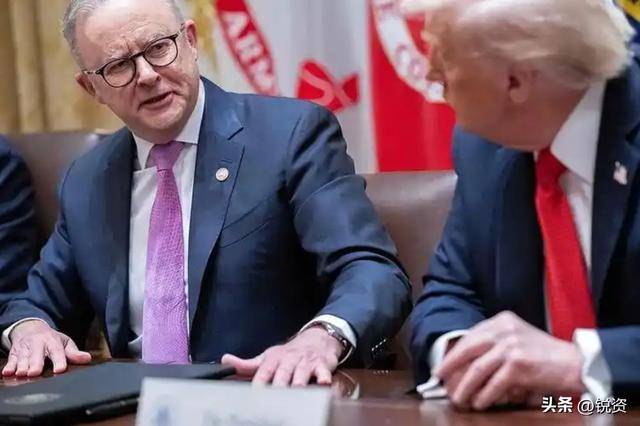
Core Viewpoint - The $8.5 billion rare earth agreement between the U.S. and Australia is largely seen as a political maneuver rather than a substantial investment, with skepticism about its actual impact on reducing U.S. dependence on China for rare earth materials [1][3][4]. Group 1: Agreement Details - The $8.5 billion figure is not a concrete investment but rather a framework agreement filled with "plans" and "intentions," similar to verbal agreements in a market [3]. - Both the U.S. and Australia have claimed different investment amounts, with the U.S. Export-Import Bank's $2.2 billion being based on seven letters of intent, requiring an additional $5 billion in private capital to move forward [3][4]. - The timeline for establishing a rare earth supply chain is lengthy, with estimates suggesting it could take three to four years to produce any output, contradicting claims of immediate surplus [4][6]. Group 2: Strategic Implications - The agreement signals a shift from U.S. reliance on China, as over 70% of U.S. rare earth imports currently come from China, highlighting the risks of supply chain disruptions [4][6]. - The partnership is tied to broader defense agreements, such as AUKUS, indicating a strategy of "resource for security," which may complicate U.S.-Australia relations in the long term [6][7]. - The U.S. is attempting to leverage Australia's resources while maintaining a tough stance on tariffs, which could undermine the competitiveness of Australian rare earths due to higher processing costs [7][8]. Group 3: Technological and Competitive Landscape - The U.S. lacks the necessary rare earth refining technology, with China holding the majority of global patents and expertise in this area, making it difficult for the U.S. and Australia to establish a competitive supply chain [7][9]. - The so-called "rare earth triangle alliance" involving Japan is also seen as weak, as Japan relies heavily on Chinese refining capabilities, limiting its ability to support U.S. initiatives [8][9]. - China's dominance in rare earth processing and technology poses a significant barrier for the U.S. and Australia, as they would need to develop their own capabilities to compete effectively [9][10]. Group 4: China's Response and Strategy - China has implemented stricter export controls on rare earth technologies, aiming to prevent the transfer of critical knowledge to Australia and the U.S. [9][10]. - The establishment of futures trading for rare earths in China is seen as a move to regain pricing power in the global market, potentially impacting international pricing dynamics [10][12]. - China's long-term strategy focuses on maintaining a closed-loop supply chain from mining to processing, which has been developed over decades, contrasting with the U.S. and Australia's nascent efforts [10][12].