WLY(000858)

Search documents
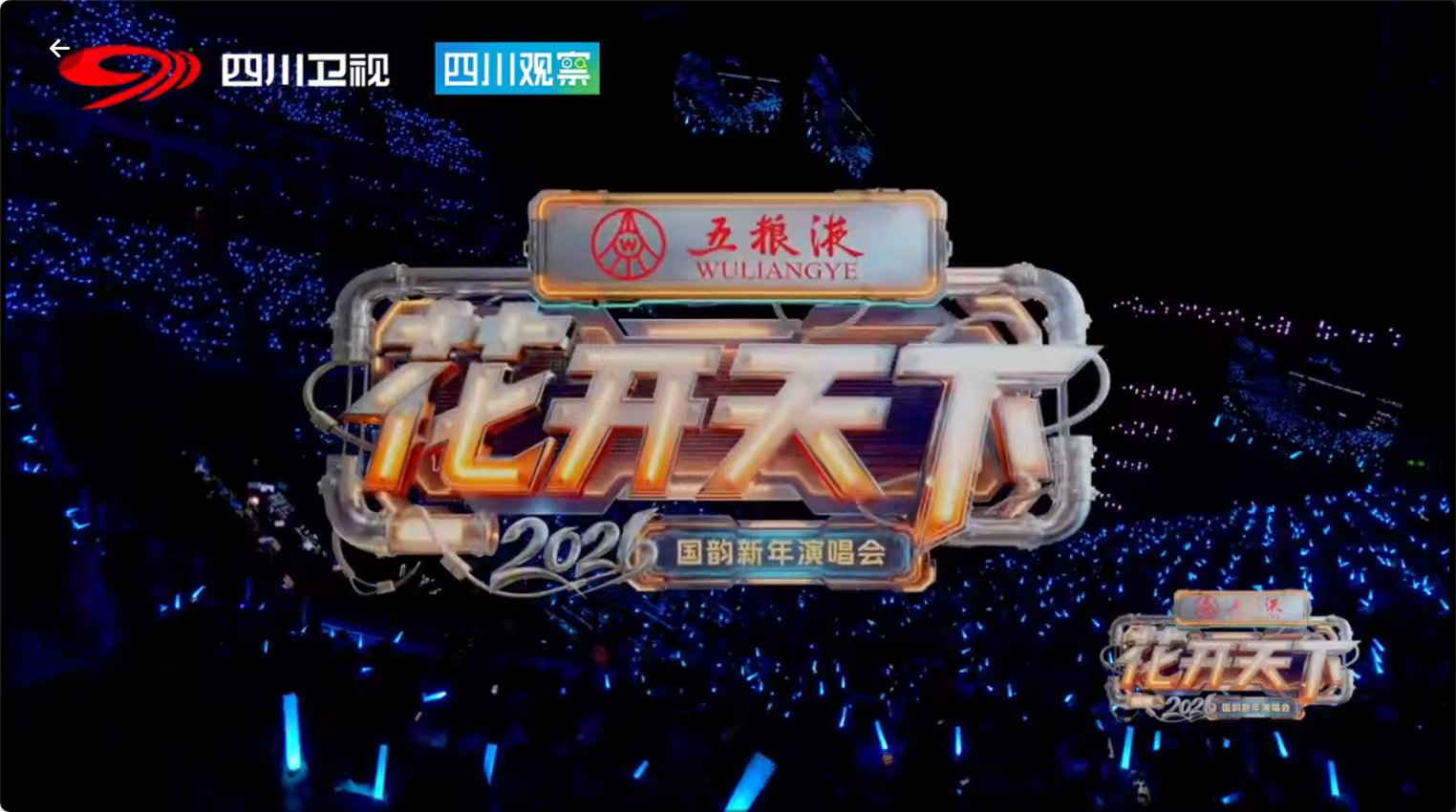
五粮液:以文化与场景焕新之姿 与消费者共赴和美新年之约
Xin Lang Cai Jing· 2026-01-04 01:28
Core Viewpoint - The company, Wuliangye, is actively engaging in cultural and experiential marketing strategies to connect with younger consumers and enhance brand recognition through various events and collaborations [1][2][4][5]. Group 1: Cultural Engagement - Wuliangye is leveraging major media platforms to promote Chinese liquor culture, aiming for innovative expression and creative transformation of traditional culture [1][2]. - The company has partnered with prominent events like the "New Year's Eve Concert" to infuse cultural depth into celebrations, targeting the youth demographic [2][4]. - The "He Mei" concept is central to Wuliangye's branding, emphasizing harmony and beauty in cultural experiences [2][5]. Group 2: Product Innovation - The introduction of the 29° Wuliangye "Yi Jian Qing Xin" product aims to appeal to younger consumers with its light taste and modern branding [2][4]. - Wuliangye is creating unique beverage experiences by combining traditional liquor with contemporary flavors, such as coffee and tea, to attract a younger audience [8][9]. Group 3: Experiential Marketing - The company is enhancing consumer experiences through immersive cultural events at locations like the 501 Chinese Liquor Culture Holy Land, which features live performances and historical storytelling [7][9]. - Wuliangye's new cultural experience center in Hangzhou is designed to engage young consumers with interactive and themed offerings [8][9]. - The brand is focusing on creating multi-dimensional narratives that allow consumers to participate and resonate with the cultural aspects of liquor [9]. Group 4: Strategic Vision - Wuliangye has designated 2026 as the "Year of Marketing Innovation," aiming to deepen consumer connections and explore new brand development opportunities [9].


酒价内参1月4日价格发布,青花郎下跌7元
Xin Lang Cai Jing· 2026-01-04 01:24
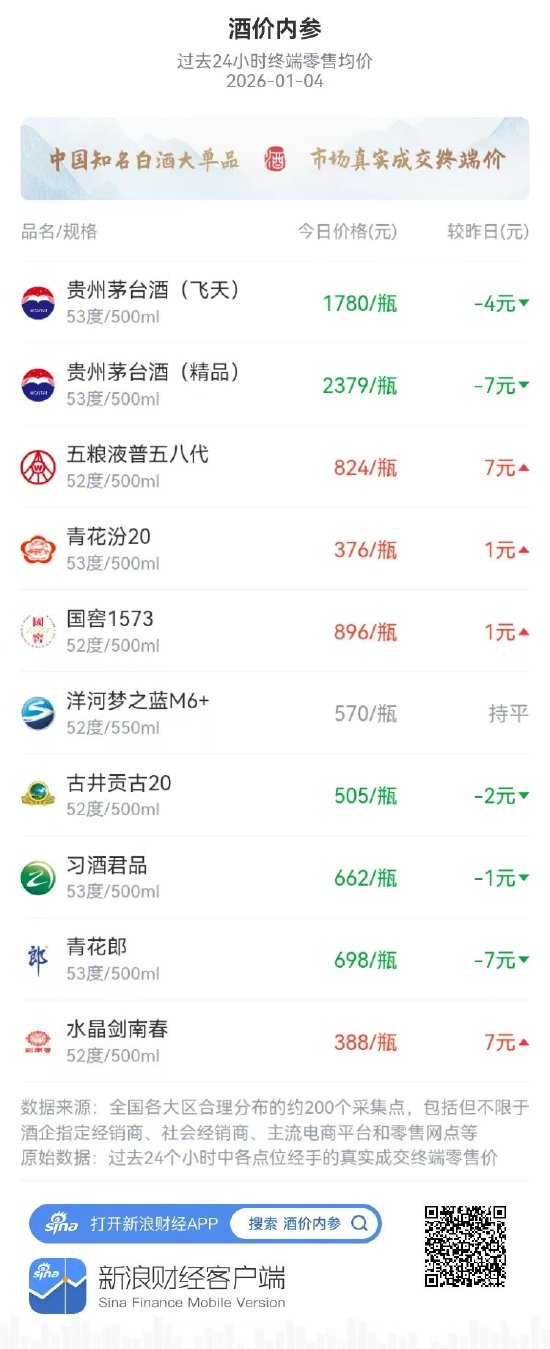
Core Insights - The core viewpoint of the article highlights the ongoing decline in the retail prices of major Chinese liquor brands, with the overall market sentiment remaining cautious as prices continue to slowly decrease [1][4]. Price Trends - The average retail price of the top ten Chinese liquor products on January 4 is reported at 9,078 yuan, down 5 yuan from the previous day, marking a new low for four consecutive trading days [1][4]. - The market shows a mixed performance with five products declining, four increasing, and one remaining stable [1][4]. Price Changes of Specific Products - Notable price increases include: - Wuliangye Pu Wubai: up 7 yuan per bottle [1][4] - Shuijingfang Jianan Chun: up 7 yuan per bottle [1][4] - Qinghua Fen 20: up 1 yuan per bottle [1][4] - Guojiao 1573: up 1 yuan per bottle, achieving four consecutive days of price increases [1][4] - Significant price decreases include: - Premium Moutai: down 7 yuan per bottle [1][4] - Qinghua Lang: down 7 yuan per bottle [1][4] - Feitian Moutai: down 4 yuan per bottle [1][4] - Gujing Gong Gu 20: down 2 yuan per bottle [1][4] - Xijiu Junpin: down 1 yuan per bottle [1][4] Market Data Collection - The data for the "Liquor Price Reference" is sourced from approximately 200 collection points across various regions, including designated distributors, social distributors, mainstream e-commerce platforms, and retail outlets, aiming to provide objective and traceable market price data [2][5]. Industry News - In a significant industry update, Moutai's digital marketing platform "i Moutai" announced a reduction in the daily purchase limit for the 53% vol 500ml Feitian Moutai from 12 bottles to 6, effective from January 4 until the Spring Festival, to better meet consumer demand during the holiday season [2][5].





酒价内参1月4日价格发布,国窖1573微涨1元实现四连阳
Xin Lang Cai Jing· 2026-01-04 01:24
新浪财经"酒价内参"重磅上线 知名白酒真实市场价尽在掌握 新浪财经"酒价内参"过去24小时中收集的数据显示,中国白酒市场十大单品的终端零售均价在1月4日延 续弱势整理,整体价格继续小幅下行。如果十大单品各取一瓶整体打包售卖,今日总售价为9078元,较 昨日回落5元,连续第四个交易日创下近期新低。市场整体情绪依然谨慎,价格中枢在低位持续且缓慢 下移。 今日市场格局分化,五跌四涨一平。上涨产品中,五粮液普五八代表现亮眼,环比上涨7元/瓶,领涨市 场。水晶剑南春价格同样上涨7元/瓶。青花汾20与国窖1573价格分别微涨1元/瓶,后者已经实现四连 阳。洋河梦之蓝M6+价格则与昨日持平。下跌产品方面,精品茅台的价格回调幅度居前,下跌7元/瓶。 青花郎价格下跌7元/瓶。飞天茅台价格下跌4元/瓶。古井贡古20价格下跌2元/瓶。习酒君品价格微跌1 元/瓶。市场缺乏明确的上涨主线,多数产品均在窄幅区间内波动整理。 "酒价内参"的每日数据源自全国各大区均有合理分布的约200个采集点,包括但不限于酒企的指定经销 商、社会经销商、主流电商平台和零售网点等,原始取样数据为过去24个小时中各点位经手的真实成交 终端零售价格,力求为社会各 ...
酒价内参1月4日价格发布,五粮液普五八代上涨7元领涨
Xin Lang Cai Jing· 2026-01-04 01:24
新浪财经"酒价内参"重磅上线 知名白酒真实市场价尽在掌握 新浪财经"酒价内参"过去24小时中收集的数据显示,中国白酒市场十大单品的终端零售均价在1月4日延 续弱势整理,整体价格继续小幅下行。如果十大单品各取一瓶整体打包售卖,今日总售价为9078元,较 昨日回落5元,连续第四个交易日创下近期新低。市场整体情绪依然谨慎,价格中枢在低位持续且缓慢 下移。 今日市场格局分化,五跌四涨一平。上涨产品中,五粮液普五八代表现亮眼,环比上涨7元/瓶,领涨市 场。水晶剑南春价格同样上涨7元/瓶。青花汾20与国窖1573价格分别微涨1元/瓶,后者已经实现四连 阳。洋河梦之蓝M6+价格则与昨日持平。下跌产品方面,精品茅台的价格回调幅度居前,下跌7元/瓶。 青花郎价格下跌7元/瓶。飞天茅台价格下跌4元/瓶。古井贡古20价格下跌2元/瓶。习酒君品价格微跌1 元/瓶。市场缺乏明确的上涨主线,多数产品均在窄幅区间内波动整理。 "酒价内参"的每日数据源自全国各大区均有合理分布的约200个采集点,包括但不限于酒企的指定经销 商、社会经销商、主流电商平台和零售网点等,原始取样数据为过去24个小时中各点位经手的真实成交 终端零售价格,力求为社会各 ...
酒价内参1月4日价格发布,水晶剑南春上涨7元领涨
Xin Lang Cai Jing· 2026-01-04 01:24
新浪财经"酒价内参"重磅上线 知名白酒真实市场价尽在掌握 新浪财经"酒价内参"过去24小时中收集的数据显示,中国白酒市场十大单品的终端零售均价在1月4日延 续弱势整理,整体价格继续小幅下行。如果十大单品各取一瓶整体打包售卖,今日总售价为9078元,较 昨日回落5元,连续第四个交易日创下近期新低。市场整体情绪依然谨慎,价格中枢在低位持续且缓慢 下移。 今日市场格局分化,五跌四涨一平。上涨产品中,五粮液普五八代表现亮眼,环比上涨7元/瓶,领涨市 场。水晶剑南春价格同样上涨7元/瓶。青花汾20与国窖1573价格分别微涨1元/瓶,后者已经实现四连 阳。洋河梦之蓝M6+价格则与昨日持平。下跌产品方面,精品茅台的价格回调幅度居前,下跌7元/瓶。 青花郎价格下跌7元/瓶。飞天茅台价格下跌4元/瓶。古井贡古20价格下跌2元/瓶。习酒君品价格微跌1 元/瓶。市场缺乏明确的上涨主线,多数产品均在窄幅区间内波动整理。 "酒价内参"的每日数据源自全国各大区均有合理分布的约200个采集点,包括但不限于酒企的指定经销 商、社会经销商、主流电商平台和零售网点等,原始取样数据为过去24个小时中各点位经手的真实成交 终端零售价格,力求为社会各 ...
酒价内参1月4日价格发布 市场弱势整理整体价格继续下探
Xin Lang Cai Jing· 2026-01-04 01:09
Core Viewpoint - The Chinese liquor market is experiencing a slight downward trend in retail prices for the top ten products, with the overall market sentiment remaining cautious and prices continuing to decline slowly [1]. Price Trends - The average retail price of the top ten liquor products on January 4 is 9,078 yuan, down 5 yuan from the previous day, marking the fourth consecutive day of decline [1]. - The market shows a mixed performance with five products increasing in price, four decreasing, and one remaining stable [1]. Price Changes of Key Products - Notable price increases include: - Wuliangye Pu Wubai: up 7 yuan per bottle [1][3]. - Shuijing Jian Nan Chun: up 7 yuan per bottle [1][4]. - Guojiao 1573: up 1 yuan per bottle, achieving four consecutive days of price increases [1][3]. - Price decreases include: - Premium Moutai: down 7 yuan per bottle [1][3]. - Qinghua Lang: down 7 yuan per bottle [1][4]. - Feitian Moutai: down 4 yuan per bottle [1][3]. - Gujing Gonggu 20: down 2 yuan per bottle [1][4]. - Xijiu Junpin: down 1 yuan per bottle [1][4]. Market Sentiment - The overall market sentiment remains cautious, with a lack of clear upward trends and most products fluctuating within narrow price ranges [1].
酒价内参1月3日价格发布 市场延续下行整体价格再创近期新低
Xin Lang Cai Jing· 2026-01-03 01:06
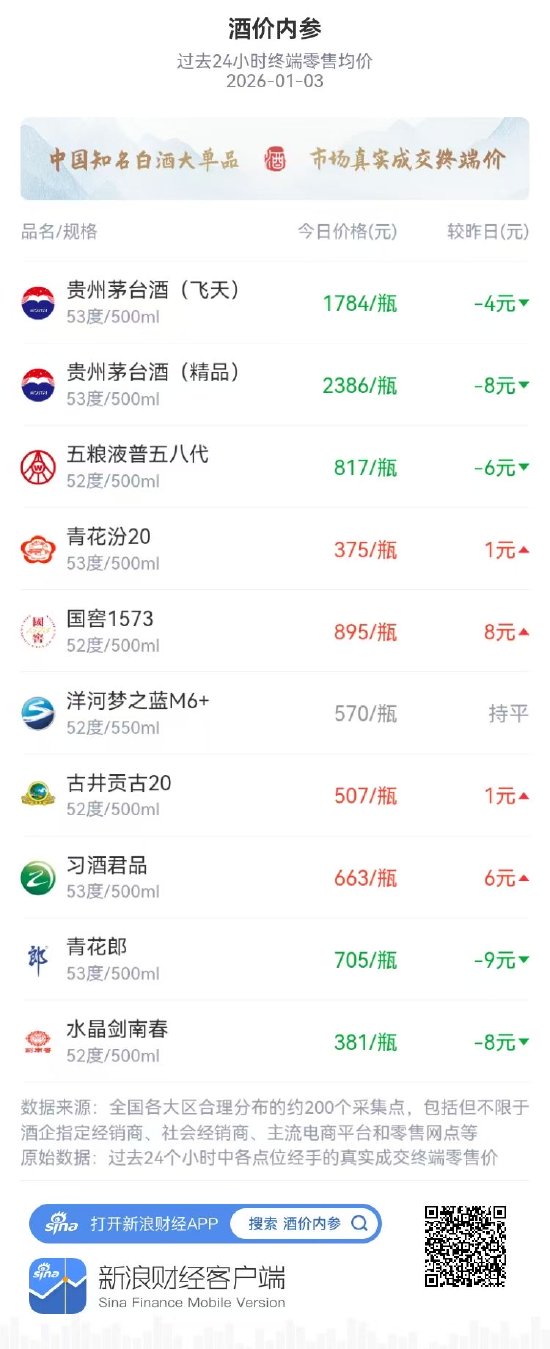
新浪财经"酒价内参"重磅上线 知名白酒真实市场价尽在掌握 新浪财经"酒价内参"过去24小时中收集的数据显示,中国白酒市场十大单品的终端零售均价在新年第三 天继续下行,整体价格进一步下探。如果十大单品各取一瓶整体打包售卖,今日总售价为9083元,较昨 日回落19元,创下近11日以来新低。市场在新年伊始连续回调,整体价格中枢持续下移。 今日市场呈现涨跌互现的分化格局。上涨产品中,国窖1573表现强势,环比上涨8元/瓶,领涨全场。习 酒君品价格上涨6元/瓶。古井贡古20与青花汾20价格分别微涨1元/瓶。洋河梦之蓝M6+价格则与昨日持 平。下跌产品方面,青花郎价格回调幅度居前,下跌9元/瓶。精品茅台与水晶剑南春价格均下跌8元/ 瓶,后者价格创下近期新低。五粮液普五八代价格下跌6元/瓶。飞天茅台价格下跌4元/瓶。尽管部分品 牌实现低点反弹,但市场整体仍被观望情绪主导,多数核心产品价格承压。 "酒价内参"的每日数据源自全国各大区均有合理分布的约200个采集点,包括但不限于酒企的指定经销 商、社会经销商、主流电商平台和零售网点等,原始取样数据为过去24个小时中各点位经手的真实成交 终端零售价格,力求为社会各界提供一份关于知 ...
新一批31家总部企业认定
Xin Lang Cai Jing· 2026-01-02 22:39
Core Insights - The number of headquarters enterprises in Sichuan has expanded, with 31 companies recognized, bringing the total to 128 [1] - Headquarters enterprises are defined as those registered in Sichuan that conduct cross-regional operations and contribute significantly to local taxes and the economy [1] Group 1: Enterprise Distribution - The newly recognized 31 enterprises are primarily located in six cities, with a majority being private enterprises (48.4%), followed by state-owned enterprises (41.9%), foreign enterprises (6.5%), and mixed-ownership enterprises (3.2%) [2] - The main sectors represented are manufacturing (51.6%), services (32.3%), and construction (9.7%), aligning with Sichuan's modern industrial development [2] - Among these enterprises, seven have annual revenues exceeding 10 billion, and one exceeds 100 billion [2] Group 2: Classification of Headquarters - Sichuan classifies headquarters enterprises into three categories: comprehensive headquarters, functional headquarters, and growth headquarters [2] - Comprehensive headquarters must meet large enterprise standards in terms of revenue, total assets, and workforce [2] - Five functional headquarters are controlled by large enterprises from outside the province or abroad, requiring a minimum registered capital of 50 million [2] Group 3: Support Policies - Sichuan will utilize various policy tools, including fiscal, financial, technological, and talent support, to promote the development of headquarters enterprises [3] - There is an emphasis on policy coordination across provincial, municipal, and county levels to enhance the effectiveness of support measures [3]

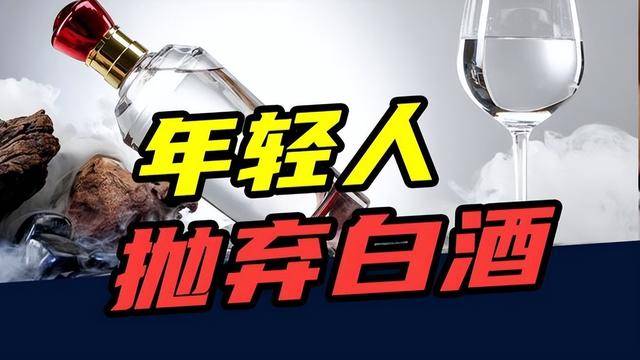
现在的年轻人,基本上已远离了白酒,2个根本原因,其他都是借口
Sou Hu Cai Jing· 2026-01-02 08:43
Core Viewpoint - The decline in liquor consumption, particularly in the high-end segment, is primarily attributed to economic conditions and policy changes rather than a shift in young people's drinking habits [1][31]. Economic Environment - The liquor industry, especially high-end liquor, is categorized as an "elastic consumption" good, meaning it is not a necessity and is more likely to be cut from budgets during economic downturns [14][18]. - The turning point for the liquor industry occurred in 2020, with stocks of major brands like Moutai and Wuliangye reaching historical peaks in early 2020 but subsequently declining for over five years [3][5]. - By the third quarter of 2025, even industry giants like Wuliangye reported significant profit declines, a scenario previously unimaginable [5]. - Economic pressures have led to reduced consumer spending, with a notable decrease in the business liquor market, which dropped by 32% year-on-year in 2024 [18][20]. Consumer Demographics - The primary consumer base for liquor has historically been middle-aged individuals, with those under 30 accounting for less than 15% of total consumption, while those over 35 represent 72.8% [9][12]. - The notion that young people are the cause of declining sales overlooks the fact that the main consumer group is facing economic challenges, leading to reduced spending [12][31]. Policy Impact - Recent policy changes, such as the revised regulations on government consumption of alcohol, have significantly altered the consumption landscape, particularly in the business sector [20][22]. - The 2025 revision of the "Regulations on Saving and Opposing Waste in Party and Government Agencies" expanded restrictions on all alcoholic beverages, contributing to a short-term decline of 2%-3% in the liquor sector [22][28]. - Local policies, like those from Guizhou province aimed at transforming the liquor industry, indicate a need for adaptation in response to changing market conditions [24][28]. Market Dynamics - The inventory levels of liquor companies have surged, with 20 listed liquor firms reporting stock levels of 168.39 billion yuan, an increase of 19.29 billion yuan year-on-year [26]. - Many distributors are experiencing price inversions, where the selling price is lower than the manufacturer's suggested price, further dampening market enthusiasm [26][28]. - The combination of economic pressures and policy regulations has compressed the consumption space for high-end liquor, which previously relied heavily on government and corporate events [30][31]. Conclusion - The decline in liquor consumption is fundamentally linked to economic conditions and regulatory changes rather than a simple shift in consumer preferences among younger demographics [31][37]. - The industry must adapt to these economic and policy shifts to meet evolving consumer demands, rather than attributing the decline to younger consumers [35][37].
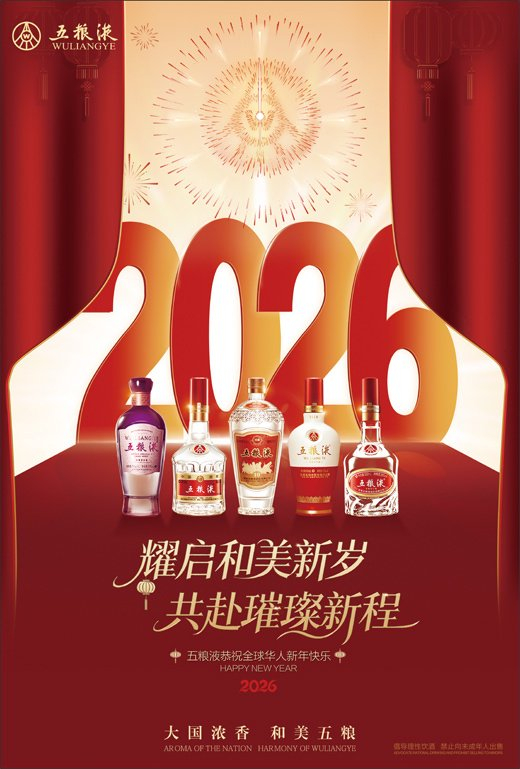
五粮液 耀启和美新岁 共赴璀璨新程
Ren Min Wang· 2026-01-01 01:10
Group 1 - The company Wuliangye extends New Year greetings to global Chinese communities, emphasizing cultural connection and celebration [2] - The message highlights the brand's commitment to promoting traditional Chinese values and fostering unity among Chinese people worldwide [2] - Wuliangye positions itself as a representative of Chinese liquor culture, aiming to enhance its global presence and recognition [2]