WLY(000858)

Search documents
2025白酒年度事件大盘点:告别高增长,行业挑战下的变革与新机
Sou Hu Cai Jing· 2025-12-31 14:12
Core Insights - The Chinese liquor industry is entering an adjustment phase in 2025, facing challenges such as the "ban on alcohol," rising inventory pressure, and declining profits, yet opportunities for growth are emerging through innovation and market expansion [2][4]. Policy Impact - A strict "ban on alcohol" policy was introduced, prohibiting public officials from consuming alcohol during workdays and even at home gatherings, with severe penalties for violations [2][4]. - This policy aims to curb corruption and address public health concerns related to alcohol consumption [4]. Digital Transformation - Leading liquor companies are advancing their digital transformation from isolated upgrades to comprehensive collaborative development, with initiatives like the first "lighthouse factory" by Luzhou Laojiao and 5G-connected factories by Shede [5]. - The Ministry of Industry and Information Technology has released guidelines for digital transformation in the liquor industry, with companies actively contributing to industry mapping [5]. ESG Practices - ESG efforts among listed liquor companies have shifted from compliance to value creation, with companies like Zhenjiu Li Du setting ambitious carbon neutrality goals and achieving high water recycling rates [7]. - Companies are integrating ESG principles into performance assessments and utilizing blockchain for product traceability [7]. Market Dynamics - The liquor market is experiencing severe inventory issues, with major companies implementing supply control measures and channel reforms to reshape pricing structures [8][10]. - In the first three quarters of 2025, liquor exports reached $704 million, a 5.3% increase year-on-year, indicating a growing international market [8][10]. Young Consumer Trends - The younger generation is increasingly favoring low-alcohol and flavored beverages, with participation rates among Gen Z rising from 66% in 2023 to 73% in 2025 [12]. - Major companies are launching low-alcohol products to cater to this demographic, with Wuliangye and Luzhou Laojiao leading the way [12]. Personnel Changes - The liquor industry is undergoing significant personnel changes, with over 20 companies experiencing nearly 30 key position shifts, indicating a trend towards younger management [14][16]. - The new management is expected to focus on refined operations and innovation to navigate industry pressures [16]. Financial Performance - In the first nine months of 2025, only two companies, Kweichow Moutai and Shanxi Fenjiu, reported positive net profit growth, while the average profit of 20 liquor companies fell by 39.2% [18]. - The average inventory turnover days for these companies surged to 1456.29 days, marking a significant increase from the previous year [18]. Health-Oriented Products - The health-oriented liquor market is gaining traction, with sales of functional products like Jinjian's red label liquor increasing by 50% in the first half of the year [20]. - However, the market faces challenges such as product homogeneity and compliance risks, with a projected market size exceeding 58 billion yuan [22]. Price Fluctuations - Moutai's price fell below the official guidance price of 1499 yuan per bottle in December 2025, raising concerns about future price trends [22]. - Following a price drop, Moutai's wholesale prices rebounded due to supply control measures and increased market demand during the peak season [24].







2025白酒行业专题报告:茅五亮牌,剑向何方?
Sou Hu Cai Jing· 2025-12-31 12:03
Core Viewpoint - The high-end liquor market, represented by Moutai and Wuliangye, is experiencing a significant price decline, leading to concerns about market confidence and a potential restructuring of the industry [1][2][11]. Group 1: Market Dynamics - The overall white liquor sector has seen a decline of approximately 7% since December, with Moutai's price dropping to around 1500 yuan and Wuliangye's to about 780 yuan, reflecting intensified supply-demand conflicts [1][11]. - Moutai and Wuliangye have initiated measures to stabilize prices, including Moutai's decision to halt the release of unfulfilled quotas and reduce the supply of high-value products [1][2][22]. - Wuliangye has adjusted its payment policy for the first time since 2014, offering a discount of 119 yuan per bottle to ease financial pressure on distributors [2][31]. Group 2: Strategic Adjustments - Moutai's recent actions include holding meetings with distributors to communicate its commitment to controlling supply and stabilizing prices, which has led to a rebound in Moutai's price to around 1600 yuan [1][22][29]. - Wuliangye has implemented various incentives, including market expansion rewards and bottle scanning subsidies, to enhance channel vitality and stabilize its pricing system [2][31]. - The report indicates a shift in the industry from "volume-driven by price" to "price-driven by volume," emphasizing the importance of sales performance [2][3]. Group 3: Future Outlook - The adjustments made by leading companies are expected to gradually alleviate overall inventory pressure in the industry, although other brands still face significant pricing and inventory challenges [2][3]. - The industry is undergoing a structural transition from rapid growth to rational management, with a focus on maintaining channel health and price stability for future high-quality development [3][14]. - The performance of sales and collections before and after the Spring Festival will be critical in determining the industry's trajectory [2][36].
四川省一半市值增长依赖新易盛 白酒与能源企业拖累市值表现
Xin Lang Cai Jing· 2025-12-31 09:53
Core Insights - In 2025, the market capitalization increment of A-share listed companies in Sichuan Province reached 716.5 billion yuan, reflecting a growth of 26.39% compared to the beginning of the year [1] Group 1: Market Growth Drivers - New Yisheng emerged as the primary driver of market capitalization growth, with an increase of 346.4 billion yuan, representing a staggering growth rate of 422.80% and contributing 48.34% to the total market capitalization increment in the province [1] - The remaining top five companies, including Baili Tianheng, Tianqi Lithium, Dongfang Electric, and Huafeng Technology, each had market capitalization increments not exceeding 60 billion yuan, with their contribution rates to the overall growth not surpassing 8% [1] Group 2: Market Declines - The companies experiencing the most significant market capitalization declines included Wuliangye, ChuanTou Energy, Luzhou Laojiao, ShuiJingFang, and Tongwei Co., with Wuliangye suffering the largest drop of 132.4 billion yuan, far exceeding the declines of the other four companies, which were all under 20 billion yuan [1]

白酒板块12月31日跌1.01%,*ST岩石领跌,主力资金净流出15.73亿元
Zheng Xing Xing Ye Ri Bao· 2025-12-31 08:59
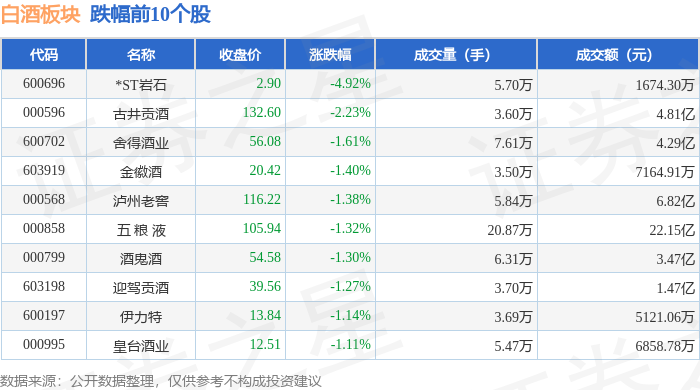
Core Viewpoint - The liquor sector experienced a decline of 1.01% on December 31, with *ST Yanshi leading the drop, while the overall market showed mixed results with the Shanghai Composite Index up by 0.09% and the Shenzhen Component Index down by 0.58% [1] Liquor Sector Performance - The closing prices and percentage changes for key liquor stocks are as follows: - *ST Yanshi: 2.90, -4.92% - Gujing Gongjiu: 132.60, -2.23% - Shede Manye: 56.08, -1.61% - Quanwei Jiu: 20.42, -1.40% - Luzhou Laojiao: 116.22, -1.38% - Wuliangye: 105.94, -1.32% - Zhisi Cha: 54.58, -1.30% - Yingjia Gongjiu: 39.56, -1.27% - Yilite: 13.84, -1.14% - Huangtai Jiuye: 12.51, -1.11% [1] Capital Flow Analysis - The liquor sector saw a net outflow of 1.573 billion yuan from main funds, while retail investors contributed a net inflow of 712 million yuan [1] - The detailed capital flow for selected stocks indicates: - Gujing Gongjiu: Main net inflow of 5.437 million yuan, retail net inflow of 2.302 million yuan - *ST Yanshi: Main net outflow of 4.866 million yuan, retail net inflow of 4.265 million yuan - Other stocks like Jinzhongzi Jiu and Kuozi Jiao experienced significant net outflows from main and retail funds [2]


酒价内参12月31日价格发布,青花汾20下跌15元
Xin Lang Cai Jing· 2025-12-31 02:25
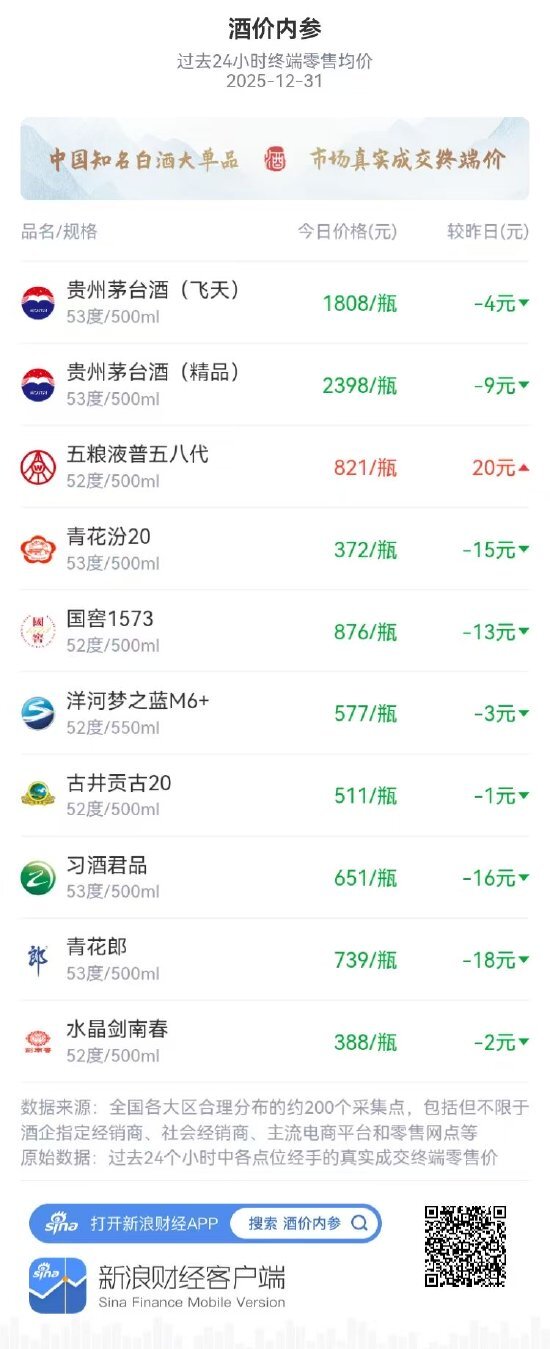
Core Viewpoint - The Chinese liquor market is experiencing a significant price adjustment, with the average retail price of the top ten liquor products dropping sharply at the end of the year, indicating a clear intention to recover funds before the holiday season [1]. Price Trends - The total retail price for a package of the top ten liquor products is 9141 yuan, down 61 yuan from the previous day, marking a new low for the week [1]. - The overall price of nine major liquor products has decreased by 1.7% from the baseline date of November 10, with a total price of 6743 yuan compared to 6860 yuan [1]. - Since the introduction of the premium Moutai on November 18, the average retail price of the top ten products has decreased by 0.9%, from 9226 yuan to 9141 yuan [1]. Individual Product Performance - Among the products, the premium Moutai is the only one that has seen a price increase during the monitoring period, while Qinghua Lang and Gujing Gonggu 20 are the top gainers [1]. - The market is currently characterized by a broad decline in prices, with only Wuliangye's Pu Wu 8th generation showing a rebound, increasing by 20 yuan per bottle [2]. - Other notable price declines include Qinghua Lang down 18 yuan, Xijiu Junpin down 16 yuan, and Guojiao 1573 down 13 yuan [2][6]. Strategic Adjustments by Moutai - Moutai announced plans to adjust its product matrix by 2026, introducing six major series, including classic, premium, zodiac, aged, cultural, and low-alcohol products [3]. - The introduction of the 53% vol 500ml flying Moutai on the "i Moutai" platform will be a first, aiming to balance supply and demand while preventing speculation [3]. - Moutai emphasizes the importance of using the "i Moutai" platform to enhance the channel ecosystem and stabilize the market for its major products [3].
酒价内参12月31日价格发布 市场深度回调整体价格创一周新低
Xin Lang Cai Jing· 2025-12-31 02:00
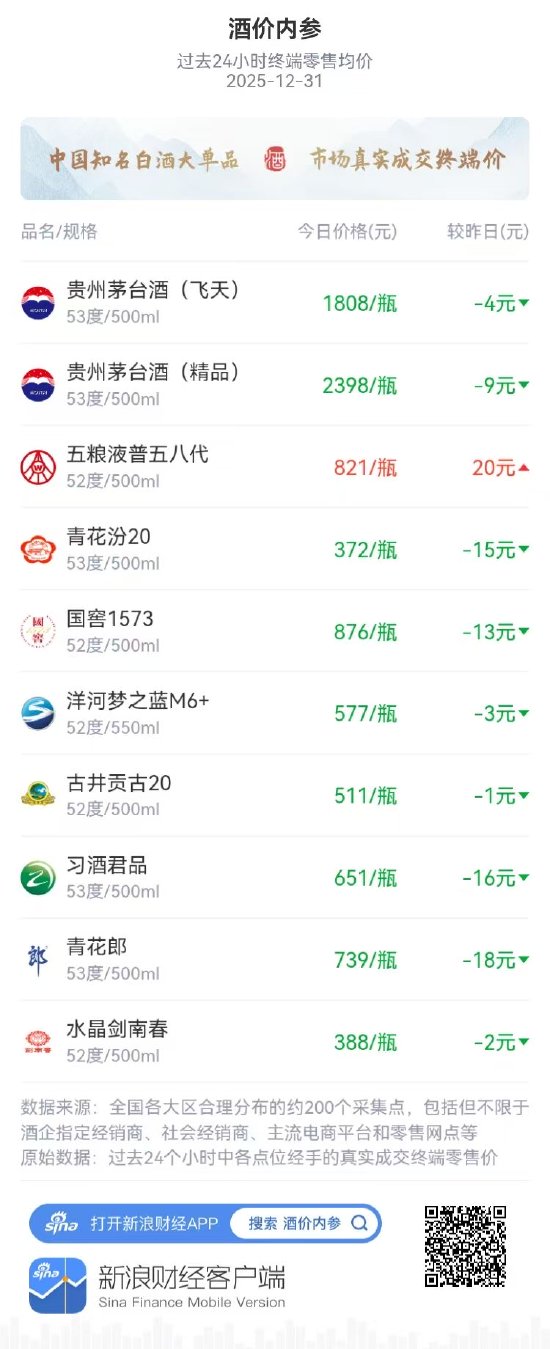
Core Viewpoint - The "Wine Price Reference" by Sina Finance has reported a significant decline in the retail prices of major Chinese liquor products, indicating a market adjustment as year-end sales aim to recover funds [1][7]. Group 1: Market Price Trends - The average retail price of the top ten liquor products dropped to 9141 yuan, a decrease of 61 yuan from the previous day, marking a new low for the week [1][7]. - The overall price of nine major liquor products, using November 10 as a base date, fell by 1.7% from 6860 yuan to 6743 yuan [1][7]. - Since the introduction of the premium Moutai on November 18, the average price of the top ten products has decreased by 0.9% from 9226 yuan to 9141 yuan [1][7]. Group 2: Individual Product Performance - Among the products, only the Wuliangye 58th generation saw a price increase of 20 yuan per bottle, recovering to normal levels after a previous drop [2][8]. - The Qinghua Lang experienced the largest price drop, decreasing by 18 yuan per bottle, followed by Xijiu Junpin down 16 yuan, and Qinghua Fen 20 down 15 yuan [2][8]. - The premium Moutai's price fell by 9 yuan per bottle, while the Flying Moutai decreased by 4 yuan [2][8]. Group 3: Industry Developments - On December 30, the "i Moutai" platform announced plans to adjust the product matrix for Moutai in 2026, introducing six major series including classic, premium, zodiac, aged, cultural, and low-alcohol products [2][8]. - The 53% vol 500ml Flying Moutai will debut on the "i Moutai" platform, which aims to balance product supply and demand while preventing speculation [2][8].
酒企排队赞助!刘德华、刀郎……谁是白酒“带货王”?
Nan Fang Du Shi Bao· 2025-12-31 00:19
Core Viewpoint - The white liquor industry is increasingly leveraging concert sponsorships as a marketing strategy to boost sales and brand value amidst high inventory and declining profits, raising questions about the effectiveness of such investments in driving actual sales [2][7]. Group 1: Marketing Strategies - Major liquor companies like Wuliangye and Luzhou Laojiao are sponsoring concerts to enhance brand visibility and engage consumers, with over 20 concerts planned for 2025 [2][3]. - The "buy alcohol, get concert tickets" model is a key tactic, allowing companies to directly link product purchases to concert attendance, thereby driving sales [5][6]. Group 2: Industry Challenges - The white liquor industry faces significant challenges, with inventory levels reaching 168.39 billion yuan, a year-on-year increase of 19.29 billion yuan, indicating ongoing inventory pressure [3]. - A survey revealed that 58.1% of distributors reported increased inventory, and over 40% faced cash flow pressures, highlighting the financial strain on the distribution network [3][4]. Group 3: Effectiveness of Concert Sponsorships - While some companies report increased sales from concert sponsorships, others struggle to see a return on investment, with risks of inventory not being effectively sold but merely transferred [7][8]. - The cost of sponsoring concerts can be substantial, with expenses for a single event easily exceeding 5 million yuan, posing a risk for smaller companies [7]. Group 4: Future Outlook - As the industry shifts from growth to competition for existing market share, companies must focus on long-term brand value rather than short-term sales boosts to achieve sustainable growth [8].
量价齐跌,价格倒挂!白酒业2025年艰辛收官,明年“挤压式”竞争将加剧|2025年终大盘点
Sou Hu Cai Jing· 2025-12-31 00:13
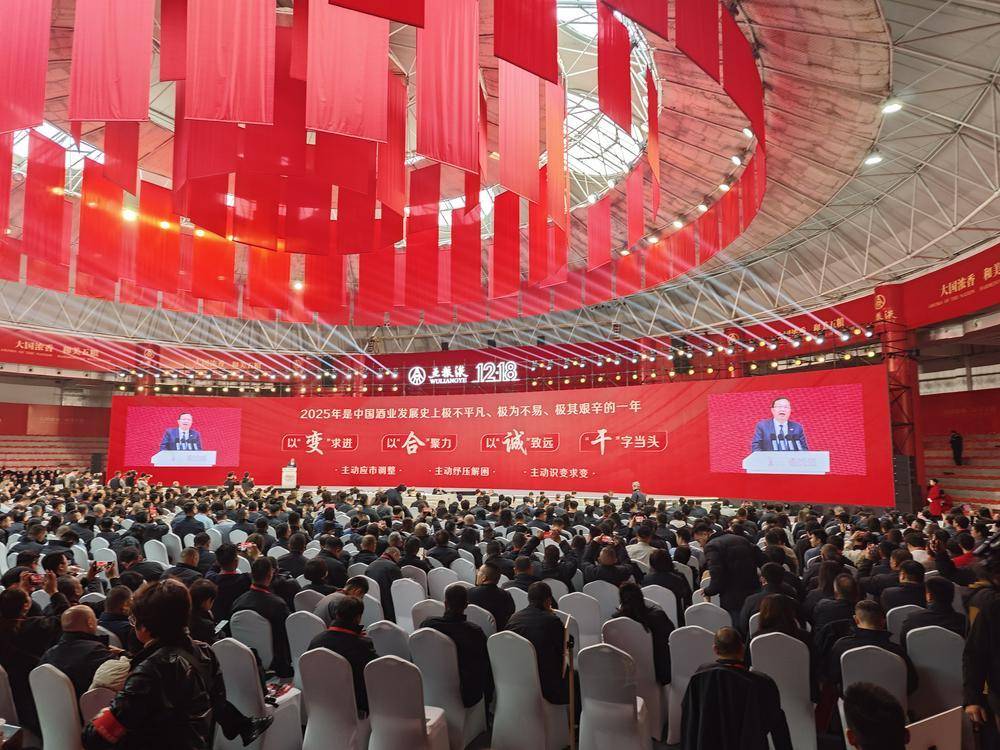
Core Insights - The Chinese liquor industry is entering a deep adjustment period in 2025, characterized by declining volume and price, with a significant contraction in consumption scenarios, leading to a challenging market environment [1][2][4] - Looking ahead to 2026, the industry is expected to face intensified competition due to weak demand, but leading companies are shifting their strategies to focus on consumer-centric approaches, targeting younger consumers and low-alcohol products [1][5] Industry Overview 2025 - The year 2025 is described as exceptionally challenging for the Chinese liquor industry, with companies, distributors, and investors facing severe tests [2] - The mid-to-high-end liquor market is projected to have lost 30-40% of its value, with significant sales declines reported during the summer months [4] Industry Outlook 2026 - The liquor industry is anticipated to remain in a weak demand environment, with ongoing adjustments and increased competitive pressure [5][6] - Companies are focusing on consumer-centric strategies to solidify their market positions, with a clear trend towards product differentiation [5] Competitive Landscape - Companies like Wuliangye aim to dominate the 800-1000 yuan price segment and are working to establish their flagship product, Wuliangye 1618, as a billion-yuan product [6][7] - Luzhou Laojiao is pursuing a differentiated competition strategy by promoting low-alcohol products, which have gained popularity among younger consumers [7] - Shanxi Fenjiu is also focusing on younger consumers and expanding its national presence [7] Long-term Opportunities - Despite short-term challenges, the liquor industry holds structural growth opportunities driven by the expansion of the middle class and new consumer scenarios [8] - The Chinese economy is expected to maintain a GDP growth rate of around 5% during the 14th Five-Year Plan, providing a solid foundation for the liquor industry to navigate through the adjustment period [8] - Upcoming supportive policies from the government are anticipated to benefit the liquor industry, with specific measures expected from regions like Sichuan [8][9]
量价齐跌,价格倒挂!白酒业2025年艰辛收官,明年“挤压式”竞争将加剧|2025年终大盘点
Xin Lang Cai Jing· 2025-12-30 14:04
Core Viewpoint - The Chinese liquor industry is entering a deep adjustment period in 2025, characterized by declining volume and price, with a challenging market environment expected to continue into 2026 [1][2][4]. Industry Overview - 2025 is described as an exceptionally difficult year for the Chinese liquor industry, with companies, distributors, and investors facing severe challenges [2]. - Major players like Kweichow Moutai and Wuliangye have acknowledged the industry's severe conditions, indicating widespread issues such as declining sales and shifting consumption patterns [3][4]. Market Performance - The high-end liquor market has seen a significant contraction, with estimates suggesting a 30-40% evaporation in the mid-to-high-end market during the Mid-Autumn Festival [3]. - Sales data indicates a drastic decline, with distributors reporting an average sales drop of 73% during peak months [3]. - Kweichow Moutai's flagship product has seen its price drop from approximately 2300 RMB to about 1580 RMB per bottle [3]. Competitive Landscape - The industry is expected to experience intensified competition due to weak demand, with companies focusing on consumer-centric strategies to maintain market share [4][5]. - Wuliangye aims to dominate the 800-1000 RMB price segment, while other companies are also shifting towards lower-alcohol products to attract younger consumers [7][8]. Strategic Initiatives - Wuliangye plans to develop its 1618 product into a billion-yuan brand to fend off new entrants [7]. - Kweichow Moutai is focusing on maintaining its core product's market position while promoting premium offerings [7]. - Luzhou Laojiao is pursuing a differentiated strategy by emphasizing lower-alcohol products, which have gained popularity among younger consumers [7]. Long-term Outlook - Despite short-term challenges, the industry holds structural opportunities, driven by the expansion of the middle class and new consumption scenarios [9]. - The government is expected to introduce supportive policies for the liquor industry, which could provide a boost in 2026 [9][10]. - Companies are optimistic about the potential for recovery, with expectations that the industry may hit bottom and begin to rebound in 2026 [10].
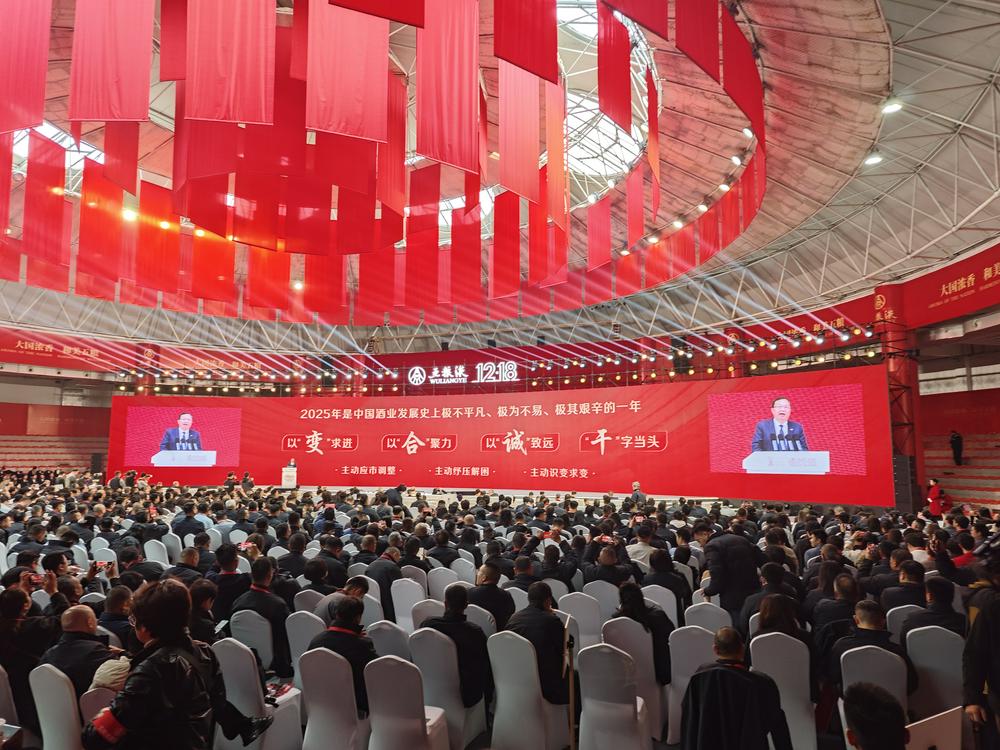
2025年A股十大最惨板块,跌麻了
Ge Long Hui· 2025-12-30 11:30
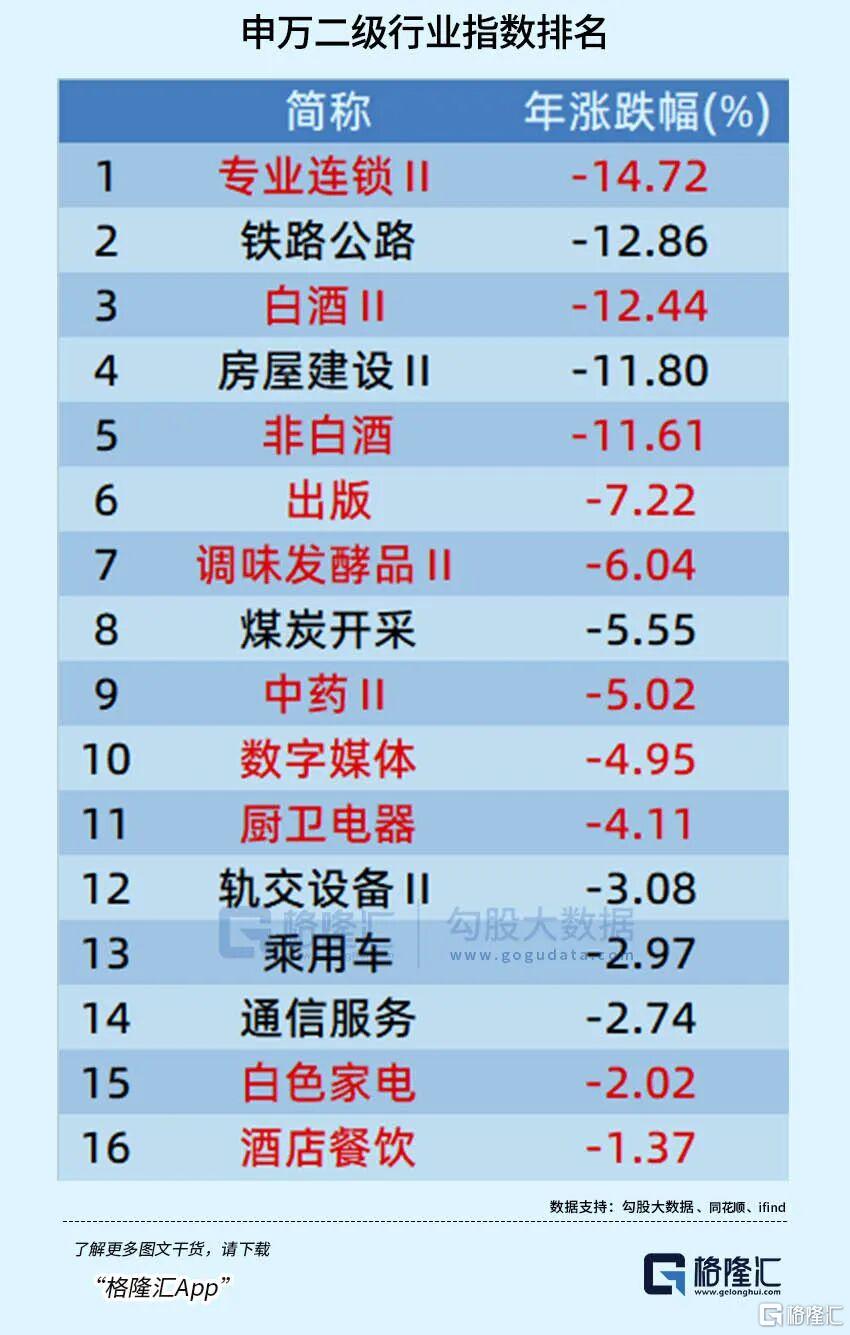
Core Viewpoint - The consumer sector has faced significant challenges in the past year, with many sub-sectors experiencing declines despite overall market growth. The focus on domestic demand and consumption has not translated into positive performance for many consumer-related industries [1][5]. Consumer Sector Performance - In the first half of the year, 10 out of 16 declining industries were from the consumer sector, indicating a broader trend of underperformance [1]. - The white liquor sector, a key component of the consumer market, has seen a year-to-date decline of 12.44%, with major brands like Wuliangye experiencing significant drops in revenue and profit [6][9]. - The professional chain sector has been particularly hard-hit, with a year-to-date decline of 14.72%, exemplified by the struggles of companies like Renrenle [16][20]. White Liquor Sector - The white liquor industry is facing its eighth consecutive year of production decline, with both volume and price dropping simultaneously [10]. - Wuliangye reported a 10.26% decline in revenue and a 13.72% drop in net profit for the first three quarters, marking its first negative growth in a decade [9]. - The industry is shifting from a growth-driven model to one focused on consumer choice, with a need for companies to adapt to changing consumer preferences [15]. Professional Chain Sector - The professional chain sector is experiencing a crisis, with many physical stores closing and traditional business models failing [16][20]. - Renrenle, once a leading private supermarket, has seen its market value plummet and is now facing delisting due to ongoing financial struggles [21][24]. - The shift towards online shopping and personalized consumer demands has further exacerbated the challenges faced by traditional retail chains [24][25]. Non-White Liquor Sector - The non-white liquor sector, including beer and wine, has also faced declines, with the beer segment seeing a notable drop in sales and profits [27][32]. - Budweiser APAC reported an 8.2% decline in domestic sales and a 24.4% drop in net profit, reflecting broader industry challenges [32][33]. - The market is witnessing a trend of cross-industry competition, with liquor companies diversifying into new beverage categories [34]. Publishing Sector - The publishing industry has shown resilience despite a 10.4% decline in the overall market for printed books, with listed companies managing to increase net profits by 14.65% [43][44]. - However, leading companies like Zhongwen Media are struggling, with significant revenue and profit declines due to changes in educational material procurement policies [45][48]. Seasoning Sector - The seasoning industry has faced a 6.04% decline, with companies like Qianhe Flavor struggling due to falling revenues and a loss of consumer trust [51][55]. - The industry is experiencing a shift in consumer preferences and increased competition, necessitating a reevaluation of business strategies [60]. Traditional Chinese Medicine Sector - The traditional Chinese medicine sector is facing challenges, with companies like Pian Zai Huang reporting significant declines in revenue and profit due to rising costs and regulatory pressures [61][66]. - The industry is undergoing a transformation as companies seek to innovate and diversify their product offerings [70]. Digital Media Sector - The digital media industry has seen a 4.95% decline, with companies like Mango TV reporting significant drops in revenue and profit due to changing consumer behaviors and market dynamics [71][74]. - The sector is grappling with the need to adapt to new content consumption trends while facing pressure from traditional advertising models [75]. Kitchen and Bathroom Appliances Sector - The kitchen and bathroom appliance sector has experienced a 4.11% decline, largely due to reduced demand from the real estate market [78][79]. - Companies like Boss Electric are facing revenue declines for the first time in years, highlighting the challenges of adapting to a changing market landscape [79][80]. White Goods Sector - The white goods sector has seen a 2.02% decline, with major players like Gree Electric facing significant revenue and profit pressures due to increased competition and market saturation [83][84]. - The industry is shifting towards a focus on product quality and brand strength as external stimuli diminish [88]. Hotel and Restaurant Sector - The hotel and restaurant sector has faced a 1.37% decline, with revenue pressures stemming from changing consumer spending habits and increased competition from online platforms [89][92]. - Companies are beginning to adopt more refined operational strategies to navigate the challenging market environment [96].