Bank of Ningbo(002142)

Search documents
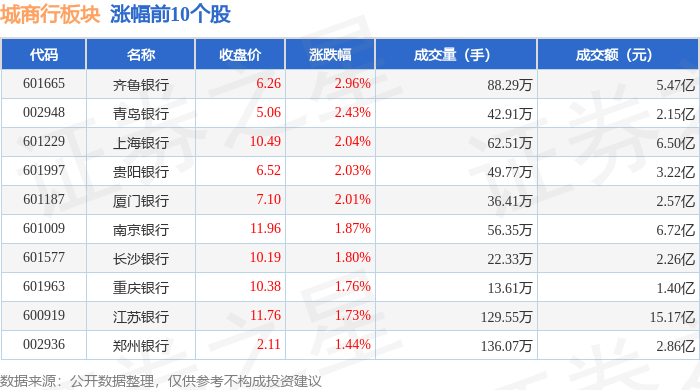
城商行板块8月5日涨1.54%,齐鲁银行领涨,主力资金净流入2807.21万元
Zheng Xing Xing Ye Ri Bao· 2025-08-05 08:37
证券之星消息,8月5日城商行板块较上一交易日上涨1.54%,齐鲁银行领涨。当日上证指数报收于 3617.6,上涨0.96%。深证成指报收于11106.96,上涨0.59%。城商行板块个股涨跌见下表: | 代码 | 名称 | 收盘价 | 涨跌幅 | 成交量(手) | 成交额(元) | | --- | --- | --- | --- | --- | --- | | 601665 | 齐鲁银行 | 6.26 | 2.96% | 88.29万 | 5.47 乙 | | 002948 | 青岛银行 | 5.06 | 2.43% | 42.91万 | 2.15亿 | | 601229 | 上海银行 | 10.49 | 2.04% | 62.51万 | 6.50亿 | | 601997 | 贵阳银行 | 6.52 | 2.03% | 49.77万 | 3.22亿 | | 601187 | 厦门银行 | 7.10 | 2.01% | 36.41万 | 2.57亿 | | 6000000 | 南京银行 | 11.96 | 1.87% | 56.35万 | 6.72亿 | | 601577 | 长沙银行 | 10.19 | 1. ...


多家银行信用卡业务“瘦身”
Jing Ji Wang· 2025-08-05 05:48
Core Insights - The domestic credit card market is undergoing significant changes, including reduced benefits, discontinuation of certain products, and closure of credit card centers, indicating a transformation trend in the industry [2][4]. Group 1: Adjustments in Credit Card Benefits - Several banks, including China Merchants Bank and Everbright Bank, have announced adjustments to high-end credit card benefits, focusing on increasing usage thresholds, modifying point accumulation rules, and reducing high-cost benefits [3][4]. - Specific changes include the adjustment of the annual fee waiver rules for credit cards, with new conditions requiring higher spending to qualify for fee waivers [3]. Group 2: Product Discontinuation - Many banks, such as Agricultural Bank of China and Postal Savings Bank, have stopped issuing certain credit card products, particularly co-branded cards in sectors like aviation and e-commerce, citing business strategy adjustments and service quality improvements [4][5]. Group 3: Shift in Business Strategy - The credit card industry is transitioning from an expansion-focused model to a more refined approach, emphasizing value creation and customer-centric strategies [5][6]. - The market environment and internal banking needs are driving this shift, with banks focusing on optimizing operations and enhancing customer engagement through tailored offerings [6][7]. Group 4: Future Development Directions - Future strategies will focus on deepening customer value, particularly for high-net-worth individuals, by creating tiered benefit systems and integrating various financial services [7]. - The industry is moving towards a model that prioritizes quality over quantity, aiming to enhance customer retention and profitability through comprehensive financial service offerings [7].







这些股票,融资客大幅加仓
天天基金网· 2025-08-05 03:35
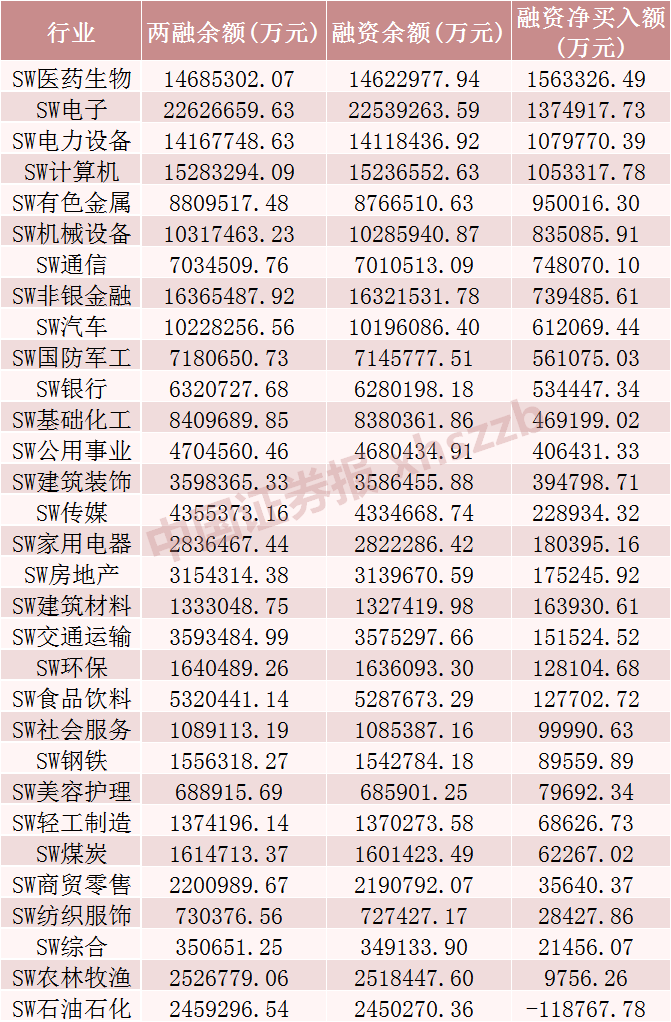
Core Viewpoint - Since July, the A-share market has rebounded, leading to a continuous increase in financing balance, reaching a record high in over 10 years by July 31 [1][3]. Financing Balance Overview - As of August 1, the A-share market financing balance was reported at 1,966.27 billion yuan, with a margin trading balance of 135.83 billion yuan. The financing balance increased by 128.13 billion yuan since July [1][3]. - In July, there were 24 trading days, with financing balance increases on 21 days, accounting for nearly 90%. Notably, on July 21, 22, 28, and 29, the financing balance increased by over 15 billion yuan each day [3]. Industry Performance - Among the 31 primary industries, 30 saw an increase in financing balance since July. The pharmaceutical and biological industry led with a net buying amount of 15.63 billion yuan, followed by electronics at 13.75 billion yuan and electric power equipment at 10.80 billion yuan [3][5]. - The only industry to experience net selling was the oil and petrochemical sector, with a net selling amount of 1.19 billion yuan [3]. Individual Stock Performance - The top ten stocks with the highest net buying amounts since July include: - Xinyi Technology: 3.18 billion yuan - Northern Rare Earth: 2.18 billion yuan - Shenghong Technology: 1.49 billion yuan - Feilihua: 1.46 billion yuan - Jianghuai Automobile: 1.41 billion yuan - WuXi AppTec: 1.37 billion yuan - CATL: 1.31 billion yuan - China Power Construction: 1.17 billion yuan - Kweichow Moutai: 1.08 billion yuan - Changjiang Electric Power: 1.07 billion yuan [7][8]. - The majority of these stocks have seen significant price increases, with Feilihua rising nearly 60% [7]. Net Selling Overview - Since July, 83 stocks experienced net selling exceeding 100 million yuan, with the top ten being: - CITIC Securities: -1.11 billion yuan - Sunshine Power: -767 million yuan - Wuliangye: -627 million yuan - Sifang Jingchuang: -569 million yuan - BOE Technology: -489 million yuan - BeiGene: -425 million yuan - Ningbo Bank: -395 million yuan - Muyuan Foods: -386 million yuan - GF Securities: -382 million yuan - Hengli Petrochemical: -367 million yuan [10][11]. Margin Trading Overview - As of August 1, the A-share market's margin trading balance was 135.83 billion yuan, with an increase of 1.28 billion yuan since July [13]. - The stocks with the highest margin trading balances included Kweichow Moutai, China Merchants Bank, and Ping An Insurance [13]. Conclusion - The A-share market has shown a robust increase in financing activities, particularly in the pharmaceutical and electronics sectors, indicating strong investor confidence and potential growth opportunities in these industries [1][3][5].






多家银行信用卡业务“瘦身”,行业进入精耕细作新阶段
Zheng Quan Ri Bao· 2025-08-04 23:48
Core Insights - The domestic credit card market is undergoing significant changes, including reduced benefits, discontinuation of certain products, and closure of credit card centers, indicating a transformation in the industry [1][3][4] Group 1: Adjustments in Credit Card Benefits - Several banks, including China Merchants Bank and Everbright Bank, have announced adjustments to high-end credit card benefits, focusing on increasing usage thresholds, modifying point accumulation rules, and reducing high-cost benefits [2][4] - Specific changes include higher thresholds for redeeming points for miles, shortened validity of points, and a shift from premium benefits like airport lounges to more practical benefits such as shopping discounts [2][3] Group 2: Discontinuation of Credit Card Products - Many banks, including Agricultural Bank of China and Postal Savings Bank, have stopped issuing certain credit card products, particularly co-branded cards in sectors like aviation and e-commerce, citing business strategy adjustments and the need to enhance service quality [3][4] Group 3: Shift from Expansion to Optimization - The credit card industry is moving from a phase of rapid expansion to one focused on optimizing existing customer relationships, with banks needing to streamline inefficient products and concentrate on core customer segments [4][5] - This transition is driven by intensified competition in the credit consumption market, pressure on credit assets, and the need to adapt to consumer preferences for high-frequency, essential spending scenarios [4][6] Group 4: Future Development Directions - The focus for future growth will be on maximizing the value of existing customers, creating tiered benefit systems for different customer segments, and enhancing coverage of high-frequency spending scenarios [5][6] - The integration of credit cards with wealth management and private banking services aims to elevate credit cards from mere customer acquisition tools to central components of value creation [6]
银行股保持强势背后 5家公司业绩报喜
Zhong Guo Zheng Quan Bao· 2025-08-04 21:07
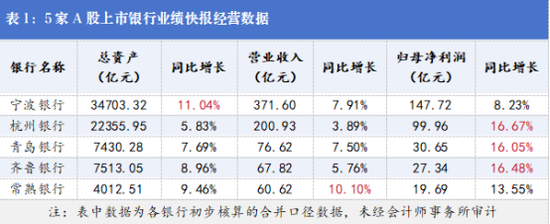
Core Viewpoint - Several listed banks reported positive performance for the first half of 2025, with both operating income and net profit increasing year-on-year, while maintaining steady asset growth [1][2]. Group 1: Financial Performance - Five banks reported year-on-year growth in both operating income and net profit, with Ningbo Bank and Hangzhou Bank each exceeding 200 million yuan in operating income [2]. - Ningbo Bank's total assets reached 3.47 trillion yuan, growing by 11.04% year-on-year, while Hangzhou Bank's total assets were 2.24 trillion yuan, up by 5.83% [2]. - The net profit attributable to shareholders for Ningbo Bank and Hangzhou Bank exceeded 100 million yuan, with figures of 147.72 million yuan and 116.62 million yuan respectively [2][3]. Group 2: Asset Quality - The non-performing loan (NPL) ratios for the five banks remained stable, with Qilu Bank reporting an NPL ratio of 1.09%, down by 0.1 percentage points from the beginning of the year [3]. - Changshu Bank's NPL ratio was 0.76%, also showing a slight decrease, while both Ningbo Bank and Hangzhou Bank maintained an NPL ratio of 0.76% [3]. Group 3: Service to the Real Economy - Banks have increased credit support to key sectors such as small and micro enterprises, manufacturing, and infrastructure, enhancing their service to the real economy [4]. - Hangzhou Bank reported that its credit issuance had exceeded 50% of its annual target by mid-year [4]. Group 4: Market Performance and Investment Trends - Bank stocks have performed well in 2025, with nine stocks in the A-share market showing a cumulative increase of over 20% [6]. - Public funds have increased their holdings in bank stocks, with the proportion reaching 4.85%, the highest since Q2 2021 [6]. - Analysts suggest that the appeal of bank stocks lies in their high dividend yields and stable performance, making them attractive to long-term investors [6].


多家银行信用卡业务“瘦身” 行业进入精耕细作新阶段
Zheng Quan Ri Bao Zhi Sheng· 2025-08-04 16:09
Core Insights - The domestic credit card market is undergoing significant changes, including reduced benefits, discontinuation of certain products, and closure of credit card centers, indicating a transformation in the industry [1][3][4] Group 1: Adjustments in Credit Card Benefits - Several banks, including China Merchants Bank and Everbright Bank, have announced adjustments to high-end credit card benefits, focusing on increasing usage thresholds, modifying point accumulation rules, and reducing high-cost benefits [2][4] - Specific changes include increased requirements for redeeming points for miles and adjustments to annual fee waivers, such as requiring a minimum spending threshold alongside points [2][3] Group 2: Discontinuation of Credit Card Products - Many banks, including Agricultural Bank of China and Postal Savings Bank, have stopped issuing certain credit card products, particularly co-branded cards in sectors like aviation and e-commerce, citing business strategy adjustments and service quality improvements [3][4] Group 3: Shift in Industry Focus - The credit card industry is transitioning from an expansion phase to a focus on optimizing existing customer value, emphasizing the need for banks to streamline inefficient products and concentrate on core customer segments [4][5] - Factors driving this shift include intensified competition in the credit consumption market, pressure on credit assets, and the need to adapt to consumer preferences for high-frequency, essential spending scenarios [4][5][6] Group 4: Future Development Directions - Future strategies will involve deepening customer engagement through tailored benefits for different customer segments, enhancing self-operated service coverage, and integrating credit cards with wealth management and private banking services [5][6] - The industry is moving towards a model that prioritizes quality over quantity, focusing on value contribution and improving comprehensive financial service quality for high-end customers [6]
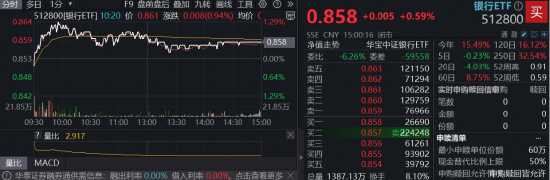
王者归来!银行全天走强,农业银行续刷新高!百亿银行ETF(512800)放量上探1%
Xin Lang Ji Jin· 2025-08-04 12:09
Core Viewpoint - The banking sector is experiencing positive momentum, driven by favorable policies and strong performance from key banks, leading to increased investor interest in bank ETFs and individual bank stocks [1][4][6]. Banking Sector Performance - The Shanghai Composite Index opened lower but quickly turned positive, with significant contributions from the banking sector, particularly the bank ETF (512800), which saw a price increase of over 1% at one point and closed up by 0.59% with a trading volume of 1.191 billion yuan [1]. - Major banks such as Agricultural Bank of China and Qingdao Bank reached new highs, with Qingdao Bank's stock rising over 4% during the day [1][3]. Policy Environment - The People's Bank of China recently maintained a stance of "moderately loose monetary policy" and "ample liquidity," which is expected to benefit banks significantly [3]. - The government’s fiscal policies are anticipated to boost financing demand, supporting stable credit growth from banks [4]. Financial Performance of Banks - Several listed banks have reported positive earnings for the first half of the year, with all five banks mentioned achieving positive growth in net profit, and four of them recording double-digit growth [4][5]. - The overall asset quality of the banking sector remains stable, with expectations for continued profit growth due to effective management of interest margins and credit quality [5][6]. Investment Trends - Institutional investors are increasingly favoring bank stocks due to their stable dividends and solid performance, with significant net inflows into bank ETFs recently [6][8]. - The bank ETF (512800) has become the largest and most liquid among its peers, with a fund size exceeding 14.4 billion yuan and an average daily trading volume of 567 million yuan this year [8].

这些股票,融资客大幅加仓
Zhong Guo Zheng Quan Bao - Zhong Zheng Wang· 2025-08-04 04:44
Core Insights - Since July, the A-share market has rebounded, leading to a continuous increase in financing balance, reaching 19,662.74 billion yuan as of August 1, with a net increase of 1,281.25 billion yuan in July, marking a new high in over 10 years [1][2] Financing Balance Overview - As of August 1, the A-share market's total margin balance is reported at 19,798.57 billion yuan, with the financing balance at 19,662.74 billion yuan, reflecting an increase of 1,281.25 billion yuan since July [2] - In the 24 trading days since July, financing balance increased on 21 days, accounting for nearly 90% of the time, with significant increases on July 21, 22, 28, and 29, each exceeding 150 billion yuan [3] Industry Performance - Among the 31 primary industries, 30 saw an increase in financing balance since July, with the pharmaceutical and biological industry leading with a net increase of 156.33 billion yuan, followed by electronics and power equipment [3] - The computer industry also reported a net increase of over 100 billion yuan, while only the oil and petrochemical industry experienced a net sell-off of 11.88 billion yuan [3] Stock Performance - The top ten stocks with the highest net buying amounts since July include Xinyi Technology (31.80 billion yuan), Northern Rare Earth (21.76 billion yuan), and Shenghong Technology (14.91 billion yuan), with most of these stocks showing significant price increases, particularly Feilihua, which rose nearly 60% [3] - Conversely, the top ten stocks with the highest net selling amounts include CITIC Securities (11.11 billion yuan) and Sunshine Power (7.67 billion yuan), with most of these stocks also experiencing price increases, notably Guangfa Securities, which rose over 15% [5] Margin Trading Overview - As of August 1, the margin trading balance reached 135.83 billion yuan, with an increase of 12.79 billion yuan since July, and a total of 28.72 billion shares available for margin trading [6] - The stocks with the highest margin trading balances include Kweichow Moutai (0.97 billion yuan), China Merchants Bank (0.68 billion yuan), and Ping An Insurance (0.68 billion yuan) [6]



银行业投资策略:下半年向优质顺周期个股要超额收益
Guoxin Securities· 2025-08-04 02:21
Group 1 - The core conclusion is that high-quality cyclical stocks are expected to show a fundamental turning point, which is key to their potential for excess returns. Currently, banks with a high proportion of retail exposure are still under pressure, but signs indicate that the pressure on quality stocks is easing. This is due to the gradual clearance of retail non-performing loans and the expectation that net interest margins will stabilize first [3][5][29] - The report predicts that the retail non-performing loan generation for listed banks will remain high until the second half of 2026, but quality banks are expected to clear their non-performing loans ahead of the industry. For quality regional banks with strong risk management capabilities, the turning point for retail non-performing loans may be approaching [3][8][18] - The net interest margin for some quality regional banks is expected to stabilize first due to a noticeable narrowing in the decline of new loan interest rates and the high proportion of long-term savings deposits, which provides greater room for optimization [3][22][29] Group 2 - The macro narrative of anti-involution is strengthening, and long-term economic optimism is increasing, which enhances the winning probability of cyclical stocks. Although the current economic fundamentals remain weak, the long-term optimistic expectations have been reinforced. The report suggests that further demand-side policies are needed to translate expectations into reality, which is a significant factor in recent market adjustments [4][27][29] - The report recommends selecting undervalued high-quality cyclical stocks for excess returns in the second half of the year, while high-dividend stocks still hold significant value but are unlikely to yield excess returns. The performance of individual stocks is expected to diverge, making stock selection crucial [29][31] - The report highlights specific banks such as Ningbo Bank, Changshu Bank, Changsha Bank, Chongqing Rural Commercial Bank, and China Merchants Bank as key recommendations for investors looking for quality cyclical stocks with potential for early recovery in fundamentals [29][31]
银行首批2025中期业绩出炉:5家上市银行营收、净利双增,杭州银行预计息差降幅或收窄
Xin Lang Cai Jing· 2025-08-04 00:53
Core Viewpoint - The A-share banking sector has shown positive mid-year performance for 2025, with several banks reporting significant growth in both operating income and net profit, indicating a robust financial environment [1][2]. Group 1: Performance of Listed Banks - Five listed banks have reported positive growth in operating income and net profit for the first half of 2025, with four banks achieving double-digit growth in net profit [1][2]. - Notable performances include Hangzhou Bank with a net profit growth of 16.67% and Changshu Bank with an operating income growth of 10.10% [2][3]. - Ningbo Bank leads with an operating income of 371.60 billion yuan and a net profit of 147.72 billion yuan [2][3]. Group 2: Asset Quality and Capital Adequacy - As of June 2025, all five banks reported positive growth in total assets, with Ningbo Bank's total assets reaching 3.47 trillion yuan, a year-on-year increase of 11.04% [2][3]. - The non-performing loan (NPL) ratios for the banks remained stable or slightly decreased, with Hangzhou Bank maintaining the highest provision coverage ratio at 520.89% despite a year-on-year decline of 20.56 percentage points [5][6]. - Capital adequacy ratios for Ningbo Bank and Hangzhou Bank improved, with Ningbo Bank's capital adequacy ratio at 15.21% and core Tier 1 capital ratio at 9.65% [6][7]. Group 3: Non-Listed Banks Performance - Non-listed banks, including Chengdu Rural Commercial Bank, have also reported positive results, with Chengdu Rural Commercial Bank achieving an operating income of 95.37 billion yuan and a net profit of 42.31 billion yuan, both showing year-on-year growth [8][9]. - Other non-listed banks such as Tai Long Bank and Qin Nong Bank reported declines in net profit, indicating mixed performance across the sector [10]. Group 4: Future Outlook - Hangzhou Bank anticipates a better overall decline in interest margins for 2025 due to rapidly decreasing external funding costs and ongoing business structure optimization [5]. - Both Ningbo Bank and Hangzhou Bank expressed confidence in maintaining stable asset quality despite potential risks in small and micro loans [7].