HIKVISION(002415)

Search documents
算力竞争引领新一轮“科技牛” 丨 2025中报专题
2 1 Shi Ji Jing Ji Bao Dao· 2025-09-05 03:28
Core Insights - The Chinese pan-technology sector is experiencing significant growth driven by AI computing power, with a clear differentiation among various segments and leading companies outperforming [1][2]. Industry Overview - The high demand for AI computing power is leading to a full-chain growth pattern from upstream infrastructure to downstream applications [2]. - The global semiconductor market reached $346 billion in the first half of 2025, showing an 18.9% year-on-year increase, with logic semiconductors growing by 37% [2]. - China's semiconductor market demonstrated resilience, with total investment down 9.8% year-on-year, a significant improvement from a 41.6% decline in the previous year [2]. Company Performance - Industrial Fulian reported a revenue of 360.8 billion yuan, a 35.6% increase, and a net profit of 12.11 billion yuan, up 38.6%, driven by AI server shipments [5]. - Cambrian-U achieved a revenue of 2.881 billion yuan, a staggering 4347.82% increase, and a net profit of 1.038 billion yuan, marking its first profitable half-year since its listing [6]. - Zhongji Xuchuang reported a revenue of 14.789 billion yuan, a 36.95% increase, and a net profit of 3.995 billion yuan, up 69.40%, benefiting from increased capital expenditure from key clients [7]. Market Trends - The light module market is expected to grow by 45% in 2024, driven by AI industry demand, with a forecast of 4.7 million units shipped in 2025 [3]. - The AI chip sector is seeing breakthroughs in performance and cost, with domestic products like Cambrian's chips showing competitive advantages [9][10]. - Traditional hardware companies like Hikvision and Luxshare Precision are adjusting their structures to find new growth points, with Hikvision's innovative business growing by 13.92% [8]. Policy and Technological Support - The Chinese government is implementing supportive policies, including the "Artificial Intelligence +" initiative, aiming for deep integration of AI across six key sectors by 2027 [3][10]. - The domestic semiconductor industry is increasing R&D investments to reduce reliance on imports, with breakthroughs in key materials and equipment expected to enhance competitiveness [10].





【前瞻分析】2025年全球智慧交通行业市场规模及投资建设分析
Sou Hu Cai Jing· 2025-09-04 09:10
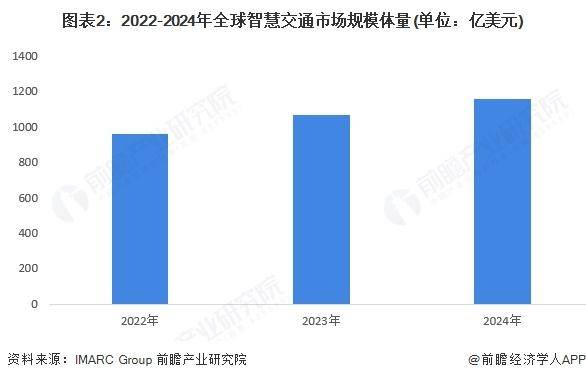
Group 1 - The global smart transportation market was approximately $96.1 billion in 2022 and is projected to reach $115.8 billion by 2024, with a compound annual growth rate (CAGR) of 8% [1] - The investment in smart city construction globally is expected to approach $80 billion by 2024, driven by urbanization challenges, with Asian countries having significant growth potential [3] - China's fixed asset investment in transportation increased from 2.87 trillion yuan in 2016 to 3.9 trillion yuan in 2023, with a forecast of 3.8 trillion yuan for 2024 [5][6] Group 2 - The market size of smart transportation in China grew from 97.3 billion yuan in 2016 to 236.7 billion yuan in 2023, with expectations to exceed 240 billion yuan in 2024 [7] - The comprehensive three-dimensional transportation network in China has a route mileage exceeding 260,000 kilometers, with a completion rate of about 90% [6]



AI触底反弹,人工智能AIETF(515070)连续12日获得资金加仓,累计加仓超20亿元
Mei Ri Jing Ji Xin Wen· 2025-09-04 04:39
Group 1 - The technology sector opened high but quickly declined, with significant drops in CPO, telecommunications, and artificial intelligence sectors. The AI ETF (515070) fell over 6% before rebounding to a decline of less than 4% [1] - Continuous capital inflow into the artificial intelligence sector has been observed, with over 2 billion yuan added in the last 12 days [1] - Major investment focus is expected to remain on the AI industry chain, supported by macro trends encouraging the integration of AI with technology, industry, and social governance [1] Group 2 - The third quarter is entering a period of intensive updates and iterations from leading domestic and international large model companies, with ongoing progress in AI applications [1] - Companies in the AI sector have begun disclosing positive advancements in AI applications, with expectations for significant growth in the second half of the year [1] - The AI ETF (515070) tracks the CS Artificial Intelligence Theme Index (930713), focusing on companies providing technology, foundational resources, and applications in the AI industry chain [1]


31家百亿私募二季度重仓股名单出炉!高毅加码黄金概念
Sou Hu Cai Jing· 2025-09-03 07:18
Group 1 - As of August 31, 31 private equity firms held a total of 46.99 billion shares in 175 A-share companies, with a combined market value of 658.29 billion yuan [1][25] - Compared to the end of Q1, the number of private equity firms increased by 5, and the number of shares held rose by 4.1 billion, with a market value increase of 158.07 billion yuan [1] - The sectors attracting significant investment include technology, particularly AI, as well as cyclical stocks and pharmaceuticals, indicating a favorable investment environment [1] Group 2 - The computer industry is the only sector with a total holding value exceeding 100 billion yuan, while other sectors like non-ferrous metals, electronics, and food and beverage also show significant holdings [12][13] - Among the 24 companies with a market value exceeding 5 billion yuan, 12 maintained their holdings, 6 saw increases, 4 were reduced, and 2 were newly added [15] - The top private equity firm by the number of companies held is Gao Yi Asset, with 9 companies, and its largest holding, Hikvision, was significantly reduced by 12 million shares [16] Group 3 - 31 companies have seen their stock prices rise over 30% since the end of Q2, with 14 of those rising over 50% [23] - The leading stock in terms of growth is Kaipu Cloud, which has increased nearly 160% following an announcement of a significant acquisition [23] - The technology growth sector is predominant among the companies with significant stock price increases, particularly in semiconductors and automotive components [23]



高毅最新动向曝光!A股持仓超260亿,邓晓峰第一大重仓股涨近7倍!8月调研67家公司!
私募排排网· 2025-09-02 10:32
本文首发于公众号"私募排排网"。 (点击↑↑ 上图查看详情 ) 截至 8月31日,A股公司的2025年半年报已经落下帷幕。半年报中披露了上市公司前十大流通股东数据,不少私募旗下产品现身十大流通股东名 单之中。因此,私募的重仓股也随之浮出水面。 高毅资产 作为国内少有的千亿级私募,是 A股市场的持仓大户,持股数量和持仓市值长期位居私募前列,其持仓一直备受市场关注。 ( 点此领 取高毅持仓全名单 ) 公司资料显示,高毅资产成立于2013年,公司聚焦基本面研究和产业研究,努力践行长期投资、价值投资和责任投资。 公司汇聚了多位投资研 究经验丰富、长期业绩出色的基金经理及投研人才。由邱国鹭担任董事长,邓晓峰担任首席投资官,卓利伟担任首席研究官,孙庆瑞、冯柳、吴 任昊担任合伙人、资深基金经理,韩海峰担任合伙人、研究总监。 高毅资产展业以来多次获得行业评选的重要奖项。 公司及 6位资深基金经理在职业生涯中合计获得30座金牛奖,在公司展业10年中合计获得17 座金牛奖 。 资料来源:公司官网 0 1 高毅 A 股持仓超 260 亿,邓晓峰第一大重仓股涨幅接近 7 倍! 根据A股公司的前十大流通股东数据统计, 截至 2025年 ...

75家机器人上市公司2025半年报总结:营收5821亿,盈利301亿,传统巨头与AI新锐谁能最终胜出?
机器人圈· 2025-09-02 10:32
Core Viewpoint - The Chinese robotics and artificial intelligence industry is experiencing a bifurcation, with leading companies like Cambricon and Orbbec achieving explosive growth driven by generative AI and 3D vision, while traditional firms like Geling Deep Vision and Jiangsu Beiren face significant losses [2][4]. Market Performance Overview - The overall industry is in a high prosperity phase, with 75 listed companies reporting total revenue of 582.994 billion yuan and a combined net profit of 30.097 billion yuan. 53 companies achieved year-on-year revenue growth, and 53 companies reported an increase in net profit [4][5]. Revenue and Profit Rankings - The top revenue-generating company, Industrial Fulian, reported 360.76 billion yuan, significantly outpacing the other nine companies combined. Other notable companies include Hikvision, Huichuan Technology, and Sanhua Intelligent, which not only have substantial net profits but also impressive growth rates of 36%-60% [9][11]. Losses and Challenges - Companies like SenseTime, Black Sesame Intelligence, and Unibot are showing trends of revenue growth and narrowing losses, indicating potential for value reassessment with technological breakthroughs. However, companies like Efort and Xinsong are facing dual declines, reflecting intense market competition and rapid technological changes [12][13]. Performance Growth Leaders - The top performers in terms of growth include companies like Cambricon, which reported a staggering revenue growth rate of 4347.82%, and a profit growth rate of 295.85%, highlighting the significant impact of global investments in AI technologies [11][13].



31家百亿私募二季度重仓股全名单出炉!高毅加码黄金概念!睿郡重仓半导体!
私募排排网· 2025-09-02 03:33
Group 1 - As of August 31, 2025, 31 billion private equity firms appeared among the top ten shareholders of 175 A-share companies, holding a total of 4.699 billion shares valued at 65.829 billion yuan [2][3] - Compared to the end of Q1 2025, the number of billion private equity firms increased by 5, with an increase of 410 million shares and a significant rise in market value by 15.807 billion yuan [2][3] - The number of newly entered stocks was 32, with 29 stocks being increased, 23 stocks being reduced, and 91 stocks remaining unchanged [2][3] Group 2 - The reasons for the significant increase in positions by billion private equity firms include a favorable market environment, optimistic investor sentiment, the emergence of structural opportunities, and the driving effect of profit-making [3][4] - The computer industry is the only sector with a holding value exceeding 10 billion yuan, while six sectors, including electronics and non-bank financials, saw a reduction in holdings [5][6] - Among the 24 companies with a holding value exceeding 5 billion yuan, 12 companies maintained their holdings, 6 were increased, 4 were reduced, and 2 were newly entered [7][8] Group 3 - The technology growth direction saw 30 companies with a holding value exceeding 1 billion yuan, particularly in sectors like computing power and innovative pharmaceuticals [9][10] - From the end of Q2 2025, 31 companies experienced a price increase of over 30%, with 14 companies seeing an increase of over 50% [12][13] - The highest price increase was observed in Kaipu Cloud, which rose nearly 160% following an announcement to acquire Nanning Taike Semiconductor [13][14] Group 4 - Eight companies were held by at least two private equity firms, with Shiji Information showing the highest increase of over 27% since the end of Q2 [15][16] - High Yi Asset, Guofeng Xinghua (Beijing) Private Equity, and Rui Jun Asset are among the eight private equity firms with a total holding value exceeding 1 billion yuan [17][18]

2025年中国智能门禁系统行业发展历程、产业链、市场规模、竞争格局及发展前景研判:应用领域不断拓展,智能门禁系统规模达236亿元[图]
Chan Ye Xin Xi Wang· 2025-09-02 01:23
Core Insights - The Chinese access control market has evolved from traditional key and keypad systems to more diversified and personalized solutions, driven by urbanization and increased property management demands [1] - The market for smart access control systems in China is projected to grow from 8.4 billion yuan in 2015 to 23.6 billion yuan in 2024, with a compound annual growth rate (CAGR) of 12.16% [1][15] - The integration of technologies such as IoT, AI, and big data is expected to further enhance the development prospects of the smart access control industry [1] Industry Overview - Smart access control systems utilize modern electronic and identification technologies to manage entry points effectively, enhancing security and convenience [4] - The systems can be categorized by recognition methods (password, card, RFID, biometric) and design principles (integrated or separate controllers and readers) [4][6] Industry Development History - The smart access control industry has undergone significant evolution over the decades, transitioning from simple electronic locks in the 1980s to advanced biometric systems in the early 2000s, and now to intelligent systems incorporating IoT and AI [9] Industry Value Chain - The value chain consists of hardware manufacturing (controllers, readers, locks) and software development (management software, recognition algorithms), with system integration and application in smart buildings and communities as downstream activities [10] Market Size and Growth - The smart community market in China is projected to grow from 348 billion yuan in 2017 to approximately 752.8 billion yuan in 2024, with a CAGR of 12.34% [12][13] Competitive Landscape - The smart access control industry in China is characterized by high market concentration, with leading companies leveraging technology and service innovation to strengthen their competitive edge [15] - Key players include both international brands (e.g., Johnson Controls, Siemens) and domestic firms (e.g., Jieshun Technology, Dahua Technology) [15] Key Companies - Jieshun Technology focuses on smart parking and access control systems, with projected revenue of 151 million yuan for its access control segment in 2024, down 30.42% year-on-year [16] - Lifan Holdings specializes in integrated access control solutions, with expected revenue of 91 million yuan for its smart access control systems in 2024, a decline of 26.02% year-on-year [16] Future Trends - The industry is expected to see increased application in diverse scenarios beyond traditional settings, such as schools and hospitals, necessitating customized solutions [17] - The integration of AI will enhance the intelligence of access control systems, enabling features like behavior analysis and anomaly detection [18] - Enhanced security measures will be implemented to counteract rising cybersecurity threats, including multi-factor authentication and blockchain technology [20] - User experience will be prioritized, with systems designed for ease of use across different demographics, including features like mobile access and voice prompts for elderly users [21]


趋势研判!2025年中国路口自动信号装置行业发展历程、产业链、市场规模、重点企业及未来前景展望:市场规模达149亿元,智能化升级推动行业持续增长[图]
Chan Ye Xin Xi Wang· 2025-09-02 01:23
Core Insights - The traditional traffic management methods are facing significant challenges due to the rapid growth of urbanization and vehicle ownership, leading to the widespread adoption of intelligent and automated intersection signal control devices [1][9] - The market size of China's intersection automatic signal device industry is projected to grow from 11 billion yuan in 2019 to 14.9 billion yuan in 2024, with a compound annual growth rate (CAGR) of 6.26% [1][9] - Future developments in the industry will focus on smarter and more networked solutions, driven by technological innovations and the deepening of new urbanization [1][9] Industry Overview - Intersection automatic signal devices are designed to control traffic lights based on real-time traffic flow and road conditions, enhancing traffic efficiency and safety [3] - The devices can be categorized into timed signal machines, semi-sensing signal machines, and fully sensing signal machines [3] Industry Development History - The industry has evolved from manual traffic control by police to mechanical signal lights, and then to electronic signal lights, which are now being replaced by intelligent systems that optimize signal management [3][4] Industry Chain - The upstream of the industry includes raw materials and core components such as sensors and controllers, while the downstream applications are primarily in traffic management and smart city systems [5][6] Sensor Market Growth - The sensor market, crucial for real-time traffic monitoring, is expected to grow from 169.08 billion yuan in 2017 to 406.12 billion yuan in 2024, with a CAGR of 13.34% [7][8] Smart Traffic System - The smart traffic system, a key application area for intersection automatic signal devices, is projected to grow from 151.3 billion yuan in 2019 to 262.82 billion yuan in 2024, with a CAGR of 11.68% [8][9] Competitive Landscape - The industry exhibits a layered competitive structure, with leading companies dominating the high-end market while many small and medium enterprises focus on regional services and price competition [10] - Key players include Hikvision, Sainojie Technology, and several others, each leveraging technology and innovation to gain market share [10][11] Future Trends - The industry is moving towards intelligent upgrades, networked collaboration, and integrated design, enhancing the capabilities of intersection automatic signal devices [12][13][14]

板块业绩复苏明显,AI+ 含量逐步提高
2025-09-02 00:42
Summary of Conference Call Records Industry Overview - The computer industry has shown a strong performance in 2025, with a growth rate of 37.42%, outperforming most sectors despite varying market perceptions [1][2] - The total revenue of 399 companies in the computer sector reached 1.04 trillion yuan, a year-on-year increase of 18.32%, while net profit attributable to shareholders grew by 28.13% to 28.413 billion yuan [1][5] Key Companies and Performance - Major companies like Haiguang and Inspur have significantly outperformed the index, contributing to the sector's overall success [3] - The DFC market trend in the first half of the year has propelled the sector index to new highs [3] AI Integration and Trends - AI technology is increasingly integrated, with 87.69% of computer companies mentioning AI in their half-year reports [1][10] - Companies such as Kingsoft Office, Hikvision, and Yonyou have reported AI-related revenues and orders, indicating a trend of investment in AI in the first half of the year, with expected implementation in the second half and significant growth in 2026 [1][6] Government Policy Impact - The State Council's recent opinions on AI development set clear targets for AI application rates by 2027 and 2030, which will accelerate technological innovation and market application among enterprises [9][13] Notable Financial Metrics - Among the 399 companies, 216 reported positive net profit growth, with an overall growth average of 16.51% [5] - The average revenue for these companies was 6.3 billion yuan, with a median of 3.7 billion yuan [5] Future Outlook - The current state is viewed as a bottom phase for AI applications, with strong potential for growth in the application sector, particularly among leading companies [7] - Investors are advised to focus on leading companies in niche markets, such as Kingsoft Office in office software and Hikvision in video surveillance [12][13] Key Takeaways for Investors - Emphasis on the importance of the State Council's AI action plan and its implications for the industry through 2035 [9][13] - Attention should be given to leading companies in their respective segments, as they possess strong competitive advantages [12][13]