RSPC(002493)

Search documents
荣盛石化(002493) - 关于公司2026年年度互保额度的公告
2025-12-08 13:00
证券代码:002493 证券简称:荣盛石化 公告编号:2025-057 荣盛石化股份有限公司 关于公司 2026 年年度互保额度的公告 本公司及董事会全体成员保证信息披露内容的真实、准确和完整,没有虚假 记载、误导性陈述或重大遗漏。 特别提示: 荣盛石化股份有限公司(以下简称"荣盛石化")对控股子公司担保及控股 子公司间互保额度总额预计超过最近一期经审计净资产的 100%,敬请投资者注 意相关风险。 释义: | 荣盛石化 | 指 | 荣盛石化股份有限公司 | | --- | --- | --- | | 浙石化 | 指 | 浙江石油化工有限公司 | | 中金石化 | 指 | 宁波中金石化有限公司 | | 逸盛大化 | 指 | 逸盛大化石化有限公司 | | 盛元化纤 | 指 | 浙江盛元化纤有限公司 | | 永盛科技 | 指 | 浙江永盛科技有限公司 | | 荣盛石化(新加坡) | 指 | 荣盛石化(新加坡)私人有限公司 | | 逸盛投资 | 指 | 大连逸盛投资有限公司 | 2025 年 12 月 8 日,荣盛石化董事会召开第七届董事会第四次会议,会议审 议通过了《关于公司 2026 年年度互保额度的议案》。根 ...

荣盛石化(002493) - 关于召开2025年第四次临时股东会的通知
2025-12-08 13:00
证券代码:002493 证券简称:荣盛石化 公告编号:2025-059 (四)会议召开日期、时间: 现场会议时间为:2025 年 12 月 31 日 14:30 开始 网络投票时间为:通过深圳证券交易所交易系统进行网络投票的时间为 2025 年 12 月 31 日 9:15—9:25,9:30—11:30 和 13:00—15:00;通过深圳证券交 易所互联网投票系统投票的具体时间为 2025 年 12 月 31 日 9:15—15:00。 荣盛石化股份有限公司 关于召开2025年第四次临时股东会的通知 本公司及董事会全体成员保证信息披露内容的真实、准确和完整,没有虚 假记载、误导性陈述或重大遗漏。 一、召开会议的基本情况 (一)股东会届次:2025 年第四次临时股东会 (二)股东会召集人:荣盛石化股份有限公司(以下简称"公司"或"荣盛 石化")董事会,荣盛石化第七届董事会第四次会议审议通过了《关于召开 2025 年第四次临时股东会的议案》。 (三)会议召开的合法、合规性:本次股东会会议的召开符合《公司法》《股 票上市规则》及《公司章程》等法律、法规和规范性文件的规定。 (3)公司聘请的见证律师。 (五)会议 ...
荣盛石化(002493) - 2025年第四次独立董事专门会议决议公告
2025-12-08 13:00
2.公司关联交易公开、公平、公正,关联交易双方的权利义务公平、合理; 交易价格遵循公允、合理原则,参照市场价格确定;交易的履行不会对公司独 立性构成不利影响,不会损害公司和非关联股东的利益。 因此,我们一致同意将以上议案提交荣盛石化第七届董事会第四次会议审 议,在董事会表决过程中,关联董事将回避表决。 表决结果:同意 3 票,反对 0 票,弃权 0 票。 独立董事:邵毅平、姚铮、俞毅 荣盛石化股份有限公司 2025 年第四次独立董事专门会议决议公告 荣盛石化股份有限公司(以下简称"荣盛石化")2025 年第四次独立董事 专门会议于 2025 年 12 月 5 日以通讯方式召开,会议应出席的独立董事 3 人, 实际出席会议的独立董事 3 人。全体独立董事共同推举邵毅平女士召集并主持 本次会议。经与会独立董事充分讨论,对《关于全资子公司转让股权暨关联交 易的议案》的相关事项进行了审议,以记名投票方式通过了上述议案,并发表 意见如下: 根据《中华人民共和国公司法》《中华人民共和国证券法》《上市公司独立 董事管理办法》《深圳证券交易所上市公司自律监管指引第 1 号——主板上市公 司规范运作》及《独立董事工作制度》等相 ...
荣盛石化(002493) - 第七届董事会第四次会议决议公告
2025-12-08 13:00
证券代码:002493 证券简称:荣盛石化 公告编号:2025-056 荣盛石化股份有限公司 第七届董事会第四次会议决议公告 本公司及董事会全体成员保证信息披露内容的真实、准确和完整,没有虚假 记载、误导性陈述或重大遗漏。 一、董事会会议召开情况 1.《关于公司 2026 年年度互保额度的议案》 该议案的具体内容详见 2025 年 12 月 9 日刊登于《证券时报》《中国证券报》 《上海证券报》《证券日报》及巨潮资讯网(http://www.cninfo.com.cn)上的《关 于公司 2026 年年度互保额度的公告》(公告编号:2025-057)。 1 重点提示:本议案需提交 2025 年第四次临时股东会审议。 表决结果:同意 9 票,反对 0 票,弃权 0 票。 荣盛石化股份有限公司(以下简称"荣盛石化")第七届董事会第四次会议 通知于 2025 年 11 月 28 日以电子邮件、书面形式送达荣盛石化全体董事。董事 会会议于 2025 年 12 月 8 日以通讯方式召开,会议由荣盛石化董事长李水荣先生 主持,会议应出席的董事 9 人,实际出席会议的董事 9 人,其中,以通讯表决方 式出席的董事 9 人。本 ...
打造实体企业“外部CFO”,大宗商品产业服务商蝶变
2 1 Shi Ji Jing Ji Bao Dao· 2025-12-08 07:05
Core Insights - The article discusses the evolution of commodity trading companies in China, highlighting their transition from mere trading entities to comprehensive service providers that integrate risk management and financial tools into their operations [1][2][12] Group 1: Regional Characteristics of Commodity Trading - Xiamen, Hangzhou, and Shanghai are identified as the three major hubs for commodity trading in China, each with distinct advantages: Xiamen benefits from its port facilities, Hangzhou has a concentration of futures institutions, and Shanghai serves as a financial center [1] - The shift towards integrated service models is driven by the increasing sophistication of the real economy in utilizing derivative tools [1] Group 2: Role of Futures and Options - The emergence of futures and options has transformed the relationship between upstream and downstream companies from adversarial price negotiations to collaborative partnerships [1] - The PTA futures market exemplifies high integration between futures and spot prices, maintaining a correlation above 0.9 [3] Group 3: Industry Service Providers - Companies like 嘉悦物产 (Jiayue Commodity) and 热联集团 (Reunion Group) are leading the way in providing integrated services that include risk management and price stabilization for clients [4][5] - 嘉悦物产 focuses on connecting upstream producers with downstream manufacturers, offering competitive pricing and comprehensive risk management solutions [4] Group 4: Risk Management Practices - The article emphasizes the importance of risk management in the current market environment, where companies must adapt to price volatility and optimize their operations [6][11] - 嘉悦物产 and other service providers are shifting from traditional trading roles to becoming external CFOs and risk management departments for their clients [8][10] Group 5: Market Evolution and Future Directions - The industry is moving from a "trade 1.0" model, which was primarily about buying low and selling high, to a "service 3.0" model that emphasizes tailored solutions and deep partnerships with clients [10][12] - The increasing complexity of market dynamics necessitates a comprehensive approach that integrates logistics, finance, and technology to provide end-to-end solutions for clients [10][12]


石油化工行业周报:长丝淡季不淡,基本面较为坚挺-20251207
Shenwan Hongyuan Securities· 2025-12-07 15:24
Investment Rating - The report maintains a "Positive" outlook on the petrochemical industry, particularly highlighting the resilience of polyester filament in the off-season [3]. Core Insights - The demand for polyester filament has remained strong, with downstream textile operating rates reaching a high of 69.45% in early November and maintaining around 90% for polyester filament production [4][5]. - Inventory levels for polyester filament and downstream fabrics are relatively low, indicating a healthy supply-demand balance [7][8]. - Profitability for polyester filament has improved significantly since September, with expectations for further profit increases in Q4 [9][10]. Summary by Sections Polyester Filament Sector - Polyester filament has entered a demand peak since September, with downstream textile operating rates consistently high, peaking at 69.45% [4][5]. - As of December 5, the operating rate for polyester filament was 90.15%, indicating strong production levels [4][5]. - Inventory levels for polyester filament (POY/FDY/DTY) are at 16.3/21.2/24.3 days, remaining low compared to the annual average [7][8]. Upstream Sector - Brent crude oil prices increased to $63.75 per barrel, reflecting a 0.87% rise from the previous week [18]. - The number of active oil rigs in the U.S. increased to 549, indicating a slight uptick in drilling activity [29]. Refining Sector - The comprehensive price spread for major refined products in Singapore decreased to $19.06 per barrel, down by $0.57 from the previous week [54]. - Domestic refining margins are expected to improve as oil prices stabilize [51]. Investment Recommendations - The report recommends focusing on high-quality companies in the polyester filament sector, such as Tongkun Co., and bottle-grade PET producers like Wankai New Materials [12]. - It also suggests monitoring large refining companies like Hengli Petrochemical and Rongsheng Petrochemical due to expected improvements in cost structures [12]. - For upstream exploration and production, companies like CNOOC and offshore oil service firms are highlighted for their potential performance improvements [12].



硫磺涨价变“牛磺”
财联社· 2025-12-07 13:30
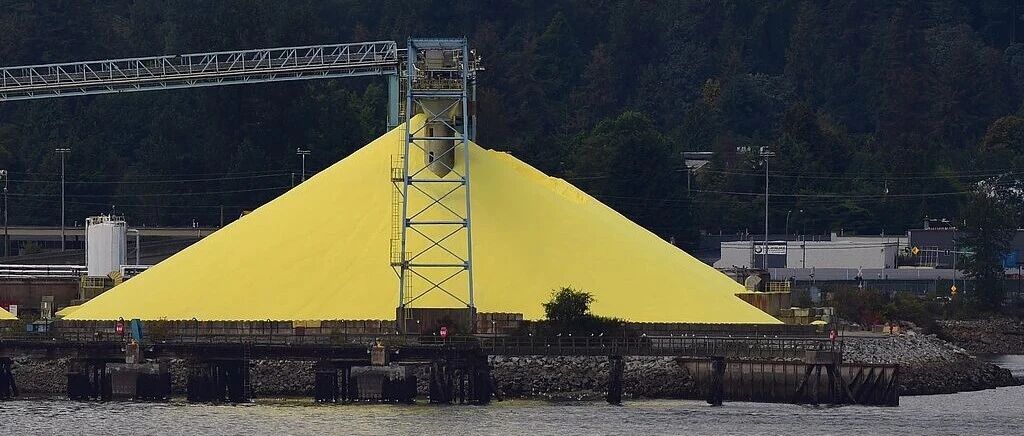
Core Viewpoint - The article discusses the significant increase in sulfur prices, which have risen to over 4,100 yuan per ton, driven by supply-demand imbalances and geopolitical factors, indicating a strong market outlook for sulfur in the near future [2][4][5]. Supply and Demand Dynamics - As of December 7, sulfur prices at China's Zhenjiang port reached 4,115 yuan per ton, up approximately 465 yuan from the previous month and over 163% from the beginning of the year [4]. - The global sulfur supply is projected to be around 81 million tons, with demand at approximately 82 million tons, indicating a widening supply-demand gap [6]. - The supply of sulfur in China has decreased, with November production at 101.17 million tons, a reduction of 5.32% month-on-month [7]. Price Trends and Forecasts - Analysts expect the strong sulfur market to continue at least until the first quarter of next year, with potential price peaks in the second quarter or later due to increased supply from Russia and the Middle East [3][13]. - Internationally, Qatar's sulfur contract prices have surged to 495 USD per ton, marking a 198% increase compared to the beginning of the year [5]. Industry Impact - Major refining companies such as Sinopec and PetroChina are significantly involved in sulfur production, with capacities of 8.34 million tons and 3.68 million tons per year, respectively [13]. - Companies with integrated sulfur or sulfuric acid resources are better positioned to withstand cost pressures, while smaller firms reliant on external sulfur supplies face operational challenges [14]. Geopolitical Influences - The ongoing geopolitical tensions, particularly the Russia-Ukraine conflict, have severely impacted sulfur exports from Russia, which are expected to drop significantly by 2026 [9][10]. - China's dependence on imported sulfur is projected to rise from 42% in 2022 to between 49% and 50% by 2025, highlighting the increasing reliance on foreign sources [10]. Downstream Demand - Over 50% of sulfur is used in phosphate fertilizer production, with new demands emerging from lithium iron phosphate and solid-state batteries, which are expected to drive additional sulfur demand [11][12]. - The production of lithium iron phosphate in China is anticipated to increase from 1.5 million tons in 2022 to over 3.6 million tons in 2025, corresponding to an additional demand for 106,000 tons of sulfur [11].



炼化及贸易板块12月5日跌0.64%,和顺石油领跌,主力资金净流出1.97亿元
Zheng Xing Xing Ye Ri Bao· 2025-12-05 09:13
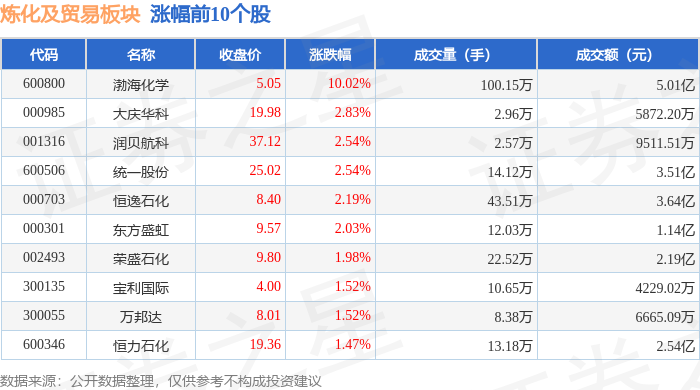
证券之星消息,12月5日炼化及贸易板块较上一交易日下跌0.64%,和顺石油领跌。当日上证指数报收于 3902.81,上涨0.7%。深证成指报收于13147.68,上涨1.08%。炼化及贸易板块个股涨跌见下表: | 代码 | 名称 | 收盘价 | 涨跌幅 | 成交量(手) | 成交额(元) | | | --- | --- | --- | --- | --- | --- | --- | | 600800 | 渤海化学 | 5.05 | 10.02% | 100.15万 | | 5.01亿 | | 000985 | 大庆华科 | 19.98 | 2.83% | 2.96万 | 5872.20万 | | | 001316 | 润贝航科 | 37.12 | 2.54% | 2.57万 | 9511.51万 | | | 600506 | 统一股份 | 25.02 | 2.54% | 14.12万 | | 3.51亿 | | 000703 | 恒逸石化 | 8.40 | 2.19% | 43.51万 | | 3.64亿 | | 000301 | 东方盛虹 | 9.57 | 2.03% | 12.03万 | | 1.14亿 ...


炼化反内卷,行业加速头部化
21世纪经济报道· 2025-12-02 13:18
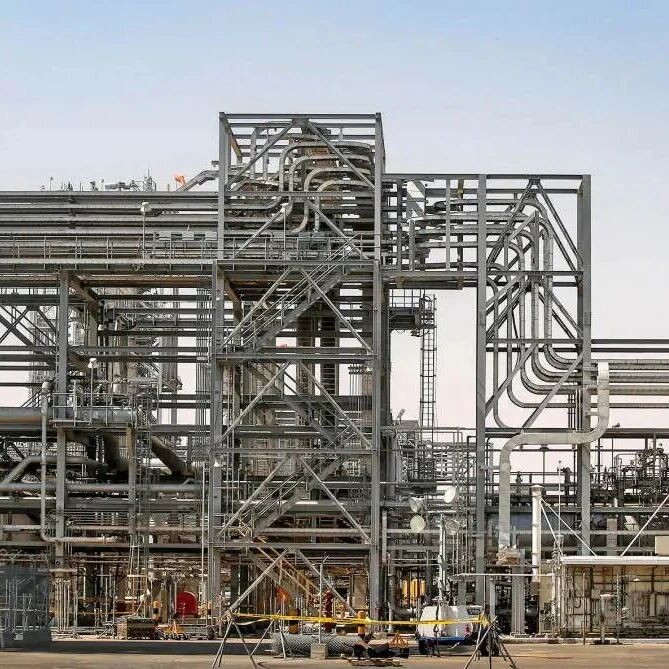
Core Viewpoint - The refining and chemical industry in China is expected to experience a significant turnaround by the second half of 2025, driven by policy changes and the consolidation of advanced capacities [1]. Group 1: Industry Policy and Capacity Allocation - In late November, China issued early crude oil import quotas for 2026, with major private refining companies like Hengli Petrochemical receiving substantial allocations, indicating a shift towards advanced capacities [1]. - The early allocation of quotas in 2026 was concentrated among a few leading companies, contrasting with the previous year's distribution among numerous smaller enterprises, highlighting a trend towards industry consolidation [5]. - The Ministry of Industry and Information Technology (MIIT) has initiated measures to prevent excessive competition in the PTA and bottle-grade polyester slice industries, signaling a favorable environment for leading firms while challenging smaller players [2]. Group 2: Industry Overcapacity and Structural Changes - The PTA industry has shifted from meeting domestic demand to facing overcapacity, prompting regulatory bodies to implement measures to address this issue, including energy consumption limits for refining and chemical processes [3]. - The implementation of energy consumption limits is expected to accelerate the exit of outdated and smaller production capacities from the market, thereby improving the overall industry structure [3]. - The recent policies aim to guide the planning and layout of major petrochemical projects, controlling new refining capacities and preventing overcapacity risks in related sectors [5]. Group 3: Market Dynamics and Economic Context - The global economic downturn since 2022 has impacted demand in the polyester industry, which is closely tied to macroeconomic conditions, leading to a phase of inventory competition [2]. - The refining industry is witnessing a clear pyramid structure, where the elimination of outdated capacities can be targeted effectively, contrasting with slower clearing processes in other sectors like solar and lithium [5]. - The geopolitical landscape has also influenced energy storage demands, reducing cost pressures on the refining industry and enhancing expectations for a market turnaround [6]. Group 4: Investment Trends and Future Outlook - As of mid-2025, the construction projects in the basic chemical sector have seen a decline in investment, indicating a potential end to the capital expenditure cycle and a gradual recovery in supply dynamics [7]. - The overall profit levels in the chemical industry remain low, prompting companies to seek improvements in competitive dynamics to achieve normal profitability levels amid the ongoing "anti-involution" trend [7].
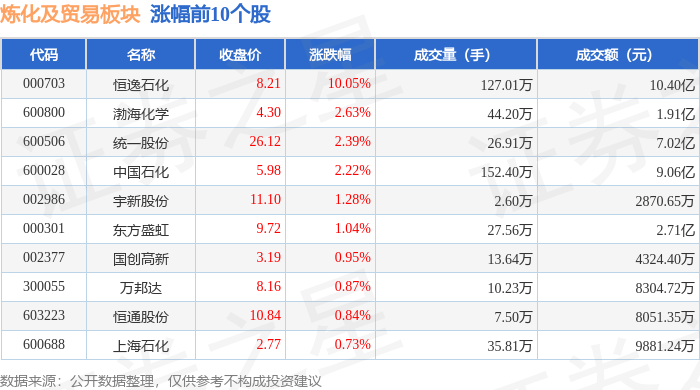
炼化及贸易板块12月2日涨0.82%,恒逸石化领涨,主力资金净流入639.17万元
Zheng Xing Xing Ye Ri Bao· 2025-12-02 09:09
Group 1 - The refining and trading sector increased by 0.82% on December 2, with Hengyi Petrochemical leading the gains [1] - The Shanghai Composite Index closed at 3897.71, down 0.42%, while the Shenzhen Component Index closed at 13056.7, down 0.68% [1] - Hengyi Petrochemical's stock price rose by 10.05% to 8.21, with a trading volume of 1.27 million shares and a transaction value of 1.04 billion [1] Group 2 - The refining and trading sector saw a net inflow of 6.39 million from main funds, while retail investors experienced a net outflow of 87.25 million [2] - The top stocks in the sector included Hengyi Petrochemical, which had a main fund net outflow of 37.97 million, and China Petroleum, which had a net inflow of 34.74 million [3] - The overall trading activity showed a mixed sentiment, with significant retail outflows across several stocks, indicating cautious investor behavior [3]