EVE(300014)

Search documents
亿纬锂能:参股公司与印尼国企签订新能源汽车电池产业链合作框架协议
Sou Hu Cai Jing· 2026-01-30 11:41
亿纬锂能参股公司签订合作框架协议公告要点一、协议主体及持股情况 公司参股公司HYD(公司间接持股15%)与印尼国企ANTAM、IBC签订框架协议,三方将在印尼围绕 新能源汽车电池全产业链开展合作。 二、合作内容及规模 火法冶炼:年产10万吨镍产品 湿法冶炼:年产5万吨镍产品 前驱体:年产10.5万吨 正极材料:年产3万吨 电池:年产20GWh镍基电池(一期7GWh) 电池回收:年产能不超过1万吨 矿山项目:产能待定 三、重要风险提示 1. 本协议为框架性、意向性协议,具体投资金额、合资方式等尚在协商,存在不确定性 2. 各子项目需经内部审批及境内外主管部门核准,能否通过存在不确定性 3. 对本年度财务影响尚不确定 拟建设电池产业链一体化项目,涵盖7个子项目: ...

亿纬锂能(300014) - 关于参股公司签订合作框架协议的公告
2026-01-30 09:48
关于参股公司签订合作框架协议的公告 公司及董事会全体成员保证信息披露的内容真实、准确、完整,没有虚假记 载、误导性陈述或重大遗漏。 特别提示: 本次签订的《框架协议》系各方为加强战略合作而订立的框架性协议,仅作为 各方合作意愿和基本原则的框架性、意向性的初步约定,具体投资金额、合资方式等 相关事宜尚在协商推进阶段,相关权利义务与合作内容细节以相关方在后续期间内所 签署的最终协议为准,尚具有不确定性。 券代码:300014 证券简称:亿纬锂能 公告编号:2026-006 惠州亿纬锂能股份有限公司 本次签订的《框架协议》涵盖多项子项目,各子项目后续尚需经相关方内部审 批,以及境内外相关主管部门核准或备案等前置审批程序,各项决策及审批程序能否 获得通过尚存在不确定性。各子项目在推进过程中,若受行业政策调整、市场环境变 化等不可预见因素或不可抗力影响,可能导致投资项目无法如期履行或履行效果未达 预期。 本协议的签订对公司本年度及未来各会计年度财务状况的具体影响存在不确 定性。 最近三年披露的框架协议的情况详见公告中的"五、重大风险提示"。 敬请广大投资者注意投资风险。 一、协议签订概况 2026年1月30日,惠州亿纬 ...
亿纬锂能(300014) - 关于亿纬动力设立分公司的进展公告
2026-01-30 09:48
证券代码:300014 证券简称:亿纬锂能 公告编号:2026-007 一、分公司工商登记基本信息 1、分公司名称:湖北亿纬动力有限公司武汉研发分公司 2、统一社会信用代码:91420100MAK6WE7H5T 3、分公司企业类型:有限责任公司分公司(自然人投资或控股的法人独资) 4、经营场所:湖北省武汉东湖新技术开发区自主街1号中国特种飞行器研发中心1 号楼(鲲龙大厦)16层、18层 惠州亿纬锂能股份有限公司 关于亿纬动力设立分公司的进展公告 公司及董事会全体成员保证信息披露的内容真实、准确、完整,没有虚假记 载、误导性陈述或重大遗漏。 2025年12月31日,惠州亿纬锂能股份有限公司(以下简称"公司")第七届董事 会第三次会议审议通过了《关于亿纬动力设立分公司的议案》,同意公司子公司湖北 亿纬动力有限公司(以下简称"亿纬动力")在武汉设立分公司,并授权亿纬动力管 理层负责上述事项的具体实施并办理有关手续。具体内容详见公司于2025年12月31日 在巨潮资讯网披露的《关于亿纬动力设立分公司的公告》(公告编号:2025-168)。 近日,亿纬动力已完成了上述分公司的工商登记,并取得武汉市市场监督管理局 核发的 ...
西部证券晨会纪要-20260129
Western Securities· 2026-01-29 01:37
Group 1: Fund Analysis - The public FOF fund scale increased in Q4 2025, with a new issuance scale of 458.54 billion yuan, primarily in bond-type funds [6][7] - The proportion of positive returns for FOF was 49%, with the top performer being CITIC Securities' selected fund [6][8] - Fund managers are optimistic about the market outlook, focusing on structural opportunities with technology and cyclical sectors as the main themes [6][11] Group 2: Electric Vehicle Market - The European electric vehicle market is entering a new phase, with a projected penetration rate of 29% in 2025 and 35% in 2026 due to supply-side drivers and supportive policies [14][15] - The introduction of affordable electric models by European automakers is expected to stimulate consumer demand significantly [15] - Chinese lithium battery companies are positioned to capitalize on the growth of the European market, enhancing their competitive landscape [14][16] Group 3: Construction and Decoration Industry - The construction state-owned enterprises are expected to benefit from strategic and professional restructuring policies initiated by the state [18][19] - The market share of major construction state-owned enterprises remains relatively low, with significant competition and operational pressure evident [19][20] - Recommendations include companies like China Communications Construction, China Railway, and China Chemical, which are likely to enhance their competitiveness through restructuring [21] Group 4: Beauty and Personal Care - The beauty industry in China is transitioning from incremental expansion to competitive positioning, with domestic brands gaining market share [23][24] - The company aims to achieve 30 billion yuan in sales by 2030, driven by research and development, brand expansion, and global operations [25] - The application of AI in production and marketing is expected to enhance operational efficiency and support long-term growth [25] Group 5: Basic Chemicals - The price of hafnium has surged by 21.64% since the beginning of 2026, driven by high demand in sectors like semiconductors and aerospace [27][28] - The company is advancing its zirconium-hafnium separation project, which is expected to significantly contribute to future earnings [29] - Hafnium's unique properties make it essential in high-tech applications, indicating strong future demand [28] Group 6: Electronics - The company is set to benefit from the high demand for PCB and packaging substrates, with projected net profits for 2025 expected to increase by 68% to 78% [31][32] - The expansion of production capacity is ongoing, with new facilities in Thailand and South China expected to enhance growth potential [33] - The company is recognized as a leading provider of electronic circuit technology, with a positive outlook for future performance [33]




电新行业2025Q4基金持仓分析:静水流深,砥砺前行
Guolian Minsheng Securities· 2026-01-28 03:29
Investment Rating - The report maintains a "Buy" rating for key companies in the electric new energy sector, including CATL, Xiamen Tungsten, and others [2][3]. Core Insights - The electric new energy sector's overall fund holding ratio has decreased, with a notable decline in the holdings of new energy vehicle and power equipment sectors, while the industrial control sector saw a slight increase [6][18]. - The report emphasizes the importance of policy, technology, and demand factors influencing the various sub-sectors within the electric new energy industry, leading to different performance expectations [6][29]. Summary by Sections 1. Overall Fund Holdings in Electric New Energy Sector - As of Q4 2025, the fund holding ratio for the electric new energy sector is 8.73%, down by 0.93 percentage points quarter-on-quarter and 1.83 percentage points year-on-year [9][14]. - The market capitalization of the electric new energy sector accounts for 5.92% of the total market capitalization, with a slight decrease of 0.28 percentage points quarter-on-quarter but an increase of 0.81 percentage points year-on-year [9][14]. 2. Sub-sector Fund Holdings Analysis - The fund holding ratio for the new energy vehicle sector is 7.24%, down by 1.06 percentage points quarter-on-quarter and 1.30 percentage points year-on-year [18][21]. - The new energy power generation sector has a fund holding ratio of 2.19%, with a minor decrease of 0.05 percentage points quarter-on-quarter and a decrease of 0.30 percentage points year-on-year [18][24]. - The power equipment and industrial control sector's fund holding ratio is 1.28%, showing a slight increase of 0.14 percentage points quarter-on-quarter [18][26]. 3. Investment Recommendations 3.1 New Energy Vehicles - The report suggests focusing on companies with clear competitive advantages and improving profitability in the battery segment, such as CATL and A123 Systems [28]. - It also highlights the importance of materials and components in the supply chain, recommending companies like Keda and others [28]. 3.2 New Energy Power Generation - The report indicates a shift from policy-driven to market-driven demand for energy storage, recommending companies involved in energy storage integration and battery production [29]. - It emphasizes the growth potential in wind energy, particularly offshore wind, and suggests monitoring companies like Mingyang Smart Energy and Goldwind [30][32]. 3.3 Power Equipment and Industrial Control - The report identifies AIDC as a growth driver for power equipment demand, recommending companies with strong fundamentals and competitive pricing [34]. - It also notes the increasing importance of high-voltage construction in domestic demand, suggesting companies like XJ Electric and others [34][35].




中国电池材料 -价格复苏之路崎岖-China Battery Materials Bumpy Road to Price Recovery
2026-01-28 03:02
Summary of Key Points from the Conference Call on China Battery Materials Industry Overview - The focus is on the battery materials industry, particularly related to lithium iron phosphate (LFP) batteries and the broader electric vehicle (EV) market - The analysis includes the impact of rising costs on battery manufacturers and the implications for downstream demand, especially in energy storage systems (ESS) [1][2][9] Core Insights and Arguments - **Price Trends**: LFP battery cell prices have increased by 8%, while battery costs have surged by 30%, leading to a squeeze in battery margins [1] - **Cost Inflation**: Lithium prices have risen by 46% year-to-date, contributing to an estimated cost inflation of Rmb32/kWh for batteries. The total LFP battery cost has increased by Rmb80/kWh, which may test demand in the coming months [2][11] - **Demand Forecasts**: Battery production guidance from major manufacturers like CATL suggests a growth of 50-70% by 2026, which has raised expectations for raw material demand [3][21] - **Market Dynamics**: The recent surge in costs has shifted the market from a demand-pull to a cost-push scenario, with concerns about EV sales weakness impacting performance [1][9] - **Cost Pass-Through Mechanisms**: Battery manufacturers have mechanisms to pass on metal-linked cost increases to downstream customers, but non-metal cost increases may not be fully passed through [20] Important but Overlooked Aspects - **Investment in Upstream**: Companies like CATL and Gotion are investing in upstream lithium resources to mitigate the impact of rising raw material costs. CATL's self-sufficiency ratio for lithium is expected to be 18% by 2025 [17][18] - **Profit Distribution**: The profit distribution along the battery supply chain is shifting, with downstream manufacturers currently capturing more profit. However, this may change as the market matures and supply chain efficiencies improve [35] - **Policy Impacts**: Changes in Chinese government policy, including export controls and a focus on price recovery, may influence the battery market dynamics and cost structures in 2026 [36] Financial Metrics and Projections - **Battery Demand Growth**: The forecast for total battery demand is projected to grow significantly, with EV battery demand expected to reach 2,096 GWh by 2026, reflecting a 30% year-over-year growth [23] - **ESS Demand**: ESS battery demand is also expected to grow, with projections of 894.5 GWh by 2026, indicating a robust market for energy storage solutions [26] Conclusion - The battery materials industry is facing significant challenges due to rising costs and potential demand weaknesses. However, strategic investments in upstream resources and favorable production guidance from major manufacturers present opportunities for growth. The evolving landscape of profit distribution and policy impacts will be critical to monitor as the market develops.




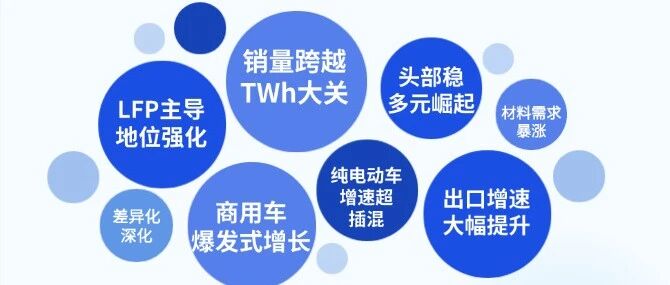
销量首破TWh,2025动力电池上升中的八重变化
高工锂电· 2026-01-27 11:21
Core Viewpoint - In 2025, the power battery industry in China experienced rapid growth, with sales surpassing 1 TWh for the first time, reflecting significant structural changes in exports, material composition, vehicle demand, and market competition [1] Group 1: Sales and Growth - In 2025, the total sales of power batteries reached 1200.9 GWh, a year-on-year increase of 51.8%, significantly higher than the 28.4% growth in 2024 [1] - Cumulative installed capacity was 769.7 GWh, up 40.4% year-on-year, with an increase of 221.3 GWh compared to 2024 [1] Group 2: Export Dynamics - Cumulative exports of power batteries in 2025 reached 189.7 GWh, a year-on-year growth of 41.9%, a substantial increase from the 5.0% growth in 2024 [3] - In December 2025, exports of lithium iron phosphate batteries accounted for 51.3% of total monthly exports, marking a 71.1% year-on-year increase and surpassing the previously dominant ternary batteries [3] Group 3: Battery Type Performance - In 2025, the installed capacity of lithium iron phosphate batteries was 625.3 GWh, representing 81.2% of total installed capacity, with a year-on-year growth of 52.9% [5] - The installed capacity of ternary batteries dropped to 18.7%, with a year-on-year growth of only 3.7%, continuing a downward trend from 10.2% in 2024 [5] Group 4: Commercial Vehicle Growth - The growth of commercial vehicles was explosive, with the installed capacity of pure electric trucks increasing to 17.7%, a year-on-year growth of 168.9% [7] - The average battery capacity of new energy vehicles rose to 55.2 kWh, a year-on-year increase of 18.8% [7] Group 5: Market Structure and Competition - The market competition is evolving from a "dual dominance" to a "stable head and diverse rise," with CATL and BYD maintaining their leading positions but seeing their combined market share decrease from 69.8% to 64.9% [10] - Mid-tier companies like Zhongchuang Innovation and Guoxuan High-Tech are gaining market share, with Guoxuan's installed capacity reaching 43.44 GWh, a year-on-year increase of 1.07 percentage points [12] Group 6: Material Demand and Pricing - The demand for core materials such as lithium iron phosphate and ternary materials surged by over 50% in 2025 [14] - By the end of 2025, the price of battery-grade lithium carbonate reached 150,000 yuan per ton, reflecting a more than 60% increase compared to the end of 2024 [14] Group 7: December Performance Highlights - In December 2025, power battery sales reached 143.8 GWh, a year-on-year increase of 49.2%, while installed capacity was 98.1 GWh, up 35.1% year-on-year [16] - The growth was driven by policy incentives and strong end-user demand, with major automakers launching promotional campaigns to stimulate purchases [15]


超2.4GWh!宁德时代、比亚迪储能等新项目集中落地
行家说储能· 2026-01-27 10:05
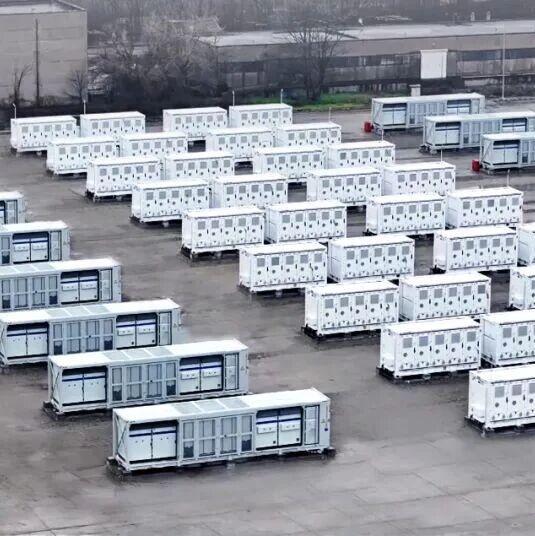
Core Insights - The article highlights the latest developments in energy storage projects from leading companies such as CATL, BYD, EVE Energy, Haibo Sichuang, Trina Storage, and Jinko Solar, with a total scale exceeding 2.4 GWh [2] Group 1: CATL - CATL's Sivrihisar project in Turkey, with a capacity of 49.2 MWp solar and 34.1 MWh storage, is the first hybrid asset approved under the DGES framework in Turkey [4][6] - The project utilizes CATL's EnerC series liquid-cooled battery system, enhancing safety and cycle life while maintaining stable charging and discharging efficiency in Turkey's arid climate [6] Group 2: BYD - BYD has successfully implemented a 100 MW/200 MWh energy storage station in Hezhou, marking the city's first centralized shared energy storage facility [7] - Additionally, BYD partnered with ContourGlobal to establish a 500 MWh standalone battery energy storage system in Bulgaria, which is one of the largest independent storage projects in Eastern Europe [9] - BYD has delivered over 500 energy storage projects globally, covering more than 110 countries and regions [9] Group 3: EVE Energy - EVE Energy has launched a 628 Ah energy storage battery technology at the Guangzhou Baiyun comprehensive energy storage demonstration project [10] - The 628 Ah battery, named "Mr. Big," features a capacity of 2 kWh and a cycle life exceeding 12,000 times, with a strategic collaboration with the National New Energy Storage Innovation Center [12] Group 4: Haibo Sichuang - Haibo Sichuang's 343 MWh emergency power storage project for coal mines utilizes advanced liquid-cooled storage systems designed for harsh environments [13][14] - The project aims to ensure stable operation under extreme conditions and provide emergency power to critical loads in coal mines [14] Group 5: Trina Storage - Trina Storage has successfully delivered a 1.7 GWh energy storage project in the Asia-Pacific region, which is the company's largest overseas project to date [17] - The project employs Trina's Elementa 2 storage system, featuring AI bionic liquid cooling technology for stable operation across a wide temperature range [17] Group 6: Jinko Solar - Jinko Solar has completed a 10 MWh energy storage project in Handan, Hebei, utilizing two Blue Whale SunTera G2 liquid-cooled storage systems [19][21] - The project aims to reduce operational costs through peak-valley electricity price arbitrage and improve the reliability of power supply for local merchants [21] - Despite reporting significant losses, Jinko Solar emphasizes rapid growth in its energy storage business and the effectiveness of its solar-storage synergy [21]

新能源+AI周报(第40期20260118-20260124):储能量价齐升,太空、AI主题延续-20260126
Tai Ping Yang Zheng Quan· 2026-01-26 15:01
Investment Rating - The report does not provide specific investment ratings for the industry sectors mentioned [2]. Core Insights - The overall industry strategy focuses on the simultaneous rise in energy storage volume and price, with ongoing themes in space and AI [3]. - The new energy vehicle supply chain is entering an upward cycle, benefiting companies like CATL and EVE Energy due to the electrification upgrade and optimization of energy storage patterns [3]. - By the end of December 2025, China's electric vehicle charging infrastructure is expected to reach 20.092 million units, a year-on-year increase of 49.7% [3]. - Global energy storage battery shipments are projected to reach 640 GWh in 2025, a year-on-year increase of 82.9%, with CATL maintaining a leading position [3][25]. - The solid-state battery sector is entering a critical phase of engineering and industrialization, with companies like Xiamen Tungsten and Peking University Technology benefiting [4]. Summary by Sections Energy Storage and New Energy - The energy storage trend continues to improve, with companies like Sungrow Power and Huaneng Power benefiting from a significant increase in domestic procurement, which exceeded 100 GWh for the first time [5]. - The average price of lithium battery storage systems has rebounded by 6.39% to 0.5226 yuan/Wh [5]. - AI expansion and global grid upgrades are driving demand for power equipment, benefiting companies like TBEA and Sanyuan Electric [5]. Lithium Carbonate and Battery Materials - The supply and demand for lithium carbonate are exceeding expectations, with companies like Salt Lake Potash and Hunan Youneng benefiting from favorable market conditions [4]. - The cost of phosphoric iron lithium cathode materials has increased, with processing fees rising by 318.7 yuan/ton compared to November averages [4][27]. AI and Robotics in New Energy - The integration of AI and humanoid robots in the new energy sector is gaining traction, with companies like Zhejiang Rongtai and Keda Li benefiting from advancements in robotics [7]. - Tesla's shift towards becoming a robotics company is expected to create new growth cycles, with significant implications for the automotive industry [7][26]. Market Trends and Projections - The report highlights that the global energy storage battery shipment is expected to reach 1,090 GWh in 2026, a year-on-year increase of 70% [25]. - The market for commercial energy storage products is evolving, with larger capacity batteries becoming mainstream and driving innovation in the sector [29].


2025年全球钠离子电池出货达9GWh,同比增长150%!
起点锂电· 2026-01-26 10:11
Core Viewpoint - By 2025, Chinese companies are expected to lead the global sodium battery industry, with major domestic players accelerating their sodium battery strategies, including CATL, BYD, and Huawei [1][2]. Group 1: Market Overview - The global sodium ion battery shipment is projected to reach 9 GWh in 2025, representing a 150% year-on-year increase, with the market expected to grow to 1051 GWh by 2030 [6]. - The primary applications for sodium batteries in 2025 will be in energy storage, start-stop systems, two-wheeled vehicles, low-range electric vehicles, and uninterruptible power supplies (UPS) [6]. Group 2: Product Diversity - Sodium battery products in China include large square, conventional square, various cylindrical types (from 18650 to super large 120420), and soft-pack batteries, showcasing a trend towards product diversification [2]. - Major manufacturers for different product types include Weike Technology, CATL, BYD, and others, with specific models listed for each category [3]. Group 3: Market Segmentation - In 2025, the shipment distribution for sodium batteries is expected to be 5.6 GWh for energy storage (62.2%), 1.7 GWh for light-duty power (18.8%), 1 GWh for automotive power (11.3%), and 0.5 GWh for start-stop batteries (5.6%) [9]. - The sodium battery's advantages in cycle life and safety make it suitable for various applications, including grid frequency regulation and AI data center storage [5]. Group 4: Material and Cost Trends - The average price of sodium battery cells is expected to be 0.52 yuan/Wh in 2025, decreasing to 0.25 yuan/Wh by 2030 [7]. - The shipment of sodium battery positive materials is projected to reach 20,000 tons in 2025, with a year-on-year growth of 122.2% [12]. - The average price for layered oxide positive materials is expected to be 46,000 yuan/ton in 2025, while the price for polycation positive materials is projected to be 28,000 yuan/ton [14]. Group 5: Future Trends - The sodium battery industry is anticipated to see significant growth from 2026 to 2030, with increased penetration in start-stop and energy storage markets, and a focus on low-temperature applications [36]. - The cost of sodium battery materials and cells is expected to decline significantly, with projections indicating that prices will fall below those of lithium iron phosphate batteries by 2027 and below lead-acid batteries by 2028 [36]. - The share of polycation materials is expected to rise significantly, while layered oxides will see a decline, with biomass hard carbon remaining the mainstream material for sodium battery anodes [36].