S.C(300724)

Search documents
光伏锂电出口退税新政出台 一季度产能释放“淡季不淡”
2 1 Shi Ji Jing Ji Bao Dao· 2026-01-12 14:40
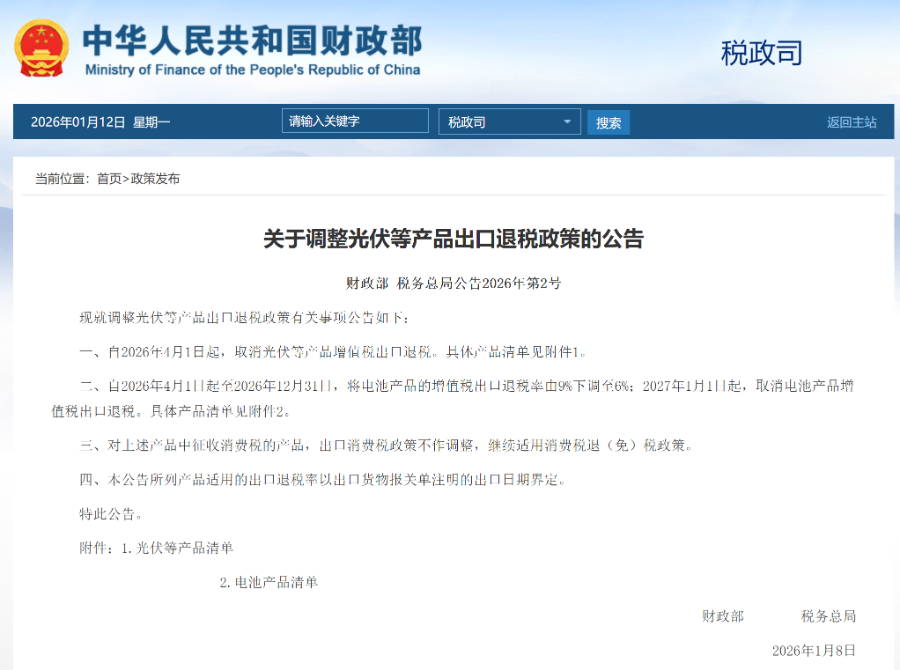
Core Viewpoint - The recent announcement by the Ministry of Finance and the State Taxation Administration to cancel export VAT rebates for photovoltaic and battery products is seen as a significant measure in the "anti-involution" actions within the new energy sectors, aimed at addressing the industry's profitability issues and promoting higher value-added products [5][6][8]. Industry Overview - The new energy photovoltaic and lithium battery industries have been facing challenges due to mismatched supply and demand and intense price competition, leading to weak profitability across the sector [3]. - Since 2025, there have been ongoing calls within the lithium battery sector to resist vicious competition, control capacity growth, and enhance technological innovation [3]. Policy Changes - Starting from April 1, 2026, the export VAT rebate for photovoltaic products will be canceled, and the rebate rate for battery products will be reduced from 9% to 6% until the end of 2026, after which it will be completely eliminated [1][5]. - The Ministry of Industry and Information Technology and other regulatory bodies have proposed 20 measures to regulate industry competition, including tightening approvals for low-capacity projects and establishing a cost-based price monitoring mechanism [4]. Market Reactions - Following the announcement, the stock performance of key players in the lithium battery sector showed significant volatility, with leading companies like CATL experiencing declines, while some photovoltaic companies saw substantial gains [1]. - The cancellation of export VAT rebates is expected to lead to an increase in the cost and price of Chinese photovoltaic components in overseas markets, which may help clear out low-end production capacity [8]. Price Trends - The prices of lithium carbonate futures have surged to over 160,000 yuan per ton, compared to 60,000 yuan per ton in June 2025, indicating a significant recovery in the battery materials market [6]. - The demand for upstream materials remains strong, with companies reporting full production capacity and no immediate adjustments in order volumes from downstream clients [7]. Future Outlook - The upcoming policy changes are anticipated to drive a surge in orders for photovoltaic components before the new VAT regulations take effect, although this demand may be temporary [7]. - Long-term, the cancellation of export VAT rebates is expected to facilitate industry consolidation and price normalization, benefiting the overall market structure [8].





光伏锂电出口退税将取消 ,有代理商称现货5分钟被抢光
2 1 Shi Ji Jing Ji Bao Dao· 2026-01-12 14:28
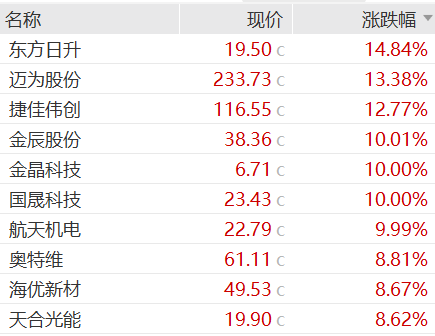
Core Viewpoint - The recent changes in export tax policies for photovoltaic and lithium battery products are seen as a significant move to combat excessive competition and improve profitability in the renewable energy sectors [4][8][9]. Group 1: Market Performance - On January 12, the opening saw fluctuations in the new energy photovoltaic and lithium battery sectors, with notable divergences in individual stock performances [1]. - Leading lithium battery company CATL (宁德时代) saw its H-shares drop by 3% and A-shares decline by over 4%, while companies like Deyang Nano (德方纳米) and Hunan Youneng (湖南裕能) experienced mixed results [1]. - In the photovoltaic sector, companies such as Maiwei (迈为股份) and Jiejia Weichuang (捷佳伟创) surged over 10%, while Trina Solar (天合光能) and Haiyou New Materials (海优新材) rose over 8% [1]. Group 2: Export Tax Policy Changes - Starting April 1, 2026, the export tax rebate for photovoltaic products will be eliminated, and the rebate rate for battery products will be reduced from 9% to 6% until the end of 2026, after which it will be completely removed [2]. - This policy change is part of a broader "anti-involution" initiative aimed at addressing the supply-demand mismatch and intense price competition that have weakened profitability in the photovoltaic and lithium battery industries [4][5][8]. Group 3: Industry Response and Measures - Since 2025, there have been ongoing calls within the lithium battery sector to resist harmful competition and control capacity growth, with various industry meetings held to discuss these issues [7]. - The Ministry of Industry and Information Technology has organized discussions with leading battery companies to establish measures for regulating competition and ensuring sustainable growth [7]. - A total of 20 measures were proposed, including monitoring production capacity and implementing penalties for non-compliant companies, which may affect financing and tax rebates [8]. Group 4: Market Dynamics and Future Outlook - Despite the seasonal downturn typically seen in the first quarter, demand for power and energy storage batteries remains strong, with companies reporting full order books and saturated production capacity [11]. - The anticipated increase in costs due to the export tax policy is prompting overseas buyers to adjust their purchasing schedules, potentially leading to a robust first quarter for lithium battery sales [11][12]. - Analysts predict that the cancellation of export tax rebates will ultimately raise the costs and prices of Chinese photovoltaic components in overseas markets, which could help clear out excess capacity and stabilize prices in the long run [13].
光伏锂电出口退税将取消 ,有代理商称现货5分钟被抢光
21世纪经济报道· 2026-01-12 14:21
Core Viewpoint - The article discusses the recent fluctuations in the new energy photovoltaic and lithium battery sectors, highlighting the impact of changes in export tax policies on these industries and the ongoing "anti-involution" actions aimed at stabilizing prices and production capacity [1][5][6]. Summary by Sections Market Performance - On January 12, the lithium battery leader CATL saw its H-shares drop by 3% and A-shares fall over 4%, while companies like Deyang Nano and Hunan Yueneng experienced mixed results with increases and decreases in their stock prices [1]. Export Tax Policy Changes - The Ministry of Finance announced that starting April 1, 2026, the export VAT refund for photovoltaic products will be canceled, and the VAT refund rate for battery products will be reduced from 9% to 6% until the end of 2026, after which it will be completely eliminated [2][3]. Industry Response and Actions - The lithium battery and photovoltaic industries have been facing challenges due to mismatched supply and demand and intense price competition, leading to a series of "anti-involution" initiatives aimed at expanding demand, adjusting prices, and controlling production capacity [3][5]. - Since 2025, there have been calls within the lithium battery sector to resist vicious competition and control the disorderly growth of production capacity, with various companies announcing price adjustments to stabilize the market [5][6]. Price Trends and Market Dynamics - Despite the seasonal downturn typically seen in the first quarter, the demand for power and energy storage batteries remains strong, with companies reporting sufficient orders and saturated production capacity [8]. - The export tax policy changes are expected to lead to an increase in battery prices, as overseas buyers adjust their purchasing strategies to avoid higher costs after the policy takes effect [8][10]. Future Outlook - Analysts predict that the cancellation of export tax refunds will increase the costs and prices of Chinese photovoltaic components in overseas markets, which may lead to industry consolidation and a return to more rational pricing in the long term [7][10].
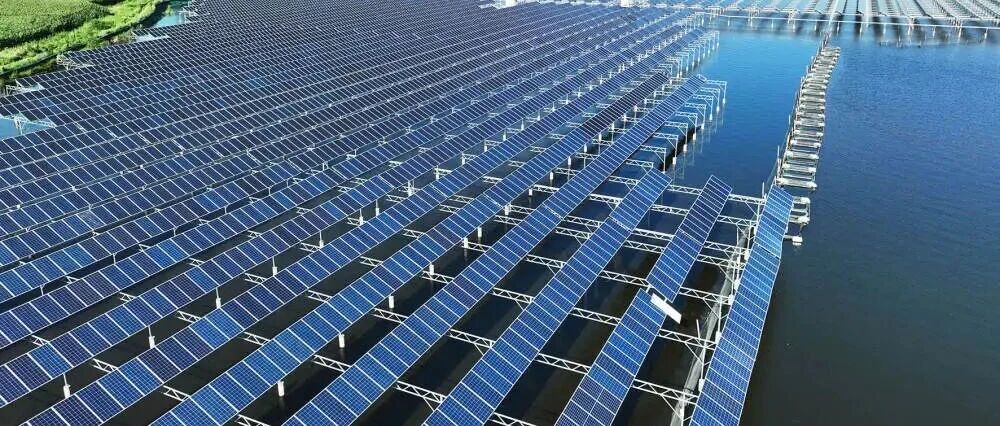
捷佳伟创:截至2025年12月31日公司股东户数为80963户
Zheng Quan Ri Bao· 2026-01-12 13:11
证券日报网讯 1月12日,捷佳伟创在互动平台回答投资者提问时表示,截至2025年12月31日公司股东户 数为80963户。 (文章来源:证券日报) ...
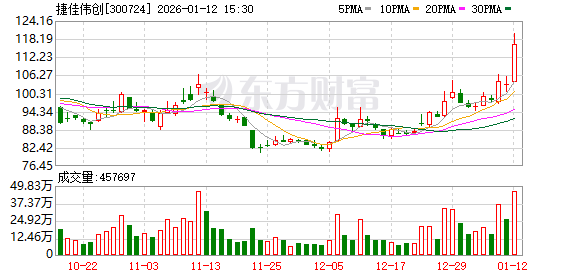
捷佳伟创:公司目前在手订单以TOPCon为主,海外订单和钙钛矿设备订单保持增长
Mei Ri Jing Ji Xin Wen· 2026-01-12 09:18
捷佳伟创(300724.SZ)1月12日在投资者互动平台表示,公司目前在手订单以TOPCon为主,行业的产 线升级改造、海外市场的扩产以及公司加大布局新技术路线,都将为公司订单带来积极影响,公司海外 订单和钙钛矿设备订单保持增长。 (文章来源:每日经济新闻) 每经AI快讯,有投资者在投资者互动平台提问:请问公司订单情况如何?市场传闻公司订单下降很厉 害。 ...
碳酸锂合约涨停,两年来首次突破15万元关口!光伏ETF华夏(515370)上涨1.45%,东方日升涨超17%
Mei Ri Jing Ji Xin Wen· 2026-01-12 02:35
Group 1 - The core viewpoint of the news highlights the performance of the photovoltaic ETF Huaxia (515370), which rose by 1.45%, with significant gains in its constituent stocks such as Dongfang Risheng (up over 17%), Maiwei Co. (up over 15%), and Jiejia Weichuang (up over 11%) [1] - The lithium carbonate futures main contract hit the daily limit, increasing by 9% to 156,060 yuan/ton, marking the first time in two years that it has surpassed the 150,000 yuan threshold [1] - Wanguo Securities predicts that the market will enter a "tight balance" in 2026, suggesting that lithium prices are likely to stabilize and rebound [1] Group 2 - The Huaxia photovoltaic ETF (515370) tracks the CSI Photovoltaic Industry Index, which encompasses upstream, midstream, and downstream companies in the photovoltaic industry, including silicon wafers, polysilicon, battery cells, cables, photovoltaic glass, battery modules, inverters, photovoltaic brackets, and power stations, providing a comprehensive reflection of the overall performance of the photovoltaic industry [1] - The index has a photovoltaic content of 83.64%, ranking first in the entire market in terms of index dimension [1]

光伏概念盘初活跃 东方日升等多股涨超10%
Xin Lang Cai Jing· 2026-01-12 01:52
【光伏概念盘初活跃 东方日升等多股涨超10%】智通财经1月12日电,早盘光伏概念再度活跃,钙钛矿 电池、太空光伏方向领涨,东方日升、迈为股份、捷佳伟创涨超10%,此前杭萧钢构、金晶科技涨停, 国晟科技触及涨停续创历史新高,天合光能、金辰股份等跟涨。消息面上,近期钧达股份、晶科能源、 天合光能等光伏上市公司对太空光伏的关注度显著提升,并且均重点提到钙钛矿技术在太空的应用前 景。 转自:智通财经 ...


大能源行业2026年第1周周报(20260111):星河主场,太阳光伏即将启航-20260111
Hua Yuan Zheng Quan· 2026-01-11 07:23
Investment Rating - The industry investment rating is "Positive" (maintained) [1] Core Insights - The commercial aerospace sector is experiencing robust growth driven by policy support, indicating a critical turning point in commercialization. Satellite frequency and orbital resources are scarce strategic assets globally, with developed countries like the US leveraging early investments and SpaceX's advantages to secure significant frequency resources. China has recognized commercial aerospace as a vital strategic area, intensifying policy support to accelerate satellite network deployment [3][8] - Solar photovoltaic (PV) technology is the primary long-term energy source for satellites, with current applications focused on communication satellites. The global solar PV market is projected to reach between 80 billion to 120 billion yuan, assuming the price of gallium arsenide batteries is approximately 200,000 yuan per square meter and an annual launch of 4,000 to 6,000 satellites, each with solar wings of 100 square meters. Elon Musk's plan to deploy 100GW of computing power annually by 2030 could transition space PV from "satellite auxiliary power" to "large-scale energy infrastructure," potentially expanding the market from a hundred billion to a trillion yuan scale [4][8][9] Summary by Sections Section 1: Electric New Energy - The solar PV market is set to expand significantly, driven by the unique energy demands of satellites and large-scale space data centers. The technology is evolving from multi-junction gallium arsenide to P-type HJT and perovskite/silicon tandem cells, which are better suited for the harsh conditions of space. P-type HJT batteries offer advantages such as radiation resistance, lightweight, high efficiency, and cost-effectiveness, making them ideal for space applications [9] - The market for HJT technology is expected to grow as it moves away from competitive pressures in the terrestrial PV market, positioning it as a mainstream technology globally [9][10] Section 2: Investment Recommendations - Key companies recommended for investment include Maiwei Co., Jin Feng Technology (H), and Zhongji Anruike. Companies related to equipment such as Jiejia Weichuang and Aotewei are suggested for attention, along with battery and module companies like Dongfang Risheng, Junda Co., Jinko Solar, Trina Solar, and Mingyang Smart Energy. Other companies in the commercial aerospace supply chain include Jin Feng Technology (A), Jiufeng Energy, Xinle Energy, Guoci Materials, Jing Shan Light Machine, Saiwu Technology, Jinjing Technology, and Taisheng Wind Energy [10]



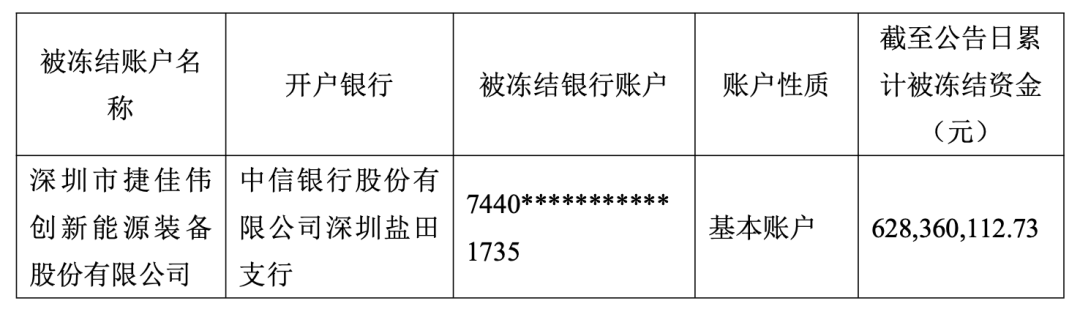
捷佳伟创积极推进徐州光能诉讼纠纷 资金冻结影响有限
Zheng Quan Shi Bao Wang· 2026-01-09 07:40
Core Viewpoint - Jiejia Weichuang is actively addressing a legal dispute with Xuzhou Guangneng, which has led to a freezing of funds amounting to 628 million yuan, but the company asserts that this will not significantly impact its operations [1] Group 1: Financial Impact - The newly frozen funds of 316 million yuan represent 5.67% of the company's latest audited net assets and 7.30% of its cash and trading financial assets [1] - The company maintains that its overall cash flow remains sufficient and that the frozen funds only pertain to its basic account, allowing other funds to circulate normally [1] Group 2: Legal Proceedings - The dispute originated from Xuzhou Guangneng's failure to pay for solar cell production line equipment, with a total claim amounting to 208 million yuan across four lawsuits initiated by Jiejia Weichuang [2] - The Shenzhen Intermediate People's Court ruled that Xuzhou Guangneng and its parent company must pay approximately 125 million yuan in equipment fees and penalties [3] - Xuzhou Guangneng has filed counterclaims, including demands for compensation of 1.06 billion yuan for economic losses and the return of previously paid equipment fees totaling 411 million yuan [4] Group 3: Ongoing Developments - As of July 2025, the management team of Xuzhou Guangneng has confirmed that Jiejia Weichuang holds ordinary claims exceeding 183 million yuan, with specific amounts detailed for each subsidiary involved [5] - The company is committed to using legal means to protect its rights and interests throughout the ongoing litigation process [5]
连环诉讼三次开庭!捷佳伟创超6亿元被冻结
Shen Zhen Shang Bao· 2026-01-09 00:37
Core Viewpoint - Jiejia Weichuang (300724) has had a portion of its bank account funds frozen, totaling 628 million yuan, primarily due to a payment dispute with Xuzhou Guangneng [1][3]. Group 1: Financial Impact - The frozen amount of 628 million yuan accounts for 5.67% of the company's latest audited net assets and 7.30% of its cash and trading financial assets as of September 30, 2025 [1]. - The company asserts that the frozen funds only represent a portion of the account, and other funds remain accessible, ensuring normal cash flow and operations are not significantly affected [1]. Group 2: Legal Disputes - The freezing of funds is linked to multiple litigation matters, including disputes with Shanghai Yichu Electric Wire & Cable Co., Ltd. and Shanghai Xuan Zhi Electric Equipment Co., Ltd., both of which have reached settlements [2]. - The primary issue involves a contract dispute with Xuzhou Guangneng, where the court has frozen 316 million yuan of the company's funds, contributing to the total frozen amount of 628 million yuan [2][4]. - The company has initiated legal proceedings against Xuzhou Guangneng and its shareholder, Wuxi Huadong Guangneng Technology Co., Ltd., due to unpaid equipment fees [4][5]. Group 3: Company Performance - For the first three quarters of 2025, the company reported total revenue of 13.106 billion yuan, a year-on-year increase of 6.17%, and a net profit attributable to shareholders of 2.688 billion yuan, up 32.90% [8]. - The company is recognized as a leading national high-tech enterprise in solar cell equipment research, production, and sales, with a focus on expanding into semiconductor and lithium battery equipment sectors [8].