
CATL(300750)

Search documents
谁才是中国民企真龙头?两份榜单背后,藏着两套生存哲学
Sou Hu Cai Jing· 2026-01-16 15:59
Core Insights - The contrasting rankings of JD.com and Tencent/Alibaba highlight two distinct business philosophies in China's private sector, focusing on current revenue versus future growth potential [1][2] Group 1: Rankings and Evaluation Standards - JD.com topped the "2025 China Private Enterprises 500" list with a revenue of 1.16 trillion RMB, surpassing Alibaba and Huawei, based on a revenue-centric evaluation of 6,379 companies [4][5] - Goldman Sachs' report ranked Tencent, Alibaba, and BYD as the "Top Ten Private Enterprises," emphasizing investment value and growth potential rather than current size [7] Group 2: Business Models - JD.com adopted a heavy asset model, investing significantly in logistics and self-operated goods, which has created substantial competitive barriers despite initial losses [8][6] - In contrast, Tencent and Alibaba utilize a light asset model, focusing on technology, data, and user relationships, allowing for high profitability with lower operational costs [10][12] Group 3: Manufacturing Sector Growth - The manufacturing sector is a significant contributor to the private economy, with 66.4% of the top 500 companies being manufacturers, accounting for 68.84% of revenue and 53.21% of net profit [13][14] - Companies like BYD and CATL are leading in innovation and R&D, with substantial investments in new energy technologies [16][17] Group 4: Future Directions - The diversity in business models among private enterprises is a strength, with companies like JD.com and Tencent exploring synergies between heavy and light asset strategies [18][19] - The implementation of the "Private Economy Promotion Law" in May 2025 is expected to provide a more supportive legal environment for private enterprises [19][20] - A significant portion of the top 500 companies is focusing on digital transformation and green initiatives, with international revenue growth indicating a push towards global expansion [20]






半导体大涨,下周A股怎么走?
Guo Ji Jin Rong Bao· 2026-01-16 15:54
Core Viewpoint - The A-share market experienced moderate fluctuations with a total trading volume returning to over 3 trillion yuan, indicating a shift in capital from popular sectors like AI applications and communications to storage chips, automotive chips, and robotics actuators [1][4][6]. Market Performance - The Shanghai Composite Index fell by 0.26% to 4101.91 points, while the ChiNext Index decreased by 0.2% to 3361.02 points, and the Shenzhen Component Index dropped by 0.18% [6]. - The total trading volume across the three markets reached 3.06 trillion yuan, with margin trading balances increasing to 2.72 trillion yuan as of January 15 [6][16]. Sector Performance - The storage chip sector rose by 5.54%, third-generation semiconductors by 3.88%, automotive chips by 4.94%, and robotics actuators by 4.26% [8]. - In contrast, sectors such as media and computing saw significant declines, with media down by 4.84% and computing by 2.23% [9]. Capital Flow and Investment Strategy - Capital is being reallocated due to regulatory measures aimed at risk prevention and monetary policies supporting liquidity, leading to a diversified market structure [4][16]. - Investment strategies should focus on policy guidance, performance support, and valuation matching, particularly in sectors benefiting from domestic substitution and global chip technology breakthroughs [4][22]. Future Market Outlook - The market is expected to continue its oscillation around the 4100-point mark, with potential for structural opportunities in policy-supported sectors and high-performing stocks [19][20]. - Analysts suggest maintaining a neutral position while avoiding high-volatility stocks and focusing on sectors with strong fundamentals [19][22].





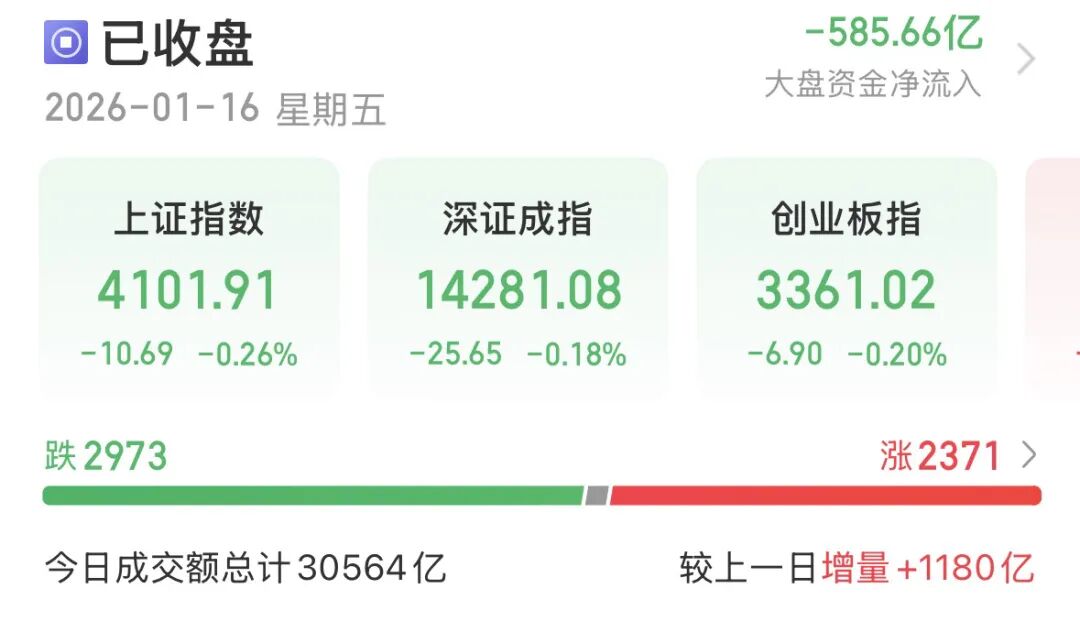
机器人的负载上限,被银河通用打破了
36氪· 2026-01-16 14:41
Core Viewpoint - The manufacturing industry is facing unprecedented changes in demand, necessitating the development of embodied intelligence to address real operational challenges in production environments [1][5]. Group 1: Embodied Intelligence Development - Companies are beginning to take significant steps in embodied intelligence, exemplified by the launch of the Galbot S1 robot by Galaxy General, which is now autonomously operating in factories like CATL [4][18]. - The Galbot S1 represents a technological breakthrough and has received authoritative recognition, indicating its strategic importance in the field of artificial intelligence [4][18]. - The introduction of Galbot S1 addresses the long-standing question of whether embodied intelligence is merely an expensive showcase or a practical digital infrastructure [5][19]. Group 2: Technical Specifications and Capabilities - Galbot S1 is designed specifically for industrial productivity, capable of handling high-intensity, long-cycle tasks in challenging environments, with a maximum load capacity of 50 kg and stable handling of 32 kg [8][11]. - The robot features advanced capabilities such as pure visual perception, strong anti-interference, and real-time response, allowing it to operate effectively in complex factory settings [11][13]. - With a dual-battery design, Galbot S1 can operate continuously for 8 hours and autonomously change batteries, meeting the demands of real factory operations [13][15]. Group 3: Market Implications and Industry Trends - The successful deployment of Galbot S1 in CATL's production line highlights the urgent need for heavy load handling in advanced manufacturing, indicating that embodied intelligence can meet real-world demands [18][20]. - The emergence of Galbot S1 signifies a shift in the role of robots in factories, moving from mere automation to becoming integral components of production processes [19][20]. - The development of embodied intelligence is diverging, with some products focusing on lightweight and interactive features, while others, like Galaxy General, emphasize reliability and stability for high-intensity tasks [22][24]. Group 4: Economic and Strategic Context - Galaxy General's recent funding round raised over $300 million, marking the largest single-round financing in the embodied intelligence sector, reflecting a recalibration of investment logic towards practical value creation [24][25]. - The value standard for embodied intelligence is increasingly defined by its ability to operate in real scenarios and deliver consistent output, aligning with national strategies for high-quality manufacturing development [25][27]. - The introduction of Galbot S1 into the manufacturing core addresses labor shortages and enhances production efficiency, marking a significant step in the evolution of industrial applications [27][28].

宁德时代宜宾基地获评全球灯塔网络“可持续”灯塔
Xin Lang Cai Jing· 2026-01-16 14:00
1月16日消息,从宁德时代获悉,宁德时代宜宾基地获评世界经济论坛(WEF)全球灯塔网络的"可持 续"灯塔,成为全球锂电行业首个"可持续"灯塔,同时也是锂电行业唯一具备生产效率与可持续双重认 证的双料灯塔。 通过部署AI驱动的能源管理系统、构建光伏储能微电网、推进生产工艺创新与低碳产品设计,该基地 推动碳足迹降低56%,并带动13家核心供应商通过碳中和认证。 全球灯塔网络由世界经济论坛与管理咨询公司麦肯锡合作开展遴选,是工业4.0与可持续发展的行业标 杆。此前,宁德时代已有3座基地获评"生产效率"灯塔。此次"可持续"灯塔认证后,宁德时代是全球锂 电行业拥有"灯塔工厂"数量最多的企业。(刘丽丽) 责任编辑:刘万里 SF014 1月16日消息,从宁德时代获悉,宁德时代宜宾基地获评世界经济论坛(WEF)全球灯塔网络的"可持 续"灯塔,成为全球锂电行业首个"可持续"灯塔,同时也是锂电行业唯一具备生产效率与可持续双重认 证的双料灯塔。 通过部署AI驱动的能源管理系统、构建光伏储能微电网、推进生产工艺创新与低碳产品设计,该基地 推动碳足迹降低56%,并带动13家核心供应商通过碳中和认证。 全球灯塔网络由世界经济论坛与管理咨 ...
机器人的负载上限,被银河通用打破了
3 6 Ke· 2026-01-16 13:40
Core Insights - The manufacturing industry is facing unprecedented changes in demand, requiring robust productivity tools that can address real operational challenges [1][4] - The introduction of the Galbot S1 robot by Galaxy General marks a significant advancement in embodied intelligence, demonstrating its application in real manufacturing environments [3][10] - Galbot S1's capabilities, including a maximum load of 50kg and the ability to operate in complex factory conditions, highlight its potential to transform industrial processes [6][11] Industry Trends - The demand for embodied intelligence in manufacturing is driven by the need for robots that can adapt to dynamic environments and collaborate with human workers [7][12] - The focus on high-intensity, long-cycle tasks indicates a shift in the robotics industry towards solutions that prioritize reliability and engineering robustness over mere aesthetics [12][13] - The successful deployment of Galbot S1 in a leading factory illustrates the urgent need for heavy load handling in advanced manufacturing sectors [10][15] Technological Advancements - Galbot S1 is designed specifically for industrial applications, overcoming limitations of traditional robots by providing flexibility and adaptability in challenging conditions [6][11] - The robot's ability to operate autonomously for extended periods (up to 8 hours) and its self-recharging capabilities enhance its utility in continuous production environments [7][8] - The development of a visual perception model allows Galbot S1 to navigate complex factory settings without relying on QR codes or labels, showcasing its advanced sensing capabilities [7][10] Market Positioning - Galaxy General's strategic focus on practical applications of embodied intelligence positions it as a leader in the sector, emphasizing the importance of creating value through real-world deployment [12][15] - The recent funding round of over $300 million (approximately 2.1 billion RMB) underscores the growing investor interest in companies that can deliver tangible productivity improvements [12] - The evolution of embodied intelligence from a novelty to a critical component of industrial operations reflects a broader trend towards integrating advanced technologies into the manufacturing process [15]


无人小车爆发,宁德时代与蜂巢们在抢什么
高工锂电· 2026-01-16 12:58
Core Viewpoint - The article discusses the emerging market for autonomous delivery vehicles, highlighting the expected growth in demand and the implications for battery manufacturers as the industry evolves towards a competitive landscape focused on operational efficiency and cost reduction [1][2][29]. Group 1: Market Dynamics - By 2025, L4 autonomous vehicles are projected to enter over 300 cities in China, with an annual procurement volume of 28,000 units [3]. - The battery demand from these vehicles is estimated to be between 0.28 to 1.4 GWh, with a median estimate of approximately 0.84 GWh [5]. - The shift in the industry from pilot projects to large-scale procurement is driven by the need for cost-effective solutions in last-mile delivery [12][31]. Group 2: Competitive Landscape - The industry is transitioning from a focus on road rights and pilot programs to a competitive environment characterized by price wars and service battles among manufacturers [7]. - Major players like New Stone and NineSight are capturing significant market shares, with New Stone accounting for over 53% of sales [14]. - The competition is expected to intensify as traditional automotive manufacturers enter the market, altering the dynamics of supply chain negotiations [35]. Group 3: Battery Requirements - Autonomous delivery vehicles have different battery requirements compared to passenger vehicles, prioritizing lifespan and stability over energy density [15]. - Battery manufacturers are being pushed to define metrics such as lifespan, reliability, and total cost of ownership (TCO) as the market matures [8][19]. - The focus on operational efficiency means that battery products must be designed as "operational assets" rather than mere components [17]. Group 4: Future Outlook - The market for autonomous delivery vehicles is expected to grow significantly, with projections suggesting a potential scale of 1 million units by 2030, translating to a battery demand of approximately 18 GWh [36]. - The competitive landscape in 2026 will likely shift towards a focus on sustainable operational models, where battery manufacturers must adapt to maintain their market position [37]. - The introduction of solid-state batteries and other innovations may further disrupt the market, providing differentiated solutions that enhance operational efficiency [24][26].

数据复盘丨电子、汽车等行业走强 163股获主力资金净流入超1亿元
Zheng Quan Shi Bao Wang· 2026-01-16 10:49
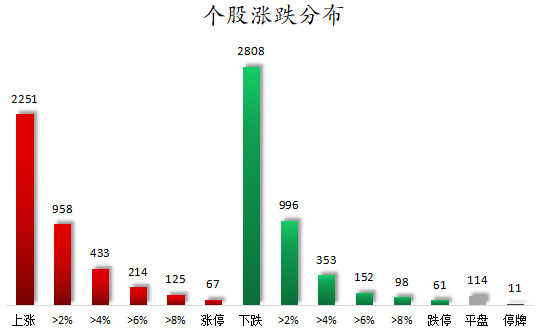
Market Overview - The Shanghai Composite Index closed at 4101.91 points, down 0.26%, with a trading volume of 13,380 billion yuan [1] - The Shenzhen Component Index closed at 14,281.08 points, down 0.18%, with a trading volume of 16,883.05 billion yuan [1] - The ChiNext Index closed at 3361.02 points, down 0.2%, with a trading volume of 8,463.56 billion yuan [1] - The STAR 50 Index closed at 1514.07 points, up 1.35%, with a trading volume of 1,168 billion yuan [1] - Total trading volume for both markets reached 30,263.05 billion yuan, an increase of 1,207.57 billion yuan compared to the previous trading day [1] Sector Performance - Strong sectors included electronics, automotive, machinery, power equipment, and home appliances [2] - Weak sectors included media, computer, oil and petrochemicals, agriculture, steel, pharmaceuticals, defense, insurance, and banking [2] - The electronic industry saw the highest net inflow of funds, amounting to 105.68 billion yuan [5] Stock Performance - A total of 2,251 stocks rose, while 2,808 stocks fell, with 114 stocks remaining flat and 11 stocks suspended [2] - 67 stocks hit the daily limit up, while 61 stocks hit the daily limit down [2] - The stock with the highest net inflow was Sanhua Intelligent Controls, with a net inflow of 1.65 billion yuan and a price increase of 5.26% [7][8] - The stock with the highest net outflow was BlueFocus, with a net outflow of 2.01 billion yuan and a price decrease of 11.52% [10][11] Institutional Activity - Institutions had a net sell of approximately 6.6 billion yuan, with 21 stocks seeing net purchases and 15 stocks seeing net sales [13] - The stock with the highest net purchase by institutions was Snowman Group, with a net purchase of approximately 234 million yuan [13][14]


锂电池产业链跟踪点评:2025年12月电池产销量同环比双增长
Dongguan Securities· 2026-01-16 09:56
Investment Rating - The industry investment rating is "Overweight," indicating that the industry index is expected to outperform the market index by more than 10% over the next six months [5]. Core Insights - In December 2025, the production and sales of new energy vehicles (NEVs) and batteries showed year-on-year growth but a month-on-month decline, primarily due to consumer hesitation during a subsidy policy gap [4]. - The penetration rate of NEVs reached 52.3% in December, a decrease of 0.9 percentage points month-on-month, while the annual penetration rate for 2025 was 47.9%, an increase of 7 percentage points year-on-year [4]. - The battery production and sales in December 2025 saw significant growth, with production at 201.7 GWh (up 14.4% month-on-month, 62.1% year-on-year) and sales at 199.3 GWh (up 11.1% month-on-month, 57.5% year-on-year) [4]. - The demand for power batteries is expected to weaken in the short term due to the traditional off-season for the NEV market and adjustments in the vehicle purchase tax [4]. - The solid-state battery industry is progressing towards commercialization, which will create incremental demand for materials and equipment in the industry chain [4]. Summary by Sections New Energy Vehicle Market - December 2025 saw NEV production and sales of 171.8 million and 171 million units, respectively, with year-on-year growth of 12.3% and 7.2%, but month-on-month declines of 8.6% and 6.2% [4]. - For the entire year of 2025, NEV production and sales reached 16.626 million and 16.49 million units, with year-on-year growth of 29% and 28.2% [4]. Battery Production and Sales - In December 2025, the production of power and energy storage batteries was 201.7 GWh, with a year-on-year increase of 62.1% [4]. - The sales of power batteries accounted for 72.1% of total sales, with a month-on-month increase of 7.3% and a year-on-year increase of 49.2% [4]. Export and Market Dynamics - Battery exports in December 2025 reached 32.6 GWh, with a year-on-year increase of 49.2% [4]. - The report anticipates stable demand in the energy storage market and potential short-term support for demand due to adjustments in export tax policies [4]. Investment Recommendations - The report suggests focusing on the recovery pace of the industry chain and prioritizing sectors benefiting from solid-state battery advancements, including core materials and equipment [4]. - Key stocks to watch include CATL, EVE Energy, and others listed in the report [4].




宁德时代1月16日大宗交易成交3.49亿元
Zheng Quan Shi Bao Wang· 2026-01-16 09:49
进一步统计,近3个月内该股累计发生31笔大宗交易,合计成交金额为82.35亿元。 (原标题:宁德时代1月16日大宗交易成交3.49亿元) 宁德时代1月16日大宗交易平台出现一笔成交,成交量99.00万股,成交金额3.49亿元,大宗交易成交价为352.32元。该笔交易的买卖双方均为机构 专用席位。 证券时报•数据宝统计显示,宁德时代今日收盘价为352.32元,下跌0.40%,日换手率为0.75%,成交额为113.51亿元,全天主力资金净流出15.07亿 元,近5日该股累计下跌4.58%,近5日资金合计净流出46.47亿元。 两融数据显示,该股最新融资余额为223.74亿元,近5日增加4.00亿元,增幅为1.82%。(数据宝) 1月16日宁德时代大宗交易一览 | 成交量 成交金额 | | 成交价格 | 相对当日 收盘折溢价 | 买方营业部 | 卖方营业部 | | --- | --- | --- | --- | --- | --- | | (万股) | (万元) | (元) | (%) | | | | 99.00 34879.68 | | 352.32 | | 0.00 机构专用 | 机构专用 | | 注:本文系新 ...
摩根大通对宁德时代的多头持仓比例降至7.11%
Xin Lang Cai Jing· 2026-01-16 09:41
据 香港交易所 披露, 摩根大通 (JPMorgan)对 宁德时代 新能源 科技股份有限公司- H股的多头持仓 比例于2026年1月12日从7.12%降至7.11%。 ...
