
CATL(300750)

Search documents
决胜“十四五” 擘画“十五五”·地方资本市场高质量发展之福建篇:资本聚力培育“八闽”产业 优结构强链条拓海外
Sou Hu Wang· 2026-01-18 03:10
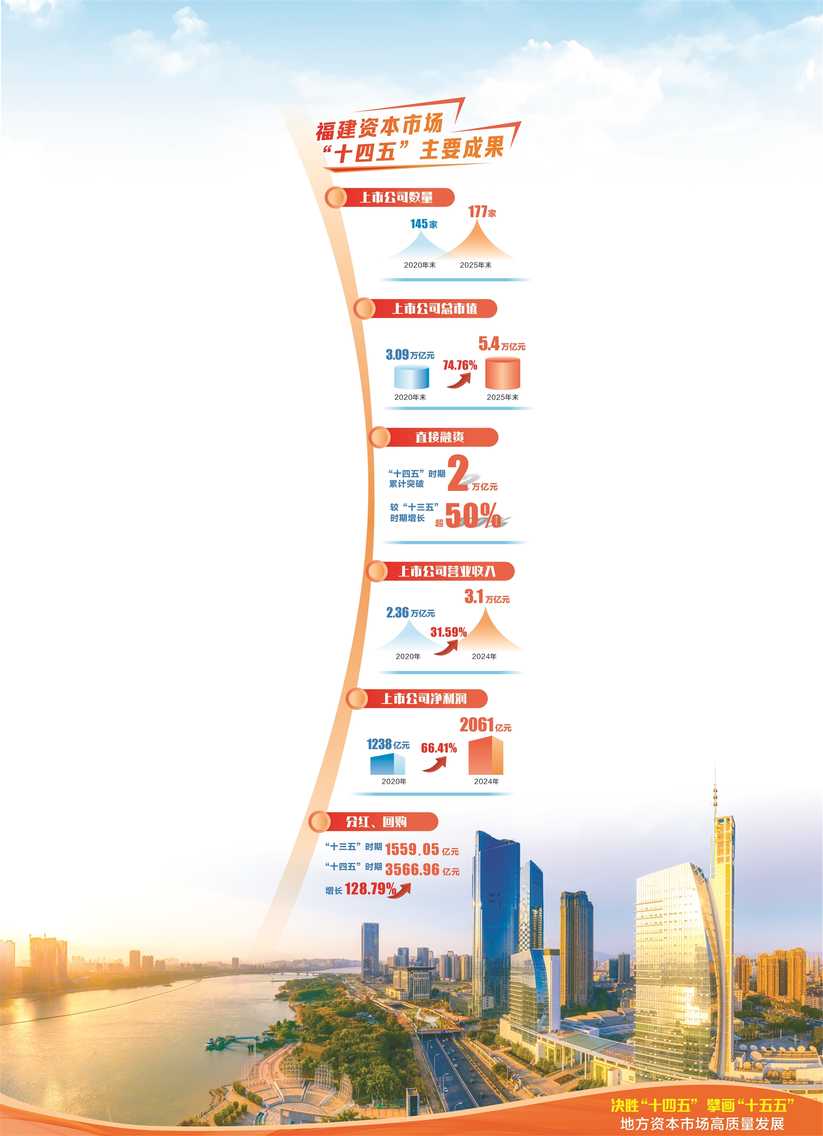
Core Viewpoint - During the "14th Five-Year Plan" period, Fujian Province's capital market has achieved remarkable growth, with direct financing exceeding 2 trillion yuan, marking over a 50% increase compared to the "13th Five-Year Plan" period, and positioning itself as a leader in A-share IPO financing by 2025 [2][3]. Direct Financing and IPOs - Fujian's capital market has seen direct financing surpass 2 trillion yuan in the past five years, highlighting its role in supporting the real economy [3]. - In 2025, the province's direct financing reached a historical high of 500 billion yuan [4]. - A-share IPO financing amounted to 22.446 billion yuan, ranking first in the nation, with Huadian New Energy raising 18.17 billion yuan, becoming the largest IPO project of the year [5]. Company Performance and Quality - By 2024, Fujian's listed companies reported revenues of 3.1 trillion yuan and net profits of 206.1 billion yuan, reflecting increases of 31.59% and 66.41% respectively compared to the end of the "13th Five-Year Plan" [5]. - Average earnings per share reached 1.09 yuan, and average return on equity was 10.77%, significantly above national averages [5]. Market Structure and Industry Development - By the end of the "14th Five-Year Plan," Fujian had 177 listed companies, an increase of 32 from the previous period, with a total market capitalization of 5.4 trillion yuan, ranking sixth nationally [6]. - The province has seen a notable concentration of companies with market capitalizations exceeding 1 billion yuan, with 6 such companies and 75 companies exceeding 100 million yuan [6]. Mergers and Acquisitions - Fujian's regulatory bodies have promoted mergers and acquisitions to enhance resource allocation efficiency, with 69 listed companies engaging in such activities since 2025, involving a total of 35.957 billion yuan [7]. - The province has also seen significant cash dividends and buybacks, totaling 356.696 billion yuan, a 128.79% increase from the previous period [7]. Support for Innovation - Fujian has actively supported technology-driven enterprises, adding 24 new technology-oriented listed companies and facilitating over 200 billion yuan in innovative bond issuance [9]. - Private equity and venture capital funds have invested in 2,125 high-tech projects in Fujian, with a total investment of 83.358 billion yuan [9]. Regulatory Environment - Fujian's regulatory authorities have intensified risk monitoring and management, addressing high-risk areas and ensuring compliance among listed companies [10]. - The province has taken significant actions against market violations, imposing fines totaling nearly 500 million yuan and enhancing market order [10]. Future Outlook - The Fujian Securities Regulatory Bureau plans to continue implementing new policies to strengthen regulation and promote high-quality development in the capital market [11].




图解北向资金最新持仓股
Ge Long Hui A P P· 2026-01-18 03:02
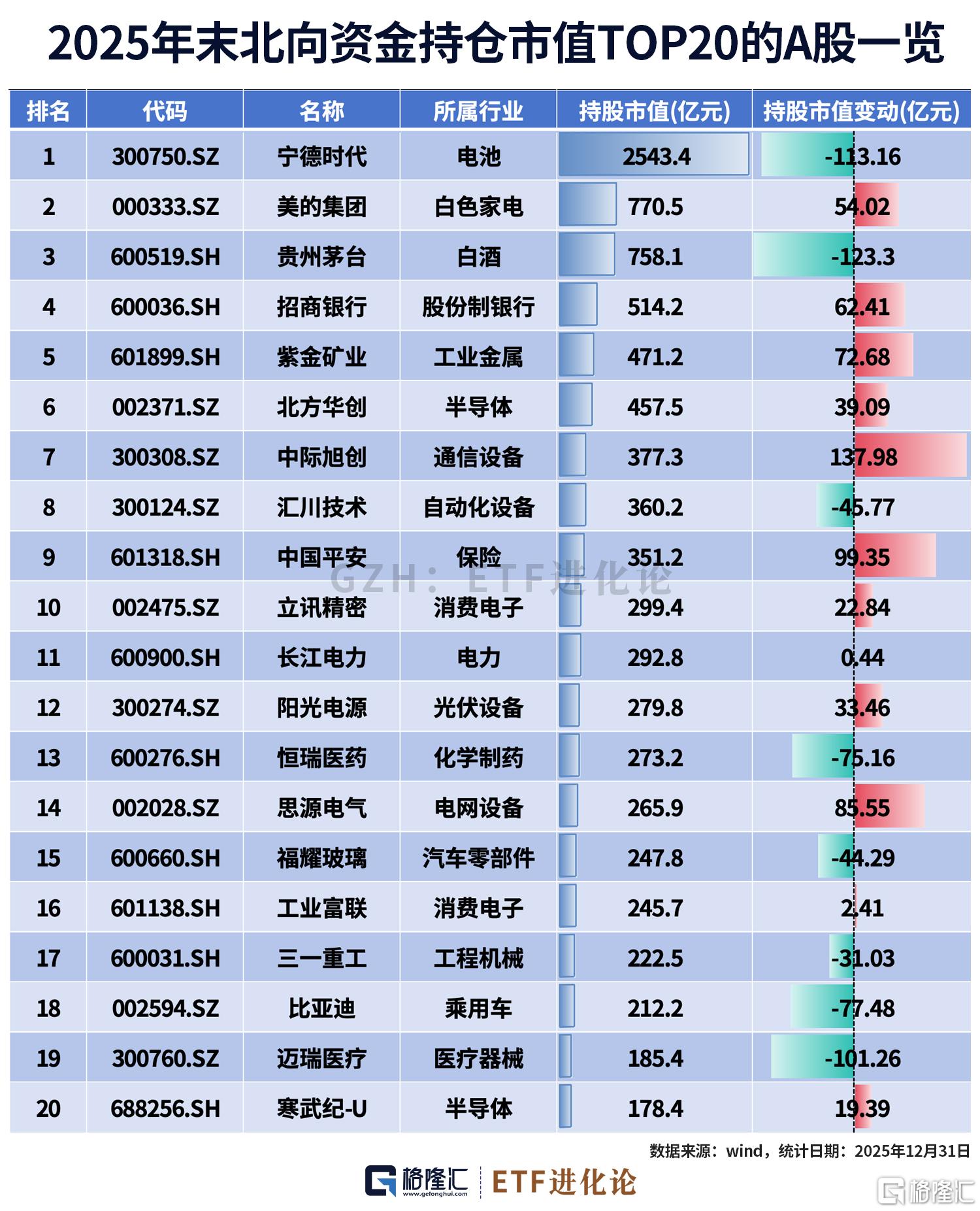
Core Viewpoint - Northbound capital saw a net inflow of 10.15 billion yuan in Q4 2025, with the market value of A-shares held increasing slightly from 25,852 billion yuan at the end of Q3 to 25,898 billion yuan at the end of Q4 [1]. Group 1: Top Holdings - The top ten stocks held by northbound capital as of the end of 2025 include CATL, Midea Group, Kweichow Moutai, China Merchants Bank, Zijin Mining, Northern Huachuang, Zhongji Xuchuang, Huichuan Technology, Ping An Insurance, and Luxshare Precision [1]. - New additions to the top 20 holdings include Suyuan Electric and Cambricon, while WuXi AppTec and Lattice Semiconductor exited the top 20 [1]. Group 2: Sector Performance - In Q4, northbound capital increased holdings in sectors such as new energy (CATL, DeYuan Co., Sunshine Power), electronics (Luxshare Precision, Northern Huachuang, Zhaoyi Innovation), non-ferrous metals (Aluminum Corporation of China, Jiangxi Copper, Zhongjin Gold), and large financials (China Merchants Bank, Ping An Insurance) [2][3]. - The sectors with the highest increase in holdings were non-ferrous metals, communication, and basic chemicals [7][8]. Group 3: Net Inflows and Outflows - The stocks with the highest net inflows in Q4 included CATL (12.19 billion yuan), Luxshare Precision (6.1 billion yuan), Weichai Power (4.87 billion yuan), China Merchants Bank (4.26 billion yuan), and Ping An Insurance (3.49 billion yuan) [4]. - Conversely, the stocks with the largest net outflows included Kweichow Moutai (-8.45 billion yuan), WuXi AppTec (-5.32 billion yuan), BYD (-4.98 billion yuan), and Mindray Medical (-4.22 billion yuan) [5]. Group 4: Industry Holdings - The leading industry by market value held by northbound capital is electrical equipment, followed by electronics, non-ferrous metals, banking, and machinery [6]. - The industries with the most significant increase in market value held were non-ferrous metals (51.63 billion yuan), communication (19.48 billion yuan), and basic chemicals (8.86 billion yuan) [8].




新能源车的“硬核”战事,2026年卷向何处?
Xin Lang Cai Jing· 2026-01-18 02:02
Core Insights - The electric vehicle (EV) industry in China is transitioning from reliance on government policies to market-driven growth, marking the end of the "policy infusion" era and the beginning of "self-sustaining" operations [2][4][17] Group 1: Market Dynamics - In 2025, the penetration rate of new energy vehicles (NEVs) in China surpassed 50%, reaching 59.5% by November, indicating a significant shift towards electric vehicles [5][25] - The charging infrastructure has improved significantly, with a total of 19.32 million charging points by the end of November 2025, a 52% year-on-year increase, and over 5,000 battery swap stations established [5][25] - The competition landscape has changed, with Tesla's retail sales in China declining by 4.8% to 625,698 units, while domestic brands like BYD, Geely, and Changan have seen substantial growth [5][27] Group 2: Sales Performance - BYD led the NEV sales in 2025 with 3.48 million units sold, despite a 6.3% year-on-year decline, holding a market share of 27.2% [6][27] - Geely and Changan reported significant sales increases of 81.3% and 26.8%, respectively, with Geely selling 1.56 million units and Changan 789,141 units [6][27] - New entrants like Leap Motor and Xiaomi have emerged as strong competitors, with Leap Motor's sales increasing by 86.3% to 529,503 units and Xiaomi entering the rankings with 411,837 units, a 200.9% increase [6][27] Group 3: Technological Advancements - The focus on "intelligent driving" has intensified, with companies like BYD, NIO, and Xpeng launching advanced driver-assistance systems and AI-driven models [11][32] - Despite advancements, there remains a gap between technology and user experience, with consumers expressing concerns over the reliability of intelligent driving systems [11][35] - The industry is witnessing a shift towards more comprehensive AI models that aim to enhance decision-making capabilities in complex driving scenarios [12][33] Group 4: Future Outlook - Starting in 2026, the EV industry will face new challenges as the government reduces subsidies, shifting the focus to market-driven strategies and user experience [15][38] - The competitive landscape is expected to evolve with a mix of pure electric, hybrid, and range-extended vehicles, as traditional automakers and new entrants adapt to changing consumer preferences [19][40] - Companies are increasingly looking to expand internationally, marking a new phase of competition that emphasizes technology depth, cost efficiency, and brand loyalty [20][41]






宁德时代与川渝高竹新区签署合作协议
Xin Lang Cai Jing· 2026-01-18 00:48
Core Viewpoint - CATL has signed a cooperation agreement with the Chuan-Yu Gaozhu New District to invest 5.5 billion yuan in a power battery project, indicating a strategic move beyond traditional capacity expansion and point investments in Chongqing's automotive industry [1] Group 1 - The investment of 5.5 billion yuan is aimed at establishing a power battery project [1] - CATL's activities in Chongqing are characterized by a comprehensive approach, integrating production line collaboration within the Seres super factory [1] - The company is enhancing the energy supply of urban logistics networks and facilitating cross-regional industrial chain connections [1]
到欧洲北非去系列之四|西班牙,正上演中国汽车的“诺曼底登陆”
汽车商业评论· 2026-01-17 23:06
Core Viewpoint - The article discusses the strategic importance of Spain as a key entry point for Chinese automotive companies into the European market, highlighting various partnerships and investments that are reshaping the automotive landscape in Spain and beyond [4][12][20]. Group 1: Chinese Automotive Expansion in Spain - The establishment of a joint venture, EBRO, between Chery Automobile and Spanish company EV Motor in Barcelona marks a significant step in revitalizing the local automotive industry [6][24]. - Other Chinese companies, such as Leap Motor and Dongfang Automotive, are also setting up manufacturing bases in Spain, indicating a broader trend of Chinese automotive firms entering the European market [9][12]. - The article emphasizes that Spain serves as a strategic hub for Chinese automotive companies to access the EU market, leveraging its favorable trade conditions and logistical advantages [20][28]. Group 2: Economic and Market Context - Spain is the fifth largest new car market in the EU, with new car registrations expected to reach approximately 1.017 million in 2024, reflecting a 7.1% year-on-year growth [18]. - The EU's electric vehicle penetration rate is around 38%, making it a lucrative market for Chinese electric vehicle manufacturers [16]. - The article notes that by 2025, Chinese electric vehicle brands had captured over 11% of the European market share, indicating significant growth potential [16]. Group 3: Strategic Advantages of Spain - Spain's geographical position allows for efficient access to key markets in Europe, Latin America, and North Africa, enhancing the logistics and distribution capabilities for Chinese automotive firms [20][28]. - The country offers attractive tax incentives for new automotive ventures, including tax reductions and subsidies for companies that create jobs and invest in local production [27][28]. - The existing automotive ecosystem in Spain, characterized by a mature supply chain and skilled workforce, provides a conducive environment for Chinese companies to establish operations and innovate [34][35]. Group 4: Challenges and Adaptation - Chinese automotive companies face challenges in fully integrating into the local market and supply chain, necessitating a deep commitment to local partnerships and community engagement [29][32]. - The article highlights Chery's strategic approach of leveraging local assets and forming partnerships to mitigate risks associated with entering the European market [24][29]. - The need for Chinese firms to adapt to local regulations and consumer preferences is emphasized as crucial for long-term success in Spain and the broader European market [29][32].




发生了什么?欧美股市集体下挫,A50五连阴,下周A股还会下跌?
Sou Hu Cai Jing· 2026-01-17 16:38
Market Overview - On January 14, 2026, the A-share market experienced significant volatility, with the Shanghai Composite Index initially rising close to 4200 points before a sharp decline, ultimately closing down 0.31% at 4126.09 points. The total market turnover exceeded 3.9 trillion yuan, setting a new historical high [1] - The U.S. stock market also faced declines, with the Dow Jones down 83.11 points (0.17%), S&P 500 down 4.46 points (0.06%), and Nasdaq down 14.63 points (0.06%). European markets followed suit, with all major indices declining [3] Policy Changes Impact - A significant factor contributing to the market's volatility was a policy change announced on January 14, which raised the minimum margin requirement for investors from 80% to 100%. This adjustment directly reduced investors' leverage, impacting trading behavior [4] - The A-share margin balance reached 2.67 trillion yuan as of January 13, with a net financing scale approaching 140 billion yuan in just the first seven trading days of 2026 [4] Sector Performance - The A-share market showed a mixed performance with 2747 stocks rising and 2592 falling, indicating intense market competition. AI application sectors led the gains, while energy metals, banking, and insurance sectors faced declines [3] - The CSI 300 index opened 1.2% higher but fell 2.38% by the end of the day, marking the largest single-day drop of 2026. Key stocks like China Merchants Bank and Kweichow Moutai saw declines exceeding 3% [6][7] Market Dynamics - The decline in heavyweight stocks is attributed to three main factors: valuation mismatch with profit expectations, pressure from a wave of share reductions, and a rebalancing of fund structures. The forward P/E ratio of the CSI 300 reached 13.8 times, a premium of 18% over the past five years [7][9] - In the first week of 2026, 39 A-share companies announced significant share reduction plans, with some major shareholders planning to reduce their stakes [9] Technical Analysis - The A50 index maintained its long-term trend line despite the sharp drop, while the Shanghai Composite Index is caught between a mid-term downtrend and a long-term uptrend [10] - The market liquidity situation remains complex, with a structural "rate cut" leading to a perception of abundant liquidity, which has influenced market movements [10] External Influences - The external environment, including U.S. policy changes under Trump, has raised global market concerns, particularly regarding the tech sector, which has seen significant declines [12][14] - The banking sector faces uncertainty due to proposed changes in credit card interest rates, which could impact net interest margins significantly [14]

中欧新能源主题混合发起A:2025年第四季度利润25.99万元 净值增长率2.33%
Sou Hu Cai Jing· 2026-01-17 15:07
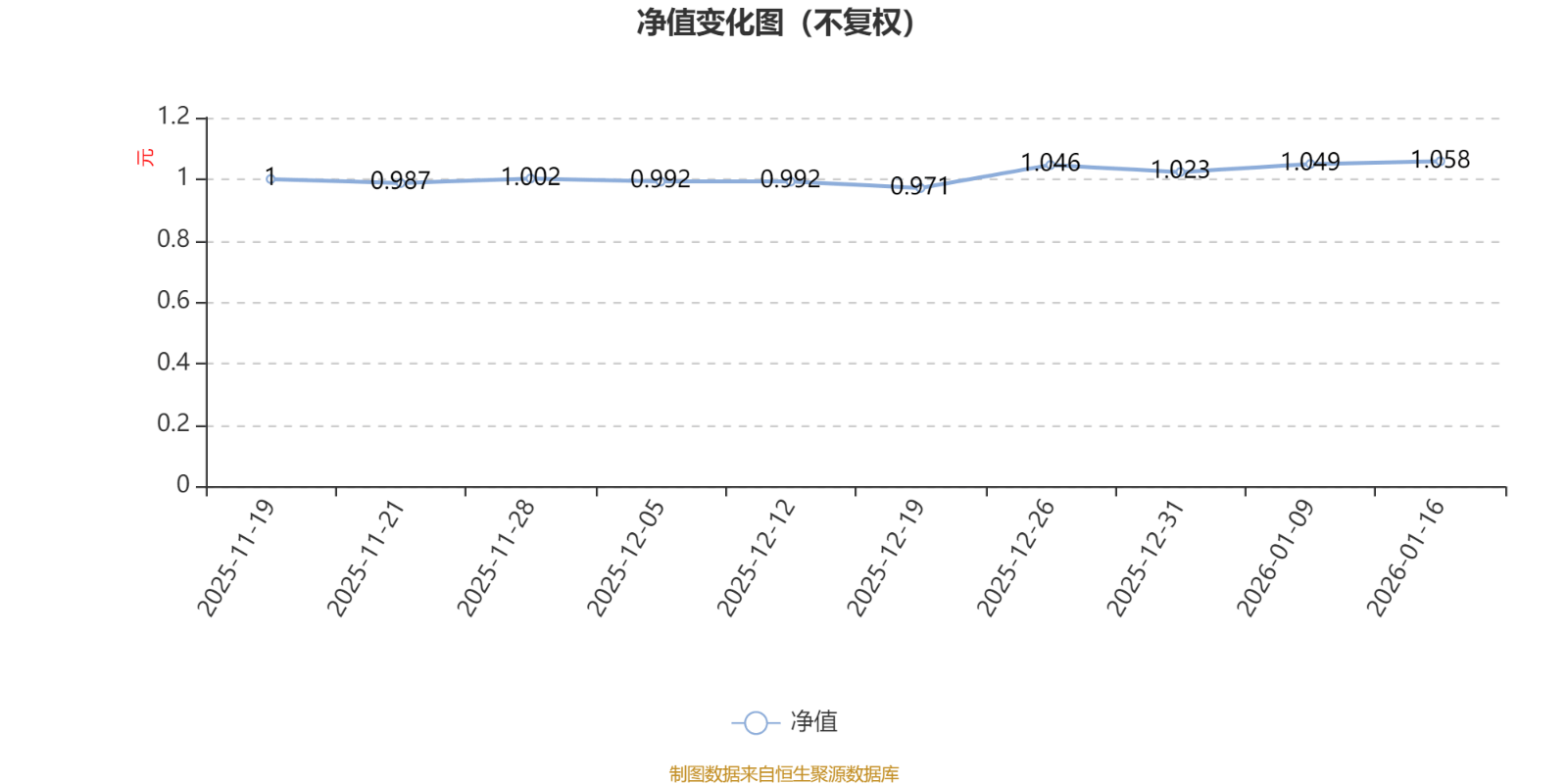
Core Viewpoint - The AI Fund, China New Energy Theme Mixed Fund A, reported a profit of 25.99 thousand yuan for Q4 2025, with a net asset value growth rate of 2.33% and a fund size of 11.4381 million yuan as of the end of Q4 2025 [3] Group 1: Lithium Battery Industry Outlook - The fund manager anticipates an improvement in supply and demand within the lithium battery industry over the next year, driven by a growing demand for energy storage, which now accounts for over 30% of total lithium battery demand [3] - Factors contributing to this demand include the maturation of domestic independent energy storage business models, continued growth in overseas energy storage, and the demand from AI data centers in the U.S. [3] - On the supply side, the expansion capacity and willingness in the upstream resources and midstream materials of lithium may be limited due to a prolonged period of declining profits over the past three years [3] - The industry is expected to enter a profit-up cycle, particularly in segments with hard supply gaps, such as lithium hexafluorophosphate and lithium ore, which may exhibit significant price and profit elasticity [3] Group 2: Power Supply and Equipment Demand - Domestic power supply and equipment are likely to benefit from global electricity supply bottlenecks, driven by large-scale construction of AI data centers and re-industrialization [4] - The demand for flexible power sources (e.g., gas turbines, energy storage systems) and electrical equipment (e.g., transformers) is expected to rise due to challenges in global electricity supply [4] - As overall power generation shifts from low-speed growth to rapid development, domestic companies may leverage capacity support, responsiveness, and cost advantages to penetrate the global supply chain and achieve rapid profit growth [4] Group 3: Solid-State Battery Technology - Solid-state batteries are recognized as a long-term important direction for lithium battery iteration, despite recent stock performance not outperforming benchmarks due to the lengthy industrialization cycle and potential short-term setbacks [4] - The solid-state battery sector is viewed as a long-term trend with significant growth potential, with leading domestic and international battery manufacturers increasing R&D investments in this area [4] - There may be opportunities for new companies to emerge in the equipment and materials segments as the industry grows, and the fund is considering increasing its focus and allocation towards solid-state battery technology [4] Group 4: Fund Holdings Concentration - As of the end of Q4 2025, the fund has a high concentration of holdings, with the top ten stocks including Yangguang Electric, CATL, Yahua Group, Kodali, Zhongmin Resources, Tianci Materials, Guocheng Mining, Fosptech, Zhenhua Co., and Siyuan Electric [4]




龙蟠科技与宁德时代再度联姻!
起点锂电· 2026-01-17 11:10
Group 1 - The core point of the article is that Longpan Technology has signed a continuous related transaction agreement with CATL, with a procurement transaction limit of up to 7 billion RMB for the year 2026 [2] - The new procurement framework agreement focuses on the domestic market for Longpan's products, differentiating it from the previous overseas supply agreement signed in September 2025, which had a transaction limit of 2.2 billion RMB per year [2] - Longpan Technology expects that the signing of the new agreement will leverage CATL's sales network and large customer base, increasing the market coverage and demand for its lithium iron phosphate cathode materials, thus benefiting the company's business growth [2] Group 2 - Historical transaction data shows that the procurement amounts from CATL's related parties to Longpan Technology were approximately 7.799 billion RMB, 3.501 billion RMB, 3.111 billion RMB, and 2.593 billion RMB for the years ending December 31, 2022, 2023, 2024, and the eleven months ending November 30, 2025, respectively [3] - The company plans to redirect the previously planned investment of 198 million HKD for a new manganese iron lithium production line in Hubei to a high-performance lithium battery cathode material project in Jiangsu, pending approval from a temporary shareholders' meeting [3]

锂电产业链集结海南:封关红利落地
高工锂电· 2026-01-17 04:13
Core Viewpoint - The article discusses the transformation of Hainan into a significant hub for lithium battery production and green energy, driven by the implementation of a zero-tariff policy and the establishment of a comprehensive industrial chain from resource importation to processing and distribution [2][4]. Group 1: Lithium Industry Developments - Hainan Free Trade Port commenced full island closure operations on December 18, 2025, increasing the proportion of zero-tariff goods from approximately 21% to 74% [2]. - The first lithium signal post-closure was marked by the arrival of about 28,950 tons of lithium concentrate at the Guotou Yangpu Port, marking the first zero-tariff declaration for new energy minerals [3]. - Hainan Mining is advancing a project in Yangpu Industrial Park to produce 20,000 tons of battery-grade lithium hydroxide annually, with a total investment of approximately 1.056 billion yuan, aiming for trial production by February 2025 [5]. Group 2: Electric Vehicle Infrastructure - CATL is establishing a network of battery swap stations in Hainan, with plans to build over 22 swap stations within three years and more than 100 within five years, targeting electric heavy-duty trucks [7][8]. - The establishment of a zero-carbon park construction alliance, led by CATL, aims to promote green transformation and industrial collaboration in Hainan [10]. Group 3: Recycling and Sustainability Initiatives - Ruikemei plans to establish a joint venture in Haikou Comprehensive Bonded Zone to build a facility with a capacity of 20,000 tons per year for processing retired lithium batteries, focusing on green recycling and high-value regeneration for Southeast Asia and the Asia-Pacific region [11]. - The article emphasizes that the closure is not merely about cheaper imports but about facilitating smoother cross-border factor flows and bonded processing for re-export [12]. Group 4: Broader Green Energy Initiatives - Yangpu is also advancing offshore wind power demonstration projects and planning a manufacturing park for wind power equipment, targeting exports and operations in Southeast Asia [14]. - Additional projects, such as green methanol, are being accelerated to meet the demand for green shipping fuels and support the construction of international shipping hubs [15].


资金的“新年选择”丨国际“热资本”,流向哪些价值洼地?
Sou Hu Cai Jing· 2026-01-16 16:33
Group 1 - Global capital markets are experiencing significant movements as international capital shows optimism towards China's economic development, with foreign institutions releasing positive annual outlook reports [1][3] - Goldman Sachs predicts China's real GDP growth will reach 4.8% in 2026, surpassing the market consensus of 4.5% [1] - HSBC emphasizes that boosting domestic demand will be a policy focus, with ongoing structural reforms and further opening up of the economy [1] Group 2 - Foreign investment in Chinese assets is increasing, with multiple U.S.-listed Chinese stock ETFs seeing substantial net inflows at the beginning of the year [2] - Morgan Stanley highlights China's innovation capabilities in AI, innovative pharmaceuticals, and smart driving technologies as key investment areas [3] - The World Bank, IMF, and ADB have raised their economic growth forecasts for China in 2025, reflecting a consensus on the positive long-term outlook for the Chinese economy [3][4] Group 3 - The attractiveness of the Chinese market to international capital is driven by its stability, policy continuity, and the positive trajectory of economic development [4] - The influx of foreign capital into China is expected to continue as favorable policies are released, particularly with the implementation of the 14th Five-Year Plan [4]
