BABA(BABA)

Search documents
中国首个!支付宝携手千问App、淘宝闪购等发布AI商业协议ACT
Xin Lang Cai Jing· 2026-01-16 03:18
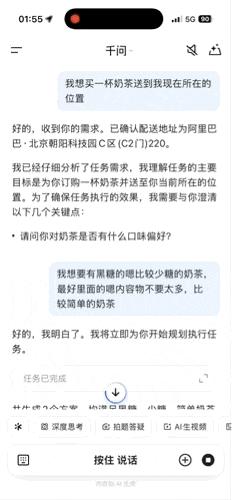
Core Insights - Alipay, in collaboration with partners including Qianwen App, Taobao Flash Purchase, Rokid, Damai, and Alibaba Cloud, has officially launched the ACT Protocol (Agentic Commerce Trust Protocol), which is China's first open technical protocol framework designed for agent commercial needs [1][4]. Group 1: ACT Protocol Overview - The ACT Protocol aims to create a "universal language" for the collaboration between AI and e-commerce, food delivery, and other service platforms, facilitating more convenient and efficient execution of AI tasks across different terminals, systems, and platforms [1][4]. Group 2: Practical Application - An example of the ACT Protocol in action is the Qianwen App, which successfully integrates Taobao Flash Purchase with Alipay AI payment. Users can simply instruct Qianwen to order a drink, and the app will intelligently recommend nearby products based on the user's location, while also handling price comparisons and automatic coupon redemption [3][6]. - The entire shopping process is streamlined into a conversational, automated experience without switching platforms, with Qianwen acting as a dedicated "shopping assistant" to manage complex operations [3][6]. Group 3: Infrastructure and Security - Alipay has established four core infrastructure standards: "Delegated Authorization Domain," "Commercial Interaction Domain," "Payment Service Domain," and "Trust Service Domain," ensuring that AI operations are fully traceable and verifiable [3][6]. - Unlike traditional payment models, under the ACT Protocol, AI only executes the order placement, while the payment process remains under the user's control or authorization, significantly saving time for users while ensuring fund security [3][6]. Group 4: Benefits for Merchants - For merchants, integrating AI-native applications will be simplified as they only need to configure a unified interface according to the protocol standards, allowing for seamless multi-channel access without the need for complex API development, thus greatly reducing integration costs [3][6].



阿里巴巴:推出通义千问 AI 助手
2026-01-16 02:56
Summary of Alibaba Group Holding Conference Call Company Overview - **Company**: Alibaba Group Holding (BABA.N) - **Industry**: China Internet and Other Services - **Market Cap**: US$403.539 billion - **Current Stock Price**: US$169.90 (as of January 14, 2026) - **Price Target**: US$180.00, indicating a 6% upside potential Key Developments - **Launch of Qwen AI Assistant**: - Qwen AI can perform over 400 daily tasks through integration with the Alibaba ecosystem, providing one-stop solutions [1] - The Qwen App achieved over 100 million monthly active users (MAU) within two months of its launch [1] - Alibaba anticipates that 60-70% of digital-world tasks will be completed by AI in the next two years, with the remaining tasks enhanced by AI for efficiency [1] Market Position and Competition - **Ecosystem Integration**: - Qwen leverages Alibaba's ecosystem, including Taobao, Eleme, Fliggy, Amap, and Alipay, positioning it as an all-in-one AI superapp and life assistant [3] - Competitors like Tencent are enhancing their AI models, although their product launches may lag behind [3] Financial Expectations - **User Growth and Revenue**: - Expected increase in daily active users (DAU) for Qwen and improvements in its capabilities are projected to drive share price growth alongside cloud revenue, estimated to grow by over 35% in F3Q and 40% in F27 [4] - **Marketing Expenses**: - Increased marketing spending for consumer adoption may lead to higher overall losses, estimated at RMB 7 billion in F3Q [4] Risks and Opportunities - **Upside Risks**: - Better monetization in core e-commerce could drive earnings growth [18] - Faster enterprise digitalization may re-accelerate cloud revenue growth [18] - Stronger demand for AI could further boost cloud revenue [18] - **Downside Risks**: - Increased competition and higher-than-expected reinvestment costs [18] - Weaker consumer spending amid a slower post-COVID recovery [18] - Regulatory scrutiny of internet platforms could pose additional challenges [18] Financial Metrics - **Fiscal Year Ending**: March 2025 - **Revenue Estimates**: - FY 2025: RMB 996 billion - FY 2026: RMB 1,022 billion - FY 2027: RMB 1,111 billion - FY 2028: RMB 1,202 billion [8] - **Net Income Estimates**: - FY 2025: RMB 129 billion - FY 2026: RMB 111 billion - FY 2027: RMB 106 billion - FY 2028: RMB 141 billion [8] Conclusion - Alibaba Group Holding is positioned to capitalize on the growing AI market through its Qwen AI Assistant, which integrates seamlessly into its extensive ecosystem. While there are significant growth opportunities, the company must navigate competitive pressures and regulatory challenges to achieve its financial targets.
阿里巴巴:通义千问产品发布要点- 实用级超级 AI 代理问世
2026-01-16 02:56
Summary of Alibaba Group Holding (BABA.N) Qwen Product Release Conference Company Overview - **Company**: Alibaba Group Holding (BABA.N) - **Market Cap**: US$405.621 billion [4] Key Industry Insights - **Product Launch**: Alibaba announced the release of Qwen Task Assistant 1.0, a universal AI agent designed to autonomously execute a wide range of digital and real-world tasks for users [1][2] - **Integration**: Qwen will be integrated across Alibaba's ecosystem, including platforms like Taobao, Alipay, and Fliggy, aiming to enhance user experience and task completion [1][7] Core Capabilities of Qwen - **Enhanced Features**: Qwen's capabilities include multi-modality understanding, AI coding, and long-context processing, allowing it to perform over 400 core digital tasks such as application development, office automation, and data analysis [2][3] - **Real-World Application**: The AI assistant is designed to assist users not only in digital tasks but also in real-life scenarios, potentially performing 60-70% of routine tasks within two years [2] User Adoption and Growth - **User Metrics**: Qwen achieved over 100 million monthly active users (MAUs) within two months of its launch, indicating strong initial adoption [1] - **Promotional Strategy**: Alibaba plans to increase its promotional budget for Qwen in CY2026 to further boost user adoption and capitalize on the growing applicability of AI agents [1] Financial Projections - **Target Price**: The target price for Alibaba N-shares is set at US$197, reflecting a 16% expected share price return and a total expected return of 17.1% [4][10] - **Valuation Methodology**: The target price is based on a 10x P/E on FY2027E Ecommerce group net profit and other revenue multiples for different business segments [10][12] Risks and Challenges - **Downside Risks**: Key risks include failure in executing the new retail strategy, investment spending pressures, a slowdown in user traffic, integration risks for newly acquired entities, and regulatory risks related to product quality [11][13] Conclusion - **Investment Outlook**: The launch of Qwen Task Assistant 1.0 represents a significant step for Alibaba in the AI space, with potential for monetization in consumer AI applications in China. However, investors should remain cautious of the outlined risks that could impact the company's performance and stock price [1][11]
解读千问App接入阿里生态
2026-01-16 02:53
Summary of the Conference Call on Qianwen App Integration with Alibaba Ecosystem Company and Industry Overview - The discussion revolves around the **Qianwen App**, which integrates with the **Alibaba ecosystem** to enhance user experience through AI-driven services and intent recognition technology [1][2]. Core Points and Arguments - **Integration and User Experience**: The Qianwen App utilizes intent recognition technology and Alibaba's plugin system (e.g., Flash Purchase API) to allow users to place orders via text or voice input, significantly improving user experience and generating AI-native revenue [1][2]. - **Model Specifications**: The core of the Qianwen App is the **Qianwen San Max model**, a closed-source model with approximately **1 trillion parameters** based on a Mixture of Experts (MOE) structure. This model is crucial for intent recognition and is integrated with various Alibaba services through APIs [2][6]. - **Cost and Efficiency**: Executing complex document tasks using the trillion-parameter model incurs costs of several dollars. However, there is potential for developing smaller yet efficient alternatives through algorithm and hardware optimization in the future [3][17]. - **Computational Demands**: The large-scale model requires substantial computational resources to ensure real-time responses and efficient handling of complex tasks, which poses higher demands on infrastructure [4][10]. - **Task Execution**: The Qianwen App's front-end UI allows for seamless order placement, where voice inputs are converted to text and processed for intent recognition, leading to efficient order handling and payment processing [5][9]. Additional Important Insights - **Token Consumption**: Different tasks consume varying amounts of tokens, with simple interactions using hundreds of tokens, while complex tasks like travel planning may require tens of thousands. This highlights the significant computational resources needed for extensive data processing [13][16]. - **Data Integration Challenges**: There are challenges in fully integrating data across platforms, particularly for non-standard products, which may require redirection to other services like Taobao Flash Purchase. This is attributed to the need for controlled delivery rates and user experience [22][23]. - **Future of Model Usage**: While the current focus is on using large models for C-end users due to diverse and complex needs, there is a possibility of introducing smaller models in the future as technology matures and user satisfaction can be maintained [20][21]. This summary encapsulates the key discussions and insights from the conference call regarding the Qianwen App's integration with Alibaba's ecosystem, highlighting its operational mechanics, challenges, and future prospects.
AI重塑购物入口体验如何
2026-01-16 02:53
Summary of Key Points from Conference Call Industry Overview - The conference call discusses the advancements in the AI e-commerce sector, highlighting the strategies of major players like Google, OpenAI, and Alibaba in reshaping shopping experiences through AI technologies [1][2]. Core Insights and Arguments - **Google's UCP Protocol**: Google has standardized e-commerce listings through the UCP protocol, allowing merchants to retain core transaction data, thereby solidifying its position as a traffic entry point [1][2][4]. - **OpenAI's ACP Protocol**: OpenAI has introduced the ACP protocol in ChatGPT, creating a conversational transaction model that internalizes the entire transaction process, representing a different strategy focused on independence [1][2][4]. - **AI's Impact on Conversion Rates**: AI technology has significantly improved e-commerce conversion rates, with ChatGPT-driven retail visits outperforming major marketing channels and showing year-on-year growth [1][5]. - **Amazon's Rufus AI Assistant**: The active user base for Amazon's Rufus AI assistant has surpassed 250 million, reflecting a 140% year-on-year increase, with an expected incremental GMV of approximately $10 billion [1][5]. Alibaba's Developments - **Qianwen App**: Alibaba's Qianwen app features two main components: a lifestyle assistant and a task assistant, integrating services like Taobao and Fliggy for in-app shopping [1][6][10]. - **User Engagement**: The Qianwen app has over 100 million monthly active users, demonstrating high-frequency daily usage patterns, with notable peaks during work hours and evenings [3][8][9]. - **Future Expansion Plans**: Alibaba plans to expand the Qianwen ecosystem within six months, potentially allowing third-party integrations post-Spring Festival, focusing on direct order completion rather than redirection [3][10]. Competitive Landscape - **Google vs. OpenAI**: The competition between Google and OpenAI in AI e-commerce is primarily centered around the development of standards and protocols, with Google currently holding a leading position due to its diverse advertising ecosystem [4][12]. User Experience and Functionality - **Limitations of Current Features**: The Qianwen app's lifestyle assistant has limitations in handling complex tasks, such as bulk ordering, which the upcoming task assistant aims to address by allowing detailed handling of multiple product requests [7][10]. - **Potential for Improvement**: The task assistant is expected to enhance user experience by integrating various functionalities, including travel planning and data visualization, although it is still in the testing phase [7][10]. Strategic Implications - **Long-term Development**: Alibaba's strategy with Qianwen is seen as a foundational step towards resource integration and product refinement, aiming to establish a robust traffic entry point over time [13]. - **Market Perception**: Despite some market skepticism regarding the rapid rollout of Alibaba's products, the overall sentiment is that this is a strategic beginning that requires time to mature [13]. Additional Considerations - **AI Assistants' Differentiation**: The distinction between comprehensive AI assistants like Qianwen and vertical AI assistants is noted, with the former being more effective in handling short tasks and enhancing user efficiency [11][12].
阿里巴巴20260115
2026-01-16 02:53
Summary of Alibaba's Conference Call Company Overview - **Company**: Alibaba Group - **Product**: Qianwen APP Key Points and Arguments Industry and Product Development - Qianwen APP integrates Alibaba's ecosystem APIs, enhancing user experience across platforms like Taobao and Fliggy, covering over 400 core tasks through a task assistant feature [2][3] - The app achieved 100 million monthly active users shortly after launch, indicating strong market acceptance and initial commercial success [2][4] - Qianwen APP's point-to-point output may disrupt traditional search engines' reliance on advertising revenue, acting as a super entry point to increase user stickiness [2][6] Business Strategy and Market Position - Despite a slowdown in e-commerce growth, Alibaba aims to optimize traffic and costs through AI technology integration and business restructuring, with cloud services continuing to grow rapidly [2][13] - Alibaba Cloud's international strategy focuses on emerging markets, leveraging pricing advantages and early positioning to become a significant growth engine [2][14] Financial Performance and Projections - E-commerce growth rate has been revised down to 3%-4%, but restructuring and AI integration are expected to provide optimization opportunities [2][13] - Sales expenses for FY2026 are projected to increase from 144 billion RMB to 240 billion RMB, with potential for cost reduction through effective advertising channel integration [2][11][12] Competitive Landscape and Trends - The rise of AI-driven products like Qianwen APP reflects a broader trend among tech giants, with companies like Microsoft and Google also investing heavily in AI [2][7] - Traditional search engines are expected to coexist with AI agents, as users still require extensive information for complex decisions [2][8] Valuation and Future Outlook - Current valuation suggests a target price of 200 HKD, indicating nearly 30% upside potential, with optimism surrounding AI-driven growth and the strategic significance of Qianwen APP [2][15] - The integration of AI and international expansion is anticipated to drive revenue growth and improve profit margins due to reduced computing costs [2][14] Additional Important Insights - Qianwen APP's role in creating a fulfillment loop enhances service efficiency and user experience, solidifying Alibaba's market position amid fierce competition [2][9] - The complementary relationship between general and vertical agents highlights the need for both types of services in addressing user needs effectively [2][10]
AI-电商-AI应用主线第二浪
2026-01-16 02:53
Summary of Key Points from Conference Call Industry Overview - The conference call discusses the integration of AI and e-commerce, highlighting significant advancements and trends in the industry, particularly focusing on companies like Google, OpenAI, Alibaba, and others involved in this transformation [1][2][5]. Core Insights and Arguments - **UCP Protocol Launch**: Google introduced the Universal Commercial Protocol (UCP) to provide a common delivery language for e-commerce, simplifying the integration of large models with e-commerce platforms. Major retailers like Walmart and Shopify have joined this initiative [1][2]. - **Instant Checkout Feature**: OpenAI's ChatGPT launched the Instant Checkout feature, collaborating with Shopify and Walmart to create a payment closure, marking a significant step in commercializing AI in e-commerce [1][2]. - **Efficiency in Consumer Decision-Making**: The integration of AI in e-commerce significantly enhances consumer decision-making efficiency by allowing users to complete the entire purchasing process within a chatbot interface, reducing the time taken for decisions [4]. - **AI's Impact on E-commerce**: The development of AI technologies is expected to improve multi-modal understanding and reasoning capabilities, lower computational costs, and promote the widespread adoption of AI agents, fundamentally changing consumer shopping habits [1][6][7]. - **Market Trends**: By 2026, AI in e-commerce is anticipated to become a major trend, leading to substantial changes in the industry and creating new investment opportunities [1][8]. Financial Performance and Projections - **Zhidingmai's Revenue Growth**: Zhidingmai is projected to see a recovery in its fundamentals by Q4 2025, with AI-related revenues primarily from AI-generated content leading to product purchases, GMV sharing, and advertising monetization. Expected revenues for 2025 are around 80 million yuan, with projections for 2026 reaching 200-300 million yuan [1][10]. - **MCP Service Launch**: Zhidingmai launched the Haina MCP service, providing product information data services to large model manufacturers, which is expected to enhance transaction GMV and commercialize through CPM/CPA fees or GMV sharing [1][8]. Other Important Insights - **Beneficiaries of AI Development**: Companies such as Guangyun Technology (SaaS providers), Yiwei Chuang, and Liren Lizhuang (operating companies), as well as Focus Technology in the B2B sector, are expected to benefit from AI advancements, potentially leading to significant revenue and profit elasticity [3][11]. - **Investor Focus**: Investors should pay attention to the changing industry trends and the shift in traffic structure due to the increasing weight of large model traffic entrances, which may affect traditional search engine traffic. The focus for 2026 should be on capturing these trends and related investment opportunities [12].

千问诞生后,负责人吴嘉首次回应15个关键问题
3 6 Ke· 2026-01-16 02:30
Core Insights - The AI assistant market is shifting from chat-based interactions to agent-based functionalities, marking a new phase in competition among major tech companies [1][2][11] - Alibaba's AI assistant, Qianwen, aims to integrate various services within its ecosystem, enhancing user experience and operational efficiency [3][4][10] Group 1: Product Development and Features - Qianwen has achieved over 100 million monthly active users within two months of launch, showcasing rapid adoption [4] - The latest version, Qianwen 6.0, includes over 400 new features and integrates with multiple Alibaba services such as Taobao and Alipay [4][6] - The assistant focuses on practical applications in daily life, such as ordering food and managing administrative tasks, aiming for a seamless user experience [6][8][10] Group 2: Strategic Positioning - Qianwen is positioned as a more personalized AI assistant compared to Quark, which serves as an AI browser and search tool [31][32] - The integration of Qianwen with Alibaba's extensive ecosystem allows it to leverage high-frequency services, enhancing its competitive edge [10][12] - The company emphasizes the importance of user satisfaction and innovative experiences over mere user growth metrics [42] Group 3: Competitive Landscape - The AI assistant market is becoming increasingly competitive, with major players like Google and OpenAI focusing on different service integrations [10][48] - Alibaba's strategy involves not just competing on technology but also on effectively utilizing its vast resources and ecosystem to deliver superior AI capabilities [11][48] - The future of AI assistants will likely see a consolidation of services, with fewer but more capable platforms emerging [52][53]
AI时代冲击波:APP退居后台,智能体浮出水面
2 1 Shi Ji Jing Ji Bao Dao· 2026-01-16 02:05
Core Viewpoint - Alibaba's Qianwen App has launched over 400 service functions, marking the transition from "chat dialogue" to the "AI service era" [1] Group 1: AI Integration and Functionality - Qianwen App integrates with Alibaba's ecosystem, enabling AI shopping functions such as ordering takeout, purchasing items, and booking flights and hotels [2] - The arrival of AI is causing traditional apps to retreat into the background, indicating a shift from an "app-centric" era to a "user-intent-centric" era [3] Group 2: Efficiency and Resource Optimization - The use of AI agents can potentially double the flow of digital economy activities without increasing the population, as they assist users in various tasks [4] - AI agents can optimize social resource allocation and improve task completion efficiency, breaking down data silos and service barriers [4] Group 3: Shift in Competitive Logic - The focus on "artificial intelligence+" has gained momentum since the release of the State Council's opinions in August 2025, marking a critical window for AI application [5] - The competition paradigm is shifting from product and service-based strategies to AI-driven ecological competition, requiring companies to embed AI technologies into their strategies and organizational structures [6][7] Group 4: Business Model Innovation - The retreat of many service-oriented apps to the background will create new, significant traffic entry points for companies that integrate with leading AI agents [7] - The traditional "eyeball economy" model is challenged as users can directly access relevant information through AI agents, leading to potential disruptions in advertising revenue models [7][8] - The API-driven service model will foster innovative business models, allowing for dynamic service combinations tailored to individual user preferences and intentions [8]
AI时代冲击波:APP退居后台,智能体浮出水面。
2 1 Shi Ji Jing Ji Bao Dao· 2026-01-16 02:03
Core Insights - Alibaba's Qianwen App has launched over 400 service functions, marking its transition from a "chat dialogue" to an "AI service era" [1] - The rise of AI is leading to a shift from an "app-centric" to a "user-intent-centric" model, where users express needs naturally and AI agents handle task execution [3][4] - The transition to an intelligent economy is changing competitive logic from product and service-based competition to "AI+" ecosystem competition [7][8] Group 1: AI Integration and Functionality - Qianwen App integrates with Alibaba's ecosystem, enabling AI-driven functionalities like food delivery, shopping, and travel bookings, and is currently in user testing [2] - The AI capabilities of Qianwen App are expected to enhance user efficiency and optimize resource allocation in the digital economy [4] Group 2: Market Predictions and Expert Opinions - Experts predict that traditional apps may become background resources, with AI agents taking over user interactions, leading to a fundamental change in human-computer interaction [3][4] - The introduction of AI agents could potentially double the effective flow of digital services without increasing the population, addressing the flow bottleneck in the digital economy [4] Group 3: Competitive Landscape Changes - The competitive landscape is shifting towards AI-driven strategies, where companies must embed AI technologies into their operations to gain an edge [7][8] - Not all apps will retreat to the background, but those that do not integrate with leading AI agents may face visibility challenges and risk being outcompeted [8][9] Group 4: Business Model Innovations - The emergence of AI agents is expected to lead to disruptive business model innovations, allowing for flexible service combinations tailored to individual user preferences [9] - The marketing paradigm is shifting from "traffic purchase" to "intent purchase," enabling brands to target specific user intentions with unprecedented precision [9]