
CME Group(CME)

Search documents
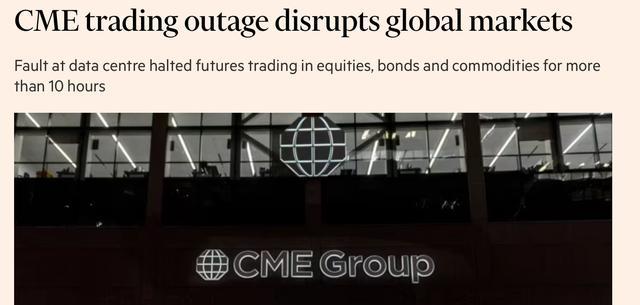
中断约10小时 芝商所因数据中心冷却故障暂停交易
Huan Qiu Wang Zi Xun· 2025-11-29 01:49
Core Points - CME Group, the world's largest exchange operator, announced a trading halt due to a cooling system failure at its CyrusOne data center [1][4] - The technical support team is working to resolve the issue and will provide updates to clients regarding trading resumption [1] - The incident affected multiple trading platforms, including the EBS forex platform, leading to a temporary halt in major currency pair quotes [4] Company Impact - CME Group's system stability is crucial for global financial markets, and this incident highlights the potential disruptions caused by technical failures [4] - This is not the first time CME Group has faced trading interruptions due to technical issues, with previous incidents occurring in 2014 and 2019 [4] - The current outage has lasted longer than the 2019 incident, indicating a significant operational challenge for the company [4] Market Response - After several hours of interruption, CME Group announced that the Globex futures and options market would resume trading at 8:30 AM Eastern Time [4] - The trading halt may cause significant inconvenience for traders needing to adjust positions across different contract months [4]


芝商所交易中断加剧市场动荡,白银与铜价齐创历史新高
Hua Er Jie Jian Wen· 2025-11-29 01:35
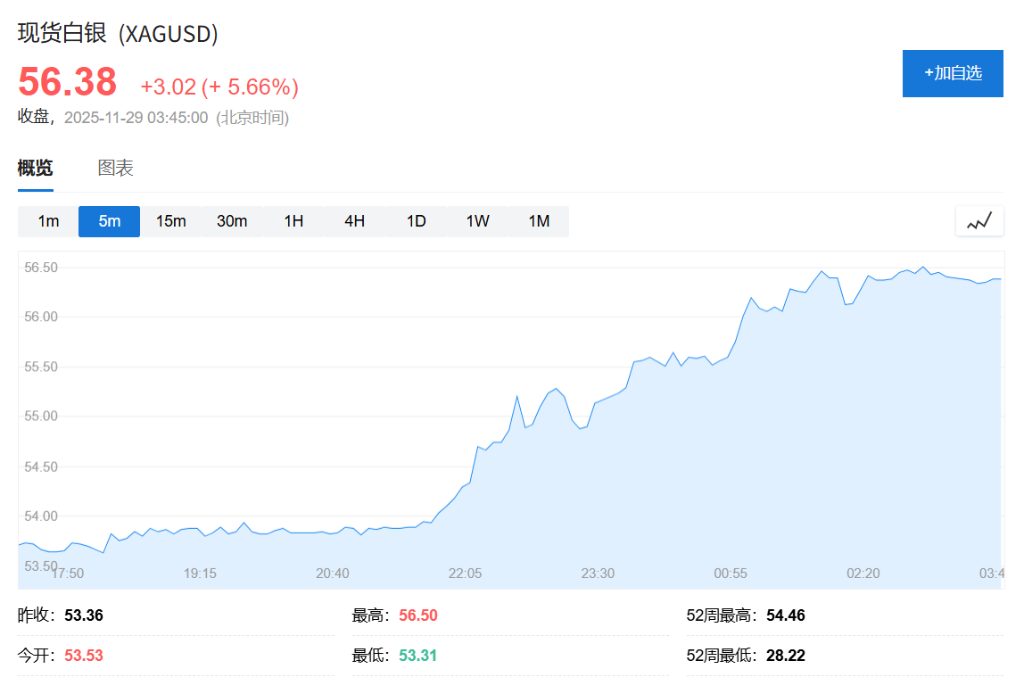
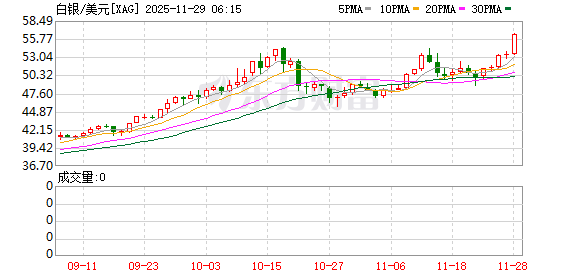
Core Viewpoint - Silver and copper prices surged to historical highs driven by strong fundamentals and expectations of interest rate cuts by the Federal Reserve, exacerbated by a rare technical failure at the CME Group that intensified market volatility [1][10]. Group 1: Silver Market Dynamics - Silver prices rose by 5.9% to $56.53 per ounce, setting a new record, while supply concerns intensified due to a significant shortage in the market [2][4]. - Industrial demand for silver, particularly from sectors like photovoltaics and electronics, has provided a solid foundation for price increases, despite a recent influx of 54 million ounces easing some supply pressure [5][6]. - Concerns over potential tariffs on silver, following its inclusion in the US Geological Survey's critical minerals list, have led to hesitance among traders regarding exporting the metal [6]. Group 2: Copper Market Sentiment - Copper prices reached new highs, with LME copper futures hitting $11,210.50 per ton, following discussions among miners, smelters, and traders at a Shanghai conference that highlighted tightening market conditions [2][7]. - The energy trading firm Mercuria's metal chief expressed bullish predictions, warning that increased shipments to the US could deplete global copper inventories [8]. - The price surge was also a response to optimistic sentiments from the CESCO Shanghai conference, contributing to a broader bullish narrative for the year-end [9]. Group 3: Macro Economic Influences - The anticipated monetary easing by the Federal Reserve has been a significant driver for metal prices, with an 86.4% probability of a 25 basis point rate cut expected at the December 10 meeting [10]. - The broader surge in metal prices this year reflects a trend known as "inflation trade," with silver prices increasing over 90% as investors shift from government bonds and currencies to alternative assets [12].
芝商所创纪录宕机引发“拉网线”传言 白银多空决战打响?
Di Yi Cai Jing· 2025-11-29 00:32
Group 1 - The Chicago Mercantile Exchange (CME) experienced a significant system failure, halting trading across global forex, commodities, and stock futures markets for nearly 11 hours, marking the longest outage in recent years [2][4] - The outage was caused by a cooling system issue at the CyrusOne data center in Chicago, affecting major brokers like Saxo Bank, XTB, and eToro, which suspended trading services [3][4] - Following the resumption of trading, silver prices surged to a historic high, raising speculation about the potential impact on the market, particularly regarding the dual industrial and financial nature of silver [2][6] Group 2 - CME's average daily trading volume for derivatives reached 26.3 million contracts in October, highlighting the exchange's significant role in the financial market [5] - The interruption in futures trading led to increased speculation among silver investors, particularly as the outage coincided with silver futures reaching over $54 per ounce shortly before the failure [6][8] - The silver market is currently under pressure due to low inventory levels, with Shanghai Futures Exchange silver stocks dropping to their lowest since 2015, and record-high exports from China exacerbating supply concerns [9][11] Group 3 - The market's reaction to the outage included a dramatic widening of bid-ask spreads, indicating extreme volatility and liquidity issues, with spreads increasing from around $1 to over $20 per ounce [6][7] - The potential for significant market movements remains, as the silver market is influenced by both industrial demand and geopolitical factors, including concerns over potential tariffs from the U.S. government [11][12] - Historical context shows that trading outages are not uncommon in major exchanges, with several incidents in recent years affecting trading operations and investor confidence [13]
芝商所所有市场已恢复交易!“宕机”事件给出这些警示
Qi Huo Ri Bao· 2025-11-29 00:09
Core Insights - CME Group experienced a significant disruption in trading due to a cooling system failure at a third-party data center, affecting multiple core derivative markets including forex, commodities, treasury, and equity index futures [1][3] - The trading was restored later that evening, with all markets reopening and functioning normally [6] Technical Issues - The failure was attributed to a problem with the cooling system at the CyrusOne data center, prompting CME Group's technical support to work on a resolution [3] - Similar outages have occurred at other major exchanges, highlighting a commonality in such technical failures across the industry [8] Market Impact - The incident occurred during a low liquidity period following the Thanksgiving holiday in the U.S., raising concerns about potential price volatility upon market reopening [10] - Traders expressed fears that accumulated orders and market sentiment could lead to a liquidity vacuum and extreme market conditions once trading resumed [10] Risk Management - Experts suggest that this incident serves as a reminder for investors to enhance their risk awareness and diversify their trading strategies to mitigate potential losses during system failures [11] - Recommendations include employing cross-market hedging strategies as a form of passive risk management during such outages [10][11] Industry Reflection - The event is seen as a stress test for the resilience of the financial market's technological infrastructure, emphasizing the need for high operational resilience in supporting trading activities [11] - The incident has prompted a reevaluation of the risks associated with over-reliance on single exchanges and the use of leverage in derivative trading [11]

Trading restarts at the CME after a 'cooling issue' at a data center prompted a halt
Yahoo Finance· 2025-11-28 21:55
Core Points - Trading across the majority of the Chicago Mercantile Exchange (CME) markets was halted due to a cooling issue at a partner's data center [1][3] - The issue was resolved by around 8:20 a.m. ET, with trading resuming at 7:30 a.m. local time for futures and options [2][3] - The halt had the potential to cause substantial issues across global financial markets, given CME's status as the world's largest exchange operator by market value [2] Summary by Sections Trading Halt - A cooling problem at CyrusOne data centers led to a halt in trading across many CME markets [1][3] - The halt occurred on a Friday, which is typically a thinner trading day due to the holiday season [3] Resolution and Impact - By 8:20 a.m. ET, CME announced that markets were open and trading had resumed [2] - The resumption of trading could lead to greater volatility during the shortened session due to thinner holiday trading conditions [3]
芝商所交易系统大瘫痪背后:私募热潮下被外包的金融核心基础设施
Hua Er Jie Jian Wen· 2025-11-28 21:12
Core Insights - The cooling system failure at CyrusOne's data center in Aurora, Illinois, led to significant disruptions in trading activities at the Chicago Mercantile Exchange (CME), highlighting vulnerabilities in critical financial market infrastructure [1][2] - The CME had previously outsourced the operation of this data center to CyrusOne after selling it in 2016, which raises concerns about the risks associated with outsourcing essential operations [3][4] - The incident has drawn attention to the role of private equity firms in the data center sector, particularly following the acquisition of CyrusOne for approximately $11.4 billion by KKR & Co. and Global Infrastructure Partners [5][6] Group 1: Data Center Operations - The Aurora data center, established by CME in 2009, has become a crucial hub for electronic trading, processing a nominal trading volume of at least $25 trillion daily [1][2] - High-frequency traders have invested heavily in proximity to this data center to minimize trading delays, indicating its strategic importance in the financial ecosystem [2] Group 2: Outsourcing and Risks - CME's decision to sell the data center and lease it back for 15 years reflects a broader trend of outsourcing critical infrastructure, which can introduce operational risks [3][4] - CyrusOne's business model focuses on securing large clients like CME, emphasizing its reputation as a significant player in the data center industry [4] Group 3: Design and Operational Concerns - The cooling system failure has raised questions about the design and redundancy measures in place at the data center, as it was expected to have additional cooling units to prevent such failures [6][7] - Despite having a disaster recovery plan that included a backup data center in New York, CME opted to restart operations in Aurora based on the belief that the cooling issue would be resolved quickly [7] Group 4: Market Dynamics - The surge in demand for data centers, driven by trends like artificial intelligence, has attracted private equity interest, as seen in the acquisition of CyrusOne [5][6] - The incident underscores the critical nature of data centers in global trading and the potential implications of operational failures on market stability [1][2]
AI时代的致命隐患,芝商所数据中心宕机,揭示冷却系统隐忧
Hua Er Jie Jian Wen· 2025-11-28 20:05
Core Insights - The recent trading disruption at CME Group highlights the critical issue of cooling systems in data centers, which can significantly impact global markets [1] Group 1: Incident Overview - On November 27, CME Group's trading platform experienced a multi-hour outage affecting trillions of dollars in contracts across various asset classes due to a cooling system failure at its Aurora, Illinois data center [1] - The cooling system failure was attributed to a malfunction in a chiller unit, which impacted multiple cooling units, leading to market turmoil [1] - CyrusOne, the operator of the data center, stated that the incident was caused by a "simple" physical failure, emphasizing the vulnerability of data centers to such issues [1] Group 2: Data Center Cooling Challenges - Data centers consume significantly more energy than typical office buildings, with energy consumption per square foot being 50 times higher, leading to substantial waste heat generation [5] - Traditional cooling methods using air are being increasingly replaced by liquid cooling systems due to the higher heat output from AI-related workloads, although these systems are more complex and costly [6] - The reliance on cooling systems raises concerns about water resource consumption, particularly in water-scarce regions, as data centers require substantial water for cooling [6] Group 3: Consequences of Overheating - Overheating in data centers can result in data loss, damage to expensive server components, and service interruptions, similar to recent outages experienced by other digital infrastructure providers [8] - Despite investments in redundancy measures, such as backup generators and additional cooling units, the complexity of systems can still lead to unavoidable disruptions [8] Group 4: CME Incident Analysis - The CME trading platform is located in a CyrusOne-operated facility in Aurora, which reportedly has advanced cooling technology and additional cooling units to mitigate failures [9] - Following the incident, CyrusOne deployed temporary cooling equipment while working to restore full cooling capacity [9] - The effectiveness of the redundant cooling systems during this incident remains unclear, raising questions about their reliability [9]
CME Trading Is Restored to Wrap Up Week After Hours-Long Outage
Yahoo Finance· 2025-11-28 20:03
Core Points - The Chicago Mercantile Exchange (CME) resumed trading operations after a significant technical outage that affected key financial markets [1][3] - The outage was caused by a cooling system malfunction at a data center, leading to a halt in trading for several hours [4] - CME's Globex Futures & Options markets, which account for 90% of CME Group's volume, reopened at 8:30 a.m. New York time, but trading volume remained light [1][3] Trading Impact - The outage lasted longer than a previous incident in 2019, highlighting the importance of CME Group and its electronic trading platform [3] - Market participants expressed frustration over the potential loss of trading sessions for millions of contracts linked to major indices like the S&P 500, Dow Jones, and Nasdaq 100 [3] - Following the resumption of trading, foreign-exchange and bond markets showed subdued activity, with the yield on 10-year Treasuries remaining stable at 3.99% [6] Market Reactions - Gold experienced erratic price movements due to thin liquidity, with the gap between bids and offers widening [7] - US crude and palm oil markets were also impacted, with some trading volumes shifting to alternative platforms as liquidity diminished [7] - The Canadian dollar showed strength against the US dollar following better-than-expected economic growth data from Canada [6]
Traders Around the World Left Hanging After Glitch Took Out CME
Yahoo Finance· 2025-11-28 19:10
Core Insights - The Chicago Mercantile Exchange (CME) experienced a significant outage that halted trading of futures and options, impacting multiple markets and contracts worth trillions of dollars [1][2] - The outage lasted for over nine hours, with services gradually resuming after the initial alert [1] - The incident highlights the critical role CME plays in global markets, as traders sought alternatives during the disruption [3] Trading Impact - The outage disrupted trading in S&P 500 futures, EBS foreign exchange platform, Treasuries, and US crude oil [2] - Traders reported difficulties in pricing equity index options and expressed concerns over liquidity when seeking alternatives to CME [3] Market Statistics - In October, CME averaged over 26 million derivatives contracts traded daily [3] - On November 20, open interest in CME's US Treasury futures and options reached an all-time high of 35.1 million contracts, with approximately $1 trillion of notional value traded daily in E-mini S&P 500 and Nasdaq 100 futures [4] Historical Context - Exchange outages have become more frequent, with technology issues affecting pricing across global platforms [5] - Previous incidents include a June 2024 glitch at the New York Stock Exchange that erroneously halted trading on about 40 stocks and a disruption in Nasdaq premarket trading earlier that year [5] - The London Stock Exchange Group also faced multiple outages at the end of 2023 [6]
The Private Equity-Owned Data Center Behind Giant CME Outage
Yahoo Finance· 2025-11-28 18:12
Core Insights - The data center in Aurora, Illinois, is crucial for global trading, processing an estimated $25 quadrillion in notional trade volume daily [1] - The facility has been the primary hub for CME Group Inc.'s digital operations for nearly two decades, covering 450,000 square feet and attracting high-frequency traders [2][4] - A recent malfunction in the cooling system disrupted CME's futures and options trading platforms, impacting traders worldwide [3] Company Overview - CME Group Inc. built the Aurora data center in 2009 to support its electronic trading infrastructure, which is essential for its Globex trading platform [4] - In 2016, CME sold the data center to CyrusOne, agreeing to lease space for 15 years to maintain its operations [5] - CyrusOne's CEO previously described the facility as "ground zero" for high-speed trading, highlighting its importance in the trading ecosystem [6] Industry Impact - The data center's cooling system failure illustrates the critical nature of infrastructure reliability in high-frequency trading environments [3] - Proximity to the data center is vital for traders to minimize latency, emphasizing the competitive landscape among trading firms [2][3] - The incident has raised concerns about operational risks in trading infrastructure, affecting market participants globally [3]