Alphabet(GOOG)

Search documents
3 Stocks to Buy and Hold Forever: A Long-Term Play for Your Portfolio
The Motley Fool· 2026-02-15 13:00
Core Viewpoint - The article discusses three technology companies—Nvidia, Alphabet, and Taiwan Semiconductor—that are well-positioned to thrive in the current market, particularly in the context of artificial intelligence (AI) advancements. Nvidia - Nvidia is recognized as a leading designer of AI processors, with increasing demand driven by tech companies investing in AI data center infrastructure [4][5] - The company’s stock has a price-to-earnings (P/E) ratio of approximately 47, which is slightly above the tech sector average of 43, indicating it may still be a viable investment [7] - Nvidia's current market cap is $4.4 trillion, with a gross margin of 70.05% and a dividend yield of 0.02% [9] Alphabet - Alphabet's Gemini chatbot has achieved 750 million monthly active users, marking a 67% increase in just nine months, showcasing its success in AI [9][10] - The company is doubling its capital expenditures to $185 billion this year, which is expected to enhance its competitiveness in the AI market [6][11] - Alphabet's stock is trading at a P/E ratio of 30, presenting a relatively attractive investment opportunity [11][12] Taiwan Semiconductor - Taiwan Semiconductor (TSMC) holds a 70% market share in semiconductor manufacturing and is the preferred choice for tech companies needing AI processors [13][14] - TSMC's revenue is projected to increase by 30% to $122.4 billion in 2025, with diluted earnings expected to rise by 47% to $10.65 per ADR [16] - The company’s stock has a P/E ratio of 34, indicating it is well-priced for potential growth [16][15]




Did Google's Gemini Just Say "Checkmate" to OpenAI's ChatGPT?
Yahoo Finance· 2026-02-15 12:05
While there were many preceding events that led to the rise of artificial intelligence (AI), the launch of OpenAI's ChatGPT in November 2022 seemed to really trigger the start of what some are calling the fourth industrial revolution. ChatGPT took the internet by storm, and consumers were floored by the chatbot's capabilities, including its human-like conversational skills and its ability to generate content and images. ChatGPT caught on like wildfire and quickly became the fastest-growing consumer app of ...
ResMed Inc. (RMD) Gains Analyst Confidence as Price Targets Rise on Strong Earnings
Insider Monkey· 2026-02-15 11:53
Core Insights - Generative AI is viewed as a transformative technology by Amazon's CEO Andy Jassy, indicating its potential to significantly enhance customer experiences across the company [1] - Elon Musk predicts that humanoid robots could create a market worth $250 trillion by 2040, representing a major shift in the global economy driven by AI innovation [2] - Major firms like PwC and McKinsey acknowledge the multi-trillion-dollar potential of AI, suggesting a broad consensus on its economic impact [3] Company and Industry Analysis - A breakthrough in AI technology is believed to be redefining work, learning, and creativity, attracting significant interest from hedge funds and top investors [4] - There is speculation about an under-owned company that may play a crucial role in the AI revolution, with its technology posing a threat to competitors [4] - Prominent figures in technology and investment, including Bill Gates and Warren Buffett, recognize AI as a major technological advancement with the potential for substantial social benefits [8] Market Trends - The AI ecosystem is expected to reshape how businesses, governments, and consumers operate globally, indicating a shift in market dynamics [2] - The investment landscape is becoming increasingly competitive, with major tech companies like Tesla, Nvidia, Alphabet, and Microsoft being closely watched, while a smaller company is suggested to hold greater potential [6]




Globus Medical Inc. (GMED) Gains Positive Attention Amid Improving Outlook
Insider Monkey· 2026-02-15 11:53
Core Insights - Generative AI is viewed as a transformative technology by Amazon's CEO Andy Jassy, indicating its potential to significantly enhance customer experiences across the company [1] - Elon Musk predicts that by 2040, humanoid robots could create a market worth $250 trillion, representing a major shift in the global economy driven by AI innovation [2][3] - Major firms like PwC and McKinsey acknowledge the multi-trillion-dollar potential of AI, suggesting a broad consensus on its economic impact [3] Company and Industry Analysis - A breakthrough in AI technology is seen as a catalyst for redefining work, learning, and creativity, attracting significant interest from hedge funds and top investors [4] - There is speculation about an under-owned company that may play a crucial role in the AI revolution, with its technology posing a threat to competitors [4][6] - Prominent figures in technology and investment, including Bill Gates and Warren Buffett, recognize AI as a major technological advancement with the potential for substantial social benefits [8]

财报后,美国四大云厂市值蒸发1万亿美元,市场甚至寻求对冲“大厂风险”
华尔街见闻· 2026-02-15 10:56
Core Viewpoint - The recent earnings reports have led to a significant market shift, with the combined market value of the four major cloud companies in the U.S. dropping by over $1 trillion, raising concerns about unsustainable AI infrastructure investments and increasing debt levels [2][9]. Group 1: Market Reactions - Microsoft shares have fallen by 27%, Amazon by 21%, Meta by 16%, and Alphabet by 11%, as investor sentiment shifts from "Is AI worth it?" to "Can capital expenditures be sustained?" [2] - The debt market is also feeling the impact, with investors worried about tech giants increasing leverage to compete in AI, leading to wider credit spreads and heightened demand for credit default swaps (CDS) [4]. Group 2: Capital Expenditure Projections - Goldman Sachs projects that capital expenditures for major cloud companies will reach nearly $1.4 trillion from 2025 to 2027, a significant increase from approximately $485 billion from 2022 to 2024 [7][10]. - Microsoft is expected to see the most substantial increase in capital expenditure, rising from $76 billion in 2024 to $376 billion during 2025-2027 [10]. Group 3: Debt Market Dynamics - The CDS market has rapidly expanded, with notable activity around Meta and Alphabet, where CDS contracts are valued at approximately $895 million and $687 million, respectively [6][13]. - As of July 2025, the number of dealers quoting CDS for Alphabet has increased from 1 to 6, indicating growing market interest [14]. Group 4: Cash Flow and Debt Financing - The fundamental reason for tech giants entering the debt market is insufficient internal cash flow to support their AI investment levels, with projections indicating that capital expenditures could nearly equal their total operating cash flow by 2026 [18][20]. - Oracle recently issued $25 billion in bonds, attracting $129 billion in orders, while Alphabet expanded its bond issuance from $15 billion to $20 billion due to high demand [20]. Group 5: Market Divergence and Future Outlook - Despite strong current demand for bonds, there is a divergence in market sentiment, with some hedge funds viewing the demand for protection as a profit opportunity, while others warn of potential credit risk due to the scale of debt [22][23]. - Goldman Sachs notes that to maintain investor return expectations, these companies need to generate over $1 trillion in profits annually, while current consensus estimates for 2026 profits are only $450 billion [24].


高毅资产美股持仓曝光!加仓拼多多、贝壳等
Ge Long Hui· 2026-02-15 08:04
Group 1 - Gao Yi Asset held stocks of 13 companies in the US stock market with a total market value exceeding $600 million as of the end of 2025 [2] - The top ten holdings of Gao Yi Asset prominently feature Chinese concept stocks, with significant increases in positions for Pinduoduo and Beike, and a new investment in Yixian E-commerce [2] - The top ten holdings include Huazhu Group, Pinduoduo, Google, Yum China, Beike, Wuxi AppTec, NetEase, iQIYI, TSMC, and ISHARES TR, indicating a dominant presence of Chinese concept stocks [2] Group 2 - As of the end of last year, Gao Yi Asset held 1.333 million shares of Pinduoduo, having increased its position by 629,000 shares compared to the end of the third quarter [3]



上一次“软件要亡”论发生在10年前,后续如何了?
Hua Er Jie Jian Wen· 2026-02-15 07:39
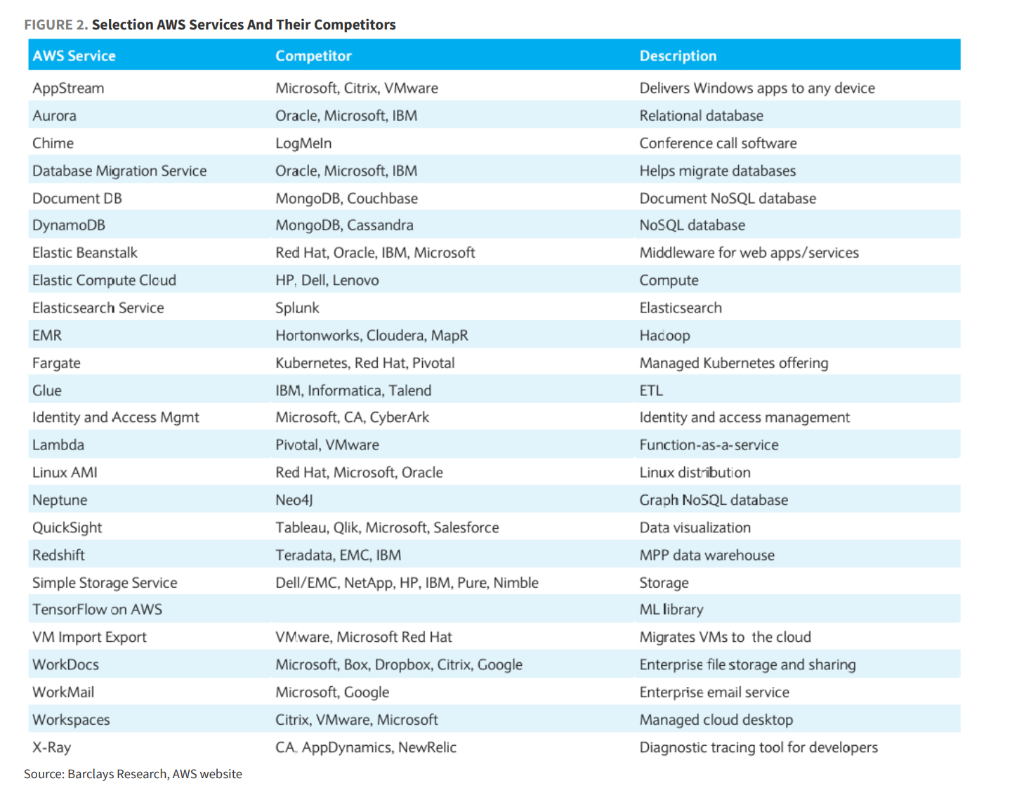
Core Viewpoint - Barclays believes that the current market panic regarding generative AI (GenAI) is based on a "worst-case scenario" assumption, predicting the extinction of traditional software companies, which mirrors the panic seen a decade ago with the rise of Amazon AWS [1][2] Historical Context - The current investor sentiment in the software sector is extremely negative, with a simplistic investment logic of buying AI newcomers and shorting traditional software [2] - This situation is reminiscent of the panic surrounding AWS's growth, where established software companies faced similar doomsday predictions, yet none went bankrupt due to AWS competition [4][5] Market Dynamics - Historical data shows that while AWS gained significant market share, it did not lead to the extinction of mature software companies; instead, these companies evolved and thrived [4][5] - The market's current indiscriminate sell-off of software stocks, with the IGV (software ETF) down approximately 24% year-to-date, is viewed as irrational [6] Mispricing Opportunities - Barclays identifies significant mispricing opportunities in the current market, particularly for companies with strong core record systems and specific domain moats that are being undervalued [1][6] - The panic selling creates an opportunity for investors to identify industry leaders that have been unfairly punished [7] Defensive Sectors - Two defensive sectors highlighted are: 1. Owners of record systems, such as Salesforce and SAP, which hold core enterprise data and are difficult to replace [9] 2. Vertical SaaS companies, like Veeva Systems and Tyler Technologies, which possess deep domain-specific data moats [9] Company Performance - Notable company performances include: - CyberArk's market cap surged from $885 million to $22.516 billion, a 2443% increase [8] - Microsoft and Google also saw significant market cap growth, with increases of 1048% and 871%, respectively [8] - Traditional companies like Teradata experienced a 73% decline, while others like Tableau and Splunk were acquired at high premiums [8]



还在玩AI 3D手办?Gemini 3 Deep Think已能直出STL,可打印实物
机器之心· 2026-02-15 06:46
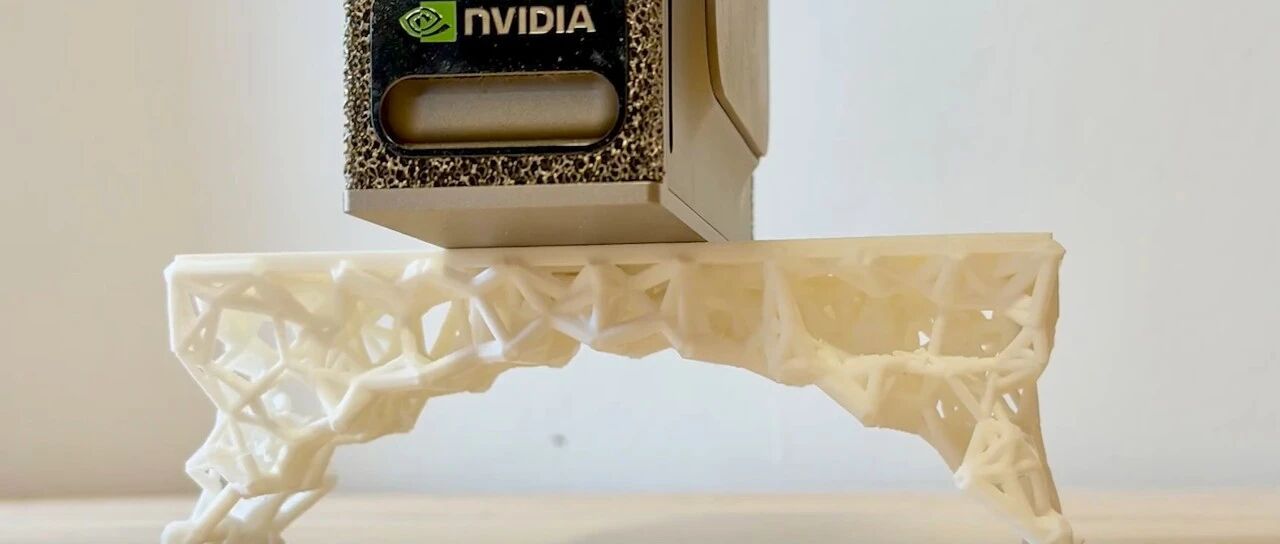
Core Viewpoint - The article discusses the competitive landscape of reasoning models, highlighting advancements by OpenAI, Anthropic, and Google, particularly focusing on Google's Gemini 3 Deep Think, which aims to enhance capabilities in scientific and engineering decision-making rather than just improving reasoning skills [1][3][4]. Group 1: Model Capabilities - OpenAI's o1 series emphasizes a "think one step further" approach, trading longer thinking time for more stable conclusions [1]. - Anthropic's Claude Thinking focuses on careful and reliable analysis in long-context scenarios [2]. - Google’s Gemini 3 Deep Think has undergone significant upgrades, positioning itself as a tool for scientific and engineering decision-making [3][4]. Group 2: Practical Applications - Gemini 3 Deep Think is designed to handle complex tasks, such as generating SVG code for a pelican riding a bicycle, which tests spatial logic, structural correctness, and detail adherence [5][6][10]. - The model can create 3D printable files directly from user requirements, sketches, or photos, moving from theoretical discussions to practical applications [15][21]. - It can analyze blueprints and construct complex shapes, generating files for 3D printing [19]. Group 3: Advanced Design and Engineering - The model can generate interactive design tools and complete design kits, as demonstrated by a professor from MIT who created a new material structure inspired by a spider web [28][30]. - Users can now produce unique designs with minimal effort, significantly reducing the time required for 3D modeling [31][33]. - Deep Think can visualize WiFi networks in 3D, demonstrating its ability to analyze and present complex data spatially [34]. Group 4: Research and Development Focus - Google aims to prove that Gemini 3 Deep Think can effectively tackle real-world research problems, which often lack clear boundaries and unique solutions [36]. - The model extends its capabilities beyond mathematics and programming to include chemistry and physics, addressing a wide range of scientific fields [37]. - As general conversational abilities become commoditized, the demand for deep reasoning capabilities in handling complex financial models and experimental data is increasing, positioning Google to transform large models into a "second brain" for research and engineering [38].
发春节红包的大厂被约谈;百度O计划曝光,文心助手MAU增4倍;影石CEO回应年会送出5套房|AI周报
AI前线· 2026-02-15 05:32
Group 1 - Major tech companies were interviewed by the market regulatory authority to eliminate "involution-style" competition and ensure compliance with various laws [3] - Baidu's Wenxin Assistant saw a fourfold increase in monthly active users, with significant growth in AI-generated content features [4][6] - Insta360's annual meeting featured extravagant prizes, including five apartments and luxury cars, highlighting the company's focus on employee recognition and long-term value [7][8] Group 2 - DeepSeek's recent update led to user dissatisfaction due to perceived loss of personality in interactions, prompting calls for a rollback to previous versions [9][10] - Alphabet raised $31.51 billion through a large-scale bond issuance, reflecting strong demand for cloud service providers despite concerns over investor protection [11] - Disney accused ByteDance of copyright infringement related to its AI video generation model Seedance, marking a significant legal challenge for the company [12][13] Group 3 - Douyin launched a new app "Dou Sheng Sheng" to enhance its local life group buying business, aiming to compete in a less saturated market [18] - Elon Musk proposed building a factory on the moon to produce AI satellites, emphasizing the need for advanced computational resources [19] - A Stanford graduate developed an AI dating app called Date Drop, which has gained popularity among students, indicating a growing trend in tech-driven social solutions [20][21] Group 4 - Zhizhu announced a price increase for its GLM Coding Plan subscriptions, reflecting the rising costs associated with AI model development [16][17] - The URKL robot fighting league was launched to accelerate advancements in humanoid robotics, drawing parallels to F1 and NBA in terms of industry impact [21][22] - OpenAI released the GPT-5.3-Codex-Spark model, designed for real-time programming, showcasing advancements in AI-assisted software development [22][23]



1 Artificial Intelligence (AI) Stock Investors Are Buying on the Dip
The Motley Fool· 2026-02-15 04:54
Core Viewpoint - The release of Anthropic's Claude Cowork tools has negatively impacted the stock market, particularly affecting software companies and AI competitors, but some investors see this as a buying opportunity for Alphabet shares [1][2]. Group 1: Market Impact - Anthropic's Claude Cowork, featuring industry-specific plugins, caused a significant market reaction, leading to declines in stocks of software companies like Salesforce, Intuit, and Atlassian, which are down 27.9%, 33%, and 41.6% year-to-date, respectively [4]. - Alphabet's shares dropped over 6% following the announcement of Claude Cowork, reflecting investor anxiety despite Alphabet not being directly impacted by the specific software offerings [5]. Group 2: Alphabet's Position - Alphabet, with a market cap of $3.7 trillion, has a strong presence in the AI sector, recently launching its own LLM, Gemini 3, which has shown improvements over competitors like OpenAI's ChatGPT [7]. - The rollout of Gemini 3 has resulted in a significant increase in paid subscribers, indicating potential customer shifts from ChatGPT to Gemini, raising concerns that Claude Cowork could attract these subscribers away from Alphabet [7]. Group 3: Investment Opportunities - Notable investors, including Warren Buffett, have taken positions in Alphabet, suggesting confidence in the company's long-term prospects despite recent stock price declines [10]. - Cathie Wood's Ark Invest purchased $21.6 million in Alphabet shares, indicating a strategic move to capitalize on the current dip in stock price [11].