
Goldman Sachs(GS)

Search documents
高盛预计美储降息两次 伦敦银再现“狂飙”
Jin Tou Wang· 2026-01-12 06:27
伦敦银价格在早盘中高涨,突破历史阻力位81.00美元,从创下新的历史高点接近,同时其在EMA50上 方的交易所代表的动态支撑仍在继续,强化了主看涨趋势的短期强度和稳定性,尤其是其与趋势线并行 交易时,注意到相对强弱指标出现负面信号,这可能会减少即将到来的涨幅。 "未来几年GDP增长的构成将与上一周期不同,"高盛首席美国经济学家戴维.梅里克(David Mericle)写 道。"增长的更大一部分将来自生产率提升,这已经出现反弹并应会得到人工智能的推动;而来自劳动 力供应增长的部分将会减少,因为目前的移民水平已大幅降低。" 彭博社在去年12月中旬进行的一项经济学家调查预测,美国2026年经济增长率为2%——与他们2025年 的预测相同。外界认为,美国总统特朗普的减税计划将维持美国相对于其他发达经济体的一贯优异表 现。 【最新伦敦银行情解析】 今日周一(1月12日)亚盘时段,伦敦银目前交投于82.80一线上方,今日开盘于80.39美元/盎司,截至发 稿,伦敦银暂报83.62美元/盎司,上涨4.59%,最高触及83.94美元/盎司,最低下探79.94美元/盎司,目 前来看,伦敦银盘内短线偏向看涨走势。 【要闻速递】 ...

高盛:预计随着供应增加2026年油价将下跌
Sou Hu Cai Jing· 2026-01-12 05:53
截至格林尼治标准时间 4 时 12 分,布伦特原油期货合约(交易代码 LCOc1)的交易价格在每桶 63 美 元左右,而美国西德克萨斯中质原油期货合约(交易代码 CLc1)则稳定在每桶 59 美元。去年,这两大 原油基准价格均创下 2020 年以来的最差年度表现,跌幅近 20%。 高盛分析师指出,美国政策制定者聚焦于保障充足的能源供应与维持相对低油价,这将在中期选举前抑 制油价持续走高的势头。 高盛分析师在报告中称,预计油价将在 2027 年逐步回升。届时,随着非欧佩克产油国供应增速放缓, 且需求保持强劲增长,原油市场将重回供不应求的状态。 来源:环球市场播报 高盛集团在周日发布的一份报告中指出,尽管与俄罗斯、委内瑞拉和伊朗相关的地缘政治风险将持续引 发市场波动,但受一波供应增长造成市场过剩的影响,今年油价或将缓步走低。 这家投行维持其对 2026 年布伦特原油 / 西德克萨斯中质原油(WTI)的均价预测,即每桶 56 美元 / 52 美元,并预计随着经济合作与发展组织(OECD)原油库存增加,布伦特原油 / WTI 原油价格将在第四 季度跌至每桶 54 美元 / 50 美元的谷底。 高盛表示:"全球原油库存 ...
高盛:预计油价将在2027年逐步回升
Xin Lang Cai Jing· 2026-01-12 04:53
Core Viewpoint - Goldman Sachs analysts predict that oil prices will gradually recover by 2027, driven by a slowdown in supply growth from non-OPEC producers and strong demand growth, leading to a return to a supply-demand imbalance in the crude oil market [1] Group 1: Price Forecast - The investment bank has adjusted its average price forecast for Brent crude and WTI crude in 2027 to $58 per barrel and $54 per barrel, respectively, a decrease of $5 from previous estimates [1] Group 2: Supply Expectations - The upward revision in supply expectations for 2027 includes an increase of 300,000 barrels per day from the United States, 400,000 barrels per day from Venezuela, and 500,000 barrels per day from Russia [1]
Goldman projects lower oil prices in 2026 as supply swells
Reuters· 2026-01-12 04:51
Core Viewpoint - Oil prices are expected to decline this year due to an increase in supply leading to a market surplus, despite ongoing geopolitical risks that may cause volatility [1] Supply and Demand - A wave of supply is anticipated to create a surplus in the oil market this year [1] Geopolitical Risks - Geopolitical tensions related to Russia, Venezuela, and Iran are expected to continue influencing market volatility [1]

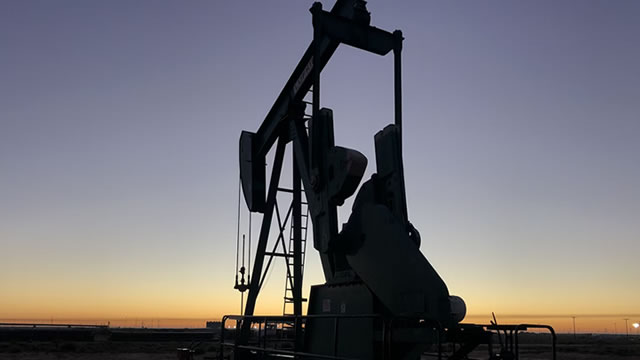
高盛:预计随着供应增加 2026年油价将下跌
Xin Lang Cai Jing· 2026-01-12 04:48
Group 1 - Goldman Sachs reports that geopolitical risks related to Russia, Venezuela, and Iran will continue to cause market volatility, but oil prices are expected to gradually decline this year due to oversupply from increased production [1][3] - The firm maintains its average price forecast for Brent crude and West Texas Intermediate (WTI) crude at $56 and $52 per barrel for 2026, respectively, predicting prices will drop to $54 and $50 per barrel in Q4 as OECD oil inventories rise [1][3] - Goldman Sachs anticipates a daily oversupply of 2.3 million barrels in the oil market by 2026, indicating that unless there are significant supply disruptions or OPEC implements production cuts, oil prices may need to decline to balance the market and support strong demand growth [1][3] Group 2 - U.S. policymakers are focused on ensuring adequate energy supply and maintaining relatively low oil prices, which is expected to suppress rising oil prices ahead of the midterm elections [2][4] - Oil prices are projected to gradually recover by 2027, as the growth rate of non-OPEC oil supply slows and demand remains strong, leading to a return to a supply-demand imbalance [2][4] - Goldman Sachs has adjusted its average price forecast for Brent and WTI crude in 2027 to $58 and $54 per barrel, respectively, a decrease of $5 from previous estimates, due to increased supply expectations from the U.S., Venezuela, and Russia [2][4]
【Fintech 周报】去年理财产品平均收益率2.28%;银行短期大额存单利率进入“0字头”
Sou Hu Cai Jing· 2026-01-12 04:27
Regulatory Dynamics - The Financial Regulatory Bureau has issued a notice to unify the execution standards for non-auto insurance "reporting and issuing" practices, addressing issues of irrational competition and high costs in the non-auto insurance market [1] - Guangzhou Huilibao Payment Technology Co., Ltd. has been fined over 74 million yuan for multiple violations, including breaches of clearing management regulations and merchant management rules [1] Industry Dynamics - Major state-owned banks are raising the threshold for gold accumulation business, requiring personal clients to have a risk tolerance level of C3- or above to purchase gold accumulation products starting January 12, 2026 [2] - The interest rates for short-term large-denomination time deposits have dropped to "0" for several major state-owned banks, with rates for 1-month and 3-month deposits at 0.9% [2] - The average annualized yield of wealth management products has decreased to 2.2809% as of the end of 2025, with a total market size of 31.63 trillion yuan [3] - A significant wave of deposits maturing, estimated at 50 trillion yuan, is expected this year, with the majority concentrated in 2-year and 3-year deposits [5] - Several joint-stock banks' financial asset investment companies have begun investing in emerging industries, focusing on high-growth sectors such as new energy and materials [5] Corporate Dynamics - Everbright Bank's "Lehui Jin" credit card has been reported to show ghost debts, affecting users' credit scores and loan applications despite no actual defaults [6] - Yunnan's first trillion-yuan bank is set to be established through the merger of local rural credit cooperatives, creating the largest financial institution in the province [7] - Ping An Life has increased its holdings in Agricultural Bank of China and China Merchants Bank, triggering regulatory filings for both [8] - China Dadi Insurance and Sunshine Property Insurance have ceased new financing insurance business applications as of the end of 2025 [8] - Beijing's North Silver Consumer Finance has received approval to increase its registered capital by 150 million yuan, raising it to 1 billion yuan [9] - Jinshan Consumer Finance has become an executed party in a court case, with a claim amount of 20,000 yuan [9] - Zhonggang Yintong's payment license has been revoked by the central bank, marking the 12th payment license cancellation in 2025 [10] - ELong has fully acquired Firefly Microloan, enhancing its position in the financial services sector [11] Overseas Dynamics - JPMorgan Chase is set to take over Goldman Sachs' Apple credit card business, acquiring over $20 billion in credit card loans as Goldman Sachs shifts away from consumer finance [12] - Global fintech venture capital funding has rebounded significantly in 2025, reaching $55.94 billion, a 25% increase from 2024 [13]






高盛预计美联储今年6月和9月各降息25bp
Ge Long Hui A P P· 2026-01-12 04:15
Core Viewpoint - Goldman Sachs expects the Federal Reserve to cut interest rates by 25 basis points in June and September this year, revising its previous forecast of rate cuts in March and June [1] Group 1 - The anticipated rate cuts are now scheduled for mid-year rather than earlier in the year [1] - The adjustment in the forecast reflects changing economic conditions and monetary policy outlook [1]
高盛展望2026:美国经济增速将冲刺2.8% 美联储将于6、9月各降息25个基点
Zhi Tong Cai Jing· 2026-01-12 04:04
高盛的预测展现出了更强的乐观预期:在2026年第四季度,美国GDP同比增速有望达到2.5%,全年增 速则预计为2.8%;至同年12月,核心PCE通胀同比增速将回落至2.1%,核心CPI同比涨幅也将放缓至2% 左右。在基准情形下,失业率将稳定在4.5%的水平,但需警惕出现"无就业增长"阶段的风险——企业可 能通过人工智能技术的应用来降低用工成本,从而导致经济增长与就业增长脱节。 在贸易领域,高盛分析指出,即将到来的中期选举将推动生活成本问题成为核心政治议题,这将促使白 宫在关税政策上采取更为谨慎的态度——避免再度显著上调关税。 梅里克在分析中明确指出:在减税政策与实际工资增长的有力支撑下,消费者支出将呈现稳步扩张态 势;进入2026年,商业投资有望成为GDP增长中最具活力的组成部分——这主要得益于宽松金融环境的 持续滋养、政策不确定性降低带来的信心提振,以及税收激励措施对投资行为的直接推动。 高盛经济学家指出,今年美国经济将在减税政策、实际工资上涨以及财富持续增长的多重驱动下实现稳 步增长,同时通胀水平有望逐步趋于温和。然而,鉴于劳动力市场前景愈发不明朗,高盛在其1月11日 发布的《2026年美国经济展望》报告 ...
沪金受经济数据驱动创新高
Jin Tou Wang· 2026-01-12 04:01
【最新黄金期货行情解析】 高盛首席美国经济学家戴维·梅里克强调,未来几年GDP增长的结构将与上一周期有所不同。其中,生 产率提升将成为增长的主要驱动力,这一趋势已现反弹迹象,并有望得到人工智能技术的进一步推动。 相比之下,由于移民水平大幅下降,劳动力供应增长对GDP的贡献将有所减少。 彭博社去年12月中旬的经济学家调查显示,普遍预测美国2026年经济增长率为2%,与2025年持平。外 界普遍认为,美国总统特朗普的减税计划将有助于维持美国相对于其他发达经济体的优势地位。 高盛的预测更为乐观,预计2026年第四季度同比GDP增长率为2.5%,全年增长率则达到2.8%。到年 底,核心PCE通胀率预计同比降至2.1%,核心CPI将放缓至2%。基线预测显示,失业率将稳定在4.5%, 但需注意企业利用人工智能降低劳动力成本可能导致"无就业增长"期的出现。 在贸易方面,高盛假设中期选举将使生活成本问题成为政治焦点,从而促使白宫避免采取大幅提高关税 的措施。梅里克认为,在减税和实际工资增长的双重支持下,消费者支出应会稳步增长。同时,更宽松 的金融条件、政策不确定性的降低以及税收激励措施,将共同推动企业投资成为2026年GDP ...
Dow Jones Futures Fall As Fed Chief Powell Under Criminal Probe; JPMorgan, Goldman, Delta, Taiwan Semi Ahead
Investors· 2026-01-12 03:52
Group 1 - The document does not contain any relevant information regarding companies or industries [2][3][5][6]

