
IBM(IBM)

Search documents
Amazon, Google named by EU among 'critical' tech providers for finance industry
Yahoo Finance· 2025-11-18 17:22
Core Points - The European Union has designated 19 technology companies, including Amazon Web Services, Google Cloud, and Microsoft, as critical third-party computing providers for the finance industry under the Digital Operational Resilience Act (DORA) [1][3] - The new regulations aim to mitigate risks associated with the financial sector's reliance on external technology providers, particularly concerning cloud computing services [2][6] - The European Banking Authority, European Insurance and Occupational Pensions Authority, and European Securities and Markets Authority (ESMA) will directly supervise these designated companies to ensure they have adequate risk management and governance frameworks [4][6] Company Responses - Companies such as Microsoft and Amazon Web Services have expressed their commitment to comply with Europe's cybersecurity and resilience laws, indicating preparedness for the designation [5] - Google Cloud has also welcomed the designation, reflecting a positive stance towards regulatory compliance [4][5] Industry Context - Concerns regarding the resilience of the finance industry in Europe have intensified, with the European Central Bank highlighting geopolitical tensions and technological disruptions as significant risks [6] - The UK is implementing a similar regulatory framework, with expectations for designations to occur within the next year [6]




[DowJonesToday]Dow Jones Dips Amid Earnings Anticipation and Economic Data Uncertainty
Stock Market News· 2025-11-17 21:09
Core Insights - The Dow Jones Industrial Average closed down 557.24 points (-1.18%) on November 17, 2025, influenced by upcoming earnings reports and a backlog of economic data [1] - Anticipation surrounds key corporate earnings from Nvidia, Walmart, and Home Depot, which are expected to provide insights into the AI, technology, and consumer sectors [1] - Delayed economic data, including the September jobs report, is expected to impact perceptions of the U.S. economy and Federal Reserve interest rate decisions [1] Company Performance - Johnson & Johnson, Amgen, and Merck & Co. were among the biggest gainers, reflecting a shift towards defensive or healthcare-related stocks amid market uncertainty, with gains of 2.08%, 1.82%, and 1.11% respectively [2] - American Express led the declines with a drop of 2.37%, attributed to increased net write-off rates in U.S. Consumer Card Member loans, followed by IBM (-2.13%), Salesforce (-1.94%), and Apple (-1.73%) [3]



IBM: Powering the Future of Technology Through Innovation
Medium· 2025-11-17 03:07
Core Insights - IBM is a global leader in hybrid cloud, AI innovation, and enterprise-level digital transformation, continuously evolving since its founding in 1911 [1][10] - The company has a rich history of technological leadership, contributing significantly to computing standards and investing heavily in research and development [2][4] Key Contributions - Development of the first magnetic hard drive, pioneering mainframe computing, advances in AI through IBM Watson, innovations in quantum computing, and leadership in enterprise cloud solutions [4] IBM and Artificial Intelligence (AI) - IBM Watson, launched in 2011, has evolved into a powerful enterprise AI platform utilized across various industries such as healthcare, finance, retail, cybersecurity, and supply chain management [4] - The company emphasizes trustworthy AI, focusing on data security, transparency, and ethical development, distinguishing itself in the global AI landscape [4] Hybrid Cloud: IBM's Core Business Strategy - The acquisition of Red Hat in 2019 transformed IBM into a hybrid cloud powerhouse, combining its infrastructure with Red Hat's open-source technology [5] - Benefits of IBM's hybrid cloud include scalable infrastructure, strong security, seamless multi-cloud integration, and cost-efficient enterprise solutions, making it an ideal partner for large companies undergoing digital transformation [6] Quantum Computing: The Next Big Leap - IBM is a leader in quantum computing, a technology capable of solving complex problems beyond classical computers [7] - Achievements include the IBM Quantum System One, quantum development tools like Qiskit, and a global network of universities, corporations, and labs, aiming to make quantum computing accessible for real-world applications [8] Sustainability and Social Responsibility - IBM is committed to environmental sustainability, aiming for net-zero greenhouse gas emissions by 2030, with initiatives in smart systems for energy management, climate data analysis using AI, and responsible supply chain programs [9] Why IBM Matters Today - IBM remains relevant due to its strong enterprise trust, high focus on research and innovation, advanced cloud, AI, and quantum capabilities, and a global presence in over 170 countries [9]

IBM宣布推出全新量子处理器,计算机ETF(159998)近2日资金累计净流入0.36亿元,机构:政策催化、AI驱动等推高计算机行业景气度
2 1 Shi Ji Jing Ji Bao Dao· 2025-11-17 01:52
Group 1 - The market experienced fluctuations on November 14, with the Shanghai Composite Index dropping nearly 1% and falling below 4000 points, while the ChiNext Index declined nearly 3% [1] - The CSI Computer Theme Index fell by 2.71%, and the CSI Hong Kong-Shenzhen Cloud Computing Industry Index decreased by 3.27% on the same day [1] - The cloud computing ETF Tianhong (517390) showed a significant premium at the close, with a premium rate of 0.21% [1] Group 2 - IBM announced the launch of a new quantum processor, IBM Quantum Nighthawk, and developed an experimental quantum computing chip named Loon [1] - Ant Group and Zhejiang University established a joint research center for big data cognitive computing in Hangzhou [1] - The computer ETF (159998) tracks the CSI Computer Theme Index, which includes both software and hardware sectors, reflecting the overall performance of the computer industry and serving as an efficient tool for investing in digital economy opportunities [1] Group 3 - Hu Long Securities indicated that the computer industry is expected to see stable revenue growth and profit growth exceeding revenue growth by the third quarter of 2025, signaling a clear performance recovery [2] - The AI sector is projected to have a significantly higher growth rate compared to the overall industry, driven by strong downstream demand and accelerated performance from leading companies [2] - Future growth in the computer industry is anticipated to be driven by policy catalysts, domestic innovation demand, and AI, suggesting an acceleration in the establishment of a fundamental turning point for the industry [2]

晚报 | 11月17日主题前瞻
Xuan Gu Bao· 2025-11-16 14:29
Aviation Industry - China Southern Airlines' C919 aircraft successfully arrived at Dubai Al Maktoum International Airport on November 14, preparing for the Dubai Airshow from November 17 to 21, 2025. The C919 has received over 1,000 domestic and international orders, marking a significant milestone in China's aviation industry development [1] - Boeing predicts that the Middle East will require 3,000 new passenger aircraft over the next 20 years, valued at over $500 billion. China's fleet is expected to grow at an average annual rate of 4.4%, with a projected total of 9,323 jet aircraft by 2043, making it the largest single aviation market globally [1] Animation Industry - Bilibili held an online launch event for 40 domestic animation works for 2025-2026, including new titles and updates on various IP sequels. The return of "The King's Avatar" TV animation and the announcement of "Chinese Folktales 2" set for January 1, 2026, were highlighted [2] - Since 2018, Bilibili has launched over 3,000 domestic creations, with nearly 970 million hours of viewing time in the past year. The platform's user base reached 330 million, with a 104% year-on-year increase in viewing time for domestic content in Q3 [2] Robotics Industry - CITIC Securities reported the completion of the IPO guidance for Yushu Technology Co., which is positioned to strengthen its industry-leading status in humanoid robotics. The company is noted for its continuous technological and product iterations [3][7] - The demand for domestic production of key systems like aviation engines is expected to drive the expansion of the domestic aviation market and upgrade the industry chain [1] Commercial Space Industry - Blue Origin's "New Glenn" rocket successfully launched on November 13, marking its second flight and the first successful sea recovery of its first stage, making Blue Origin the second company globally to master orbital rocket recovery technology after SpaceX [4] Satellite Internet - The Chinese Academy of Sciences conducted a successful high-rate communication experiment, achieving data transmission rates of 6.0 Gbps in the X-band and 20 Gbps in the Ka-band, indicating significant technological advancements in satellite communication [5] - The satellite communication market is currently valued at approximately 40-50 billion yuan, with projections to exceed 200-400 billion yuan by 2030, reflecting a compound annual growth rate of 10%-28% [5] Quantum Technology - IBM announced significant progress towards achieving quantum advantage by the end of 2026 and fault-tolerant quantum computing by 2029, introducing its most advanced quantum processor, "Quantum Nighthawk," expected to be delivered by the end of 2025 [6] - China's "Zuchongzhi 3" superconducting quantum computer has successfully manipulated 105 qubits, becoming the highest-performing superconducting quantum computing prototype globally [6] Physical AI - Yushu Technology's founder emphasized that AI technology will enable robots to truly "understand the world" in the next decade, with their humanoid robots capable of performing most work actions through offline pre-learning and real-time imitation [7] - The emergence of Physical AI aims to enhance autonomous machines' capabilities in real-world physical interactions, bridging the gap between virtual and embodied intelligence [7]


计算机周报20251116:叙事的逆转:中美大模型差距是否在拉大?-20251116
Minsheng Securities· 2025-11-16 14:02
Investment Rating - The report maintains a "Recommended" investment rating for the industry [5]. Core Insights - The gap between domestic and overseas large models in AI is rapidly narrowing, with domestic AI ecosystems represented by Tencent and Alibaba showing significant development. This suggests a potential turning point for accelerated growth in domestic AI [3][22]. - The report emphasizes the importance of focusing on core targets in domestic computing power and AI agents, highlighting key companies in cloud computing, chip design, and AI applications [3][22]. Summary by Sections Market Review - During the week of November 10-14, the CSI 300 index fell by 1.08%, the SME index decreased by 1.71%, and the ChiNext index dropped by 3.01%. The computer sector (CITIC) saw a decline of 3.72% [30]. Industry News - AMD's CEO predicts that the AI data center market will exceed $1 trillion by 2030, growing from approximately $200 billion currently, with a compound annual growth rate (CAGR) of over 40% [23]. - The Ministry of Industry and Information Technology has issued a notice to accelerate the construction of pilot platforms in the manufacturing sector, aiming to enhance innovation and technology transfer [24]. Company News - Lingzhi Software plans to acquire 100% of Kaimiride (Suzhou) Information Technology Co., Ltd. through a share issuance and cash payment, with a share price set at 15.31 yuan [27]. - Zhengyuan Wisdom's board approved a share repurchase plan, intending to reduce up to 2,842,000 shares within six months [29]. Weekly Insights - Domestic large models like MiniMax and DeepSeek are now among the top global models, with MiniMax M2 achieving a daily token usage surpassing 50 billion, indicating strong market acceptance [9][12]. - The report highlights the competitive landscape in AI, with Tencent and Alibaba intensifying their efforts in AI applications, suggesting an imminent phase of heightened competition in the domestic AI market [20][22].




Inside IBM's MIND-BLOWING Quantum computer
Youtube· 2025-11-15 23:00
Core Insights - IBM has unveiled its new Nighthawk quantum processor, which is one of the fastest computers globally and is being utilized for various applications including medicine development, battery improvement, and enhancing financial performance [1][4]. Quantum Technology - The Nighthawk quantum processor is approximately 30% more efficient than its predecessor, showcasing significant advancements in quantum computing technology [3]. - The processor operates at extremely low temperatures, reaching 15 millikelvins, which is a thousand times colder than outer space, indicating the advanced cooling technology required for quantum operations [3]. Applications and Industry Impact - Quantum computing is positioned as a new computational tool that can solve previously unsolvable problems, enhancing the capabilities of artificial intelligence rather than replacing it [2][4]. - Companies such as Boeing, Moderna, and HSBC are already leveraging IBM's quantum technology for various purposes, including creating more durable aircraft, developing effective vaccines, and achieving better trading outcomes [4][5]. Competitive Landscape - The United States currently leads in the development of advanced quantum computers, but China is making substantial investments in this field, indicating a competitive landscape in quantum technology [5]. - The U.S. is expected to deploy its quantum capabilities by the end of the decade, highlighting the urgency and importance of advancements in this sector [5].
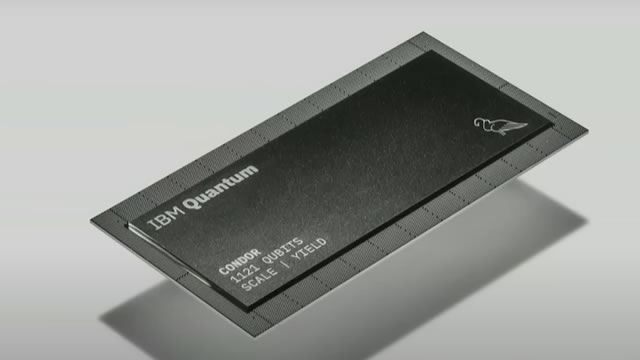
Own International Business Machines (IBM) if You Want to Own Quantum, Says Jim Cramer
Insider Monkey· 2025-11-15 18:03
Core Insights - Artificial intelligence (AI) is identified as the greatest investment opportunity of the current era, with a strong emphasis on the urgency to invest in AI technologies now [1][13] - The energy demands of AI technologies are highlighted as a critical concern, with data centers consuming as much energy as small cities, leading to potential crises in power supply [2][3] Investment Opportunity - A specific company is presented as a unique investment opportunity, positioned to benefit from the increasing energy demands of AI, owning critical energy infrastructure assets [3][6] - This company is not a chipmaker or cloud platform but is essential for supplying electricity, which is becoming the most valuable commodity in the digital age [3][6] Energy Infrastructure - The company is described as a "Toll Booth" operator in the AI energy boom, collecting fees from energy exports and benefiting from the onshoring trend driven by tariffs [5][6] - It owns significant nuclear energy infrastructure, making it a key player in the U.S. energy strategy and capable of executing large-scale projects across various energy sectors [7][8] Financial Position - The company is noted for being debt-free and having a substantial cash reserve, equating to nearly one-third of its market capitalization, which positions it favorably compared to heavily indebted competitors [8][10] - It also holds a significant equity stake in another AI-related company, providing indirect exposure to multiple growth engines in the AI sector [9][10] Market Trends - The article emphasizes the ongoing AI infrastructure supercycle, the surge in U.S. LNG exports, and the impact of tariffs on American manufacturing as key trends that the company is poised to capitalize on [14] - The influx of talent into the AI sector is expected to drive continuous innovation and advancements, reinforcing the importance of investing in AI-related companies [12]

苹果,再次豪赌芯片!
半导体行业观察· 2025-11-15 01:42
Core Viewpoint - The article discusses Apple's journey from reliance on external chip manufacturers to developing its own chips, highlighting the significance of the M1 chip and the company's ongoing efforts in vertical integration, including the development of a custom 100MP image sensor [1]. Group 1: Historical Context - In the 1980s, Apple relied heavily on Motorola's MOS 6502 processor, which was pivotal in the success of early Apple products like the Apple I and Apple II [3][4]. - The Macintosh 128K, launched in 1984, utilized the Motorola 68000 processor, marking a significant innovation in personal computing with its graphical user interface [4][6]. Group 2: Early Self-Development Efforts - In 1989, Apple initiated the "Project Aquarius," aiming to develop a multi-core CPU architecture to regain technological strength, but the project was ultimately terminated due to resource constraints [5][6]. - Despite the failure of early self-development efforts, Apple demonstrated a persistent desire to control its hardware future [6]. Group 3: Strategic Partnerships - In 1991, Apple formed a partnership with IBM to develop the PowerPC architecture, which was seen as a significant move against the dominance of Intel and Microsoft [8][13]. - The AIM alliance, consisting of Apple, IBM, and Motorola, aimed to create a unified standard in chips, hardware, and software, but ultimately, Apple only adopted the PowerPC chip without significant progress in other areas [24]. Group 4: Market Challenges - The launch of Windows 95 in 1995 marked a turning point, as it significantly improved usability and performance, leading to a decline in Apple's market share from 16% to 4% [28][29]. - The competitive landscape shifted dramatically, with Intel and Microsoft solidifying their dominance in the PC market, while Apple's reliance on the PowerPC architecture faced increasing scrutiny [30][32]. Group 5: Decline of PowerPC - Despite initial success with the Power Macintosh, the AIM alliance faced numerous challenges, including the failure of joint ventures like Taligent and Kaleida, which did not deliver on their promises [22][24]. - By the late 1990s, Motorola's inability to keep pace with Intel's advancements led to a decline in the PowerPC's relevance in the market [41][42]. Group 6: Transition to Intel - In 2005, Apple announced a transition to Intel processors, marking a significant shift in its hardware strategy as it sought to improve performance and compatibility with the broader PC ecosystem [46].


AI成科技行业重构关键推手
Jing Ji Ri Bao· 2025-11-14 21:45
Core Viewpoint - IBM is initiating a new round of global layoffs in Q4, affecting thousands of employees, as part of its strategic transformation towards high-growth software and services, reflecting deeper changes in the global tech industry [1][2]. Company Summary - IBM's Q3 revenue reached $16.33 billion, a 9% year-over-year increase, but the company faces uneven business development [1]. - The company aims to shift focus towards high-value software, with a projected 10% growth in this segment for 2024, while consulting and infrastructure revenues declined by 2% and 7.6% respectively [1]. - IBM's cloud market share is below 5%, struggling against competitors like Amazon AWS and Microsoft Azure, necessitating workforce reductions in related areas [1]. Industry Summary - The global tech industry is undergoing significant layoffs, with nearly 100,000 positions cut this year, as companies like Amazon, Microsoft, and Meta also reduce their workforce [2]. - Factors driving these layoffs include economic slowdown, increased competition, and the impact of AI technology leading to job displacement and business restructuring [2][3]. - The layoffs are seen as a necessary transition pain for the tech industry in the AI era, emphasizing the urgency for companies to adapt through technological change and resource optimization [3].